book review

Big Sky

Big Sky by Kate Atkinson (Website)

Genre: mystery

Setting: mostly a seaside town in the north of England

I read it as a(n): audiobook

Narrator: Jason Isaacs

Source: My own Audible collection

Length: 11:22:00

Published by: Hachette Audio (25 June 2019)

Her Grace’s rating: 3 out of 5 stars

I’m giving this 3 out of 5 stars only because Jason Isaacs’s narration was superb. The story itself was kind of boring. As with the rest of the books in Atkinson’s Jackson Brodie series, Big Sky starts with Jackson working on a case, this time staking out a couple to provide proof of their infidelity to his client. Then, showing the kind of weird luck only Jackson seems capable of, he encounters a man on a crumbling cliff and gets sucked into a ring of sex trafficking and kidnapping. Of course, the only person who can solve things and fix it is Jackson.

If he weren’t so sexy, Jackson Brodie would be really fucking annoying. The whole trope of “only I can solve this” was old to begin with, and now it has been pretty much ruined by the Lobotomized Hitler currently squatting in the White House, and it’s a pretty arrogant thing to think regardless of who is saying it. 

It was nice to see Reggie come back in this story. Last we saw of her, she was a lost and scared young lady trying to get by mostly on her own. It was fun to see her in this story and see what she’s made of herself. Other than Reggie and Jackson, sometimes, I really found not one likeable character in this story. The traffickers of course were revolting, but Julia is a shallow twit, Nathan is a typical teen and no one really likes those, and most of the others were pretty one-dimensional. The plot itself wasn’t terribly compelling to me, and Atkinson’s style of writing is so nonlinear that listening to this as opposed to eyeball reading it was a chore. I found myself not listening to it as often as not, and only kept going by pure virtue of Jason Isaacs’s sexy voice and skill in narrating. I really wish he would narrate more audiobooks. He’s one of my very favorite narrators, and it isn’t just because he’s my mega celebrity crush. He is a genuinely excellent narrator, able to do a variety of accents well, and even reading women’s voices nicely. I hate it when male narrators do a falsetto for women, or make them sound like brainless morons. Like, what women do you know who really sounds like that? Isaacs does nothing of the sort and all his voices are authentic and believable. I just really wish Audible could/would make more use of his voice talent.

book review · fantasy

Akata Witch

Akata Witch paperback cover

Akata Witch by Nnedi Okorafor (Website, Twitter, Insta)

Genre: fantasy, MG

Setting: Near Abuja, Nigeria

I read it as a(n): paperback

Source: my own collection

Length: 349 pp

Published by: Viking Children’s (14 April 2011)

Her Grace’s rating: 3.5 out of 5 stars

Sunny is a young American girl born to Nigerian parents. Although she was born in New York, her family returned to Nigeria when she was 9 so that Sunny and her brothers could grow up knowing their culture and heritage. Sunny doesn’t feel like she fits in anywhere, since in America she is considered Nigerian, and in Nigeria she’s considered American. Everywhere she goes, she is albino. She can’t go in the sun and carries an umbrella with her everywhere. She can’t play soccer except sometimes at night with her brothers. And on top of it all, now she is seeing visions in candle flames. 

Her childhood friend, Orlu, and their neighbor Chichi discover that Sunny is a talented witch, for lack of a better term. So are they, and Sasha, a friend from the US who was also born to Nigerian parents. The four of them make an oha coven, a group of people whose magic and physical traits are perfectly balanced. Their mentor begins training the children and helping them to learn the extent of their juju. However, none are skilled enough to take on a brutal murderer of children who is himself a highly advanced juju man. And yet, they must confront him not only to save innocent lives, but to prevent an ancient and terrible being from being brought forth into their world.

A super fun and speedy read from Okorafor. The descriptions of Nigerian culture are evocative and rich and, even though this story is at its heart a fantasy, I feel like I was able to learn a bit about Nigerian culture by reading it. My favorite parts were where there were food descriptions. We can learn so much about a place and people through the food they serve. I absolutely am inspired now to look up some Nigerian recipes and give them a try. 

There was a strong theme of the bonds of friendship throughout this novel. Without friendship and trust, none of the kids would have survived the various magickal events and tests they endured. As they mature, I think the idea of their perfectly balanced group is that they will pair off into couples, thus strengthening the magic of the entire group as well as individually. I’ll see if I’m right when I read the sequel, Akata Warrior

So far, this is 5-0 in favor of Okorafor! I’ve read all three Binti novellas, Who Fears Death, and now this one and have really enjoyed all of them. That’s almost unheard of for me. This one is a younger book than I would typically read, but I still liked it a lot and it covers one of the Read Harder tasks. Recommended for all who enjoy fantasy, especially if you are looking to branch out and find books set somewhere other than the US or Britain, and who like to learn about various cultures.

Uncategorized

Lightning Round: Inside Out and Back Again and Too Much and Never Enough

IInside Out and Back Againnside Out and Back Again by Thanhha Lai

Genre: MG biographical fiction

Setting: Vietnam and Alabama

I read it as a(n): paperback

Source: my own collection

Length: 262 pp

Published by: Scholastic (22 Feb 2011)

Her Grace’s rating: 3.5 out of 5 stars

This novel is the story of Ha, who flees Vietnam with her mother and brothers to escape the war. They end up in Alabama where they are hosted by a family that Ha thinks is a family of cowboys. The story tells of her challenges in adapting to life in 1970s America.

The story is written in verse and makes for a very lyrical novel. The way Lai uses imagery in her poems makes the emotions Ha and her family are feeling visceral. They are afraid to leave their home, they worry that they don’t have news about Ha’s father or where he might be, and they feel like they are abandoning him and their culture to leave and set up a new life for themselves in America. When they get there, Ha’s fears are justified because she cannot speak English, people think she is dumb because of it, and the people in general are close-minded and unwilling to accept them as part of their community. It was a bittersweet story and a very good one to use to discuss the experiences of refugees with your children.

(I refuse to put a pic of this book cover here. I don’t want to see its ugly face)

Too Much and Never Enough by Mary L. Trump 

Genre: nonfiction/biography

Setting: mostly New York

I read it as a(n): hardback

Source: my own collection

Length: 225 pp

Published by: S&S (14 July 2020)

Her Grace’s rating: 3 out of 5 stars

Mary Trump is Donald Trump’s niece, if anyone at all has been under a rock and didn’t learn that by now. She has a PhD in psychology and uses it to explain the excrescence that is her uncle, by diabolical fate the President of the United States. 

While this book really didn’t give any new information to those of us who have been paying attention, it is still nice to have our suspicions about the mango Mussolini confirmed by a member of the family who is an expert in the field. However, she seems to place all the blame squarely on the shoulders of his parents, in particular his dad. Yes, I am sure their horrible parenting impacted how he grew up. But doing so also takes the blame off of him – AGAIN – and makes it so he is not responsible for his actions. There are plenty of kids who had awful childhoods, far worse than Donny’s gilded negligence, and those people didn’t turn into malignant narcissists. So fuck that. He had a shitty childhood but he is the one who chooses cruelty over compassion and is a loathsome creature. 

Also, if I had a family like that, I would drop them so fucking fast you’d think I discovered warp drive. The fact that she hasn’t done so kind of seems to me like she’s sticking around in hopes of getting some money after all. That, or a scorching case of Stockholm Syndrome. Or both. #armchairpsychiatry. Whatever the case is, it rings hollow in a lot of ways.

book review · books · sci-fi

Kindred

Kindred by Octavia Butler

Genre: let’s call it magical realism

Setting: 1976 and the antebellum South

I read it as a(n): kindle book

Source: my own collection

Length: 287 pp

Published by: Beacon Press (1 June 1979)

Her Grace’s rating: 4 out of 5 stars

Dana is a modern young Black woman, married to a white man called Kevin, and they are both authors. They have recently purchased their first real home together and are in the middle of unpacking when Dana feels dizzy and falls to the ground. When the dizziness passes, she finds herself outside and hears a child yelling for help. Since Dana isn’t a dick, she rushes to help and ends up saving a young boy named Rufus from drowning. The boy’s father comes across them and, thinking Dana is trying to harm his son, aims a rifle at her. Dana is then transported back to her home, soaking wet and covered in mud from her rescue efforts. 

Over the next few weeks, Dana finds herself inexplicably called back to what she learns is the antebellum South, to a plantation with slaves. Somehow, anytime Rufus is in mortal danger, he pulls her back in time to him, completely unintentionally. Dana learns that Rufus is one of her ancestors and she has to keep saving him until he is able to father the child who is her direct ancestor. Each time Dana goes back, she stays longer and the trip is more dangerous for her. She eventually figures out that when she herself fears for her life, she is able to return to her own time, which is moving more slowly than the past. Dana spends hours, days, and months in the past and yet her own time period only moves forward by a few minutes or days even for her longest period spent in the past. Dana has to learn how to survive in a harsh past, retain Rufus’s trust enough that he doesn’t harm her himself just because he can, and keep her husband Kevin safe during her travels as well. 

This story was a difficult and yet un-put-downable read. Difficult because of the subject matter but a very fast and engaging read. Even though it was written in 1979, there was not actually much reference to technology so it didn’t feel dated. In fact, it could have been written this year and would have been hailed as a timely discussion on race relations and equality, given the ongoing protests surrounding police brutality towards Black people. It was a horrifying read as well because it explores topics such as slavery, which is to be expected from the book’s premise. What was worst, though, was Dana’s thoughts on how easy it can be to become accustomed to injustice. The discussion of racism was deep and explored some of the ways in which it has become institutionalized in America even today. Some scenes reminded me of part of Angie Thomas’s novel The Hate U Give where Starr and her brothers received “the talk” from their parents. Not the sex talk, but the talk about what to do and how to act if and when they are stopped by a police officer. The fact that such talks are considered a necessary part of parenting for so many people is heartbreaking, and Butler’s novel shows readers partly why that has come to be. 

Dana adapted fairly quickly to her new environment, not because she was somehow weak or didn’t resist hard enough, but because she had to adapt or die. Part of the discussion on how quickly Dana had to adapt to slavery conditions was also the sense of mutual obligation between many of the characters. They all tried to look out for each other and take everyone’s well being into consideration, even if it was sometimes to their own detriment. But parents, for example, would do whatever was necessary to spare their children and to keep them with them rather than being sold to different places far away. I can understand that; there is nothing I wouldn’t do to keep my daughter safe with me in those conditions. Despite Dana’s ability to adapt quickly to her new circumstances, she was not spared from being on the receiving end of some awful abuse, and she lived in constant fear of being sold to a plantation further south that was notorious for its truly brutal conditions. A modern person worrying about being sold – if that doesn’t absolutely horrify you, then you must be part of the problem.

Part of the discussion on adapting is, I think, the ways Dana and the other Black characters view Tom Weylin and Rufus. Tom initially appears to be brutal, every bit the worst of the stereotypical slave owner. As the novel progresses, how he is viewed doesn’t change so much to liking him as to seeing how he is more or less a fair man operating within the social constructs of his time period. He is a hard man and sometimes does cruel things, but he is doing what is allowed for him to do and doesn’t really step out of those bounds, as disgusting as they are to our modern sensibilities. Similarly, with Rufus, he seems to grow up to take after his father in most ways, except that he is in love with Alice, and his father never would have loved a slave. Use her body, yes, but love her, no. Dana is able to forgive Rufus for so many wrongs, and he actually seems to do worse things than his father ever did. He makes overt threats to Dana, lies about sending her letters to Kevin when he got trapped in the past, and is a volatile drunk. His father at least never seemed to let himself get out of control like Rufus does. In many ways, Rufus is a pitiable character, largely lacking in understanding, empathy, or willpower. To be fair, though, I’d probably be blind fucking drunk all the time if I had to live in the South at that time of history. In any case, the way Dana and the other Black characters view the Weylins very much makes me think of Stockholm Syndrome. Maybe they were just as awful as one thinks they were but the effect was lessened over the course of the novel by the psychological impact of being held against their will, malnourished, beaten and whipped, and worked until they dropped.

Normally, I don’t care much for first-person perspective in novels. But I think first-person is the only way this novel could be as powerful as it was. If Dana hadn’t been the narrator, if we had a third-person POV instead, it would have created a distance between the characters, events they went through, and the reader; the situations she went through would not have been as visceral an experience for readers and thus the discussions on various issues would not have been as effective.

The title itself is a stark reminder that being related to a person doesn’t always mean they are your family. There’s a big difference between relatives and family. Rufus and Dana are related to one another. They have a sense of mutual obligation to each other, though an admittedly lop-sided one. But they are in no way family as I would define it. So that makes an interesting contrast throughout the book, especially when you consider Dana and her husband’s relationship, and her relationship with the slaves. She seems much closer to them than to Rufus, her actual relative. Similarly, her marriage to Kevin is illegal in the past and, I would imagine, is seen as at least odd in 1976. I don’t think interracial marriages were very well tolerated at the time. 

In any case, this was a terrific read, if difficult at times because of the things that happened to people. I definitely recommend it to any fans of timeslip, sci-fi, magical realism, or antebellum history. 

Uncategorized

Marginalized Voices in SFF

With continuing and growing protests over police brutality, racial and gender inequality, and various relevant activist groups, I am made even more aware of the disparity that still exists in the publishing world. Yes, things are getting a little better and more inclusive, ever so slowly. At times, it feels as if we take one small step forward and three or four giant steps back. But it is encouraging to see that there are more women and authors of color being published and recognized for their contributions. NK Jemisin, for example, was the first Black woman to win the Hugo in 2016, and she proceeded to win the prestigious science-fiction/ fantasy (SFF) award for the next three years in a row.

I mention that Jemisin won the Hugo for three years running not because she is an awesome writer of speculative fiction (though she is). Rather, I mention it because the Hugo Awards had been nearly taken over by an alt-right subculture that wanted to silence the rising prominence of women and other marginalized groups within the SFF (Romano. 2018). The publishing industry has been working towards creating more diversity across all genres, not just SFF. But within the SFF community, a few things happened to really help kickstart a better approach to publishing and fan communities. The first of these was “Racefail,” a year-long discussion about the lack of diversity and the overwhelming dominance of white colonialism within the SFF culture. Romano (2018) notes that “the conversations around Racefail resulted in an emerging awareness of the need to not only embrace the writing of women and people of color, but also to make the community a safer space for all writers” (para 7). Racefail led to a growth of diversity and a lessening of gatekeeping on who was allowed to participate in the SFF culture.

It is important here to note that the Hugo Awards are voted on by members of the annual World Science Fiction Society (WorldCon) rather than by a voting committee, and anyone can become a WorldCon member. Doing the voting in this way effectively makes the Hugos a crowdsourced event and it also helps to show changing trends within the SFF community. Unfortunately, it also can provide a space for people to try to game the system. Most notably within the SFF community, two subgroups have tried for years to influence the Hugo Awards by getting their followers within the WorldCon community to vote en masse for certain writers. These groups, called the Sad Puppies and the Rabid Puppies (no, really), formed when author Theodore Beale “Vox Day” was banned from the professional Science Fiction and Fantasy Writers Association (SFWA) after he made posts referring to NK Jemisin in truly awful, racist ways. Another author, Larry Correia, made a blog post in which he whined that his book wasn’t getting any Hugo nominations and asked that all his readers vote for him. Correia went on to establish the Sad Puppies, and Vox Day followed suit and made the Rabid Puppies. Vox Day has since been recognized as a leader within the alt-right movement. The Puppies went on to get ultra-conservative voting groups to vote for authors they had approved to prevent more diverse authors from making it to the Hugo list.

The first year the Puppies were active, they got 107 out of 127 authors on the initial Hugo voting ballot. So, they were right that the Hugos could be pretty easily manipulated. However, turnabout is fair play, and it seems the SFF community in general loves a good bit of revenge. Things backfired brilliantly when, while attempting to make the Hugos into a joke, the Puppies nominated Chuck Tingle, an erotic fantasy author, to the list. Tingle was well aware of what the Puppies were trying to do, so he created a page on his website to celebrate his Hugo nomination, and then he directed his audience to the sites and books of the women the Puppies were trying to block from being nominated. Similar actions over the past few years have been the way in which the Puppies and other groups like them are being stymied. Many times, authors will simply withdraw their name from consideration if they were nominated because of actions from the Puppies. Another common practice is that voters choose “no award” instead of a “Puppy approved” nominee. For the past couple years, Sad and Rabid Puppies have seen their influence drop as the Hugos, and the SFF community as a whole, have sided with the voices of the marginalized. As Jemisin said in her acceptance speech for her third Hugo award (YES, girl!), “SFF is a microcosm of the wider world, in no way rarefied from the world’s pettiness or prejudice. …  I look to science fiction and fantasy as the aspirational drive of the Zeitgeist: we creators are the engineers of possibility. And as this genre finally, however grudgingly, acknowledges that the dreams of the marginalized matter and that all of us have a future, so will go the world” (Cadenhead, 2018, 2:33).

Below are just a few SFF books written by a variety of marginalized voices that are all well worth the read. If you have other recommendations, whether in SFF or any other genre, for novels by marginalized individuals, please let me know!
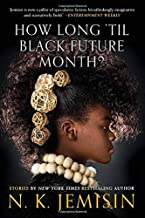
NK Jemisin – I can’t start a list for an article like this without telling you to go read Jemisin’s Hugo-winning Broken Earth trilogy posthaste. You will not be disappointed! She also has a fabulous book of short stories out, When Will It Be Black Future Month?

Nalo Hopkinson – I’ve read several of her books, most recently The Salt Roads and Brown Girl in the Ring. Both are excellent works of speculative fiction that explore privilege, social status, and race in beautifully rendered narratives, heavy with Afro-Caribbean cultural influences.
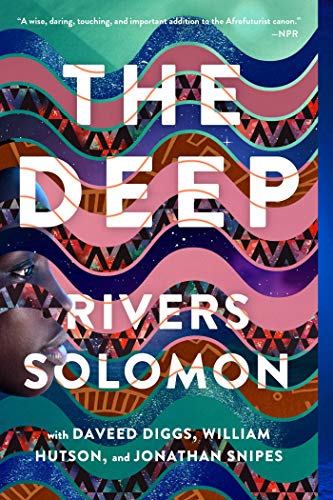
Rivers Solomon – An Unkindness of Ghosts is set on a generational spaceship that has been divided into social classes correspondent with where one’s living quarters are situated. They have a second book, The Deep, about water-dwelling descendants of African slave women who were thrown overboard while crossing the Middle Passage. Extra diversity info: Rivers Solomon identifies as nonbinary and on the spectrum.

Octavia E. Butler – one of the queens of “traditional” SFF, Butler’s Xenogenesis trilogy, beginning with Dawn, is the story of Lilith, a woman cryogenically frozen by the Oankali. These aliens survive by genetically merging with other species. They wake Lilith up when Earth becomes habitable again and Lilith has to decide if she will support the Oankali’s methods of saving humanity or if she will side with humans, even if it means extinction.

Roxane Gay – OK, so she wrote Black Panther: World of Wakanda and is well respected in the SFF community. But I really want everyone to read Gay’s memoir, Hunger, which explores topics such as sex, food, body image, and health through the lens of her own personal experiences. Also, her book of essays, Bad Feminist, is a must-read for everyone, whether you identify as feminist or not.

Karen Lord – her book The Best of All Possible Worlds explores topics ranging from technology to sexuality to injustices by telling the story of the Sadiri, whose home world was obliterated by another species.

Walter Mosley – Mosley is probably best known for his Easy Rawlins hard-boiled mystery series, and that is indeed a delightful series to read. However, Futureland is a collection of nine short stories about a future society divided by technology and wealth. Kind of like society today.

Victor LaValle – LaValle’s novel The Ballad of Black Tom takes Lovecraft’s Cthulhu mythos for a spin by narrating the tale from the perspective of a Black man working for the protagonist, Robert Suydam.

Nisi Shawl – Everfair is Victorian! Afro! Steampunk! It speculates on what the world would look like if the tribes of the Congo had developed steam power before the Belgians colonized their land.

References

Cadenhead, R.. (2018, August 19). N.K. Jemisin’s 2018 Hugo Award Best Novel acceptance speech [Video]. YouTube. https://www.youtube.com/watch?v=8lFybhRxoVM.

Romano, A. (2018, August 21). “The Hugo Awards just made history, and defied alt-right extremists in the process.” Vox.com, retrieved from https://www.vox.com/2018/8/21/17763260/n-k-jemisin-hugo-awards-broken-earth-sad-puppies.