book review

Sistersong as Social Narrative

In modern society, it can feel nearly impossible to escape from news focusing on politics, social issues, or conflict. Regardless of where one falls on the social or political spectrum, there is no escaping the fact that these topics are instrumental in shaping the cultural narrative. Exploring the implications of these topics is similarly vital and, as readers of historical fiction well know, an ideal place to do so is within the pages of a book. Lucy Holland’s Sistersong examines several social and political topics through the fascinating lens of a forgotten character from a traditional folk ballad. 

Sistersong centers around three sisters, children of King Cador of Dumnonia, whom Holland interprets as the sisters from the ballad “The Twa Sisters.” Riva is the eldest of the three, scarred for life by a fire; Keyne, the middle child, battles with her family to be accepted for who she truly is; and Sinne, the youngest, is spoiled and thoughtless in her pursuit of romance. When a mysterious warrior, Tristan, arrives at their father’s stronghold with urgent news about an imminent invasion by a dangerous Saxon king, a chain of events is set off that will affect the sisters in unimaginable ways. Aided and mentored by the fictional Myrdhin, stymied by the historical Gildas, the royal sisters embark on their own journeys to become the people they were meant to be. 

Throughout the novel, there is a recurring theme of agency. “The Twa Sisters” is a murder ballad in which a man comes between two sisters and “even the bonds of sisterhood are not strong enough to withstand the sexual jealousy that leads one sister to murder the other.” Holland believes the genesis of such ballads can be placed directly from the limited role women had in society. She tackles the question of agency by giving the sisters control over their fates while also acknowledging the social role expected of them. Riva, Keyne, and Sinne, as royal daughters, were expected to marry men their father chose for them based on political alliances. This expectation is fundamentally at odds with Keyne, who identifies as male and battles daily to be recognized as such by his family. Disregarding Keyne’s identity and refusing to use masculine pronouns for him is a symptom of erasure. This misuse of language and deliberate forgetting of people because it “does not fit with the narrative upheld by the patriarchy” partially explains a lack of gender fluid or transgendered people in much of the historical record, despite evidence that these identities are not found only in the modern world. 

Holland says, “The absence of people like Keyne is indicative of the way they are written out of the dominant social narrative. In writing Sistersong, I felt it was vital to restore such people to a society in which they undoubtedly participated.” Holland envisioned Keyne’s identity as an explanation for why “The Twa Sisters” initially referenced three siblings but by the end, there were only two mentioned.

Holland’s novel begins in 535 C.E., in post-Roman, pre-Saxon Britain. She describes it as a liminal moment in time, an ideal term to apply to the political, social, and even spiritual shifts that were occurring. Further, the discovery of a Romano-British settlement near her home in Devon intrigued Holland, as well as the relative lack of primary sources and the fact that the region was one of the last in Britain to come under Saxon rule. As such, she felt that it was a “perfect setting for a folktale that would draw heavily on myth as much as history.” Sistersong balances on that fine line between myth and history, which readers see in Holland’s use of Christianity, paganism, and pure magic. This commingling of religions was not fictional. As Holland explains, the installation of Christianity into Britain “was not a smooth or straightforward process. Tensions between these two spiritualities led to a complicated fusion of beliefs…in which both religions were practiced alongside each other, vying for control of a nation’s collective soul.” Religious and political issues were also overshadowed by the steady migration of the Saxons throughout Britain. 

When dominant groups begin to shift, as they are doing in Sistersong, the intersection between the groups and the way they write the social narrative can cause a great deal of conflict. Holland exemplifies such conflict in the characters of Myrdhin and Gildas. Myrdhin is a variant of the Arthurian wizard Merlin; Gildas was a historical monk who lived in the 6th century. His major work was De Excidio et Conquestu Britanniae (On the Ruin and Conquest of Britain), which was an excoriation of the five most recent rulers and ecclesiastical leaders of his time. Myrdhin embodies the waning strength of druidism and other pagan religions in the face of the rising power of Christianity and its ability to convert kings to the new faith. Gildas reflects the sense of inevitable change that came to British society alongside his religion. The conflict between Myrdhin and Gildas was natural – they did represent opposing religions, after all – but Holland admits that her portrayal of Gildas might have been “overly influenced by his vitriolic treatise.” She is quick to point out, though, that she didn’t intend for him to be the stereotypically evil priest common to historical fantasy: “I am sure he believed wholeheartedly in the benefits that Christianity could bring to Britain; it’s this belief that directs his actions in the book. He is guilty only of intolerance…but it’s worth remembering, of course, where intolerance can eventually lead.” 

There are so many pertinent topics covered in Lucy Holland’s enchanting novel, Sistersong, proving again that historical fantasy is an excellent medium in which to examine them. The issues that occupy our thoughts today are much the same as they were in early medieval Britain, at least in this beautifully written novel. Holland’s skill brings to life a mysterious period of history and shows that history, myth, and folklore can intersect in wonderfully relevant ways. 

This article was originally published by the Historical Novel Society: Sistersong as Social Narrative
book review · sci-fi · Star Trek

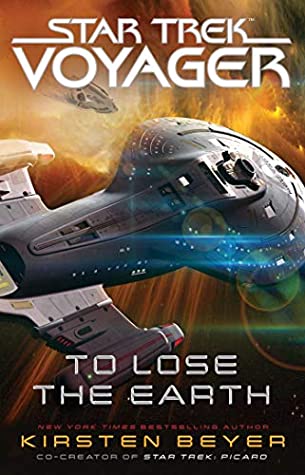
To Lose the Earth (Star Trek VGR)

ST VGR to lose the earthTo Lose the Earth by Kirsten Beyer

Genre: sci-fi

Setting: spaaaaaaaaaaaaace!

I read it as a(n): paperback

Source: my own collection 

Length: 354 pp

Published by: Gallery Books (2020)

Her Grace’s rating: 2 out of 5 stars

**Spoilers abound!**

This Voyager novel, roughly two years in the making, continues the story of the Full Circle Fleet, led by Admiral Kathryn Janeway and Captain Chakotay. Here, Lt Harry Kim had been aboard the medical ship Galen to visit his girlfriend, Nancy Conlon and their baby, who had been placed in a gestational incubator. Suddenly, the Galen explodes. Or seems to. In reality, it was transported thousands of light-years away from the rest of the fleet by an alien species of unimaginable power. Now the crew of the Galen has to try to repair their supremely damaged ship, figure out where they are and how to get back to the fleet, and what the hell the aliens want.

So, it’s known among my Star Trek-loving friends and family that I have never cared very much for Beyer’s Voyager novels. I liked Christie Golden’s a lot better. I get impatient with story arcs that go over a dozen books and a decade or more to complete. That seems to be the way Trek novels are going to go forever now, though, and I hope that changes. I miss the old numbered paperbacks where one book equals one story, for the most part. Anyway, Beyer is not a bad writer. At all. I just don’t care for her take on VGR. I think she did a much better job writing for the Discovery series. 

That all isn’t really relevant to this novel, though, just general griping. For THIS book, Beyer’s author’s note implies that this is the final Voyager novel. All I can really think of to sum up my thoughts on that is, “That’s finally over with.” I should feel sad about it, because I loved Voyager, but I don’t. This one ended with so many unanswered questions and loose ends. If it really is the final VGR novel, then it was terribly done. Maybe S&S plans to pass the torch to another author to finish up or carry on the VGR storyline. If so, then I have a list of things I hope to have explained:

  • I’m still waiting to hear how a couple in the 24th century accidentally gets pregnant. Surely by then they can turn off someone’s ovaries or something until she is ready and willing to conceive. That is still a plot device I simply can’t buy.
  • Where is Reg Barclay going to go? His decision was left hanging.
  • What about Gwyn? Her connection to the fetus was never explained to Harry or Nancy. Is she going to get to be involved in the child’s life? Will Harry transfer his affections to her since Nancy finally figured out that none of this is what she wanted and bailed?

That’s just a start. I’m sure I can come up with some more.

Also, this book had so. Much. Technobabble. I get that technobabble is fun and it is a very Star Trek thing to do. Normally I don’t mind it; I even like it. But there was so much here that I found myself skimming over many rather large sections just because the technobabble was ridiculous. It felt like filler. As a writer, I get that writing is really hard. But please, if you are struggling with the plot and feel the need to fill it with pretty unnecessary stuff to get from point A to point B, take a break and put it down and figure out what to do better.

I’ve never been a Janeway/Chakotay shipper, though I know many Trekkies are. I just never thought they had romantic chemistry at all. So their whole relationship is not a thing I care about one whit. That said, I do feel bad for the folks who ARE J/C shippers. They waited years, not only for that relationship but for this specific book, and all they get in the end is a single page wedding at the end? No conversation among the characters about it? Nothing? That is really not cool. 

So yeah, this was one of my least favorite Trek books, in any series, in quite some time. If this is the end, then I’m not sorry to see it go after all this. 


Even the books I don’t like often have some great lines. Some of my favorites from this book are below:

  • Intelligent life exists on a continuum. …I didn’t know…how far humanity had yet to go or how mortified I could be by our ignorance. It’s simply intolerable. … It turns out humanity has spent too much time in the children’s section of the universal library, and I’m not content to allow that state of affairs to continue indefinitely. Why are we here if not to transcend ourselves? And how are we to do so if we shrink from the work transcendence requires? (90)
  • Fear was a powerful thing. It led people down paths that felt true, even if they were lies. (98)
  • But the whole thing with new people, aliens or not, is that you can’t go in just looking at the ways you are different and decide you’ll never get along. You have to look for the ways you are the same. They can be hard to find but they are almost always there. And once you find a little common ground, that’s how you get to know each other better. (177)
  • But for now, and probably forever, it’s just going to be you and me. It might be a long time before you even realize that’s unusual. Although it isn’t, necessarily. Lots of children are raised by one parent, even if their parents are married. Some families have more than two parents in a relationship. The Andorians come to mind. Anyway, point is, families come in all kinds of shapes and sizes and for now, we are a family of two. (348)

book review · sci-fi

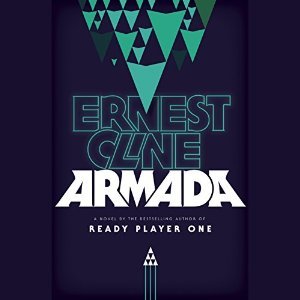
Armada

armadaArmada by Ernest Cline 

Genre: sci-fi

Setting: Portland, OR, United States, Earth, the solar system

I read it as a(n): audiobook

Narrator: Wil Wheaton

Source: my own collection 

Length: 11:50:00

Published by: Random House Audio (2015)

Her Grace’s rating: 2 out of 5 stars

Zack Lightman is super into gaming, in particular a game called Armada, which centers around an alien invasion of Earth. Players get to control various battle drones and ships to stave off the alien attack. So it is understandable that Zack thinks he’s losing his mind when he sees a spaceship exactly like those in Armada flying around outside his school window. But nope, the aliens are real and the game developers created the game, in tandem with an actual Earth Defense Alliance, to train millions of civilians to fight when the actual aliens arrive. Only of course it isn’t as straightforward as that. 

Zack has an anger problem because his father, Xavier, had died when Zack was just a baby. He died in a stupid accident at his job in a waste facility installation. He literally died getting blown up by human shit. That would cause most people some kind of angst, I would imagine. But he still managed to pass his love of gaming and 1980s pop culture to his son because Zack’s mother kept that part of her husband alive for him. His anger makes for a great gamer, though, and so when Zack learns the truth about the aliens and is recruited into the EDA, he jumps at the chance to defend Earth. 

So this book was ok but it was not nearly as good as Ready Player One. I found it to be entirely predictable. Entirely. Literally not one thing came as a surprise to me, there was no bated breath, no anxiety about what would happen, nothing. My granny could have written it, and she hates sci-fi (I’m not really sure how I’m related to her sometimes). I know the publisher’s blurb claims that it is intended to subvert a lot of sci-fi tropes. But I don’t think it did that. It basically just copied them (mostly from The Last Starfighter, Ender’s Game, and ET, from what I could tell) and provided nothing new to the genre, subversive or otherwise. I am quite disappointed since I really loved RP1 and had hoped Cline could pull this one off as well. But no. I didn’t hate it, but I didn’t like it all that much either. Mostly I kept listening because I think Wil Wheaton did a great job narrating it, as he always does. I just didn’t care about the plot or the characters enough to truly love it. Which makes me sad because I am a geek and am always ready and excited to embrace any aspect of nerdom. Oh well. Can’t always roll 20, I guess.

book review · books · fantasy

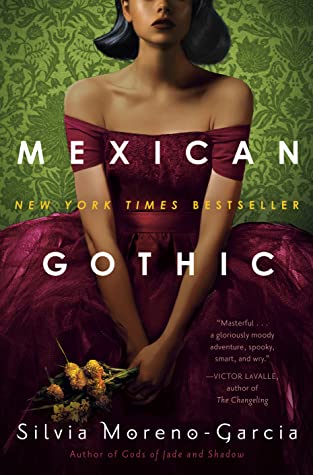
Mexican Gothic

mexican gothicMexican Gothic by Silvia Moreno-Garcia (Website, Twitter, IG)

Genre: Gothic fantasy

Setting: 1950s Mexico

I read it as a(n): hardback

Source: my own collection

Length: 301 pp

Her Grace’s rating: 3 out of 5 stars

Noemi Taboada is a young socialite in 1950s Mexico City. Her father is a wealthy merchant and the head of the family. As such, he is concerned about image and avoiding scandal. So, when his niece Catalina sends a letter to him that sounds completely unhinged, he wants to get to the bottom of that and fix whatever needs fixing before it hits the society pages in the newspaper. He sends Noemi to visit Catalina in her husband’s home manor of High Place in the remote Mexican countryside. Things go downhill from there. 

I really loved the first part of this novel. It was everything a proper Gothic novel should be – eerie, mysterious, dark, neglected, and so on. Very much felt like a Mexican Jane Eyre. I kind of lost the Gothic feel around 2/3 of the way through, when I think it felt more like a straight horror novel than Gothic. That said, I still really loved all of it, it just felt like it switched genre a little bit in the middle there. I wouldn’t even care that much except I’m not a huge fan of horror. 

I thought Noemi was a very believable character. She was sort of shallow and vain at first, but then we learn she wants to go to university to get a master’s degree in anthropology. She is something of a flirt and prefers the chase or courtship to being caught in her relationships, but she is self-aware enough to know it. She had hidden depths that reveal themselves nicely throughout the novel. She was a really well-developed character.

I didn’t think that so much about Catalina. I know that her flat personality was actually a part of the plot, but the glimpses we got from Noemi’s perspective about her were not really enough to give her much depth or make her into a fully-fleshed person in the story for me. She felt more like a prop than a person. 

The rest of the characters – Virgil, Francis, Florence, and Howard – were suitably developed for the roles they played in the novel. I don’t think they were super deep but they all did have certain nuances to their personalities and were fine for the purposes they served.

I especially loved how the house, High Place, was described. It was in the tradition of the best Gothic manor homes, like a cross between Thornfield Hall and the Haunted Mansion. Old, dusty, neglected, falling apart, mouldy, and of course it had a cemetery! Minus the mould, I would love to have a house like that. I’d put just enough money into it that it had proper amenities but keep the abandoned Gothic feel. 🙂 

Overall, I thought this was a fun read. Didn’t blow me away, but it was fun. Would certainly recommend.

book review · sci-fi

Nemesis Games (The Expanse #5)

nemesis gamesNemesis Games (The Expanse #5) by James S.A. Corey 

Genre: sci-fi

Setting: spaaaaaaaaaaaaaace! 

I read it as a(n): paperback

Source: my own collection 

Length: 532 pp

Published by: Orbit

Her Grace’s rating: 4 out of 5 stars

In book 5 of The Expanse series, the crew of the Rocinante all go their separate ways. Temporarily, of course. The crew are family now and the Roci is home. That doesn’t mean they don’t still have business elsewhere to tend to, though, and they do. Holden is the only one who stays put; Naomi goes to Ceres Station to deal with a family  problem, Alex goes to Mars with a vague idea of getting his ex back, and Amos goes to Earth to make sure the death of someone he cared about was natural or not. Naturally, the entire solar system goes up in flames while the crew is scattered every which way.

The political situation is fraught in this entry. A radical branch of the OPA is behind the most devastating attack in history, their attempt to carve out a place for themselves within the larger political landscape. Because terrorism totally works. That was sarcasm for anyone who can’t parse Kristen-speak. 😊 Holden tries to work with Fred Johnson to reign in the violent nutjobs while, elsewhere, Alex researches why ships are going missing, with some help from Bobbie Draper. Amos makes an unexpected new friend. Or old friend, depending on how you look at it. And Naomi finds herself in the middle of everything in some strange ways.

The last few entries of The Expanse series, I have hoped for the other primary characters – Naomi, Alex, and Amos – to be point-of-view narrators. I got my wish in this novel! All of the POV characters were the crew of the Rocinante. We get a glimpse into their histories and some parts raised more questions. I learned, though, that there are Expanse novellas that dive into their past selves in more depth, so I have no doubt I’ll be reading those at some point as well. Because I am a giant sucker for a good back story. 

I like that there was a theme of family and home woven throughout. Everyone kept reflecting on home in terms of their past, but now that isn’t home, it isn’t their family. Home is where you make it, and family is who you choose. Birth and blood don’t really factor into either of those unless you want them to. I liked that the crew knows with a deep certainty that they are each other’s family. 

All in all, another fun entry in The Expanse series. Can’t wait to read the rest!

book review · fantasy

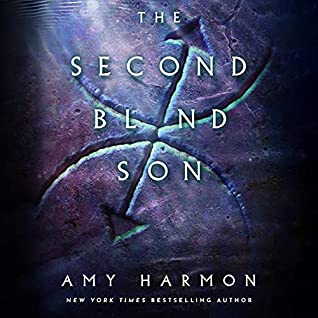
The Second Blind Son

the second blind sonThe Second Blind Son by Amy Harmon (Website, Twitter, IG)

Genre: fantasy

Setting: Saylock

I read it as a(n): audiobook

Narrator: Rob Shapiro

Source: my own collection 

Length: 15:58:00

Published by: Brilliance Audio (2021)

Her Grace’s rating: 4 out of 5 stars

The Second Blind Son is a sequel of sorts to Amy Harmon’s earlier novel, The First Girl Child. I say of sorts because this story ran concurrently to the events of TFGC, rather than portraying a continuation of that story. In this, the focus is on Hod, a blind man who is raised to be a Keeper of the Temple by Arwin, a cave keeper. Arwen has taught Hod how to listen, smell, feel in ways that are uncanny to help him compensate for his blindness. As a result, Hod is adept at hunting and fighting through the use of his heightened senses. He can identify the heartbeats of individual people, their specific scent, and so forth. And then one day, he rescues a girl who washes up near his cave from a shipwreck. Ghisla is the sole survivor from her people, the Songers, whose voices are ethereally beautiful, and she wants to die. Slowly, she and Hod become the best of friends and, when she uses a rune carved upon her hand, Hod is able to see. Their paths are often separated but they retain their connection through the years, through political upheaval, and across vast distances.

I loved this book so much. I really liked the way it wove into the earlier story of TFGC and made you remember events from that story alongside this new one. I hadn’t realised it was that sort of timeline, so I kind of wish I had reread TFGC before jumping into this one, but it in no way hindered the ease of following the story. It is just a thing I would have done to refresh my own memory. And yes, it can probably be read as a standalone, but I truly think readers are short-changing themselves not to read TFGC first. Not only will you become familiar with the world of Saylock, but the characters from that book who make appearances in this one are familiar and welcome. You’d miss out on that if you only read TSBS as a standalone.

The narration was excellent as well. The narrator did some different voices for various characters, but only enough to differentiate them within the scene. He didn’t go crazy with melodrama, he just read the story in an engaging way. There were times when he sounded just like Tuvok, though, so that was a bit of cognitive dissonance. I kept expecting Star Trek. 

The character development throughout was decent, though I would have liked to get more scenes with the other Daughters of the Temple. They were an important part of the story but I feel like I didn’t get to know them very well. Maybe future Saylock books will focus on them more in some way. Ghisla becomes one of the Daughters when she is forced to leave Hod’s cave and is given in lieu of a clan chieftain’s daughter to the Keepers. There, she is known as Liis of Leok and no one learns her true identity. Hod is the only one who knows her real story. Also, YAY for the book sample on Amazon having the spelling of characters’ names! I would not have gotten some right from just listening to it.

I thought it was interesting how King Banruud was a hateful, horrible person but Ghisla could help keep him from raging too much with her music. I don’t remember his madness at all from TFGC, but here it struck me as horrific, persistent tinnitus. I know that can make people crazy – mine sometimes wakes me up – but if one is already crazy and cruel to begin with, what new horrors could the condition bring about? Doesn’t make his actions at all ok, but I thought it was an interesting reading of madness. 

Keeping Hod and Ghisla apart in distance but giving them the means with which to communicate with each other was a great touch. It allowed them to grow and mature, and their relationship did likewise. The rune magic that helped them speak to one another really keeps things humming along for readers so we can sense their desire to be together but we don’t get bored by the separation. 

Probably there is a message in there about how true love doesn’t need to see to recognize one’s beloved. Or something. Ick. I don’t really do romance, though I find this sort of non-melodramatic, non-bodice-ripping romance within many fantasy novels to be entirely acceptable. 

Overall, a thoroughly lovely story, nicely paced, and I can’t wait to read more of Harmon’s fantasy novels!

books · editorial · travel

Armchair Traveler, pt 2

still-life-379858_1920As I had mentioned in my earlier post on this topic, literature is a fantastic way to get to know a new culture and get to travel a bit without leaving the comfort of your own home. If you can’t travel for whatever reason – health, safety concerns, finances, etc. – literature can provide a means of escape without actually going anywhere. Through literature, we can learn about new cultures through food and cuisine and then make an adventure for ourselves by trying to track down those cuisines in our own locations. Because of my own armchair tourism, I have discovered restaurants (ranging in definition from actual sit-down establishments to hole-in-the-wall joints that barely have room for a folding table and a couple plastic chairs to sit at while waiting for our food to be prepared in a mysterious and highly suspicious back room) which serve traditional Hawaiian, Ethiopian, Vietnamese, Szechuan, and Middle Eastern dishes. I had to do a bit of research and driving to get to some of them, but the experience was worth it, and helped bring to life some of the books I’ve read which referenced specific dishes.

Continuing with my armchair tourism for physical locations is, I find, easier even than with food. Living in Arizona, there are only so many places I can go physically that are nearby that even remotely resemble the locations I read about in books. We don’t have jungles in Arizona. It doesn’t look like England (woe!) or Africa, and certainly not anywhere Arctic. The culture, such as it is, is entirely different from any of those places. Giving up on physically taking myself to experience some of the places I read about, rather than stymying me, frees me to read liberally from around the world. I know it is unlikely I will ever get to go to Beirut, Jerusalem, Dubai, Tehran, Istanbul (maybe I’ll get to go there one day), Petra, Morocco, Egypt, the Congo, the Amazon, so I take it as a challenge to read as much as I can about the places and cultures there now. Oh, the places I’ve gone…

I’ve traveled to Jeddah, Saudi Arabia, and witnessed how one person learns to handle being simultaneously young, female, and live in a place where there are religious police. Such is the story of Zarin Wadia in A Girl Like That by Tanaz Bhathena. Zarin moves from her home in Mumbai to Jeddah after the death of her parents. She deals with bullying at school, an abusive aunt at home, and an uncle who won’t defend her. Until I read this book, I had never known where Jeddah was exactly, though I knew it was a major stop on the route to Mecca for devout Muslims making their hajj. I had never heard of the languages of Gujarati or Avestan. I had never known about the minority of Zoroastrians living in Saudi. This book helped me see those places, feel the coastal breeze coming off the Red Sea, and feel the hot, spice-laden air. Not that I ever need an excuse to eat Middle Eastern food, but while I was reading this book, I’m pretty sure I ate my weight in take-away dolmas, manakeesh, and shawarma from my favorite local hummus spot. Also, I cried my eyes out because of this book as well. It was an utterly, beautifully devastating book.

All This I Will Give to You by Dolores Redondo took me to Spain. In this book, author Manuel Ortigosa’s husband Alvaro dies in a car crash, and Manuel learns that Alvaro has kept secret the fact that he is Spanish aristocracy. This novel, set in the Galicia region of Spain, is redolent with the scent of gardenias, vineyards, and lush greenery. The rolling hills tumbling down to the sea, the air carrying the sound of the bells from the cathedral at Santiago de Compostela, all mingle into a miasma of history and intrigue throughout this novel, carefully crafted by Redondo and faithfully translated by Michael Meigs. The cathedral at Compostela has long been a destination for pilgrimages and remains a source of interest for medieval scholars for its importance during the Crusades in particular. When reading this book, I sampled a few local Spanish restaurants, discovering in the process that I love tomato jam but, surprisingly, do not love paella, even though it looks an awful lot like risotto.

Small Country by Gaël Faye took me to 1992, Burundi, and showed me the genocide from the perspective of a child. Gabriel, living with his friends in a wealthy neighborhood for ex-pats, is sheltered by his French father from politics and is entirely ignorant of the instability and poverty the rest of the country is subject to. He never understood that he was more protected than many others around him, including their own household staff, some of whom disappeared and were never seen again. Throughout this novel, amid the bougainvillea and plantain, the damp air hangs heavy with blood, sharp with gunpowder. The traditional foods of red kidney beans, onion, chili powder, and plantains cooked in palm oil waft across the page, ubiquitous and soothing amidst the turmoil of a lost childhood. I tried this recipe for kidney beans and plantains from Global Table Adventure and it was delicious.

I’ve also been to Saigon and Hanoi, Vietnam, with Mai, a girl of Vietnamese heritage from California in the middle grade novel Listen, Slowly. Her Vietnamese grandmother is going back to her home village after receiving word that her husband, long thought to have been killed when they had escaped the country during the Vietnam War, may still be alive. Mai does not want to go, doesn’t care about her heritage, and doesn’t want to play caretaker to her grandmother for the summer, and yet she gradually falls in love with the culture, people, and location. As with many other kinds of cuisine, I really don’t need an excuse to eat Vietnamese food, yet while I was reading this charming little book, I am certain I ate my weight in pho, which is just about as perfect a comfort food as I can imagine.

Pairing food with literature is certainly nothing new. As mentioned earlier, food and travel writing remain popular genres in publishing. My love for these kinds of literature stems entirely from their ability to teach me about new kinds of food to try, because it is through food and shared meals that so many people learn to become friends, sometimes even against their own desires. We learn about new places, values, and cultures and, through them, we learn greater empathy. After all, “The shared meal elevates eating from a mechanical process of fueling the body to a ritual of family and community, from the mere animal biology to an act of culture” (Pollan 192). Whether the meal is shared literally, with people at the same table as you, or metaphorically in the pages of a book while you eat the same food the characters are eating, food is a unifying force the world over.

Have you been inspired to try new foods based on books you have read? Please share the experiences (and the recipes, if you have them!)!

Pollan, Michael. In Defense of Food: An Eater’s Manifesto. Penguin, New York, 2008.