book review

Books about early humans

Early human history has always been a source of fascination to me. Who wouldn’t be curious about the origins of humanity and our evolution? It’s one of the grandest questions of the thinking mind, wondering about our long journey along the road of evolution and wanting to understand more about our distant ancestors. While I make no comparisons to myself and great thinkers, I’ve always tried to follow along with various bits of anthropology and the science of human evolution. I want to be as scientifically literate as a layman can be. I have a long way to go, but it’s an interesting journey, if nothing else. 

Then I saw this article and was utterly enthralled. I have never been a person to feel threatened by the idea that Neanderthals could teach things to Homo sapiens, or that the two likely interbred, or that they were here first. I like the idea that Neanderthals and H.sapiens could have lived side by side and maybe taught each other things. But the fact that these paintings predate ones done by H.sapiens is awesome. I love the possibility that maybe – just maybe – H.sapiens learned to symbolically and creatively express ourselves because we were taught to do so by our Neanderthal cousins. I don’t know that that could ever be proved – at least not without a lot more cave paintings – but it is a really interesting thought that we learned art from Neanderthals. Maybe someone will write a book about it.

Related to this article, of course, is the fact that the first discovery of an Australopithecus afarensis skeleton happened on this day in 1974. Happy 48th birthday, Lucy, plus or minus 3.2 million years!

So, because it’s what I do, I gathered a list of books, both nonfiction and fiction, about early humans. What others would you add to the list?

  • From Lucy to Language by Donald C. Johanson and Blake Edgar
  • Sapiens by Noah Yuval Harari
  • The Clan of the Cave Bear by Jean M. Auel
  • Lone Survivors by Chris Stringer
  • The Last Neanderthal by Claire Cameron
  • How to Think Like a Neanderthal by Thomas Wynn and Frederick L. Coolidge
  • The First Human by Ann Gibbons
  • The Fossil Chronicles by Dean Falk
  • Shaman by Kim Stanley Robinson
  • Seven Skeletons by Lydia Pine
  • The World Before Us by Tom Higham
book review

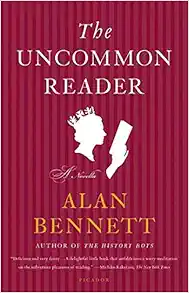
The Uncommon Reader

An Uncommon Reader by Alan Bennett

Genre: literary fiction

I read it as a(n): audiobook

Narrator: Alan Bennett

Length: 2:41:00

Her Grace’s rating: 4.5 out of 5 stars

This was a totally delightful little diversion. The Queen has discovered a love of reading and it’s affecting her ability to do – or rather, her interest in doing – her royal duties. Her family, government officials, and courtiers are Not Amused by her newfound obsession, either.

Mostly I thought this was a witty little story with several places that made me laugh out loud. I admit I know little of Queen Elizabeth’s personal life so I have no idea if she was never a reader until later in her life or not. I do know she basically had to ask to be educated because she wasn’t supposed to be the monarch and then, well. Whoops. So maybe she wasn’t much of a reader. What was funny though was that all her snobby officials and courtiers didn’t have a clue what she was talking about when making references to some very famous authors and their books. So they came across as boneheads, which I am sure was Bennett’s intention. 

I did think it was kind of sad too that no one other than Norman, the former kitchen boy, was at all supportive of her reading. They all treated her like either a dumb old woman in need of humoring or someone who shouldn’t have any personal interests and just do boring duties 100% of the time. I don’t care who you are, everyone ought to have interests outside of work and support of friends or family. 

There is a lot of social commentary in this small book, from class and social rank to the obligations a ruler owes to their country to the many virtues of literature. Lots to think about. My book club picked this as our next read and I’m glad. I imagine it will generate some great discussion.

book review · sci-fi

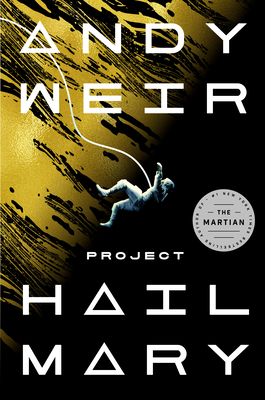
Project Hail Mary

Project Hail Mary by Andy Weir

Genre: sci-fi

I read it as a(n): audiobook

Narrator: Ray Porter

Length: 16:10:00

Her Grace’s rating: 5 out of 5 stars

Ryland Grace is an astrobiologist who wrote a paper that speculated that life didn’t necessarily need water to evolve. People laughed at him so he left academia and went to teach middle school science. A friend from his academia days remained in touch and eventually she told him that there is a line of particles beaming from the sun to Venus. It has the unfortunate effect of dimming the sun, which will decrease in luminescence by about 20% in a matter of a couple decades. That would effectively mean the end of humanity. Eventually it is discovered that the particles are actually life forms. Unfortunately for Grace, they’re still made out of water. They get named Astrophage.

Fortunately, a top scientist remembered Grace’s paper and was in a position to recruit him to her project to save the Earth. By recruit, I mean conscript and by project, I mean desperate, seat of your pants, last-ditch attempt to save the world. Hence, Project Hail Mary. Grace and 2 other crewmates get launched out of the solar system to try to discover why Tau Ceti, the star at the hub of the Astrophage lines isn’t getting dimmer, and in that discovery, to find a way to save Earth. Except Grace is the only one of his crew to survive the years-long trip via medically-induced coma. So now the fate of the entire planet rests solely on his shoulders. Good thing he meets a really cool friend to help him out. 

I really fucking loved this book! I’ve heard some describe it as The Martian on a spaceship but I didn’t think so at all. It was fun and anxiety-inducing but in different ways from The Martian. I really, REALLY loved Rocky. He is my favorite character entirely. 

I loved the interactions between Rocky and Grace, even though I thought they learned each other’s language awfully fast. Though I suppose when you’re in dire straits, you can do a lot of things you didn’t expect. The humor was exactly right and exactly what I expect from Weir. The action was fast and exciting, the plot was engaging. There were a couple times I cried. 

SPOILER NEXT!! I think literally the only thing I didn’t love about this book was that it wasn’t clear to me if Ryland sent all his info about the Erideans back to Earth along with the data on the astrophage and taumoeba. Maybe I missed it somehow but if he did not send that, then I think it was a missed opportunity. If he did, then it is totally an opening to a follow-up book from Weir about how humans and Erideans become interstellar friends. 

Favorite lines:

  • “So…when you say ‘a certain amount of authority’…” 

“I have all of the authority.” (39)

  • I gasped. “Wait a minute! Am I a guinea pig? I’m a guinea pig!”

“No, it’s not like that,” she said.

I stared at her.

She stared at me.

I stared at her. 

“Okay, it’s exactly like that,” she said. (58)

  • I check the corresponding star in my catalog: It’s called 40 Eridani. But I bet the crew of the Blip-A call it home (149).
  • “And just like that another climate denier is born. See how easy it is? All I have to do is tell you something you don’t want to hear” (234).
  • We have an unspoken agreement that cultural things just have to be accepted. It ends any minor dispute (279).
  • Sample device radio signal strong,” Rocky says. “Getting closer. Be ready.

“I’m ready.”

Be very ready.

“I am very ready. Be calm.”

Am calm. You be calm.” (317)

  • Usually you not stupid. Why stupid, question?” (347)
  • “We’re as smart as evolution made us. So we’re the minimum intelligence needed to ensure we can dominate our planets” (349).
  • “Rocky, you can make screws, right?”

Yes. Easy. Why, question?

“I dropped one.”

Hold screws better.”

“How?”

Use hand.

“My hand’s busy with the wrench.”

Use second hand.

“My other hand’s on the hull to keep me steady.”

Use third han…hmm. Get beetles. I make new screws.

  • “Good. Proud. I am scary space monster. You are leaky space blob.” He points to the breeder tanks. “Check tanks!” (421).
  • Erid will live! Earth will live! Everyone live!” He curls the claws of one hand into a ball and presses it against the xenonite. “Fist me!” 

I push my knuckles against the xenonite. “It’s ‘fist-bump,’ but yeah” (422).

book review

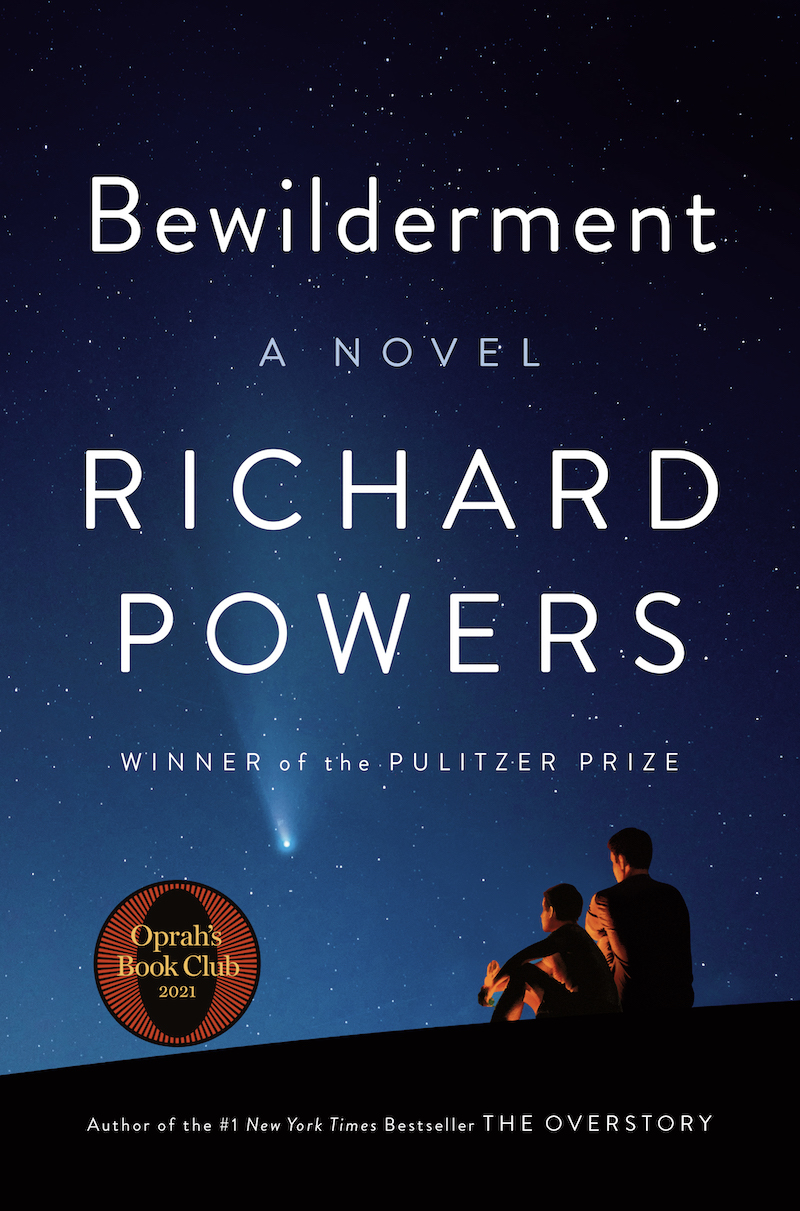
Bewilderment

Bewilderment by Richard Powers

Genre: sci-fi? Maybe political fiction? Maybe dystopian?

I read it as a(n): hardback

Length: 278 pp

Her Grace’s rating: 3 out of 5 stars

Theo Byrne is a struggling single father. His son, Robin, has behavioural issues and seems to be on the spectrum. They are both grieving the loss of Robin’s mother, Alyssa, who died in a car accident a few years previously. Theo is an astrobiologist and uses computer programs to theorise about the climates of other planets. The information is then used to try to help correct Earth’s own climate crisis, which is worsening rapidly thanks to a belligerently anti-science government and a rise in religious fundamentalism.

If it sounds familiar, it should. This book was clearly written in response to the four horrendous years of the Trump administration, their ignorant and anti-scientific approach to as many things as possible, the sharp rise in Christian nationalism (AKA, Nazism), and the global climate crisis speeding up. 

This book made me mad and it made me scared. I was already mad and scared enough as it was, so this was not, perhaps, the best thing for me to read when I am already stressed out and anxious. I do think this should be on the curriculum for all contemporary literature classes, and it could probably find a place in at least the recommended reading of environmental science and behavioural science programs. 

The plot itself is fine. It was really sort of a modern take on Flowers for Algernon, so in that, it was pretty predictable. I felt bad for Theo because he had such a hard time finding help for Robin. I 100% disagreed with his surprisingly anti-medicine attitude, though. He didn’t want to give Robin vaccines because of the miniscule amount of mercury in some of them. I think there is more mercury in the fish we eat than what’s in vaccines. There was also a line in there about how no doctor can diagnose his son better than he can. Well, yes. Yes, they can. A parent is obviously more familiar with the kinds of emotional and behavioural outbursts a kid has, but unless they are also a doctor with a specialty in XYZ issues, then no, they can’t diagnose their own kids just as well as a doctor can. It’s why we have doctors in the first place. So that part really turned me off.

Overall, I liked it but the more I think about it, the more I realise that is all. I liked it, I didn’t love it as much as I wanted to. 

Favourite lines:

  • I wanted to tell the man that everyone alive on this little fluke planet was on the spectrum. That’s what a spectrum is. I wanted to tell the man that life itself is a spectrum disorder, where each of us vibrated at some unique frequency in the continuous rainbow (5). 
  • I’d visit Enceladus and Europa and Proxima Centauri b, at least via spectroscopy. I’d learn how to read the histories and biographies of their atmospheres. And I’d comb through those distant oceans of air for the slightest signs of anything breathing (48). 
  • …God isn’t something you can prove or disprove. But from what I can see, we don’t need any bigger miracle than evolution (59). 
  • The library was the best dungeon crawl imaginable: free loot for the finding, combined with the joy of leveling up (76).
  • Had mass extinction ever once felt real? (81).
  • In such steadiness, there was no great call to assist or improvise or second-guess or model much of anything.
  • He thought about that. Trouble is what creates intelligence?
    • I said yes. Crisis and change and upheaval.
    • His voice turned sad and wondrous. Then we’ll never find anyone smarter than us (114).
  • You know how when you talk to someone stupid and it makes you stupid, too? (116).
  • Have you ever considered what is going on inside a leaf? I mean, really thought about it? It’s a total mind-fuck (185).
  • Almost nobody knows this, but plants do pretty much all the work. Everybody else is just a parasite (215).
  • I knew then why these men wanted to kill this project. The cost overruns were just an excuse. The country’s ruling party would have opposed the Seeker even if it were free. Finding other Earths was a globalist plot deserving the Tower of Babel treatment. If we academic elites found that life arose all over, it wouldn’t say much for humanity’s Special Relationship with God (218).