book review · books · fantasy · random · sci-fi

A random list of books based on an IG challenge

Greetings, fellow book nerds! I hope your summer is off to a good start and that you have many adventures to look forward to. I am looking forward to a couple short trips and, of course, making some kind of dent in my TBR. Which is hard because I seem to be in a reading slump and I haven’t read very much lately. 

Sometimes when I’m in a reading rut, I will try reading a genre that is completely opposite of the book I just finished. That often helps me get back on track. That doesn’t always work, though, and then I have to try something else. This time, I went to Instagram and dug around in the #bookstagramchallenges hashtags. I also follow the bookstagramchallenges channel to see a variety of book and reading challenges. Sometimes those are great for kicking me out of a reading rut. Plus, they’re just fun! Also, they’re like lists! I love lists. I love getting to cross things off of them. 

For this, I absolutely cherry-picked the prompts I wanted to use from a few different challenges. I went with an all science fiction and fantasy theme for these, since I’m in a big sci-fi mood. I also recognize that there are entirely too many books listed here. I had a hard time picking just one for some of the questions! 

  1. Last, current, and next reads: The Buried Giant by Kazuo Ishiguro; The Big Book of Science Fiction, edited by Ann and Jeff Vandermeer (print) and Seveneves by Neal Stephenson (audio); The Sound of Stars by Alechia Dow. 
  2. Favorite SFF series: Sci-fi – The Expanse series by James S.A. Corey; Fantasy – The Dragonriders of Pern by Anne McCaffrey.
  3. Side characters you wanted to see more of: Kamazotz, the Death Bat from Gods of Jade and Shadow by Silvia Moreno-Garcia. I guess it isn’t really a proper sidekick, but I would have a ball flapping around on a death bat while on epic quests. 
  4. Quick reads: All Systems Red by Martha Wells. We need more Muderbot in our lives!
  5. Sad reads: Never Let Me Go by Kazuo Ishiguro; “There Will Come Soft Rains” by Ray Bradbury; and several of the stories in Alexander Weinstein’s excellent collection Children of the New World, in particular the titular short story as well as “Saying Goodbye to Yang.” 
  6. Funny reads: Job: A Comedy of Justice by Robert A. Heinlein (possibly the most hilarious book I’ve ever read); Redshirts by John Scalzi; How to Live Safely in a Science Fictional Universe by Charles Yu. 
  7. Weapon on the cover: The Rising of the Moon by Flynn Connolly.
  8. Favorite mentor: Ged from The Earthsea trilogy by Ursula K. Le Guin. 
  9. Books and drinks: Split and Scumble, both from Terry Pratchett’s Discworld series! And, although these aren’t from books, honorable sci-fi drink mentions are: Green (AKA Aldebaran whisky) from the episode “Relics” from Star Trek TNG and A Warrior’s Drink (prune juice eww!) from the TNG episode “Yesterday’s Enterprise.”
  10. Unpopular opinions: Only Dune is good in the Dune series. The first rule of reading the Dune series is that you should only bother with Dune, not the rest of the books.
  11. The chosen one: Bastian Bux from The Neverending Story by Michael Ende.
  12. Revenge plotlines: Ancillary Justice by Ann Leckie.
  13. Favorite creatures: Mother Thing in Have Space Suit, Will Travel by Robert A. Heinlein; the Tendu, the frog-like beings in The Color of Distance by Amy Thomson; and the hen with a demon in her in Nettle and Bone by T. Kingfisher. 
  14. Loyal and noble: Robbie the robot, the titular character in Isaac Asimov’s short story “Robbie.”
  15. Book that I would recommend to new SFF readers: The Long Way to a Small, Angry Planet by Becky Chambers. For fantasy, I’d go with Spinning Silver by Naomi Novak or Daughter of the Forest by Juliet Marillier.
  16. Maps: There’s an awesome map in Cyteen by C.J. Cherryh. Also, I know I mentioned her several times in this post,  but the Dragonriders of Pern series by Anne McCaffrey has some excellent maps as well. I spent hours as a child poring over those, visualizing the various weyrs and halls of the planet. 
  17. Favorite anthology: The Paper Menagerie by Ken Liu; Black Thorn, White Rose, edited by Ellen Datlow and Terri Windling (any anthology edited by either of these women are excellent); and Mirrorshades, edited by Bruce Sterling. Click on the clicky-link! It takes you to a free, online version of the Mirrorshades anthology, which is awesome since it’s almost impossible to track down a copy anywhere. 
  18. Book that takes place during winter: City in the Middle of the Night by Charlie Jane Anders. Well, it isn’t winter so much as the night side of a tidally locked planet. Cold counts as winter, right? 
  19. High-flying characters: Sirantha Jax in Grimspace by Ann Aguirre.
  20. Favorite villain: Sydney from The Prey of Gods by Nicky Drayden; The Gentleman with the Thistle-Down Hair in Jonathan Strange and Mr. Norrell by Susanna Clarke.
  21. Cool animal companions who aren’t main characters: The Wolf in The Witch’s Boy by Kelly Barnhill; Solovey, the horse in The Bear and the Nightingale by Katherine Arden.
  22. Hopeful characters: Keyne from Sistersong by Lucy Holland.
  23. Rogues and scoundrels: Trouble and Her Friends by Melissa Scott.
  24. Ocean or beach setting: The Mountain Under the Sea by Ray Nayler.
  25. Bounty hunters or assassins: Warcross by Marie Lu.
  26. Droids and robots: Starship Grifters by Robert Kroese.
  27. Purple book stack: Star Trek TNG: Q-In-Law by Peter David; Sword Stone Table, eds. Swapna Krishna and Jenn Northington; Flames of the Dark Crystal by J.M. Lee; Prickle Moon by Juliet Marillier; and Smoke by Dan Vyleta. 
  28. Monthly book haul: Print books – The Rex Nihilo series by Robert Kroese, Star Trek Discovery: Somewhere to Belong by Dayton Ward, Loki’s Ring by Stina Leicht, The Blighted Stars by Megan O’Keefe. Audiobooks: Bacchanal by Veronica G. Henry, Anathem by Neal Stephenson, The Municipalists by Seth Fried, The Fold by Peter Cline, and the Themis Files trilogy by Sylvain Neuvel.
  29. Monthly wrap-up: I’ll be working my way through The Big Book of Science Fiction for quite a while. I haven’t been reading as much as usual. Also, Seveneves will take me forever to listen to because I can usually only listen when I’m driving. WFH and my kid’s summer break means that I hardly drive anywhere. So I expect that my reading stats for the month won’t be too much bigger than those two books plus The Buried Giant that I read for book club. 
book review · historical fiction

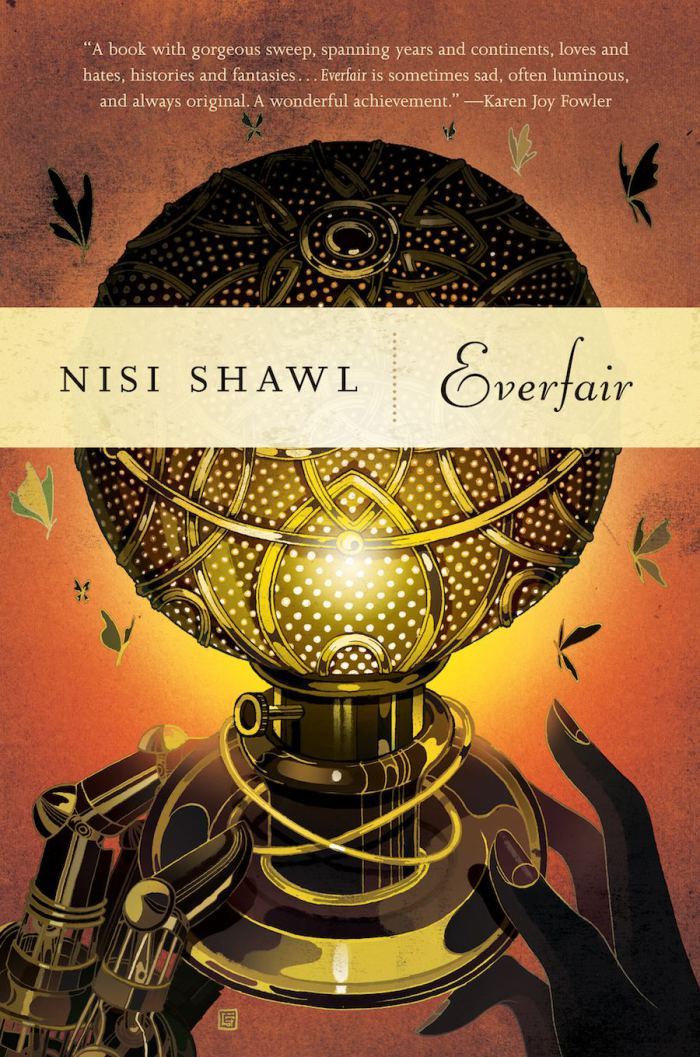
Everfair

everfair

Everfair by Nisi Shawl

Genre: fantasy

I read it as a(n): audiobook

Narrator: Allyson Johnson

Length: 12:44:00

Her Grace’s rating: 2 out of 5 stars

Everfair by Nisi Shawl is a steampunk alternative history novel that presents a fascinating premise: the people of the Congo discovering steam power before they were invaded by Belgium. Afro-Victorian Steampunk? Hell, yes! Alas, while the concept is intriguing and offers great potential, the execution of the story leaves much to be desired. There is a plethora of characters and an overly ambitious narrative, so the book struggles to maintain a cohesive and engaging plot in my opinion.

One of the main issues with Everfair is the overwhelming number of characters. While a large cast can add depth and variety to a story, Shawl’s approach feels excessive and convoluted. With so many characters competing for attention, I never really could invest emotionally in any one individual. The lack of a clear focal point or well-developed protagonists hampers the overall cohesion of the plot and makes me care a lot less about their individual story arcs.

Another drawback is the sheer number of ideas and themes that Shawl attempts to explore within the confines of a single book. From political intrigue to social revolution, colonization to racial tensions, and the development of steam-powered technology, the novel feels…crowded. Really, really crowded. Like a college dorm room crowded. The result is a fragmented narrative that lacks the necessary depth and exploration to do justice to any of the ideas presented. The overarching story gets muddy and confusing and fails to provide a satisfying resolution for any of the themes introduced.

While the premise of an alternate Congo with steam power is undeniably captivating, the execution of the story falls flat. The pacing is uneven, with long stretches of slow development punctuated by sudden jumps in time and perspective. This disrupts the flow of the narrative and makes it difficult to fully immerse oneself in the world Shawl has created. 

It’s obvious that Shawl did a shitton of research and has a genuine passion for the subject matter, particularly in her exploration of the impact of colonization on the Congolese people. However, the execution of the story fails to translate that passion into a compelling narrative. The book’s potential is undermined by its disjointed structure and a lack of focus.

At the end of the day, Everfair by Nisi Shawl presents a fascinating premise that I really wanted to love so much, but it was just too much. It was a disappointing and tedious read.

book review · fantasy

The Queen and the Cure

the queen and the cure

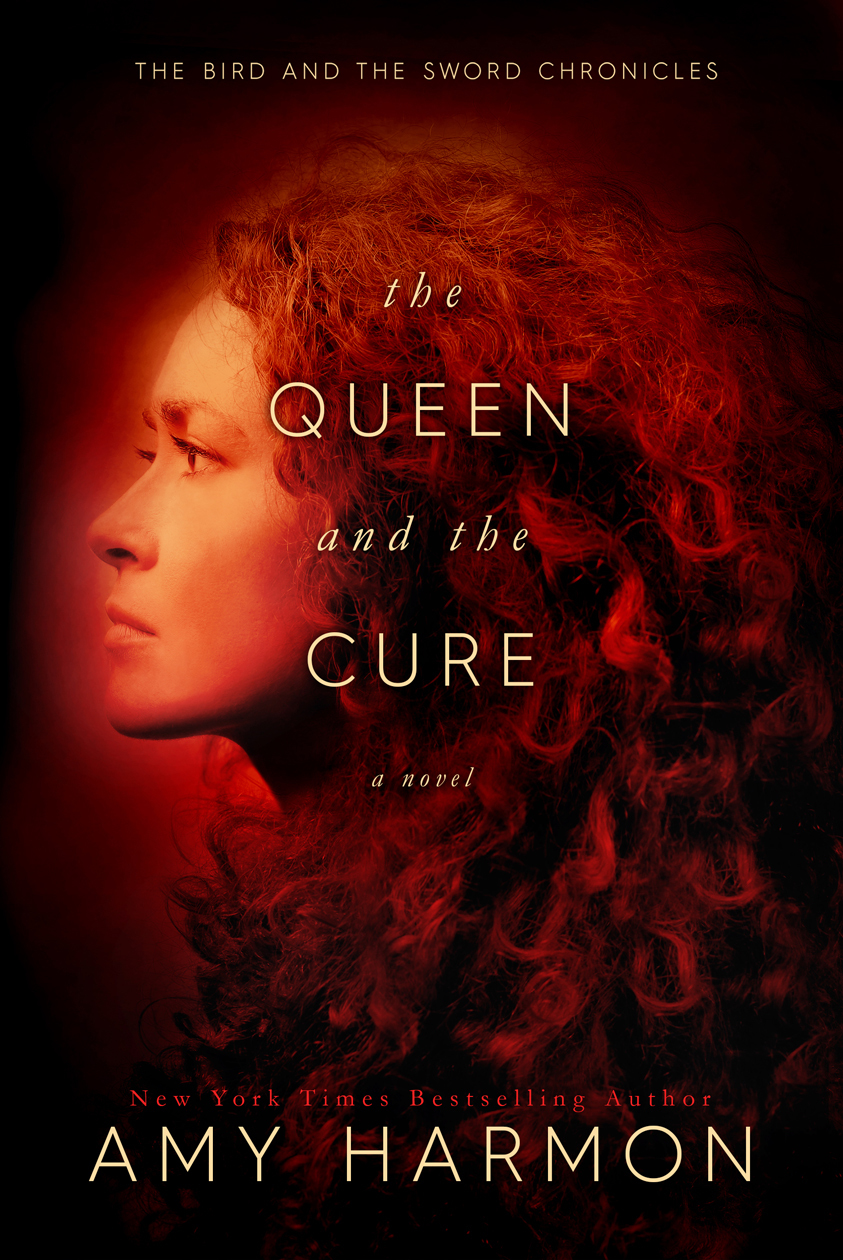
The Queen and the Cure by Amy Harmon

Genre: fantasy

I read it as a(n): audiobook

Narrator: Steve West

Length: 10:57:00

Her Grace’s rating: 2 out of 5 stars

Amy Harmon’s The Queen and The Cure, the highly anticipated sequel to The Bird and The Sword, unfortunately falls short of its predecessor’s brilliance. While Harmon’s writing style and world-building skills are still evident, the book suffers from weak character development, a lackluster setting, a generally weird approach to magic, and a failure to establish strong connections to the previous installment.

Character development plays a crucial role in any story, and it’s here that The Queen and The Cure stumbles. The main character, Kjell, who we met in the previous book, lacks the depth and complexity that made Lark so interesting. Actually, Kjell himself was more interesting in The Bird and the Sword than he is in his very own book. His journey felt underdeveloped, and I felt there was a sense of disconnect and missed potential. Sorsha/Saoirse was just weird to me. She doesn’t remember, which, fair. Then proceeds to wrap Kjell around her little finger, falls in love with him in turn, then discovers her true identity and just like that can return to it? Sure, it says she wanted to stay with him but couldn’t. But why? It’s not even her home to begin with that she was returning to. It was an awkward plot device just to get Kjell to Sorsha’s home and have those events transpire. The supporting characters also lacked the growth and depth necessary to become fully fleshed people on a meaningful level.

The setting, a world filled with enchanting magic, was a standout feature in The Bird and The Sword. It was woven into the politics and culture and everything else. However, in this book, it felt almost like an afterthought. Like Kjell might be able to heal, but he does so reluctantly and still with a sense of shame that he is gifted. Either make him come around to the fact that he has an awesome skill, or else work out deeper reasons for why he continues to resist. But Harmon’s descriptions about that felt lacking in detail and failed to create a satisfying explanation. 

The lackluster setting also added to the overall disappointment of the book. Maybe it’s just me but I never got any real sense of the places where the action took place. I don’t know about the kingdom Kjell traveled to, or any sense of the trip itself, or the palace once we got there. Maybe I just didn’t care about the story much by that point.

The connections to the previous book were another letdown. I had hoped for a continuation of the story and a further exploration of that world, its politics, and its characters, but other than a few of the same characters making cameos, the sequel felt disjointed and lacked a strong connection to its predecessor. The references to the events and characters from the first book felt forced and superficial.

Despite its flaws, the book still had her signature writing style, which is fluid and engaging. Harmon’s ability to craft beautiful prose is evident throughout the book, making it a pleasant read despite the disappointment in other areas. The real saving grace for me was the narrator, Steve West. He did a terrific job with his reading and made the book more interesting to me than I think it would have been had I eyeball read it.

Overall, The Queen and The Cure falls short of my expectations. I didn’t hate it but I definitely didn’t love it as much as The Bird and the Sword and I have no intention to read it again. 

book review · sci-fi · Star Trek

Star Trek Picard: Rogue Elements

STP rogue elements

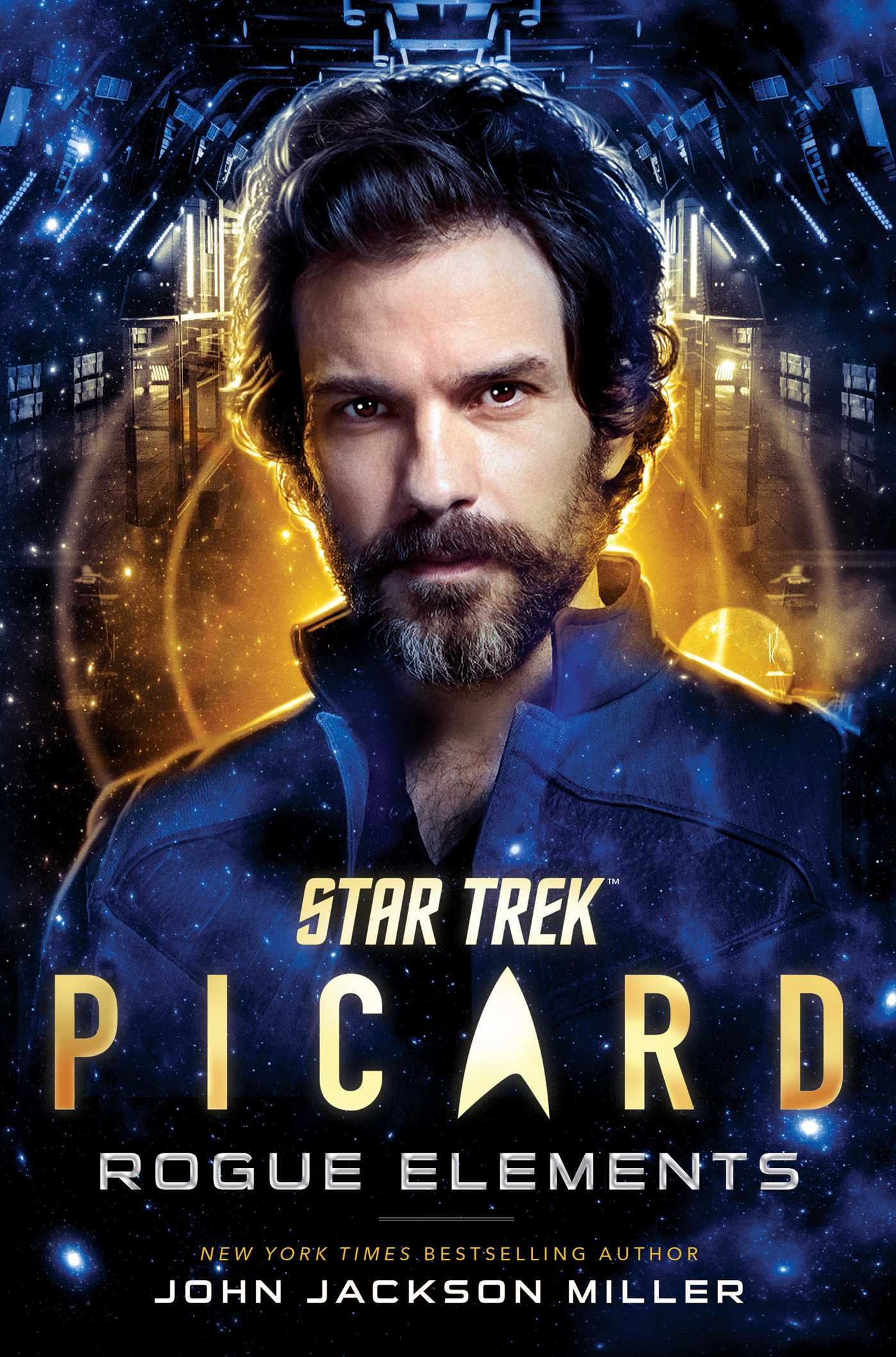
Star Trek Picard: Rogue Elements by John Jackson Miller

Genre: sci-fi

I read it as a(n): paperback

Length: 406 pp

Her Grace’s rating: 4 out of 5 stars 

John Jackson Miller’s Star Trek Picard: Rogue Elements offers readers an escapist journey through the Federation’s seedier underbelly, a slightly different approach than the typical Trek novel. The author’s note indicated that it was written specifically to serve as a much-needed escape from the grip of the COVID pandemic lockdown. I, however, am several years behind in all of my reading, including Trek, so I only just now read it. It was still perfect escapist reading. With a focus on the charismatic Rios, the acquisition of the ship La Sirena, and seamless connections to the TV show Star Trek: Picard, this novel is a delightful addition to the Star Trek universe.

One of the standout elements of Rogue Elements is the exploration of Cristóbal Rios’s character and back story. I am a major sucker for a good back story, as anyone knows who has had the least contact with me and my bookish preferences. In fact, I’m pretty sure even the Awá people are aware of my love of back stories. Miller expertly delves into Rios’s past, unravelling the layers of his personality and providing readers with a deeper understanding of this complex character. Through actiony adventures and poignant moments, we witness Rios’s growth, gaining insight into the experiences that shaped him into the man we see on the TV show. 

The acquisition of La Sirena, a ship that holds its own aura of mystery, brings a new dynamic to the story. Miller paints a vivid picture of this ship, portraying it as a character in its own right. I also really fucking love it when inanimate objects are their own characters. Oh hi, The One Ring! Excalibur! Rocinante! As readers explore the ship alongside Rios and his ragtag, accidental crew, there is a palpable sense of adventure that permeates every page. 

Rogue Elements effortlessly weaves its story into the broader tapestry of Star Trek: Picard. Fans of the TV show will appreciate the integration of familiar faces and storylines, providing a sense of continuity and further expanding the world created on screen. Miller’s attention to detail ensures that the novel feels like a natural extension of the television series, making it a must-read for any true Trekkie.

book review · fantasy

The Witch’s Boy

the witch's boy

The Witch’s Boy by Kelly Barnhill

Genre: fantasy

I read it as a(n): paperback

Length: 372 pp

Her Grace’s rating: 4 out of 5 stars

Once, there were twin brothers, Tam and Ned, who built a raft to go to sea. The raft broke and Tam drowned in the river. Ned nearly died of an infection until his mother, grieving over the loss of Tam, captured Tam’s soul and stitched it to Ned. The villagers said that the wrong boy lived because Ned was never the same, speaking with a terrible stutter and not being able to read or write. At the same time in another part of the world, Aine, the daughter of the bandit king, learns that the wrong boy will help her and save the kingdom from a devastating war.

This book was pure fantastical joy. It seamlessly wove together the magical with the mundane, which is one of my favorite storytelling tropes. Everywhere in the story, there are elements of magic, from the way Ned’s mother, known as Sister Witch, captures Tam’s soul, to the forest that moves and protects those it cares about, to the standing stones and their living memories. Magic in this world is wicked, always trying to lead those who wield it to misuse it in some way. Sister Witch remained good and uncorrupted by the magic because she kept it in a clay pot in the basement. Her one time slipping up was in stitching Tam’s soul to Ned. The villagers in general are quick to leave her and eventually Ned on the outskirts of society, but are even quicker to call on her if they need help to heal a sick child or injured adult. Ned, too, is shunned and demeaned, blamed in some way for Tam’s death and treated as an idiot because he couldn’t read or write and could barely speak. 

Set as a counterweight to Sister Witch’s goodness and her resistance to the corrupting influence of the magic is Aine’s father, the bandit king. He has a talisman made from a piece of the stones that hold most of the magic in the world. The stones are ready to move into a new form and leave the world, taking the magic with them. Aine’s father, however, is driven partly mad by the magic and he is at its whim, using it for wicked deeds and lacking the strength of will to control it. 

The way people view Sister Witch and Ned explores the idea that the things we fear the most can also be a source of salvation. The dichotomy between being seen as outcasts but also as someone who is needed is a great metaphor for the dualities we face in ourselves. It also shows that embracing differences and facing down our fears can lead to self-discovery and growth.

Love and friendship are central themes in the story. The unconditional love between Tam and Ned is fairly gut-wrenching. When Aine comes along, the friendship she and Ned form help him to deal with his grief and guilt while at the same time giving Aine a new focus for her unmoored existence. The bonds that form between Ned and Aine as well as between the wolf and both children show how genuine love and friendship can help to heal, awaken hidden strengths, and inspire deep courage. The trust, loyalty, and unflagging support this unlikely group of friends share with one another transcend the social norms of both their societies and defy the expectations of all who know them. In the end, Aine’s love for her father is what redeems him, though his redemption comes at a high price, and the love Ned’s parents have for him and his brother breaks the curse he’s had of carrying a soul that is not his. All of these various relationships highlight the transformative power of love.

At its core, The Witch’s Boy is a story about the transformative power of love and the unbreakable bonds of friendship. Barnhill effortlessly captures the essence of these emotions, exploring how they can guide us through life’s darkest moments. 

Favorite line:

  • A word, after all, is a kind of magic. It locks the substance of a thing in sound or syllable, and affixes it to the ear, or paper, or stone. Words call the world into being (29).