book review · historical fiction

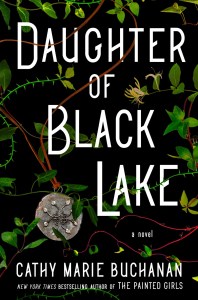
Daughter of Black Lake

daughter of black lake

Daughter of Black Lake by Cathy Marie Buchanan

Genre: historical fiction

I read it as a(n): hardback

Length: 320 pp

Her Grace’s rating: 5 out of 5 stars

Set in the 1st century CE, Daughter of Black Lake centers on a small village to the northwest of Londinium. The Roman invasion is in process, though the villagers don’t really seem to care much. Most see it as an opportunity to make some money by trading with a nearby outpost town. When an unhinged Druid, Fox, comes along, trying to incite the tribesmen to band together and rise against the Romans, things get dangerous. One woman, Devout, and her daughter, Hobble, find themselves in the middle of a power struggle between the Druid and the leader of the village, in part because of Hobble’s ability to See the future. Devout, though, also has secrets of her own that may destroy the peace of the village and doom Fox and the rest of the Druids’ plans to overthrow the perceived shackles of their oppressors. 

At first, I wasn’t sure if I was going to like this book. It felt like a lot of not much was happening. But the characters were deeply developed and I got invested in their stories. Then Fox came along and I wanted to see what would happen with him. He was a hateful character, which was weird for me since I usually really like Druid characters. Of course, the Druid figures in other stories I’ve read were more like Merlin or Gandalf, so naturally I would like them. Fox, not so much. He was a fundy zealous dick. 

I liked Hobble a great deal. She was a healer, like her mother, and had vast knowledge for such a young girl. I cared less about her ability to see the future, especially since it was never really explained why she had the ability. Fox wanted to use her ability to help rally the tribes to the Druids’ cause and go to the aid of the Iceni queen, Boudicca, but Hobble couldn’t do that. She could see that the Romans were going to kick their asses. And historically, they did. Boudicca came damn close to winning but in the end, she didn’t. 

I really liked the writing style. It was almost dream-like. It felt similar to The Buried Giant by Kazuo Ishiguro, but I didn’t care for that story and I did like Daughter of Black Lake. Maybe comparing it to The Mists of Avalon would be more accurate. At any rate, I really liked this one. It’s certainly making my favorite books of 2023 list. 

book review

Catch-Up Post

the impossible fortress

The Impossible Fortress by Jason Rekulak

Genre: YA / 1980s nostalgia-fest

I read it as a(n): hardback

Length: 285 pp

Her Grace’s rating: 5 out of 5 stars

On a quest to boost one of the Vanna White Playboys from the local convenience store, Billy, computer and gaming nerd extraordinaire, meets Mary, who kicks his ass at programming. Over the course of a few months, they bond over their desire to program a video game to enter into a contest, hoping for the chance to win the badass new computer that the first-place winner will get, which puts even Mary’s Commodore 64 to shame. And Billy discovers that, despite getting teased by his friends for Mary being overweight, Mary is awesome and he really likes her.

An homage to the 80s, this YA novel explores the friendships made in our teens, revisits the excitement we all felt when the first video games were coming out, and generally made me miss being a kid for a minute. 


the wife upstairs

The Wife Upstairs by Rachel Hawkins 

Genre: mystery

I read it as a(n): hardback

Length: pp

Her Grace’s rating: 3 out of 5 stars

A contemporary retelling of Jane Eyre, only made into a murder mystery, with a different ending, and not one really likeable character. There wasn’t a lot of surprise to this one and although I didn’t hate it, it was a solid meh for me. 


the year of less

The Year of Less by Cait Flanders

Genre: nonfiction/lifestyle

I read it as a(n): paperback

Length: 189 pp

Her Grace’s rating: 4 out of 5 stars

A book on one woman’s year of embracing minimalism, mostly through not buying anything she doesn’t actually need. What works for one person may not be for another, but I enjoyed reading about her experiences and picking up a few new tips along the way. I will be implementing some of those tips into my own evolving minimalism practice. 

book review · historical fiction

Bookshop Cinderella

bookshop cinderella

Bookshop Cinderella by Laura Lee Guhrke
Genre: Victorian romance
I read it as a(n): digital galley
Length: 336 pp
Her Grace’s rating: 3 out of 5 stars 


Bookshop Cinderella by Laura Lee Guhrke is a delightful Victorian romance that will have readers of the genre swooning with its charming rags-to-riches storyline. Evie Harlow is a strong and independent woman, which is a source of consternation to her family and society in general. She took over the ownership and management of her father’s rare books store when he died and has been happily ensconced in that ever since. She has no need of male companionship beyond a dear childhood friend and can’t imagine herself in any sort of long-term relationship. It simply doesn’t fit in with her daily life. Although she occasionally longs for a happily ever after for herself, she’s mostly given up on the thought and does her best to enjoy the life she has. So you can imagine how flustered she is when she finds herself in the acquaintance of Duke Maximillian of Westbourne. Introduced mainly by a random mutual acquaintance, Max initially intends only to use Evie’s talents at research to help with a fancy dinner party he’s been put in charge of. It soon changes when Max’s young proteges mock Evie for her lack of fashion and beauty and propose a scheme to Max. Max is determined to win a bet that proves Evie can become a debutante and take the London Season by storm.

The basic cast of characters are developed well and have plenty of interesting personality quirks, which is what I think really helps move a plot forward in a romance novel. The chemistry between Evie and Max is palpable, and the author does an excellent job of developing their relationship in a way that feels natural and authentic. Evie and Max are both imminently likeable characters in their different ways, and even secondary characters feel like actual people and not placeholders needed to fill a crowd. There was a lot of slow building passion between Evie and Max, which made the anticipation a pleasant ride. 

My one real quibble is that there wasn’t much resolution with regard to the villain in the story. His motivations felt a bit contrived and the ending for his part of the story was rushed and felt incomplete. I would have liked more closure on that. I confess, I wanted to see a proper comeuppance, but instead, that part of the story just ended! Totally unsatisfied with that. 

The book is filled with banter, a few hilariously biting remarks about the aristocracy, and romantic moments that are sure to please readers. Gurhke’s writing style is engaging and immersive, readers were treated to some details about daily life among the peerage and the working classes, and the end result was everything it needed to be. It’s a quick and easy read that is perfect for anyone looking for a light romance. 

book review · Medievalism

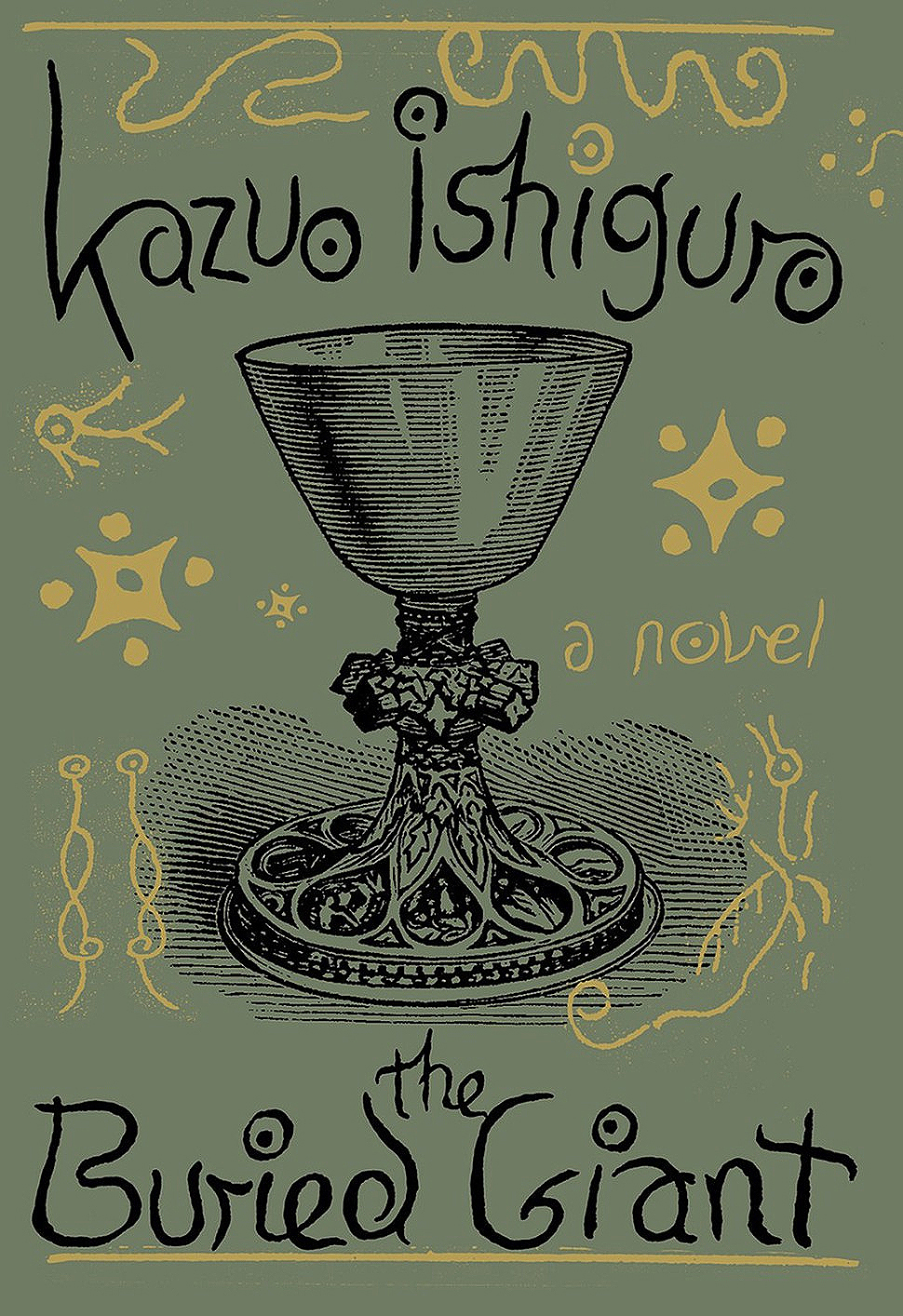
The Buried Giant

The Buried Giant by Kazuo Ishiguro

Genre: fantasy

I read it as a(n): hardback

Length: 317 pp

Her Grace’s rating: 2 out of 5 stars

I…did not understand this book. I’ve got plenty of game. I can talk about the allegory of the buried giant as the letting go of or forgetting of old grudges. I get that the mist is the collective forgetting that happens when we rewrite history or lose meaningful parts of history. I can understand the symbolism (So. Much. Symbolism) of the dragon, the pilgrimage, or the boatman. I can talk about how each person in the group of Axl, Beatrice, Wistan, Gawain, and Edwin represents a different social strata and that they collectively serve as a microcosm of post-Roman Britain. 

But I still do not understand this book. What even happened in it? I wanted to love it so much. I love most things even remotely related to Arthurian legend. But there was an old couple and a warrior and a kid and they all met Sir Gawain and then there’s a dragon and some monks and the kid’s weird visions and a boat and the end. All with nothing really happening. The characters were flat. Most of them were totally blank to me. I didn’t care about their quest or the fact that they couldn’t remember. The tidbits of memory from Axl were not tempting to me. There was nothing exciting, no plot progression, nada. Just, like…ok? And? 

I think people who enjoy introspective and meditative narratives will love it. That is usually me, but not this time. I could go on for days about it and still come up with nothing much. So weird.

book review · historical fiction · Medievalism

The Good Wife of Bath

good wife of bath

The Good Wife of Bath by Karen Brooks

Genre: historical fiction

I read it as a(n): paperback

Length: 541 pp

Her Grace’s rating: 5 out of 5 stars

Eleanor is the daughter of a brogger, the mediaeval term for broker, in 1380s England. Her mother dies when Eleanor is a baby and her father when she is about ten. She goes into service for the local gentlelady and from there, proceeds to have men ruin her reputation, her joy, and her sense of self. She’s married off when she’s 12 to a man who is in his 60s and, to modern audiences, it goes downhill from there. However, Eleanor finds her joy in her many marriages and the found family she gains in her long life. Her friendship with a man of the merchant class, one Geoffrey Chaucer, ensures that she remains known and beloved for all time, living as his (in)famous Wife of Bath.

Or at least, this is the fictional take on how a real-life woman might have become the Wife of Bath. 

Replete with vivid images, sights, and sounds of mediaeval England, The Good Wife of Bath takes readers on a pilgrimage through this turbulent period of history seen through the eyes of an equally turbulent character! 

It’s been a long time since I read The Canterbury Tales, but this made me want to read them again. It would have been fun to do a side-by-side readalong sort of thing. Eleanor is, of course, modelled on the Wife of Bath, but other figures in the story are also modelled on other characters from the Tales. A new interpretation of them would be fun for this book nerd.

I loved the insights we got into Eleanor’s character in the chapters that were written as letters to Chaucer while she was on one pilgrimage or another. We got to see glimpses of this woman throughout the book anyway, but much of that was the public mask she put on. Her letters revealed her innermost thoughts and they were quite something! She would be fun to have drinks with for sure. The letters showed an irreverent, irrepressible person who found a way forward regardless of what misfortunes came her way and took absolutely zero shit in the process. She really took to heart the idea that if life gives you lemons, then squirt the juice into the eyes of your enemies! 

The differences in her various marriages were really intriguing, more so because of how Chaucer’s actual Wife was written. Brooks’s Eleanor marries three times for convenience and twice for love. The love matches were hot, stinking garbage fires of a relationship and the marriages of convenience were the ones that actually resulted in a good and pretty happy life for her. In particular, I loved her first husband, Fulk Bigod, and third, Mervyn Slynge the best. The second, Turbot Gerrish, was ok in the end, though he himself was a ridiculous caricature of a man. But Fulk allowed her to tell him what to do and as a result, they got significantly wealthier. Mervyn became a genuine friend to her and, although he had other issues, was a wonderful husband. I sometimes wish a kind old rich gay man wanted to marry me for beaver cover and then leave me all his piles of money when he died. 

Her convenient marriages allowed her to have the control over her own choices that she desired. Her love marriages were far more restrictive and made her a slave in more than one way. She had far less freedom in those. It’s an interesting point and one that would make for an excellent group discussion.

Ultimately, what I think Chaucer’s Wife wanted wasn’t control, or mastery, as he wrote it, over men. What she wanted was control over her own choices, her ability to choose for herself. Sovereignty over one’s choices, one’s body, one’s relationships, one’s money, was not something most women had in 1300s Europe. Really, it is a pathetic commentary on men and modern society that a very great many women still lack these things. The ones who do have them are either single, managed to find a truly feminist partner, or are old, rich, and widowed. Not a whole lot has changed in the 700 years since Chaucer wrote the Tales. Stop the ride, I want off. 

Overall, I highly recommend this to anyone who loves mediaeval historical fiction, and especially to those of us who hold a special place in our hearts for Chaucer.

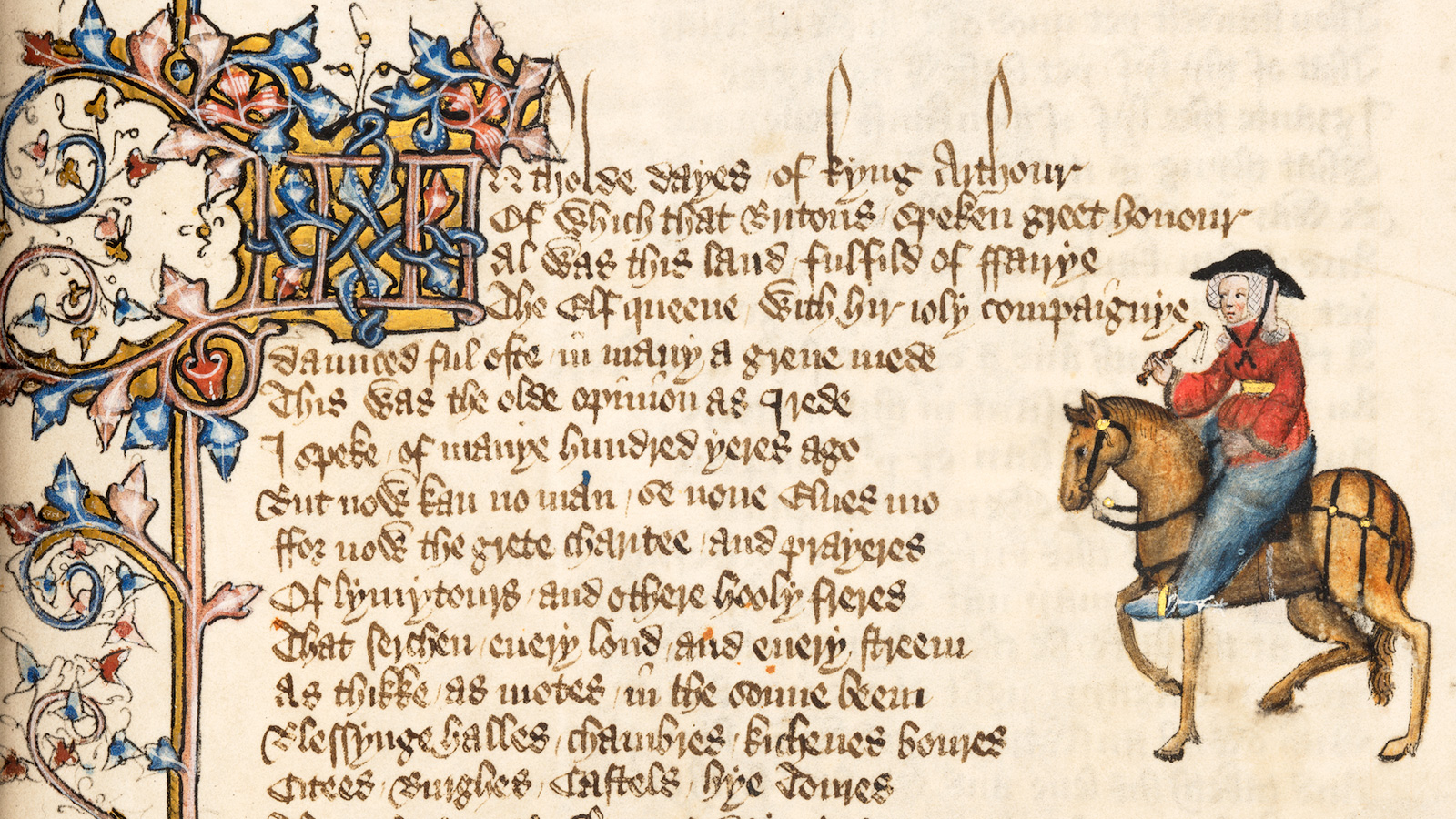
wife-of-bath-British Library