
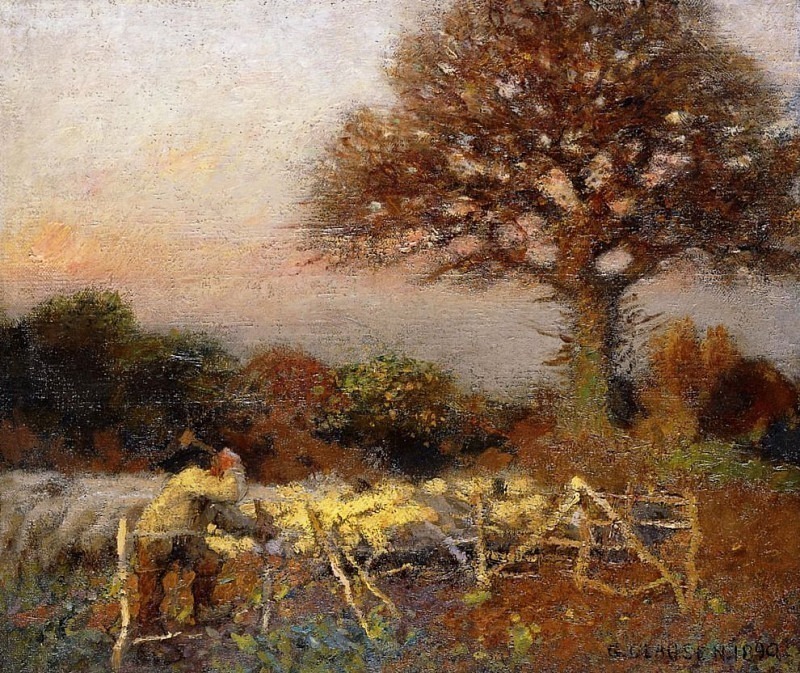
Far from the Madding Crowd by Thomas Hardy Genre: British classics I read it as a(n): paperback Length: 468 pp Her Grace’s rating: 4 stars
So this is one of those classics that I not only never read in high school or college, but I didn’t even know what the plot was. Like, at all. All I knew was from the blurb on the book that I have. Since I want to be better about reading more classics, I thought this would be a good one to start with partly because I didn’t know anything about it, and because it’s British and I like British authors for the most part.
But I don’t feel like writing a proper review of it. It’s been sitting on my desk for weeks since I finished it, waiting for me to review it. Other than saying that I loved it and that there were quite a few parts that I thought were actually hilarious, it was a solid story. I thought it took a bit longer than necessary to introduce all of Bathsheba’s suitors, but it was fine. I loved it overall regardless.
One thing I like to do is make a note of any books or music that are mentioned in a book. The literature mentioned in this one is:
- Maid’s Tragedy
- Mourning Bride
- Night Thoughts
- Vanity of Human Wishes
- Love in a Village
- The Maid of the Mill
- Doctor Syntax
- Volumes of The Spectator (Madding Crowd was published in 1874, so I assume the 1870s would be ideal)
Anyway, like I said, I don’t feel like writing an actual review. Partly because I’ve had the book sitting on my desk for weeks and I finished reading this quite some time ago. So instead of a traditional review, I’m going to share my favorite lines from the novel. Here they are. Behold.
The instinctive act of human-kind was to stand, and listen, and learn how the trees on the right and the trees on the left wailed or chanted to each other in the regular antiphonies of a cathedral choir; how hedges and other shapes to leeward then caught the notes, lowering it to the tenderest sob; and how the hurrying gust then plunged into the south to be heard no more (14).
To find themselves utterly alone at night where company is desirable and expected makes some people fearful; but a case more trying by far to the nerves is to discover some mysterious companionship when intuition, sensation, memory, analogy, testimony, probability, induction – every kind of evidence in the logician’s list – have united to persuade consciousness that it is quite in isolation (18). [Extroverts? I think this describes extroverts.]
“My name is Gabriel Oak.”
“And mine isn’t. You seem fond of yours in speaking it so decisively Gabriel Oak.”
“You see, it is the only one I shall ever have, and I must make the most of it.” (27)
There was left to him a dignified calm he had never before known and that indifference to fate which, though it often makes a villain of a man is the basis of his sublimity when it does not (43).
[Discussing Joseph Poorgrass’s shyness]
“Yes – very awkward for a man.”
“Ay – and he’s very timid too,” observed Jan Coggan. “Once he had been working late at Yalbury Bottom, and had had a drap of drink, and lost his way as he was coming home-along through Yalbury Wood – didn’t ye, Master Poorgrass?”
“No, no, no – not that story!” expostulated the modest man, forcing a laugh to bury his concern.
“-And so ‘a lost himself quite,” continued Mr Coggan with an impassive face implying that a true narrative, like time and tide, must run its course and would respect no man. “And as he was coming along in the middle of the night, much afeared, and not able to find his way out of the trees no-how, ‘a cried out, ‘Man-a-lost! Man-a-lost!’ A owl in a tree happened to be crying ‘Whoo-whoo-whoo!’ as owls do you know, Shepherd” (Gabriel noddled), “and Joseph, all in a tremble, said ‘Joseph Poorgrass of Weatherbury, sir!’” (62-63). [LOOOOOOL that poor guy! 😂]
The good old word of sin thrown in here and there at such times is a great relief to a merry soul (65).
It was one of the usual slow sunrises of this time of the year, and they sky, pure violet in the zenith, was leaden to the northward, and murky to the east, where, over the snowy down or ewe-lease on Weatherbury Upper Farm, and apparently resting upon the ridge, the only half of the sun yet visible burnt rayless, like a red and flameless fire shining over a white hearthstone. The whole effect resembled a sunset as a childhood resembles age.
In other directions the fields and sky were so much of one colour by the snow that it was difficult in a hasty glance to tell whereabouts the horizon occurred; and in general there was here too that before mentioned preternatural inversion of light and shade which attends the prospect when the garish brightness commonly in the sky is found on the earth and the shades of earth are in the sky. Over the west hung the wasting moon, now dull and greenish-yellow, like tarnished brass (104).
O I love him to very distraction, and misery and agony. … Loving is misery for women always (207).
[Petrichor!] She went out of the house just at the close of a timely thundershower, which had refined the air, and daintily bathed the coat of the land, though all beneath was dry as ever. Freshness was exhaled in an essence from the varied contours of bank and hollow, as if the earth breathed maiden breath, and the pleased birds were hymning to the scene (210).
But man, even to himself, is a palimpsest, having an ostensible writing, and another beneath the lines. It is possible that there was this golden legend under the utilitarian one: “I will help, to my last effort, the woman I have loved so dearly” (254).
[A mutt!] He was a huge heavy and quiet creature, standing darkly against the low horizon, and at least two feet higher than the present position of her eyes. Whether Newfoundland, mastiff, bloodhound, or what not, it was impossible to say. He seemed to be of too strange and mysterious a nature to belong to any variety among those of popular nomenclature. Being thus assignable to no breed he was the ideal embodiment of canine greatness – a generalization from what was common to all (277).
All romances end at marriage (281).
Where however happy circumstance permits its development the compounded feeling proves itself to be the only love which is strong as death – that love which many writers cannot quench, nor the floods drown, beside which the passion usually called by the name is evanescent as steam (409).
References:
Clausen, Sir George. A Sheepfold, Early Morning. 1890. Oil on canvas. Gallerix, https://gallerix.org/storeroom/1363/N/287/.
Hardy, Thomas. Far from the Madding Crowd. Edited by Suzanne B. Falck-Yi and Linda M. Shires, 2nd ed., Oxford University Press, 2008.
 Her Grace's Library