book review · books · historical fiction · Medievalism

In the Shadow of the Enemy

42070912In the Shadow of the Enemy (A Christine de Pizan Mystery) by Tania Bayard

I read it as an: ARC

Source: HNS*

Length: 224 pp

Publisher: Severn House

Year: 2019

In late-14th century France, Charles VI “the Mad,” rules. Probably a lot of people would like for France not to be ruled by a guy who is off his rocker, including his brother, the Duke of Orleans. Then, at a masquerade ball, the king and several of his friends decide to cause some mayhem and dress up like wildmen. To do so, they stick fur and leaves to themselves using pitch. This turns out to be a spectacularly bad idea, because a spark, presumably from the Duke of Orleans’s torch, catches on one of their outfits, causing four of the men to burn to death and the king to narrowly escape the same fate. Everyone suspects the Duke. However, some other people attending, including Christine de Pizan (yes, that Christine de Pizan) see something others didn’t – another torch, which was thrown from a spot far away from the Duke’s location. He still had both of his torches and yet there was a third torch on the floor, in the middle of the burning men. The Queen, Isabeau of Bavaria, asks Christine to find out who wants the king dead, for she is certain that he was the target of an attempted assassination. Aided by a colorful array of sidekicks, including a prostitute who actually makes her living at embroidery, a dwarf who works for the Queen, and a deaf girl who takes care of the King’s lions, Christine undertakes an investigation. It leads her from the twisted politics of the court, to various potential targets and culprits with different reasons to want the victims dead, and straight into the sights of a killer.

In the Shadow of the Enemy is actually the second in the Christine de Pizan series, but it was the first one I’ve read. That made no difference to my utter enjoyment of the book, though, as this story is a standalone. The first book was referenced enough that it filled in any gaps there might have been, sometimes a little too thoroughly – there are totally spoilers for the first book, so I didn’t think that was very well done at all. I’m still going to read the first book, though, and just hope that I’ve forgotten what the spoilers are by the time I actually get around to it.

I adore the fact that Christine de Pizan, author of The Book of the City of Ladies (Penguin Classics), is the protagonist here. I love it when real women from history are the stars in literature interesting new ways. She is a complex character, and all the secondary characters are multifaceted as well. Marion the prostitute was my second favorite, with her big personality and capacity for warmth and generosity and her inexplicable reluctance to tell people she isn’t actually a prostitute anymore. Christine’s mother, Francesca, was also a fun, minor addition. She reminds me of my grandmother in a lot of ways. The one thing I thought was weird was Klara’s utter and sudden change of heart regarding her husband Martin and her views on her brother, Willem. Those both seemed too convenient for me, but in the scheme of things, I can overlook this minor quibble.

The mix of medieval attitudes towards people, including those deemed “defective”, such as dwarves or deaf people, and even towards Christine herself, is so realistic. People thought Loyse, the deaf girl, had demons because they didn’t understand that she acted as she did simply because she couldn’t hear or understand others. The dwarf, Alips, was viewed with deep suspicion and hatred because it was thought that dwarves bring bad luck, or that the way they look on the outside reflected a corrupt soul.  And, of course, women were viewed as second class citizens and were treated as such. So much religious bullshit. The research that clearly went into the novel is apparent and appreciated. The imagery brings to life medieval France in an immediate way, from the descriptions of the court and its kitchens and gardens to the streets and their various inhabitants. The plot was pleasingly complex and included a lot of history about French warfare, or at least one battle in particular. Overall, this was a fast, fairly light read and I happily recommend it. I even went to the library and got the first one in the series. I’ll read a few other books before I read that one, though, to see if I forget the spoilers for it that were in this book. Hmph.

*This is a much longer and more detailed review of the one which was originally published by the Historical Novel Society.

book review · books · random

Best lines from Circe

It’s been a loooooooooooong time since I wrote a ‘favorite lines from…’ kind of post. I can’t think of a better one to start back up with than Madeline Miller’s CIRCE. Miller’s prose is simply magical. Every pun intended. Assume there will be spoilers below.

35959740

  • When I was born, the name for what I was did not exist.
  • That word, nymph, paced out the length and breadth of our futures. In our language, it means not just goddess, but bride.
  • Nothing is empty void, while air is what fills all else. It is breath and life and spirit, the words we speak.
  • What was I truly? In the end, I could not bear to know.
  • It was not a word I knew. It was not a word anyone knew, then. Pharmakis,’ I said. Witch.
  • I thought: this is how Zeus felt when he first lifted the thunderbolt.
  • ‘Tell me,’ he said, ‘who gives better offerings, a miserable man or a happy one?’ ‘A happy one, of course.’ ‘Wrong,’ he said. ‘A happy man is too occupied with his life. He thinks he is beholden to no one. But make him shiver, kill his wife, cripple his child, then you will hear from him. He will starve his family for a month to buy you a pure-white yearling calf. If he can afford it, he will buy you a hundred.’

Fear of failure was the worst thing for any spell.

  • My sister might be twice the goddess I was, but I was twice the witch.
  • This was how mortals found fame, I thought. Through practise and diligence, tending their skills like gardens until they glowed beneath the sun.
  • Whatever you do, I wanted to say, do not be too happy. It will bring down fire on your head.
  • But in a solitary life, there are rare moments when another soul dips near yours, as stars once a year brush the earth. Such a constellation he was to me.
  • As it turned out, I did kill pigs that night after all.
  • When there is rot in the walls, there is only one remedy. …Tear down, I thought. Tear down and build again.
  • Brides, nymphs were called, but that is not really how the world saw us. We were an endless feast laid out upon a table, beautiful and renewing. And so very bad at getting away.
  • They never listened. The truth is, men make terrible pigs.
  • War has always seemed to me a foolish choice for men. Whatever they win from it, they will have only a handful of years to enjoy before they die. More likely they will perish trying.

Witches are not so delicate.

  • Most men, in my experience, are fools.

Humbling women seems to me a chief pastime of poets. As if there can be no story unless we crawl and weep.

  • Would I be skimmed milk or a harpy? A foolish gull or a villainous monster? Those could not still be the only choices.
  • When Achilles puts on his helmet and cleaves his red path through the field, the hearts of common men swell in their chests. They think of the stories that will be told, and they long to be in them. I fought beside Achilles. I stood shield to shield with Ajax. I felt the wind and fan of their great spears.
  • I was a golden witch, who had no past at all.
  • They have wrinkles, but no wisdom. I took  them to war before they could do any of those things that steady a man. … I fear I have robbed them not only of their youth, but their age as well.
  • Heroes are fools.

When you are in Egypt you worship Isis, when in Anatolia you kill a lamb for Cybele. It does not trespass on your Athena still at home.

  • I washed him and rubbed oils into his skin, as carefully as if he could still feel my fingers. I sang as I worked, a melody to keep his soul company while he waited to cross the great river to the underworld.
  • I touched the thought like a bruise, testing its ache.
  • He showed me his scars, and in return he let me pretend I had none.
  • I would look at him and feel a love so sharp it seemed my flesh lay open. I made a list of all the things I would do for him. Scald off my skin. Tear out my eyes. Walk my feet to bones, if only he would be happy and well.
  • Her only love was reason. And that has never been the same as wisdom.
  • Gods and mortals do not last together happily.
  • Witchcraft transforms the world. He wanted only to join it.

‘…I cannot say how I knew. It was as if…as is all this while, my eyes had been waiting for just that shape.’ I knew the feeling. It is how I had felt first looking down at him in my arms.

  • But perhaps no parent can truly see their child. When we look we see only the mirror of our own faults.
  • ‘It is strange to think of a goddess needing friends.’ ‘All creatures that are not mad need them.’

I remembered what Odysseus had said about her once. That she never went astray, never made an error. I had been jealous then. Now I thought: what a burden. What an ugly weight upon your back.

  • ‘I warned her once that grief would come of her marriage. There is no pleasure in hearing I was right.’ ‘There seldom is.’
  • Penelope said, ‘What makes a witch, then? If it is not divinity?’ ‘I do not know for certain. …I have come to believe it is mostly will.’ She nodded. I did not have to explain. We knew what will was.
  • That is how things go. You fix them, and they go awry, and then you fix them again.

Life is not so simple as a loom. What you weave, you cannot unravel with a tug.

  • …some people are like constellations who only touch the earth for a season.
  • One of us must grieve. I would not let it be him.
  • ‘You have always been the worst of my children,’ he said. ‘Be sure you do not dishonor me.’ ‘I have a better idea. I will do as I please, and when you count your children, leave me out.’
  • Do not try to take my regret from me.
  • ‘We are not our blood,’ he answered. ‘A witch once told me that.’

He does not mean that it does not hurt. He does not mean that we are not frightened. Only that: we are here. This is what it means to swim in the tide, to walk the earth and feel it touch your feet. This is what it means to be alive.

book review · books · historical fiction

Black Lily

39305353Black Lily by Philippa Stockley

I read it as an: ARC

Source: HNS*

Length: 253 pp

Publisher:  Pimpernel Press

Year: 2018

**This review very much contains spoilers**

Black Lily is the tale of Zenobia and Lily. Zenobia was born into poverty, the daughter of an impoverished young girl who became the mistress of a shipping mogul. It is possible he was Greek or Middle Eastern but if it ever said, I missed that part. He was surprised when Zenobia was born blonde. Lily is a black woman who was brought to London from the Caribbean on a sugar and slave ship as a toy to a rich lord. She was a kept woman for a rich merchant who ended up being connected to Zenobia in a surprising way. The lives of these women  continue to intertwine in intricate, often horrific, ways, and they both have to learn how to navigate society to her best advantage when her value is entirely decided by the men who control them. Lily ends up being a hidden driving force throughout Zenobia’s entire adult life in ways she never even knows. In turn, Zenobia unwittingly is a savior of sorts to Lily. Another woman, Lily’s maidservant, Agatha, is yet another link between the three women, forging deeper connections and bonds that are strong enough to keep the secrets they all hide from society and the men around them. Continue reading “Black Lily”

book review · historical fiction

Circe

CirceCirce by Madeline Miller

I read it as a: hardback

Source: my own collection

Length: 333 pp

Publisher: Bloomsbury Publishing UK

Year: 2018

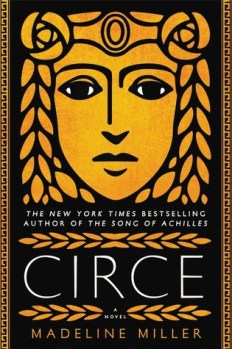
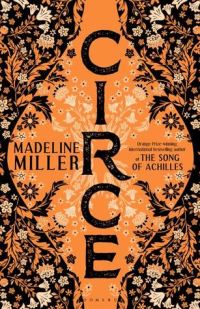
Circe is the tale of a fascinating but somewhat overlooked woman from Greek myth. She is the daughter of the sun god Helios, a lesser divinity, immortal, and a witch. She has the power to transform things and she knows the inherent magic in plants. Most of us know her from her role in The Odyssey, which was significant even if it wasn’t long. This novel tells her tale from her childhood, her self-discovery, and how she finds a place for herself in the harsh world of the gods.

I absolutely loved how Circe deals with her role in and among the gods. She never has an easy time – she has the worst time, really – but she is a woman in a man’s world and she still makes a place for herself. She is seen, and forces the divinities to acknowledge her in some way, whether any of them like it or not, including her. I think this really mirrors the experiences of modern women in that we still struggle to be seen and be taken for granted, not be underestimated, and not shuffled off or ignored as though we are worthless.

When Circe encounters Prometheus, it sets the stage for her entire life. She learns she can defy the gods to an extent. Perhaps she will be punished for her defiance if she gets caught, but she also learns they don’t actually know everything and there are things people can do and get away with that they never know about. She manages to make this idea central in her own life, defying the gods in subtle and not so subtle ways.

I really loved the way crafts were woven throughout as well. They were, however, divided by traditional gender roles. It makes sense within the context of the narrative, though, since Circe, Penelope, Medea, were expected to know certain things and not others, and vice versa for Odysseus or Daedalus. The women knew weaving and spinning, herb lore, healing and midwifery. The men knew smithing, metalwork, sculpting, and woodworking. Breaking down crafts by gender roles reinforces the  roles and highlights the fact that even the gods are similar to humans in this world, which is super interesting because, even though the gods are immortal and have various powers, they are still limited in some ways with what they can do. They are governed largely by their emotions and desires. In many of the ways that count, they act more like immortal toddlers than as wise beings. Humans tend to be more reasonable in some situations than the gods, which I think is interesting. Is it how Circe sees the gods and humans, or is that how it truly is here? Intriguing commentary, either way.

There are just too many things that could be discussed for one review – how parents view their children and vice versa; the relationship between Circe and her sister Pasiphae or her brother Aeetes; how Daedalus affects Circe; Medea; Penelope, Telemachus, and Odysseus; power dynamics; transformations of a multitude variety. Like the Greek myths themselves, you could probably write a dissertation about the ways to interpret this novel, how the characters influence each other and the world around them, gender roles and expectations, or the role of choice and fate. I loved this book, and I love strong women, and strong women figuring out that they are strong is just the best.

I haven’t even gotten into the sheer beauty of Miller’s writing style. I think I will have to do a separate post just with my favorite lines from the book.

In any case, this is very highly recommended and an excellent way to get a ton of Greek mythology without reading the source material, if that isn’t really your thing. Though everyone should read The Iliad and The Odyssey at least once in their life.

book review · historical fiction

Catch-Up: Victorican Era and Pirate novels review*

36269117The Brotherhood of the Black Flag: A Novel of the Golden Age of Piracy by Ian Nathaniel Cohen

Cathy read it as an: ARC

Source: Helen Hollickat Discovering Diamonds.

Length: 260 pp

Publisher: Amazon Digital Services

Year: 2017

In an action-packed, heroic story, Michael McNamara leaves Bristol, England, in search of himself. McNamara starts with a dream to become an officer in the Royal Navy. When an opportunity presents itself, he is accepted into the navy as a volunteer – per – order, after providing a reluctantly written letter from his father. When McNamara is then drummed out of the navy, he uses his skills with a small sword to become a fencing instructor, only to be let go from this position a year later. He then decides to pursue a fresh start in Kingston, Jamaica. Once McNamara arrives there he finds himself in a duel with a group of ruthless Caribbean pirates and thus is set in motion a series of events that leads him to the magnificent Dona Catalina Moore Viuda de Caldeira and her infamous fiancé pirate, Captain Stephen Reynard.  What happens next takes our hero on a journey that comes to define his purpose in life through his experiences with The Brotherhood of the Black Flag, and this is where the real story begins.

Cohen does an excellent job building a fast-paced story that moves McNamara’s adventures forward with vivid descriptions of battles and fights that take place on land and at sea. His knowledge of 18th-century weapons, specifically swords, helps readers to visualize the time period and the character’s personas. Readers feel McNamara’s tenacity and commitment to life by Cohen’s balance of the accuracy of facts with the originality of his fictional story.

Throughout the book, readers come to respect McNamara for his loyalty and duty to those in his life. The character builds relationships and establishes his reputation as a strong, principled individual who holds steadfast to his ideals. Equally, readers also come to know and understand the beautiful Catalina, whom McNamara comes to love; and the pirate Reynard who appears to be working on changing his swashbuckling lifestyle. When Cohen moves the story into a sudden and unexpected twist of events, readers wonder whether they missed something along the way – but soon realize the author’s masterful writing skill.  

The only thing that lets the book down is the cover. The narrative is exciting, the cover isn’t – for young adults or a children’s book it would have been fine, but not for an adult read.

The Brotherhood of the Black Flag is a must read for anyone who is captivated with the Age of Piracy. Cohen has done a remarkable job developing a story that places readers in the middle of the action, and into the heart, soul and spirit of the hero, Michael McNamara.

An excellent read.

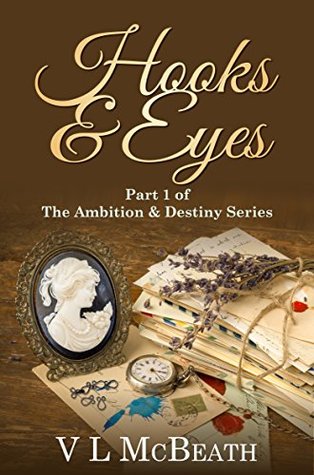
34526009Hooks & Eyes: Part 1 of The Ambition & Destiny Series by VL McBeath

Cathy read it as an: ARC

Source: Helen Hollick at Discovering Diamonds.

Length: 442 pp

Publisher: Valyn Publishing

Year: 2017

Set in 1846 England, Hooks and Eyes by V. L. McBeath is the story of Mary Jackson, a young widow, and the journey she takes to ensure that she can aptly raise her two young children during the Victorian Age. After the death of her husband, Mary decides to leave her in-laws’ country home to live with her deceased husband’s Aunt Lucy and Aunt Rebecca in the city.  Determined to make her own choices about what is best for her family, Mary, against the advice of her aunts, marries William Wetherby, her former employer, a bully, and a womanizer.

Throughout the novel, McBeath intertwines the lives of multiple families while incorporating accurate historical elements into each chapter. She touches on how the non-mechanized businesses transitioned into the mechanized factories of the Industrial Revolution. Most importantly, McBeath opens the reader’s eyes to the difficulties faced by widowed and older, unmarried women during the mid-1800s.

The author did a good job capturing the emotional struggles faced by the women throughout the novel. Readers will sympathize with Mary’s emotional and psychological pain. Seeing how women could choose to support one another, as Mary’s aunts try to do, was enlightening. Unfortunately, some of Mary’s choices do not set well with her Aunt Lucy.

Instead of using Mary and Wetherby’s marriage to focus the many subplots more effectively into the central narrative of female strength, McBeath moves the story forward by introducing multiple characters to create short, family dramas that are frequently left unresolved or are irrelevant, and because of this, the one storyline that moves the main idea forward is unresolved. Had it been, it could have given Mary profound insight into her original choice, creating a smoother transition into the final scene.

Hooks and Eyes starts with a narrative that captures the emotions of the main character and the journey she takes because of the death of her true love. The subplots are interesting and build a sense of the period, but  they fall a little short of connecting that main storyline introduced in the beginning of the novel, with the climax in the final paragraphs.

However, an interesting novel for those readers interested in this period.

The Year the Swans Came is a tragic story for anyone who wants to become captivated by the lives of two girls who are literally polar opposites of each other.  It is a story of one girl’s love of herself and her physical world, and the story of another girl’s unconditional love for the people in her life. It is a story of passion and a story of anguish. Spencer has done a wonderful job subtly showing how magical realism is a real part of the mythologies of a culture. 

**This is a guest post by Cathy Smith. 

book review · books

Pandora the Curious

13547083Pandora the Curious by Joan Holub

I read it as a: paperback

Source: my daughter’s collection

Length: 256 pp

Publisher: Aladdin

Year: 2012

In this ninth installation in the GoddessGirls series, Pandora opens that bloody box. The Titans, Epimetheus and Prometheus, are new students at Mount Olympus Academy and they are rather outcasts for the role the Titans played in the war between the Titans and Olympians. Spoiler alert: the Titans lost. Epimetheus has a box with him that makes odd noises and, of course, Pandora is intensely curious about it. When the godboys decide to play a game of keep-away with the box, it falls into Pandora’s hands without anyone noticing and it opens. Almost as if it were fated to do so. Huh. The box contained ten bubbles, which all floated out except one. Pandora seems to be the only one able to see the bubbles, so she is also the only one able to observe the effects of the bubbles bumping into people. So when Athena, for example, is bubble-bumped, Pandora hears it whisper “Ditz” and then Athena turns stupid. Similarly, another bubble bumps Aphrodite and whispers “rude,” and Aphrodite proceeds to become a vulgar and disgusting example of everyone one ought not to do, ever. Pandora doesn’t know whether or not to trust the Titans with this information, because she thinks they may have come to MOA to help take over and pave the way for a new Titan war against the Olympians. She has to decide who to trust and figure out how to reverse the effects of the bubbles before all hope is lost. See what I did there?

As with all the previous books in this series, Pandora the Curious provides an excellent way to begin teaching younger readers about the Classical myths. This one also provided a good example of troubleshooting and problem solving as well as making sure to give people second chances and not to judge based on a group but rather on an individual basis. Pandora learns a lot about herself and how curiosity can be both good and bad, depending on how it is used. She also learns that just because a person is a Titan and fought against the Olympians doesn’t make them a bad person and she should always take an individual approach to judging someone. This was a good way to talk about a variety of social issues with my daughter. We see in the news a lot of racism and sweeping generalizations made about entire groups of people. So we had a chat about how any group of people can include bad people, but that we should always try to get to know the person in front of us and not judge them or assume they are bad just because someone else like them did a bad thing. That’s no way to live.

Overall, the series has piqued my daughter’s interest in mythology, all kinds, not just Greco-Roman. At the end of the day, even if some of the stuff is silly or trite, I can live with that because of the interest it’s sparked in her for better things.


book review · books · Elizabethan England · historical fiction

Blood and Ink

40821110Blood and Ink by DK Marley

I read it as an: ARC

Source: Helen Hollick at Discovering Diamonds.

Length: 414 pp

Publisher: CreateSpace Independent Publishing

Year: 2018

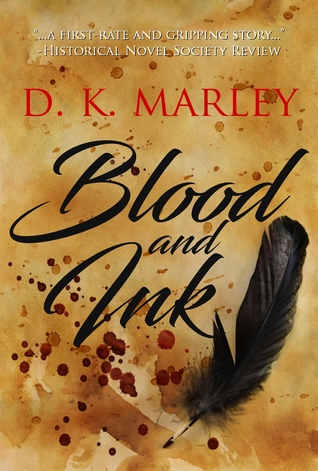
Blood and Ink by DK Marley is the tale of Christopher “Kit” Marlowe, Renaissance poet and playwright, near contemporary of Shakespeare. In Marley’s novel, our playwright is an unwanted child who is effectively sold to Sir Francis Walsingham, Queen Elizabeth’s spymaster, who noticed the boy’s intelligence when he visited a local school. Placing the young Marlowe under the mentorship of poet and spy, Sir Phillip Sydney, Marlowe continues his education as well as learns how to be a spy for Walsingham. As the years progress, Marlowe convinces Elizabeth to support his plays on-stage in exchange for his services to her. However, when factions more loyal to money and personal advancement than to the Queen step in, Marlowe makes a sacrifice that alters everything he has understood about the world, his writing, and himself.

christopher_marlowe
Christopher Marlowe. I love that the portrait has “Quod me nutrit me destruit” in the upper left. That would make a cool tattoo…

This was an interesting novel and can potentially be classified as alternate history, depending on one’s perspective. It takes one of the more popular theories about Shakespeare, which is that Marlowe was actually the author of his works, and runs with it in a way that is believable. There are theories that Marlowe didn’t actually die at the inn in Deptford and that his death was, in fact, staged so that he could go either into hiding, exile, or continue his spy work for Walsingham. The author poses some of the more common and interesting questions in her note at the end of the book, including why Shakespeare, one of the greatest playwrights of his day, was buried in a common churchyard rather than in a glamorous cemetery; why the Queen provided her own coroner to preside over the inquest of Marlowe’s death when it wasn’t in her purview to do so; why we never heard anything at all about Shakespeare until after Marlowe’s death; the education of Shakespeare and Marlowe (Marlowe had a degree from Cambridge, Shakespeare was relatively uneducated); and why was Shakespeare’s grave dug 12 feet deep instead of only the usual 6 feet? Marley takes pains to answer these questions and more in the novel and does so quite thoroughly. She also is careful to note that she herself is a Shakespearean, at least until there is solid proof that someone else was the author. But it makes for a good story.

220px-shakespeare
William Shakespeare

Various themes were at play throughout the novel, ranging from nature vs. nurture to loyalty to ambition to betrayal. The ways in which all these themes intertwine and influence one another are fascinating and very finely wrought, particularly the ways Marlowe had to balance his work as a spy with his calling as a playwright. The mix of blood and ink throughout the narrative is a stark reminder that his dreams come at a steep price, one that may be too much to bear. Overall, I think some of the characters were a tad one-dimensional, though Marlowe himself and the major secondary characters like Walsingham or Queen Elizabeth are complex figures. Shakespeare was the next most well-fleshed character besides Marlowe, which makes sense, though his motives were only apparent near the end of the novel. The last quarter or so of the book felt unnecessarily long and dragged down the pacing somewhat. However, the attention to historical detail was excellent and made for an immersive read. I particularly enjoyed all the bits and pieces of plays and poems scattered throughout the narrative. It was fun to see words that we automatically credit to Shakespeare coming from Marlowe’s pen or lips in this story, and it definitely reminds me that it’s time to reread the plays again. It has been too long. I look forward to more from this author in the future.

book review · books

The Winter of the Witch

42082394The Winter of the Witch: A Novel (Winternight Trilogy) by Katherine Arden

I read it as an: audiobook

Narrator: Kathleen Gati

Source: my own collection

Length: 14:00:00

Publisher: Random House Audio

Year: 2019

Picking up right where The Girl in the Tower left off, Vasilisa Petrovna finds herself the focus of the rage of Moscow’s people after inadvertently burning down a large part of the city. Accused of witchcraft, with the mob’s hatred fanned by the insane monk Konstantin, Vasya manages to escape into the realm of Midnight, a place where all midnights of the past, present, and future exist, but not before making a sacrifice that absolutely gutted me. In Midnight, Vasya meets many new characters, some friendly, others not so much. One of the best was the little mushroom spirit who made it a point to tell everyone that he was the first to support her quest. Baba Yaga also makes an important appearance. Vasya also learns that she has some surprising new abilities and the reasons for them, which draw the attention of the winter king Morozko. His twin brother, Medved, is bent on creating chaos in the spirit world and world of men, and Vasya and Morozko have to find a way to stop him. As if that all weren’t enough for her to worry about, Vasya also has to navigate the politics of the secular world to help save Rus from an invading horde of Tatars.

There isn’t really a good way to summarize this book. It is a satisfying end to the trilogy and I loved it, though I do think it is my least favorite of the three. I am not sure if it is simply because I was listening to it on audio (as I did the other two as well) and, because of work and personal schedules and things, I had a lot of days where I wasn’t able to listen at all, or not with my full attention. It felt a little disjointed in places, but that could have been me. In any case, Arden’s writing remains as lush and evocative as ever. I think I have to buy physical copies of this trilogy and eyeball read them all now, I loved this series that much.

Winter of the Witch dealt closely with destiny, identity, and loyalty, and how those influence people and their interactions. Just so many factors come into play – love, lust, fear, hate – and each one leaves its mark on Vasya. She learns hard lessons and makes some horrific sacrifices. She finds the only kind of love she could tolerate. She finds the place she belongs. She’s grown from a wild little girl into a strong and capable woman, with her own skills and secrets and pain and joys. Any woman would be proud to have a daughter such as her.

Favorite quotes:

“There are no monsters in the world, and no saints. Only infinite shades woven into the same tapestry, light and dark.”

“Yesterday she saved your life, slew a wicked magician, set fire to Moscow and then saved it all in a single night. Do you think she will consent to disappear, for the price of a dowry – for any price?’’

horse-743474_1920
Image courtesy of Pixabay. Maybe it’s Solovey?

“I was asleep but those two woke me up. I missed you.”

“Who is to say, in the end, that the three guardians of Russia are not a witch, a frost-demon, and a chaos-spirit? I find it fitting.”

book review · books

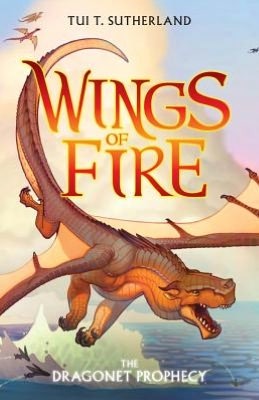
Wings of Fire: The Dragonet Prophecy

13228487Wings of Fire: The Dragonet Prophecy by Tui T. Sutherland

I read it as a: paperback

Source: my daughter’s collection

Length: 336 pp

Publisher: Scholastic Press

Year: 2012

This world, at war for decades, is ruled by dragons. The land is broken and bleeding and all are suffering because of the wars between the seven various groups of dragons. A prophecy states that after 20 years of war, a group of dragonets, born under special circumstances, will come to unite the dragons and bring peace. These dragonets – Clay, Glory, Tsunami, Starflight, and Sunny – have been taken from their native homes, hatched together in a hidden cave under the mountains, and raised together against their will by dragons working for a group called the Talons of Peace. Their purpose is to raise these dragonets to fulfill the prophecy. The problem is, the dragonets have ideas of their own, don’t really want to be part of a prophecy, and just want to find their families and be normal dragons. And there are other factions who are not interested in bringing the war to an end.

This was a relatively fast read, or would have been if I wasn’t reading it as a bedtime story with my daughter, just a chapter or two per night. She loves this series, but Pern, it is not. It’s super violent for a middle grade book, which I don’t really like. It did provide for some decent discussion about why prophecies are illogical and false, a good exercise in using her critical thinking while still reading a fun story. It also shows how even the most bitter of enemies can learn to get along if you get to know each other, or are raised together and can overlook each other’s differences, i.e., nobody is born a racist. But in general, I didn’t find the actual story to be all that compelling or the writing that good. It was fine for what it was, which is a story my 8 year old enjoys, though I wish she enjoyed something less violent. I am determined to get her addicted to the Dragonriders of Pern. It WILL happen!

book review · editorial

Fear: Trump in the White House

41012533A Review by Cathy Smith*

It was 1974, and we were all standing around a small television in the lobby of a hotel in Mexico City. President Richard Nixon was resigning from the office of President of the United States. My uncle turned to my mother and asked her thoughts about Watergate and President Nixon. Mom was not a big supporter of Nixon. For her, it was personal. During the 1950s, we lived in Bolivia. My father was one of the chief advisers to President Paz Estensoro and was involved in all the diplomatic meetings with any state officials from the United States. It was during one of Nixon’s visits to Bolivia as Vice President of the United States that things got very personal for my mom, and both my parents lost all respect and support for Nixon.

It is funny how the mind works, and how certain memories come back when watching current events in the news. In this case, all the memories of Watergate, Nixon, and my parents surfaced as I followed, and continue to follow, the drama of the Trump administration from the elections leading up to 2016, the midterms of 2018, the Mueller investigation, and Bob Woodward’s latest book Fear: Trump in the White House.

Bob Woodward is a Pulitzer Prize-winning journalist whose most notable work was with colleague Carl Bernstein when the two men blew the lid off the Watergate scandal with their investigative reporting. Their book, All the President’s Men, chronicles their work on Watergate. Woodward has worked for the Washington Post for over 45 years. Of his 19 authored or coauthored books, 13 have been number one national non-fiction bestsellers, and nine have been on recent U.S. Presidents (Woodward, n.d.). Fear: Trump in the White House was sold out before the book’s actual publication date. I initially bought the Audible version of the book, and later picked up a hard copy I found hiding in a stack of books at the local Costco. When going through checkout, the cashier told me I was lucky to have found the book because all the local bookstores sent representatives into Costco on the release date to purchase the Costco copies. He was surprised they had missed one. According to Woodward (n.d.) Fear: Trump in the White House has “sold more than 1.1 million copies in its first week in the United States and broke the 94-year-first-week sales record of its publisher Simon & Schuster” (para. 1).

Fear: Trump in the White House presents readers with a report of the Trump White House based on “multiple deep background interviews with firsthand sources” (Woodward, 2018, “Source Notes” pp. 363-390). Woodward presents readers with an inside look at what seems to be a White House in chaos. The story starts eight months into Trump’s term as President of the United States. Woodward opens with an account of a letter draft to the President of South Korea which would pull the United States out of KORUS, the United States – Korea Free Trade Agreement (Woodward, 2018, p. xvii). Woodward (2018) continues to explain in detail how Gary Cohn and Rob Porter “worked together to derail what they believed were Trump’s most impulsive and dangerous orders” (p. xix). From this example, Woodward takes his readers back to the beginning of the Donald Trump story, his rise to power, and how the White House drama of this administration continues to unfold in the headlines today.

Before the campaign, there was Steve Bannon, a scruffy looking, unkempt, right-wing media executive and strategist who was executive chairman of Breitbart News prior to becoming a chief strategist and senior counselor for Donald Trump. Bannon is a nationalist and holds to his America-first viewpoints. Bannon’s America-first viewpoint became the foundation for Trump’s Make America Great Again campaign, which included three points of focus: (1) to end mass illegal immigration (2) bring manufacturing back to the United States, and (3) get out of unnecessary foreign wars (Woodward, 2018). Bannon also encouraged the Trump campaign to focus on the fact that Donald Trump was not a politician, and that the campaign should focus the attention mostly on the Democratic opponent, Hillary Clinton. Throughout the book, Woodward provides example after example as to how Bannon influenced the campaign and the policies that laid the foundation for the White House we see today. However, even Bannon’s influence was limited when it came to Trump’s real inner circle, which is inclusive of the Trump family that include his wife, Melania; his son, Donald (Don) Trump, Jr.; his daughter, Ivanka; and his son-in-law, Jared Kushner. In an article from CNN, Betsy Klein (2018) reports, “In a White House where the loyalty of some is in question, family members are among the very few Trump trusts completely” (para. 4).

In the first part of his book, Woodward describes a situation where Melania strongly refuses to sit to one side of Trump, with Ivanka on his other side while he makes a tearful apology about misogynist comments made years earlier. Although Melania did not sit next to Trump for this staged apology recommended by Kellyanne Conway, Melania did release a statement to the public expressing her dissatisfaction with his comments, but also shared her forgiveness in hopes that the public could do the same (Woodward, 2018). As I read this section of the Woodward’s book, I remembered the Clinton/Lewinsky affair. I thought about how this played out in the media when this story broke and how it continued to haunt Hillary Clinton throughout her Presidential campaign. Later in his book, Woodward then describes the West Wing’s views of Melania Trump and President Trump as having “sincere affection for each other” even though “she operated independently” (p. 174). According to Woodward (2018) “They ate dinner together at times, spent some time together; but they never really seemed to merge their lives” (p. 174).

Don Trump, Jr., who took over his father’s private businesses when his father took office, is said to be Trump’s most vocal advocate (Klein, 2018). Woodward’s mention of Don, Jr., focuses on his meetings with the Russians at Trump Tower in the middle of the presidential campaign. Closer to the inner workings of the Trump White House are both the first daughter, Ivanka, and her husband, Jared Kushner. Woodward references this power couple throughout his book, illustrating the influence they have on President Trump. Woodward clearly leaves his readers with the impression that although Ivanka was on the President’s staff, she did not see herself as a staffer. Woodward describes an altercation between Bannon and Ivanka when Bannon calls her out on working around the Chief of Staff, and not following protocol by working through him. Woodward (2018) states that Ivanka was not shy about using her title as the first daughter when she assertively shouted at Bannon that she was not a staffer, but the first daughter. According to Maxwell Tani (2017), Jared Kushner, as one of Trump’s senior advisors, was “tasked by his father-in-law to solve some of the world’s most complex and confounding political problems domestically and abroad” (para. 2). Throughout Fear, Woodward makes mention of Kushner and his involvement in the Trump White House.

Outside of Trump’s immediate family, Woodward’s list of players, who seem to come and go, is extensive. Woodward does a great job weaving the narratives of the various players into the story of this White House administration. Woodward discusses the campaign, the Mueller report, immigration, trade, and the role this administration plays in the world and at home. Woodward paints a picture of how Trump was selected as the Republican candidate and then molded into the image of what the powers in control of the money wanted as the President of the United States. The chaos exposed by the reports from Woodward’s deep background interviews reflects not only the fear that some Americans may feel from reading his book, but is also reflective of the fear that individuals may have from working in and with the current White House administration.

After I finished listening to the book, I found that I needed some time to process and digest everything that I had just listened to. I decided to turn on the radio. The 1968 Simon and Garfunkel song “At the Zoo” was playing.

The monkeys stand for honesty | Giraffes are insincere| And the elephants are kindly but they’re dumb| orangutans are skeptical | Of changes in their cages | And the zookeeper is very fond of rum | Zebras are reactionaries | Antelopes are missionaries | Pigeons plot in secrecy | And hamsters turn on frequently | What a gas, you gotta come and see | At the zoo… (Simon, 2018, lines 16 – 29)

The timing of the song was a perfect ending to a well-written book. The Trump White House, as Woodward describes it, was (and still is) a zoo. As I continue to follow the news and the current state of the nation, I remember Watergate, and the scandals of a President my parents did not respect. I turned off the radio and sat in silence for a few seconds until another song/poem came into mind titled “‘The Ballad of the Skeletons’: Allen Ginsberg’s 1996 Collaboration with Phillip Glass and Paul McCartney.” I wondered about the agelessness of the songs and poetry of the Fifties Beat Generation and the Rock music of the Sixties. My mind finally wandered to Bob Dylan and I asked myself are the times “A-Changin”?


References

Klein, B. (2018). How Don Jr. became the President’s most vocal defender. CNN Politics. Retrieved on December 10, 2018 from https://www.cnn.com/2018/09/15/politics/donald-trump-jr-defender/index.html

Simon, P. (2018). At the zoo. Paul Simon. Retrieved on December 5, 2018 from https://www.paulsimon.com/song/zoo/

Tani, M. (2017). Here are all the duties Jared Kushner has in the Trump administration. Business Insider. Retrieved on December 10, 2018 from https://www.businessinsider.com/what-does-jared-kushner-do-in-trump-administration-2017-4

Woodward, B. (2018). Fear: Trump in the White House. Simon and Schuster: NY, NY

Woodward, B. (n.d.) Bob Woodward. Retrieved on December 5, 2018 from http://bobwoodward.com/


*Cathy Smith is a Full-time Faculty member at the University of Phoenix. She has taught at all grade levels, from kindergarten through college, as well as ESL. She herself is a bilingual citizen and advocates for Dreamers and DACA. She has many Things to Say about politics and the current Agent Orangenikov currently invading the Oval Office.