book review

The Flaws of Remember Summer: A Romance Gone Wrong

Remember Summer by Elizabeth Lowell
Genre: ewww, romance
I read it as a(n): digital book from the library
Length: 384 pp 
Her Grace’s rating: 1 stars

Raine Smith is a world-class equestrian. Readers first meet her scanning the cross country obstacle course for the summer Olympics, where she is standing on a hill with a camera. The male protagonist, Cord Elliott, is an agent from a branch of the government anti-terrorist task force who is assigned to protect Raine, whose father is a bigwig in said task force. Except nobody told Raine that she has a protective detail, and someone gave Cord a terrible photo of Raine so he didn’t recognize her. Still thinking she’s alone, she reaches into her purse to grab a notebook, making Cord think she’s going for a gun – alone. On a hilltop. – and he tackles her to the ground. Two minutes later, they are making out.

I…do not understand romance books. Granted, this one was written in the 80s. But even in that strange time, I don’t think real people acted that way. Who the fuck makes out with a man who literally just attacked you? The only correct response, both in that instant and in every instance thereafter, is a solid kick to the balls.

I got this book (thankfully from the library – I spent no money on it) because I saw a review somewhere that only talked about the horse stuff. So I thought it was a horse book! For grown ups! I was a horse-crazy little girl. I still dig a good horse novel for adults, especially if it’s about English style riding or eventing. If I had known it was a romance, I would have passed on it. Because of crap like the above. There is hardly any horse stuff except in the last 10% or so, other than Raine talking or thinking about her horse. Otherwise, it could be just any kind of event or sport – fill in the blank with whatever activity you choose and you’ll have the same story.

The characters were flat and unlikable. Raine is supposed to be a world-class rider on a dangerous horse who has spent her entire life working towards this moment when she will compete in the Olympics, and yet one tackle and getting pinned to the ground by a random man turns her into a vapid cow who can only think about getting laid by said random man and who laments that her daddy doesn’t love her. 

Cord is a caveman with a gun – grunt woman mine! – who has poor communication skills and a one-track mind, if we’re being generous in factoring in his mission to kill a specific terrorist. Half-track mind if we focus only on his singular desire to drag Raine to bed by her hair and keep her there. Naturally, he also handles her horse better than she does.

I am sad that there is such a dearth of horse stories for adults, and that many of the ones that exist take the form of romance. Horses and women do not automatically have to equate to bodice-ripping, flat romance. I am definitely dumber for having read this book.

book review · sci-fi

Character-Driven Stories in The Wayfarers Series

I had done a very short review for The Long Way to a Small, Angry Planet in a catch-up round a while back. So I don’t really want to redo it here, even though there’s a lot I could say about it. Mostly I will say that I loved it and that it had spicy, diverse characters. The characters were the primary drivers of the story more than the plot, though that was ridiculously fun as well. I love the trope of Found Family and Chambers created a beautiful one on the Wayfarer. I give it 4.5/5 stars

Moving on. A Closed and Common Orbit is, I think, my favorite in the series. As fun as TLWtaSAP was, this one sat me down and fed me a delicious story of self-discovery AND a character backstory. I do love a good backstory. I like seeing how all the stories and characters are intertwining across these books. Pepper was a minor character in a couple scenes in the first book, and now she has a whole book of her own, along with Lovey, the Wayfarer’s AI. Other characters that got a small mention elsewhere show up as well. I love that kind of world-building. Very meta. 

I also loved this story because it was fun to get to know one specific setting well. The primary story was set in Port Coriol, and the descriptions of that city were vivid and tangible. It was a vibrant city and Pepper’s little neighborhood, Six Top, felt like a place I would love to stay. 

5/5 stars

————————————–

Record of a Spaceborn Few covers the Human fleet, called the Exodans. They are the remnants of the people who left Earth and who decided to remain in space rather than settling on a planet. As with the other books in the series, there are references to other characters from previous books. One of the POV characters in this is Ashby’s sister. Ashby, for those who may have forgotten, is the captain of the Wayfarer. It was fun to get “updates” about Ashby by way of a random comment here and there, a reminder of what the Wayfarer crew was up to at the same time the events in the Fleet were unfolding. 

This one focused on the ways we come to discover Home, and what that means to each of us. We saw this exploration through the eyes of several Humans, some who were Exodan and some who grew up on a planet. Some wanted out of the Fleet, some wanted back in, and others weren’t sure where they belonged. Chambers teased out the threads of their stories and wove them together to create a lovely, rich story.

3/5 stars

————————————–

The Galaxy, and the Ground Within. Yes, yes, it was chock full of complex characters and a little bit of splody space excitement and getting to know people and their various cultures. I dig all of that, don’t get me wrong. But! Did you know there is a whole scene dedicated to cheese? And how revolting it really is when you stop to think about it? And how, despite that, humans are “all so fucking bonkers for cheese that they’ll ingest a dose of the enzymes [needed to digest cheese] beforehand so that they can eat it.” I feel so seen.

As with the other three books in the series, this one was full of deep characters, lots of self-discovery, and growth. Also as with the rest of this series, it really isn’t an action-packed, standard space adventure kind of story. All of the books in this series are more like examples of kishotenketsu, where there isn’t a traditional hero or call to action or conflict. The characters interact and learn about each other and through them, their own biases and blind spots. Some of them try to figure out what they can do about those to do better. Their circumstances made them think introspectively, and I think it should do the same for any reader as well.

4/5 stars

————————————–

Overall, this entire series is the sort of generally happy, hopeful sci-fi I love. It’s reminiscent, in that way, of the original series Star Trek. I think we need more of the fun, optimistic, cozy kind of sci-fi and less of the dystopian, doom and gloom, we’re all going to die screaming kind. We already know we’re going to die screaming. I, for one, would like not to have to think about it for a minute. The Wayfarers series is the thing you are looking for to help distract you from…everything.

book review · historical fiction

Exploring Women’s Voices in The Iliad’s Retelling

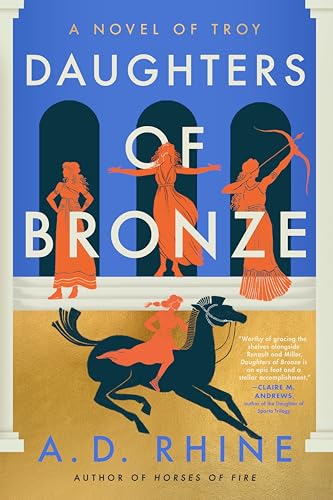
Daughters of Bronze by A.D. Rhine
Genre: historical fiction
I read it as a(n): digital ARC
Length: 512 pp
Her Grace’s rating: 5 stars

In Daughters of Bronze, A.D. Rhine (the penname of writing team Ashlee Cowles and Danielle Stinson) continues their feminist retelling of The Iliad, focusing on four women: Rhea, Andromache, Helen, and Cassandra. This second* novel brings their stories to the forefront, challenging the traditional male-dominated narrative.

Helen, often blamed for the Trojan War, is portrayed as a victim of Paris, who took her against her will. Rhine gives Helen a voice, exploring themes of female agency and resilience.

Andromache, usually seen as Hector’s wife and Astyanax’s mother, is depicted as a complex character, fiercely protecting her family and city. Her story delves into motherhood, duty, and honor.

Cassandra, the seer cursed to be ignored, is shown as a character of heartbreaking vision. Her voice is repeatedly silenced, often by other women, yet she remains devoted to the truth. Her story highlights the consequences of ignoring or marginalizing women.

Rhea, a refugee turned spy for Troy, plays a crucial role in the war. She and other brave women work to undermine the Greeks, risking their lives and highlighting the invisibility of women in historical narratives. If Helen, Andromache, and Cassandra are the warp of this story, Rhea is the weft that binds them together.

Rhine’s novel is rich with themes that resonate deeply in contemporary discourse. The author uses the framework of The Iliad to explore issues of gender, power, and agency. Each character’s story is a testament to the strength and resilience of women, challenging the patriarchal structures that seek to confine them. By giving voice to Rhea, Andromache, Helen, and Cassandra, Rhine underscores the importance of listening to and valuing women’s experiences and perspectives.

The novel also discusses the personal cost of war, not just for the men who fight, but for the women who endure its aftermath. The emotional and psychological toll of the Trojan War is vividly portrayed through the eyes of its female characters, offering a stark reminder of the often-overlooked victims of conflict.

Rhine’s prose is lyrical and evocative, capturing the grandeur of the ancient world while providing intimate glimpses into the lives of its characters. The alternating viewpoints of Rhea, Andromache, Helen, and Cassandra are seamlessly woven together, creating a tapestry of interconnected stories. This narrative structure not only highlights the individuality of each character but also emphasizes their collective experiences and struggles.

Daughters of Bronze is a powerful and thought-provoking retelling of The Iliad that places women at its heart. A.D. Rhine’s novel is a celebration of female strength, resilience, and agency, offering a fresh perspective on a timeless epic. By reimagining the stories of Rhea, Andromache, Helen, and Cassandra, Rhine provides readers with a deeper understanding of the human experience and the enduring impact of women’s voices in history. This novel is a must-read for fans of historical fiction, feminist literature, and anyone seeking a more inclusive and nuanced take on classic tales.

*I somehow missed that this was the second installment, but it didn’t matter. The narrative is tight, and anyone familiar with The Iliad can jump right in. However, some backstory from the first installment, Horses of Fire, might further enhance the reading experience.

A version of this review was originally published at the Historical Novel Society.

book review

Exploring Magical Realism in _Spells for Forgetting_

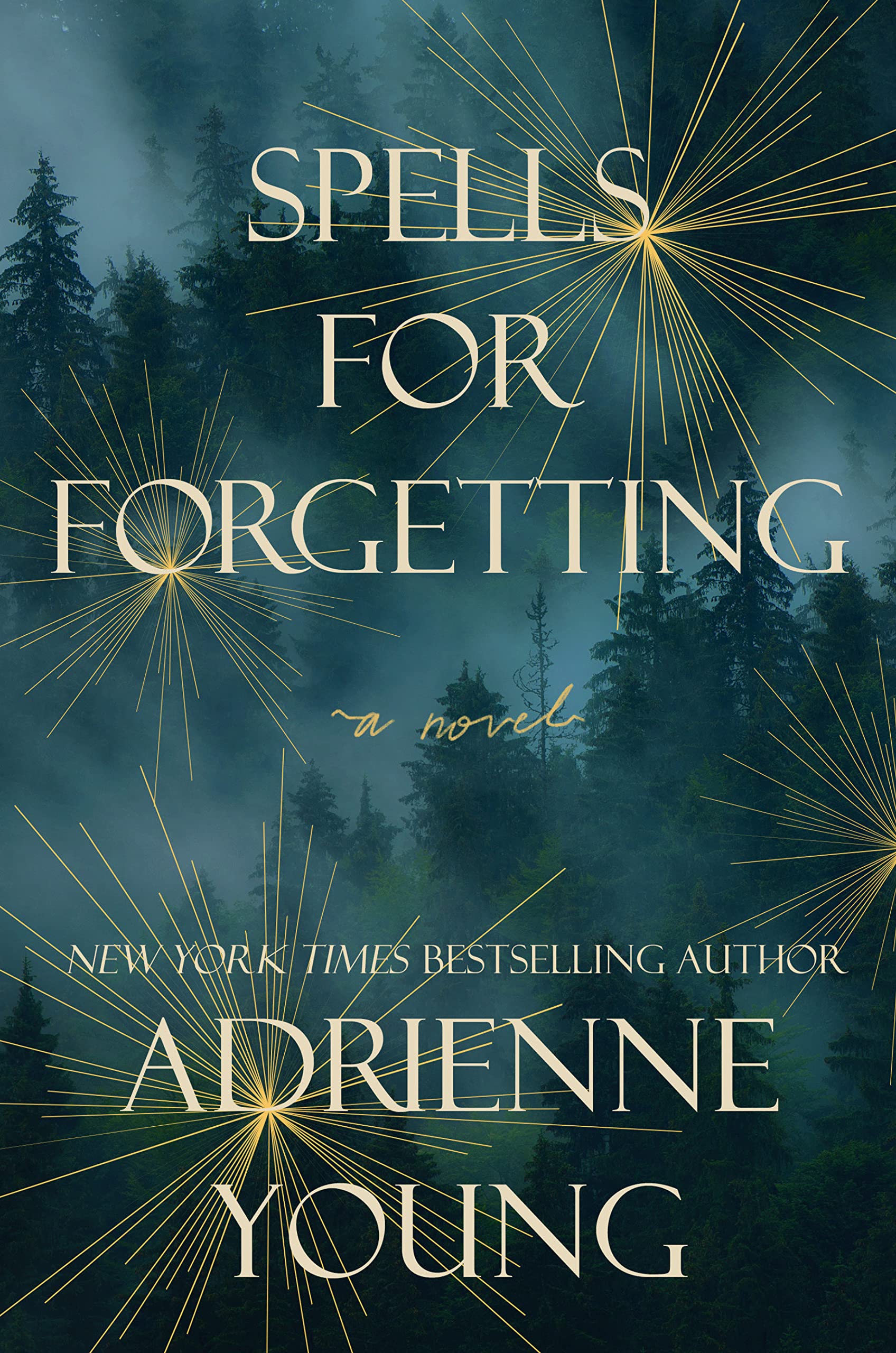
Spells for Forgetting by Adrienne Young
Genre: literary fiction/ magical realism
I read it as a(n): hb
Length: 350 pp 
Her Grace’s rating: 4 stars

The residents of Saoirse Island, WA, are a different group of people. They are insular, some of them to the point of xenophobia, yet they are almost entirely dependent on the tourists who come to the island to pick apples from its gigantic orchard. Every person on the island is tied in one way or another to the orchard. So when the orchard burned nearly to the ground and a teen died, folks did what they felt was necessary – ostracized the boy who seemed responsible, forcing him and his mother out of the community, and then never spoke of it again. That is, until that boy, now a man, returns to the island to bury the ashes of his mother. August Salt’s return to the island stirs up memories and secrets most want to leave buried except for Emery Blackwood, the girl August left behind.

Saoirse is an island that wraps itself around the lives of its people, dictating their fates in ways that feel inescapable. It is ironic since Saoirse means freedom in Irish, but it’s anything but free for some of the islanders who are bound by the weight of history, tradition, and unsolved mysteries. For those who live there, leaving is never really an option. Even when they manage to get away, as one of the characters does, they are always drawn back, like a magnet pulling them to confront what has been left unresolved. It is not really an ominous sense, though, as the island protects many who need it, and wreaks havoc on others who deserve it. Also? I love it when there is an inanimate object that is a fully fledged character in its own right. Saoirse Island is certainly that.

In magical realism, the blending of the ordinary with the extraordinary is seamless, and Spells for Forgetting exemplifies that perfectly. Saoirse is full of magic, but it’s a kind of magic that feels like part of the natural world. It just exists, like the air or the tides, and nobody questions its existence. The magic is tied to the land itself, the orchard in particular. The island breathes life into this magic, and just as it holds the people in its grip, it also holds their power. This is why the women, especially the older women, are so central to the story. Their knowledge of magic isn’t learned in books or schools—it’s passed down through the generations, grandmother to granddaughter, like a family secret. 

In folklore, older women tend to hold a special place when they aren’t relegated to the role of witch or wicked stepmother. They are the keepers of tradition, the wise ones who hold knowledge that others don’t understand or respect until it’s too late. But Spells for Forgetting subverts this role in an interesting way. Yes, the grandmothers are the teachers, the ones who understand the magic and the island, but they are also trapped by it. The island’s magic is as much a burden as it is a gift. It binds them to Saoirse just as much as it empowers them, and in this way, they are not the all-knowing, all-powerful figures of traditional folklore. Instead, they are characters shaped by the same constraints and fears as everyone else, forced to carry the weight of the island’s secrets and never able to escape its influence. 

The role of women in the story, particularly in the context of magical realism, highlights the balance between empowerment and imprisonment. Their connection to the island, through magic, bloodlines, and tradition, gives them strength but also makes them part of Saoirse’s pull. While folklore often celebrates the wisdom of old women, Spells for Forgetting shows the price of that wisdom—knowledge of the island’s magic comes with a cost, and freedom, in the true sense of the word, is not part of the bargain. 

In this way, the island itself becomes the ultimate character, shaping and controlling the lives of everyone who resides there. Its magic is subtle, but Saoirse is a constant reminder that what should be freedom is, in reality, a kind of beautiful, inescapable prison. The natural elements—earth, water, wind, and fire—aren’t just parts of the scenery but active forces that tie the people to the island, just as much as the magic and the folklore do.

book review

Nineteen Minutes

Nineteen Minutes by Jodi Picoult
Genre: general fiction
I read it as a(n): paperback
Length: 642 pp
Her Grace’s rating: 3.5 stars

A typical day at Stirling High in New Hampshire took a horrific turn when a shooter unleashed devastation in just 19 minutes, forever changing the lives of everyone in the town.

This was a tough book for me to read. As a parent of a high schooler, it touched on a fear that feels all too real. The thought of sending my daughter to a place where she should be safe, only to have her not come home, is something that gives me daily anxiety. 

The story follows the aftermath of the shooting, as various characters grapple with the trauma. Some have lost children or close friends, while others are survivors trying to rebuild their lives amidst grief and survivor’s guilt. Secrets ripple through the small town as characters struggle with what they know, and in some cases, what they refuse to admit.

Peter, the shooter, fits the mold of the classic outsider—bullied from an early age and deeply sensitive. But he’s more than just a stereotype; he’s experienced losses of his own, too. Josie, on the other hand, is one of the popular girls, driven by a fear of social rejection and trapped by the high school hierarchy. The pressure to conform is constantly present. I do not fucking miss high school one bit.

Patrick, the detective who is one of the first responders at the scene, is a man haunted by his own past and determined to seek justice for the victims. Yet in a town where almost everyone is hiding something, justice is hard to come by. Alex, the trial judge, faces her own internal conflict. Having known Peter as her daughter Josie’s childhood friend, her struggle to remain impartial while also putting her daughter’s needs first adds another layer of tension.

Picoult skillfully intertwines these characters’ stories, revealing bits and pieces that form a complex web of connections. As their secrets come to light, it’s clear that not everyone is who they seem. The shifting perspectives and timelines create a rich narrative structure, which adds depth to the mystery—even though we know early on who the shooter is.

This book forces readers to confront difficult questions about guilt, blame, and what it means to be the “bad guy.” It challenges the idea of who the true villains are, and the answers aren’t always straightforward.

That said, a few things left me unsatisfied. There were some loose ends that felt less like intentional ambiguity and more like unfinished threads in the story. While I appreciate a certain level of open-endedness, it can be frustrating when key details don’t feel fully resolved.

The major takeaway from this novel, though, is simple:

WE DON’T HAVE TO LIVE LIKE THIS!

Also, just from me, a hearty FUCK YOU to Republicans. If it weren’t for them and their weird ammosexual tendencies, valuing their guns more than people, we wouldn’t have to worry about things like this.

book review · interview

Reflections of Identity & History: Discussing Hall of Mirrors with John Copenhaver

Originally published in Historical Novels Review | Issue 109 (August 2024)

The 1950s were a complex time, filled with political intrigue and deep social and moral imbalances. This is the tumultuous backdrop for John Copenhaver’s latest novel, Hall of Mirrors (Pegasus Crime, 2024), a thoughtful reflection of identity, politics, and the human experience.

Copenhaver set Hall of Mirrors in the McCarthy era, following the timeline established in his previous post-WWII novel, The Savage Kind (Pegasus Crime, 2021), featuring the same main characters, Judy and Philippa. Copenhaver explains that he had more to tell about their story and wanted to follow them in their growth from teenagers to young women. He says that the McCarthy era was “a particularly difficult time to be an independent-minded woman, especially if you’re queer and, in Judy’s case, mixed race.”

Researching and writing about this period uncovered some unique challenges, particularly those facing the LGBTQ+ and Black communities. Copenhaver immersed himself in the socio-political climate of the 1950s, uncovering the intricate ways in which government policies shaped societal attitudes. The McCarthy era is indelibly marked by government-sanctioned discrimination against Black and queer individuals, which bled over into society as a whole. Copenhaver notes, “The McCarthy era, from overt political figures grasping for power like McCarthy to the FBI under J. Edgar Hoover, led to the perpetuation of discriminatory ideologies that still linger.” It is in the space left by these attitudes that Copenhaver is able to explore their continuing impact on modern society. He says, “These attitudes still echo today, making it a rich and relevant setting for my story.”

Copenhaver deftly manages the delicate task of balancing historical accuracy with creative storytelling. His story incorporates many of the dark facets of the McCarthy era and how various government agencies acted while simultaneously revolving around a domestic setting through the private lives of Judy and Philippa, as well as those of Roger and Lionel, the novel’s murder victim and suspect. He explains that this balance was crucial to create an authentic and engaging narrative. The domestic side of the novel really is where the narrative shines, allowing readers a glimpse into the minds of the characters.

The book’s title itself gives readers a deeper perspective and acts as a portal into the themes within, with the concept of reflection and doubling at the forefront. The society that Judy and Philippa navigate is fraught with double standards and questions of identity. Copenhaver elaborates, “I’ve always been interested in mirroring and doubles, a consistent theme in film noir. In this novel, I explore several doubles: Judy and Philippa, Roger and Lionel. Opposites attract, and love aligns, yet mirrors also suggest vanity and the question of identity.”

Identity is further explored in the representation of LGBTQ+ characters, which are a cornerstone of Copenhaver’s writing. Thanks to Copenhaver and other contemporary writers, these characters are being written back into historical fiction. He says that LGBTQ+ representation in his work is an intentional correction of invisibility and, “It’s about enjoying a twisty mystery while considering historical representation.”

The theme of “passing” is also central the narrative. Judy has spent her life passing as a white woman, though in reality she is biracial. Passing has been a complex issue for decades, having its origins in the colonial and antebellum South eras. Initially, the practice of racial passing was used as a means of escaping slavery, but it continued in the post-Reconstruction era as a strategy to avoid systemic racism. Passing carried on into the 1950s, both in terms of racial passing as well as passing as straight for members of the queer community, again as an attempt to escape from the racism and homophobia of the time. Copenhaver notes that passing also “raises questions of identity and agency, highlighting the moral imbalances of societal norms.”

Moral imbalances are further explored through the lens of the political landscape of the 1950s. This time period was marked by the Red Scare and Jim Crow laws which also targeted LGBTQ+ individuals. The merest hint of accusation could be enough to destroy an entire life. Copenhaver reflects, “The Lavender Scare, a subset of the Red Scare, led to the persecution of gays and lesbians in government roles, driven by fearmongering and power dynamics.”  Roger’s firing from his job at the State Department and Lionel hiding his true relationship with Roger from the police during their investigations are reflections of the Lavender Scare and systemic racism in action.

While acknowledging social progress since then, Copenhaver questions the true extent of change. Through the characters’ experiences, he urges readers to critically analyze fear-driven narratives, emphasizing the importance of understanding historical contexts to foster meaningful change.

When dealing with heavy themes, a reflection on grief and loss is only natural. Copenhaver’s personal experiences with grief shape his writing. He candidly discusses the impact of his father’s early death, stating that this formative experience forced him to reflect on loss, mortality, and why bad things happen. He describes his writing as “inherently dark yet affirming, reflecting the complexities of life.”

Copenhaver further notes, “Exploring grief allows for a deeper understanding of human experiences, showcasing the resilience and affirmation that coexist with sorrow.” Philippa, Judy, and Lionel embody various aspects of grief and resilience as they experience the loss of loved ones, of their security, livelihood, and identity. They also are the embodiment of perseverance, carrying on despite hardship and persecution. As Copenhaver’s vibrant, complex characters demonstrate, it is during difficult times that people’s true selves emerges.

Hall of Mirrors emerges as a nuanced exploration of identity, politics, and human resilience within the McCarthy-era, as well as holding up a mirror to our modern lives and challenging us to do better. Copenhaver’s captivating narrative encourages readers to reflect on historical legacies, LGBTQ+ representation, and the enduring quest for identity and belonging.

book review

Audiobook Catch-Up: Lost Boy, Norse Mythology, Ammonite, & You Feel It Just Below the Ribs

Norse Mythology by Neil Gaiman Genre: fantasy I read it as a(n): audiobook Narrator: Neil Gaiman Length: 6:29:00 Her Grace’s rating: 5 stars

In the beginning, there was Ymir. Things got weird from there. 

A delightful, modern revision to the Norse Mythology canon. Neil Gaiman did a great job – can he do any other kind? – remaining true to the Eddas but also making the stories accessible and fun for modern audiences. This one has a special place in my heart since this is what he read to us the one time I got to see him live. I hope to see him read in person again someday.

EDIT: What the fuck, Neil Gaiman? I sincerely hope the allegations against you are false. Don’t be yet another reason why we choose the bear.

Lost Boy by Christina Henry Genre: fantasy I read it as a(n): audiobook Narrator: Samuel Roukin Length: 7:43:00  Her Grace’s rating: 5 stars

The story of Peter Pan as told through the eyes of the very first Lost Boy – James Hook. In this version, which was brilliantly narrated by Samuel Roukin, we see what life was like for the Lost Boys in Neverland, how they got there, and the strange little family they cobbled together for themselves. 

Also, as I’ve said for years, Peter Pan is NOT a good creature. 

This is one of my favorite books of 2024, I already know this.

You Feel It Just Below the Ribs by Jeffrey Cramor and Janina Matthewson Genre: SF I read it as a(n): audiobook Narrator: Kirstin Potter and Adepero Oduye Length: 9:22:00  Her Grace’s rating: 4 stars

In a not-too-distant future, after decades of global war that decimated society, a new approach was put into place. It was designed to prevent wars in the future by eliminating the bonds humans form with each other. There are no nations, no religions, no political parties, nothing that contributes to tribalism. Sounds just about perfect. 

Oh yeah, they also eliminate families. Babies are given into care as soon as they’re born to be raised in government-run facilities. So nevermind about the utopian veneer. 

Told through the found documents/journal of the woman who created this new theory of living, with footnotes from a scholar of the time. 

In the dictionary next to “unreliable narrators” is a link to this book.

Ammonite by Nicola Griffith Genre: SF I read it as a(n): audiobook Narrator: Gabra Zuckman Length: 13:29:00  Her Grace’s rating: 3 stars

On a colony planet that has lost touch, a virus decimated the inhabitants, killing many of the women and every single man. The survivors were left to fend for themselves and adapt or die. Centuries later, folks back home want to reestablish contact so they can exploit the planet. But they’re scared of the virus and abandon the crews they sent to check things out. Included in that group is Marghe, an anthropologist sent to learn how the women on the planet have survived for so long without any men to procreate with. Her discoveries are…surprising. 

Suuuuuper interesting story, still highly relevant even though this was written nearly 30 years ago. Narration was a little boring, though. 

book review

A Spartan’s Sorrow

Book cover with a statue of a woman in the center of a circle of Greek patterns, surrounded by red and orange foliage
A Spartan’s Sorrow
by Hannah M. Lynn
Genre: historical fiction
I read it as a(n): ARC
Length:
332 pp
Her Grace’s rating: 4 stars

Everyone knows at least the gist of the Trojan War and its major players – idiot Paris, Helen with her face that launched a thousand ships, brave Achilles and Odysseus, Menelaus and Agamemnon. Probably, too, people are more familiar with portrayals of Agamemnon’s wife, Clytemnestra, as a devious, selfish, and vengeful woman who gets her comeuppance in the fullness of time. Well, Hannah M. Lynn’s novel, A Spartan’s Sorrow, turns that portrayal right on its head. Instead, we see Clytemnestra as a complex figure, abused, grieving, and fiercely protective of her children. 

The novel begins with Agamemnon’s fleet ready to set sail to Troy. The seas, however, are becalmed and nobody’s going anywhere until that changes. Turns out, Agamemnon pissed off the goddess Artemis when he killed a stag that was special to her. To appease Artemis and get her to return the wind to the seas, he sacrifices his eldest daughter with Clytemnestra, Iphigenia. Then off he pops to Troy for ten years, leaving his wife shattered with grief and 100% planning her revenge.

During the course of the novel, we see behind the throne, as it were, into the inner workings of the Mycenean kingdom. Clytemnestra is that most terrifying character of all – a strong, brave, competent woman. She rules Mycenea fairly and efficiently, and in time her subjects come to regard her with tremendous respect. She is a single working mother of the ancient world in every respect that matters. She raises her children as fairly as she can, including supporting their interests, teaching them the ways of their social class, and fosters their love for their people. Even though she has plenty of cause to, Clytemnestra also never speaks badly of Agamemnon to her children, which should probably count as some kind of Herculean task. If my husband killed not only one of my children with him, but also my first husband and infant son, you can bet I would be telling everyone about it. Equatorial pygmies would know how I felt about him. 

So once he kills Iphigenia, do you think Clytemnestra is just going to sit back and wait to see if he feels he needs to kill another one of his kids? No. No, she does not. Every single thing she does is to ensure the safety of her surviving children, no matter how difficult it is for her personally. 

I loved this book because it showed her in a much more realistic light. In most of literature, Clytemnestra is portrayed as being such a cow. In this book, she is a mother first and foremost. The things she thinks and feels and does are understandable to any woman who has children of her own. She is a complex, well-rounded figure in the book, not a one-dimensional, scheming villain. She is a flawed, realistic woman.

Similarly, the other characters are also very well-developed. Electra, her youngest daughter, evolves from a bold little girl to a young woman who despises her mother based on an incorrect assumption. And yet, she loves her little brother, Orestes, deeply and unconditionally. Orestes himself grows from a toddler to a young man and king in his own right, retaining his sweetness and gentleness but honing his political acumen to great effect. 

I definitely enjoyed this book and, even though it is listed as the second in a trilogy, it easily reads as a standalone. I enjoyed it enough that I may well go back and read the first one, which I believe focuses on Medusa. YASSSS, queen, give me all the feminist retellings, please! 

A version of this review was originally published in the Historical Novels Review. 

book review · historical fiction

I Am Rome

I Am Rome by Santiago Posteguillo
Genre: historical fiction
I read it as a(n): digital ARC
Length: 634 pp 
Her Grace’s rating: 5 stars

The end of the Roman Republic was a time of great strife and even greater corruption. Members of the ruling classes clashed with the regular population in terms of what taxes and rights each social class had. A prime example of this corruption was Gnaeus Cornelius Dolabella, close advisor to the dictator Sulla and governor of Macedonia. During his stint as governor, Dolabella abused his position to gain tremendous wealth, ignoring his duties in favor of abusing the people under his care and stealing taxes. He was charged in Rome with corruption, theft, and rape. However, since it was an age rife with general corruption, all of the jurors and judges were bribed to exonerate him. No one wanted to step into the role of prosecutor since doing so would not only effectively end a man’s political career but also very likely terminate his life. Except one young and inexperienced man decided he would do it. Gaius Julius Caesar was his name.

This novel was a 600+ page doorstopper – and I read it in just a few days. The story flowed rapidly and engaged my interest from page one. The novel’s structure was divided into sections dedicated to Dolabella’s trial mixed with flashbacks from various characters’ perspectives of events that led up to the trial over the course of many years. Readers are introduced to the main players and given glimpses into their motivations based on their experiences. 

The action-heavy scenes and battles are vividly depicted and exciting. This is definitely the novel’s strength. Many techniques the Romans were famous for, such as the testudo formation, are described here in detail, enhancing the action without slowing it down. The military strategies used throughout the novel would be familiar to students of Rome or military history. To the uninitiated, these details merely add to the excitement of the moment. 

The main drawback to Posteguillo’s novel is that there is little in the way of actual character development. Caesar largely remains the same throughout the book even though he is shown at various ages from childhood to early adulthood. Similarly, the dialogue is a little lacking and feels a bit stilted in places. It was great fun, though, to see Posteguillo’s young Caesar reflecting about how he will never be known as a military genius like his uncle Marius, or how he will never amount to anything if he loses the case against Dolabella. It is also always interesting when other real-life figures make appearances, such as Cicero here and there throughout the trial. 

I don’t usually look at any other reviews before I read a book, and I didn’t this time, either. I did, though, look at some after I finished. It seems that some readers felt the book was very inaccurate and played fast and loose with historical events. Normally I am a stickler for high fidelity in historical fiction since it will make historians happy and the rest of us won’t know any different. Perhaps this book is inaccurate, but I happily fall into the latter camp despite having taken 7 years of Latin throughout my college and grad school career. I just thought it was a great read and I would happily read more of Posteguillo’s works if they ever get translated into English. 

All in all, I thought this was a highly enjoyable novel, even if it had some flaws and inaccuracies. Definitely recommended. 

book review

The Gentleman: Exploring a Madcap and Devilish Literary Adventure

The Gentleman by Forrest Leo
Genre: fantasy, I guess?
I read it as a(n): audiobook
Narrator: Samuel Roukin and John Keating
Length: 7:56:00 
Her Grace’s rating: 4 stars

Imagine you are a writer. Maybe not a super successful one, maybe not the very best one, but a writer all the same. You make words on the page and sell them and people buy them and at least some of those people enjoy them and are eager to read the next words you put on the page and sell. You love what you do but then you discover that you’re broke and so you decide to find a lady and marry her just for her money. This effectively kills your muse and you don’t write for months. Then, during a dinner party you didn’t want to host, you accidentally sell your new wife to the devil – the Gentleman in question – and then, to your horror, discover that you actually are in love with her and now you have to go on a mission to get her back. 

This is what happens to Lionel Savage, broke peer of the realm, mediocre poet, and failed but besotted husband. The book is told through Lionel’s essay on the adventure, with footnotes added by his editor (and cousin-by-marriage), Hubert Lancaster, who is possibly the best character in the book besides Simmons the butler. 

If you are looking for a book that challenges your deeply-held beliefs or is a philosophical exploration on the mysteries of love, inspiration, and family dynamics, this is absolutely not the book for you! If you want a pseudo-Victorian historical fiction filled with duels, flying machines, secret societies, a soft-spoken Devil who uses Dante as a gardener, literary snobbery by one of the characters, derring-do, brutal British wit, and general madcap adventure in the vein os Pratchett, Wilde, or Wodehouse, then step right up! 

I haven’t laughed this hard at a book since the last Scalzi I read.