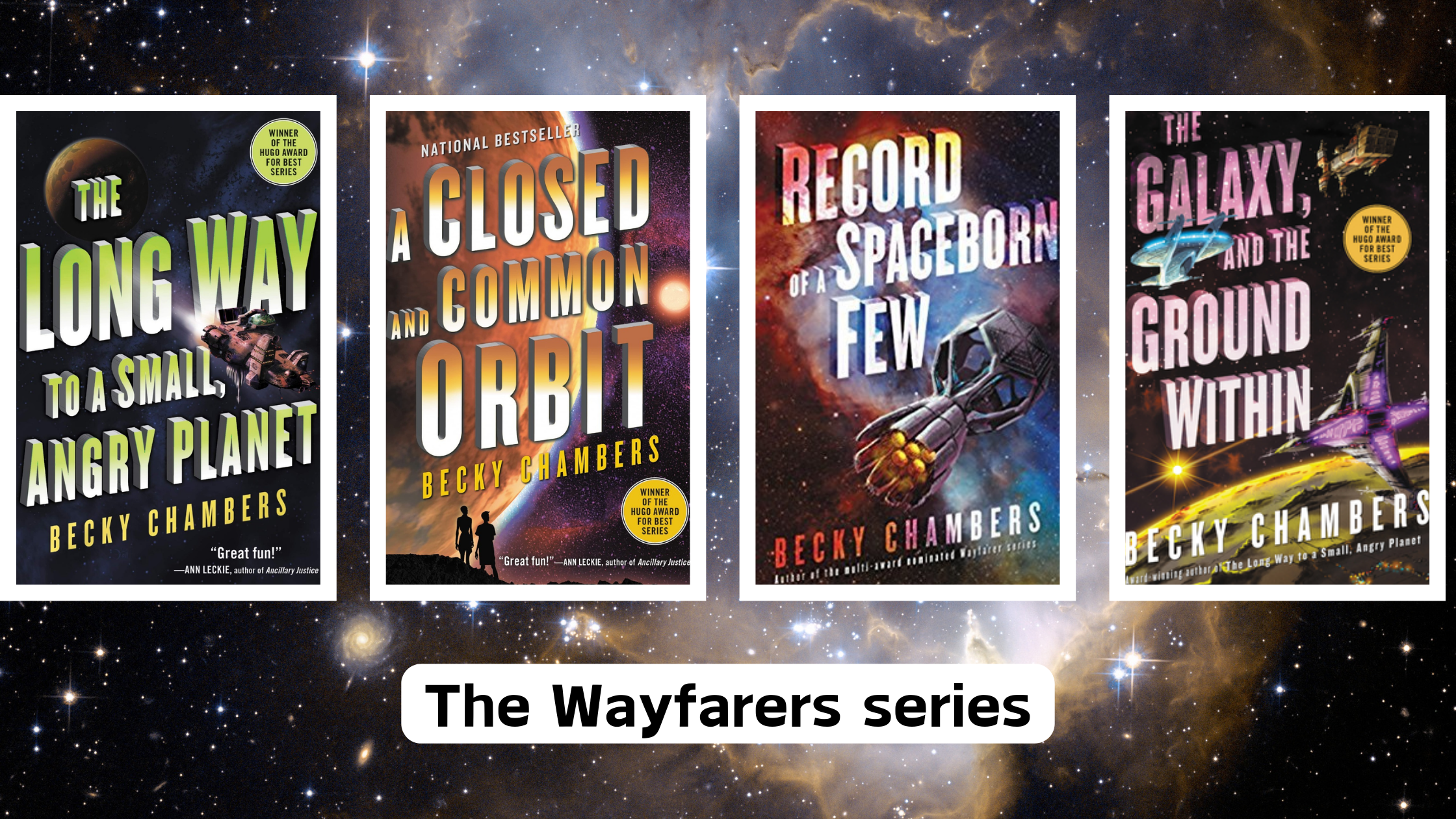
book review · sci-fi

Character-Driven Stories in The Wayfarers Series

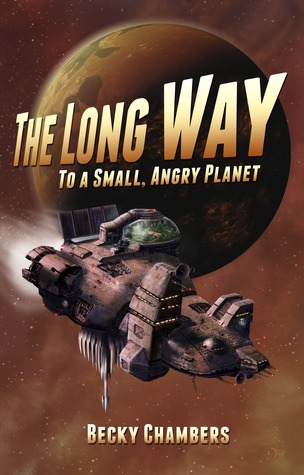
I had done a very short review for The Long Way to a Small, Angry Planet in a catch-up round a while back. So I don’t really want to redo it here, even though there’s a lot I could say about it. Mostly I will say that I loved it and that it had spicy, diverse characters. The characters were the primary drivers of the story more than the plot, though that was ridiculously fun as well. I love the trope of Found Family and Chambers created a beautiful one on the Wayfarer. I give it 4.5/5 stars

Moving on. A Closed and Common Orbit is, I think, my favorite in the series. As fun as TLWtaSAP was, this one sat me down and fed me a delicious story of self-discovery AND a character backstory. I do love a good backstory. I like seeing how all the stories and characters are intertwining across these books. Pepper was a minor character in a couple scenes in the first book, and now she has a whole book of her own, along with Lovey, the Wayfarer’s AI. Other characters that got a small mention elsewhere show up as well. I love that kind of world-building. Very meta. 

I also loved this story because it was fun to get to know one specific setting well. The primary story was set in Port Coriol, and the descriptions of that city were vivid and tangible. It was a vibrant city and Pepper’s little neighborhood, Six Top, felt like a place I would love to stay. 

5/5 stars

————————————–

Record of a Spaceborn Few covers the Human fleet, called the Exodans. They are the remnants of the people who left Earth and who decided to remain in space rather than settling on a planet. As with the other books in the series, there are references to other characters from previous books. One of the POV characters in this is Ashby’s sister. Ashby, for those who may have forgotten, is the captain of the Wayfarer. It was fun to get “updates” about Ashby by way of a random comment here and there, a reminder of what the Wayfarer crew was up to at the same time the events in the Fleet were unfolding. 

This one focused on the ways we come to discover Home, and what that means to each of us. We saw this exploration through the eyes of several Humans, some who were Exodan and some who grew up on a planet. Some wanted out of the Fleet, some wanted back in, and others weren’t sure where they belonged. Chambers teased out the threads of their stories and wove them together to create a lovely, rich story.

3/5 stars

————————————–

The Galaxy, and the Ground Within. Yes, yes, it was chock full of complex characters and a little bit of splody space excitement and getting to know people and their various cultures. I dig all of that, don’t get me wrong. But! Did you know there is a whole scene dedicated to cheese? And how revolting it really is when you stop to think about it? And how, despite that, humans are “all so fucking bonkers for cheese that they’ll ingest a dose of the enzymes [needed to digest cheese] beforehand so that they can eat it.” I feel so seen.

As with the other three books in the series, this one was full of deep characters, lots of self-discovery, and growth. Also as with the rest of this series, it really isn’t an action-packed, standard space adventure kind of story. All of the books in this series are more like examples of kishotenketsu, where there isn’t a traditional hero or call to action or conflict. The characters interact and learn about each other and through them, their own biases and blind spots. Some of them try to figure out what they can do about those to do better. Their circumstances made them think introspectively, and I think it should do the same for any reader as well.

4/5 stars

————————————–

Overall, this entire series is the sort of generally happy, hopeful sci-fi I love. It’s reminiscent, in that way, of the original series Star Trek. I think we need more of the fun, optimistic, cozy kind of sci-fi and less of the dystopian, doom and gloom, we’re all going to die screaming kind. We already know we’re going to die screaming. I, for one, would like not to have to think about it for a minute. The Wayfarers series is the thing you are looking for to help distract you from…everything.
fantasy · sci-fi

Thorn Hedge, Hell Followed With Us, and The Long Way to a Small, Angry Planet – A Catch-Up Review

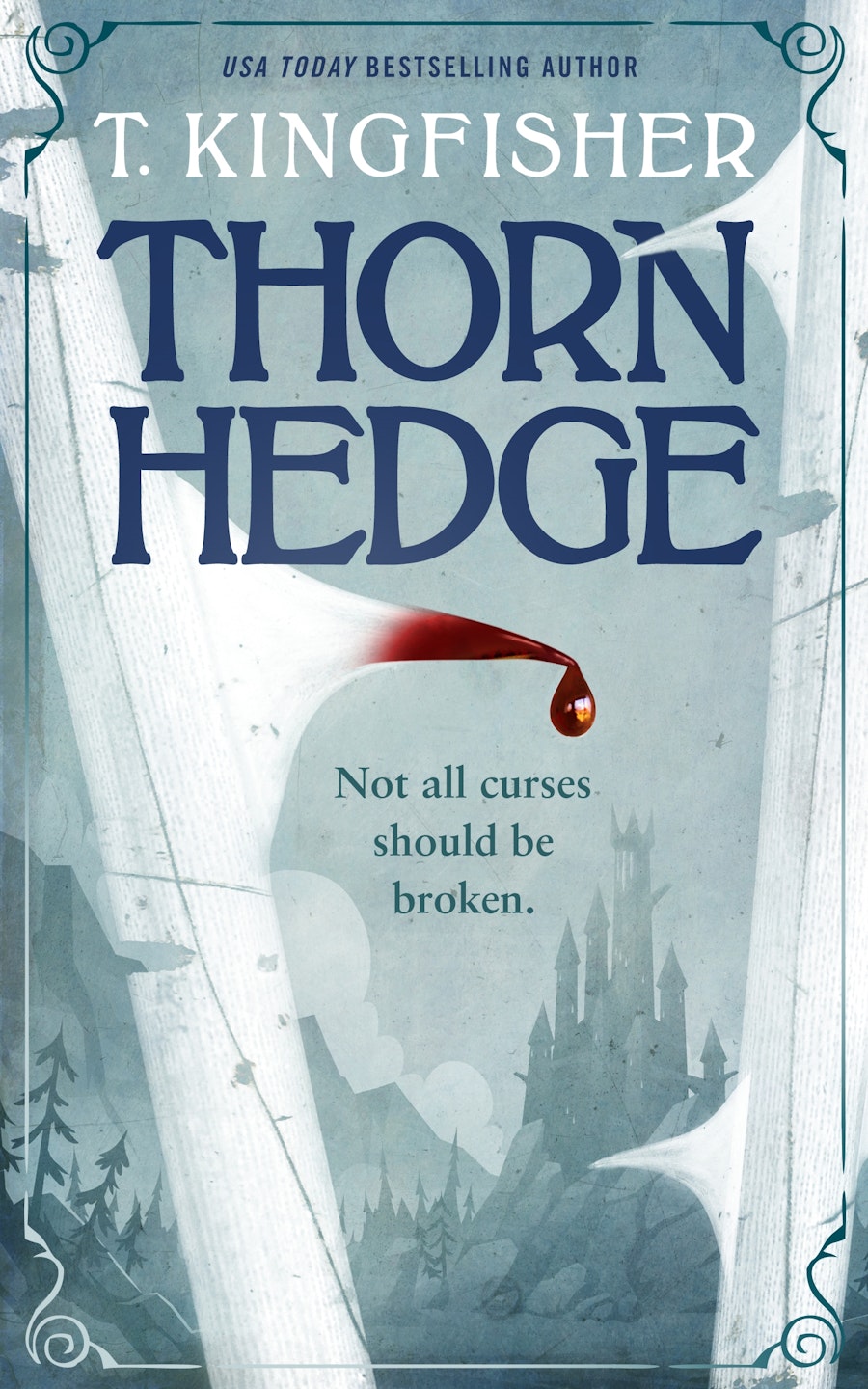
Thorn Hedge by T. Kingfisher
Genre: fantasy
I read it as a(n): hardback
Length: 116 pp 
Her Grace’s rating: 4 stars

A retelling of “Sleeping Beauty,” Thorn Hedge asks, “What if Briar Rose slept not because she was cursed but to protect everybody else?” Not all curses should be broken, as the blurb says, and it’s true. Kingfisher takes a beloved fairy tale and breathes new life into it. I loved everything about this story – the atmosphere, the self-discovery, and the anxiety it gave me to think about what might happen if the Princess woke up. Also, I think there needs to be a cat at some point in my future that I will name Toadling.  

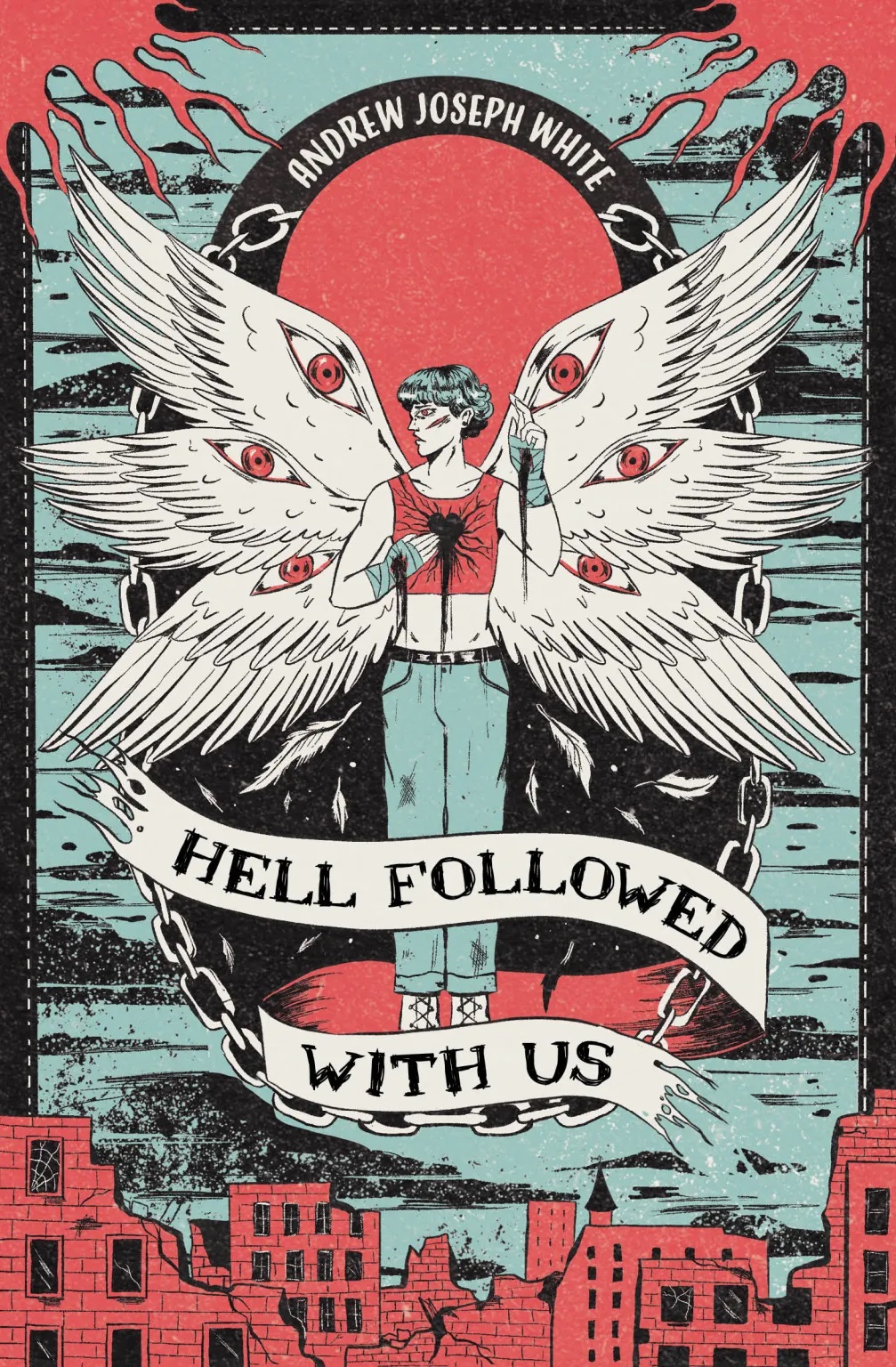
Hell Followed With Us by Andrew Joseph White
Genre: SF
I read it as a(n): paperback
Length: 398 pp
Her Grace’s rating: 3 stars

I had read White’s second book, The Spirit Bares Its Teeth, a while back and loved it. My daughter read this one first and begged me to read it, too, so I did. I enjoyed it but I was kind of grossed out. I dig a good cult book and escaping from said cult, but the body horror in this one was over the top. I loved the characters, though, and the dynamics between them all.

The Long Way to a Small, Angry Planet by Becky Chambers
Genre: SF
I read it as a(n): paperback
Length: 441 pp
Her Grace’s rating: 5 stars

I’ve had this one on my TBR for several years and I don’t know what took me so long to get around to reading it. I loved it! In some ways, it felt a bit like a more lighthearted version of The Expanse books. Not in terms of plot at all, but more in the sense of found family. It had enough action but also plenty of terrific world-building and character development. 

book review · sci-fi · Star Trek

Boldly Exploring Home: A Review of Somewhere to Belong

A book cover featuring the title 'Star Trek Discovery: Somewhere to Belong.' The cover showcases a cosmic backdrop with the iconic Starfleet insignia, a vibrant blend of blue and purple hues, and the silhouette of a starship soaring through the stars. There are 4 people on the cover. The largest is the face of a young Black woman with long braids. The other 3 are in a semicircle around her and depict a young white woman with curly hair, a young Hispanic man with goatee and short hair, and a cleanshaven white man with blonde hair.
Image from Goodreads

Somewhere to Belong (ST: DSC) by Dayton Ward
Genre: sci-fi
I read it as a(n): paperback
Length:
333 pp
Her Grace’s rating: 2.5 stars

Spoilers for anyone who hasn’t watched the show.

Now that the threat from the Emerald Chain is dealt with and the source of the Burn has been identified and corrected, Burnham and the crew of Discovery are able to take some down time to reflect on what the implications really are for them now that they’ve arrived in the 33rd century. Dr. Culber had been standing in as the counselor for the crew, but now that they’re at a starbase, a temporary replacement counselor has been assigned. Then they all get sent out to continue their mission of reconnecting with formerly allied planets that had been cut off from the Burn. They answer a distress signal and discover a ship of Xaheans, staunch allies of the Federation in the 22nd century. Only now, the Xaheans have by necessity become a wandering society and are isolationist on the verge of xenophobia. Capt Burnham has to try her hand at diplomacy to resolve a potentially deadly situation from exploding, and taking her ship and crew with it.

I have never taken so long to read a Star Trek book in my life. I was carting this around with me for the better part of a month! It was barely 300 pages, it should have taken me maybe a week even with work. It was. So. S L O W. I have never DNFed a Trek book but I came very close to doing so on this one. It was so out of character for Dayton Ward’s novels that it was kind of shocking how fucking bored I was with this one. It felt like he wrote himself into a corner and had no options for resolution other than cheesy and unbelievable ones. 

The overarching theme in the story is, of course, finding where one belongs. Ward explores the topics of what makes a home, how we create a found family, if home is a place or a feeling, and so on. At times, the exploration was a bit ham-handed. It felt sermony, which is usually reserved for Burnham although she managed to refrain from sermonizing this time. 

Also, this is kind of a weird observation. To be fair, I haven’t read every Trek book Ward has written so I could be wrong. But this book makes me think that he does not know how to write gay male characters. Stamets and Culber were definitely not right in this book. They were always saying something petulant or acting moody. Even though the characters recognized that and corrected it, it was still the first thing that was described. None of the other characters were handled that way. Maybe he just doesn’t like Culber or Stamets, which is fine if so. We don’t have to like all the characters. But I hope he figures out how to write those two characters better if he writes more Discovery books in the future. And I DO hope he does! He wrote Drastic Measures, which is one of my favorite Disco books, partly because it focused mainly on a young Lieutenant Gabriel Lorca, and he’s played by Jason Isaacs who I’m in love with. And partly because of that little tidbit at the very end that was obviously a confused and scared Prime Lorca stuck in the MU and I want to read that story!

book review · sci-fi

Exploring Otherworldly Tales: A Review of The Ghost Machine, Generations (in the Firefly Series), and My Best Friend’s Exorcism

A book cover with a dark haired young woman in the background, a man with brown hair in the middle ground, and a black haired woman wearing a necklace in the foreground, with a spaceship in front.
Image retrieved from Goodreads

The Ghost Machine (Firefly) by James Lovegrove
Genre: sci-fi
I read it as a(n): hardback
Length:
336 pp
Her Grace’s rating: 3.5 stars

The crew of Serenity are hired by Badger to ship a device to a client on one of the outer worlds. Mal, though, gets a real bad feeling about it and declines to take it on board his ship. That doesn’t stop Jayne from bringing it on himself. Unfortunately for all, it is a device that attacks brainwaves, sending people into a coma-like sleep in which they have vivid hallucinations. They start out like everyone’s greatest dreams come true, but gradually change to their worst nightmare. Only River seems able to enter into the others’ visions, which she does in a desperate attempt to wake someone up before the ship crashes into a moon. 

I enjoyed this one, even though I don’t remember tons of details about it. It only took me 2 days to read. I liked it because it gave us a “what if” glimpse into what the crew’s secret desires are, though some are not hard to guess. The thing I seriously disliked was that Lovegrove seemed not to know what to do with Shepherd Book and Inara, so he shipped them off on an errand off-ship and they didn’t come back until the crisis was averted. I think he missed a great chance to fill in some of Book’s backstory in particular.

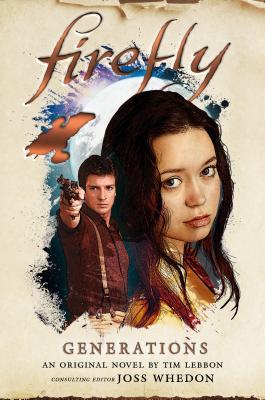
Book cover with a man in brown shirt with brown hair pointing a gun in front of him with a dark haired girl in the background
Image retrieved from Goodreads

Generations (Firefly) by Tim Lebbon
Genre: sci-fi
I read it as a(n): hardback
Length:
281 pp
Her Grace’s rating: 2.5 stars

Mal wins a strange star map in a game of poker and immediately the bad luck begins. Someone else tries to steal it and kill everyone in the process, River gets crazier because of something in the map, and there’s a Big Bad Secret that the Alliance has hidden in orbit around a far-outer planet. But, if the crew can manage to get there and back in one piece, there is a trove of historical relics worth a fortune on the black market. X marks the spot, I guess.

This one wasn’t as well developed as the previous three Firefly books. The characters seemed less complex and we didn’t really get a good view of things from River’s POV, even though she was the main protagonist in this one. Also, if I’m being honest, it was kind of slow. Not much actually happened. Probably my least favorite Firefly book so far, but I still enjoyed it because I will take Firefly in any way I can.

Book cover with a blonde girl with red eyes, owls and bats in the background, a clock tower, and 2 little girls holding hands
Image retrieved from Goodreads

My Best Friend’s Exorcism by Grady Hendrix
Genre: horror
I read it as a(n): audiobook
Narrator: Emily Woo Zeller
Length: 10:11:00
Her Grace’s rating: 3 stars

Abby and Gretchen are best friends and have been ever since Gretchen saved Abby’s 10th birthday party from being a total disaster. The girls are inseparable until high school when, after a weekend spent at another girlfriend’s house, Gretchen starts acting strange. She stops washing or changing her clothes, she is cruel, and she dumps Abby in favor of richer friends. Abby eventually figures out that Gretchen is possessed by a demon and sets out to help her. Of course no one believes her.

So I got this one because I thought it would be funny. I mean, the title alone kind of implies humor. Also, demon possession is fucking hilarious. There are people who actually believe it’s real. But it was really not funny. It was a straight-up horror story, which is fine. I don’t usually care for actual horror because I can’t suspend my disbelief. See above comment about people actually believing in demon possession; I am not one of them. So that’s on me for not looking into it further before I got it. 

Mainly, though, it’s a story about friendship, growing up, and changing as you grow, which is a good enough theme. 

I listened to this on audio and the narrator, Emily Woo Zeller, did a good job, as usual. She may not be on my list of very favorite narrators but she is definitely good and I wouldn’t decline to listen to a book just because she’s narrating. 

book review · books · fantasy · random · sci-fi

A random list of books based on an IG challenge

Greetings, fellow book nerds! I hope your summer is off to a good start and that you have many adventures to look forward to. I am looking forward to a couple short trips and, of course, making some kind of dent in my TBR. Which is hard because I seem to be in a reading slump and I haven’t read very much lately. 

Sometimes when I’m in a reading rut, I will try reading a genre that is completely opposite of the book I just finished. That often helps me get back on track. That doesn’t always work, though, and then I have to try something else. This time, I went to Instagram and dug around in the #bookstagramchallenges hashtags. I also follow the bookstagramchallenges channel to see a variety of book and reading challenges. Sometimes those are great for kicking me out of a reading rut. Plus, they’re just fun! Also, they’re like lists! I love lists. I love getting to cross things off of them. 

For this, I absolutely cherry-picked the prompts I wanted to use from a few different challenges. I went with an all science fiction and fantasy theme for these, since I’m in a big sci-fi mood. I also recognize that there are entirely too many books listed here. I had a hard time picking just one for some of the questions! 

  1. Last, current, and next reads: The Buried Giant by Kazuo Ishiguro; The Big Book of Science Fiction, edited by Ann and Jeff Vandermeer (print) and Seveneves by Neal Stephenson (audio); The Sound of Stars by Alechia Dow. 
  2. Favorite SFF series: Sci-fi – The Expanse series by James S.A. Corey; Fantasy – The Dragonriders of Pern by Anne McCaffrey.
  3. Side characters you wanted to see more of: Kamazotz, the Death Bat from Gods of Jade and Shadow by Silvia Moreno-Garcia. I guess it isn’t really a proper sidekick, but I would have a ball flapping around on a death bat while on epic quests. 
  4. Quick reads: All Systems Red by Martha Wells. We need more Muderbot in our lives!
  5. Sad reads: Never Let Me Go by Kazuo Ishiguro; “There Will Come Soft Rains” by Ray Bradbury; and several of the stories in Alexander Weinstein’s excellent collection Children of the New World, in particular the titular short story as well as “Saying Goodbye to Yang.” 
  6. Funny reads: Job: A Comedy of Justice by Robert A. Heinlein (possibly the most hilarious book I’ve ever read); Redshirts by John Scalzi; How to Live Safely in a Science Fictional Universe by Charles Yu. 
  7. Weapon on the cover: The Rising of the Moon by Flynn Connolly.
  8. Favorite mentor: Ged from The Earthsea trilogy by Ursula K. Le Guin. 
  9. Books and drinks: Split and Scumble, both from Terry Pratchett’s Discworld series! And, although these aren’t from books, honorable sci-fi drink mentions are: Green (AKA Aldebaran whisky) from the episode “Relics” from Star Trek TNG and A Warrior’s Drink (prune juice eww!) from the TNG episode “Yesterday’s Enterprise.”
  10. Unpopular opinions: Only Dune is good in the Dune series. The first rule of reading the Dune series is that you should only bother with Dune, not the rest of the books.
  11. The chosen one: Bastian Bux from The Neverending Story by Michael Ende.
  12. Revenge plotlines: Ancillary Justice by Ann Leckie.
  13. Favorite creatures: Mother Thing in Have Space Suit, Will Travel by Robert A. Heinlein; the Tendu, the frog-like beings in The Color of Distance by Amy Thomson; and the hen with a demon in her in Nettle and Bone by T. Kingfisher. 
  14. Loyal and noble: Robbie the robot, the titular character in Isaac Asimov’s short story “Robbie.”
  15. Book that I would recommend to new SFF readers: The Long Way to a Small, Angry Planet by Becky Chambers. For fantasy, I’d go with Spinning Silver by Naomi Novak or Daughter of the Forest by Juliet Marillier.
  16. Maps: There’s an awesome map in Cyteen by C.J. Cherryh. Also, I know I mentioned her several times in this post,  but the Dragonriders of Pern series by Anne McCaffrey has some excellent maps as well. I spent hours as a child poring over those, visualizing the various weyrs and halls of the planet. 
  17. Favorite anthology: The Paper Menagerie by Ken Liu; Black Thorn, White Rose, edited by Ellen Datlow and Terri Windling (any anthology edited by either of these women are excellent); and Mirrorshades, edited by Bruce Sterling. Click on the clicky-link! It takes you to a free, online version of the Mirrorshades anthology, which is awesome since it’s almost impossible to track down a copy anywhere. 
  18. Book that takes place during winter: City in the Middle of the Night by Charlie Jane Anders. Well, it isn’t winter so much as the night side of a tidally locked planet. Cold counts as winter, right? 
  19. High-flying characters: Sirantha Jax in Grimspace by Ann Aguirre.
  20. Favorite villain: Sydney from The Prey of Gods by Nicky Drayden; The Gentleman with the Thistle-Down Hair in Jonathan Strange and Mr. Norrell by Susanna Clarke.
  21. Cool animal companions who aren’t main characters: The Wolf in The Witch’s Boy by Kelly Barnhill; Solovey, the horse in The Bear and the Nightingale by Katherine Arden.
  22. Hopeful characters: Keyne from Sistersong by Lucy Holland.
  23. Rogues and scoundrels: Trouble and Her Friends by Melissa Scott.
  24. Ocean or beach setting: The Mountain Under the Sea by Ray Nayler.
  25. Bounty hunters or assassins: Warcross by Marie Lu.
  26. Droids and robots: Starship Grifters by Robert Kroese.
  27. Purple book stack: Star Trek TNG: Q-In-Law by Peter David; Sword Stone Table, eds. Swapna Krishna and Jenn Northington; Flames of the Dark Crystal by J.M. Lee; Prickle Moon by Juliet Marillier; and Smoke by Dan Vyleta. 
  28. Monthly book haul: Print books – The Rex Nihilo series by Robert Kroese, Star Trek Discovery: Somewhere to Belong by Dayton Ward, Loki’s Ring by Stina Leicht, The Blighted Stars by Megan O’Keefe. Audiobooks: Bacchanal by Veronica G. Henry, Anathem by Neal Stephenson, The Municipalists by Seth Fried, The Fold by Peter Cline, and the Themis Files trilogy by Sylvain Neuvel.
  29. Monthly wrap-up: I’ll be working my way through The Big Book of Science Fiction for quite a while. I haven’t been reading as much as usual. Also, Seveneves will take me forever to listen to because I can usually only listen when I’m driving. WFH and my kid’s summer break means that I hardly drive anywhere. So I expect that my reading stats for the month won’t be too much bigger than those two books plus The Buried Giant that I read for book club. 
book review · sci-fi · Star Trek

Star Trek Picard: Rogue Elements

STP rogue elements

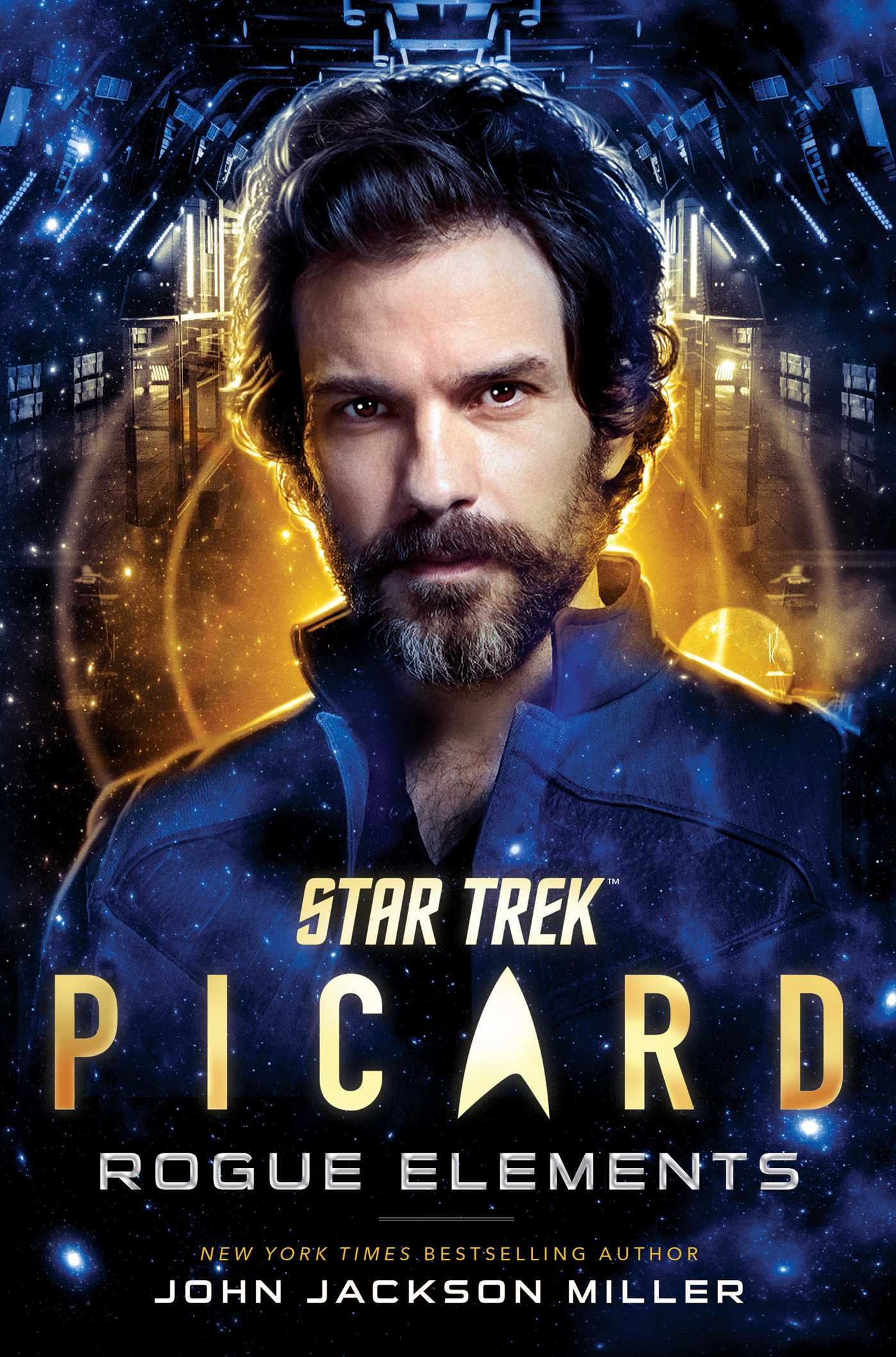
Star Trek Picard: Rogue Elements by John Jackson Miller

Genre: sci-fi

I read it as a(n): paperback

Length: 406 pp

Her Grace’s rating: 4 out of 5 stars 

John Jackson Miller’s Star Trek Picard: Rogue Elements offers readers an escapist journey through the Federation’s seedier underbelly, a slightly different approach than the typical Trek novel. The author’s note indicated that it was written specifically to serve as a much-needed escape from the grip of the COVID pandemic lockdown. I, however, am several years behind in all of my reading, including Trek, so I only just now read it. It was still perfect escapist reading. With a focus on the charismatic Rios, the acquisition of the ship La Sirena, and seamless connections to the TV show Star Trek: Picard, this novel is a delightful addition to the Star Trek universe.

One of the standout elements of Rogue Elements is the exploration of Cristóbal Rios’s character and back story. I am a major sucker for a good back story, as anyone knows who has had the least contact with me and my bookish preferences. In fact, I’m pretty sure even the Awá people are aware of my love of back stories. Miller expertly delves into Rios’s past, unravelling the layers of his personality and providing readers with a deeper understanding of this complex character. Through actiony adventures and poignant moments, we witness Rios’s growth, gaining insight into the experiences that shaped him into the man we see on the TV show. 

The acquisition of La Sirena, a ship that holds its own aura of mystery, brings a new dynamic to the story. Miller paints a vivid picture of this ship, portraying it as a character in its own right. I also really fucking love it when inanimate objects are their own characters. Oh hi, The One Ring! Excalibur! Rocinante! As readers explore the ship alongside Rios and his ragtag, accidental crew, there is a palpable sense of adventure that permeates every page. 

Rogue Elements effortlessly weaves its story into the broader tapestry of Star Trek: Picard. Fans of the TV show will appreciate the integration of familiar faces and storylines, providing a sense of continuity and further expanding the world created on screen. Miller’s attention to detail ensures that the novel feels like a natural extension of the television series, making it a must-read for any true Trekkie.

book review · sci-fi

Starship Grifters

starship grifters

Starship Grifters by Robert Kroese

Genre: sci-fi

I read it as a(n): audiobook

Narrator: Kate Rudd

Length: 7:26:00

Her Grace’s rating: 4 out of 5 stars

We’ve been lucky to have a ton of sci-fi space opera to read, and recent additions to the canon have been both full of action as well as making some astute social, religious, or political commentary amid various interstellar adventures and cosmic battles. Robert Kroese’s Starship Grifters is another refreshing and hilarious addition. This satirical space opera combines elements of classic science fiction tropes with a witty narrative that grabbed my attention (almost) from the start. I had a moment where I wasn’t in the mood for sci-fi the way I thought I was, and so it took me a little bit to get into this story. Once it got me hooked, though, all I wanted to do was listen to it.

I think the character development is a strength of the book. The protagonist, Rex Nihilo, is a lovable scoundrel with an insatiable appetite for trouble. Kroese skillfully crafts Rex as a charming yet flawed character (actually, he might be kind of a sociopath. I’m not entirely sure), whose resourcefulness and smart mouth often lead him into outrageous situations. As the story progresses, Rex just keeps landing himself in a series of progressively crazier calamities. At the same time, he also shows some surprising layers of depth beneath his initially superficial exterior. He’s still mainly superficial and does things that are the best for him, but he managed to surprise me on several occasions.

The supporting characters in the novel are equally memorable. Sasha, Rex’s robot sidekick, adds a touch of practicality and grounding to their escapades. She is the voice of reason that Rex decidedly ignores at every opportunity. Kroese infuses each character with unique traits and motivations, making them each well-rounded and fully-realized. The interactions between the cast are lively and entertaining, creating a dynamic ensemble that kept me interested in them and their adventures.

The setting overall is a delightful blend of futuristic technology and retro aesthetics. Do you remember that movie The Rocketeer? Sort of a steampunk/mid-century/detective noir aesthetic? This book was kind of like that, but in space. Kroese constructs a vivid universe filled with bustling spaceports, eccentric alien species, and advanced gadgets. The author’s attention to detail creates an immersive experience in this universe. It was pretty easy to visualize the places described and see the story as though I were a character observing from a distance. The world-building is done in a way that embraces the absurd and eccentric elements sometimes (but not always!) associated with science fiction, complementing the overall tone of the book.

Speaking of tone, humor permeates every page of Starship Grifters. Kroese combines witty banter, situational comedy, and clever wordplay to great effect. The narrative tone is lighthearted, and the author’s comedic timing shines throughout the story. That timing is further enhanced by Kate Rudd’s masterful narration. She nails Sasha’s dry tone perfectly and that deadpan delivery made for more than one laugh out loud moments. The humor is not only used for entertainment purposes but also as a vehicle for social commentary, poking fun at various aspects of human nature and society. This satirical approach adds an additional layer of depth to the story and elevates it beyond a simple space adventure story.

Going back to the audiobook and narration, as soon as I finished this book, I wanted to go and get the next one to listen to. Imagine my supreme disappointment when I discovered that Kate Rudd does NOT narrate the rest of the series! What the fuck? Why would you change a narrator from a good one to a not good one? The sample of book two wasn’t too promising and my skepticism regarding the skill of the new narrator seems to be borne out by many, many reviews saying that the story of the next two books are fun but the narration sucks. So unless the next books are ever an Audible daily deal or something, it is not very likely that I will bother listening to them. Maybe I’ll buy the print versions, though my self-imposed moratorium on buying new books is putting a crimp in that idea. 

All told, Starship Grifters is a highly enjoyable space opera that combines character-driven storytelling, an imaginative setting, and a comedic tone. Robert Kroese’s skillful development of the protagonist, engaging supporting cast, and the vibrant universe they inhabit make this novel a standout in the genre. Fans of science fiction with a penchant for humor will find themselves thoroughly entertained by this intergalactic romp. The main caveat I have is, if you are inclined to listen to the audiobooks, just know that Rudd won’t be narrating them all. You might want to steer clear of starting an audio series without knowing about the change in narrators. I wish I had known before I got this one.

book review · sci-fi · Star Trek

No Time Like the Past

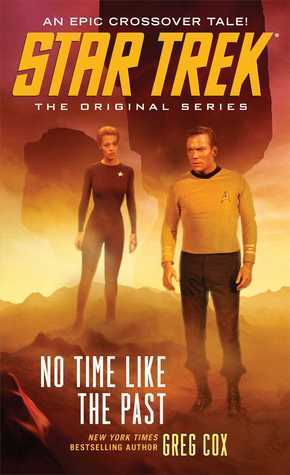
No Time Like the Past by Greg Cox 

Genre: sci-fi

I read it as a(n): paperback

Length: 388 pp

Her Grace’s rating: 3.5 out of 5 stars

On an away mission to a planetoid with a weird reading, Seven is swept back in time to the 23rd century. Specifically, to Kirk’s Enterprise. What follows is a quest through space-time to gather the scattered pieces of the device that sent Seven back while at the same time trying not to pollute the timeline, evading a band of Orions who want Seven for themselves, dealing with an unknown traitor, and getting Seven back to her time before the lack of regeneration does her in.

This was a fun read. Not the very best Trek book ever but not even close to the worst. I don’t generally enjoy crossover novels that much – a large part of why the vast collection of relaunch books irritate me – but this one was very well done. I think the crossover aspect was partly why it took me until the end of 2022 to read this one rather than when it was actually published.

The plot was interesting, if somewhat pedestrian, and I think Cox did a great job getting the interactions between Seven and the original crew right. Seven finally understood the relationship between Tuvok and Neelix after seeing the banter between Spock and Bones. It’s always a pleasure to see Spock and Bones bicker like an old married couple, when it’s done well.

My main issue was that the Orions were like a bad rash that keeps cropping up. A couple times it felt like they were dropped into the plot just because they were the Bad Guys in this story. It was a little forced in that regard. And there were a couple other scenes that I think could have been shorter or eliminated altogether. But in the scheme of things, that’s not so bad.

My favorite part wasn’t a single part, per se. It was the jaunt back through a few of the best episodes of TOS. I loved that. I would love more of it across all the Star Trek series, even if it means crossovers. Just so long as they’re standalone stories, please.

book review · fantasy · sci-fi

The Lunar Chronicles

Cinder, Scarlet, Cress, and Winter by Marissa Meyer

Genre: sci-fi/fantasy

I read it as a(n): audiobook

Narrator: Rebecca Soler

Her Grace’s rating: 4 out of 5 stars for the series as a whole

The four main novels in the Lunar Chronicles series are all thoroughly tied up with each other, in the most delightful way possible. Cinder sets up most of the world-building and character introductions. The overarching plot is that Cinder, a young, part-cyborg mechanic from the Eastern Commonwealth (formerly China) and Kai, the Eastern Commonwealth’s Emperor, are trying to find Selene, the Lunar princess and rightful heir to Luna’s throne, who was long thought to have died in a fire as an infant. Kai doesn’t think that is true and is on a mission to find Selene and overthrow Levana, the evil Lunar Queen who killed her sister (the true queen) and her niece and took the Lunar throne for herself. The secondary plot is Levana’s determination to take over Earth, using what the Lunars call their “Gift” – the ability to sense and manipulate a person’s bioelectrical energy. As a result, Lunars can force humans or Lunars with weaker Gifts to do anything they want them to do. The Lunar gift has varying strength, apparently based on one’s social class, and the queen is the most powerful of all, followed by her thaumaturges, her highest councillors and advisors. They can force people to do anything from being silent to committing murder or suicide. The Lunar queen is one nasty bitch. Cinder plans to stop her.

Throughout the four books, Cinder is joined by Iko, the bubbly android with a faulty personality chip; Dr. Erland, the brilliant but unethical scientist trying to find a cure for a disease ravaging humanity; Carswell Thorn, an irreverent American spaceship captain who broke out of prison with Cinder; Scarlet, a French farmer whose missing grandmother knows something vital about Selene; a street fighter named Wolf who knows where Scarlet’s grandmother is; Cress, a Lunar girl who was born without the Lunar Gift and who has been kept alone on a satellite for years, forced to do technological spying for the Queen; Jason, a Royal Lunar guard who isn’t sure what side he should be on; and Winter, Levana’s stepdaughter who is slowly going insane because she refuses to use her Lunar gift.

Levana has a cure for the disease but she won’t give it to Earth unless Kai agrees to marry her and make her his Empress. Doing so will save millions of lives but also will all but ensure that Levana will kill Kai and use her power as Empress to take over Earth. She could do so through her Gift. Kai agrees to marry Levana to get the antidote, even though it’s the last thing he wants to do. Cinder, meanwhile, gets arrested for crashing Kai and Levana’s engagement ball, then breaks out and makes new friends while she is trying to help track down people who might know about the Lunar princess, Selene. 

For those folks who are unaware, the four novels in this series are retellings of the classic fairy tales – you guessed it – Cinderella, Little Red Riding Hood, Rapunzel, and Snow White. Meyer centers them all in a sci-fi setting, which is fucking awesome. It is set in some indeterminate point in the future. The years refer to the time since the 4th World War and the signing of a global peace treaty, so we don’t really know exactly how far ahead it is. The political climate is complex and nicely explained within the context of the overarching plot. I like that it doesn’t beat you over the head with billions of minute info-dump details but also doesn’t just gloss over politics altogether. Readers get a fully developed political system that is delivered as relevant bits of info throughout the series. 

Similarly, each character is a complete, complex, imperfect, and conflicted individual. They each have their own distinctive voice and ideas. Their personalities are clear – I don’t think anyone would ever be confused as to whether they were reading Cinder or Cress, Thorn or Kai. I really loved that they are all imperfect. None of them are perfectly good or always certain of the right thing to do. They all are trying to do what they think is the right thing, but what that is doesn’t always mesh with what the others think. They are all good people – well, Cinder’s group is. Levana and her Lunars are garbage and you love to hate them – but they also all do “bad” things sometimes. Then they are conflicted about the things they did and the reasons they did them. No one is 100% certain and I think that’s great. It’s so much more realistic that way. 

I also really loved the way the various characters and stories got all woven together. It was satisfying in a way the original fairy tales are not since they are self-contained stories of their own. It is more interesting when they all mingle and know each other. Kind of like the idea that the hunter who killed Bambi’s mom was Gaston from the film version of Beauty and the Beast, or that the sunken ship Ariel swims around in is the one that went down carrying Anna and Elsa’s parents. It’s all the same universe, folks. Similarly, Meyer weaves the various threads of these four fairy tales very nicely together into one satisfying Gordian knot of a bow.

The one thing I think was not at all well developed was the diversity. As in, I don’t think there was any anywhere in the entire series. Based on location and naming convention, it’s assumed that Cinder, Kai, Cinder’s stepmother and stepsisters, and Kai’s court are Asian. But there are no hints or outright descriptions of Asian culture otherwise. The same is true for all the other groups of beings as well. Nothing about them stands out as American or European or Commonwealth other than, in a couple cases, an accent. Even Cinder and Kai do not have any kind of accent that could be identified as coming from an Asian region. Winter is described as having dark skin and curly hair, and on the audiobook cover she is depicted as a young Black woman. Other than Winter, I am not entirely sure there were really any people of color in the series at all. 

The same is true for LGBTQ+ and disabled characters. There wasn’t a single one of either community in the entire series unless you want to count Winter since she’s slowly going insane. But that is an identifiable disease within the Lunar Chronicles universe and by the end of the series she’s being treated for it so she can be “normal.” Maybe she meant for Thorn to be disabled because he lost his vision? But again, that lasted for about a month and then he went back to his old sighted self. You could really, really stretch and say Cress has social anxiety disorder, but again, she’s gotten over it by the end of the series and her shyness a) isn’t a disability and b) was a direct result of being locked away and never interacting with anyone besides the thaumaturge in charge of her for like a decade. Anyone would be a little socially awkward after that. So yeah. Meyer seriously needs to do better in terms of any kind of representation. 

The lack of diversity makes me rate the series as a whole at 4 stars. I think Cinder, Cress, and Winter each rate  4 stars on their own as well. Scarlet was my least favorite of the series and I give it 3 stars. 

I read these four books via audiobook. The narrator, Rebecca Soler, did a good job. Maybe a tad over emotional in some places where it wasn’t really warranted. But overall she was a decent narrator though I don’t think she will ever be one of my favorites. 

I definitely recommend the series to all who love fairy tales and a good sci-fi space opera. It hits all those spots.

book review · sci-fi

The Magnificent Nine

Book cover with a woman in silhouette holding a shotgun upright, a man in the foreground with a yellow hat with earflaps

The Magnificent Nine by James Lovegrove

Genre: sci-fi

I read it as a(n): hardback

Length: 331 pp

Her Grace’s rating: 4 out of 5 stars

Temperance McCloud, an old flame of Jayne Cobb, lives a quiet life with her daughter on Thetis, a far off settler’s planet. Until Elias Vandal and his gang of Scourers come to her town of Coogan’s Bluff, that is. Vandal sets himself up as the ruler of Thetis and he’s going to enforce that position by taking control of all the water on the desert-like planet. Temperance convinces Jayne and the crew of Serenity to come to their aid. But not everything is what it seems, including Temperance’s daughter…Jane.

This novel was so fun, just life an episode of Firefly in print. There really wasn’t anything too special about the plot; if you paid attention, there really weren’t any surprises and you know of course that the crew are all going to survive. But it doesn’t matter because it is just fun to read and it’s a bit of nostalgia to reunite with a beloved cast from a greatly missed show. 

I know there are other books in the series and I’m going to read them all. But I hope there will be more as well. There are books for Mal, Jayne, Inara, Zoe, and River. But what about Wash, Kaylee, Simon, and Book? A couple of the others seem to be ensemble books featuring the whole crew equally but it would be awesome if the rest of the crew could each get their own story to finish out the novels. Probably it won’t happen, but as the saying goes, if wishes were horses, we’d all be eating steak.

Favorite lines:

  • “Just tell me this: when did a shipload of criminals, desperadoes, and fugitives become such a bunch of do-gooders?”

Inara had the answer. “When their captain showed them how” (42).

  • They’ll pick up a half-dozen, maybe a dozen recruits each time. Folks who fancy being on the winning team. Folks who were perhaps never that popular in their hometown. The dregs, the losers. They see something they like in the Scourers and they latch onto it (66). [Just like a certain political group I can think of.]
  • “That was a good dodge, that one,” Jayne said. “We printed up Miles Davis labels and stuck ’em on Kenny G vinyl” (86). 
  • Seriously, keep this up and I’ll rip your arm out of its socket and beat you to death with the wet end (93).
  • I fought at Serenity Valley. It ain’t about optimism. It’s about doin’ what’s right even when everything’s stacked against you (143).