Happy March, friends. I like to call it Middle Earth March. I specifically look forward to March 25th each year. In the Tolkienverse, it’s the Gondorian New Year, the day Sauron fell, the One Ring was destroyed, and the beginning of the Fourth Age of Gondor. It’s often celebrated as Tolkien Reading Day, the theme of which this year is “Service and Sacrifice.” March 25 is also my almost-birthday. On this day, I fix many meals – first and second breakfast, luncheon, afternoon tea, dinner, and supper – and hole up with a Tolkien book. Ha ha, get it? In a hole in the ground, there lived a hobbit? Anyway. Sometimes I reread an old favorite and revisit The Hobbit or The Lord of the Rings. Other times, I’ll pick a less familiar work. It’s been probably 20 years and more since I read The Silmarillion, and I have only read Leaf by Niggle but once. Might be the year for that. Who knows? I did read The Fellowship of the Ring to my daughter for the first time a couple years ago. She was ten at the time and was mightily impressed that Frodo gets to go on a quest and see the elves and all. I think she will never forgive me for not warning her that Gandalf falls in Moria, though. She’s still mad at me for not warning her. But what could I do? I couldn’t spoil it for her. On the Gondorian New Year, I’ll definitely make all the food for her. I’m determined to make her a Tolkien fan and so far, my plan seems to be working.
As a lifelong Tolkien fan myself, it is natural for me to reread the books every few years. Each time, I discover something entirely new in them. I’ve always changed in some way between readings, grown older, hopefully a little wiser, and so I pick up new things in the text. It’s like an English trifle, each reading revealing a hidden layer to reveal some new treasure within. It’s delightful. I honestly don’t know if it is just because I love Tolkien’s works so much, or if they are just that rich, or what, because there are any number of other books that I adore and reread often but don’t find that much new in them upon rereading. In any case, there are many life lessons I have learned from Tolkien’s works. Just a few of the ones I have found to be the most meaningful are below.Continue reading “Middle Earth March: Life Lessons from Tolkien”→
The Salt Path by Raynor Winn Genre: memoir I read it as a(n): audiobook Narrator: Raynor Winn Length: 09:00:00 Her Grace’s rating: 5 stars
Raynor Winn and her husband, Moth, are in their 50s when they lose everything due to a bad business scheme their friend got them into. They find themselves with no home, no business, no money, and no one able to help. On top of all that, Moth is diagnosed with a terminal degenerative illness just days after they lost everything else. So they pack their backpacks and set off to walk the South West Coastal Path, a 600+ mile trail around the Cornish peninsula. Just like any normal person would (WARNING: sarcasm detected). Having lost all their savings, they are dependent upon the miniscule amount of government funds they’re entitled to, which is something like £20 per week.
I first became aware of this book because of an article I saw that said it was being filmed and is starring Jason Isaacs and Gillian Anderson. BOTH of my celebrity crushes in the SAME MOVIE OMFG *FLAIL* WHEN CAN I WATCH IT??
Here’s the thing, though. After reading it, it doesn’t even matter to me if Jason and Gillian are starring. At this point, I would have watched it no matter who was in the film. They could have cast Adam Sandler (shudder) and Gwyneth Paltrow (double shudder) and I would still watch it. That’s because I already know this book will top out in my 5 favorite reads of 2024.
I read this book a few weeks ago and I still can’t get it out of my head. I felt so bad for Ray and Moth. I can’t imagine how hurt and scared they must have been to be screwed over like they were by a “friend” or how unfair the legal system was to them (they had proof they were not at fault but weren’t allowed to use it because they didn’t submit a form exactly right WTF). Also, how awful it must have been for Moth to carry on when his body was betraying him.
One thing that struck me throughout the book was the casual cruelty they experienced. They could be sitting by themselves, bothering nobody, in a public park, and someone often would come along and tell them they’re disgusting for being drunk in public or sleeping in public or being crazy in public or whatever the fuck. Nevermind the fact that they were not drunk or stoned or anything like that, and they were homeless. There aren’t enough shelters or space in the existing ones. Where the fuck are they supposed to sleep, the Savoy? And what kind of judgmental jerk automatically assumes that if a person is homeless, they must also be an addict, criminal, or mental patient of some kind? I guess being poor in public is also frowned upon. The fact that these were educated, productive members of society prior to their devastating loss apparently never even occurred to any of the people who gave them grief. Also? I don’t know about you but if I were homeless, numbing all of that with drugs and alcohol probably would seem like an excellent idea.
I think the thing that made me feel the worst to hear about was when they were laying in their tent in the early morning (in a location where it is perfectly fine to pitch a tent) and waiting to get the day started when a random hiker and his dog both take a piss on their tent. I mean, who the fuck DOES that? What kind of asshole do you have to be to piss, literally, on someone’s home? See, this is an example of why I should never become a Jedi. If I had the Force, there is a 100% chance I would use it to give instant karma to assholes like that. Want to pee on someone’s tent? Cool – instant, antibiotic-resistant UTI for you. Maybe a scorching case of jock itch as well. Enjoy it, dickweed.
All that is to say that this book correctly challenges the perceptions much of society has towards people who are marginalized, whether they are unhoused, addicted, mentally ill, or anything else. People without homes are still people. People with addictions are still people. People who are impoverished are still people. The fact that this needs to be said is a pathetic indictment on humanity as a whole.
That said, they also did encounter many people who were kind and helpful along the way. Some of them were also walking the south west coast path and they ran into them more than once, though those people were all walking on vacation and only had so many days before they got into a car and drove back home. While they were generally kind and eager to share, it seemed like that was a painful encounter as well since Ray and Moth had no home to go to when they were cold or hungry or sick. Listening to it felt a little like rubbing salt in the wound.
The book is also an exploration of home and what makes a home. Initially, home was their lost farm, the place where their kids had been born and grew up, where all their things were. By the end, home was simply with each other. They learned that they needed far less than they ever thought, and got by on less than that even though it was out of necessity. As long as they were together, that was really all they needed. That was home and they can take it with them anywhere they go.
FAVORITE QUOTE
We were lightly salted blackberries, hanging in the last of the summer sun, and this perfect moment was the only one we needed.
Since I decided to make my own reading challenge for 2024, I figured it is a good idea to figure out which books I might want to use to complete the tasks. I’m going to see how many of my own TBR books I can use, first, and how many I can do with women/LGBTQ+/BIPOC authors for as many as I can. Below are some suggestions for each task. Double-dipping is totally allowed!
Also, as I researched for books to complete these tasks, I learned that I need better definitions for some things, or that some others could be worded differently, or be defined in a broader way. Sorry about that! I will try to do better for next year’s tasks.
If you have any suggestions for any of the tasks, please share them in the comments! I love book recs!
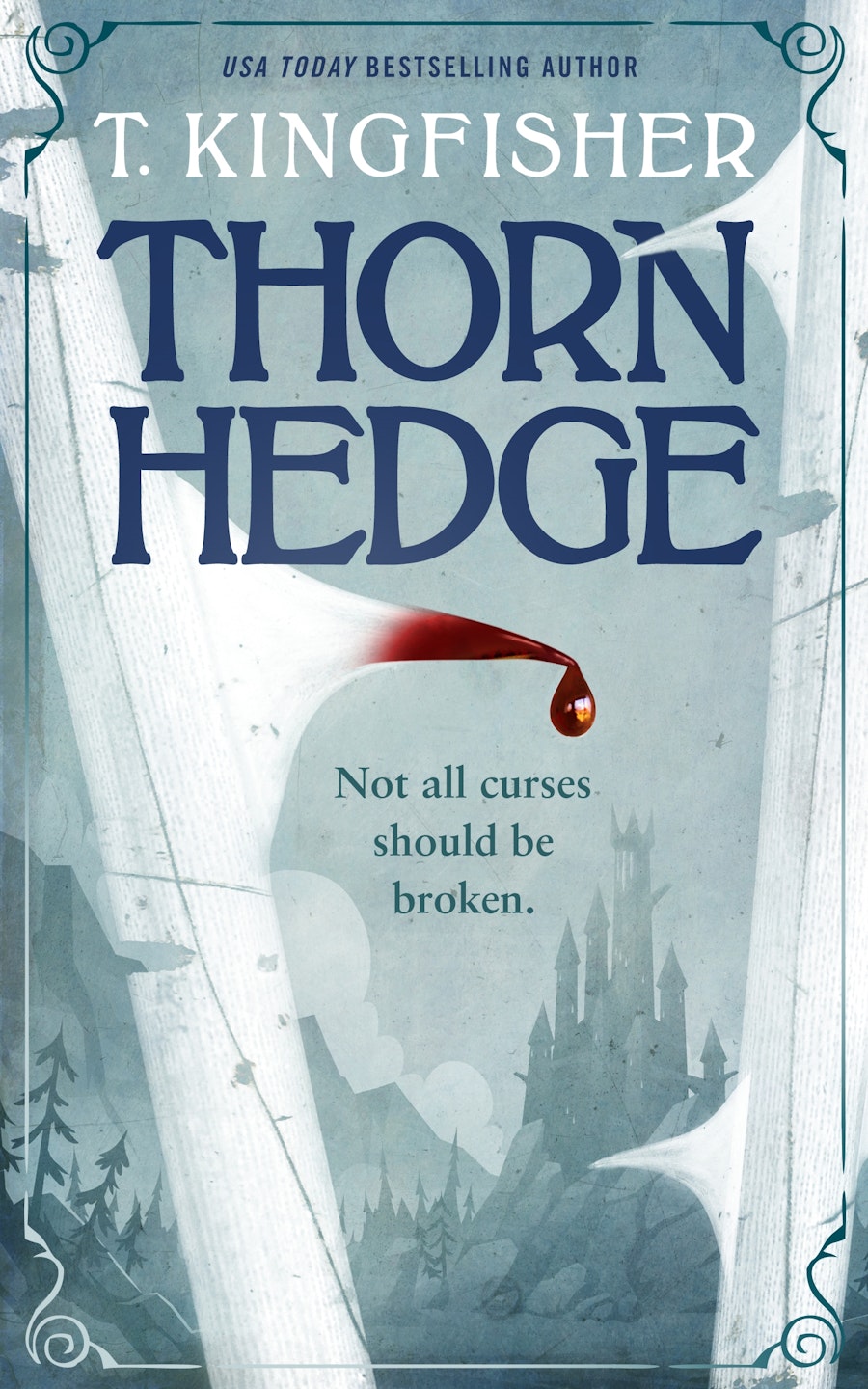
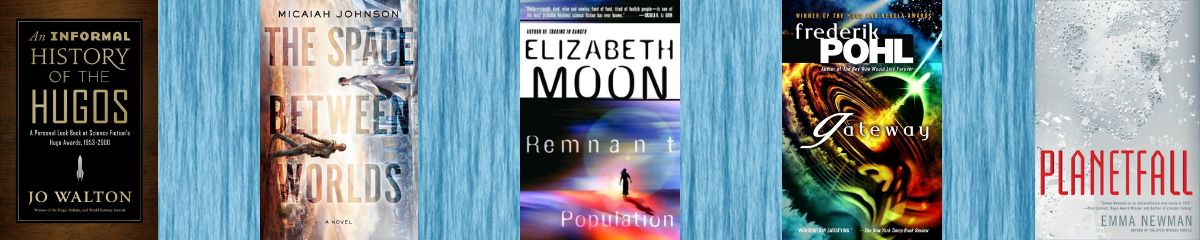
A title longer than 6 words: The Girl Who Circumnavigated Fairyland in a Ship of Her Own Making (Catherynne Valente) Written by an author with your initials: Katherine Mansfield for me The MC is an animal: The Bees (Laline Paull) or Hollow Kingdom (Kira Jane Buxton) Takes place underwater: The Mountain in the Sea (Ray Nayler), Startide Rising (David Brin), A Darkling Sea (James L. Cambias) Doesn’t have the letter “e” in the title: Hollow Kingdom (Kira Jane Buxton) or Loki’s Ring or any number of others on my list, I reckon. Or Gadsby by Ernest Vincent Wright if you want to read an entire book that doesn’t have an E anywhere. By or about being a refugee: Downbelow Station (C.J. Cherryh), Girl at War (Sarah Novic), The Amazing Adventures of Kavalier and Clay (Michael Chabon), or American Dirt (Jeanine Cummins) In translation: The Little Paris Bookshop (Nina George), The Three-Body Problem (Cixin Liu), Walking Practice (Dolki Min) A cover featuring neon colors: The Ultimate Cyberpunk Anthology The MC is a non-human entity (robot, alien, etc.): Murderbot! I plan to read the whole series this year. Other options are The Last Unicorn (Peter Beagle) or The Bees (Laline Paull). Set in space: Since I mainly read sci-fi, any number of books will complete this task. The first one that comes to mind is Downbelow Station by C.J. Cherryh. Another option is The Best of All Possible Worlds (Karen Lord). Written by an Indigenous/Native American/First Nations author: Braiding Sweetgrass (Robin Wall Kimmerer), Walking the Clouds (ed. Grace L. Dillon), or anything by Stephen Graham Jones. An anthology: Walking the Clouds or The Ultimate Cyberpunk Anthology Released in your birth month: March: Loki’s Ring (Stina Leicht), Infinity Gate (M.R. Carey), The Mimicking of Known Successes (Malka Older), Walking Practice (Dolki Min), A House with Good Bones (T. Kingfisher)
The title is a question: Do Androids Dream of Electric Sheep? (PKD) or How Long ‘Til Black Future Month? (NK Jemisin) The MC or author is transgendered: Light from Uncommon Stars (Ryka Aoki), Pet (Akwaeki Emezi), The Memory Librarian (Janelle Monae), or Bang Bang Boddhisattva (Aubrey Wood) The weather plays a significant role: The Maddaddam trilogy (Margaret Atwood), Parable of the Sower (Octavia Butler), The Broken Earth trilogy (NK Jemisin), or The Road (Cormac McCarthy) Has an unusual format (epistolary, choose your own adventure, etc.): Me Being Me Is Exactly As Insane As You Being You (Todd Hasak-Lowy, told in lists); Horrorstor (Grady Hendrix, told in Ikea catalog format) The protagonist is a plant: Semiosis (Sue Burke), Legacy of Heorot (Larry Niven), the Dragonriders of Pern (Anne McCaffrey), or the Southern Reach trilogy (Jeff VanderMeer) 2024 adaptation: The Salt Path (Raynor Wynn), The Three-Body Problem (Cixin Liu), or Mickey7 (Edward Ashton) You have no idea where you got this book: I mean, this is the majority of my TBR. I look at some of them and wonder where the fuck this book came from. The MC has a phobia: The Yellow Wallpaper (Charlotte Perkins Gilman), Murderbot Diaries (Martha Wells), or Fangirl (Rainbow Rowell) Set during your favorite holiday or event: A lot of sci-fi books have holidays such as a “Founder’s Day” or something similar. Pern has Hatching Day, so I might go with that. Or Something Wicked This Way Comes (Bradbury) A one-word title: Annihilation (Jeff VanderMeer), Anathem (Neal Stephenson), or Fingersmith (Sarah Waters) The MC is a time traveler: Long Division (Kiese Laymon), Door into Summer or Farnham’s Freehold ( both by Heinlein), or How to Live Safely in a Science Fictional World (Charles Yu) By or about a person who is asexual: The Sound of Stars (Alecia Dow) or Guardians of the Dead (Karen Hawley) A color in the title: The Woman in White (Wilkie Collins) or Red, White, and Royal Blue (Casey McQuiston), or Red Mars trilogy (Kim Stanley Robinson)
Published in the year of a big historical event in your lifetime: 1986: Count Zero (William Gibson) or The Physician (Noah Gordon) or Howl’s Moving Castle (Diana Wynne Jones) The protagonist has a weird job: The Ravenmaster (Christopher Skaife), The Trauma Cleaner (Sarah Krasnostein), or Ancillary Justice (Ann Leckie) A MC who collects something unusual: Keeper of Lost Things (Ruth Hogan) A book that has won an LGBTQ+ literary award: Dhalgren (Samuel Delany), The Female Man (Joanna Russ), or The Sparrow (Mary Doria Russell) Over 400 pages: Anathem or Cryptonomicon (Neal Stephenson) A novella: Murderbot, The Seep (Chana Porter) Written by an author who shares your zodiac sign: Richard Dawkins, Christopher Hitchens, Dan Simmons, Life on Mars (Tracy K. Smith) Features 24 (a 24-year-old MC, or was published 24 years ago, etc): 1999: Cryptonomicon (Neal Stephenson), Flashforward (Robert Sawyer) Women in STEM/ Girl coders, etc: Tomorrow and Tomorrow and Tomorrow (Gabrielle Zevin), The Calculating Stars (Mary Robinette Kowal), Braiding Sweetgrass (Robin Wall Kimmerer) An attention-grabbing title: Noor (Nnedi Okorafor), Cyteen or Downbelow Station (C.J. Cherryh), or Thistlefoot (GennaRose Nethercott) Author or MC is HIV positive: The Immortals (Tracy Hickman), Push (Sapphire), or Darker Proof (Adam Mars-Jones and Edmund White) Takes place in a haunted house: Possibly Annihilation (Jeff VanderMeer), Revelation Space (Alastair Reynolds), and there’s always The Haunting of Hill House (Shirley Jackson) Title starts with G: Gateway (Frederik Pohl), Glory Road (Heinlein), Gnomon (Nick Harkaway), Goliath (Tochi Onyebuchi)
A book of poetry: the witch doesn’t burn in this one (Amanda Lovelace), Anne Sexton’s fairy tale poems, Life on Mars (Tracy K. Smith) A microhistory: An Informal History of the Hugos (Jo Walton), Extra Virginity (Tom Mueller) By or about a neurodivergent person: Ninefox Gambit (Yoon Ha Lee), The Speed of Dark (Elizabeth Moon), Rules (Cynthia Lord), A Girl Like Her (Talia Hibbert), or Happiness Falls (Angie Kim) Book with a main character over 60 years old: Remnant Population (Elizabeth Moon), Old Man’s War (John Scalzi), The Adventures of Amina-Al-Sirafi (S.A. Chakraborthy) It has a pretty cover: The Hazel Wood (Melissa Albert), The Last Unicorn (Peter Beagle), The Sparrow (Mary Doria Russell) MC has a strange hobby: The Utterly Uninteresting and Unadventurous Tales of Fred, the Vampire Accountant (Drew Hayes), Mostly Dead Things (Kristen Arnett), The House of Small Shadows (Adam Nevill), The Taxidermist’s Lover (Polly Hall) Set in a city you’ve never visited: The House of Shattered Wings (Aliette de Bodard), The Little Paris Bookshop (Nina George) By or about a person with a mental illness: The Devil in Silver (Victor LaValle), Planetfall (Emma Newman), Outside (Ada Hoffman), Stormlight Archives (Brandon SAnderson) A title that rhymes: Eye in the Sky (PKD), Wed, Read, and Dead (V.M. Burns), To Brie or Not to Brie (Avery Aames) Set in a parallel universe: The Space Between Worlds (Micaiah Johnson), Ilium/Olympos duology (Dan Simmons), Interworld (Neil Gaiman and Michael Reeves) Published in your birth year: Dinosaur Planet (Anne McCaffrey), The Persistence of Vision (John Varley), Gateway (Pohl), Lucifer’s Hammer (Niven and Pournelle) Indie or small press published: Ancient Oceans of Central Kentucky (David Connerly Nahm), Alien Stories (E.C. Osondu), Winterset Hollow (Jonathan Edward Durham) By or about a person on the autism spectrum: Outside (Ada Hoffman), The Speed of Dark (Elizabeth Moon), 600 Hours of Edward (Craig Lancaster)
Greetings, friends! This year I thought I might try something new – creating my own challenge for 2024! I always participate in annual reading challenges. My favorites are the ones by The Nerd Daily, Book Riot, and PopSugar. It looks like The Nerd Daily hasn’t added their reading challenge for 2024 yet, so keep an eye on that site if you look forward to that particular one as much as I do.
For this year, as I did last year in the challenges I participated in, I am going to try to complete this by shopping my own TBR first. I have an unimaginably huge TBR – seriously, I think it’s about 500 books. So I am trying to pare that down and also still have some fun with reading challenges. I try, too, to make it more challenging by reading only women, BIPOC, or LGBTQ+ authors. It’ll be interesting to see if I manage to complete my own challenge. I haven’t completed a challenge in a couple years, though I did hit my Goodreads goal to read at least 50 books.
If anyone decides to try this reading challenge out, it would be awesome if you left a comment below or tagged me in one of the social media places! 💖
Also, I’ve been super into junk journaling lately, so I designed the PDF of the challenge prompts to look similar to a junk journal page. Thank you, Canva, for making design easy!
Here is a link to a basic Word doc with the prompts as well, if anyone wants that.
Somewhere to Belong (ST: DSC) by Dayton Ward Genre: sci-fi I read it as a(n): paperback
Length: 333 pp Her Grace’s rating: 2.5 stars
Spoilers for anyone who hasn’t watched the show.
Now that the threat from the Emerald Chain is dealt with and the source of the Burn has been identified and corrected, Burnham and the crew of Discovery are able to take some down time to reflect on what the implications really are for them now that they’ve arrived in the 33rd century. Dr. Culber had been standing in as the counselor for the crew, but now that they’re at a starbase, a temporary replacement counselor has been assigned. Then they all get sent out to continue their mission of reconnecting with formerly allied planets that had been cut off from the Burn. They answer a distress signal and discover a ship of Xaheans, staunch allies of the Federation in the 22nd century. Only now, the Xaheans have by necessity become a wandering society and are isolationist on the verge of xenophobia. Capt Burnham has to try her hand at diplomacy to resolve a potentially deadly situation from exploding, and taking her ship and crew with it.
I have never taken so long to read a Star Trek book in my life. I was carting this around with me for the better part of a month! It was barely 300 pages, it should have taken me maybe a week even with work. It was. So. S L O W. I have never DNFed a Trek book but I came very close to doing so on this one. It was so out of character for Dayton Ward’s novels that it was kind of shocking how fucking bored I was with this one. It felt like he wrote himself into a corner and had no options for resolution other than cheesy and unbelievable ones.
The overarching theme in the story is, of course, finding where one belongs. Ward explores the topics of what makes a home, how we create a found family, if home is a place or a feeling, and so on. At times, the exploration was a bit ham-handed. It felt sermony, which is usually reserved for Burnham although she managed to refrain from sermonizing this time.
Also, this is kind of a weird observation. To be fair, I haven’t read every Trek book Ward has written so I could be wrong. But this book makes me think that he does not know how to write gay male characters. Stamets and Culber were definitely not right in this book. They were always saying something petulant or acting moody. Even though the characters recognized that and corrected it, it was still the first thing that was described. None of the other characters were handled that way. Maybe he just doesn’t like Culber or Stamets, which is fine if so. We don’t have to like all the characters. But I hope he figures out how to write those two characters better if he writes more Discovery books in the future. And I DO hope he does! He wrote Drastic Measures, which is one of my favorite Disco books, partly because it focused mainly on a young Lieutenant Gabriel Lorca, and he’s played by Jason Isaacs who I’m in love with. And partly because of that little tidbit at the very end that was obviously a confused and scared Prime Lorca stuck in the MU and I want to read that story!
The Ghost Machine (Firefly) by James Lovegrove Genre: sci-fi I read it as a(n): hardback
Length: 336 pp Her Grace’s rating: 3.5 stars
The crew of Serenity are hired by Badger to ship a device to a client on one of the outer worlds. Mal, though, gets a real bad feeling about it and declines to take it on board his ship. That doesn’t stop Jayne from bringing it on himself. Unfortunately for all, it is a device that attacks brainwaves, sending people into a coma-like sleep in which they have vivid hallucinations. They start out like everyone’s greatest dreams come true, but gradually change to their worst nightmare. Only River seems able to enter into the others’ visions, which she does in a desperate attempt to wake someone up before the ship crashes into a moon.
I enjoyed this one, even though I don’t remember tons of details about it. It only took me 2 days to read. I liked it because it gave us a “what if” glimpse into what the crew’s secret desires are, though some are not hard to guess. The thing I seriously disliked was that Lovegrove seemed not to know what to do with Shepherd Book and Inara, so he shipped them off on an errand off-ship and they didn’t come back until the crisis was averted. I think he missed a great chance to fill in some of Book’s backstory in particular.
Image retrieved from Goodreads
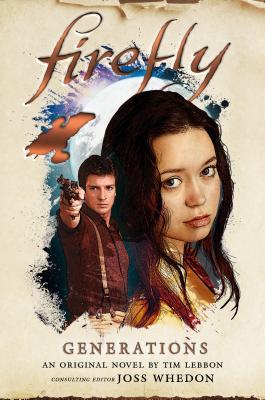
Generations (Firefly) by Tim Lebbon Genre: sci-fi I read it as a(n): hardback
Length: 281 pp Her Grace’s rating: 2.5 stars
Mal wins a strange star map in a game of poker and immediately the bad luck begins. Someone else tries to steal it and kill everyone in the process, River gets crazier because of something in the map, and there’s a Big Bad Secret that the Alliance has hidden in orbit around a far-outer planet. But, if the crew can manage to get there and back in one piece, there is a trove of historical relics worth a fortune on the black market. X marks the spot, I guess.
This one wasn’t as well developed as the previous three Firefly books. The characters seemed less complex and we didn’t really get a good view of things from River’s POV, even though she was the main protagonist in this one. Also, if I’m being honest, it was kind of slow. Not much actually happened. Probably my least favorite Firefly book so far, but I still enjoyed it because I will take Firefly in any way I can.
Image retrieved from Goodreads
My Best Friend’s Exorcism by Grady Hendrix Genre: horror I read it as a(n): audiobook Narrator: Emily Woo Zeller Length: 10:11:00 Her Grace’s rating: 3 stars
Abby and Gretchen are best friends and have been ever since Gretchen saved Abby’s 10th birthday party from being a total disaster. The girls are inseparable until high school when, after a weekend spent at another girlfriend’s house, Gretchen starts acting strange. She stops washing or changing her clothes, she is cruel, and she dumps Abby in favor of richer friends. Abby eventually figures out that Gretchen is possessed by a demon and sets out to help her. Of course no one believes her.
So I got this one because I thought it would be funny. I mean, the title alone kind of implies humor. Also, demon possession is fucking hilarious. There are people who actually believe it’s real. But it was really not funny. It was a straight-up horror story, which is fine. I don’t usually care for actual horror because I can’t suspend my disbelief. See above comment about people actually believing in demon possession; I am not one of them. So that’s on me for not looking into it further before I got it.
Mainly, though, it’s a story about friendship, growing up, and changing as you grow, which is a good enough theme.
I listened to this on audio and the narrator, Emily Woo Zeller, did a good job, as usual. She may not be on my list of very favorite narrators but she is definitely good and I wouldn’t decline to listen to a book just because she’s narrating.
The Earthly Blaze by Alice Poon Genre: fantasy I read it as a(n): digital ARC Length: 396 pp Her Grace’s rating: 4 stars
In The Earthly Blaze, author Alice Poon takes up immediately after the events of the first book of this duology, The Heavenly Sword. Jumping right into the thick of it, Sai’er, who is the earthly incarnation of the goddess Chang’e, and her friends struggle against the forces of Prince Zhu Di, the earthly incarnation of the evil Sky Wolf. The fighters form a sect to network and recruit new members, resist the wicked acts of Zhu Di and his government, and hone their skills in kung fu to aid them in their battles. Along the way, bonds between the group are strained and tested in ways none of them could have foreseen. Adding in betrayals and double agents makes the entire situation all the more fraught, burdening Sai’er, Sanbao, Binhong, Yinho, and the rest of the Sect with wavering morale and uncertainty about who is friend and who is foe.
I enjoyed this book even more than The Heavenly Sword. After reading that first entry, I realized that I actually had No Clue™ about kung fu/ wuxia in general beyond having watched Crouching Tiger, Hidden Dragon and some Jackie Chan films, and even less about the literary genre. So I set out to learn a few things about it and lo and behold! I was rewarded by my new understanding with an even greater appreciation for the story as a whole and for the wuxia genre specifically.
This action-packed book was rich in Chinese culture and mythology. I loved the attention to detail throughout. Everything from broad strokes such as landscape descriptions to tiny details such as decorations on a person’s clothes were included and helped to make a vibrant backdrop for the story. It made it feel like I was immersed and part of the action. Likewise, references to various deities and myths enriched the reading experience and, in a couple places, made me go off and look up a myth or character that was previously unfamiliar to me. The worldbuilding overall is excellent, and I also really loved the politics in this. They were complex, at times even labyrinthine, and provided some good insight into the social structures in real-life in earlier times. The legends, politics, and epic martial arts sequences mix together for an explosive adventure.
I enjoyed getting to know Sai’er better. She was very much a mother figure to the Sect members and they looked up to her. She is not perfect, though, but her flaws and uncertainties make her relatable. It was fun to see how not only Sai’er grew as a person and how her celestial identity was resolved, but also how the others fulfilled their own roles, whatever those happened to be. Everything worked itself out the way it needed to, even when we lost characters along the way or wished that something had gone differently. One sign of a good story, to me, is when an author can take readers where they may not want to go but ultimately where they need to go; Poon does that exactly right.
Finally, a small point that nevertheless made a big difference. There was a recap of book 1 at the beginning! I had read and enjoyed the first book in this duology but, as with the majority of the books I read anymore, I forget most of the things about it as soon as I finish reading. The recap was greatly appreciated and was enough to jog my memory so that I could dive right into this one.
At the end of the day, this duology is a sweeping journey through a world filled with courage, destiny, and cosmic forces colliding in an epic battle of good vs. evil. I highly recommend it to anyone who loves kung fu, Chinese mythology, or just a rip-roaring, action-packed story.
The Spirit Bares Its Teeth by Andrew joseph White Genre: historical fiction/fantasy I read it as a(n): ARC
Length: 384 pp Her Grace’s rating: 5 out of 5 stars
In White’s version of Victorian England, some people are born with violet eyes. These people can cut through the Veil, opening a portal to the realm of the spirits of the dead. Many of these violet-eyed people, called Speakers, are women who are highly sought as brides, but since this is Victorian England, they are naturally considered too mentally feeble and physically unsuited to handle being a Speaker. That’s a whole lot of bullshit right there. Female Speakers who are deemed to be unfit, or in some other way rebel against the patriarchy, are diagnosed with Veil Sickness and sent away for treatment, similarly to actual Victorian women who dared to have a mind of her own and got sent off for a nice little lobotomy. Such is the lot of Silas Bell, a trans boy railing against a society that doesn’t see his true self and being unable to attend medical school as a result. Silas is sent to Braxton’s Finishing School and Sanatorium for Girls where other wayward females are stashed away until they are “cured,” usually by forced marriage. There’s a code word for “rape” if I ever heard it. While there, Silas learns that Braxton’s has a horrific secret that the headmaster will guard at any cost.
This superlative novel speaks directly to the trauma of not being seen or valued as one’s authentic self. Even today, many of us know the rage, fear, and despair of living in a society that would see us hidden away, eliminated, and which perpetuates a very deliberate erasure of the things that hold meaning for us. White, himself a trans man, has woven a delicate web of a novel, drawing on current events and lived experience, to craft an exciting plot, complex worldbuilding, and memorable characters who readers are bound to care about deeply. Historical details such as Victorian social mores add to an already intense and vivid story.
A quick warning: there are some gory quasi-medical scenes. Maybe skim over those if you are squeamish. I’m not and felt that the gore added intensity to the plot as well as an additional layer of desperation and hopelessness that makes you want to burn everything to the fucking ground.
I recommend this with the greatest enthusiasm. Fuck the patriarchy, friends!
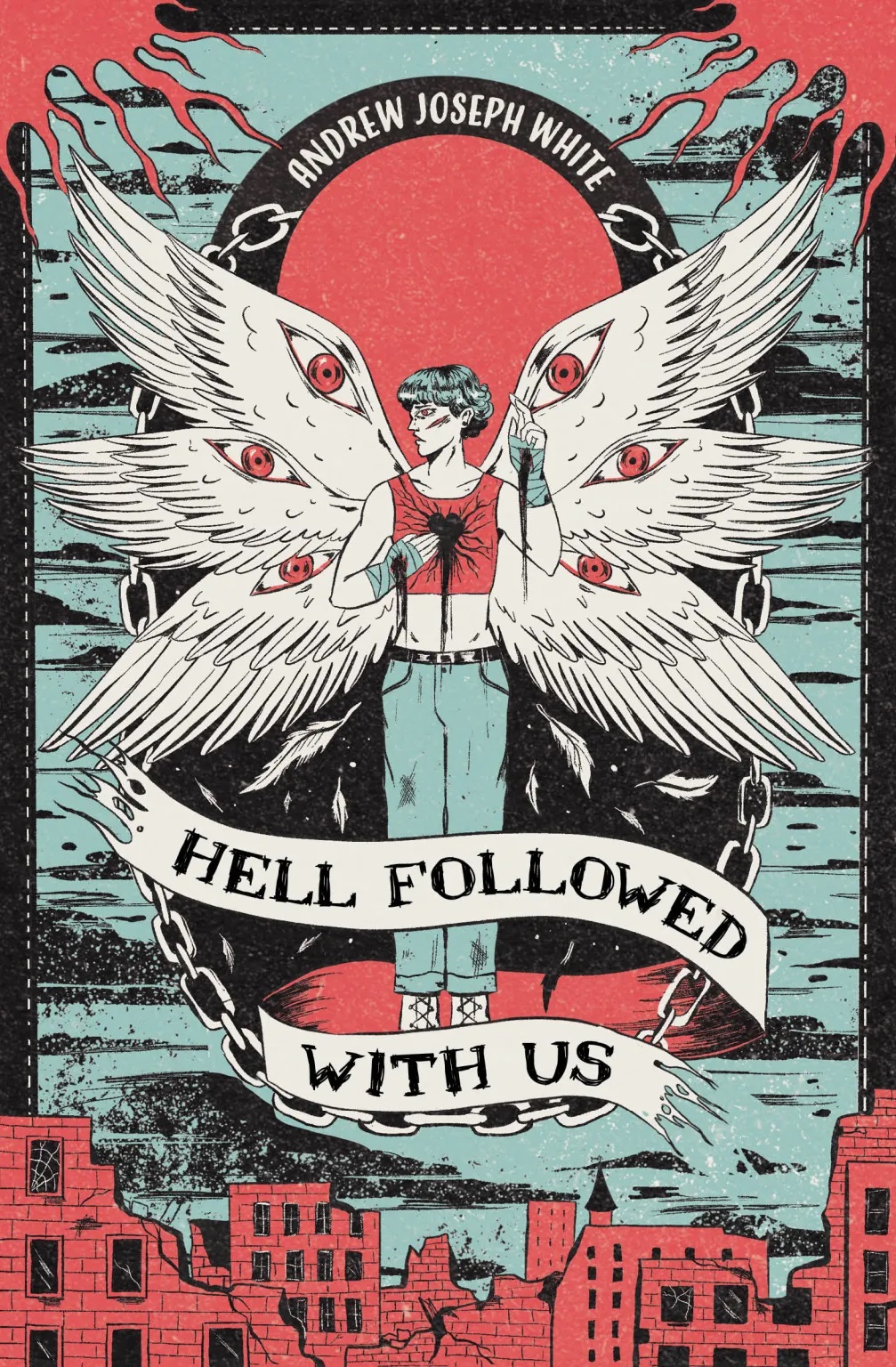
Weirdly, my daughter is reading White’s debut book, Hell Followed with Us, for a project in her English class. Neither of us realized we were reading the same author until we both, at the same moment, looked at each other’s books while sitting on the couch and said, “holy crap, I’m reading his other book right now!”
This review was originally published on the Historical Novels Review website, minus the swears.
The Improbable Tales of Baskerville Hall by Ali Standish Genre: historical fantasy/YA I read it as a(n): ARC
Length: 336 pp Her Grace’s rating: 2 out of 5 stars
The Improbable Tales of Baskerville Hall by Ali Standish mingles elements of the historical Arthur Conan Doyle and his most famous series, Sherlock Holmes into a steampunk-influenced adventure that’s reminiscent of a jaunt through Hogwart’s. A young Arthur Conan Doyle, living hand to mouth with his sisters, mother, and alcoholic father in Edinburgh, jumps at the chance to improve his family’s fortunes when he is offered a spot at an exclusive boarding school, Baskerville Hall. When he arrives – by airship! – Doyle settles in and quickly establishes himself as one of the most promising students currently in residence. When a series of break-ins, thefts, and threatening appearances by shadowy figures occur, events conspire to put Doyle’s education and life at risk.
This book will surely appeal to many young readers, but adult readers will wonder how the fuck Sherlock Holmes ended up in Hogwarts. At times, it felt as though the author were merely replacing names from Harry Potter with ones from Sherlock Holmes and dusting her hands off afterward. While that Potteresque aspect of the book might be forgiven since a lot of fantasy is pretty derivative anyway, it is harder to overlook the fantasy aspects as a whole. “Fantasy” isn’t usually what readers expect from anyone with the name Sherlock Holmes attached to it, so this book felt very out of alignment. The Sherlock Holmes series lends itself well to steampunk, no argument with that at all, and author Ali Standish does a good job incorporating components of that genre into this novel. However, I was expecting a logic book. Where’s my damn logic book? In other words, it lacks the investigative style and logic that is associated with Sherlock Holmes and expected in any retelling of the great detective’s stories.
To give credit where it is due, the story is filled with interesting and well-crafted characters. Real people such as Doyle himself mingle with his fictional characters such as Dr. Watson, creating an intriguing cast. I loved the diversity in the people the best. They’re not all homogenous and bland; they are vivid and have personalities that are deeply developed, given the relative shortness of the book and its targeted age level.
Younger readers will no doubt be thrilled with this story, but I don’t think it would appeal very much to many well-read adults.
This was originally published on the Historical Novels Review website. That review was nicer, though it said basically the same thing as here.
The Prince and the Coyote by David Bowles Genre: historical fiction I read it as a(n): ARC Length: 424 pp Her Grace’s rating: 3 out of 5 stars
Set in 1418, pre-Columbian Mexico, a young nobleman comes of age in a time of tremendous upheaval. The Mexican national hero, Nezahualcoyotl, a dreamer and poet as well as the Crown Prince of Tetzcoco (modern Texcoco), is sent to an elite school to learn the many duties of being a royal. His world is shattered when an uprising, led in part by his illegitimate half-brother, leads to the deaths of all of Nezahualcoyotl’s family and sends Nezahualcoyotl himself into exile. Complex political strategy, military brilliance, and sheer stubborn determination to reclaim his throne keep Nezahualcoyotl going as he forges new alliances and fights for his rightful throne.
The world building in this novel was exceptional. Bowles took great pains to create a living, breathing world that appeals to modern readers. The labyrinthine politics involved in the relationships between the various city-states of Mexico at the time are fascinating. That aspect of the novel was certainly the strongest. The battle scenes, though sometimes feeling a little rushed, were exciting and detailed. Learning more about the weapons and battle tactics of this time period was intriguing and made me want to learn more. Similarly, I appreciated learning about daily life for this region and time period.
I have two minor quibbles: the book is marketed as a YA but because of the complexity of the plot, it definitely reads like an adult novel. I think a lot of younger readers would be bored with this.
Also, even though the story quickly grabbed my attention, I was almost undone by the names. While I appreciate, and usually insist upon, historical accuracy, this might be an instance where it would be acceptable to shorten some names to make this book more readable, even if that isn’t technically accurate. It would have been so much easier to read and keep straight all the characters if they were actually called Fasting Coyote or whatever the translation of their name would be.
Overall, The Prince and the Coyote is a gripping, enjoyable epic through a period of history that the U.S. largely skips right over. Warmly recommended.