book review · bookish things · historical fiction

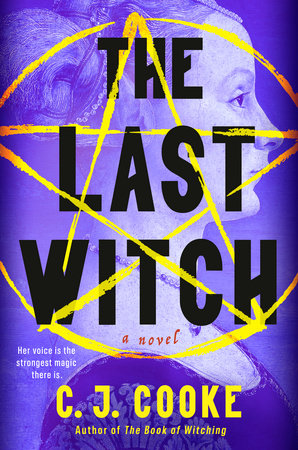
Boudicca’s Daughter by Elodie Harper — Giving a Voice to the Forgotten

Elodie Harper’s Boudicca’s Daughter tells the imagined story of two young girls who, according to Roman accounts, were ordered by Gaius Suetonius Paulinus, the Roman governor of Britain, to be raped by Roman soldiers while their mother was flogged. This atrocity became the biggest catalyst for Boudicca’s rebellion against Rome. Historically, we know almost nothing about these daughters: not their names, their fates, or even whether Boudicca had other children besides the two girls. After their assault, they disappear completely from the historical record.

That’s what makes this novel so compelling. Harper takes these nameless figures, women who were written out of history, and gives them identities, voices, and lives of their own. The book begins with the lead-up to Boudicca’s rebellion, but the uprising itself only occupies about the first quarter. The rest of the story unfolds from the perspective of her eldest daughter, who in this book is called Solina, as she navigates the aftermath of her mother’s rebellion – the trauma of the assault, the crushing defeat of her people, and her struggle to survive being sold into slavery in the heart of Rome.

One of the things I appreciated most was Harper’s willingness to explore the complexity of what happens after the rebellion ends, especially to the women who are left behind. Solina’s story feels like a reclamation of history, giving voice to those who were silenced. I’m always drawn to stories of strong women, and this one in particular highlights how resilience and strength can take many forms. Sometimes strength is quiet, sometimes it is choosing one of two evils and hoping you can live with that choice. It is aways deeply personal.

A theme that really challenged me while reading was the “enemies to lovers” dynamic. Normally, that trope doesn’t bother me when it’s something like academic rivals, sports competitors, or even just a couple of people who take an instant dislike to each other. But I’ve always been uncomfortable with stories that romanticize relationships between oppressors and victims, for example, between a Nazi officer and a Jewish prisoner. While such relationships almost certainly existed – I would think it’s a survival mechanism in at least some cases – I’ve always found that version of the trope disturbing and something I’d rather not read even if it might be historically accurate.

Yet in Boudicca’s Daughter, Harper approaches that idea in a way that made me think more deeply. When Solina forms a complicated relationship with Paulinus, the very man who ordered her rape and who destroyed her people, it isn’t presented as simple romance. If it was, it would have been unforgivably disrespectful to Solina, Boudicca, and every other woman in history who had to make a similar choice. Instead, it’s messy, painful, and psychologically complex. It made me reflect on how trauma can distort love and loyalty, how survival can blur moral boundaries, and how what we label “enemies to lovers” might sometimes be closer to a portrayal of coercion, dependency, or even Stockholm syndrome. I am still not sure what I think about Solina and Paulinus’s relationship or how honest such a relationship could ever really be.

In the end, I came away deeply impressed. Boudicca’s Daughter is not just a story about rebellion; it’s about identity and reclaiming one’s voice in the aftermath of violence. It’s powerful, unsettling, and unforgettable. I’d highly recommend it to readers who love stories about strong women, historical fiction, or anyone interested in the human side of Boudicca’s rebellion.

(Image credit: duncan1890 via Getty Images)
book review · lifestyle · travel

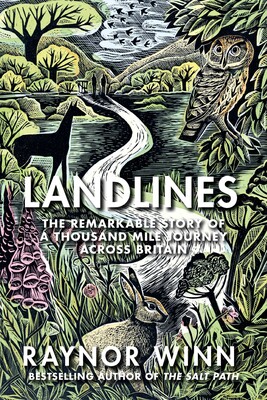
Exploring Connections in ‘Landlines’ by Raynor Winn

Landlines by Raynor Winn Genre: memoir/ nature writing I read it as a(n): trade paper Length: 303 pp Her Grace’s rating: 5 stars

Landlines – not just the telephones for old people! In Winn’s newest book, they are lines on maps. Lines on the land. Lines of communication. The theme of Winn’s third book are the various lines we encounter everyday and how they connect us to each other, to our home, to the places and people we love. 

Ray and Moth went walking, with the intention to walk the Cape Wrath Trail. That trail’s name sounds scary to me and I would probably die. Moth seemed to be getting worse and falling into a depression. Ray browbeat him into going walking again. At first, and for much of their trip, she felt guilty about it because Moth was convinced he was no longer able to do a long distance walk and he seemed to be genuinely miserable. But Ray, understandably, cannot give up on him or her hope. So she pushed and pulled and harangued until he kept going. And soon enough, they hit a rhythm that worked and rather than walking Cape Wrath and then going home, they decided to go to the next leg of the trail. And then the next. And the next. And ultimately they walked a thousand miles back home to Cornwall. 

As I wrote about previously, I don’t care if any of Raynor and Moth’s story is made up. I don’t think it is, but even if it is, I don’t care. I don’t think it matters. It’s memoir, not testimony, and there is still plenty of inspiration to be gleaned from any book, fiction or otherwise. I found Landlines to be just as inspiring and beautifully written as The Salt Path and The Wild Silence. I especially loved the references in this book to The Salt Path and how Ray now looks back on that time as one of the best parts of their life, even though while they were in it, it felt like one of the worst. I loved the way she weaves in reflections and memories of her life with Moth. They are all full of love, now tinged with the anticipation of dread and grief. “He reaches his hand out, and for a second I’m taking the last few steps through a freezing Arctic river and he’s pulling me up on to the bank of black ash, but that’s only a memory now” (20). 

A word I learned from this book: Moraine, an accumulation of dirt and rocks and other debris that is carried and deposited by moving glaciers. 

Some of my favorite quotes:

[Upon being given a couple bottles of beer by a stranger at a pub] “Put these in your bag, they’re for the big man later, don’t tell him ‘til tonight. What he’s doing, being out here, it’s a big thing. I might be loud, and drunk, but I know courage when I see it” (101). 

They’re the moments which turn desperate, annoying or desolate experiences into an understanding that the person you share the plastic bag with is the one, that you have the ability to laugh at anything, and that even having lost most of your material possessions you can survive on love, hope and a packet of dried noodles (105). 

“I know you’ve walked a long way.”

I look down at my clothes, muddy, ripped, smelling of dried bog-water. “I know, we do look a bit of a mess.”

“No, you can’t get away with it like that. I know who you are. Your book changed our lives – it changed the way we live our lives. We would never have given ourselves the time to just walk, not before we read your book.”

I look at the couple, heading towards middle age, but glowing from the wind, sun and enthusiasm. “The book might have given you an idea, but it didn’t change your lives.”

“How do you know that?”

“Because books don’t change lives. They can change how you think, but it’s you that changed your life” (227). 

Thousands of feet over thousands of years have trodden many of the same trails we have, tracing their passage on to the landscape, imprinting their memories into the soil. What remains are not just paths, they’re precious landlines that connect us to the earth, to our past and to each other. We’ve followed them for a thousand miles, seen so much, heard so many stories, until now, at the edge of the land, we’ve become something other than just walkers. We’re at the point where time and place and energy combine, where we become the path, the walker and the story. No need for runestones, it’s all held within us; we’re already part of our landlines, part of the song of the land (298-299).

book review · books · Star Trek

Maps, Mystery, and Mayhem in Star Trek’s The High Country

The High Country (Star Trek Strange New Worlds) by John Jackson Miller
Genre: sci-fi
I read it as a(n): hardcover
Length: 371 pp
Her Grace’s rating: 4 stars 

Pike and the gang are headed out to test an experimental new kind of shuttle. It is a miserable failure, but not because the technology is flawed. It’s because they stray into a region of space where absolutely no technology works. They crash on a planet, Skagara, their emergency transporters sending the shuttle crew all across the planet. To the surprise of everyone, not only is there a thriving blended civilization there, but a close friend of Pike’s. 

The people of Skagara come from many places. The humans are descended from a lost ship that harkens back to an episode of Enterprise. The thing they all have in common is that they were brought to Skagara to follow a tech-free way of life. To Pike’s friend, Lila alley, it is paradise, but to Pike and the rest of the Enterprise crew, it’s awful. They set off on a mission to reconnect with the shuttle crew and also solve the mystery of why nothing works so they can escape from the planet. Unfortunately, Lila and many others will do anything to prevent Pike from doing what they think will ruin their way of life. 

Ok, first things first. This Star Trek book has MAPS! I fucking love maps in sci-fi books! I have never seen a map in a Star Trek book before, and not only is there A map, there are five maps! THERE! ARE! FIVE! MAPS! I fully support putting maps in Star Trek books and I wish every one of them that is based even in part on a planet or moon or planetary body of any kind came with a map. 

Next, the story itself was quite fun. It is a pretty typical Trek story – crashes and planets and a Problem That Will Destroy the Universe unless Our Heroes can fix it! The civilization on Skagara is very Old West, so there were plenty of parts of this book that read like an episode of Firefly. I ALSO approve of Trek that reminds me of Firefly! And vice versa! When can we get more Firefly books as well as Star Trek books, please and thank you? 

We got to see a lot of good character development for Uhura in particular, which was nice. Not everything the shuttle crew experienced was good and some of it will leave scars. Not even Utopia is perfect. There was also some good back story for Pike, which I always like. I dig a good back story. 

For me, Number One had the least interesting story line and least amount of character growth. Spock had the most “yeah, right” story line. Fun, but yeah, right, like that would happen. 

I also liked that this book had short chapters. It felt like I was making faster progress than I was, and also made it a lot easier to read in bed at night. I could say that I was going to read 2 chapters and actually make it through 2 whole chapters without my book hitting me in the face. 

Anyway, it was a fun story, nothing too unexpected at all. A solid Star Trek brain candy book.

book review

Top Quotes from Hardy’s ‘Far from the Madding Crowd’

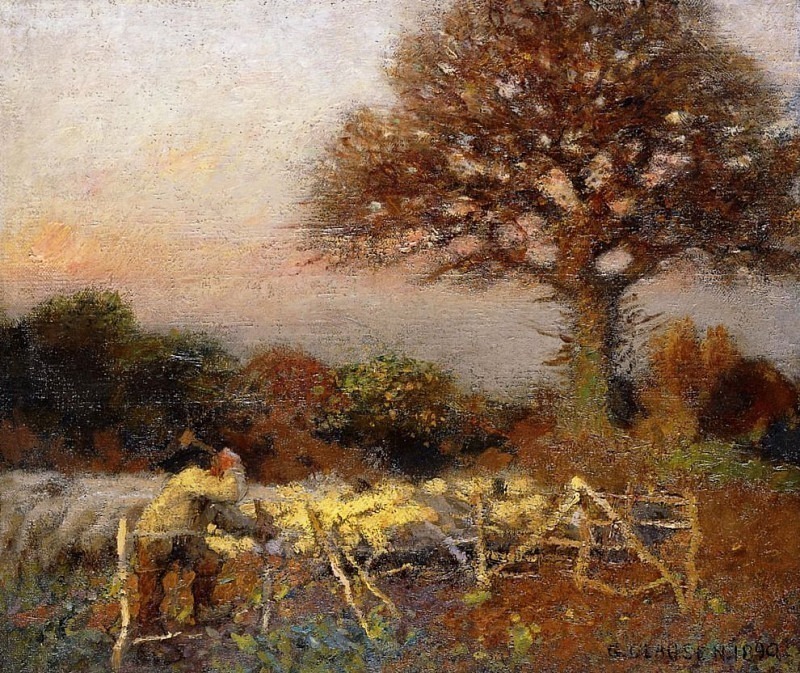
Sheepfold at Early Morning by Sir George Clausen. Image from Gallerix.org.

Far from the Madding Crowd by Thomas Hardy Genre: British classics I read it as a(n): paperback Length: 468 pp Her Grace’s rating: 4 stars 

So this is one of those classics that I not only never read in high school or college, but I didn’t even know what the plot was. Like, at all. All I knew was from the blurb on the book that I have. Since I want to be better about reading more classics, I thought this would be a good one to start with partly because I didn’t know anything about it, and because it’s British and I like British authors for the most part. 

But I don’t feel like writing a proper review of it. It’s been sitting on my desk for weeks since I finished it, waiting for me to review it. Other than saying that I loved it and that there were quite a few parts that I thought were actually hilarious, it was a solid story. I thought it took a bit longer than necessary to introduce all of Bathsheba’s suitors, but it was fine. I loved it overall regardless. 

One thing I like to do is make a note of any books or music that are mentioned in a book. The literature mentioned in this one is:

Anyway, like I said, I don’t feel like writing an actual review. Partly because I’ve had the book sitting on my desk for weeks and I finished reading this quite some time ago. So instead of a traditional review, I’m going to share my favorite lines from the novel. Here they are. Behold.

The instinctive act of human-kind was to stand, and listen, and learn how the trees on the right and the trees on the left wailed or chanted to each other in the regular antiphonies of a cathedral choir; how hedges and other shapes to leeward then caught the notes, lowering it to the tenderest sob; and how the hurrying gust then plunged into the south to be heard no more (14).

To find themselves utterly alone at night where company is desirable and expected makes some people fearful; but a case more trying by far to the nerves is to discover some mysterious companionship when intuition, sensation, memory, analogy, testimony, probability, induction – every kind of evidence in the logician’s list – have united to persuade consciousness that it is quite in isolation (18). [Extroverts? I think this describes extroverts.]

“My name is Gabriel Oak.”
“And mine isn’t. You seem fond of yours in speaking it so decisively Gabriel Oak.”
“You see, it is the only one I shall ever have, and I must make the most of it.” (27)

There was left to him a dignified calm he had never before known and that indifference to fate which, though it often makes a villain of a man is the basis of his sublimity when it does not (43).

[Discussing Joseph Poorgrass’s shyness]
“Yes – very awkward for a man.”
“Ay – and he’s very timid too,” observed Jan Coggan. “Once he had been working late at Yalbury Bottom, and had had a drap of drink, and lost his way as he was coming home-along through Yalbury Wood – didn’t ye, Master Poorgrass?”
“No, no, no – not that story!” expostulated the modest man, forcing a laugh to bury his concern.
“-And so ‘a lost himself quite,” continued Mr Coggan with an impassive face implying that a true narrative, like time and tide, must run its course and would respect no man. “And as he was coming along in the middle of the night, much afeared, and not able to find his way out of the trees no-how, ‘a cried out, ‘Man-a-lost! Man-a-lost!’ A owl in a tree happened to be crying ‘Whoo-whoo-whoo!’ as owls do you know, Shepherd” (Gabriel noddled), “and Joseph, all in a tremble, said ‘Joseph Poorgrass of Weatherbury, sir!’” (62-63). [LOOOOOOL that poor guy! 😂]

The good old word of sin thrown in here and there at such times is a great relief to a merry soul (65).

It was one of the usual slow sunrises of this time of the year, and they sky, pure violet in the zenith, was leaden to the northward, and murky to the east, where, over the snowy down or ewe-lease on Weatherbury Upper Farm, and apparently resting upon the ridge, the only half of the sun yet visible burnt rayless, like a red and flameless fire shining over a white hearthstone. The whole effect resembled a sunset as a childhood resembles age.
In other directions the fields and sky were so much of one colour by the snow that it was difficult in a hasty glance to tell whereabouts the horizon occurred; and in general there was here too that before mentioned preternatural inversion of light and shade which attends the prospect when the garish brightness commonly in the sky is found on the earth and the shades of earth are in the sky. Over the west hung the wasting moon, now dull and greenish-yellow, like tarnished brass (104).

O I love him to very distraction, and misery and agony. … Loving is misery for women always (207).

[Petrichor!] She went out of the house just at the close of a timely thundershower, which had refined the air, and daintily bathed the coat of the land, though all beneath was dry as ever. Freshness was exhaled in an essence from the varied contours of bank and hollow, as if the earth breathed maiden breath, and the pleased birds were hymning to the scene (210).

But man, even to himself, is a palimpsest, having an ostensible writing, and another beneath the lines. It is possible that there was this golden legend under the utilitarian one: “I will help, to my last effort, the woman I have loved so dearly” (254).

[A mutt!] He was a huge heavy and quiet creature, standing darkly against the low horizon, and at least two feet higher than the present position of her eyes. Whether Newfoundland, mastiff, bloodhound, or what not, it was impossible to say. He seemed to be of too strange and mysterious a nature to belong to any variety among those of popular nomenclature. Being thus assignable to no breed he was the ideal embodiment of canine greatness – a generalization from what was common to all (277).

All romances end at marriage (281).

Where however happy circumstance permits its development the compounded feeling proves itself to be the only love which is strong as death – that love which many writers cannot quench, nor the floods drown, beside which the passion usually called by the name is evanescent as steam (409). 

References:
Clausen, Sir George. A Sheepfold, Early Morning. 1890. Oil on canvas. Gallerix, https://gallerix.org/storeroom/1363/N/287/. 

Hardy, Thomas. Far from the Madding Crowd. Edited by Suzanne B. Falck-Yi and Linda M. Shires, 2nd ed., Oxford University Press, 2008.

editorial

Why Raynor Winn’s Memoir Matters: A Defense Against Criticism

Some of you fellow book nerds might’ve seen the recent scandal surrounding Raynor Winn, author of the beloved bestselling memoir The Salt Path. If not, here’s the TL;DR version: a “reporter” (we’ll be generous and call her that) from The Observer accused Winn of fabricating parts of her book. She claimed Winn lied about her husband’s neurological illness, said they secretly had a house in France, and basically tried to tear the whole memoir apart.

Then, not long after, the same journalist backpedaled, admitting maybe she hadn’t actually fact-checked her piece very well.

I call bullshit.

In Winn’s statement about this, she says that The Observer had been offered the chance to talk to her and Moth and “to correct their inaccurate account and to be guided on the truth, on the basis that the discussion would not be made public. However, they chose not to take it, preferring to pursue their highly misleading narrative” (Winn). The reporter could’ve used her platform at The Observer to do something meaningful, like highlighting an underreported social issue, talking about a bright young up-and-coming inventor, or maybe even helping someone. But no, she wrote a smear job about a wildly popular book, penned by a flawed, real human being. Newsflash: Winn is human! Not perfect. No one is. But I don’t for one nanosecond believe that Winn fabricated The Salt Path out of whole cloth.

For starters, yes, she mentioned a place in France, but a) it’s a ruin, not a livable house, and b) they were destitute. How were they supposed to get to France with zero money? By beaming there? Could they have tried selling the French place? They did, according to Winn’s statement, but the place is worth almost nothing and the local realtor “saw no point in marketing it” (Winn). Did they actually lose their house because she’d embezzled money from her employer? Not according to her statement, which she printed basically with receipts. I choose to believe she and Moth are gentle and awesome humans, but you never really know a person. And that’s just the thing. Unless you know all the details, which none of us do, don’t assume. And more importantly, it’s really nobody’s business. Writing a memoir doesn’t mean the author signs over their entire private life to public scrutiny. It’s like when a friend asks for your advice. They’re not actually required to take it. Quit acting like entitled monsters.

Also, let’s talk about memoirs in general for a second. Nearly all of them are creative nonfiction. The operative term there is “creative.” Imagine a memoir that was just a dry, factual list. “Dear diary, we lost the house. Then we walked 600+ miles.” How fucking boring. No matter what readers might say, we don’t actually care if a person lost their home or what the reason is that they lost it. We want the heartbreak, the grit, the beauty, the weirdness, the transformation, the discovery, and nature walking, all of that. We don’t want to know just what happened. We want to know how it felt. What we want, in fact, is a story. 

Storytelling makes up the biggest part of human existence. It teaches us, comforts us, challenges us, and elevates us. It is fundamental. It’s how we understand each other. Storytelling makes us human. 

I am not saying that every word in The Salt Path is literal truth. I’m saying that it doesn’t matter. It’s one woman’s lived experience. Ray and Moth are different beings, and they experienced things differently. I would have a different experience too. Interpretation is highly individual. That doesn’t make it a lie. Memoir is not court testimony, nor a science book. It’s an emotional truth that is shaped by individual memory and meaning. With any work of literature, whether it’s poetry or prose or memoir, there is a relationship between the text, the author, and the reader where they create the meaning together. The book doesn’t exist in a vacuum. The French philosopher Jean-Paul Sartre wrote about this idea at length. Here is a great blog post about the more salient points of Sartre’s essay: Sartre: Is There a Connection between the Reader and the Writer of Literature? For those of you who are feeling particularly spicy, you can also read the entire thing: What is Literature? Give it a go, seriously. 

This also means readers have a responsibility as well. Stop blindly nodding along with whatever some journalist says. Think for yourselves. 

I came across a YouTube video (not even gonna link it, it’s too stupid. Look it up yourselves if you want to see it and are willing to take the hit to your IQ), claiming The Salt Path harms sick people. What the eternal fuck, now? That’s idiotic on so many levels. For one thing, Winn never, anywhere in her books, said, “If you do exactly what we did, your illness will go away.” I’ve read them all. That’s simply not a thing. What she has said and done, many times, is make it clear how hard Moth’s condition is to diagnose. The only definitive confirmation comes after death through an autopsy. You might understand why she’s reluctant for a real diagnosis under those circumstances. And to these internet armchair medical experts saying, “The life expectancy for CBD is 5 to 8 years, why isn’t he dead yet?” – do you hear yourselves? That is a vile thing to say. You’re rooting for a stranger to die just to prove a point? If you’re in the mood to hope someone cops it, I can give you a list of people who actually deserve it. 

I doubt seriously that many of these internet armchair medical experts are people who trust doctors anyway. There’s almost certainly overlap between the folks who don’t believe Moth is sick and the ones who thought drinking bleach or taking horse dewormer was solid Covid advice. 

That YouTuber also claimed the book gives people false hope. Excuse me? No, it doesn’t. Hope is not a weapon. If you don’t have hope, that’s not Raynor Winn’s fault. And if you’re dumb enough to ignore your doctor’s advice in favor of something you read in a memoir, that’s on you. I’m so sorry if you’re sick. I truly am. But The Salt Path is not to blame for your disappointment. You are not entitled to drag someone else because their experience didn’t match your expectations. Manage your own emotions.

Finally, and this is really the big point for me. Both the publisher and the film company have stated they did their due diligence. They believe in Winn and stand by her. The release of her fourth book has been delayed, not because it’s being scrapped, but because they’re trying to protect her and her family while this shitstorm plays out. They’ve said as much publicly. Feel free to look it up.

So if that “reporter” wants to do some soul-searching and professional self-improvement (doubtful, but okay), maybe she could start by holding herself and her colleagues to actual journalistic standards. Maybe demonstrate some journalistic courage, while they’re at it. For example, the first reporter to ask Trump to his face, “What the fuck is wrong with you?” should instantly win the Pulitzer. She should ask why Black defendants get villainized in crime reporting while white ones get sympathy profiles. She should ask why it’s okay when powerful people lie in ways that can actually harm people and the press is silent, but when a regular person writes a memoir that maybe is embellished a little for the sake of a story, the press suddenly gets all hot and bothered. This journalist, and the people lapping up her nonsense, are part of the problem.

book review

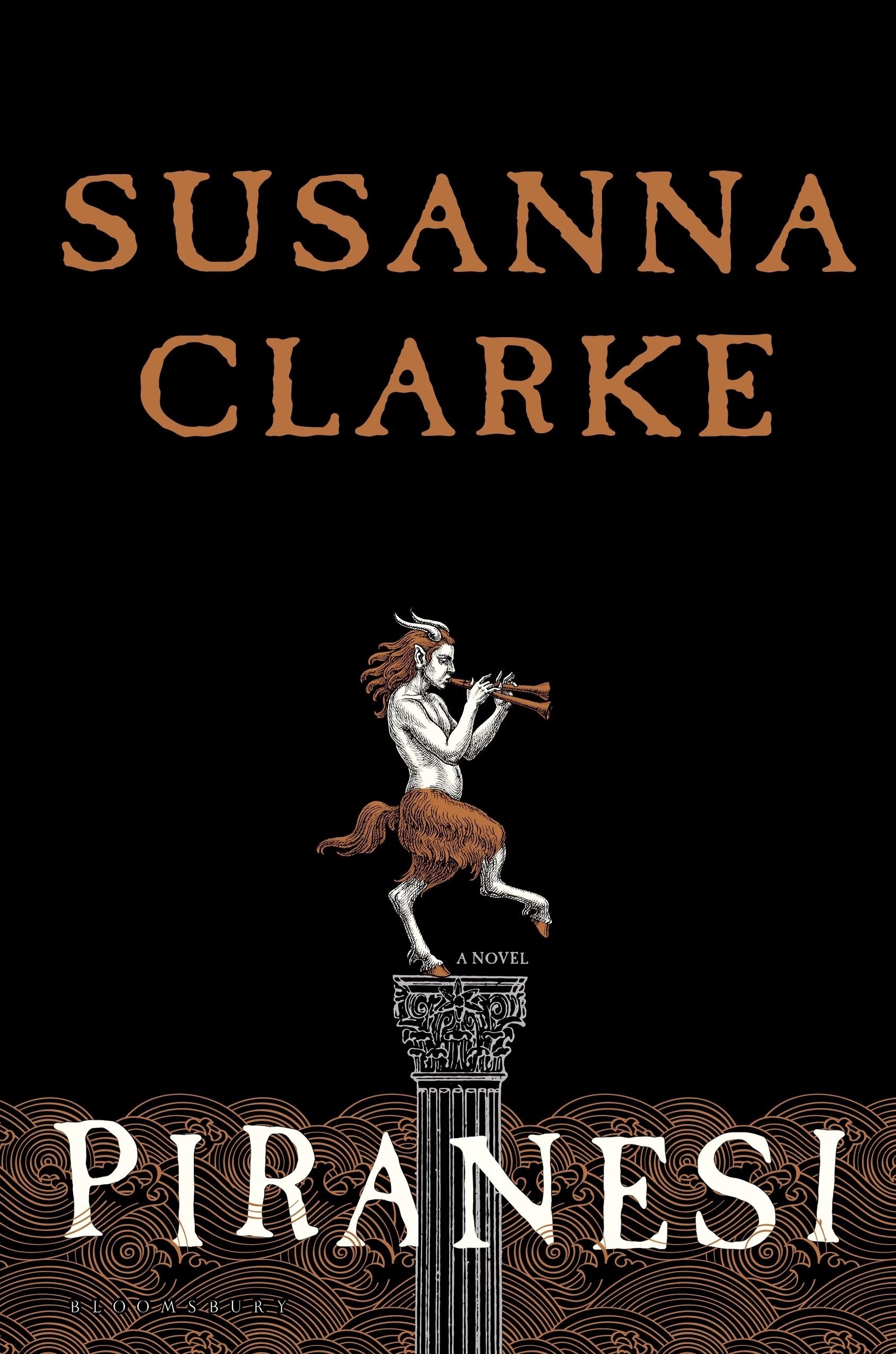
Piranesi by Susanna Clarke: A Beautifully Confusing Read

Piranesi by Susanna Clarke
Genre: fantasy
I read it as a(n): hardback
Length: 245 pp 
Her Grace’s rating: 3.5 stars
2025 Reading Challenge tasks: TND: #33 – a title you know nothing about

Piranesi is the story of a man in a strange and hidden world. He is alone but for occasional visits from the man he calls the Other, and the bones of several people.The House Piranesi lives in has endless corridors, statues, fish and sea creatures and birds, as well as an ocean that floods rooms and has tides. When the tides rise and a room floods, Piranesi is careful to move the bones of the people who were there before him so they are safe and they know they aren’t alone. Eventually, in his mission to help the Other find A Great and Secret Knowledge, Piranesi discovers that there may be a great deal more to his world and place in it than he ever could have anticipated. 

It is appropriate that the reading challenge this book fits is the one where you know nothing about the title. I really liked this book. I thought the writing style was beautiful, I loved Piranesi as a character, I thought the setting was fascinating. And I have no fucking idea what this book is actually about. 

Piranesi is the most unreliable of narrators because the House damages one’s memory the more time is spent there. The Other has an agenda of his own and is not helpful. And of course the only other people in the House are the Bone People. So readers are left to wonder where he really is, how he got there, why can’t he get out, where are all the other people, and how long has Piranesi been in the House. He keeps a journal and that is an intrinsic part of who he is. But the entries, with interesting dating systems like “the 4th day of the 8th month in the year the albatross came” are also no help.

I think Clarke wrote this as a story to be experienced rather than understood or explained. It had a very dreamlike quality to it, which I love more the more I think about it. The narrative style bears out the idea that it’s a meditation on dreaming. There is an unnatural calmness to the entire setting. Piranesi is quiet and formal in an archaic way. He’s just so very polite, as my friend said at our book club meeting. Time seems to drift and is fairly meaningless. Overall, I think it works well as a meditation on dreaming because, like dreams themselves, the story works fine on partial knowledge. You know something but don’t know why or how. It just is. Also, things that should scare the living shit out of you, like an endless house with an ocean trapped inside it, are just part of the setting and are not alarming. Partly it’s just again with that calmness. The House and Piranesi just have their own internal logic that works. It doesn’t matter if we understand how it works, only that it works. 

Another thing that I really loved, and which also fits the dreamlike narrative, is the deliberate mix of the sacred and the profane. I’ve always been interested in that (or at least have been interested since I first learned about it in college). Piranesi reveres and even worships the House. It could just be a lower-case house, a place where you live, but he elevates it to something more. The House. And it is suitable because of course it isn’t just any ordinary house. Oceans inside it, remember? Tides and sea creatures and birds. Giant statues. Bones of other people. The bones are another way Piranesi turned the profane into the sacred. He tends to the bones as best he can, keeping them clean and in order and all the bones with its respective body. He talks to them so they don’t feel alone. He has somewhat deified them. 

The whole narrative structure is not just the vehicle or container for the story. It is a major part of the story itself. When it first starts and is entirely dreamlike and drifting, it helps readers know how to feel without telling them. Then when we start to get glimpses of other places and people outside of the House, that’s the dream turning, the point where you would either wake up or the dream shifts into something else. 

There’s also maybe some commentary on academic exploitation. The Other, whose name is Ketterley, would fit right in with a dark academia novel. He’s obsessed with this Great and Secret Knowledge, and is willing to do anything and use anyone to get whatever it is he thinks he’s looking for. That’s a big contrast as well between him and Piranesi. Ketterley will exploit the House and Piranesi, whereas Piranesi cherishes the House and Ketterley. Ketterley and his whole thing is a sharp reminder about what can result when you have intense curiosity (yay!) that is divorced from compassion (oh no!). 

Spoilers below the cut!

Continue reading “Piranesi by Susanna Clarke: A Beautifully Confusing Read”
book review · books

A Review of The Castle of Otranto: Insights into the First Gothic Novel

The Castle of Otranto by Horace Walpole Genre: Gothic, classics I read it as a(n): pb Length: 117  Her Grace’s rating: 4 stars

Generally considered to be the very first Gothic story, The Castle of Otranto is centered on Lord Manfred, his wife Hippolyta, his daughter Matilda, and his son’s fiancée Isabella. In the opening scenes, Manfred’s son, Conrad, gets smashed to a pulp by a giant metal helmet that seemed to come flying out of thin air when he was on his way to the church to marry Isabella. This, friends, is foreshadowing! Events proceed from there, with a family curse, a nefarious plot, a hidden nobleman, a random but handsome stranger from another town, and a salty monk bringing the action along with them.

One of the first things I noticed, and was surprised about, was how funny this story was! There are a couple of servants, Jaquez and Diego, who are like Rosencrantz and Guildenstern. The lady’s maid, Bianca, is like all four of those men rolled into one. Or maybe she is channeling her inner Lwaxana Troi. Either way, she’s hilarious. There were several spots where just the writing and narration itself made me laugh out loud as well. Walpole occasionally broke the fourth wall but good.  

There was also a very heavy implication that nobility is a blood- or birthright. Considering that Walpole was himself a nobleman, that makes sense. It was a little on-the-nose in some parts, but I feel like Walpole was making a deliberate commentary about nobility. The idea running throughout the story is that nobility is inherent, not something one can inherit with titles or take through force. We see this played out in full force with Theodore and Manfred. Theo started out as a peasant in the story but through his actions and behaviors, showed that he was more noble than Manfred. When Theo is revealed to actually be a nobleman, it reads like a confirmation of what we already knew more than an actual plot twist. It’s a big contrast to Manfred who has the titles and lands to back up his claim of nobility, but he’s cruel, paranoid, and basically unhinged. Just like a certain tangerine-colored politician. Example of how life imitates art! 

The way the women fit into nobility is also interesting, if frustrating on occasion. Hippolyta is noble by birth and actions. Her nobility is closely tied to her loyalty, humility, and piety. But she goes way overboard with the whole obedience thing and eventually her virtues are tied so closely with submission that they actually become the problem. She is a very virtuous doormat. Matilda is also virtuous and noble, and her compassion bears that out. She forgives and is empathetic even to people who wrong her. But since this is a Proper Gothic Story, there’s a lot of fatalism and in the end, Matilda’s virtues are not enough to save her. 

I think Isabella is the most interesting. She is virtuous and everything a woman was expected to be at that time, but she also has a spine. She tells Manfred to fuck off when he wants to marry her, she always tries to protect other people, she chooses to be noble as well as being noble by birth. She also tries to save herself by getting the hell out of the castle and pelting to the monastery where she can claim sanctuary and avoid Manfred. She and Theo would make a great match, if that were part of the plot. 

Overall, this was a fast and fun read, the first real Gothic story, and definitely one I recommend to anyone who is into that. 

Some of my favorite lines:

“I fear no bad angel, and have offended no good one” (30).

“He tells you he is in love, or unhappy, it is the same thing” (41).

“Since mirth is not your mood, let us be sad” (64). 

“A good Knight cannot go to the grave with more satisfaction than when falling in his vocation: whatever is the will of heaven, I submit” (66).

“He sighed, and retired, but with eyes fixed on the gate, until Matilda, closing it, put an end to an interview, in which the hearts of both had drunk so deeply of a passion, which both now tasted for the first time” (72).

“I can forget injuries, but never benefits” (95).

book review · books · historical fiction

Carmilla: The Sapphic Vampire Classic

Carmilla by J. Sheridan Le Fanu
Genre: horror/Gothic/Classics
I read it as a(n): e-book
Length: 108 pp
Her Grace’s rating: 3.5 stars
2025 Reading Challenge tasks:
Her Grace’s: #10 – A book that was adapted to screen
TND: #9 – Author starting with J; #48 – Under 250 pages
PS: #39 – A classic you never read (I guess technically, I read it in college but I definitely didn’t pay attention to it then)

Predating Stoker’s Dracula by about 25 years, Carmilla is the Gothic Sapphic story you are looking for. Though by no means the oldest vampire story (that honor falls to Sekhmet from Ancient Egypt, circa 1500 BCE), Le Fanu’s novella highlights many of the now-familiar tropes within the vampire canon. Mysterious, highly attractive stranger? Check. Dark and spooky castle/forest/chateau/moors setting? Check. Weirdly incestuous vibes? Shuddercheck! Homoerotic fixation? Double check! 

Le Fanu opens his story with the narrator (her name is Laura but we don’t know that until about halfway through the story) reminiscing about a past experience that has haunted – literally and figuratively – her life ever since. The story is told in snapshots of memory as though written in a letter or diary format. Or as if we are sitting with Laura and she is telling the story to us. In any case, the format of the storytelling adds to the atmospheric setting overall. 

Laura is a young girl when she first meets Carmilla, or so it is implied. She seems to meet her in a dream, though as we read, it seems more likely that Carmilla found her in real life and had somehow marked her as her own. When they meet several years later, the intensity of the connection between Laura and Carmilla reads, at times, like long-lost friends as much as lovers. And there were a LOT of Sapphic vibes throughout this short book. Laura finds herself struck dumb more than once at Carmilla’s beauty, though savvy modern folks know that’s just what vampires do. They charm us. See? 

But seriously, that guy could charm me all he wants. 

Anyway. Carmilla’s victims that we know about are all young women or children who are young enough to still be fairly androgynous. That part is super creepy. Also creepy are the incestuous vibes when the General talks about his ward, who he views as his daughter, and who was unfortunately one of Carmilla’s victims. That’s a common vampire trope, so it isn’t out of the ordinary here, except when we consider that this is one of the earlier vampire stories we have and it was written in the Victorian Era, that period of supremely repressed sexual desire and general moral chucklefuckery. 

I decided to read Carmilla because I am reviewing a retelling of it for the Historical Novels Society and wanted a refresher. I’ll post that review once it goes live on the HNS site. For now, I am glad that I reread Carmilla; it is easy enough reading, once you get used to the very long sentences, and short enough to read in one sitting. 

book review

Navigating Teenage Girls’ Growth: Insights from Untangled

Untangled: Guiding Teenage GIrls through the Seven Transitions into Adulthood by Lisa Damour, Ph.D.
Genre: nonfiction/sociology
I read it as a(n): paperback
Length: 343 pp 
Her Grace’s rating: 4 stars
2025 Reading Challenge tasks:
Her Grace’s: #8 – a nonfiction about an -ology
TND: #10 – The title is red; #42 – Wish you had read when you were younger 

As the title suggests, Untangled is a guide for parents of teenage girls. It breaks down, clearly and logically, the major phases of life the author, who is a practicing clinical psychologist, has identified that teen girls go through. Each section discusses the unique phase in depth as well as includes some case studies and examples. It also has suggestions for ways to approach topics, how to handle difficult conversations, and when you should legitimately worry and seek outside help. 

I enjoyed Damour’s writing style. I found her approach to be supportive and encouraging – and honestly hilarious at times! The humor was welcome, because teenage years are horrific and if you don’t look for the humor in it all, then you’re going to end up rocking in a corner somewhere. 

Part of the reason I picked this book up in the first place is that it seems like most psychology books for parents of teens deal with the Generic Teenager. Others deal specifically with Teenage Boys. Finding books about Teenage Girls are fewer and farther between. It’s an important distinction because, yes, teens do have some of the same weirdnesses across genders, such as the way the brain restructures itself from the primitive lizard brain first to the frontal cortex (where logic lives) at the very last. But many other experiences are unique to girls, their biology, and the way they process emotions and thoughts. Having a resource specific to teen girls is super important and I, at least, found it really insightful.

I would definitely recommend this if you have a teen or soon-to-be teen girl. I wish I had read this book years ago, before my girl turned into a teen. Honestly, ever since she hit 13, this song has been playing in my head on repeat.

book review

Exploring Themes in The Shadowed Land by Signe Pike

The Shadowed Land by Signe Pike
Genre: historical fantasy
I read it as a(n): audiobook
Narrator: Eilidh Beaton, Toni Frutin, Gary Furlong, Angus King, and Siobhan Waring
Length: 11:48:00 
Her Grace’s rating: 3.5 stars
2025 Reading Challenge tasks:
Her Grace’s: #15 – a retelling (Arthurian legend); #24 – Three or more point-of-view characters 
TND: #5 – Green on the cover; #30 – An author you love 
PS: #19 – Highly anticipated for 2025; #32 – An overlooked woman in history

The highly anticipated third installation of Signe Pike’s Arthurian retelling, The Shadowed Land, focuses on the reunion of Languoreth, Lailoken, and Angharad, Languoreth’s long-lost daughter. Everyone thought Angharad had died in a battle nine years before as no one could find her afterwards. She was, however, living with the Picts. Traveling with them is the warrior Artur Mac Aeden, who eventually gets summoned back to his father’s home in Dalriada, Languoreth and Lailoken go back to Strathclyde with the odious priest Mungo, and Angharad goes back to the Picts to try to convince the Druid Briochan to take her on as an apprentice. 

Maybe I just forgot some things since it was so long between book 2 and this book (I think it was at least 3 years since the previous book, The Forgotten Kingdom, was released). But it felt like a whole lot of nothing much happened. Partly, I think my reading was a bit tainted because I thought this was going to be the final book in a trilogy but then I read that it is now a series and at least one more book is planned. That honestly kind of killed most of the anticipation I had felt leading up to this book. Why does everything have to be a fucking series? Can’t anything stop at just a trilogy anymore? Or even just a single book? One book, one story. I get so sick of reading never-ending series. Most of them now just feel like selling out to make more money.

I also have no idea why we suddenly got Gladys, Languoreth’s elder daughter, as a POV character. She seemed to have zero purpose in the overarching plot. I listened to this as an audiobook and whoever they got to narrate her* was also super obnoxious. I hated her and I will never intentionally listen to any book she narrates. I don’t know how much, if any, input authors have into who is cast for their audiobook narrators, but if Pike has any say in it, I truly hope she tells them to find someone else next time. 

I did really like that there was a lot of focus on the Picts in this book. I don’t remember there being as much about them in the previous two books. I have always been intrigued by them, and we know so little about them, that it is fun to find a book that has Picts as main characters. I don’t have the print edition of this book yet – waiting for the paperback edition – but when I get that, I hope it has a little bibliography so I can check out some of the books myself. I love it when authors include a bib in their books, even if it is in no way all of the things they, themselves, read while researching. 

I also liked that there seemed to be a theme of self-discovery throughout. Each POV character, except Gladys, learned or discovered things about themselves that made them a more complete, complex character. I think it was nicely done on Pike’s part, as it showed growth that people just acquire as they age and engage in self-reflection. 

Overall, I still liked the book, but I frequently tuned out and was disappointed that it felt more like a filler or placeholder to the next book in the now-series. I wish it had stayed as a trilogy as originally planned.

*Eilidh Beaton narrates Gladys’s voice. Process of elimination by listening to samples on Audible, yay. Now she is on my Do Not Listen to This Narrator list.