
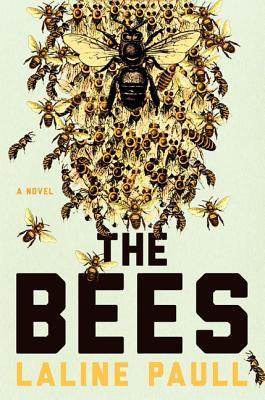
The Bees by Laline Paull
Genre: speculative fiction
I read it as a(n): paperback
Length: 340 pp
Her Grace’s rating: 4 stars
2025 Reading Challenge tasks:
Her Grace’s: 1 – set in a non-patriarchal society
TND: 4 – Debut author; 36 – Standalone
PS: 18 – contains magical creatures that aren’t dragons (bees are absolutely magical creatures. Fight me)
Flora 717 is a worker bee of the sanitation caste, the lowest kind of bee in her hive’s strict matriarchal hierarchy. Her intended purpose is to clean, and only clean, and do whatever is commanded of her. Naturally, her destiny is wildly different than that.
What a unique, wonderful book! Laline Paull takes real science about bees and their hierarchy and blends it beautifully with allegory to create this novel. To be fair, I was inclined to like this one anyway because I love bees. But I was not prepared for the story of one little bee to make me cry.
Because of her bravery, Flora’s journey takes her from a lowly sanitation worker to a forager, a role rarely granted to a bee of her caste. She becomes an important figure in the hive, rallying her sisters during crises, being a most excellent forager, and reminding her sisters to hold onto hope during times of despair. Her growth as a character mirrors the hive’s broader struggles, which dig into themes of individuality and collective responsibility.
Flora also has a secret – but so do the bees of the Sage caste, the ruling members of the hive. Surprise!
I think the way Paull wrote the story – entirely from a bee’s perspective – is masterful. Throughout the novel, the world is entirely portrayed from the sensory and cognitive framework of bees. Creating the story from a non-human point of view is a great challenge to readers to consider our world in a different way. Predators like wasps and spiders are described as existential threats, and bluebottles are depicted as clumsy and disgusting. Human structures like cell phone towers are perceived as confusing, loud, and dangerous metal trees. Thinking about our structures and technology in that way not only enhances the story but also encourages us to reflect on humanity’s impact on the natural world. Whether Paull intended this commentary or not (I’m guessing she absolutely did), the novel should encourage readers to think about our ecological footprint.
This book also has a lot of allegorical layers that show how the hive is a microcosm of our own society. It explores systems of governance ranging from democratic and collectivist to authoritarian and dictatorship. It touches on themes of community, sisterhood, and the sacrifices demanded for the greater good but then juxtaposes those with the dangers of blind devotion to leadership. The hive’s cult-like adoration of the Queen highlights the dangers of unquestioning loyalty, which ought to ring a bell of some kind – any kind – with contemporary political and social dynamics. MAGA, anyone? The Bees predates the administration of a certain incompetent, unintelligent, narcissistic, orange-hued wannabe king, but its critique of oppressive hierarchies and groupthink feels prescient.
I enjoyed Paull’s writing style as well. The pacing was a little uneven at times, but not so much that it destroyed the engagement or anything. I think the places where the narrative slows are offset by the richness of the writing and the depth of the characters. The depth of character development and emotional complexity make Flora a very sympathetic and relatable character.
Overall, I think this is a unique and thought-provoking novel that should appeal to fans of speculative fiction and allegory alike. Now I want to go read Honeybee Democracy and The Lives of Bees.
 Her Grace's Library