
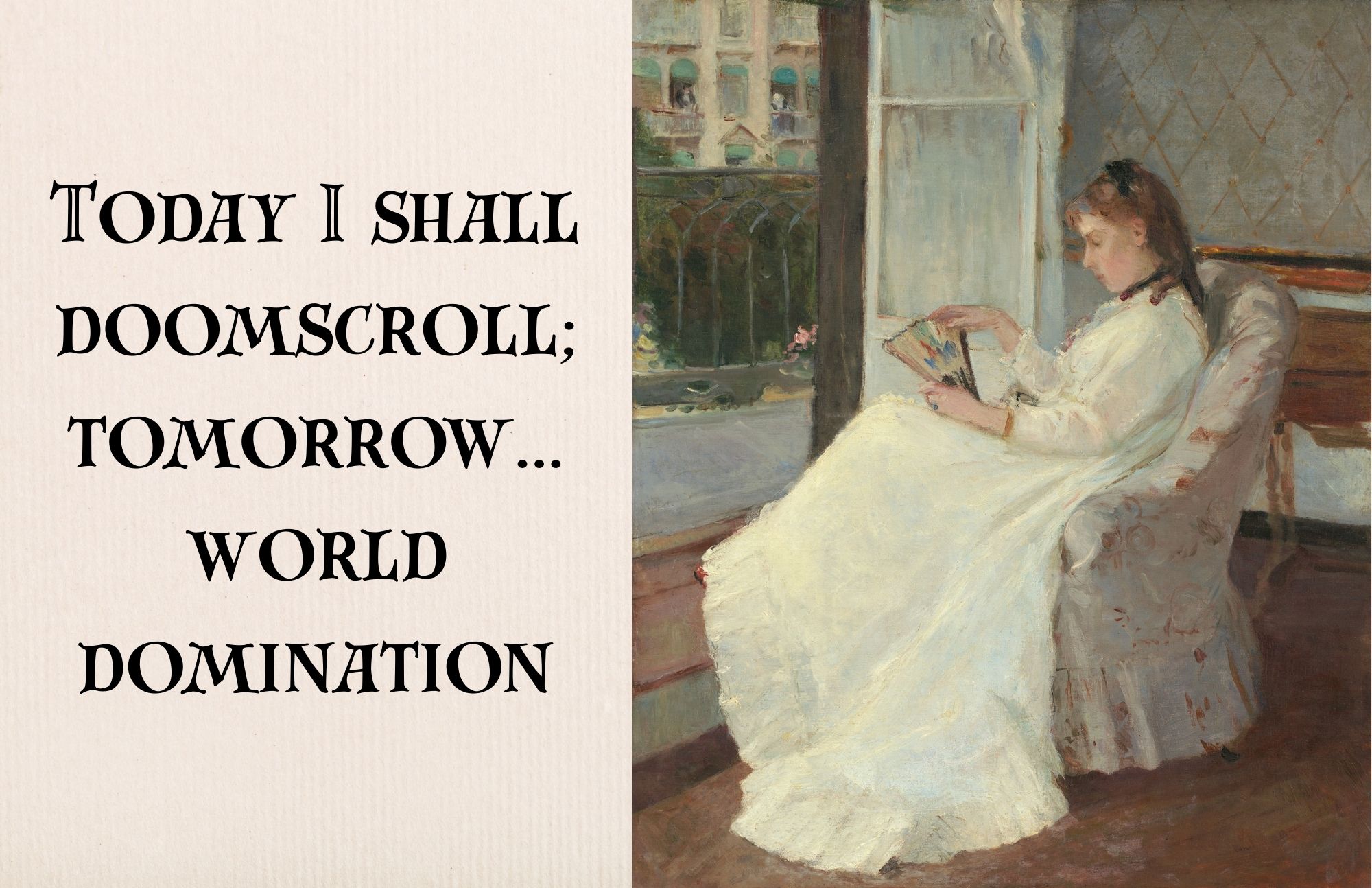
Doomscrolling. We’ve all done it. You pick up your phone to look up one small thing, open a browser, immediately forget what that thing was, yet somehow six hours later you’re still scrolling. Instagram. TikTok. A news organization’s social media page that is very carefully designed to make you angry, anxious, or afraid so you’ll keep clicking.
That’s not an accident. This is how those platforms make money, and they’re extremely good at it. They know how to grab your attention and keep you emotionally hooked, either by pushing content that makes you feel outraged and stressed out, or which gives you a big ol’ dopamine hit by confirming your biases.
A lot of people try to fight doomscrolling by carefully curating their social media feeds, like unfollowing certain accounts, avoiding news, or sticking only to content that feels light or harmless. I’ve done that, too. I don’t go on the hellsite known formerly known as Twitter at all anymore. My time on Bluesky is very limited. And my Instagram feed is aggressively curated. That’s where I go for posts about funny animals, art, travel, recipes, and crafting. No politics. No religion. Nothing designed to spike my blood pressure.
The problem is that even a carefully curated feed is still a feed. You’re still staring at a screen. You’re still scrolling. And you’re almost certainly spending more time doing it than you meant to.
What’s worked better for me is something the internet, ironically, has started calling analog doomscrolling.
More rambling behind the link – click it! Her Grace's Library