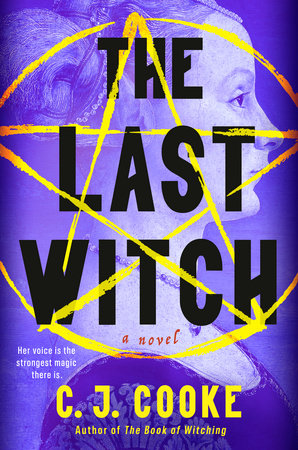
CJ Cooke’s latest novel, The Last Witch, takes readers to late medieval Austria and one of the most infamous witch trials of the era, the Innsbruck trial of 1485. Helena Scheuberin, a sometimes recklessly outspoken woman, finds herself accused of witchcraft after publicly defending another woman who had been unjustly executed. Unfortunately for Helena, the man she yelled at/ publicly chastised/ embarrassed/ expressed an opinion to was none other than Heinrich Kramer, the Dominican inquisitor and author of the notorious Malleus Maleficarum, a vile and influential treatise that helped fuel Europe’s witch persecutions for centuries. From the moment Helena crosses him, her arrest for witchcraft is all but guaranteed. She and several other women are imprisoned, forced to navigate between survival and surrender in a world ruled by fear, superstition, and male authority.
Cooke’s novel is an immersive, richly imagined, deeply researched recreation of the Innsbruck trial. She brings to life both the horror of the accusations and the humanity of the women ensnared by them. The depiction of Helena’s imprisonment is particularly vivid. Cooke spares no detail in describing the cold, dark dungeon, the stench of decay and rot, and the absolute terror that permeates its atmosphere. The scene with the thumbscrews is enough to upset the stomach. And if you think thumbscrews aren’t too bad, other than the agony it causes, consider that most people who endured it never had the use of their hands again, if they survived at all and didn’t die of septic infection instead.
Despite all the misery depicted, the novel finds many moments of solidarity and resistance among the women. There are whispered prayers, a shoulder to lean on, a hand to hold, just a bunch of small kindnesses and defiances that help the women hold on to their dignity. Cooke’s attention to historical texture really helps to sell the oppressive atmosphere of a world where accusation itself could easily be a death sentence. She makes the world tangible and immediate, and brings historical suffering to life without losing compassion.
Helena Scheuberin was a real historical figure, and she emerges here as a woman of great courage and intelligence. She is deeply human and quietly heroic, someone who refuses to let terror erase her voice. Cooke’s portrayal emphasizes her wit, compassion, and sense of justice, showing a mind capable of challenging the warped logic of her accusers. Through Helena, Cooke gives voice to the countless women silenced by history, transforming a name in a court record into a fully realized person whose story resonates across centuries. She is someone I think I would have liked to know in real life. She’s principled, brave, and unwilling to accept the world’s injustices without question.
Heinrich Kramer, too, was a real person, to the eternal horror of anyone with an actual conscience. Cooke’s depiction of him is actually enraging. Not because of her choices as a writer, but because of the man himself. He is not the kind of villain you love to hate; he is a man whose arrogance and cruelty provoke genuine loathing. Knowing his historical role makes him even harder to stomach within the novel. This was a man whose Malleus Maleficarum codified misogyny into doctrine and justified the murder of innocent women under the guise of piety. Modern commentators have aptly called Kramer a “medieval incel,” and Cooke captures that description perfectly. He’s an insecure, petty, self-righteous man driven by resentment and fanaticism. Other characters are put off by him and his appearance, which is scrawny and filthy. Apparently being dirty and stinky is how one shows one’s devotion? Gross. Pretty sure Jesus took a bath once in a while. Baptism is at least good for something. Cooke’s portrayal of Kramer as both pathetic and terrifying is one of the book’s strengths and really highlights how personal bitterness and institutional power can combine to create monstrous people doing monstrous deeds.
I loved this novel for its exploration of loyalty, courage, and the power of words. Helena never falters in her loyalty to her fellow prisoners. Cooke shows that bravery can come in many forms – sometimes it’s loud and defiant, sometimes it’s quiet and persistent. One of my favorite scenes was when the women in the dungeon taught each another how to pronounce their names correctly. That’s a small act that reclaims their humanity but it’s also a reminder that words are magic. That idea is borne out by the second-most common definition of the word: “a spoken word or form of words held to have magic power” (“Spell”). It’s bitterly ironic that Kramer’s use of the word “witch” becomes his own dark spell, a verbal act that destroys lives as surely as the fire he wants to burn them with. As the saying goes, I’m not afraid of witches, I’m afraid of the people who want to burn other human beings alive.
And finally, there’s the dedication, which I adore: “To Gisèle Pelicot.” YES, witch! A perfect nod to resistance and reclamation.
The Last Witch is an engrossing, haunting, and beautifully written novel that revives a real woman’s story with empathy and power. Cooke transforms historical tragedy into a testament to courage, and I cannot recommend it highly enough.
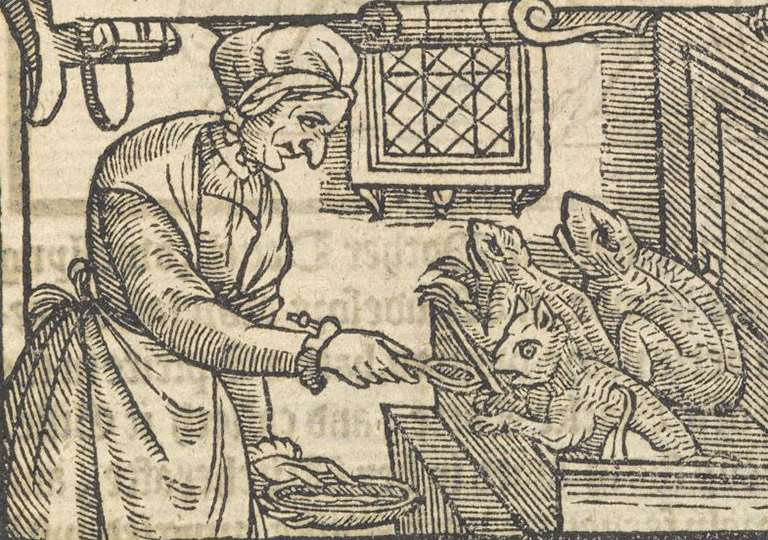
A woodcut from a 1579 pamphlet showing a witch feeding her familiars. From englishheritage.org, courtesy of The British Library
Lolly Willowes by Sylvia Townsend Warner Genre: British classics I read it as a(n): hardback Length: 222 pp Her Grace’s rating: 4 stars
This is another classic that I had never read and didn’t know anything about. I picked it to read partly because of that, and I also picked it for my book club when it was my turn because it was the very first book ever chosen by the Book of the Month Club. I thought that was cool. Also, a spinster who decides to move to the countryside and take up witchcraft? Hell, yes, sign me right up!
Laura “Lolly” Willowes is a spinster who has to go live with her brother and his family in London when their father dies. Because god forbid a woman live alone, as Lolly wanted to do. She has an affinity for the countryside and for learning about plants and herbs and animals. But she is not married and has few prospects of becoming so. I think maybe she is on the spectrum, though of course nobody knew about ASD when this book was written. Just the way she is described, though, makes me think that. She was also supremely introverted and didn’t want to go to parties or meet men to marry. Warner writes, “They had seen her at home, where animation brought color into her cheeks and spirit into her bearing. Abroad, and in company, she was not animated. She disliked going out, she seldom attended any but those formal parties at which the attendance of Miss Willowes of Lady Place was an obligatory civility; and she found there little reason for animation” (26). So, no weddings for Lolly.
She was viewed by her family as useful. The useful and doting aunt. The helpful sister. The competent household manager. Nobody ever really saw her for who she was, only for what they wanted her to be. So once her nieces and nephews were grown and no longer needed her, Lolly decided she was going to leave London and move to a town in the countryside called Great Mop, which is an awesome name, like she had wanted to do since her 20s, when she was required to move to London.
She found a room to rent as a lodger in a nice little town with a nice little lady and her husband. Where Lolly discovered that all the townspeople were witches and served Satan, so she decided to join the fun. But all she ever did with her satan witchy powers was curdle some milk, though. I mean, WHAT? If I had satanic powers (or the Force, or telekinesis, or anything of the sort) I would most definitely not just curdle milk with them. I would be visiting some politicians. “That is not the bill you are voting for. You will vote for this bill. Behave or I shall cast deep rectal itch upon you.” I would also totally make everyone on the road get out of my way. Like Fezzik in The Princess Bride.
Something I noticed throughout the book, or at least until Lolly moved back to the countryside, was that there isn’t a lot of dialogue in it. It was a blur of events and years. Even World War I took like 1 ½ pages, if that. I think Warner did that on purpose. It highlighted how dull and drifting Lolly’s life was, how empty and meaningless she felt. She was just going through the motions. She came alive when she left the city for the country, and it had little to do with giving her soul over to Satan and getting a cat. Though those things helped. Everyone needs a cat, and a dark lord.
The things Lolly noticed throughout the book were all tied to nature. She bought some fruit and jams from the grocer’s and wondered about the woman who had picked the fruit and made the jams: “A solitary old woman picking fruit in a darkening orchard, rubbing her rough fingertips over the smooth-skinned plums, a lean wiry old woman, standing with upstretched arms among her fruit trees as though she were a tree herself, growing out of the long grass, with arms stretched up like branches” (79). Sounds like some solid life goals to me!
Since Lolly knows that “nothing is impossible for a single, middle-aged woman with an income of her own” (95), she decides to stop being useful and go do what she wants. She was also 47 when she came to that decision, the same age I am. Yes, girl, rewild yourself! Her coming-of-age is very late, but it comes all the same. She figures out, finally, that she is her own person and that nobody – not her brother or nephews or nieces – could “drive her out, or enslave her spirit any more, nor shake her possession of the place she had chosen. While she lived her solitudes were hers inalienably; she and the kitten, the witch and the familiar, would live on at Great Mop, growing old together, and hearing the owls hoot from the winter trees” (159-160).
One thing I really loved is that Lolly totally had her own Barbie Speech. It is even longer than the Barbie Speech in the actual Barbie movie, but just as powerful. The Devil did tell her to talk, “not that I may know all your thoughts, but that you may” (216). And she certainly did talk. Her entire speech is still just as relevant today as it was when this book was published 100 years ago. That’s fucking infuriating. If you want to read her whole Lolly Barbie Speech, it is below the cut.
Click to reveal the spoiler
“When I think of witches, I seem to see all over England, all over Europe, women living and growing old, as common as blackberries, and as unregarded. I see them, wives and sisters of respectable men, chapel members, and blacksmiths, and small farmers, and Puritans. In places like Bedfordshire, the sort of country one sees from the train. You know. Well, there they were, there they are, child-rearing, house-keeping, hanging washed dishcloths on currant bushes; and for diversion each other’s silly conversation, and listening to men talking together in the way that men talk and women listen. Quite different to the way women talk, and men listen, if they listen at all. And all the time being thrust further down into dullness when the one thing all women hate is to be thought dull. And on Sunday they put on plain stuff gowns and starched white coverings on their heads and necks – the Puritan ones did – and walked across the fields to chapel, and listened to the sermon. Sin and Grace, and God and the –” (she stopped herself just in time), “and St. Paul. All men’s things, like politics, or mathematics. Nothing for them except subjection and plaiting their hair. And on the way back they listened to more talk. Talk about the sermon, or war, or cock-fighting; and when they got back, there were the potatoes to be cooked for dinner. It sounds very pretty to complain about, but I tell you, that sort of thing settles down on one like a fine dust, and by and by the dust is age, settling down. Settling down! You never die, do you? No doubt that’s far worse, but there is a dreadful kind of dreary immortality about being settled down on by one day after another. And they think how they were young once, and they see new young women, just like what they were, and yet as surprising as if it had never happened before, like trees in spring. But they are like trees towards the end of summer, heavy and dusty, and nobody finds their leaves surprising, or notices them till they fall off. If they could be passive and unnoticed, it wouldn’t matter. But they must be active, and still not noticed. Doing, doing, doing, till mere habit scolds at them like a house wife, and rouses them up – when they might sit in their doorways and think – to be doing still! …
Is it true that you can poke the fire with a stick of dynamite in perfect safety? I used to take my nieces to scientific lectures, and I believe I heard it then. Anyhow, even if it isn’t true of dynamite, it’s true of women. But they know they are dynamite, and long for the concussion that may justify them. Some may get religion, then they’re all right, I expect. But for the others, for so many, what can there be but witchcraft? That strikes them real. Even if other people still find them quite safe and usual, and go on poking with them, they know in their hearts how dangerous, how incalculable, how extraordinary they are. Even if they never do anything with their witchcraft, they know it’s there – ready! Respectable countrywomen keep their grave-clothes in a corner of the chest of drawers, hidden away, and when they want a little comfort they go and look at them, and think that once more, at any rate, they will be worth dressing with care. But the witch keeps her cloak of darkness, her dress embroidered with signs and planets; that’s better worth looking at. And think, Satan, what a compliment you pay her, pursuing her soul, lying in wait for it, following it through all its windings, crafty and patient and secret like a gentleman out killing tigers. Her soul – when no one else would give a look at her body even! And they are all so accustomed, so sure of her! They say: ‘Dear Lolly! What shall we give her for her birthday this year? Perhaps a hot-water bottle. Or what about a nice black lace scarf? Or a new workbox? Her old one is nearly worn out.’ But you say: ‘Come here, my bird! I will give you the dangerous black night to stretch your wings in, and poisonous berries to feed on, and a nest of bones and thorns, perched high up in danger where no one can climb to it.’ That’s why we become witches: to show our scorn of pretending life’s a safe business, to satisfy our passion for adventure. It’s not malice, or wickedness – well, perhaps it is wickedness, for most women love that – but certainly not malice, not wanting to plague cattle and make horrid children spout up pins and – what is it? – ‘blight the genial bed.’ Of course, given the power, one may go in for that sort of thing, either in self-defense, or just out of playfulness. But it’s a poor twopenny house-wifely kind of witchcraft, black magic is, and white magic is no better. One doesn’t become a witch to run around being harmful, or to run around being helpful either, a district visitor on a broomstick. It’s to escape all that – to have a life of one’s own, not an existence doled out to you by others, charitable refuse of their thoughts, so many ounces of stale bread of life a day, the workhouse dietary is scientifically calculated to support life. As for the witches who can only express themselves by pins and bed-blighting, they have been warped into that shape by the dismal lives they’ve led. Think of Miss Carloe! She’s a typical witch, people would say. Really she’s the typical genteel spinster who’s spent herself being useful to people who didn’t want her. If you’d got her younger she’d never be like that” (211-215).
And this quote really sums up not only the book but my entire worldview in a handy lil nutshell: That was one of the advantages of dealing with witches; they do not mind if you are a little odd in your ways, frown if you are late for meals, fret if you are out all night, pry and commiserate when at length you return. Lovely to be with people who prefer their thoughts to yours, lovely to live at your own sweet will, lovely to sleep out all night! (222).
Anyway, I enjoyed this book, and am eager to read more classics that I have never got around to before now.
Reference:
Warner, Sylvia Townsend. Lolly Willowes. Book of the Month, 2017.
Happy Halloween, everyone! It has long been my practice to watch the 1998 film version of Practical Magic. If I am going to reread any of the books, I also tend to do so in October. It just makes sense!
This time, I thought I would make a post of my personal favorite lines from all four of the Practical Magic book series. I think they are either touching, make me think, are funny, or are wise.
What lines would you add?
Practical Magic
Sometimes you have to leave home. Sometimes, running away means you’re headed in the exact right direction.
The moon is always jealous of the heat of the day, just as the sun always longs for something dark and deep.
Trouble is just like love, after all; it comes in unannounced and takes over before you’ve had a chance to reconsider, or even to think.
There’s a little witch in all of us.
If a woman is in trouble, she should always wear blue for protection.
His grandfather used to say that holding tears back makes them drain upward, higher and higher, until one day your head just explodes and you’re left with a stub of a neck and nothing more. … Crying in a woman’s kitchen doesn’t embarrass him; he’s seen his grandfather’s eyes fill with tears nearly every time he looked at a beautiful horse or a woman with dark hair.
Some things, when they change, never do return to the way they once were. Butterflies, for instance, and women who’ve been in love with the wrong man too often.
Although she’d never believe it, those lines in Gillian’s face are the most beautiful part about her. They reveal what she’s gone through and what she’s survived and who exactly she is, deep inside.
At twilight they will always think of those women who would do anything for love. And in spite of everything, they will discover that this, above all others, is their favorite time of day. It’s the hour when they remember everything the aunts taught them. It’s the hour they’re most grateful for.
Always throw spoiled salt over your left shoulder. Keep rosemary by your garden gate. Add pepper to your mashed potatoes. Plants roses and lavender, for luck. Fall in love whenever you can.
Magic Lessons:
This was true magic, the making and unmaking of the world with paper and ink.
But it was a woman’s personal book that was most important; here she would record the correct recipes for all manner of enchantments. … literary magic, the writing of charms and amulets and incantations, for there read no magic as covered or as effective as that which used words.
Even when you kept your eyes wide open, the world would surprise you.
What is a daughter but good fortune, as complicated as she might be.
There are no spells for many of the sorrows in this world, and death is one of them.
A woman alone who could read and write was suspect. Words were magic. Books were not to be trusted. What men could not understand, they wished to burn.
“Never be without thread,” she told the girl. “What is broken can also be mended.”
Tell a witch to go, and she’ll plant her feet on the ground and stay exactly where she is.
Tell a witch to bind a wild creature and she will do the opposite.
What was a witch if not a woman with wisdom and talent?
If they called her beautiful, it was a mark against them, for what a person was could not be seen with the naked eye.
These are the lessons to be learned. Drink chamomile tea to calm the spirit. Feed a cold and starve a fever. Read as many books as you can. Always choose courage. Never watch another woman burn. Know that love is the only answer.
The Rules of Magic:
“Anything whole can be broken,” Isabelle told her. “And anything broken can be put back together again. That is the meaning of Abracadabra. I create what I speak.”
“Do you have business at the cemetery, Miss Owens?” the driver asked in a nervous tone.
“We all will have business there sooner or later,” she answered brightly.
Three hundred years ago people believed in the devil. They believed if an incident could not be explained, then the cause was said to be a witch. Women who did as they pleased, women with property, women who had enemies, women who took lovers, women who knew about the mysteries of childbirth, all were suspect…
…witches were difficult to control, for they had minds of their own and didn’t hold to keeping to the law.
The world will do enough to us, we don’t have to do it to ourselves.
She had wanted to be a bird, but now she knew…that even birds are chained to earth by their needs and desires.
…when you truly love someone and they love you in return, you ruin your lives together. That is not a curse, it’s what life is, my girl. We all come to ruin, we turn to dust, but whom we love is the thing that lasts.
I just do the best I can to face what life brings. That’s the secret, you know. That’s the way you change your fate.
…he kissed her and told her he didn’t care if they were witches or warlocks or zombies or Republicans.
“But trying is a start. What is your story?”
“My life.”
“Ah.”
“If you write it all down, it doesn’t hurt as much.”
But rules were never the point. It was finding out who you were.
Always leave out seed for the birds when the first snow falls. Wash your hair with rosemary. Drink lavender tea when you cannot sleep. Know that the only remedy for love is to love more.
The Book of Magic:
Some stories begin at the beginning and others begin at the end, but all the best stories begin in a library.
But stories change, depending on who tells them, and stories are nothing if you don’t have someone to tell them to.
“If you can’t eat chocolate cake for breakfast, what’s the point of being alive?” Franny said.
There are some things you have only once in a lifetime, and then only if you’re lucky.
When Kylie and Antonia were growing up, their mother had told them if they were ever lost it was always best to find their way to a library.
“There are no witches,” Antonia said. “Only people who want to burn them.”
“Do you think I’m a fool”
“No, I think you’re a witch.”
“Then you’re not so stupid after all.”
“If it isn’t written down, it will likely be forgotten,” Isabelle had told her. That was why women had been illiterate for so long; reading and writing gave power, and power was what had been so often denied to women.
A woman with knowledge, one who could read and write, and who spoke her own mind had always been considered dangerous.
If a woman doesn’t write her own history, there are very few who will.
It never hurt to have some assistance from a sister, and this was a simple spell that had been used by women since the beginning of time, with words that resembled the wild clacking of birds when they were spoken aloud.
What a life she had, most of it unexpected. She would not have it any other way, not even the losses. This life was hers and hers alone.
Her love was the fiercest part about her.
The Book of the Raven was meant to go to the next woman who needed it. It might sit on the shelf for another three hundred years or it might be discovered the very next day, either way it would continue to live, for people often find the books they need.
Once, a long time ago, before we knew who we were, we thought we wanted to be like everyone else. How lucky to be exactly who we were.
Women here in Massachusetts had been drowned and beaten and hanged, especially if they were found to have access to books other than the Bible…
Fans of this book series also know that there are many references made in them to the Owens’ women’s black soap, Chocolate Tipsy Cake, and a variety of teas. These are the ones I found, along with a couple possible recipes. I use Adagio Tea for a lot of my tea-making supplies. I will do the same when I make these tea blends. If I can’t find an item on Adagio, I’m sure a local farmer’s market or bulk foods store will have the rest.
Teas and Other Foodstuffs:
Courage Tea: currants, vanilla, green tea, thyme. Steep it for a long time.
Travel Well Tea: orange peel, black tea, mint, rosemary
Chocolate Tipsy Cake. I found this recipe on The Hungry Bookworm and it seems the most accurate and tipsy-making cake of the sort, so I am going to refer to it when I make my own: Chocolate Tipsy Cake by The Hungry Bookworm.
Practical Magic Black Soap. Similarly, I found a recipe for the Owens Women’s Black Soap on Under a Tin Roof. This sounds lovely, though there are a few changes I will make to my own batches, different oils, loads more lavender since it is supposed to be lavender scented, but overall I think this one is the most legit recipe I’ve found for the black soap yet! To do it further justice, according to Aunt Isabelle, “The best soap is made in March in the dark of the moon.”
In this fourth and final novel in Hoffman’s Practical Magic series, readers see Kylie and Antonia Owens, the daughters of Sally Owens, as young women living their lives in ignorance of their family’s history as bloodline witches. When the entire extended family gathers for a funeral, Antonia and Kylie learn of their magical heritage. Antonia, the logic-driven med student, scoffs and blows it off. Kylie is intrigued, and becomes involved up to her neck when her boyfriend is hit by a car and hovers between life and death.
Taking off to England with Faith Owens’s dark grimoire in hand, Kylie is determined to break the curse that has followed her family for generations. Hot on her heels is her mother Sally, her aunt Gillian, and other family and friends met along the way. They learn what is important and just how much they are willing to sacrifice for those they love.
This was a great end to the Practical Magic series. I will miss reading more about the Owens women, but am grateful that I have the four books in the series to revisit when I feel the need for a fix of Tipsy Chocolate Cake and witchery. I also found recipes for both the chocolate cake AND the black soap that both sound honestly nice, so I’m going to make those one of these days and have myself a proper day of witchiness.
It was nice to spend time with Kylie and Antonia and get to know them more. As expected, both strong and independent women. But we spent as much time, too, with the aunts, Sally and Gillian, and their long-lost grandfather Vincent. Adding to the cast is Ian Wright, a professor of history and magic, and Tom Lockland, a distant relative, each man with agendas of their own.
For me, this book dragged just a little in the middle, which is why I gave it 4 stars and not 5 stars. I got a little bored with some of the things Kylie and Antonia (mostly Antonia) were doing and it felt a little long. But it didn’t last long and it picked up again and gave way to a fantastic journey across England, through history, and through the human heart. Highly recommended!
Favorite lines (possible spoilers!):
Some stories begin at the beginning and others begin at the end, but all the best stories begin in a library.
Curses are like knots, the more you struggle to be free, the tighter they become, whether they’re made of rope or spite or desperation.
But stories change, depending on who tells them, and stories are nothing if you don’t have someone to tell them to.
“If you can’t eat chocolate cake for breakfast, what’s the point of being alive?” Franny said.
There are some things you have only once in a lifetime, and then only if you’re lucky.
When Kylie and Antonia were growing up, their mother had told them if they were ever lost it was always best to find their way to a library.
“There are no witches,” Antonia said. “Only people who want to burn them.”
“Do you think I’m a fool” “No, I think you’re a witch.” “Then you’re not so stupid after all.”
“If it isn’t written down, it will likely be forgotten,” Isabelle had told her. That was why women had been illiterate for so long; reading and writing gave power, and power was what had been so often denied to women.
A woman with knowledge, one who could read and write, and who spoke her own mind had always been considered dangerous.
If a woman doesn’t write her own history, there are very few who will.
It never hurt to have some assistance from a sister, and this was a simple spell that had been used by women since the beginning of time, with words that resembled the wild clacking of birds when they were spoken aloud.
What a life she had, most of it unexpected. She would not have it any other way, not even the losses. This life was hers and hers alone.
Love was inside every story.
Her love was the fiercest part about her.
The Book of the Raven was meant to go to the next woman who needed it. It might sit on the shelf for another three hundred year or it might be discovered the very next day, either way it would continue to live, for people often find the books they need.
Once, a long time ago, before we knew who we were, we thought we wanted to be like everyone else. How lucky to be exactly who we were.
Women here in Massachusetts had been drowned and beaten and hanged, especially if they were found to have access to books other than the Bible…
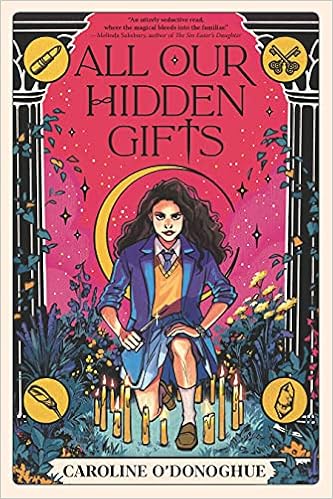
Maeve is a typical teen – she likes hanging out with friends, doesn’t like school, occasionally has behavioural problems, and mainly just wants to fit in. When she randomly unearths a deck of tarot cards while cleaning out a room in detention, she discovers that she has a strange affinity and skill for reading the tarot. Maeve finds herself suddenly popular, her highly accurate tarot readings wildly in demand among her fellow students. But when a reading goes badly wrong and a girl disappears, Maeve once again finds herself on the edges of society. She finds herself assisted in some surprising ways as she struggles to fix what she broke, find the missing girl, and bring balance again to cosmic forces well beyond her understanding.
This was a pretty fun read, though at times fairly standard. I liked that it was set in Ireland and had a plot involving some of the tensions between Catholics and Protestants. The way the author worked that into the story was nicely done. It invoked some historical elements that added some extra depth to the plot. I also liked how it seemed she was making a commentary on Christianity and how so often they are nowhere near as loving or whatever as they claim to be.
The author also explored how being a teen is hard, yes, but it is also when you get new life experiences and the chance to have a lot of personal growth. A lot of the story revolved around this and other normal teen issues like learning how to navigate changing relationships. I think a big takeaway from it was that, even when things turn out fine in the end, that doesn’t mean they stay the same or even that they work out well. Sometimes you have to take life lessons with outcomes you don’t want. That isn’t bad, even if things hurt sometimes. It’s just the way it is.
I read this because my daughter loved it and wanted me to read it as well. I try to read at least a few of the same books as her throughout the year. Most of the stuff she likes is sort of fluffy fantasy and this wasn’t really an exception. I like that she loves reading so I am always happy to share her books if there’s one she really enjoyed. It is one thing that I hope we will always have in common, a love of reading.
The Witch’s Daughter by Paula Brackston (Website|Twitter)
Genre: magical realism
Setting: Batchcombe, Wessex
I read it as a(n): paperback
Source: my own collection
Length: 403 pp
Her Grace’s rating: 3 out of 5 stars
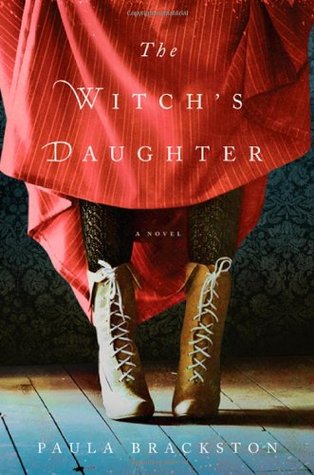
Bess Hawksmith is a young woman when the Great Plague of 1666 swept through her small village of Batchcombe. Naturally, the bereaved townsfolk need a scapegoat to blame for the losses they suffered. Bess’s mother, Anne, is a healer, so bingo! She must be a witch! The townsfolk round her up, along with another old woman who is a midwife, and hang them. The thing is, Anne really was a witch, and so is Bess. Bess flees and spends the next several centuries (she’s effectively immortal) running both from the memory of the horrific persecution as well as from the warlock who made a deal with the devil to give Bess her supernatural powers. Living a solitary life, Bess eventually finds a kindred spirit in young Tegan, a lonely teen who is drawn to Bess and her energy. But in taking Tegan under her wing, Bess inadvertently puts her in danger from Gideon, the man who has been hunting her throughout the years.
This one was, for me, SUPER slow to start. I almost quit. But then it picked up around chapter 4 or 5 and it was a very fast read from there out. I enjoyed this story a lot, though I don’t think it really had anything too unique about it. It was fairly predictable at the end, but the journey getting to the end was worth the read. I have a particular fondness for the Victorian Era, so I enjoyed that section the most. The bit from World War I was awful (an awful experience, not an awful read or awful writing). I don’t know much about that war, nor about the Battle of Passchendaele specifically, but it was an interesting, if sad and gory, part of the book.
Overall, I think the characters were fairly well developed, but I’m not sure how much growth they really showed. Bess did mature and became a wise woman, but once she reached her maturity, she kind of stalled out. Gideon was consistently wicked but he was not a Bad Boy kind of character to me. I usually like those. Gideon was more like a cancerous presence to be cut out of a life rather than one who held any real attraction. Tegan was just a regular teen and didn’t really show anything other than that. Which is fine. They all worked for the story.
I think readers who enjoy Sarah Addison Allen or Alice Hoffman will enjoy this book. SAA and AH have more complex characters and richer storytelling, but I do think PB will get there eventually as well.
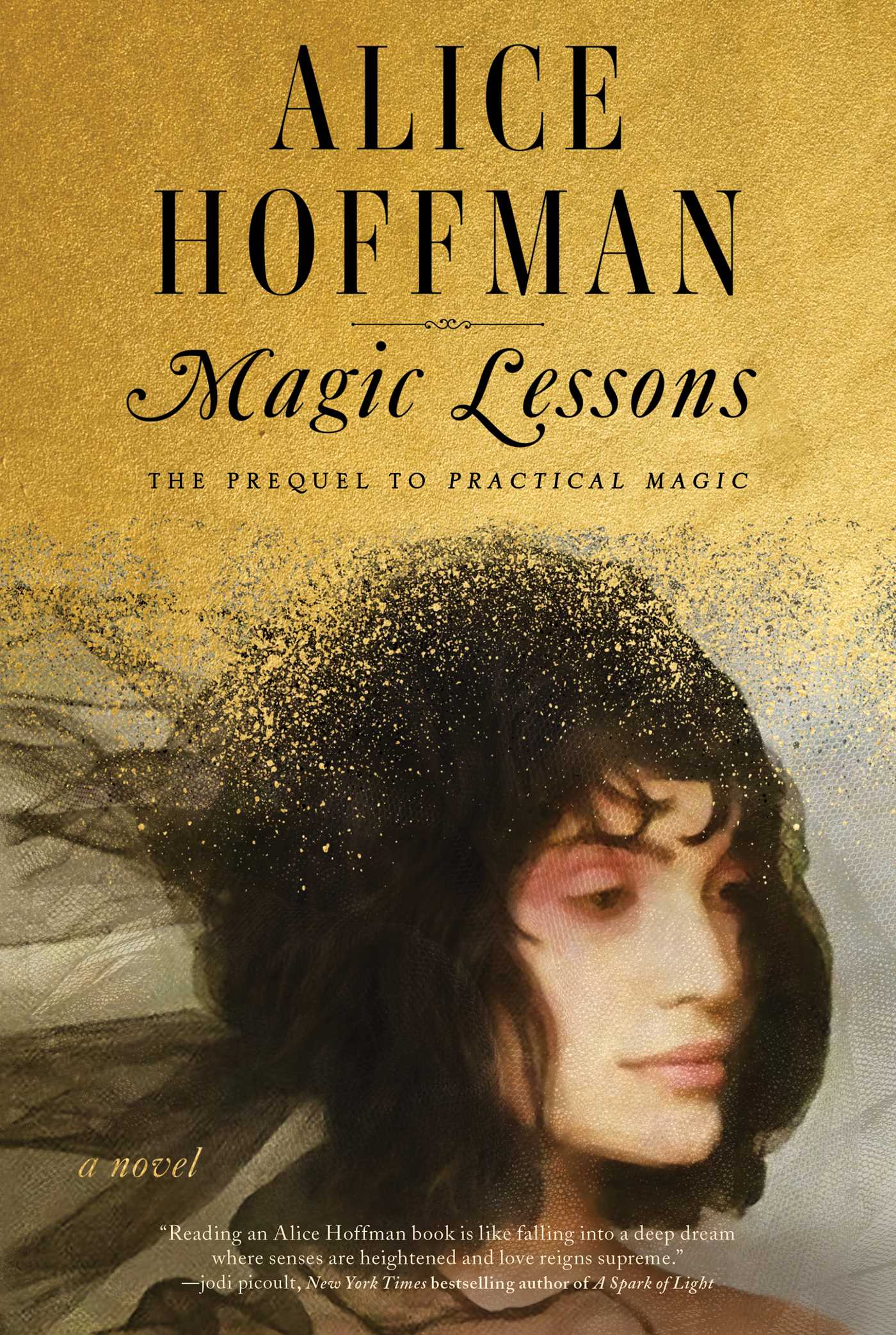
At long last, the story of Maria Owens, the witch they couldn’t hang. Maria was abandoned as an infant in Essex County, England, where she was found and raised by the kind hearted Hannah Owens. Hannah taught Maria all she knew of healing and folk magic, but Maria, as it happens, was a witch by birthright. All Hannah taught to her was compounded by her latent magic talent. When a horrific tragedy occurs, Maria flees England for Curacao. There, she finds love and follows that to New England. And the rest, as they say, is history. Or is it magic?
I fucking love the Practical Magic series. I could probably conclude my review with that. But I’m also a sucker for a good back story, which this is. I always wanted to know what happened to Maria, how she got tricked by a man who left her, where she was from, and where she went after her failed hanging. I could talk about those things. I could talk about Maria’s history, her experiences, what she learned and taught. I could talk about the history of witch trials and women’s power. But I think it would be better for you to go read it and find out for yourself why this is such a great book.
This was true magic, the making and unmaking of the world with paper and ink (13).
“Never be without thread,” she told the girl. “What is broken can also be mended” (55).
Tell a witch to go, and she’ll plant her feet on the ground and stay exactly where she is (164). [Yep. Don’t tell me what to do.]
Tell a witch to bind a wild creature and she will do the opposite (184). [I told you, don’t tell me what to do!]
Arnold, the horse who belongs to the peddler Jack Finney, is my favorite. He is a good boy.
These are the lessons to be learned. Drink chamomile tea to calm the spirit. Feed a cold and starve a fever. Read as many books as you can. Always choose courage. Never watch another woman burn. Know that love is the only answer (396).



 The Witch’s Daughter
  Magic Lesson
  Her Grace's Library