book review · books · historical fiction

Ghost Wall

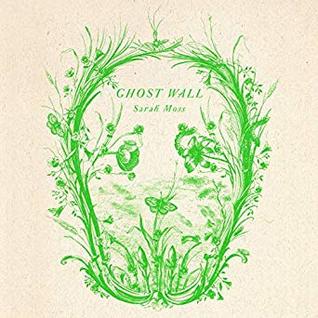
43660486Ghost Wall: A Novel* by Sarah Moss

I read it as an: audiobook

Narrator: Christine Hewett

Source: my own collection

Length: 03:48:00

Publisher: Macmillan Audio

Year: 2019

Ghost Wall is the story of Silvie and the two weeks in which her father, an amateur ancient historian, drags her and her mother into the woods of north England to live as ancient Britons. They join a group of anthropology students who are also there to reenact living the lives of simpler times and try to understand how the “bog bodies” came to be so. The group forages for food, hunts and fishes, all using Bronze Age tools. When they erect a “ghost wall”, the spiritual barrier made of stakes topped with ancestral skulls intended to ward off enemies, the group taps into a deep-seated, primal connection to their distant ancestors as well as a desire to deeply understand their motivations. What follows is a deeply unsettling narrative of abuse and sacrifice. 

This slim novel (or rather, in my case, short audiobook) highlights how taut prose can tell just as good a story as any giant epic doorstopper of a novel any day. This was an excellent read. Told from the point of view of Sylvie, the young woman whose father, Bill, is the amateur historian, we learn fragments of life about ancient Britons based on what she has learned in turn from her father. More importantly, we learn that her father is an abusive bag of dicks and has convinced her that people only hit the things they care about. Sylvie has a quick wit and salty attitude, which we only see in her internal dialogue; she never really says what she’s thinking for fear of what her father will do to her if she does. However, once they join up with the students and professor of the anthropology group, she begins to envision a different life for herself which includes going to university, having her own money, making her own decisions, living away from home and even away from England. She is afraid, however, to voice her interests since she has learned they will probably be thwarted. 

The anthropology students are an interesting group, ranging from barely engaged in the reenactment to ready to go back in time and embrace prehistoric life. Jim Slade, The Prof, as their instructor is called, leads the group overall, though Sylvie’s dad is the unacknowledged ruler since everyone tip toes around him. The students – Dan, Pete, and Molly – are by turns helpful and dismissive, indifferent and supportive. Molly in particular shines here and is a great example of a strong woman and role model. 

Sylvie’s father uses his love of history as a justification to abuse his family as well as to try to go back to some ephemeral time of British purity. Anyone who actually knows history knows there is no such thing for really any culture, let alone British culture. He names his daughter after a goddess – Sulevia – claiming she is a British goddess when in reality she is Roman in origin. You can’t “take back” a country when it was never pure or yours to begin with. There is a lot to unpack here with regard to cultural or racial purity, cultural and historical ignorance, and the ways in which humans have used history and a connection to past events, imperfectly understood, to justify and rationalize current cruelty and brutality. I could go on a long political rant about this, but suffice to say GOP/Trump.

I think this book makes a terrific argument for why we need to study and understand history. Yes, there is the old wheeze about people who don’t know history are doomed to repeat it. More than that, though, is the message that those who imperfectly understand history (not that there is really a perfect way to understand it) can twist it to do awful things on both large and small scales. Bill uses history to justify abusing his wife and daughter; politicians use it as a way to whip up their base with the idea of “making __ country great again”, the implication being that it wasn’t just fine the way it was before, with all the people from all different places living there. Racism. 

It also touches on the vital issue of domestic abuse, shame, and fear associated with it. Sylvie is ashamed and afraid because her dad beats her with his belt. Her mother is useless in protecting her, and while I tend not to understand that mentality – I think I’d kill anyone who hurt my daughter – I am also not a long-time victim of abuse. I don’t know how it must wear you down and make you think it is normal. That is important to try to understand. It is something I have to work on because I felt anger and disgust at Sylvie’s mom for not protecting her, and it isn’t probably fair of me. 

In short, I loved this book. It was deceptively nuanced and complex. Highly recommended.


*Amazon affiliate link.
 

book review · historical fiction

The Pearl That Broke Its Shell

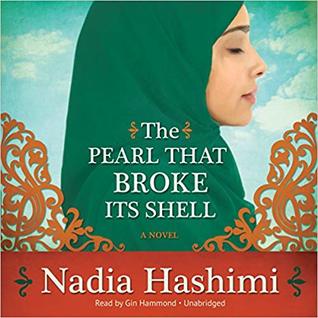
40135122The Pearl That Broke Its Shell: A Novel* by Nadia Hashimi

I read it as an: audiobook

Narrator: Gin Hammond

Source: my own collection

Length: 16:10:00

Publisher: Blackstone Audio

Year: 2014

The Pearl The Broke Its Shell is a dual timeline narrative told mostly from the perspective of Rahima, a young woman living near Kabul in 2007. She and her sisters are the children of an opium-addicted father and, with no brothers to help the family, their prospects for improving their life or marriage prospects are grim. Their rebellious aunt, Shaima, suggests that Rahima follow an old custom called the bacha posh, which not only sounds like Klingon the way the narrator pronounced it, but it the tradition of allowing a girl to dress and act as a boy when there are no other boys in a family. She can go to school, run errands for her mother, and chaperone her other sisters. In this way, Rahima becomes Rahim and becomes a boy until she reaches marriageable age and her father marries her and her two other eldest sisters off. By marriageable, I mean she was 13.

The tradition of bacha posh was not unique to Rahima’s family. She had a many-times-great grandmother, Shekiba, who had lived as a man near the turn of the century as well. The secondary timeline follows her story from her small village and farmstead, through the cholera epidemic that wiped out her entire family, and how she lived as a man in order to survive.

This was such a thought provoking novel. Though fiction, it deals with issues which happened in real life and which are still highly relevant today – child marriage, honor killing, domestic abuse, drug addiction, and many other issues. Any one of these things is enough to break a person, but underneath all this is woven the strength of women. Rahima and Shekiba, as well as the other women throughout the book, all suffer hardships, sacrifices, abuses, and losses that are unimaginable. Some, like Rahima’s sister Parwin, are overcome. But others, like Rahima and Shekiba themselves, keep fighting even when they think they’ve come to the end of their strength and can’t go any further or endure anything else life could possibly throw at them. In the end, Shekiba’s story becomes a source of strength for Rahima, and Rahima becomes the pearl that breaks her shell.

I loved the use of bird imagery as well throughout the book. Parwin was fond of drawing birds, there were birds singing and fluttering about in many pivotal scenes. Birds have some significant parts in Islamic culture, from the “Miracle of the Birds” when Abyssinian forces were supposedly annihilated by birds dropping pebbles from the sky to prevent them from entering Mecca and destroying the Ka’bah, to stories found in The Thousand and One Arabian Nights to works by Sufi poets and Islamic mystics. Including the bird imagery elevates the narratives of the women and equates them to many of the mystics or saints from other cultures in some ways, those who were made holy through their suffering, like medieval saints. I am not sure if that is intentional or not, but the image is there all the same.

This mystic thread continues in the book’s title, which is derived from the ecstatic poem “There Is Some Kiss We Want” by Rumi, the 13th century Sufi poet. It is a lovely poem:

There is some kiss we want

with our whole lives,

the touch of spirit on the body.


Seawater begs the pearl

to break its shell.


And the lily, how passionately

it needs some wild darling.


At night, I open the window

and ask the moon to come

and press its face against mine.

Breathe into me.


Close the language-door

and open the love-window.


The moon won’t use the door,

only the window.

bookish things

Currently Reading – Book Tags

I wasn’t tagged but I came across this post on Feed the Crime and thought it looked like fun. It is hard to resist a book survey kind of post, especially when it comes to books! So here goes…

How many books do you usually read at once?

I usually have at least two going – a book to eyeball read and an audiobook. Sometimes I will have a couple different eyeball books, depending on the genre, so like a fiction and a nonfiction. Usually, though, I can only handle two at once, unless you count the book I always have going with my daughter that we read together at bedtime. Then it’s always at least three.

How do you decide when to switch between multiple reads?

Depends mostly on my mood or on what I need to get done. Right now, I really want to read for fun but I need to get some research done for my book I’m writing, so I am doing a lot of nonfiction reading. I reward myself with tidbits of fiction everyday.

Do you ever switch bookmarks partway through a book?

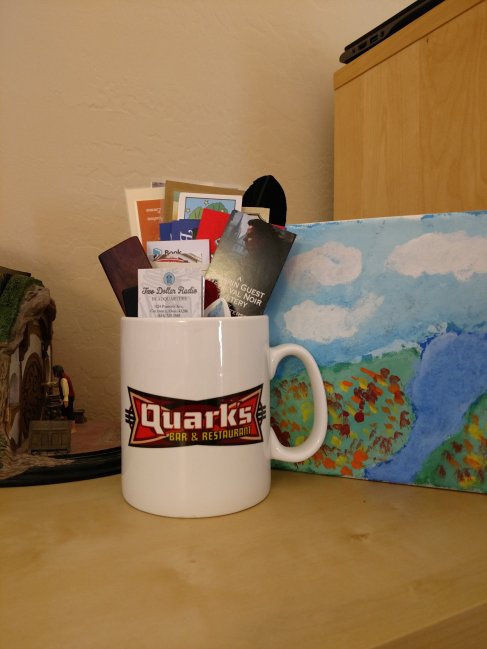
No. Why would I switch them? Is this a thing people do? I guess it must be. I don’t even always use a bookmark at all. I obviously don’t need a bookmark for audio or kindle books, but for physical books, a bookmark is just a tool to hold my spot, not something I give any actual thought to. I don’t care what I use. That said, I have a whole huge mug full of bookmarks, and I do use them when I use bookmarks.

img_20190615_1323103936693504010382411497.jpg

Where do you keep the book(s) you’re currently reading?

All. Over. The house. In my purse. On the nightstand. Sometimes in my car, though those are my daughter’s since I can’t read and drive at the same time, with the exception of listening to audiobooks. This is just my TBR pile. My library is in a separate room. It’s a little ridiculous. 

What time of day do you read the most?

Mostly in the afternoon or evening. I work for a living and have no time in the morning during the week. I am also my daughter’s sole parent, so when I get home, she wants to do stuff with me. Sometimes she lets me read while she’s doing her homework. Mostly, I read after she’s gone to bed. Sometimes, I get to read in the morning on weekends before she gets up.

How long do you typically read in one session?

This depends entirely on how tired I am. It can be anywhere from two minutes to “holy shit! The sun is coming up!” 

gettyimages-92866299-1024x1024

Do you read hardbacks with the dust jacket off?

Yes, it gets in my way and I tend to rip them no matter how careful I am with them. Dustjacket definitely comes off.

What position do you mainly use to read?

I tend to sit in my chair with my feet tucked up under me and my legs all curled up. Sometimes I sit cross legged, or sometimes I actually sit like a human with my feet on the ground or my legs crossed, but mostly I perch.

Do you take your current read with you everywhere you go?

Yes. How else am I supposed to get through the day? What would happen if my car breaks down and I have to wait and I have nothing to read? Or if I decide to go to lunch somewhere and I don’t have my book? I take at least one book everywhere – to the store, the movies, social functions. You never know when you’ll get to escape from humans and read by yourself somewhere.

How often do you update your Goodreads reading progress?

For sure when I’m finished. Sometimes I enter a book in as “currently reading” when I start it, but not always. I never update my progress. No one cares about the progress I make while reading.

What book(s) are you currently reading?

I’m eyeball reading Medieval Queenship, edited by John Carmi Parsons, A Brightness Long Ago by Guy Gavriel Kay, and Harry Potter and the Goblet of Fire by JK Rowling (with my daughter). I am also listening to The Pearl That Broke Its Shell by Nadia Hashimi, narrated by Gin Hammond.

book review

Rainbirds

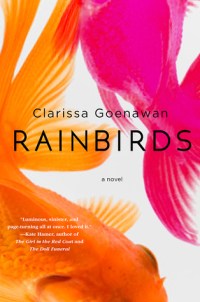
33026565Rainbirds by Clarissa Goenawan

I read it as a: hardback

Source: my own collection/BOTM credit

Length: 322 pp

Publisher: Soho

Year: 2018


***Spoilers for this book are very much present in this review.***

Ren Ishida comes from Tokyo to a small, unnamed town in Japan after receiving the news that his sister, Keiko, has been murdered. Intending to go and finalize her affairs, Ren finds himself accepting a job as a teacher at her old school and living in her old apartment. He essentially takes on his sister’s old life in many ways, hoping to figure out what happened to her while bringing himself closure as well. In the process, he uncovers many surprising truths about his sister as well as his entire family.

Ehhhhh. I get that this was supposed to be written with a minimalist style, but I don’t think it was actually minimalist. I think it needed to be fleshed the fuck out. This story could have occurred anywhere – there was just no sense of place at all, nothing memorable about the town or surroundings to make it special. The characters were mostly flat and Ren, the main character, was stultifying. He has no real personality. The dialogue was mostly painful and lame throughout as well. Do people really talk like that in Japan? For example:

“So, you’re a teacher,” she said.

I nodded. “I teach English at a cram school”

“That makes sense. I was wondering what kind of work you did. You leave the apartment around noon, and return pretty late. I thought you were in retail, like me.”

“That would have made sense, too.”

“Hey, Izumi.” The young man who greeted me earlier approached us. “Sorry to cut in, but your shift is over.”

“Already?” She checked her watch. Her wrist was slim and bony. “You’re right. Thanks for letting me know.” (219)

So stilted. This sounds very similar to some dialogue my daughter wrote in one of her stories. My daughter is eight. It just goes on and on like this throughout the entire book. Nobody seemed genuine at all because of the way their dialogue was written. Maybe I just didn’t care for the style at all, but let’s move past that.

I also didn’t like – at all – how the killer’s identity was discovered but no one cared to give that information to the police, either because it wouldn’t bring back Keiko or because it would ruin the lives of the killer’s family. Um, SO? How would something someone else did have any impact on another person? *I* didn’t kill that person, my relative did it, let me help you throw their ass in the clink! Fuck reputation. Of course it doesn’t bring the murdered person back, but that’s not the point. The point is that you don’t let murderers get away with it. What the fuck? So that was deeply unsatisfying. The end, I felt, just petered out and everything went back to normal and everyone moved on and it was like nothing much happened, just a minor six-month detour in life that we can now forget about and move past. I honestly kept reading this book to see who it was because I wanted them to go to jail, but that didn’t happen and it left a bad taste. I feel like I wasted a whole weekend on this book when I could have been reading the new Guy Gavriel Kay book instead.

I want my BOTM credit back.

bookish things · books

Two Dollar Radio – blind date unboxing

So this is something different. I had actually intended to try my hand at doing a video and starting some video book reviews and such, and this would have been the first of those. But…I am fundamentally lazy and haven’t got round to it yet. I still plan to do that, but just haven’t managed to get over the fear of technologies yet.

But! I did come across the Blind Date Book Sale that Two Dollar Radio was having a while back. Actually, it looks like they always run it? Or it’s just still running? I don’t know, but as of this writing, it is still up on their sales page. As I am a big fan of supporting small and independent publishers, especially ones that have a tattoo club, I had been interested in this publisher for some time. But I didn’t know what books to get! So many looked so good, but I had several reasons for not just getting all of the ones that piqued my interest. Enter the Blind Date sale, a delightful way to discover new books.* This sale lets you get two random, pre-2017 books from their backlist, which the staff at Two Dollar Radio picks for you, for $9.99. That is an excellent deal, so I went for it.

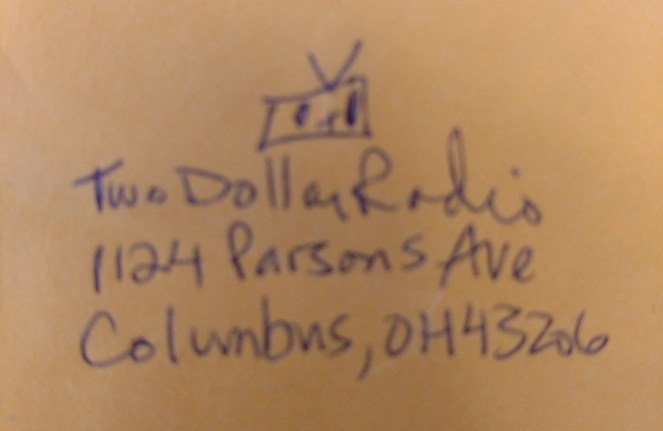
img_20190608_1656347059180781847641859599.jpg

This came out a little blurry, but I love that someone took the time to actually draw the little boombox on the envelope. It’s the little things like that wot make me keep coming back to a place. I’m just saying.

adobe_post_20190608_1827562508256296224696034.png

Inside the envelope, I discovered Ancient Oceans of Central Kentucky by David Connerley Nahm and Radio Iris by Anne-Marie Kinney.

They are a really nice size as well, these books are. They, um, feel good in the hand. I mean, they’re not too big or heavy or too little and hard to hold or… hell. You know what I’m saying, get your mind out of the gutter. Since these are the first books I’ve gotten from this publisher, I don’t know if they are all this size or not, but I hope so. I like it.

adobe_post_20190608_1834474755508965155034895.png

It also came with a bookmark bearing a coupon code and a Two Dollar Radio sticker, which my daughter promptly stole, but then was confused because she didn’t know what a boombox was. “Is it like an iPod, Mama? But big?” *facedesk* Yes, baby, it is like an iPod but bigger. “They didn’t draw it very good. Where is the screen?” I give up.

End result: I would definitely recommend giving the Blind Date Sale from Two Dollar Radio a try. Even though I have not yet finished the books they sent me, I have started them and they are both high quality writing. Supporting indie and small presses is always a good thing, as is helping spread the word about talented new authors.


*N.B.: This is also a great way to discover new foods. I like to go to restaurants whenever I go to new places and ask the server to bring me whatever their favorite dish is. They probably hate it when people do that, but I like to try new things and so, unless their favorite thing is, like, salad with dressing on the side and everything extra bland, I am game to try just about anything. Lessons from Tony, know what I mean?

book review · historical fiction · Medievalism

Earl of Huntingdon

42551630Earl of Huntingdon (Outlaw’s Legacy Book 3)* by NB Dixon

I read it as an: ARC

Source: Helen Hollick at Discovering Diamonds 

Length: 418 pp

Publisher: Beaten Track

Year: 2019

Earl of Huntingdon is the third in the Outlaw’s Legacy series, a reimagining of the Robin Hood legend by NB Dixon. In this installation, Robin of Huntingdon, formerly of Locksley, is an earl, a former outlaw pardoned by King Richard for his lawless ways. He had married Marian, the heiress of Huntingdon, though his heart was given to one of his companions, Will Scathelock. Now, years later, Robin is facing an old enemy from his Crusading days, Roger of Doncaster, who had been promised to Marian in his youth and never forgave her or Robin for coercing her marriage to Robin instead. Roger is determined to do all he can to destroy Robin, whose only solace now is in the arms of the man whose heart he broke.

The action begins with a new group of outlaws in Sherwood. The difference here is that these outlaws are truly bad people, raping, pillaging, and plundering from the innocent. The new sheriff of Nottingham, Matthew Picard, is as inept as Guy of Gisbourne ever could have been, and does nothing to stop them. Robin takes matters into his own hands and dispatches the outlaws himself with the aid of his loyal men…and Will Scathelock. However, the outlaws were connected to a spy in Robin’s midst working with Roger of Doncaster to bring Robin down and killing the outlaws sets in motion a chain of events neither Robin nor his men could have anticipated.

This was an utterly unstoppable read. While I confess I’ll read just about anything labelled “Robin Hood,” that doesn’t mean all such are actually well written or entertaining; Earl of Huntingdon, however, is both. I enjoyed the rich historical details, such as the training the men did in the lists and at the tiltyard, or the ways in which castles could be besieged. Adding in the historical details in this way make these novels which are based on legend spring to life, making it seem that much more possible that people like Robin Hood really could have existed.

The characters were all interesting and well developed. I loved how very human Robin was – he was conflicted in wanting to do right by Marian and by what I think was his genuine affection for her, but also his desire for Will and wanting to be with the man he truly loves. He isn’t a perfect person, and never tries to be, and it makes him that much more believable.

Marian is not always likeable and her reasons are understandable. She’s endured many losses and suffered a lot of heartache, which makes her rather shrewish at first. We get to know her more as the book goes on and I grew to like her more. Having Marian be less likeable than she often is in more traditional versions makes this novel compelling and more relatable – it reminds readers that she is a woman of her time and subject to the whims of the men in charge of her, and yet she has endured it all as best she can.

All the secondary characters – Will, John Little, Tuck, John’s wife Daphne, Alan a Dale, and so on – have distinct personalities and foibles of their own. Daphne in particular is a woman to be reckoned with. She’s awesome, even though her role in this novel was relatively minor.

Roger of Doncaster is a complex antagonist. He is so incredibly hateful towards Robin that, without having read the previous books, I am left to wonder if he is supposed to have been closeted. He hates Robin and other gay men so much, and bases his hatred for them in his religious devotions, that it makes me wonder if the hatred isn’t really supposed to be a projection of his own self-loathing. That possibility wasn’t really addressed in this book, but it did make me wonder as I was reading.

My only quibble, and it is minor, is that a couple of the secondary antagonists are a little stereotypical. Picard, for example, is very good at being a stupid fop and not much else. It makes him a rather boring antagonist because he is one-dimensional. There didn’t seem to be much else going for him. Again, this is a minor issue and didn’t detract from the rest of the plot overall, other than it made a few things a little predictable.

I loved the queering of the Robin Hood legend. It’s always fun to read a reimagining of any beloved story, and to see it done in a way that is socially relevant is a treat. It brings new discussion into the mix and raises a lot of interesting new questions to the traditional story everyone is familiar with. The chemistry between Robin and Will is unmistakable and fierce, but not over the top. As a non-reader of romance in general, I appreciate it when the romance isn’t actually smacking me in the face. The romance and sex in this novel were, I felt, very nicely done for both the gay and hetero couples.

I do feel I would have enjoyed the book even more had I read the previous two in the series. However, I do not feel like I was lost, plot-wise, for having missed them. Enough of the backstory was given so that any gaping plot holes were filled in, though I do feel like I missed out. I enjoyed the book enough that I went and purchased the first two in the series, and will quickly remedy that deficiency. Even without having read the first two in the series, I still happily recommend this book even as it is, and am looking forward to reading the whole series in order.

*Amazon affiliate link.