book review · sci-fi

Cibola Burn (The Expanse #4)

cibola burnCibola Burn (The Expanse #4) by James S.A. Corey (Website, Twitter, Expanse Twitter)

Genre: sci-fi

Setting: spaaaaaaaaaaaaaace! And Ilus/New Terra

I read it as a(n): paperback

Source: my own collection 

Length: 581 pp

Published by: Orbit (2014)

Her Grace’s rating: 4 out of 5 stars

In this 4th entry in The Expanse series, humans are moving beyond their solar system and beginning to colonize far-flung planets on the other side of the Ring. Of course, they’re doing so before having fully studied them and analysed the data. What could go wrong?

Everything, of course! A group of Belter settlers lands on a planet they call Ilus and set up camp, ready to mine the planet’s rich deposits of lithium; the UN gets a contract to mine the same lithium on the same planet, which they’ve dubbed New Terra, and proclaim the Belters as squatters. Terrorism, murder, and mayhem ensue. This is all before the weird debilitating disease strikes. And the planet itself attacks the humans. And also, the orbits of the ships are all degrading and it’s only a matter of time before they all come plummeting out of the sky, including the Roci

Naturally, Holden and crew are the only ones who can fix things. 

I think sometimes Holden comes off as sort of Gary Stu in this one, even though he isn’t written as a perfect man free of weaknesses. He has plenty of those. But is it really a weakness to be the only one who can save humanity from itself? Again? I mean, it isn’t his fault everyone else is too wrapped up in their petty quibbles and research and murder to see what’s actually important. I’m still not entirely sure Holden is really a Mary Sue despite the above, and his human frailties do keep it from going too far over the edge. But it might be nice to see someone else come charging to the rescue sometime. 

Speaking of that. I do love how every book in the series so far has different POV characters. Yes, one is always Holden, but that’s fine and only makes sense given that he really is the main character. I like how we are meeting characters in this book as POV figures who were minor characters in previous books. I dig that kind of plot continuity. I would REALLY, though, love it if Naomi, Alex, and Amos were all POV characters in at least one of the books. I like them all but I have a soft spot for Amos. He reminds me a bit of the man they call Jayne.

It was interesting to see Basia Merton as a POV character. He was the man who was friends with Prax and whose son died on Ganymede back in book 2. Basia’s been through some things and his pain makes him do some stupid, cruel things that he normally wouldn’t. His character development was certainly thorough. He was a nicely complex person and I enjoyed seeing his progression. 

Overall, another great instalment in The Expanse series! It’s been a long time since I enjoyed reading a full, long series quite as much as this one!
book review · lifestyle · travel

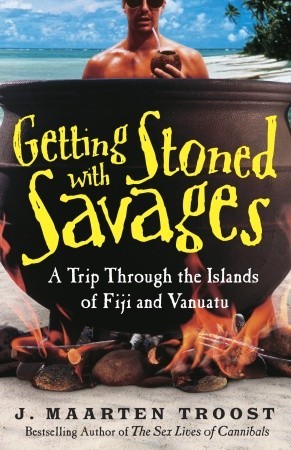
Getting Stoned with Savages

getting stoned with savagesGetting Stoned with Savages by J. Maarten Troost 

Genre: memoir/ travel writing

Setting: Vanuatu and Fiji

I read it as a(n): audiobook

Narrator: Simon Vance

Source: public library 

Length: 07:25:00

Published by: Blackstone 

Her Grace’s rating: 2 out of 5 stars

This memoir/ travel writing narrative is the follow-up to Troost’s debut, The Sex Lives of Cannibals. I didn’t read that one, though I know several people who did and enjoyed it. I love travel writing in general. This one focused on Troost’s experiences in Vanuatu and Fiji, where he and his wife lived when she got a job of some kind there. I don’t think I paid attention to it as well as I should have. 

There were some undeniably funny parts. Troost has a dry wit that I generally appreciate. I found that I didn’t really care much about him or his adventures here, though, and I’m not really sure why. It wasn’t the best travel narrative I’ve ever read, but it didn’t suck or anything. It just didn’t light my fire like I had hoped. 

I saw several reviews saying that it is very racist. I didn’t think it was; it was discussing the racism in other groups that he noticed while traveling, but he himself didn’t strike me as a racist at all. I think a lot of people objected to the title of the book. But helloooo, it’s supposed to be a play on words and pique readers’ interest. You can’t judge another time period (irrelevant in this book) or another culture (super relevant in this book) by our own. 

Something that I did find to be a major turn-off was Troost’s description of his first night in Fiji. He was wandering around looking for just a basic bar or pub to sit in and have a drink and relax after a long day of travel. I get that. Instead, he encountered some male prostitutes who kept trying to take him into the jungle. At least, according to his recollection. He remembered thinking that he was nervous and that getting sodomized wasn’t something high on his list of things to do. OH, IS THAT SO? And getting raped and/or sodomized is something that IS high on the list of every woman who’s had to endure it? Or even the worry that you could get raped? I don’t think I know ANY woman who hasn’t been worried or scared about being assaulted in some form or another. Soooo… now you know how it feels, my dude? I’m sorry he had that scary experience but there was a tone deafness to that whole section that put me off. It seemed never to occur to him that such experiences are commonplace among women. Fucking derp. 

After listening to this, the main takeaway I have is that neither Vanuatu or Fiji are places I want to go. Like, ever. Nor do I understand why anyone would want to visit, let alone LIVE there. Which is too bad because they are probably both cool places to visit. But between the earthquakes, mudslides, volcanoes, and foot-long centipedes, I’m inclined to call the entire region a hard pass. Maybe I’ll stumble across a different narrative that will change my mind, but for now, I think I’ll keep my vacations outside the Ring of Fire, unless I’m going to Australia or New Zealand. I don’t think this was the best book to read for boosting tourism to the South Pacific.

bookish things

Armchair Traveler

book collageThroughout this blog, I have tried to help bring diversity to my own (and hopefully others’) reading practices, to show new ways reading diversely can enrich your life, and teach how readers can do their part to try to influence publishing to stimulate diversity in the industry. Studies show that reading literary fiction helps to hone empathy and compassion by seeing the world from the point of view of people unlike ourselves. However, there is another side to this in addition to honing empathy. Many books set in different countries or even different communities within our own country offer a unique perspective of the world and can give readers the sense of having traveled to a new place from the comfort of our own chair. Enter: book tourism, or armchair traveling.
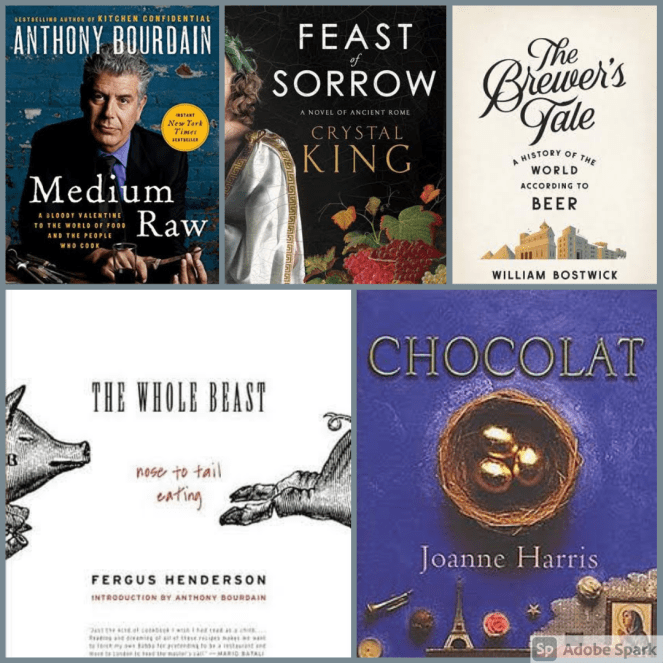
One of my favorite forms of armchair traveling is through food writing or food tourism. My very favorite food tourism writer is the late, greatly-missed Anthony Bourdain. He summed it up wonderfully in his book Medium Raw when he said, “Find out how other people live and eat and cook. Learn from them – wherever you go” (Bourdain 56). Food writing encompasses the best of both worlds, showing readers a new part of the world geographically as well as introducing them to new foods and the cultures that cook them. In addition to the canon of Bourdain’s writing, which is elegant, witty, and achingly poignant, the works of Bill Buford, Fuchsia Dunlop, and Fergus Henderson are also well worth a read. One of the best I have read is Climbing the Mango Tree by Madhur Jaffrey, which introduces readers to the influences of spice, dining al fresco under the mango trees, and learning to cook surrounded by your family matriarchs while growing up in the Indian Himalayan foothills. Who wouldn’t want to grow up climbing mango trees?

Fiction that prominently features food in some way also inspires wanderlust. A vivid scene over a meal or in a kitchen evokes the sights and aromas that truly bring a setting to life. The kitchen is the heart of the home for a reason, and it is over a meal where we can learn the most about people and cultures. Breaking bread is a traditional way to meet new friends and to make peace with enemies. When reading a book like Chocolat by Joanne Harris, you can taste the chocolate as well as feel the cool air of the small French village, smell the bakery up the road, see the cobblestones of the ancient streets. Like Water for Chocolate by Laura Esquivel gives readers a taste – pun intended – of life in turn of the century Mexico along with characters who can imbue their food with their emotions. One of my favorite novels of recent years is Feast of Sorrow by Crystal King, a historical fiction set in ancient Rome about Marcus Gavius Apicius, the author of the oldest cookbook in the world. This not only makes readers want to travel to Rome and see all the places referred to in the novel, but many passages from Apicius’s cookbook are included in the text as well. Ancient Roman cooking at its finest!

Below are some books, fiction and nonfiction alike, which have inspired wanderlust and food cravings in one way or another. What books would you recommend to instill wanderlust?

Julia Child (My Life in France)

Michael W. Twitty (The Cooking Gene: A Journey through the African American Culinary History in the Old South)

Laura Esquivel (Like Water for Chocolate)

William Bostwick (The Brewer’s Tale: A History of the World According to Beer)

Frances Mayes (Under the Tuscan Sun)

Bill Buford (Heat: An Amateur’s Adventures as Kitchen Slave, Line Cook, Pasta-Maker, and Apprentice to a Dante-Quoting Butcher in Tuscany)

Fuchsia Dunlop (Shark’s Fin and Sichuan Pepper: A Sweet-Sour Memoir of Eating in China)

Fergus Henderson (The Whole Beast: Nose to Tail Eating)

Marcus Samuelsson (Yes, Chef)

References:

Bourdain, Anthony. Medium Raw: A Bloody Valentine to the World of Food and the People Who Cook. London, Bloomsbury Publishing Group, 2010.

Stillman, Jessica. “New Study: Reading Fiction Really Will Make You Nicer and More Empathetic.” The Inc. Life, 2019.

book review · historical fiction

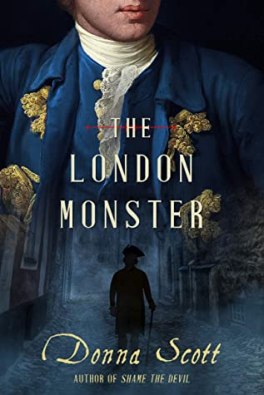
The London Monster

The London MonsterThe London Monster by Donna Scott (Website, Twitter, IG)

Genre: historical mystery

Setting: Late Georgian London

I read it as a(n): ARC

Source: Helen Hollick at Discovering Diamonds

Length: 322 pp

Published by: Atlantic Publishing

Her Grace’s rating: 5 out of 5 stars

In Late Georgian London, a man dubbed as “The London Monster” was attacking women, assaulting first their ears and sensibilities with terribly vulgar come-ons and, when those inevitably failed to win the lady’s affection, he stabbed at her with a dagger. Most of the women only had their dresses torn, though a few were cut on their hips and fortunately, none of them died. It is unlikely that the correct man was ever arrested, though one man did serve time in Newgate as the Monster. Author Donna Scott takes this historical figure out for a ride in her new novel, The London Monster.

Sophie Carlisle, daughter of a minor noble, wants nothing more than to become a journalist. Unfortunately, not only is that a profession forbidden to women, she is also betrothed to Cuthbert “Bertie” Needham, her childhood friend. To attempt to get her articles written and published, Sophie goes around London dressed as a boy, researching and following leads. In the course of her journalistic adventures, Sophie meets and befriends Maeve, an Irish prostitute. Tom Hayes, meanwhile, is the son of a filthy rich merchant with aspirations to a seat in the House of Commons. Tom is haunted by his mother’s murder, which happened before his own eyes when he was ten. To atone for his past helplessness, Tom now is a pugilist and vigilante, determined to catch the Monster before he can hurt any more women. Their paths intersect in so many ways, some entirely unexpected. 

First of all, I loved this book. I actually read it in one sitting, which hasn’t happened with a book in a long time for me. I found the writing to be highly descriptive and engaging, the characters complex, and tone perfectly balanced to reflect a variety of tensions. Sophie is a charming and irrepressible figure. Tom appears to be one of those mythical creatures – a man who is handsome, intelligent, AND genuinely kind all rolled into one. Maeve is salty and pragmatic yet still retains a deep sense of hope despite life having taught her not to bother. Each one of these characters are flawed in some way, but it serves to highlight the strengths of their personalities rather than their weaknesses. 

Speaking of weaknesses. Bertie. Bertie, Bertie, Bertie. He had great potential as a man but he’s just so gross and frankly kind of pathetic. I don’t think readers are really supposed to like him, and certainly I did not. If he had even a little more self-awareness and consideration for others, he might have been a totally sympathetic character. As it was, he came off as more of a self-centered whiner who tried to make Sophie love him even while thinking about how marrying her would solve his family’s debt crisis. Not sure you can truly love a person if you want them for their money, no matter how hard he tries. And perhaps he really did love her, but it always seemed tinged with a variety of desperation. Super not attractive. 

As with any book, I’m not sure if the author wrote about certain themes intentionally or if I am imposing my own interpretation upon the story. However, I picked up some strong themes of consent and safety throughout this book. There was obviously no consent at all in the Monster’s attacks on his victims; they all roundly rejected him and he forced violence upon them anyway. Maeve occupies a liminal space of consent – she is a prostitute so her consent is implied through her vocation, but she hates it and is ashamed, so her consent is grudging at best. To me, I think that equates to NOT giving consent. Sophie wants to help catch the Monster in part because of a frightening experience she had at a party several years earlier when a gentleman she flirted with tried to rape her. At one point, she also tells Tom that she wants the Monster to be caught and imprisoned because she wants him and all men to know that they can’t make women feel they can’t be kind or polite without risking assault. Oh hi, modern women’s continuing issue! Women today STILL can’t be friendly to so many men without them thinking we are flirting and they are entitled to get some. 

Linked to that is a strong sense of shame. Sophie feels ashamed of the incident at the party, despite the fact that it was in no way her fault. No matter what a woman says or does, whether she’s flirting or not, at some point a man makes the decision to assault or rape a woman. It is entirely on him. Yet even today, where there is not nearly the stigma surrounding rape that there once was, many women still are too scared or ashamed to report their assaults. Those who do are often not believed, contributing further reasons for women not to bother. If it’s still like that now, I can only imagine how much worse it would have been in the 1780s. And, as explained in the Author’s Note, while there were more than 50 reported cases of women being attacked by the Monster, the true figure is actually unknown – some women almost certainly never reported their attacks, and others falsely reported an attack. Also like today’s society, some people will say anything to get a little attention, to get their 15 minutes of fame. Shame is carried out further in Maeve’s character. She is a prostitute and she does what she does to survive and to provide money to her young daughter, in the care of another family. But she doesn’t want to be a prostitute and, despite some very frank language about sex from her and other sex workers in the book, Maeve is deeply ashamed of what she does and dreams of a day when she might save enough money to pay off her debts to her madame and leave to do other work instead. 

I also felt there was a strong theme of Otherness and acceptance. Sophie at one point thought about how she would never have tolerated a prostitute near her and would never have thought she would even speak with one. Then she met Maeve and got to know her. The two became true friends, despite the huge gap in their social class, and Sophie found she would go to great lengths to help her friend. See what happens when we get to know people? They turn out to be people with their own feelings and hopes and fears, just like the rest of us! Getting to know people is one of the greatest killers of prejudice and bigotry there is, and the friendship between Sophie and Maeve provided a great example of that. I wish it happened more in real life.

Overall, I devoured this book and can’t wait to read more by Donna Scott. Highly recommended!

book review · sci-fi

Abaddon’s Gate (The Expanse #3)

abaddons gateAbaddon’s Gate (The Expanse #3) by James S.A. Corey (Website, Twitter, Expanse Twitter)

Genre: sci-fi

Setting: spaaaaaaaaaaaace!

I read it as a(n): paperback

Source: my own collection 

Length: 539 pp

Published by: Orbit

Her Grace’s rating: 4 out of 5 stars

In this third Expanse instalment, Jim Holden and the crew of the Rocinante are freelance contractors now, parted way somewhat acrimoniously with Fred Johnson and the Outer Planetary Alliance. When one of their clients, a rather shady bunch, suddenly back out of their contract with Holden, the crew discover that they are being sued by the Martian government to get the Roci, formerly a Martian Marines battle ship, back. Coming to their rescue is Monica Stuart, a journalist from the UN Public Broadcasting, who contracts Holden on an exclusive if he takes her and her team out to a mysterious ring. The ring was constructed by the protomoluecule creature that launched itself off Venus at the end of the previous book, and it is weird. It appears to be a simple ring construct, and yet ships that go through it do not come out on the other side as expected. It’s like it’s a…stargate… 

A flotilla of ships from Earth, Mars, and the OPA is on the way to the ring to investigate, each government hoping to gain the upper hand. When a person from Holden’s past sabotages his reputation, he is forced to flee with his crew and ship through the ring. What they discover on the other side is not at all what they expected. 

The thing about book series, for me, is that if they are longer than a trilogy, I tend to lose interest. Usually around book three or four. However, that isn’t close to being the case with this series. Yes, it follows the same core of characters. Yes, it has an overarching plot revolving around a weird protomolecule. But each novel has a large and diverse cast of secondary characters and a new basic plot, each different from the previous book. It isn’t a cliffhanger from one book to the next where you have to keep reading about the exact same goddamn characters over and over. Corey’s style works wonders for me.

Holden is evolving as a character in a good way. He can still be a sanctimonious bastard, but he is self-aware enough now to know it. He is making a concerted effort to be a better person, not only for himself, but for his crew, and especially his lover, Naomi. We know a bit more about Holden’s past than the other main characters, possibly because he is the captain. But we get tidbits of information about Naomi, Amos, and Alex as well. I hope we get to learn more about their past lives as the novels progress. What drove them to be on the Canterbury way back in book one? Why did they end up on a bottom-of-the-barrel ship when they all clearly have crazy skills and can do what they want in much better positions? These things, I want to know. 

The secondary cast this go round is Carlos Baca, called Bull, a security officer for the OPA. He is assigned as the security chief to the Behemoth when it heads out to the ring. He’s kind of bitter about his position since he should really have been the captain, and Fred Johnson knows it. But he’s not, because politics! Instead, some jackoff called Ashton is captain, and he seems like a skinny Trump, all ego and narcissism and demands of loyalty. We hate Ashton. But we love Bull.

Joining the Behemoth is Sam, the engineer from Tycho Station and Naomi’s best friend; Clarissa Mao, in disguise as someone called Melba Koh, who is on a private mission of vengeance against Holden for his perceived harm to her family’s good standing; and Pastor Anna, a Russian, well, pastor who is on the Behemoth because she believes God called her there to help in some way. And of course a colorful variety of various others ranging from Martian Marines to news reporters to a neurotic socialite. Each one is there for their own reasons, and each one ends up playing parts they hadn’t anticipated. 

Also, Joe Miller is a recurring presence, despite having ridden Eros on its collision course with Venus at the end of book one. So there’s that. 

The biblical and religious allusions are inescapable. I mean, it’s built right into the title. Abaddon is the Hebrew word for “place of destruction,” or hell, or the realm of the dead. Pastor Anna has a lot of things to say about the place of religion in human society, about forgiveness, and about the ways in which humans must fit in with the greater universe. It was not a “beat you over the head” sort of religious discussion. It was interesting and in the background. I’m sure others who are more inclined could find a lot more to say about it. I can, too, but find that I can’t be bothered with religion today. Suffice to say, the title is a perfect highlighting of the plot in this one. 

Themes of loyalty and bravery are front and center as well, which I’m coming to expect from this series. There are so many ways in which these characters, and those in the previous books, have displayed these concepts. I think one of the most important discussion on bravery in this instalment is when Holden figures out how scared he really is by anything to do with the protomolecule. And yet, he does whatever has to be done, despite his fear. I guess Ned Stark was right – when you’re scared, that’s the only time you can truly be brave. 

I have to take a forced break in the series to read a couple books I promised to a friend for a review, and that’s cool, but I can’t wait to get back into this series!