In the early 12th century, a young girl was given as a tithe to the church with the intention that she would be enclosed as an anchoress at the abbey of Disibodenberg. That girl was Hildegard, known to history as Hildegard of Bingen. This novel tells the story of her early years at the abbey of Disibod and attempts to fill in a gap in the historical record.
Author PK Adams does a lovely job bringing a young Hildegard to life with her clear and elegant prose. The setting of the medieval Rhineland is well described and gives readers a vivid image of life during the Investiture Controversy. The conflicts brewing between the Church and secular authorities were complex and distressing to people at the time, and Adams captured these emotions plainly in her characters.
I have, at times, railed against authors of historical fiction who take liberties with historical fact for the sake of telling a story. I think if they can’t tell a good story without embellishing the facts then they aren’t good storytellers. However, Adams has found a sweet spot with regard to Hildegard’s story, and she’s run with it. Little is known about Hildegard’s life after she initially entered the abbey until Jutta’s death. Adams uses that gap in knowledge and creates a detailed and plausible version of her own, enhanced with excellent and accurate details of medieval life. We may not know about what Hildegard’s life was really like for a number of years, but this novel presents us with a viable option for consideration.
Adams wove in many lyrics from Hildegard’s songs, which was a nice touch. A vital touch, in my opinion. I don’t think one should write about Hildegard without including some of her songs, given that she wrote SO MANY of them. I do wish there had been more about herbology, such as recipes she might have used, but that’s just because I am super interested in herbalism. There was enough on that front to appeal to most readers who aren’t as interested as I am, I believe.
The characters are nicely developed overall. I would like more development with Helenger; right now, he just seems like the flat archvillain, mean just for the sake of being mean. I would also like more development with Volmar, particularly since he played such a large role in Hildegard’s real life. Maybe that will be in book two. The issue with Jutta and her bodily mortification left me a little wanting – I wanted to know more about Hildegard’s thoughts behind it. But overall, these were minor issues and didn’t impact my enjoyment of the book as a whole.
I am excited that I don’t have to wait to read the next in the series – thanks, Netgalley! It will be interesting to see how the next book handles the later parts of Hildegard’s much more well-documented life. Hopefully, Adams will continue Hildegard’s story with the same eye for detail as she has begun.
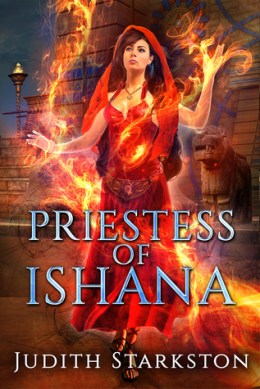
Book cover: Priestess of IshanaAuthor Judith Starkston. Image retrieved from author website
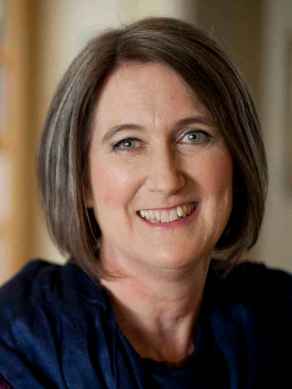
A couple of months ago, I sat down to chat with author Judith Starkston about her new book, Priestess of Ishana. With deepest apologies to Judith about the delay in writing this article, especially as she was so gracious about giving me the interview – and feeding me in her own home, no less! – I want to talk a little bit about the awesome lady and the research behind a truly unique new series of books.
The series, which begins with Priestess… and will carry on with a forthcoming book (yay!) is based on Starkston’s research of the Hittite culture. I touched on this a little bit in my initial review of the book both on my blog and the historical novel review site, Discovering Diamonds. Her research is deep and accurate, and I would expect nothing less of her since she is a Classicist who is committed to providing detailed information about the ancient world in a fun and accessible way.
One of the overarching themes I noted in the book involve politics and shows men trying to keep women submissive. Starkston comments, “There are a lot of correlations between the politics of then and now. We like to think of history as progressing, but that isn’t always the case.” She goes on to explain about Hittite culture and how women like Tesha, her main character who is based on the real-life Hittite queenPuduhepa, were allowed to stay queens after their husband died. Often, if they had a son, they would navigate their power to get their sons on the throne, because there was always a king, unlike, for example, in Tudor England with Elizabeth I. But generally speaking, Hittite women had more power and freedom than Victorian women – they had property, could keep children even after a divorce, and they were allowed to initiate a divorce. Priestesses in particular had a key business and financial role as well as religious. The temples are sometimes referred to by scholars as “Little Vaticans” since they held so much power and influence over other non-religious institutions.
The Great Temple in Hattusa
The rites and rituals portrayed in Starkston’s book are fascinating and full of magic. They also come directly from existing Hittite records; none of them are made up. While this might seem unbelievable to modern readers, Starkston explains that the Hittite culture is imminently well-suited for a fantasy novel.
She says, “When I decided to change the series from straight historical fiction to fantasy, it was actually really liberating. There is so much about how they view the world that is hardwired for magic.” For example, there is a detailed scene where Tesha performs a rite in a cave to banish an evil spirit, which they believed was lingering because a man was burnt to death. The entire ritual comes directly from cuneiform records. Similarly, another ritual, not used in the book but which Starkston discovered about Hittite culture, deals with disputes within a family. When such instances occur, the family would call in a priestess to heal them, believing it was an illness. The priestess would make wax tongues, the family would say the words of the argument, then spit on the wax and burn it. Based on court records, Starkston explains that this ritual and other similar ones showed that the Hittites believed words were the most powerful thing, curses were believed to be real and were feared, and correcting bad words is written into the culture. Such belief is woven into the fabric of Priestess of Ishana at every level.
Cuneiform tablet
Another element of the book I truly loved were the mouth-watering descriptions of the food. I’m a foodie and I love to learn about new places and foods based on the books I read. Some of the foods in Priestess were made up to reinforce the fantasy elements, but overall, the foods in the book were also based on archaeological records and DNA studies of the residue from around hearths or pots, which can tell us if they contained wine, grains, cheese, and so on.
Starkston says, “Food is core to understanding a culture, so I really wanted to highlight it.” Indeed, she did. One of my favorite scenes involved Tesha and Hattu eating the stamens of large flowers in the temple. Who knew that eating flowers could be so sexy?
The flowers in this scene were made up, but the rest of the food in the same scene was not. I asked Starkston if she had ever tried making any of the recipes she had written about in the book or discovered in the historical record. Not only has she done so, she actually made a cookbook based on them. They are based on ingredients and techniques available at the time. All the recipes mentioned in her books are collected there and if you sign up for her newsletter, she will send it to you for free. I have tried some of them and I have to say, they are GOOD. My favorites are her hummus, lamb and lentil stew with raisins (though I hate raisins so I substituted with dried blueberries and it was delish), and the almond-stuffed dates. Seriously, the recipes are scrumptious and are fancy enough to impress your friends at a dinner party. That they are based on ancient recipes is just a delightful bonus for history nerds.
Starkston’s series will continue with a second novel, which I, for one, am eagerly anticipating. As yet, there is not a release date for the second book, though she says Tesha’s sister Daniti will be a point-of-view character. This will prove fascinating, as Daniti is blind, having lost her sight from chickenpox as a child. The way Starkston approaches illness and physical imperfection in the novel struck a balance between actual beliefs from antiquity. She is doing a lot of research to create as authentic a character as possible in Daniti. She says, “Since I found no evidence of how blindness might have been treated in Hittite society, or how the blind might have been viewed, I worked from close cultures like Sumerians to extrapolate. But there were split ideas toward blindness in ancient world. They were either thought to have inner visions sent by a god, like Homer’s ability, or they were thought to have a deformity or imperfection. Daniti is viewed by her father as cursed. Whatever went wrong was always the fault of the sick person, for example. So I made her an outcast, which was historically accurate, except that she and Tesha are close.”
Daniti is a strong woman, something Starkston excels at crafting. She creates women who can take on an enemy and do it without a sword. Tesha and Daniti are both women of deep strength.
Do magic and fantasy sit well together within historical fiction – indeed can such novels even be counted as historical? Should ‘historical’ be as accurate as possible without the addition of magic or obvious fantasy, or is there leeway for diversification? Should a book that is clearly fantasy in essence, but has its background of characters and general plot set very firmly within an accurately researched historical setting be considered as historical or as a fantasy novel, set in a fantasy world that is very loosely based in history, and therefore have no right to be classed as ‘historical’? What actually constitutes history or fantasy, anyway? Is the merging of fantasy into history acceptable? In short, of course it is! Within the varied genres of historical fiction, is it not this diversity which makes reading novels set in the past so exciting? The accurate biographical type novels of the lives of known people (usually kings and queens, or men and women of note) is one branch of historical fiction where the known facts are imperative to ensure the overall feel of ‘believability’ is ensured. For the other genres, mysteries, thrillers, romance, timeslip, alternative, it is the depth of the background research that creates the feeling of realism. If fantasy is not acceptable for historical fiction we would be sadly deprived of many wonderful novels and series: Mary Stewart, Barbara Erskine, Du Maurier to name just three – and there would be no Outlander!
When I find an author who writes a unique story, and who does it really well, it is a delight. When that story is also based on actual fact, as Judith Starkston’s novel is, it undergoes an alchemical change from just a fun story into a jaw-dropping narrative of women in the ancient world, struggling to gain their own agency, find their strength and bravery, give love to those around them, and fulfil a destiny. It provides an insight into what life was really like and shines a light on the human condition. We can look beyond the elements of fantasy and see the real people behind the magic.
And really, isn’t that what good literature is supposed to do, be it fact or fantasy?
Get Well Soon is all a brief overview of several of the worst/ scariest/ grossest diseases in recorded history. Each chapter deals with one disease or condition and written with what is obviously a shit ton of research to back it up. Also, lots of gallows humor and pop references, to keep you entertained.
It should come as a surprise to absolutely no one who knows me that I LOVED this book. I mean, I know am I morbidly obsessed with the bubonic plague. Seriously. I’ll read anything about the plague. But this book? It was hilarious! I get that a book about horrific diseases shouldn’t, maybe, be classified as “hilarious,” but too bad. If you can’t laugh inappropriately at things, then I am not the person for you to hang out with. We won’t make good friends. This is one of my favorite nonfiction books ever. The writing is engaging, not sophomoric as one wet-blanket reviewer suggested. It is fun, and the use of pop culture references, even older ones, keeps readers reading. Given the gnat-like attention span many people have now (thanks, social media), keeping their attention focused is a good thing. It helps people learn. Learning is fun. I learned that smallpox is hemorrhagic. And that “boo-boo” likely derives from “bubo,” though I already knew not to kiss a bubo to make it better. I teach fairy tales and folklore, so I found the connections to those stories and encephalitis lethargica to be fascinating. Also, this should be required reading for all anti-vaxxers.
I listened to this on audio book, and I have to say the narrator was not my favorite. She had this weird way of starting a sentence sounding sort of nasaly/ raspy, like Kate Mulgrew, and then ending the sentence in a normal tone. It was worse when she was quoting someone. It was annoying AF. But the content of the book itself was so good that I did my best to ignore the narrator’s voice.
Christopher Boone likes to go walking at night sometimes. On one of his nightly excursions, he encounters Wellington, one of the neighbor’s dogs. Wellington is dead, killed by a garden fork. This is puzzling to Christopher, who likes to understand why things happen and likes it when rules are followed; Wellington should not be killed with a garden fork. He decides to discover who killed Wellington and begins “detecting” like Sherlock Holmes, asking his neighbors rather uncomfortable questions. In the process, Christopher uncovers many more truths than he ever expected to, and now he has to learn how to live with the consequences of those truths.
This was a sweet coming of age story, told from the perspective of a boy who is on the autism spectrum. Christopher is highly intelligent and is gifted in math – he is going to take his A-Level maths exams later in the book so he can attend university. But he doesn’t know how to buy a train ticket without help. He doesn’t understand humor. He can’t tell a lie and doesn’t understand why you must always tell the truth but can’t tell an old person they’re old or a smelly person that they stink. I loved that he says metaphors are lies, but similes aren’t, and that he hated yellow and brown but red was the best. I really loved his thoughts on logic and reasoning and religion. Getting the story from his perspective is a wonderful change of pace from the typical narrator. I listened to this on audio book, so I didn’t see any of the diagrams that I think were in it. But I did enjoy figuring out before it was explained in the story that the chapter numbers were prime numbers. If you know how good I am not at math, you will know how impressive that is. I was rather proud of myself.
Seeing Christopher’s growth over the course of the book was wonderful. He learns that he IS able to do far more than he ever thought he could or would be able to do. He figures out a soul-shattering secret that has been kept from him and it sends him into a spiral of confusion, anger, and pain. Fleeing to London, on his own for the first time, Christopher learns that he is capable of much more than her ever knew.
I also thought the way his parents were portrayed was probably pretty realistic. I don’t have an autistic child, so I can’t imagine how hard it must be. I AM the mother of a very smart and difficult child, though, and know very well how frustrating and exhausting it can be. I wouldn’t change it for anything, but I can maybe understand how some parents would snap after a while. It doesn’t make it right, but it is a human reaction, and I think Christopher’s parents were shown in a very human and sympathetic light.
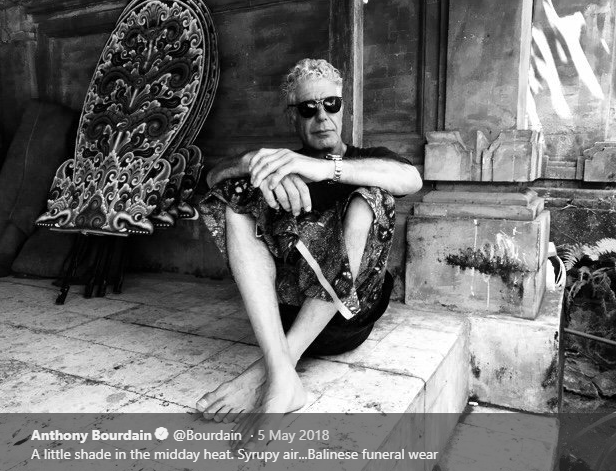
Sometimes when I cook, I have the voice of chef Anne Burrell in my head, telling me I’m using my knife wrong or I need to do something differently. Over the years, though, another voice has been added to hers, overwriting it to tell me that it doesn’t matter if I do it perfectly so long as I’m trying something new, and “screwups are good. Screwups – and bouncing back from screwups – help you conquer fear. … Do not be afraid” (Les Halles). As long as my mise en place is in order (and it had better be or he will yell at me), then everything will be fine. That distinctive voice belongs to Anthony Bourdain.
Probably it’s not normal to have the voices of anyone in your head, but I’ve always been one to have conversations with people I only meet in books, or on TV, or from studying history. I’m not ashamed to admit that some of the best life lessons were ones I’ve received from people I’ve never met in person, some of them fictional. This is far more a tribute to him than is it a book review, so I am going to talk about the late, greatly missed Tony Bourdain. From Tony, watching his shows and reading his books, I’ve learned so many things. Now I know that you should always try a dish twice in case it wasn’t prepared well the first time. Borders don’t matter because we have far more similarities than differences. You’ll never know what you like until you try it. The one truly universal connection between people is food and breaking bread together over a meal, prepared with love and served in a spirit of generosity and openness, is something that transcends religion and politics and language. Traveling to new places and seeing how people in different cultures live is something everyone should do; there is no education in any hallowed institution on earth that can compare with this.
Most of us never got to meet Tony in real life; nevertheless, he had a tremendous impact on our lives all the same. I never met him, but that doesn’t change the fact that I look up to him as a mentor, or that his death left a wound that will always be tender. I know this isn’t how depression works, but I can’t help but wonder if he knew how very many people would be affected by his death, if it would have made a difference. Probably not. I’ll save my rant about the need for better mental health care for a more appropriate place.
As I said, I never got the chance to meet Tony in person. The closest I ever got was a random encounter in London, on opposite sides of a busy street in Soho. That sardonic smile was plainly visible through traffic and crowds and will be a sight I’ll cherish dearly. Nevertheless, I can say that I feel lucky that I was alive and shared the earth at the same time he did. I think the best way to remember him will be to try to approach life like he did – with curiosity and openness and a hunger that can only be satiated by going and seeing and experiencing it for myself.
This book is a collection of memories, left by people who feel as I do. This is not great literature. It isn’t going to move mountains or bring about world peace. It is simply the heartfelt notes of people given in their grief to express a love for a deeply flawed, deeply compassionate, curious, creative, soulful man, someone who touched us all profoundly in some way, and whose loss we feel acutely. People who also learned from Tony that “there is less to fear about the world than we think” or that we should “listen, rather than speak.” We know, because of him, that “it is a privilege to sit at someone’s table” and that we should “go to the place. Eat the thing. Talk to the person.” When we travel, he taught us how to be “less of an observer and more of a participant…”, that we should “offend no one, appreciate the simplest things, and absorb it all”, that “food was a tool through which to understand a place, to broaden your own understanding of the world…”, and that there is “beauty in the sad, and the poignant, and even in the mundane, every day.” He taught us new ways to see, how to be better listeners, and how to find the interesting experiences. I think he’d get a kick out of one comment in particular, written by Amy P, who said, “Tripe. I didn’t enjoy it, but Tony was 100 percent the reason I tried it.” Yes, girl! I have tried things, culinary and otherwise, that I never would have thought to do because of something I learned from Tony. Just try the food. If you don’t like it, then try it again somewhere else, in case the first time wasn’t the best. If you don’t like it after that, well, at least you tried it. But then again, you may discover your new favorite food. You might learn about your new favorite activity. I learned about black pudding in London’s old east end butcher district, and the next time I am there, I’m absolutely going to try some, because that’s what Tony would do. Because the real lesson he left us with is not to be afraid. Go out and try things and see where they take you.
“Travel isn’t often pretty. It isn’t often comfortable. Sometimes it hurts, it even breaks your heart. But that’s okay. The journey changes you; it should change you. It leaves marks on your memory, on your body. You take something with you. Hopefully, you leave something good behind” (No Reservations). Anthony Bourdain left something good behind, and his presence will continue to be missed. Let’s all go out, have an adventure, and make our own mark on the world.
Robert Green and Christopher Marlowe are not friends. But when Green believes someone is trying to kill him, he sends a desperate letter to Marlowe, behind for his help. When Green is found dead, Kit believes it is his duty to discover who murdered Green and so undertakes the investigation. At the same time, stage manager Ned Sledd is wrongly taken to Bedlam in lieu of an escaped inmate just days before the opening of one of Marlowe’s new plays. Marlowe has to find the connection between all these events and help his friend. And also, the Spymaster, Robert Cecil, is taking an inordinate interest in things. And there’s plague. What could go wrong?
This is a short, quick read and like other MJ Trow novels I’ve read, it is a fun and witty tale as well. The plot is full of twists and turns and not all is as it appears. The characters, especially Marlowe, are all multidimensional. I really love the little digs at William Shakespeare (spelled here as Shaxper) throughout and the subtle shade thrown on the authorship of his works. There are many literary gems hidden in these pages that appeal to any Anglophile.
The descriptions of Elizabethan London are also vivid and gritty. So much of that period is romanticized but here, we get the more realistic portrayal of what it might have actually been like – dirty, smelly, and depressing. Oh, and don’t forget the plague!
A fun and fast read, highly recommended for any lovers of Marlowe, Shaxper :-), or Elizabethan English history in general.
Manuel Ortigosa is a writer living in Madrid. He is hard at work on his next novel, waiting for his husband Alvaro to return from a business trip to Barcelona, when he receives word from police that Alvaro has been killed in a car accident. In Galicia, the opposite side of the country from Barcelona. Manuel travels to the town in Galicia where Alvaro died and learns that his husband was the Marquis of an ancient aristocratic family and Galicia is their ancestral home. Alvaro had hidden all this from Manuel because it seems he felt that his family was toxic and he wanted to shield Manuel from them. Upon his death, however, Manuel learns that Alvaro had saved his family from deep debt, using his own considerable funds to pay back loans and renovate the family homes, which put them in Alvaro’s personal possession, and thus he bequeathed everything to Manuel. Manuel is trying to come to terms with the fact that his husband hid who he was from him for the 15 years of their marriage, deal with the family who is indeed toxic, and find out what truly happened to Alvaro because he hadn’t died in an accident – he was murdered. Manuel meets two allies – a recently retired cop and a childhood friend of Alvaro’s, now a priest and Alvaro’s confessor – who aid him in finding out the truth.
This was a nicely complex book and I enjoyed not only the mystery plot but the travel element as well. I’ve never been to Spain, so the descriptions of the settings were some of my favorite parts, irrespective of the rest of the story.
The characters were generally complex and multifaceted. Manuel, the cop, and the priest were the ones I thought were the most multidimensional and complex people, though many of the other secondary characters, such as the family’s nanny, also seemed to have rich personalities.
There were many points of conflict – between Manuel and his husband’s family, between more progressive ideals and traditional Catholic practices, between the newer social order and the ancient traditions of nobility. There were also rivalries and intrigues between the family members as well, dark secrets and infighting. Alvaro was right – his family is toxic and he did well to keep Manuel from them. It would be exhausting to have to deal with a family like that.
I listened to this on audio book, so I have no idea how to spell some of the names, like the name of the cop friend, or the name of Alvaro’s family home. In any case, I think I would have preferred to eyeball read this one. I had picked up the audio book because it was a daily deal on Audible, but I didn’t care for the narrator. He did all right but I didn’t think he did a great job differentiating between characters. I had a hard time telling when it was supposed to be Manuel speaking and the cop, for example. His reading of women’s voices was pretty awful, though at least he didn’t make them sound like vapid cows like some male narrators do.
I loved the last line of the book SO MUCH. It is one of my favorite last lines ever now.
Connall had promised his father that he would take care of Lainn, his little sister. Then his father went away and Connall, despite his best efforts, failed spectacularly in every way to uphold his promise. He and Lainn endure an abusive stepfather; a neglectful mother; starvation, terror, imprisonment, and torture in the land of Faerie; and literal insanity in both human and fey realms. Connall tries to draw on the power of a magic brooch, passed down through his family for generations, to help him and Lainn survive, but in doing so, is he saving them or only delaying the inevitable?
This is the seventh book in Christy Nicholas’s Druid’s Brooch series, and as with the others, it can be read as a standalone. I have read most of the others in the series and with each installation, I appreciate anew how well Nicholas crafts her characters. Each one has depth and vision to them, even minor characters who are only on the page a moment.
Equally appreciated is Nicholas’s deep understanding of Irish legend and lore. Her books are rich with these, and they bring the culture and people within the pages to brilliant life. This novel features the early days when the old ways of the Druids and the new ways of the Christians were still able to live together peaceably, though by the end of the book, the two religions were showing the strain. The Age of Saints refers to the 5th and 6th centuries when the Church was working especially hard to convert the Celtic countries, often using converted Celts to do so, such as St Patrick or Columba, who is referenced in this novel. It was interesting to see the interplay between the two cultures in this way.
I also loved the theme of protection that wove throughout the book. Connall cares for and protects Lainn as best he can, even when he fails utterly. He tries to keep his father’s words in mind as a way to protect himself as well, because at the end of the day, Connall is still a very young man, still in need of protection himself in a variety of ways. He learns how to protect himself, but also how to accept it from others when needed. The raven companion provides protection of a sort as well, and teaches a hard lesson. Connall protects his mother even when he doesn’t really want to. Even though most of the hardships in the book were because of a bad decision he made, Connall was still a sympathetic figure. He honestly did what he thought was best, or at least tried to. He never did anything out of maliciousness, just out of simple naivety or lack of experience, and he never whined about it, unlike some characters in other books. He Had his issues and his flaws, and he had an epic meltdown at one point, which I think was entirely understandable, but he was not an unsympathetic figure at all. He just needed someone to protect him but he had no one to do that, and so he did the best he could.
I also liked the exploration of his sexuality here, and how he was concerned about how Christians would think of him as sinful or unnatural to want to lie with another man, but the Druids had such members within their ranks and thought nothing of it. The conflict in him didn’t feel forced, like Nicholas was just trying to do something new or make a point. It was nicely done and flowed well within the narrative of the story.
One of the things I really love about this series is that it works in reverse time – the books begin in a more recent time and are gradually working back toward a time when the magic is newer and closer to the surface. I hope that, in the final installment of the series, readers will finally understand the genesis of the story, the event that caused the brooch to be given to the humans from the fey, and to see the full circle of all the novels in the series thus far. It has been a finely crafted series to date and I look forward to reading more. Highly recommended.
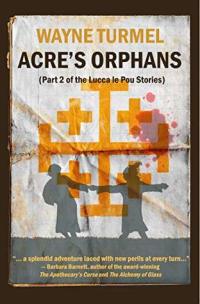
This is the second novel featuring protagonist Lucca le Pou (Lucca the Louse), but it can easily function as a standalone novel. It opens very shortly after the Battle of Hattin in which Salah-adin’s forces defeated the Crusaders and forced them to surrender vast portions including Jerusalem, and executing many Knights Hospitallers. Lucca, one of the titular orphans of Acre, has lived his entire life in Acre and has little desire to leave the city when Salah-adin takes control. However, his nominal guardians at the leper house where he lives convince him to go to Tyre, taking along Sister Marie-Pilar, a leprous nun, and Niheda, another orphan girl who attached herself to Lucca. Lucca is determined to go to Tyre to find Count Raymond, whose name is being slandered in Acre and accused of being a traitor, setting him up to be murdered. Lucca is to find the Count and deliver a message to him from his allies still in Acre, avoid being captured by Salah-adin’s forces, keep Sister and Nahida safe, and somehow return home again in one piece.
At first, I thought this was a YA or even a children’s book because of the young age of the protagonist. However, the more I read, the more obvious it became that this is not a children’s book. It is a nicely written adult novel, replete with rich historical detail, which just happens to have a 10-year-old protagonist. The themes the book covers are not ones most children would want to read, and the violence, disease, and general human misery on display would make it unsuitable for many younger readers.
Despite the somber topics the book covers – the Crusades, leprosy, children surviving horrors on their own – Turmel does a really excellent job of keeping it appropriately light. The bits of humor that shine through in Lucca’s personality lift what could otherwise be a very grim read and instead bring in genuine laughter and a sense of adventure rather than doom.
The cast of characters is pleasingly diverse. I appreciated that the bad guys were not automatically the Muslim characters. There is enough Othering that occurs in both literature and real life as it is, so to see a book that includes a wide range of people as main characters and which doesn’t automatically pigeonhole those characters into revolting stereotypical roles is a really nice change of pace. This seems particularly true of novels set during the Crusades; one website that has the biggest list of historical novels I’ve ever encountered still only has about 15 books on the Crusades as told from the Muslim point of view, and not all of those are even written by Muslim authors. This book still doesn’t tick all the boxes for me in that regard, but I’m hard to please, and it is nevertheless a delightfully well-rounded story.
Lucca is a boy I wouldn’t mind knowing in real life. I would want to bring him home and feed him up and throw him in the tub because he needs a mother to look after him. Nahida is a girl I want to hold and protect from the world, same as with my own daughter, and keep them all safe. The giant Knight Hospitaller Gerhardt reminds me of a dear friend of mine and Sister Marie-Pilar is the fierce and protective auntie or grandmother everyone should have. These characters breath life from every page and made me care about what happened to them.
The Creation of Anne Boleyn is a study on the woman, in all her various incarnations, who was wife to a king, a catalyst to the English Reformation, and mother to Elizabeth I. The book covers a wide range of areas ranging from actual history to literature, film, TV, and pop culture interpretations of Anne Boleyn.
There were some enjoyable things about this book. Bordo takes a feminist approach to her writing and interpretation of Anne, which of course is something I appreciate. She is a women’s studies professor, so approaching the topic of Anne Boleyn from the perspective of gender studies rather than a pure historian’s point of view is a nice change of pace from some of the recent things I have read on the subject. I also think that, because the writing tone is engaging and entertaining, it might entice other readers who are new to the topic of Tudor studies to be inspired to learn more about the subject on their own as a result.
There were many issues throughout the book as well, though. As many others before her, I think Bordo leans too heavily on Eustace Chapuys’s letters about Anne. It is true that he did not like her and had many reasons to hope for her downfall. However, although Bordo frequently states in one way or another that Chapuys shouldn’t be trusted in regard to his opinion on Anne, not once did she mention that he only had a couple interactions with Anne directly. Most of his information about Anne came second- and third-hand from others, which she did mention in passing, but I think it is important to remember that his whole job was to report to his boss, Charles V, what was said at court. Chapuys was Charles’s ambassador, so he was likely repeating many of the things he had heard; he was doing his job when he said that “a gentleman known to me” called Anne a whore or said that she had adulterous relations or whatever else. We cannot possibly know that he was “gleeful” when Anne’s downfall came, because unless one is a time traveling mindreader, there’s simply no way to know what he was thinking. I think we really have to take much, if not most, of what Chapuys says in his letters about Anne with a grain of salt. No, he probably didn’t like her at all, but it doesn’t necessarily follow that every single word he wrote about her were his own true thoughts, either.
The book also had a tendency to attack authors with whom Bordo disagreed, which I don’t think is the most professional approach. She makes a lot of valid points about many popular authors who seem to think their historical fiction books are the same as gospel truth and are well researched, when in fact neither is true. I won’t say which authors Bordo takes such exception to, only that I completely agree. They, at least, tell a good story even if it’s totally inaccurate. Bordo, however, champions some authors who also have problems as well, if not to the same degree as the others. The difference seems to be that the ones she champions are ones who paint Anne in a very positive light rather than as the traditional Jezebel or even as a flawed and imperfect woman. Her own bias comes through the most strongly here. Also, Bordo herself does the same things she accuses others of doing, which is to make declarations of historical fact without supporting evidence, or making claims that are contrary to evidence in hand. At one point, she calls Henry a pussy-whipped husband, which is really unlikely to be true, don’t you think? There is evidence that he was ruthless and even brutal when he needed or wanted to be long before he met Anne. Similarly, her treatment of Katherine of Aragon and Mary is really bad. You don’t have to be Team Katherine to be able to acknowledge that Henry treated his first wife and daughter abominably. Fighting to keep a marriage and position to which she was born does not make Katherine stubborn or self-righteous, as Bordo suggests. It makes for good historical fiction, perhaps, but not really for nonfiction. Additionally, I really don’t think quoting people from one’s own Facebook page is adequate for a “scholarly” book. I was really annoyed by that and disappointed that this book was passed off as scholarly. It’s kind of the equivalent of “My mom thinks my story is cool,” and it doesn’t pass muster. For someone who is a doctorally prepared professor, she should do better than resorting to ad hominem attacks on authors or scholars whose positions she disagrees with, and use better supporting evidence.
At the end of the day, this is far more a pop culture commentary than a biography. It is useful in its way for a starting point into further, more academic studies by actual Tudor scholars. It was interesting as a feminist cultural study, but I wouldn’t recommend it as a source for any theses.

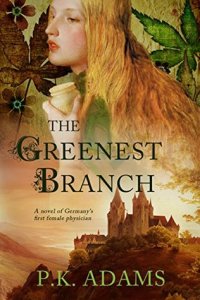 The Greenest Branch: A Novel of Germany’s First Female Physician (Hildegard of Bingen)


 Buy the Book
 *
* 
 *
* 
 *
* 

 *
* 
 *
* 
 *
* 
 *
* 
 *
*  Her Grace's Library