Uncategorized

The Splendor before the Dark

51ademwwk4l-_sx327_bo1204203200_The Splendor Before the Dark by Margaret George

I read it as an: advanced reading copy

Source: Edelweiss

Length: 592 pp

Publisher: Berkley

Year: 2018

This book picked up right where the previous book in Margaret George’s Nero series (duology would be a better term) left off. Jumping right into the thick of things, Nero has just learned about the fire sweeping through Rome. He rushes back, determined to do anything he can to stop it. He was in the middle of the efforts to stop the Great Fire, though later he would fall victim to rumors that he started the fire himself to make room for his Golden House, or, infamously, that he was fiddling about the fall of Troy as Rome burned.

Nero’s troubles didn’t end with the last smoke of the fire. He had to deal with fossilized senators from old families who were scandalized that he wanted to do things in new ways. Hey, kind of like the fossilized old farts in the senate today! How much things remain the same… Nero wanted to introduce arts and theatre and culture to Rome, and Rome, especially the patrician Romans, wanted nothing to do with it.

He also had to deal with numerous revolts, uprisings, and betrayals during his reign. Nero changed from an idealistic young boy to a somewhat paranoid man because of the betrayals he had suffered in his short life. He thought that betrayal, when it inevitably came, would come from within his family or possibly the senate, but he never saw it coming from the provinces or his Praetorian Guard. And certainly not from some of those he trusted most.

I really loved this book, at least as much as the first Nero book Ms George wrote. Here, we truly get to see Nero as he most likely really was – a sensitive, thoughtful man who wanted to make sweeping changes to a centuries-old system and instead got destroyed in the politics of it. He was first and foremost an artist and musician, loving nothing more than to write and perform poetry and music. I took years and years of Latin from high school through grad school; I’ve read Tacitus and his comments about Nero. I never thought they seemed very realistic. The outstanding research that went into this book and its predecessor really highlights how misunderstood Nero has become to history. He wasn’t insane, cruel, or in love with persecuting Christians. He was flawed, yes, maybe a bit childish and naive for the ruler of the known world. Likely he was a bit narcissistic, or at least he came across that way somewhat, but not in a malignant way *coughtrumpcough* nor in an entirely self-centered way, if that makes sense. His narcissism, such as it was, seemed to be derived purely from being a child of luxury and privilege and not knowing anything else. Sometimes while reading this, I felt a little embarrassed for him, as I think I was meant to, because, like others in the room with Nero, I wanted to tell him to stop, or ask him, “Don’t you know you can’t do that/say that here to these people?” He was so idealistic that he was really clueless about a lot of things, and it made him a target in a variety of ways.

As with all her other books, Margaret George has some absolutely lovely prose in this one as well. When speaking of the gods and religion, Nero has many things to say that were intriguing and well crafted. When one senator accused him of being an atheist, Nero replied that, in practical terms, he is because

“since we cannot know [the gods’] thoughts, it is best to admit that and proceed in the dark, unlike ignorant people who think they know and make stupid interpretations.”

Later, regarding the Christians who he ordered executed for their alleged role in the fire, Nero said,

“In some ways they are to be envied…. Having something so precious that it overrides all else in your life, even your life itself.”

As an atheist myself, I don’t feel this way about religion, but I do understand the sentiment. I hold many things in higher regard than my own life. Nero felt this way about his art, and came to realize he felt that way about Rome itself.

Combining thoughts on religion with philosophy, another of Nero’s favorite pastimes, is a terrific scene that comes just after he competes in his first chariot race. Nero’s wife Poppaea berates him for racing, an act that a charioteer (i.e., a slave) would do, not a patrician, and she was afraid for him for many reasons. She told him he was acting like a child:

“You are no longer a child. Or are you? You behave like one.”

“If I behave like one, it is because deep inside the child is still there.” …

“Childhood is a phase of life, to be put aside as one grows up.”

“No, it should be cherished, because it is the truest part of ourselves, the part that came into being first. …It is when we are our childhood selves that we are closest to the gods.”

This one reminded me to cherish my daughter’s childhood and to get more in touch with my own inner child. When Nero is on stage or talking about the arts, his true love, is when his real personality comes through. Nero and an actor are discussing the destruction of many of the theatres in the fire and how to rebuild so that plays can be put on again. Nero says,

“Yes, people need that. Especially after such sorrow. It helps them to know that life goes on.”

“Oddly enough, tragedies are a remedy for that. They put our own sorrows in context, the context of being human. Suffering is woven into all existence.”

“Oh my,” [says Nero,] “perhaps you are in the wrong profession, and belong with the philosophers.”

“Actors bring philosophy to people in a form they can understand,” [the actor] said.

I love this exchange so hard because it encompasses so much of what the humanities as a whole stand for. If you’ve known me for any length of time at all, you will have been subject to one of my epic soapbox rants about the vital role the humanities play in modern society and how it is stupid and short-sighted to cut such programs from schools. The humanities teach us literally the human experience, how people experience the world around them. We may have all kinds of cool technology now, but someone had to think it up in the first place, and think about how it impacts human life and experience. Just…don’t get me started. But I loved this scene for a lot of reasons.

Overall, I think this was just about a perfect novel. I just loved the deep research that clearly went into it, and the discovery of a man who is so different than how he is often portrayed in history. I think Margaret George has uncovered a more realistic version of Nero than anyone else and I adore the way she handles him and the multitude of myths and scandals that surround him.
 

book review · books · Elizabethan England · historical fiction · Tudors

A Murder by Any Name

51orh40ubylA Murder by Any Name by Suzanne M. Wolfe

I read it as an: ARC

Source: Publisher/HNS

Length: 336 pp

Publisher: Crooked Lane Books

Year: 2018

In this series debut, Nicholas Holt, the younger son of a fictional nobleman, is a soldier as well as a spy for William Cecil. He is home in London to report on his mission from the Continent when he is instead assigned to investigate the brutal murder of Queen Elizabeth’s youngest, most innocent lady in waiting, right in the heart of the court. The murder is disturbing, not only because it strikes at a young and innocent girl, but because the body was posed in the chapel in a gruesome imitation of prayer. When a second lady in waiting is murdered shortly after the first, the stakes get even higher for Nick, whose loyalty as a member of a recusant family might be in question if he cannot discover the identity of the  murderer. The political overtones imply that someone is striking now at Elizabeth herself, implying that her reign is illegitimate and that Catholics should be ruling England. Nick relies on the help of his friends – Spanish Jewish doctors Eli and his beautiful twin sister Rivkah, his childhood friend John, and his faithful and well trained wolfhound Hector – to hone in on a cold-blooded killer who won’t stop until forced to by the Queen’s executioner.

A Murder by Any Name was a fast-paced and entertaining read. It held my attention throughout, even though I totally figured out who the killer was quite early on. I’ve read too many mysteries to be surprised by very much, and this plot was really pretty standard. However, the historical details and character development were really well done and more than made up for any lack of surprise for me. Wolfe’s attention to detail was such that I could practically smell the stench of the Thames – or Elizabeth’s breath from her black and rotting teeth! Gnarly. The atmosphere she created was rich and full of emotion, enhanced by the physical details surrounding the characters. The brittle cold, icy water, foggy riverbanks, echoing chambers or chapels, all contributed encompassing the feelings of fear and paranoia that pervaded society at the time. So often, the Jewish communities were the scapegoats for anything that went wrong, as Eli and Rivkah had painful reason to know. Skillfully, Wolfe crafted a protagonist who was sympathetic as well as empathetic while retaining historical accuracy, a tremendous balancing act in itself. Nick Holt was a product of his time, but he was not hardened or indifferent to the suffering of those beneath him on the social scale. I thought Wolfe did a fantastic job of weaving feminism into her story while still being accurate to the social mores of the time. I thought that was excellent. Nick was a wonderful, sensitive, believable character, and I wish there were more period pieces with men like him in them as opposed to sexist men who are written like barbarians simply because the author seems to think that is how it was back in the day, or maybe because an author is himself a sexist. Instead, A Murder by Any Name is the best of what happens when you get a woman to write a well-researched historical fiction. I am looking forward to reading more books in this series, and I can happily recommend this one.


book review · books · historical fiction

A Missed Murder

51htbmniokl-_sx315_bo1204203200_A Missed Murder by Michael Jecks

I read it as a: galley

Length: 224 pp

Publisher: Severn House

Year: 2018

Jack Blackjack, which is either a really cool name or a really lame one, is an assassin in the employ of the historic figure John Blount. Blount somehow managed to convince Jack to be an assassin for him, even though Jack is squeamish around blood and is an indifferent assassin at best. He really takes the job only because he would get paid a lot of money and he’s jonesing for better food, nicer clothes, and a big house (not that I blame him for that), and because he is rightfully concerned that Blount will kill him for turning him down. Jack is also a complete fuck-up. He was ordered to kill a guy, then that order was countermanded, but Jack manages to kill him anyway, completely by accident. All that happened even though he had really hired the father of his lover to do the actual killing for him. See above re: squeamish about blood. Now Jack is trying to get out of his self-inflicted mess alive. The plot thickens as he scrambles to do a job, avoid a job, and not become his own next victim.

It sounds pretty fun, right? You would be wrong. This was the first book by Michael Jecks I have read and I have to say, I think it will be the last. It’s disappointing, too, because the blurb honestly sounded like it would be so good. I thought Jack was not merely an unlikable character but a revolting one. I am so incredibly sick of male narrators who are braggarts and arrogant and view women as objects. Within just the first few pages, there were a shit ton of comments made by the narrator about women and their vacant eyes and how that was a turn-on. Seriously, what the fuck? Additionally, there were tons of incredibly juvenile euphemisms for sex – hide the sausage, pounding the mattress, mattress galloping,  that might appeal to immature audiences, but not, I think, to most adults. There were men in the 16th century would have appreciated a woman with some wits about her, who wasn’t just some vapid cow. So this attitude – by the narrator? By the author? – didn’t really capture the sense of the social mores. Women at the time were, indeed, not equal to men, and were sometimes viewed as objects. Hey, kinda like today! But there are plenty of examples, both from the contemporary literature and real life, of men who valued a strong, intelligent woman. Also, it’s kind of hard to overlook the fact that there was a woman on the throne at the time this book was set, even if she wasn’t the most popular, and was followed by another woman who was one of THE most popular and longest-reigning monarchs in British history. So even allowing for 16th century social mores, the rampant sexism is hard to stomach. It’s used often enough that I don’t know if it is supposed to reflect the protagonist’s mindset or if it is the viewpoint of the author himself. The ubiquitous sexism also detracts from an already tepid plot that is lacking any meaningful historical detail. I know Jecks has a ton of books in another series, so it seems he’s pretty popular. Maybe this is an aberration and his other books are better, but I was thoroughly put off by this one and now have no interest in reading his other ones. A Missed Murder should have been titled A Missed Opportunity

book review · books

I Am Not Your Perfect Mexican Daughter
29010395I Am Not Your Perfect Mexican Daughter by Erika Sanchez

I read it as an: hardback

Source: library

Length: 340 pp

Publisher: Knopf

Year: 2017

Julia is a fairly typical 15 year old – she wants to hang out with her friends, have fun, and get good enough grades to get out of her neighborhood and go away to college when she is old enough. She struggles with depression, though she initially doesn’t realize it, because her parents are oppressive and don’t want her to achieve anything more than to get through high school without getting pregnant, then get married and get a job as a secretary, which is the best job they can think of. To be fair, her dad works in a factory and her mom cleans houses, so working as a secretary would be a big step up to them. However, Julia is highly intelligent and a talented writer; she wants to go to college and be a writer when she grows up, a job neither of her parents understands or supports. The death of her older sister, Olga, which happens before the start of the book, naturally throws her into a deeper depression than she already had been in.

Olga had been the perfect Mexican daughter, according to Julia’s mother. Olga was happy to stay at home forever, never dated, was happy to help her mother clean and cook traditional food. Julia wanted nothing to do with any of these things. After Olga died, Julia discovered that Olga may have had a secret life and makes it her mission to learn what it was. The weight of the secrets she learns becomes too much to bear and it has a terrible impact on Julia’s mental health.

I read this in one sitting and it made me ugly cry. It was so fucking good! There are so many issues wrapped up in this novel. Julia’s parents are undocumented immigrants and, over the course of the story, we learn about their harrowing trip across the border from their home town on Los Ojos in Mexico, the horrible things that happened to them. They were unable to return to Mexico when their parents died because they wouldn’t have been able to return to their home in Chicago or to their children. They work the worst jobs with the worst shifts because their employers know they have them over a barrel. Julia’s dad and his factory coworkers live in constant fear of raids by immigration; it’s pure dumb luck the raids have never happened during any of his shifts. Julia’s mother cleans houses in the rich areas of Chicago and deals with all kinds of abuse from the homeowners, from bored rich housewives hovering and criticizing everything she does to gross old men leering at her.

Julia suffers from depression and anxiety, but she doesn’t know it. She just thinks that she is weird and that nothing she does is good enough to please her mother. She’s a victim of her culture, to a large extent, and of her mother. Depression is not something that her mother understands and she thinks Julia just needs to be happy with her family and go to church more. Oppressing Julia’s need for a creative outlet and showing no interest in things she loves – literature, writing, travel – makes her feel as though she is unseen and unwanted, and understandably so.

Another issue in the book is how homosexuality is dealt with in the Hispanic community. I am not Hispanic, but I know that, traditionally, being gay is not very well tolerated. Readers see that in one of Julia’s friends, a gay boy who is frequently beaten by hi father for being gay.

Being from AZ, I know maybe a tad more about Mexican culture than some, but really I don’t know tons. Reading this book helped me learn more than I expected and for that, I am grateful. I want to learn more.

Overall, this book was sad and enlightening and shines a light on a huge number of issues. I loved it so hard.

book review · books · historical fiction

The Hollow of Fear

36342330The Hollow of Fear by Sherry Thomas

I read it as an: ARC

Source: publicist

Length: 336 pp

Publisher: Berkley

Year: 2018

The Hollow of Fear is the third in Thomas’s Lady Sherlock series and honestly, they just keep getting better and better. In this installment, Charlotte Holmes helps her dear friend Lord Ingram when his wife’s body is discovered in the ice house on the grounds of his country estate, Stern Hollow. Charlotte provides assistance and moral support to Ingram, who is the prime suspect in Lady Ingram’s murder. In order to be able to assist and move freely among the police investigators, Charlotte dresses up as Sherlock’s fictional brother Sherrington, which is hilarious since Sherlock himself is fictional as well. Livia, meanwhile, though concerned about Ingram, is also pining for the mysterious man she met in the second novel, while trying not to be obvious about it. Readers will be rooting  for her to get some kind of happiness, which has been so long withheld due to circumstance and her parents’ unkind personalities. Throughout the twists and turns, Charlotte has to keep her sisters safe, keep her identity as Sherlock secret, and keep Ingram out of the hangman’s noose.

There is so much to unpack in this novel. The plot is wonderfully complex and it kept me guessing until the surprising end. We learn that, as so often in real life, people are not always as they first appear. Some turn out to be nicer than we think, and in this case, learning that was a delightful surprise. Others are harboring dark secrets and it hurts to find out who it is. It was also a treat to learn more about Ingram’s other two brothers: Wycliffe, the eldest and the duke, and Remington, the youngest and free-spirited of the group. Although they really didn’t make an actual appearance on the page to speak of, it still gave a more well-rounded background for Ingram and Bancroft that was appreciated. Readers of the series are already intimately familiar with Ingram, of course, and Bancroft, a quasi-Mycroft figure.

But it is beyond the plot where the novel’s true strengths lie. Charlotte still desires Ingram, and propositions him on occasion, to his consternation, since he operates within the scope of society. However, she only wants him on her terms and is willing to wait if necessary. Unlike the original Sherlock, Charlotte isn’t asexual, but she refuses to allow society to dictate how she lives her life, and she isn’t driven purely by mindless desire, which would be terribly boring. The fact that she is almost certainly on the spectrum also makes for some interesting interactions because she reacts to emotions very differently. Also unlike the original, Charlotte uses food and eating as her addiction rather than cocaine, which sparks great discussion about body positivity and body image. I love her commentary about “maximum tolerable chins.”

My favorite element of this particular story is that it has lots to say about gender identity. Thomas takes Sherlock and gender-flips him into Lady Sherlock, which is fun enough on its own. But here, Lady Sherlock goes and dresses as a man so she can help Ingram. While she was dressed as Sherrington Holmes, the handful of people who know Charlotte is actually Sherlock – Ingram, Livia, and Inspector Treadles – maintained her cover, addressing her as a man and treating her as such. They said things to her and allowed her to do things as Sherrington that never would have been allowed had she presented as Charlotte, even it was just Ingram, who is indulgent of her and lets her do pretty much what she wants. I found the interplay of gender identity and gender fluidity to be fascinating.

Oh, and that last line! I simply can’t wait for the next book!

book review · books

An American Marriage

38389692An American Marriage by Tayari Jones

I read it as an: audiobook

Narrator: Sean Crisden and Eisa Davis

Source: my own collection

Length: 08:59:00

Publisher: HighBridge

Year: 2018

Roy Hamilton and Celestial Davenport are a young, married, black couple living in Atlanta. They’re up and coming, just starting out – he’s a hotshot executive, having graduated from a prestigious college with a full scholarship, and she’s making a name for herself as an artist. Their plans for the future come to a grinding halt when they visit Roy’s parents in Louisiana one weekend, and Roy is arrested, and later convicted, for a rape he did not commit. He is sentenced to 12 years in prison, and is released after 5 when his conviction is overturned. He returns to Atlanta, ready to start his marriage back up again, but 5 years apart is a long time, and Roy isn’t the only one changed by his time in prison.

Sometimes, you read a book that highlights a social issue and it enrages you and makes you want to set the world on fire, like The New Jim Crow by Michelle Alexander. Other books, like An American Marriage, bring those social issues home, give them a human face, and put them into the context that shows the impact they have on whole families, not just one person. This book is a deep character study, using first person perspectives from Roy, Celestial, and their mutual friend Andre. During the years of Roy’s incarceration, it shifts to an epistolary narrative, which works really well and shows the ways in which his and Celestial’s marriage is beginning to crumble. It is a discussion on what marriage is, what is worth fighting for, how much of yourself are you willing to give up, and to what extent duty and obligation stretch. How does one person save another, and is it her job to do so? There were so many parts of this book that made me just…sad. Nothing made me ugly cry, though I can see how it might have if I had been in a different mood. But the whole thing just filled me with a deep sadness. Our system is so terribly broken. Although Roy is fictional, his story is not. There are so many young men whose lives are destroyed because they were simply in the wrong place at the wrong time, and they were victims of a system that is deeply flawed and stacked against them. Roy was the one to spend time in prison, but it was not just him to suffer. His family suffered and changed in irrevocable ways and no one came through the experience unscathed. To think only the person in prison is the one affected is very wrong. It shouldn’t need to be said at all, but in case it does, this book helps to bring that point home and show the human side of the broader social issues.

I think this story could have gone very differently. I am glad it ended as well as it did, though it was still heartbreaking. It could easily have gone a whole lot worse and I’m glad it didn’t. I was really worried it would go sideways and be bad, especially at the start of the epilogue. The resolution was imperfect and the best they could do and was, ultimately, very human and real.

book review · books · historical fiction

A Conspiracy in Belgravia

33835806A Conspiracy in Belgravia by Sherry Thomas

I read it as a: paperback

Source: library

Length: 317 pp

Publisher: Berkley

Year: 2017


In the second installment of the Lady Sherlock series, Charlotte Holmes has established her reputation as a consulting detective, albeit under the alias of Sherlock, her bedridden fictional brother. Here, she finds herself investigating the case of Lady Ingram’s first love, the man she would have preferred to marry rather than Charlotte’s friend Lord Ingram. The two former lovers have an agreement to meet but this year he misses the appointment, causing Lady Ingram to seek out help in finding him. At the same time, Charlotte’s sister Livia meets a handsome stranger and is being wooed by him, though he may not be who he seems. Through it all, Charlotte learns that her illegitimate half brother may be involved, and she also has to decide what to do with an intriguing marriage proposal to boot.

I thoroughly enjoyed the first book in this series, and I liked this one even better. Charlotte is growing as a person and it is interesting to see how it affects her logic. She kind of reminds me a lot of Cristina Yang in some ways – all cold logic and lack of emotions but hiding a caring person once she gets to know you. The way Thomas is handling original characters is really good. I still love Mrs Watson, and how shadowy Moriarty is in his (or her!) off-page debut in this novel. I really love the conclusion to this novel’s case, which is, I would like to believe, how Thomas will handle The Woman/Irene Adler. Maybe? I can see this particular character taking on that role, at any rate. I’ll be so interested to see how that plays out in later books. And that last line – loved it! I hadn’t actually seen that one coming. I love when that happens.

I really can’t talk in detail about the plot without giving spoilers, but this entire series so far is a genuine delight and I can’t wait to read the 3rd one!

Elizabethan England · Tudors

Regina Futurum Sit Hodie Natus Est

Today, a future queen is born. Elizabeth, daughter of Henry VIII and Anne Boleyn, was born today in 1533. So sure were Henry and Anne that she would be a boy that they had already drawn up birth announcements proclaiming a Prince. They had to be hastily amended with an additional S. You can see it in the third line down, about halfway: “…deliverance and bringing forth of a Princess…” Whoops. Little did they know that Elizabeth would go on to be one of the longest-reigning British monarchs, would unite her people in ways they hadn’t been in centuries, and would usher in an age of music, art, literature, and exploration. The Elizabethan Age was rightfully called a Golden Era.

elizabethbirthannouncement
Image courtesy of Elizregina.com

Everyone knows Shakespeare, but he wasn’t the only one who put pen to paper. There was also Christopher Marlowe, who I am convinced we would be studying instead of Shakespeare if he hadn’t been killed when he was only 29; Thomas Kyd; Phillip Sydney; Edmund Spenser; and Robert Ascher, to name a very few. There were plenty of women who wrote at the time as well. Aemelia Lanyer was the first English woman who wanted to support herself as a poet and sought out the support of prominent female patrons. One of Lanyer’s patrons was Mary Sidney, the sister of Philip Sydney, herself a famous poet. Mary Sidney influenced Shakespeare, and she completed her brother’s work on poetic meditations on the Psalms after he died. Elizabeth I herself was also a very talented writer and poet.

Some of my favorite music also came from this period. I ADORE Thomas Tallis, William Byrd, John Taverner, and Thomas Morley. I sang a LOT of these mens’ songs in chorus when I was in school, which I’m sure influenced my interest in them, but I genuinely appreciate the music for itself. I find it soothing and will put it on if I want to work on writing something. Tallis is playing right now as I write this, in fact.

Elizabeth may have had her flaws – a volcanic temper was reputed to be one of them – but she was also a huge patron of the arts and literature. She fostered diplomacy on a scale that makes my greatly missed President Obama look like an amateur. She was, in short, a shining example of what a leader is. I can think of one so-called leader who should read up on her, but alas, it seems he can’t read. 

book review · books · historical fiction

A Study in Scarlet Women

35009017A Study in  Scarlet Women by Sherry Thomas

I read it as an: audiobook

Narrator: Kate Reading

Source: my own collection

Length: 11:00:00

Publisher: Blackstone Audio

Year: 2016

A Study in Scarlet Women is, in essence, a gender-flipped Sherlock Holmes story. Right there, I wanted to read it. The premise of this novel is that Charlotte Holmes is a brilliant woman and has no interest whatsoever in marriage. She’s told her father so and they made a deal – if she makes a genuine effort to find a suitor and let him make her fall in love with him and she still doesn’t want to get married, when she is 25, he will pay for the education she needs to set up shop as the headmistress of a girls’ boarding school. Charlotte holds up her end of the bargain; her father does not. So she takes matters into her own hands and has an affair with a married man, thus ruining her reputation and rendering her unfit for marriage. Yay, idiotic Victorian morality! She has no intention, either, of being imprisoned at their family’s country estate forever, so she runs away to London where she intends to support herself as a typist. Eventually she meets Mrs Watson, who hires her as her companion. Mrs Watson convinces Charlotte to take on clients as an investigator, pretending to be the sister of the bedridden man, Sherlock Holmes. The ruse works and Charlotte is able to support herself quite well by solving mysteries. She is called in on one case that strikes close to home when suspicion falls on her sister, Livia, who had publicly accused the mother of Charlotte’s lover of ruining her sister’s life, and hours later, the woman was dead. When two other people die mysteriously, Charlotte and an Inspector Treadles work together to solve the mystery and figure out how the victims were connected.

I enjoyed seeing a gender-flipped Sherlock. Charlotte is a woman who knows what she wants and makes plans to get it. She has good body image and isn’t worried about being stick thin. These are all good things about this novel. There are a lot of strong and independent women, even being set in Victorian London. I think that the mystery itself took too long to set up and get to, though, and once we got to it, was unnecessarily convoluted. It was hard to keep everyone straight and the ending was really complicated. I read a ton of mysteries and am really good at keeping track of who’s who and it still confused the hell out of me. I felt that the book’s strength was in the character development, which was excellent for nearly every character we meet. Though I didn’t feel the mystery part of the plot was terribly well done, the rest made up for it and I am still looking forward to reading the rest of the books in this series.

book review · books · lifestyle

Guest Post by Leslie Key: Looking and Seeing: Nalanda Miksang Contemplative Photography

51eje8r2i8l-_sx398_bo1204203200_Title: Looking and Seeing: Nalanda Miksang Contemplative Photography by John McQuade and Miriam Hall


I read it as an: eBook

Source:  Leslie Key’s own collection

Length: 6 hours/more if using as reference

Publisher: Drala Publishing

Year: 2015


A Poem

Staying in One Place

Could it be that we like to stay

where it’s comfortable even to our dismay?

What turns the tide to rescue us?

How many turns must we pass,

before we choose the Way?

Sea Sand Stone and Shell 1 CR LR .jpg (1 of 1)
Sea, Sand, Stone and Shell 1

This poem and image were created during the moments of reflection on an experience I had with contemplative photography.

The book Looking and Seeing was my first formal introduction to the idea of contemplative photography, which is a focused and mindful visual experience with intention. Looking is the moment of perception that takes you into seeing, creating the personal connection. With my camera as my tool, it is a Way of Seeing the world around me, a perceptual wonder. McQade and Hall describe a Way as a path or practice to perception (seeing) (2015). In the second section of Looking and Seeing the authors explain what it means to have “view, motivation and intention” as it relates to capturing images through experiencing them with mind, body and spirit. I have used and am using this concept for several photographic projects now.

For example, over the 4th of July this year I visited friends in San Diego, CA. Every year they head down to Ocean Beach and typically arrive around sunrise to ensure they land a good spot near the pier. This year I decided to commit to Ocean Beach on the 4th of July and join my dear friends Benny and Shari each year to follow. I’ve also committed to visually capturing Ocean Beach in each visit during the wee hours of the mornings of each 4th of July. The images I captured in July of 2017 proved to be different than what I saw during my July 2018 visit.

This year during these wee hours the sea shore showed me places that were soon hidden by the high tide. I had several hours to capture the shore at low tide. I titled this photographic project “Staying in One Place.” The first image below captures the crevasses and streams of sea, sand, stone and shell. In contemplative photography I take the time to experience the environment that I plan to capture with my camera. This year I spent about two hours walking, listening and standing still with my eyes closed to listen carefully to what this place could show me. This is when I can hear what I see. McQuade and Hall call this a mind-set of practice using “view, motivation and intent” to be “fully human and awake” (2015, p. 19).

My view or orientation of the scene is when I can understand the journey in capturing the image. This is how I captured the image below and my perception when I clicked the camera shutter. As I angled my camera and tripod securely on a mossy and somewhat slippery stone, I began to compare the elements of sea, sand, stone and shell to people; people (including myself at times) who have decided to stay in their crevasses and still water, passing every opportunity to move on.

How many times in life are we forced to move and change? How many times is our positive, yet painful change forced by circumstances we are in through choices we have made? This can sound dreadful yet is a natural path to discovery.

The following three photographs are from my photo project “Stay in One Place.”

Sea Sand Stone and Shell 2
Sea, Sand, Stone and Shell 2
2 Sea Sand Stone and Shell CR LR .jpg (1 of 1).jpg
Sea, Sand, Stone and Shell 3


Tidal Force CR LR .jpg (1 of 1)
Tidal Force

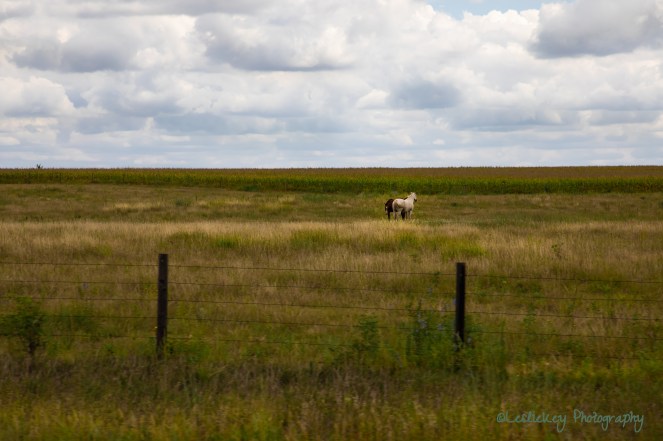
Another recent photographic project I titled “From My Car Window” gave me a new Way of Seeing.  I focused on using contemplative photography on a recent road trip to Ottawa, Kansas. Because of a short time-frame and urgent need to get to my destination, I realized my car window was my only chance to capture some incredible scenes with full intention of using the “discipline of relaxation,” which McQuade and Hall describe as a moment of contemplative practice or intent. Here are a few images that I captured from my car window. The experience offered me a “Way of Seeing” while moving fast enough that if my camera settings were not perfect, the image would not display what I saw. In other words, I synchronized.

The following four photographs are from my photo project “From My Car Window.”

Cumulus LR .jpg (1 of 1)
Cumulus

Traces CR LR .jpg (1 of 1)
Traces

Two Horses CR LR .jpg (1 of 1)
Two Horses

High Desert CR LR .jpg (1 of 1)
High Desert

McQuade and Hall frequently refer to a “flash of perception” through synchronization or creating a state where eye, mind and world all come together at the same time (p. 21). To prepare for this experience, I ensure that my camera and equipment are ready to be put to use, a time when my logical, organizational mind begins to prepare for the contemplative photographic event.

In the final chapters of Looking and Seeing the authors give me a chance to put the concept of contemplative photography into practice. McQuade and Hall bring me into a world of new perception and thinking about what a miracle vision really is. The authors call it an unconditional miracle of “sheer manifestation” (p. 32). For example, we see color every day, right? Using the concept of contemplative photography, I first contemplate the color by first looking, then seeing (perceiving) the color, to making an image of the color. This same exercise is applied to light and shadows, texture and patterns. This is a process, an exercise in contemplative photography.

In closing I would like to say that I love capturing what I see and feel. I love the idea that sharing images for the sheer pleasure of sharing, is my goal. This book is for all types of photographers, from film and digital, to iphone, to the snapshot wonder. Looking and Seeing is a form of mindful meditation through a Way of Seeing and capturing the world we live in.

***

Leslie Key is, by profession, a full-time faculty of higher education. By hobby, she is a photographic hobbyist who loves to capture what she sees and feels, with intentions of becoming a professional nature photographer.

As a full-time faculty with the University of Phoenix, Leslie teaches courses in critical thinking, and general life and study skills to first year college students. She finds that she connects well with these students who are either returning or new to college. She identifies well the struggles to balance family, career, and college because this is what she did.

Returning to college at 45 years was interesting and scary, but Leslie achieved her goals and earned a master in adult education and learning theories. She then began her second career in higher education and has worked in student services, academic affairs, administration and now as full-time faculty.

Her background in photography started at age 5 when her father introduced her to a point and shoot camera, so she could take photos alongside him. Her interest continued through the years photographing people, places and things. Today, her intentions continue, and her focus deepens.

Leslie hopes you enjoy her guest blog post and photographs. She is in the process of creating her professional website, which is now under construction. In the meantime, please check out her Photography Profile