book review · books · fantasy · random · sci-fi

A random list of books based on an IG challenge

Greetings, fellow book nerds! I hope your summer is off to a good start and that you have many adventures to look forward to. I am looking forward to a couple short trips and, of course, making some kind of dent in my TBR. Which is hard because I seem to be in a reading slump and I haven’t read very much lately. 

Sometimes when I’m in a reading rut, I will try reading a genre that is completely opposite of the book I just finished. That often helps me get back on track. That doesn’t always work, though, and then I have to try something else. This time, I went to Instagram and dug around in the #bookstagramchallenges hashtags. I also follow the bookstagramchallenges channel to see a variety of book and reading challenges. Sometimes those are great for kicking me out of a reading rut. Plus, they’re just fun! Also, they’re like lists! I love lists. I love getting to cross things off of them. 

For this, I absolutely cherry-picked the prompts I wanted to use from a few different challenges. I went with an all science fiction and fantasy theme for these, since I’m in a big sci-fi mood. I also recognize that there are entirely too many books listed here. I had a hard time picking just one for some of the questions! 

  1. Last, current, and next reads: The Buried Giant by Kazuo Ishiguro; The Big Book of Science Fiction, edited by Ann and Jeff Vandermeer (print) and Seveneves by Neal Stephenson (audio); The Sound of Stars by Alechia Dow. 
  2. Favorite SFF series: Sci-fi – The Expanse series by James S.A. Corey; Fantasy – The Dragonriders of Pern by Anne McCaffrey.
  3. Side characters you wanted to see more of: Kamazotz, the Death Bat from Gods of Jade and Shadow by Silvia Moreno-Garcia. I guess it isn’t really a proper sidekick, but I would have a ball flapping around on a death bat while on epic quests. 
  4. Quick reads: All Systems Red by Martha Wells. We need more Muderbot in our lives!
  5. Sad reads: Never Let Me Go by Kazuo Ishiguro; “There Will Come Soft Rains” by Ray Bradbury; and several of the stories in Alexander Weinstein’s excellent collection Children of the New World, in particular the titular short story as well as “Saying Goodbye to Yang.” 
  6. Funny reads: Job: A Comedy of Justice by Robert A. Heinlein (possibly the most hilarious book I’ve ever read); Redshirts by John Scalzi; How to Live Safely in a Science Fictional Universe by Charles Yu. 
  7. Weapon on the cover: The Rising of the Moon by Flynn Connolly.
  8. Favorite mentor: Ged from The Earthsea trilogy by Ursula K. Le Guin. 
  9. Books and drinks: Split and Scumble, both from Terry Pratchett’s Discworld series! And, although these aren’t from books, honorable sci-fi drink mentions are: Green (AKA Aldebaran whisky) from the episode “Relics” from Star Trek TNG and A Warrior’s Drink (prune juice eww!) from the TNG episode “Yesterday’s Enterprise.”
  10. Unpopular opinions: Only Dune is good in the Dune series. The first rule of reading the Dune series is that you should only bother with Dune, not the rest of the books.
  11. The chosen one: Bastian Bux from The Neverending Story by Michael Ende.
  12. Revenge plotlines: Ancillary Justice by Ann Leckie.
  13. Favorite creatures: Mother Thing in Have Space Suit, Will Travel by Robert A. Heinlein; the Tendu, the frog-like beings in The Color of Distance by Amy Thomson; and the hen with a demon in her in Nettle and Bone by T. Kingfisher. 
  14. Loyal and noble: Robbie the robot, the titular character in Isaac Asimov’s short story “Robbie.”
  15. Book that I would recommend to new SFF readers: The Long Way to a Small, Angry Planet by Becky Chambers. For fantasy, I’d go with Spinning Silver by Naomi Novak or Daughter of the Forest by Juliet Marillier.
  16. Maps: There’s an awesome map in Cyteen by C.J. Cherryh. Also, I know I mentioned her several times in this post,  but the Dragonriders of Pern series by Anne McCaffrey has some excellent maps as well. I spent hours as a child poring over those, visualizing the various weyrs and halls of the planet. 
  17. Favorite anthology: The Paper Menagerie by Ken Liu; Black Thorn, White Rose, edited by Ellen Datlow and Terri Windling (any anthology edited by either of these women are excellent); and Mirrorshades, edited by Bruce Sterling. Click on the clicky-link! It takes you to a free, online version of the Mirrorshades anthology, which is awesome since it’s almost impossible to track down a copy anywhere. 
  18. Book that takes place during winter: City in the Middle of the Night by Charlie Jane Anders. Well, it isn’t winter so much as the night side of a tidally locked planet. Cold counts as winter, right? 
  19. High-flying characters: Sirantha Jax in Grimspace by Ann Aguirre.
  20. Favorite villain: Sydney from The Prey of Gods by Nicky Drayden; The Gentleman with the Thistle-Down Hair in Jonathan Strange and Mr. Norrell by Susanna Clarke.
  21. Cool animal companions who aren’t main characters: The Wolf in The Witch’s Boy by Kelly Barnhill; Solovey, the horse in The Bear and the Nightingale by Katherine Arden.
  22. Hopeful characters: Keyne from Sistersong by Lucy Holland.
  23. Rogues and scoundrels: Trouble and Her Friends by Melissa Scott.
  24. Ocean or beach setting: The Mountain Under the Sea by Ray Nayler.
  25. Bounty hunters or assassins: Warcross by Marie Lu.
  26. Droids and robots: Starship Grifters by Robert Kroese.
  27. Purple book stack: Star Trek TNG: Q-In-Law by Peter David; Sword Stone Table, eds. Swapna Krishna and Jenn Northington; Flames of the Dark Crystal by J.M. Lee; Prickle Moon by Juliet Marillier; and Smoke by Dan Vyleta. 
  28. Monthly book haul: Print books – The Rex Nihilo series by Robert Kroese, Star Trek Discovery: Somewhere to Belong by Dayton Ward, Loki’s Ring by Stina Leicht, The Blighted Stars by Megan O’Keefe. Audiobooks: Bacchanal by Veronica G. Henry, Anathem by Neal Stephenson, The Municipalists by Seth Fried, The Fold by Peter Cline, and the Themis Files trilogy by Sylvain Neuvel.
  29. Monthly wrap-up: I’ll be working my way through The Big Book of Science Fiction for quite a while. I haven’t been reading as much as usual. Also, Seveneves will take me forever to listen to because I can usually only listen when I’m driving. WFH and my kid’s summer break means that I hardly drive anywhere. So I expect that my reading stats for the month won’t be too much bigger than those two books plus The Buried Giant that I read for book club. 
book review · historical fiction

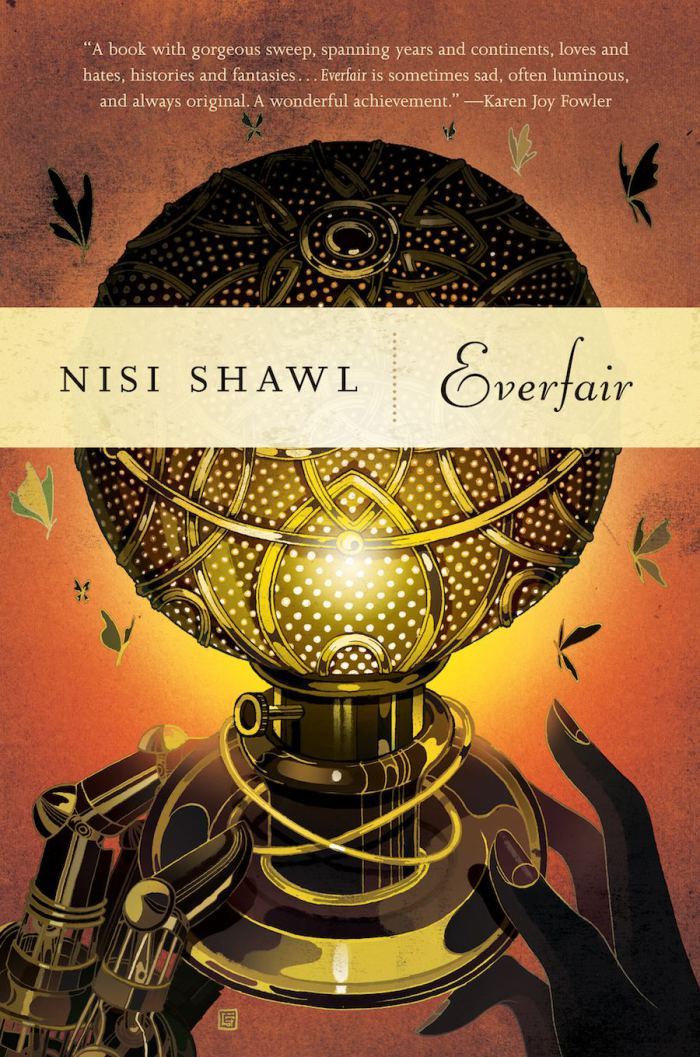
Everfair

everfair

Everfair by Nisi Shawl

Genre: fantasy

I read it as a(n): audiobook

Narrator: Allyson Johnson

Length: 12:44:00

Her Grace’s rating: 2 out of 5 stars

Everfair by Nisi Shawl is a steampunk alternative history novel that presents a fascinating premise: the people of the Congo discovering steam power before they were invaded by Belgium. Afro-Victorian Steampunk? Hell, yes! Alas, while the concept is intriguing and offers great potential, the execution of the story leaves much to be desired. There is a plethora of characters and an overly ambitious narrative, so the book struggles to maintain a cohesive and engaging plot in my opinion.

One of the main issues with Everfair is the overwhelming number of characters. While a large cast can add depth and variety to a story, Shawl’s approach feels excessive and convoluted. With so many characters competing for attention, I never really could invest emotionally in any one individual. The lack of a clear focal point or well-developed protagonists hampers the overall cohesion of the plot and makes me care a lot less about their individual story arcs.

Another drawback is the sheer number of ideas and themes that Shawl attempts to explore within the confines of a single book. From political intrigue to social revolution, colonization to racial tensions, and the development of steam-powered technology, the novel feels…crowded. Really, really crowded. Like a college dorm room crowded. The result is a fragmented narrative that lacks the necessary depth and exploration to do justice to any of the ideas presented. The overarching story gets muddy and confusing and fails to provide a satisfying resolution for any of the themes introduced.

While the premise of an alternate Congo with steam power is undeniably captivating, the execution of the story falls flat. The pacing is uneven, with long stretches of slow development punctuated by sudden jumps in time and perspective. This disrupts the flow of the narrative and makes it difficult to fully immerse oneself in the world Shawl has created. 

It’s obvious that Shawl did a shitton of research and has a genuine passion for the subject matter, particularly in her exploration of the impact of colonization on the Congolese people. However, the execution of the story fails to translate that passion into a compelling narrative. The book’s potential is undermined by its disjointed structure and a lack of focus.

At the end of the day, Everfair by Nisi Shawl presents a fascinating premise that I really wanted to love so much, but it was just too much. It was a disappointing and tedious read.

book review · fantasy

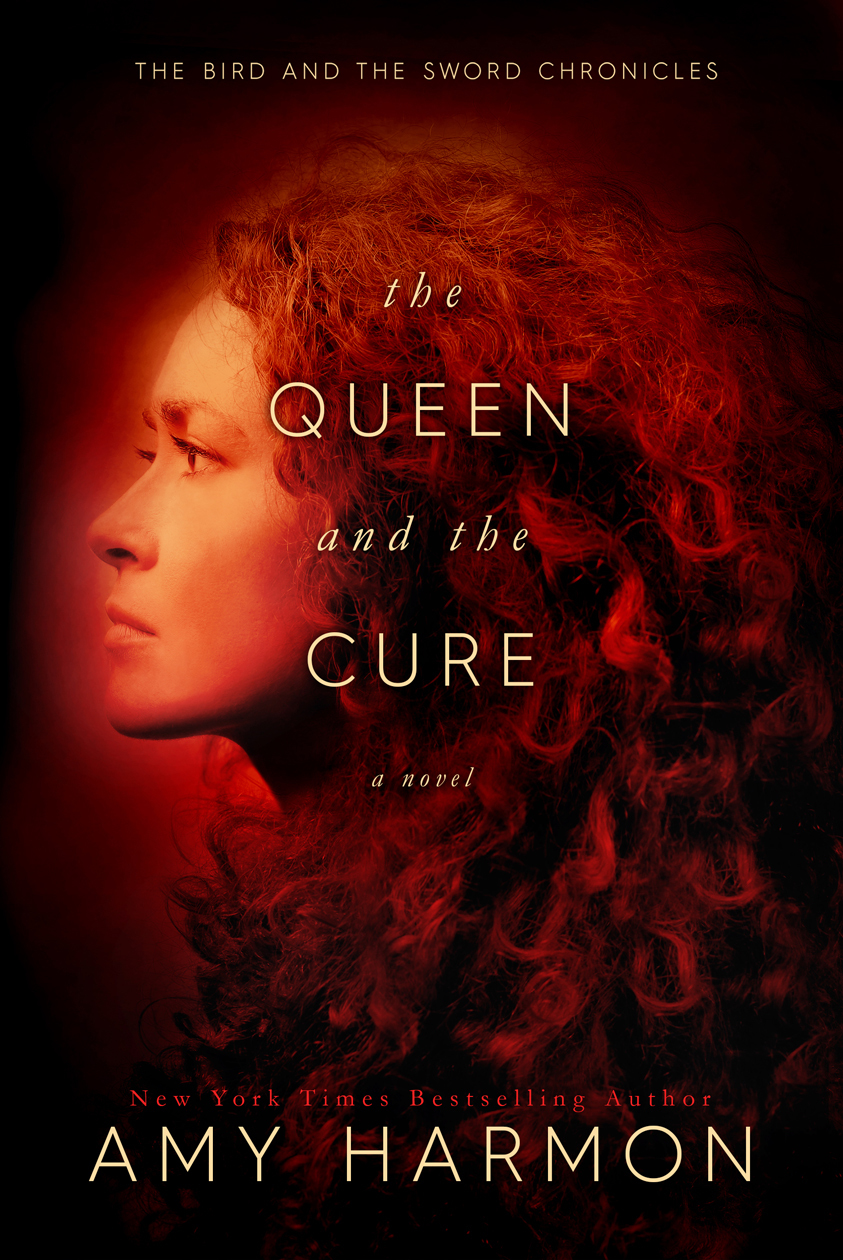
The Queen and the Cure

the queen and the cure

The Queen and the Cure by Amy Harmon

Genre: fantasy

I read it as a(n): audiobook

Narrator: Steve West

Length: 10:57:00

Her Grace’s rating: 2 out of 5 stars

Amy Harmon’s The Queen and The Cure, the highly anticipated sequel to The Bird and The Sword, unfortunately falls short of its predecessor’s brilliance. While Harmon’s writing style and world-building skills are still evident, the book suffers from weak character development, a lackluster setting, a generally weird approach to magic, and a failure to establish strong connections to the previous installment.

Character development plays a crucial role in any story, and it’s here that The Queen and The Cure stumbles. The main character, Kjell, who we met in the previous book, lacks the depth and complexity that made Lark so interesting. Actually, Kjell himself was more interesting in The Bird and the Sword than he is in his very own book. His journey felt underdeveloped, and I felt there was a sense of disconnect and missed potential. Sorsha/Saoirse was just weird to me. She doesn’t remember, which, fair. Then proceeds to wrap Kjell around her little finger, falls in love with him in turn, then discovers her true identity and just like that can return to it? Sure, it says she wanted to stay with him but couldn’t. But why? It’s not even her home to begin with that she was returning to. It was an awkward plot device just to get Kjell to Sorsha’s home and have those events transpire. The supporting characters also lacked the growth and depth necessary to become fully fleshed people on a meaningful level.

The setting, a world filled with enchanting magic, was a standout feature in The Bird and The Sword. It was woven into the politics and culture and everything else. However, in this book, it felt almost like an afterthought. Like Kjell might be able to heal, but he does so reluctantly and still with a sense of shame that he is gifted. Either make him come around to the fact that he has an awesome skill, or else work out deeper reasons for why he continues to resist. But Harmon’s descriptions about that felt lacking in detail and failed to create a satisfying explanation. 

The lackluster setting also added to the overall disappointment of the book. Maybe it’s just me but I never got any real sense of the places where the action took place. I don’t know about the kingdom Kjell traveled to, or any sense of the trip itself, or the palace once we got there. Maybe I just didn’t care about the story much by that point.

The connections to the previous book were another letdown. I had hoped for a continuation of the story and a further exploration of that world, its politics, and its characters, but other than a few of the same characters making cameos, the sequel felt disjointed and lacked a strong connection to its predecessor. The references to the events and characters from the first book felt forced and superficial.

Despite its flaws, the book still had her signature writing style, which is fluid and engaging. Harmon’s ability to craft beautiful prose is evident throughout the book, making it a pleasant read despite the disappointment in other areas. The real saving grace for me was the narrator, Steve West. He did a terrific job with his reading and made the book more interesting to me than I think it would have been had I eyeball read it.

Overall, The Queen and The Cure falls short of my expectations. I didn’t hate it but I definitely didn’t love it as much as The Bird and the Sword and I have no intention to read it again. 

book review · sci-fi · Star Trek

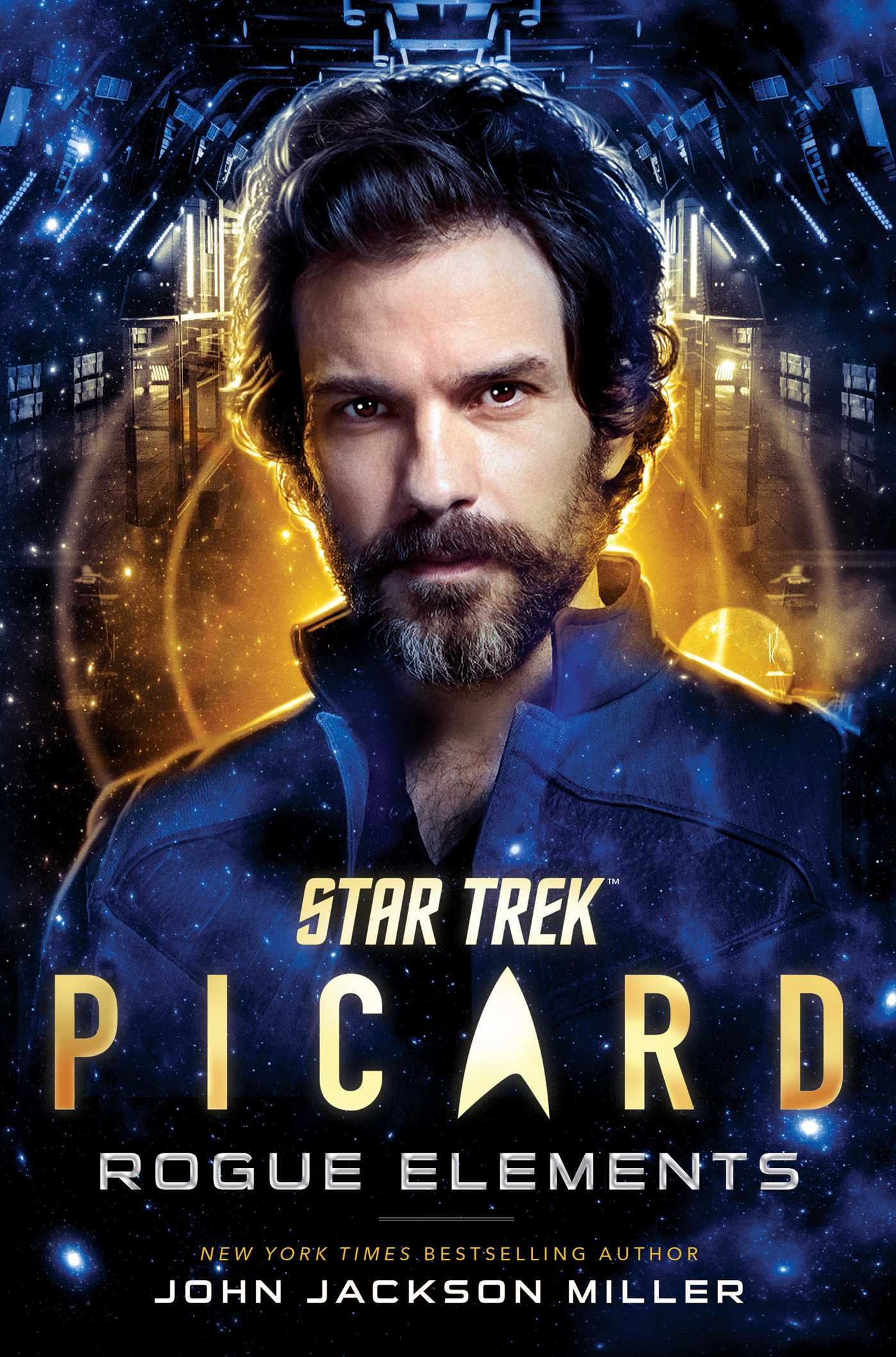
Star Trek Picard: Rogue Elements

STP rogue elements

Star Trek Picard: Rogue Elements by John Jackson Miller

Genre: sci-fi

I read it as a(n): paperback

Length: 406 pp

Her Grace’s rating: 4 out of 5 stars 

John Jackson Miller’s Star Trek Picard: Rogue Elements offers readers an escapist journey through the Federation’s seedier underbelly, a slightly different approach than the typical Trek novel. The author’s note indicated that it was written specifically to serve as a much-needed escape from the grip of the COVID pandemic lockdown. I, however, am several years behind in all of my reading, including Trek, so I only just now read it. It was still perfect escapist reading. With a focus on the charismatic Rios, the acquisition of the ship La Sirena, and seamless connections to the TV show Star Trek: Picard, this novel is a delightful addition to the Star Trek universe.

One of the standout elements of Rogue Elements is the exploration of Cristóbal Rios’s character and back story. I am a major sucker for a good back story, as anyone knows who has had the least contact with me and my bookish preferences. In fact, I’m pretty sure even the Awá people are aware of my love of back stories. Miller expertly delves into Rios’s past, unravelling the layers of his personality and providing readers with a deeper understanding of this complex character. Through actiony adventures and poignant moments, we witness Rios’s growth, gaining insight into the experiences that shaped him into the man we see on the TV show. 

The acquisition of La Sirena, a ship that holds its own aura of mystery, brings a new dynamic to the story. Miller paints a vivid picture of this ship, portraying it as a character in its own right. I also really fucking love it when inanimate objects are their own characters. Oh hi, The One Ring! Excalibur! Rocinante! As readers explore the ship alongside Rios and his ragtag, accidental crew, there is a palpable sense of adventure that permeates every page. 

Rogue Elements effortlessly weaves its story into the broader tapestry of Star Trek: Picard. Fans of the TV show will appreciate the integration of familiar faces and storylines, providing a sense of continuity and further expanding the world created on screen. Miller’s attention to detail ensures that the novel feels like a natural extension of the television series, making it a must-read for any true Trekkie.

book review · fantasy

The Witch’s Boy

the witch's boy

The Witch’s Boy by Kelly Barnhill

Genre: fantasy

I read it as a(n): paperback

Length: 372 pp

Her Grace’s rating: 4 out of 5 stars

Once, there were twin brothers, Tam and Ned, who built a raft to go to sea. The raft broke and Tam drowned in the river. Ned nearly died of an infection until his mother, grieving over the loss of Tam, captured Tam’s soul and stitched it to Ned. The villagers said that the wrong boy lived because Ned was never the same, speaking with a terrible stutter and not being able to read or write. At the same time in another part of the world, Aine, the daughter of the bandit king, learns that the wrong boy will help her and save the kingdom from a devastating war.

This book was pure fantastical joy. It seamlessly wove together the magical with the mundane, which is one of my favorite storytelling tropes. Everywhere in the story, there are elements of magic, from the way Ned’s mother, known as Sister Witch, captures Tam’s soul, to the forest that moves and protects those it cares about, to the standing stones and their living memories. Magic in this world is wicked, always trying to lead those who wield it to misuse it in some way. Sister Witch remained good and uncorrupted by the magic because she kept it in a clay pot in the basement. Her one time slipping up was in stitching Tam’s soul to Ned. The villagers in general are quick to leave her and eventually Ned on the outskirts of society, but are even quicker to call on her if they need help to heal a sick child or injured adult. Ned, too, is shunned and demeaned, blamed in some way for Tam’s death and treated as an idiot because he couldn’t read or write and could barely speak. 

Set as a counterweight to Sister Witch’s goodness and her resistance to the corrupting influence of the magic is Aine’s father, the bandit king. He has a talisman made from a piece of the stones that hold most of the magic in the world. The stones are ready to move into a new form and leave the world, taking the magic with them. Aine’s father, however, is driven partly mad by the magic and he is at its whim, using it for wicked deeds and lacking the strength of will to control it. 

The way people view Sister Witch and Ned explores the idea that the things we fear the most can also be a source of salvation. The dichotomy between being seen as outcasts but also as someone who is needed is a great metaphor for the dualities we face in ourselves. It also shows that embracing differences and facing down our fears can lead to self-discovery and growth.

Love and friendship are central themes in the story. The unconditional love between Tam and Ned is fairly gut-wrenching. When Aine comes along, the friendship she and Ned form help him to deal with his grief and guilt while at the same time giving Aine a new focus for her unmoored existence. The bonds that form between Ned and Aine as well as between the wolf and both children show how genuine love and friendship can help to heal, awaken hidden strengths, and inspire deep courage. The trust, loyalty, and unflagging support this unlikely group of friends share with one another transcend the social norms of both their societies and defy the expectations of all who know them. In the end, Aine’s love for her father is what redeems him, though his redemption comes at a high price, and the love Ned’s parents have for him and his brother breaks the curse he’s had of carrying a soul that is not his. All of these various relationships highlight the transformative power of love.

At its core, The Witch’s Boy is a story about the transformative power of love and the unbreakable bonds of friendship. Barnhill effortlessly captures the essence of these emotions, exploring how they can guide us through life’s darkest moments. 

Favorite line:

  • A word, after all, is a kind of magic. It locks the substance of a thing in sound or syllable, and affixes it to the ear, or paper, or stone. Words call the world into being (29).
book review · sci-fi

Starship Grifters

starship grifters

Starship Grifters by Robert Kroese

Genre: sci-fi

I read it as a(n): audiobook

Narrator: Kate Rudd

Length: 7:26:00

Her Grace’s rating: 4 out of 5 stars

We’ve been lucky to have a ton of sci-fi space opera to read, and recent additions to the canon have been both full of action as well as making some astute social, religious, or political commentary amid various interstellar adventures and cosmic battles. Robert Kroese’s Starship Grifters is another refreshing and hilarious addition. This satirical space opera combines elements of classic science fiction tropes with a witty narrative that grabbed my attention (almost) from the start. I had a moment where I wasn’t in the mood for sci-fi the way I thought I was, and so it took me a little bit to get into this story. Once it got me hooked, though, all I wanted to do was listen to it.

I think the character development is a strength of the book. The protagonist, Rex Nihilo, is a lovable scoundrel with an insatiable appetite for trouble. Kroese skillfully crafts Rex as a charming yet flawed character (actually, he might be kind of a sociopath. I’m not entirely sure), whose resourcefulness and smart mouth often lead him into outrageous situations. As the story progresses, Rex just keeps landing himself in a series of progressively crazier calamities. At the same time, he also shows some surprising layers of depth beneath his initially superficial exterior. He’s still mainly superficial and does things that are the best for him, but he managed to surprise me on several occasions.

The supporting characters in the novel are equally memorable. Sasha, Rex’s robot sidekick, adds a touch of practicality and grounding to their escapades. She is the voice of reason that Rex decidedly ignores at every opportunity. Kroese infuses each character with unique traits and motivations, making them each well-rounded and fully-realized. The interactions between the cast are lively and entertaining, creating a dynamic ensemble that kept me interested in them and their adventures.

The setting overall is a delightful blend of futuristic technology and retro aesthetics. Do you remember that movie The Rocketeer? Sort of a steampunk/mid-century/detective noir aesthetic? This book was kind of like that, but in space. Kroese constructs a vivid universe filled with bustling spaceports, eccentric alien species, and advanced gadgets. The author’s attention to detail creates an immersive experience in this universe. It was pretty easy to visualize the places described and see the story as though I were a character observing from a distance. The world-building is done in a way that embraces the absurd and eccentric elements sometimes (but not always!) associated with science fiction, complementing the overall tone of the book.

Speaking of tone, humor permeates every page of Starship Grifters. Kroese combines witty banter, situational comedy, and clever wordplay to great effect. The narrative tone is lighthearted, and the author’s comedic timing shines throughout the story. That timing is further enhanced by Kate Rudd’s masterful narration. She nails Sasha’s dry tone perfectly and that deadpan delivery made for more than one laugh out loud moments. The humor is not only used for entertainment purposes but also as a vehicle for social commentary, poking fun at various aspects of human nature and society. This satirical approach adds an additional layer of depth to the story and elevates it beyond a simple space adventure story.

Going back to the audiobook and narration, as soon as I finished this book, I wanted to go and get the next one to listen to. Imagine my supreme disappointment when I discovered that Kate Rudd does NOT narrate the rest of the series! What the fuck? Why would you change a narrator from a good one to a not good one? The sample of book two wasn’t too promising and my skepticism regarding the skill of the new narrator seems to be borne out by many, many reviews saying that the story of the next two books are fun but the narration sucks. So unless the next books are ever an Audible daily deal or something, it is not very likely that I will bother listening to them. Maybe I’ll buy the print versions, though my self-imposed moratorium on buying new books is putting a crimp in that idea. 

All told, Starship Grifters is a highly enjoyable space opera that combines character-driven storytelling, an imaginative setting, and a comedic tone. Robert Kroese’s skillful development of the protagonist, engaging supporting cast, and the vibrant universe they inhabit make this novel a standout in the genre. Fans of science fiction with a penchant for humor will find themselves thoroughly entertained by this intergalactic romp. The main caveat I have is, if you are inclined to listen to the audiobooks, just know that Rudd won’t be narrating them all. You might want to steer clear of starting an audio series without knowing about the change in narrators. I wish I had known before I got this one.

Elizabethan England · Tudors

Anne Boleyn’s Little Neck

Of all the Queens throughout British history, one of the most infamous surely must be Anne Boleyn (c. 1501 – May 19, 1536). Painted throughout history as a temptress, seductress, traitor, and worse, Anne Boleyn has gotten a seriously bad rap. But where does this image of her really come from? Was she really these things? The answer is probably no, not really. Possibly the truth is somewhere in the middle, or maybe we will never know the truth at all. Many historical novelists have had their own interpretations of Anne over the years, and depending on their perceptions, readers are presented with very different people.

A very quick history lesson:

  • Much of our basis for how we view Anne Boleyn comes from the letters and documents of Eustace Chapuys, the ambassador for the Holy Roman Emperor, Charles V.
  • Chapuys’s job was literally to report what he heard at Henry VIII’s court, including about Anne, much of which came from her enemies. His actual letters reported others’ words, not necessarily his own.
  • The Holy Roman Emperor was Catherine of Aragon’s nephew, so he was naturally inclined to dislike Anne based on her replacement and treatment of his aunt. Often, he referred to Anne as “the Concubine,” which was recorded in letters to and from Chapuys.
  • Chapuys didn’t like Protestants or the French. At all. Anne was both Protestant and had French mannerisms, so it’s easy to see why historians think he hated her.
  • Chapuys and another man, Pedro Ortiz, exchanged a lot of letters in the course of their duties and the two might have become conflated over time. Ortiz was Catherine of Aragon’s proctor in Rome. HE REALLY loathed Anne, and his letters do actually prove it. Chapuys’s letters are fairly unbiased.
  • Chapuys only met Anne once, in April of 1535. All his other information about her came from other sources, including her enemies.
  • Chapuys was one of the only people who publicly stated that he thought Anne was innocent of the charges brought against her and was a victim of political machinations.
  • Regardless of politics, Anne was unpopular. Her failure to have a son gave Henry VIII the impetus he was looking for to have Thomas Cromwell charge her with adultery, incest, and treason.
  • Adultery, when one is married to the king, is high treason, punishable by death.
  • Five other men were charged with Anne and executed.

One scene that is often seized upon by authors occurs during Anne’s tenure in the Tower. While she was held in the Tower, both before and after her trial and sentencing, she was attended by Mary Kingston, the wife of the Tower constable, Sir William Kingston. The conversations Sir William recorded and reported to Cromwell were used at that time to seal Anne’s fate, as well as that of the five other men who were executed with her. Today, Kingston’s letters are considered among the most important bits of evidence that Anne and the others were totally innocent. In a letter written May 19, 1536, the morning of Anne’s execution, Kingston wrote:

 This morning she sent for me, that I might be with her at such time as she received the good Lord, to the intent I should hear her speak as touching her innocency alway to be clear. And in the writing of this she sent for me, and at my coming she said, ‘Mr. Kingston, I hear I shall not die afore noon, and I am very sorry therefore, for I thought to be dead by this time and past my pain.’ I told her it should be no pain, it was so little. And then she said, ‘I heard say the executioner was very good, and I have a little neck,’ and then put her hands about it, laughing heartily. I have seen many men and also women executed, and that they have been in great sorrow, and to my knowledge this lady has much joy in death. Sir, her almoner is continually with her, and had been since two o’clock after midnight.

 This statement serves as the focal point for many interpretations of Anne’s behavior in various novel, TV, and film adaptations. On a surface reading of Kingston’s letter, we might assume that he thought her actions to be aberrant, considering that he noted other condemned prisoners had displayed “great sorrow” at their impending demise, but Anne instead had “much joy in death.” However, a closer look indicates that he isn’t actually offering a commentary on Anne’s state of mind. He is merely observing what his charge is doing, as his job requires, like a doctor charts a patient’s progress. There is no judgment in Kingston’s letter. To the contrary, the letter implies he is a compassionate jailer. He attempts to calm her fears about any pain she will face during her execution, which he didn’t have to do. Perhaps he was kind to her because he believed she was innocent. We may never know, but writers certainly have their views on the matter. Two popular historical novelists, Margaret George and Alison Weir, have each tackled this scene, with very different results.

In Margaret George’s novel The Autobiography of Henry VIII, the scene in the Tower is unsettling to Kingston, who is distracted by preparations he must oversee for the executions. Kingston is on the verge of exhaustion, frazzled by the multitude of administrative functions he has to fulfill, and is perturbed by the lack of instructions from Henry VIII about Anne’s coffin. “Dawn came before five, and Master Kingston was already exhausted from the tasks of the day ahead. …[H]e naturally had many details of both practicality and protocol to attend to. … He was running late. … But still no word about the coffin!” (George 542). Kingston, when he goes to Anne’s rooms to deliver news of her delayed execution, is relieved by it because it gives him more time to carry out his other duties. When he speaks to Anne, he’s obviously in two places at once and has to force himself to pay attention to her. When she speaks, Anne’s dialogue is consistent with Kingston’s description in his letter to the king. Upon learning of the delay, Ms. George describes Anne as disappointed and sad. Anne goes on to comment that she thought by noon to be past her pain. But then she grabs Kingston’s arm and whispers frantically to him that she is innocent. Abruptly, she has another mood swing and asks him fearfully if her death will be painful. Her volatile swings in mood make her seem mentally unstable, which at that time in history would also imply her guilt. This version of Anne is worried about how big the executioner’s axe is: “I have a little neck. … But the axe is so thick, and rough” (George 542). Upon learning that she was to be beheaded by a swordsman, she laughed, saying that Henry was ever a good and gentle sovereign lord. That, friends, is what I like to call sarcasm. Her laugh is described as “that hideous, raucous laughter” (George 542), like a witch’s cackle, and Kingston is thoroughly unnerved by it. Anne’s laughter again starts up when she jokes to Kingston that she will be known as Queen Anne Lack-Head. Here, George describes Anne’s laughter as “shrieking” (543) and Kingston is actually frightened by it, all but fleeing her Tower chambers. The overtones of witchcraft, overlaid with her added comments about Henry making her a martyr, underscore the implied mental instability implicit in the text, neatly tying up the issue of her unsuitability to be queen. All told, her mannerisms combine to create a character that is unsympathetic, severing any lingering tender feelings readers may have had for her. Given that this novel is told from Henry’s perspective, it makes sense for Ms. George to make Boleyn a character that readers no longer like at this point. We are seeing her through his eyes, and by now, he truly believed that she was guilty and had wronged him grievously.

In Alison Weir’s novel, Anne Boleyn: A King’s Obsession, readers get another interpretation of Anne’s famous “little neck” comment. Right away, the novel has a decidedly favorable tone towards Anne, whereas George’s novel did not. From the moment Anne arrives at the Tower, concessions are made to her rank as queen: She was given the same rooms she had used before her coronation, she had several ladies attending her, she ate with Sir William and his family. Her clothes were richly described, and pomp and ceremony were seen to more so than in other novels. Kingston is referred to as the “Gentleman Jailer” (Weir 527), making him sound as though he is a courtier there to wait upon her and lending more dignity to Anne’s imprisonment than it would have had otherwise. After her sentencing, Kingston was more forthcoming with Anne and was very gentle, taking time to talk with her and answer any questions she asked of him, acting very much the gentleman indeed. When he informed Anne of the time of her execution, she was relieved, for she had just been forced at Henry’s order to watch from the Tower the executions of the other five men. Kingston showed no hint that her relief was aberrant, as in other interpretations. Here, Anne is described as “agitated and panicky” (539) when her execution is delayed. This seems the more natural reaction in the two novels. Who among us hasn’t been agitated and panicky over facing something that we are dreading and have no choice to go through with? Hysteria and inappropriate reactions seem the most logical explanation. Anne has spent days dwelling on the fact that she’s going to die by having her head cut off. She is asking a normal question to a person who is a logical choice, having witnessed many executions in his line of work. Anne says, as we know, that she had hoped to be past her pain, because she’s been brooding about it and the suspense is eating her alive. Kingston is quick to reassure her it will be painless. When Anne says, “I have heard you say the executioner is very good, and I have a little neck” (593) she gives a nervous laugh afterwards. Of course she is nervous. She’s beyond nervous; she’s petrified. But she is also acknowledging Kingston’s role as a figure who has given her succor, because he was the one who told her about the swordsman from Calais, and that he was skilled and humane. Kingston went out of his way to try to calm her, without judgment. She explains to him that she wants to die now but her body “shrinks from it, so I am heartily glad it will be over quickly” (540) and Kingston assures her it will be, and squeezes her hand kindly. This is a very human moment for both of them, the most poignant and touching of the entire book, to be honest. This is a woman who went from being a queen to taking comfort from the man who will lead her to her execution. More so than any other scene, this is truly the full circle moment for Anne.

There is a reason why novelists continue to write about the Tudors. Yes, in part it is because the books will sell. But more than that, there is still a deep current of compassion we feel towards the people then, a desire to understand their motives and thoughts, and to better understand ourselves through them. Anne Boleyn remains a tragic figure – hated by some, beloved by others, mysterious in many ways to all. Her story encompasses so much depth that it is hard to look away, regardless of how one views her. Nearly 500 years after her death, the lingering controversy, intrigue, and curiosity surrounding Anne Boleyn may be the best elegy she could have asked for.


References:

Bordo, S. (2012, May 6). When fictionalized facts matter. The Chronicle Review, retrieved from https://www.chronicle.com/article/When-Fictionalized-Facts/131759

George, M. (1987). The Autobiography of Henry VIII, With Notes by His Fool, Will Somers. St. Martin’s Griffin: New York.

Mantel, H. (2012, May 11). Anne Boleyn: witch, bitch, temptress, feminist. The Guardian, retrieved from https://www.theguardian.com/books/2012/may/11/hilary-mantel-on-anne-boleyn

Mantel, H. (2012). Bring Up the Bodies. Henry Holt and Co: New York.

McKay, L. (2016, May 6). Did Eustace Chapuys really despise Anne Boleyn? HistoryExtra.com, retrieved from https://www.historyextra.com/period/tudor/did-eustace-chapuys-really-despise-anne-boleyn/

Weir, A. (2017). Anne Boleyn: A King’s Obsession. Ballantine Books, New York.


bookish things

Books for the Kentucky Derby

I am not a sports fan. Like, at all. I don’t understand sportsball in any way. No offence to any fans out there – you do you, friends. But to me, sportsball involves watching grown men in tights chase a ball around, then pat each other on the ass, while the rest of the world pays to applaud. I just don’t get it. But I do LOVE horse races in general.* I love ponies. They run fast. I can pretend they’re unicorns. The epitome of the American racing world is the Kentucky Derby, held the first Saturday in May. This year, of course, that means it will run on May 6, 2023. 

Since its inception, the Kentucky Derby has grown and changed, but it remains one of America’s favorite sporting events. Like I said, I can’t stand most sports, but I’ll be glued to the Derby Day coverage from start to finish. They have ponies! I never know anything about the horses because I don’t follow racing in general, so if there is a jockey I know riding that day, like Pat Day (aww, Pat Day. He retired several years ago) or Gary Stevens (he also retired, and to give an idea of why, his nickname is “Bionic Man” because he’s had so many joint replacements. Riding is hard on the joints, yo), then I cheer on his horse. If I don’t know any of the jockeys, I cheer for the horse I think is the prettiest and/or who has the longest odds. Then, whichever horse actually wins the Derby is the one I cheer for to win the Preakness and Belmont, because Triple Crown! It’s a really scientific method, you see. After the Triple Crown is over, I’ve hit my critical mass of sports for the year and I don’t bother again until the next first Saturday of May. 

I’m sure you all know the usual Derby things – mint juleps, bourbon balls, ladies in ridiculous hats, most exciting two minutes in sports, and so on. But here are some things you might not have known:

  • The first Kentucky Derby was run in 1875. It is the longest-running sporting event in the US. It continued even through horrible things like two world wars and the Great Depression, when other major sporting events were put on hold. 
  • The racetrack, Churchill Downs, was founded by a partnership between Meriwether Lewis Clark (his grandad was the Clark of Lewis and Clark exploratory fame) and his uncles, John and Henry Churchill, who gave him land for a racetrack. Meriwether Clark wanted to start a racing club after he had traveled to England and saw the famous Epsom Derby. Once he got the land for the track, he got a jockey club going and named it the Louisville Jockey Club, which fundraised the money for the actual track. The track didn’t get named Churchill Downs until 1883. 
  • The very first Kentucky Derby winner was a 3 year old stallion named Aristides, who ran its original distance of 1.5 miles. The distance was shortened to 1.25 miles in 1896 because experts thought 1.5 miles was too long for a 3 year old to run in early spring. 
  • Regret was the first filly to win the Derby in 1915. You go, girl!
  • In 1919, Sir Barton was the first winner of what will eventually become the Triple Crown – The Kentucky Derby, the Preakness Stakes, and the Belmont Stakes.
  • Diane Crump was the first lady jockey to ride in the Derby in 1970. Her mount, Fathom, didn’t win, but she helped put another crack in that glass ceiling. 
  • In 1973, Secretariat won the Derby, and went on to become the first Triple Crown winner in 25 years (since Citation in 1948). He won the Belmont by 31 lengths in 2 minutes 24 seconds, both records that still stand. That amazing race can be seen here: Secretariat, Belmont Stakes June 9, 1973. When he was put down in 1989 because of a debilitating hoof condition, Secretariat was buried whole at his home farm of Claiborne Farm, which is a rare honor. Most winning race horses only have their heads, hearts, and hooves buried. 
  • Seattle Slew won the Derby and went on to win the Triple Crown in 1977. His win is unique because he was the only horse to win the Triple Crown while also undefeated in any of his other races. 
  • The filly Eight Belles came in second place in the 2008 Derby, but was immediately euthanized on the track due to grievous compound fractures of both her front legs. The fractures were the same as those suffered by the 2006 Derby winner Barbaro, who died after getting the same injuries in one front leg after the Preakness in 2006. These injuries have renewed controversy among the racing industry about the conditions of the tracks as well as the care of the horses. 
  • American Pharoah is the most recent winner of the Triple Crown, taking that title in 2015. 

If you want more about the Kentucky Derby, or just about horse racing in general, check out some of these books: 

Man o’ War: A Legend Like Lightning by Dorothy Ours. Man o’ War never ran in the Derby. His owner didn’t believe in running 3 year olds 10 furlongs. Instead, he won the Preakness and then smoked the competition in the Belmont, winning that race by 20 lengths. But this is a great biography of one of horse racing’s most famous horses. 

Seabiscuit by Laura Hillenbrand. It’s hard not to be fond of a horse named Seabiscuit, really. This is the most popular book about Seabiscuit. Also, sea biscuits, AKA sand dollars, are super cute, squishy little things when they’re alive. By all accounts, the horse Seabiscuit also had a super cute and squishy personality as well. He wasn’t named for the sand dollar critters, he was named for the hardtack food sailors eat because his sire’s name was Hard Tack, but I like the squishy little critters. 

The Prince of Jockeys: The Life of Isaac Burns Murphy by Pellom McDaniels III. Isaac Murphy Burns, who had been born into slavery, was a star jockey of the late 1800s. He was the first jockey to win the Kentucky Derby three times. At one point, he was the highest-paid jockey in racing. He has a documented win record of 34.5% (his own account states it was 44%). Whichever number is correct, they are both still unmatched today. He was eventually forced out of racing when Black jockeys were excluded from racing. This book details not only Murphy’s life but the social, racial, and political issues Black jockeys had to deal with. 

Riding for My Life by Julie Krone. The biography of one of racing’s leading female jockeys. She was the first woman to win a Breeder’s Cup race as well as a Triple Crown race, which she won while riding Colonial Affair in the Belmont in 1993. 

Lord of Misrule by Jaimy Gordon. A National Book Award winner (2010) about a down on its luck racing stable in West Virginia. Told from the perspectives of several different narrators, readers get a picture of what racing was like in a small stable in the 1970s. 

Horse Heaven by Jane Smiley. A literary fiction with multiple narratives about the world of racing. The horses know what they are doing and what they want; it’s the humans who are really struggling to figure things out. I love the animals in this book and how Smiley characterizes them without anthropomorphizing them. I hate when authors do that. 

The Scorpio Races by Maggie Steifvater. Because it’s like the Kentucky Derby, but with water horses, which are different from seahorses. This is a reimagining of the Scottish fairy tale of the kelpie, and leads up to a race in which riders might live if they are lucky. The race itself isn’t the main focus of the novel, but I wanted to include it here because it is like a YA fantasy version of the behind the scenes stuff happening at the racetrack. 

*Yes, there is a lot of controversy surrounding horse racing, the ethics involved, the safety and wellbeing of the horses, and so on. Activists have steadily worked to increase the safety of racing for both the horses and the people involved. An NPR article titled “Horse racing is on the cusp of major changes in the U.S. after years of scandal” details many of the upcoming changes to the racing industry that will soon be federally mandated. It is a start, at least.

book review · fantasy

Snow and Poison

Snow and Poison

Snow and Poison by Melissa de la Cruz*

Genre: fantasy

I read it as a(n): digital galley

Length: 288 pp

Her Grace’s rating: 2 out of 5 stars

De la Cruz’s lush retelling of Snow White is set in 17th century Bavaria. The central figure is Sophie, the Duke of Bavaria’s daughter, and her love interest is Phillip of Spain. They meet at her debut ball, which is also the marriage of her father to a woman called Claudia, who hails from a remote region of Bavaria. Events are set in motion that will test the strength of Sophie’s resilience as well as the bond between Sophie and everyone she loves.

There were many things to like about this book. In particular, the relationship between Sophie and Claudia was delightful; it’s always refreshing when an author makes a traditionally negative character into one worthy of love and respect as she did with Claudia. She turned the trope of the wicked stepmother on its head. 

There were several drawbacks to the novel as well, though. The pacing was generally poor. The first three-quarters of the book were a straightforward historical story; one wondered when or if there would be any elements of the Snow White tale. I had actually wondered if this was perhaps the first part of a duology or trilogy. Then, in the last quarter of the book, the dwarves’ and the wicked witch’s characters were introduced and the whole rest of the fairy tale proceeded from there in a very rushed manner. Mostly because of the inconsistent pacing, the characters in general all lacked development, and a couple of them who had the potential to be honestly fascinating were more or less glossed over in favor of concluding the story. Many unanswered questions remained as a result of the pacing deficiencies.

The novel should appeal to younger teens or established fans of de la Cruz, but I think it would disappoint older teens or adult YA readers.

*This review was originally published with the Historical Novel Society

book review

The Black House

the black house

The Black House by Peter May
Genre: mystery
I read it as a(n): Kindle book
Length: 401 pp
Her Grace’s rating: 3 out of 5 stars

The Black House by Peter May is marketed as a mystery that will leave readers spellbound. Set on the isle of Lewis in the Outer Hebrides, the book brings Detective Inspector Fin MacLeod back to his hometown to investigate the murder of a local man. MacLeod finds himself on a journey into the heart of darkness, where secrets and mysteries are closely guarded by the insular community.

I say it was marketed as a mystery because I didn’t think there was really all that much mystery to it. Yes, there was a murder being investigated. But except for a couple scenes interviewing people and a thoroughly described autopsy, the main part of the story focused on the villagers of Lewis and their connected past. That is actually a-ok with me, as I was far more interested in the culture of the Outer Hebrides than I was in the murder. I actually learned a lot and am curious to visit, though I am in no way strong enough to live in a place like that.

May’s writing is atmospheric – he includes vivid descriptions of the island’s rugged landscape and the harsh realities of life in the remote community. The characters are complex and nuanced, with their own secrets and motives that are slowly revealed throughout the book. I learned that the Outer Hebrides is primarily where Gaelic is spoken today, and it is still actually the primary language. So now I’m on a mission to visit so I can hear it in the wild, so to speak.

One of the things I really liked about The Black House is the way May weaves together multiple storylines and perspectives. He did so in a way that meshed together seamlessly, creating a tapestry of intrigue and suspense throughout. The pacing might be slow for some readers but I liked the greater focus on the Hebridean culture more than the actual mystery portion anyway. I did not figure out who killed the man on Lewis or why until it was revealed in the story. When it was revealed, I thought it was rather rushed and not believable. However, there was another tangent that MacLeod missed entirely and he was surprised when he learned about it. I am guessing a woman would not have been surprised and probably would have figured it out right quick.

Overall, The Black House is an interesting bit of storytelling, combining beautiful scenic descriptions, complex characters, and a mostly ok plot into a quick read.