book review · books · Star Trek

Maps, Mystery, and Mayhem in Star Trek’s The High Country

The High Country (Star Trek Strange New Worlds) by John Jackson Miller
Genre: sci-fi
I read it as a(n): hardcover
Length: 371 pp
Her Grace’s rating: 4 stars 

Pike and the gang are headed out to test an experimental new kind of shuttle. It is a miserable failure, but not because the technology is flawed. It’s because they stray into a region of space where absolutely no technology works. They crash on a planet, Skagara, their emergency transporters sending the shuttle crew all across the planet. To the surprise of everyone, not only is there a thriving blended civilization there, but a close friend of Pike’s. 

The people of Skagara come from many places. The humans are descended from a lost ship that harkens back to an episode of Enterprise. The thing they all have in common is that they were brought to Skagara to follow a tech-free way of life. To Pike’s friend, Lila alley, it is paradise, but to Pike and the rest of the Enterprise crew, it’s awful. They set off on a mission to reconnect with the shuttle crew and also solve the mystery of why nothing works so they can escape from the planet. Unfortunately, Lila and many others will do anything to prevent Pike from doing what they think will ruin their way of life. 

Ok, first things first. This Star Trek book has MAPS! I fucking love maps in sci-fi books! I have never seen a map in a Star Trek book before, and not only is there A map, there are five maps! THERE! ARE! FIVE! MAPS! I fully support putting maps in Star Trek books and I wish every one of them that is based even in part on a planet or moon or planetary body of any kind came with a map. 

Next, the story itself was quite fun. It is a pretty typical Trek story – crashes and planets and a Problem That Will Destroy the Universe unless Our Heroes can fix it! The civilization on Skagara is very Old West, so there were plenty of parts of this book that read like an episode of Firefly. I ALSO approve of Trek that reminds me of Firefly! And vice versa! When can we get more Firefly books as well as Star Trek books, please and thank you? 

We got to see a lot of good character development for Uhura in particular, which was nice. Not everything the shuttle crew experienced was good and some of it will leave scars. Not even Utopia is perfect. There was also some good back story for Pike, which I always like. I dig a good back story. 

For me, Number One had the least interesting story line and least amount of character growth. Spock had the most “yeah, right” story line. Fun, but yeah, right, like that would happen. 

I also liked that this book had short chapters. It felt like I was making faster progress than I was, and also made it a lot easier to read in bed at night. I could say that I was going to read 2 chapters and actually make it through 2 whole chapters without my book hitting me in the face. 

Anyway, it was a fun story, nothing too unexpected at all. A solid Star Trek brain candy book.

book review · bookish things · books

Exploring Witchcraft in Lolly Willowes: A Feminist Classic

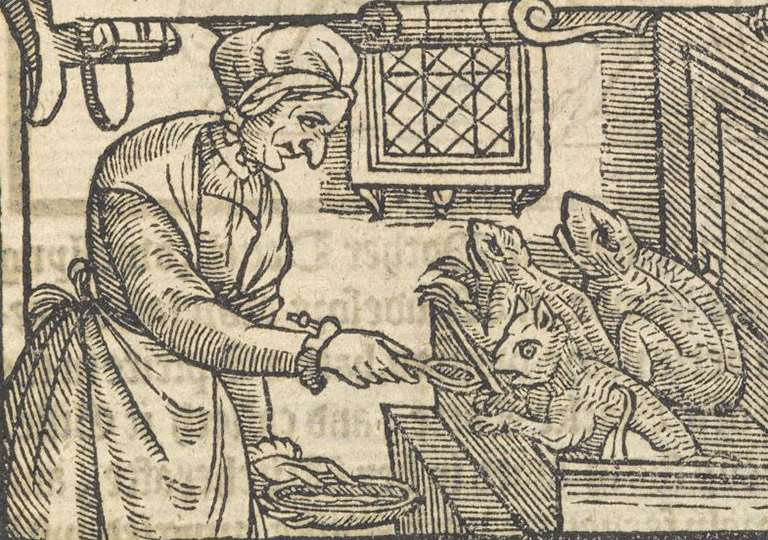
A woodcut from a 1579 pamphlet showing a witch feeding her familiars. From englishheritage.org, courtesy of The British Library

Lolly Willowes by Sylvia Townsend Warner Genre: British classics I read it as a(n): hardback Length: 222 pp  Her Grace’s rating: 4 stars 

This is another classic that I had never read and didn’t know anything about. I picked it to read partly because of that, and I also picked it for my book club when it was my turn because it was the very first book ever chosen by the Book of the Month Club. I thought that was cool. Also, a spinster who decides to move to the countryside and take up witchcraft? Hell, yes, sign me right up!

Laura “Lolly” Willowes is a spinster who has to go live with her brother and his family in London when their father dies. Because god forbid a woman live alone, as Lolly wanted to do. She has an affinity for the countryside and for learning about plants and herbs and animals. But she is not married and has few prospects of becoming so. I think maybe she is on the spectrum, though of course nobody knew about ASD when this book was written. Just the way she is described, though, makes me think that. She was also supremely introverted and didn’t want to go to parties or meet men to marry. Warner writes, “They had seen her at home, where animation brought color into her cheeks and spirit into her bearing. Abroad, and in company, she was not animated. She disliked going out, she seldom attended any but those formal parties at which the attendance of Miss Willowes of Lady Place was an obligatory civility; and she found there little reason for animation” (26). So, no weddings for Lolly.

She was viewed by her family as useful. The useful and doting aunt. The helpful sister. The competent household manager. Nobody ever really saw her for who she was, only for what they wanted her to be. So once her nieces and nephews were grown and no longer needed her, Lolly decided she was going to leave London and move to a town in the countryside called Great Mop, which is an awesome name, like she had wanted to do since her 20s, when she was required to move to London. 

She found a room to rent as a lodger in a nice little town with a nice little lady and her husband. Where Lolly discovered that all the townspeople were witches and served Satan, so she decided to join the fun. But all she ever did with her satan witchy powers was curdle some milk, though. I mean, WHAT? If I had satanic powers (or the Force, or telekinesis, or anything of the sort) I would most definitely not just curdle milk with them. I would be visiting some politicians. “That is not the bill you are voting for. You will vote for this bill. Behave or I shall cast deep rectal itch upon you.” I would also totally make everyone on the road get out of my way. Like Fezzik in The Princess Bride.

Something I noticed throughout the book, or at least until Lolly moved back to the countryside, was that there isn’t a lot of dialogue in it. It was a blur of events and years. Even World War I took like 1 ½ pages, if that. I think Warner did that on purpose. It highlighted how dull and drifting Lolly’s life was, how empty and meaningless she felt. She was just going through the motions. She came alive when she left the city for the country, and it had little to do with giving her soul over to Satan and getting a cat. Though those things helped. Everyone needs a cat, and a dark lord. 

The things Lolly noticed throughout the book were all tied to nature. She bought some fruit and jams from the grocer’s and wondered about the woman who had picked the fruit and made the jams: “A solitary old woman picking fruit in a darkening orchard, rubbing her rough fingertips over the smooth-skinned plums, a lean wiry old woman, standing with upstretched arms among her fruit trees as though she were a tree herself, growing out of the long grass, with arms stretched up like branches” (79). Sounds like some solid life goals to me! 

Since Lolly knows that “nothing is impossible for a single, middle-aged woman with an income of her own” (95), she decides to stop being useful and go do what she wants. She was also 47 when she came to that decision, the same age I am. Yes, girl, rewild yourself! Her coming-of-age is very late, but it comes all the same. She figures out, finally, that she is her own person and that nobody – not her brother or nephews or nieces – could “drive her out, or enslave her spirit any more, nor shake her possession of the place she had chosen. While she lived her solitudes were hers inalienably; she and the kitten, the witch and the familiar, would live on at Great Mop, growing old together, and hearing the owls hoot from the winter trees” (159-160). 

One thing I really loved is that Lolly totally had her own Barbie Speech. It is even longer than the Barbie Speech in the actual Barbie movie, but just as powerful. The Devil did tell her to talk, “not that I may know all your thoughts, but that you may” (216). And she certainly did talk. Her entire speech is still just as relevant today as it was when this book was published 100 years ago. That’s fucking infuriating. If you want to read her whole Lolly Barbie Speech, it is below the cut.

Click to reveal the spoiler

“When I think of witches, I seem to see all over England, all over Europe, women living and growing old, as common as blackberries, and as unregarded. I see them, wives and sisters of respectable men, chapel members, and blacksmiths, and small farmers, and Puritans. In places like Bedfordshire, the sort of country one sees from the train. You know. Well, there they were, there they are, child-rearing, house-keeping, hanging washed dishcloths on currant bushes; and for diversion each other’s silly conversation, and listening to men talking together in the way that men talk and women listen. Quite different to the way women talk, and men listen, if they listen at all. And all the time being thrust further down into dullness when the one thing all women hate is to be thought dull. And on Sunday they put on plain stuff gowns and starched white coverings on their heads and necks – the Puritan ones did – and walked across the fields to chapel, and listened to the sermon. Sin and Grace, and God and the –” (she stopped herself just in time), “and St. Paul. All men’s things, like politics, or mathematics. Nothing for them except subjection and plaiting their hair. And on the way back they listened to more talk. Talk about the sermon, or war, or cock-fighting; and when they got back, there were the potatoes to be cooked for dinner. It sounds very pretty to complain about, but I tell you, that sort of thing settles down on one like a fine dust, and by and by the dust is age, settling down. Settling down! You never die, do you? No doubt that’s far worse, but there is a dreadful kind of dreary immortality about being settled down on by one day after another. And they think how they were young once, and they see new young women, just like what they were, and yet as surprising as if it had never happened before, like trees in spring. But they are like trees towards the end of summer, heavy and dusty, and nobody finds their leaves surprising, or notices them till they fall off. If they could be passive and unnoticed, it wouldn’t matter. But they must be active, and still not noticed. Doing, doing, doing, till mere habit scolds at them like a house wife, and rouses them up – when they might sit in their doorways and think – to be doing still! …

Is it true that you can poke the fire with a stick of dynamite in perfect safety? I used to take my nieces to scientific lectures, and I believe I heard it then. Anyhow, even if it isn’t true of dynamite, it’s true of women. But they know they are dynamite, and long for the concussion that may justify them. Some may get religion, then they’re all right, I expect. But for the others, for so many, what can there be but witchcraft? That strikes them real. Even if other people still find them quite safe and usual, and go on poking with them, they know in their hearts how dangerous, how incalculable, how extraordinary they are. Even if they never do anything with their witchcraft, they know it’s there – ready! Respectable countrywomen keep their grave-clothes in a corner of the chest of drawers, hidden away, and when they want a little comfort they go and look at them, and think that once more, at any rate, they will be worth dressing with care. But the witch keeps her cloak of darkness, her dress embroidered with signs and planets; that’s better worth looking at. And think, Satan, what a compliment you pay her, pursuing her soul, lying in wait for it, following it through all its windings, crafty and patient and secret like a gentleman out killing tigers. Her soul – when no one else would give a look at her body even! And they are all so accustomed, so sure of her! They say: ‘Dear Lolly! What shall we give her for her birthday this year? Perhaps a hot-water bottle. Or what about a nice black lace scarf? Or a new workbox? Her old one is nearly worn out.’ But you say: ‘Come here, my bird! I will give you the dangerous black night to stretch your wings in, and poisonous berries to feed on, and a nest of bones and thorns, perched high up in danger where no one can climb to it.’ That’s why we become witches: to show our scorn of pretending life’s a safe business, to satisfy our passion for adventure. It’s not malice, or wickedness – well, perhaps it is wickedness, for most women love that – but certainly not malice, not wanting to plague cattle and make horrid children spout up pins and – what is it? – ‘blight the genial bed.’ Of course, given the power, one may go in for that sort of thing, either in self-defense, or just out of playfulness. But it’s a poor twopenny house-wifely kind of witchcraft, black magic is, and white magic is no better. One doesn’t become a witch to run around being harmful, or to run around being helpful either, a district visitor on a broomstick. It’s to escape all that – to have a life of one’s own, not an existence doled out to you by others, charitable refuse of their thoughts, so many ounces of stale bread of life a day, the workhouse dietary is scientifically calculated to support life. As for the witches who can only express themselves by pins and bed-blighting, they have been warped into that shape by the dismal lives they’ve led. Think of Miss Carloe! She’s a typical witch, people would say. Really she’s the typical genteel spinster who’s spent herself being useful to people who didn’t want her. If you’d got her younger she’d never be like that” (211-215).

And this quote really sums up not only the book but my entire worldview in a handy lil nutshell: That was one of the advantages of dealing with witches; they do not mind if you are a little odd in your ways, frown if you are late for meals, fret if you are out all night, pry and commiserate when at length you return. Lovely to be with people who prefer their thoughts to yours, lovely to live at your own sweet will, lovely to sleep out all night! (222).

Anyway, I enjoyed this book, and am eager to read more classics that I have never got around to before now. 

Reference:

Warner, Sylvia Townsend. Lolly Willowes. Book of the Month, 2017.

book review · books

A Review of The Castle of Otranto: Insights into the First Gothic Novel

The Castle of Otranto by Horace Walpole Genre: Gothic, classics I read it as a(n): pb Length: 117  Her Grace’s rating: 4 stars

Generally considered to be the very first Gothic story, The Castle of Otranto is centered on Lord Manfred, his wife Hippolyta, his daughter Matilda, and his son’s fiancée Isabella. In the opening scenes, Manfred’s son, Conrad, gets smashed to a pulp by a giant metal helmet that seemed to come flying out of thin air when he was on his way to the church to marry Isabella. This, friends, is foreshadowing! Events proceed from there, with a family curse, a nefarious plot, a hidden nobleman, a random but handsome stranger from another town, and a salty monk bringing the action along with them.

One of the first things I noticed, and was surprised about, was how funny this story was! There are a couple of servants, Jaquez and Diego, who are like Rosencrantz and Guildenstern. The lady’s maid, Bianca, is like all four of those men rolled into one. Or maybe she is channeling her inner Lwaxana Troi. Either way, she’s hilarious. There were several spots where just the writing and narration itself made me laugh out loud as well. Walpole occasionally broke the fourth wall but good.  

There was also a very heavy implication that nobility is a blood- or birthright. Considering that Walpole was himself a nobleman, that makes sense. It was a little on-the-nose in some parts, but I feel like Walpole was making a deliberate commentary about nobility. The idea running throughout the story is that nobility is inherent, not something one can inherit with titles or take through force. We see this played out in full force with Theodore and Manfred. Theo started out as a peasant in the story but through his actions and behaviors, showed that he was more noble than Manfred. When Theo is revealed to actually be a nobleman, it reads like a confirmation of what we already knew more than an actual plot twist. It’s a big contrast to Manfred who has the titles and lands to back up his claim of nobility, but he’s cruel, paranoid, and basically unhinged. Just like a certain tangerine-colored politician. Example of how life imitates art! 

The way the women fit into nobility is also interesting, if frustrating on occasion. Hippolyta is noble by birth and actions. Her nobility is closely tied to her loyalty, humility, and piety. But she goes way overboard with the whole obedience thing and eventually her virtues are tied so closely with submission that they actually become the problem. She is a very virtuous doormat. Matilda is also virtuous and noble, and her compassion bears that out. She forgives and is empathetic even to people who wrong her. But since this is a Proper Gothic Story, there’s a lot of fatalism and in the end, Matilda’s virtues are not enough to save her. 

I think Isabella is the most interesting. She is virtuous and everything a woman was expected to be at that time, but she also has a spine. She tells Manfred to fuck off when he wants to marry her, she always tries to protect other people, she chooses to be noble as well as being noble by birth. She also tries to save herself by getting the hell out of the castle and pelting to the monastery where she can claim sanctuary and avoid Manfred. She and Theo would make a great match, if that were part of the plot. 

Overall, this was a fast and fun read, the first real Gothic story, and definitely one I recommend to anyone who is into that. 

Some of my favorite lines:

“I fear no bad angel, and have offended no good one” (30).

“He tells you he is in love, or unhappy, it is the same thing” (41).

“Since mirth is not your mood, let us be sad” (64). 

“A good Knight cannot go to the grave with more satisfaction than when falling in his vocation: whatever is the will of heaven, I submit” (66).

“He sighed, and retired, but with eyes fixed on the gate, until Matilda, closing it, put an end to an interview, in which the hearts of both had drunk so deeply of a passion, which both now tasted for the first time” (72).

“I can forget injuries, but never benefits” (95).

book review · books · historical fiction

Carmilla: The Sapphic Vampire Classic

Carmilla by J. Sheridan Le Fanu
Genre: horror/Gothic/Classics
I read it as a(n): e-book
Length: 108 pp
Her Grace’s rating: 3.5 stars
2025 Reading Challenge tasks:
Her Grace’s: #10 – A book that was adapted to screen
TND: #9 – Author starting with J; #48 – Under 250 pages
PS: #39 – A classic you never read (I guess technically, I read it in college but I definitely didn’t pay attention to it then)

Predating Stoker’s Dracula by about 25 years, Carmilla is the Gothic Sapphic story you are looking for. Though by no means the oldest vampire story (that honor falls to Sekhmet from Ancient Egypt, circa 1500 BCE), Le Fanu’s novella highlights many of the now-familiar tropes within the vampire canon. Mysterious, highly attractive stranger? Check. Dark and spooky castle/forest/chateau/moors setting? Check. Weirdly incestuous vibes? Shuddercheck! Homoerotic fixation? Double check! 

Le Fanu opens his story with the narrator (her name is Laura but we don’t know that until about halfway through the story) reminiscing about a past experience that has haunted – literally and figuratively – her life ever since. The story is told in snapshots of memory as though written in a letter or diary format. Or as if we are sitting with Laura and she is telling the story to us. In any case, the format of the storytelling adds to the atmospheric setting overall. 

Laura is a young girl when she first meets Carmilla, or so it is implied. She seems to meet her in a dream, though as we read, it seems more likely that Carmilla found her in real life and had somehow marked her as her own. When they meet several years later, the intensity of the connection between Laura and Carmilla reads, at times, like long-lost friends as much as lovers. And there were a LOT of Sapphic vibes throughout this short book. Laura finds herself struck dumb more than once at Carmilla’s beauty, though savvy modern folks know that’s just what vampires do. They charm us. See? 

But seriously, that guy could charm me all he wants. 

Anyway. Carmilla’s victims that we know about are all young women or children who are young enough to still be fairly androgynous. That part is super creepy. Also creepy are the incestuous vibes when the General talks about his ward, who he views as his daughter, and who was unfortunately one of Carmilla’s victims. That’s a common vampire trope, so it isn’t out of the ordinary here, except when we consider that this is one of the earlier vampire stories we have and it was written in the Victorian Era, that period of supremely repressed sexual desire and general moral chucklefuckery. 

I decided to read Carmilla because I am reviewing a retelling of it for the Historical Novels Society and wanted a refresher. I’ll post that review once it goes live on the HNS site. For now, I am glad that I reread Carmilla; it is easy enough reading, once you get used to the very long sentences, and short enough to read in one sitting. 

bookish things · books · lists · Reading Challenges

2025 Reading Challenge: Discover New Books and Reignite Your Love for Reading

Welcome to our 2nd annual reading challenge! I can’t believe it is 2025. That sounds like a science fiction setting. Wasn’t 12 Monkeys set in 2025? Or maybe it was Mad Max. I dunno. Probably there were a few. Anyway. Here are some new prompts for 2025. 

Did you complete a reading challenge in 2024, whether it was this one or a different one? What are the best books you read as a result? 

The Prompts:

  1. Set in a non-patriarchal society, because FUCK the patriarchy
  2. Set in or about nature
  3. Reread a favorite childhood book 
  4. A nonfiction by a woman about a STEM field 
  5. By or about a person struggling with a mental illness
  6. Recommended by a family member
  7. A middle grade book
  8. A nonfiction about an -ology
  9. Passes the Bechdel Test
  10. A book that was adapted to the screen
  11. A book that is a novelization of a TV show or movie
  12. A book that won an award in 2023
  13. A book with a yellow spine
  14. Flowers on the cover
  15. A retelling
  16. A banned or frequently challenged book
  17. Explores a culture that is different from yours
  18. Features snakes in some way (2025 is the Year of the Snake in Chinese zodiac)
  19. Set in a utopian society, because reality is dystopian enough, thank you
  20. Related to medicine
  21. About witches or nuns
  22. About geek culture
  23. Takes place over one 24-hour period
  24. Three or more point-of-view characters
  25. Bonus challenge 1: Complete the challenge using books only by people who identify as women
  26. Bonus challenge 2: Use the prompts to complete the A-Z reading challenge

book review · books · fantasy · random · sci-fi

A random list of books based on an IG challenge

Greetings, fellow book nerds! I hope your summer is off to a good start and that you have many adventures to look forward to. I am looking forward to a couple short trips and, of course, making some kind of dent in my TBR. Which is hard because I seem to be in a reading slump and I haven’t read very much lately. 

Sometimes when I’m in a reading rut, I will try reading a genre that is completely opposite of the book I just finished. That often helps me get back on track. That doesn’t always work, though, and then I have to try something else. This time, I went to Instagram and dug around in the #bookstagramchallenges hashtags. I also follow the bookstagramchallenges channel to see a variety of book and reading challenges. Sometimes those are great for kicking me out of a reading rut. Plus, they’re just fun! Also, they’re like lists! I love lists. I love getting to cross things off of them. 

For this, I absolutely cherry-picked the prompts I wanted to use from a few different challenges. I went with an all science fiction and fantasy theme for these, since I’m in a big sci-fi mood. I also recognize that there are entirely too many books listed here. I had a hard time picking just one for some of the questions! 

  1. Last, current, and next reads: The Buried Giant by Kazuo Ishiguro; The Big Book of Science Fiction, edited by Ann and Jeff Vandermeer (print) and Seveneves by Neal Stephenson (audio); The Sound of Stars by Alechia Dow. 
  2. Favorite SFF series: Sci-fi – The Expanse series by James S.A. Corey; Fantasy – The Dragonriders of Pern by Anne McCaffrey.
  3. Side characters you wanted to see more of: Kamazotz, the Death Bat from Gods of Jade and Shadow by Silvia Moreno-Garcia. I guess it isn’t really a proper sidekick, but I would have a ball flapping around on a death bat while on epic quests. 
  4. Quick reads: All Systems Red by Martha Wells. We need more Muderbot in our lives!
  5. Sad reads: Never Let Me Go by Kazuo Ishiguro; “There Will Come Soft Rains” by Ray Bradbury; and several of the stories in Alexander Weinstein’s excellent collection Children of the New World, in particular the titular short story as well as “Saying Goodbye to Yang.” 
  6. Funny reads: Job: A Comedy of Justice by Robert A. Heinlein (possibly the most hilarious book I’ve ever read); Redshirts by John Scalzi; How to Live Safely in a Science Fictional Universe by Charles Yu. 
  7. Weapon on the cover: The Rising of the Moon by Flynn Connolly.
  8. Favorite mentor: Ged from The Earthsea trilogy by Ursula K. Le Guin. 
  9. Books and drinks: Split and Scumble, both from Terry Pratchett’s Discworld series! And, although these aren’t from books, honorable sci-fi drink mentions are: Green (AKA Aldebaran whisky) from the episode “Relics” from Star Trek TNG and A Warrior’s Drink (prune juice eww!) from the TNG episode “Yesterday’s Enterprise.”
  10. Unpopular opinions: Only Dune is good in the Dune series. The first rule of reading the Dune series is that you should only bother with Dune, not the rest of the books.
  11. The chosen one: Bastian Bux from The Neverending Story by Michael Ende.
  12. Revenge plotlines: Ancillary Justice by Ann Leckie.
  13. Favorite creatures: Mother Thing in Have Space Suit, Will Travel by Robert A. Heinlein; the Tendu, the frog-like beings in The Color of Distance by Amy Thomson; and the hen with a demon in her in Nettle and Bone by T. Kingfisher. 
  14. Loyal and noble: Robbie the robot, the titular character in Isaac Asimov’s short story “Robbie.”
  15. Book that I would recommend to new SFF readers: The Long Way to a Small, Angry Planet by Becky Chambers. For fantasy, I’d go with Spinning Silver by Naomi Novak or Daughter of the Forest by Juliet Marillier.
  16. Maps: There’s an awesome map in Cyteen by C.J. Cherryh. Also, I know I mentioned her several times in this post,  but the Dragonriders of Pern series by Anne McCaffrey has some excellent maps as well. I spent hours as a child poring over those, visualizing the various weyrs and halls of the planet. 
  17. Favorite anthology: The Paper Menagerie by Ken Liu; Black Thorn, White Rose, edited by Ellen Datlow and Terri Windling (any anthology edited by either of these women are excellent); and Mirrorshades, edited by Bruce Sterling. Click on the clicky-link! It takes you to a free, online version of the Mirrorshades anthology, which is awesome since it’s almost impossible to track down a copy anywhere. 
  18. Book that takes place during winter: City in the Middle of the Night by Charlie Jane Anders. Well, it isn’t winter so much as the night side of a tidally locked planet. Cold counts as winter, right? 
  19. High-flying characters: Sirantha Jax in Grimspace by Ann Aguirre.
  20. Favorite villain: Sydney from The Prey of Gods by Nicky Drayden; The Gentleman with the Thistle-Down Hair in Jonathan Strange and Mr. Norrell by Susanna Clarke.
  21. Cool animal companions who aren’t main characters: The Wolf in The Witch’s Boy by Kelly Barnhill; Solovey, the horse in The Bear and the Nightingale by Katherine Arden.
  22. Hopeful characters: Keyne from Sistersong by Lucy Holland.
  23. Rogues and scoundrels: Trouble and Her Friends by Melissa Scott.
  24. Ocean or beach setting: The Mountain Under the Sea by Ray Nayler.
  25. Bounty hunters or assassins: Warcross by Marie Lu.
  26. Droids and robots: Starship Grifters by Robert Kroese.
  27. Purple book stack: Star Trek TNG: Q-In-Law by Peter David; Sword Stone Table, eds. Swapna Krishna and Jenn Northington; Flames of the Dark Crystal by J.M. Lee; Prickle Moon by Juliet Marillier; and Smoke by Dan Vyleta. 
  28. Monthly book haul: Print books – The Rex Nihilo series by Robert Kroese, Star Trek Discovery: Somewhere to Belong by Dayton Ward, Loki’s Ring by Stina Leicht, The Blighted Stars by Megan O’Keefe. Audiobooks: Bacchanal by Veronica G. Henry, Anathem by Neal Stephenson, The Municipalists by Seth Fried, The Fold by Peter Cline, and the Themis Files trilogy by Sylvain Neuvel.
  29. Monthly wrap-up: I’ll be working my way through The Big Book of Science Fiction for quite a while. I haven’t been reading as much as usual. Also, Seveneves will take me forever to listen to because I can usually only listen when I’m driving. WFH and my kid’s summer break means that I hardly drive anywhere. So I expect that my reading stats for the month won’t be too much bigger than those two books plus The Buried Giant that I read for book club. 
book review · bookish things · books

Book Pairing: The Island of Doctor Moreau and The Daughter of Doctor Moreau

The Island of Dr. Moreau by H.G. Wells/ The Daughter of Doctor Moreau by Silvia Moreno-Garcia

Genre: sci-fi/fantasy

I read it as a(n): audiobook (Dr. Moreau)/ hardback (Daughter of Dr. Moreau)

Narrator: Jason Isaacs

Length: 4:21:00 hours/ 306 pp

Her Grace’s rating: 4 out of 5 stars /3 out of 5 stars
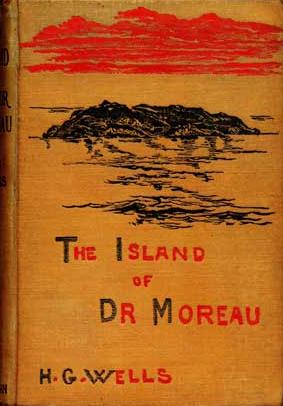
islandofdrmoreau original cover

The Island of Doctor Moreau is a fun, quick story that encapsulates much of Victorian thinking in one spot. The plot is straightforward – Edward Prendick is the survivor of a shipwreck who is rescued by a fairly ridiculous shit and then unceremoniously dumped off on a random island. On the island are strange creatures and only two other people, a gentleman called Montgomery and Dr. Moreau, an exiled London biologist who turns his considerable scientific skills toward vivisection. Prendick learns that the strange creatures he sees are a result of Moreau’s twisted experiments to turn animals into thinking creatures, or into hybrids with other unrelated species. 

Wells tackled an absolute shitload of themes in this little story including medical ethics, the superiority of humanity, evolution, identity, and religion. Obviously I haven’t read every book ever but I think Wells was among the earliest to write about the effects of trauma on the human psyche. Of course, he didn’t write it in those terms. We didn’t have the term PTSD officially until its inclusion in the 1980 3rd edition of the Diagnostic and Statistical Manual of Mental Disorders (DSM). Trauma and PTSD as we now understand them still seem to appear in literature dating at least as far back as whenever the Book of Job 7:14 was written. It says, “You scare me with dreams and terrify me with visions.” Prendick certainly seemed to have what we now call PTSD. I reckon being shipwrecked, floating around alone at sea, and then getting rescued by a drunken lunatic can do that to a person.

Prendick expressed abject horror at Moreau’s “House of Pain” where he conducts his experiments. The Island of Doctor Moreau was partly a denunciation of the practice of vivisection which was in use during the Victorian Era. The concept of the mad scientist also had its genesis in Victorian literature and was based largely on the idea that science would destroy society. Because religion certainly doesn’t do that all on its own at ALLLLL…Right. Wells, a determined atheist, helps to explain why it is ridiculous to think that science is bad through his rendition of Moreau, who in some ways is almost Spock-like in his adherence to logic. Spock, though, would recoil at the idea of vivisection or any other kind of animal cruelty. It is not logical to bring unnecessary pain and suffering to other beings. Anyway, Moreau’s character highlights the Victorian fears about science. I’m not really sure what to make of the fact that Moreau’s “Beast People” revert to wild animals once the doctor is dead and no longer able to continue their treatments. Nature won out over science and religion both, which shows that human-made social constructs like religion are weak, and even science is subject to the laws of nature. I could talk for days about possible interpretations of this, so I’ll just say that it posed a very interesting thought experiment for me while I was figuring out what to write for this post.

All of that, of course, is a lead-in to discuss what it means to be human and to be civilized. Plenty of smelling salts were needed when Darwin’s book was published, saying that humans evolved out of animals. Darwinism, it was feared, would mean the death of religion and society and family and it’s the end of the world don’t teach me new things wE’rE aLl GoInG tO dIe! That clearly didn’t happen, though the death of religion would solve a very great number of lingering socio-political problems. This story shows the many ways in which civilization and civility are just veneers and that the line between human and beast is incredibly thin. The Beast People adhere to The Law that Moreau creates for them and they seem to really embrace it for most of the story. It is the humans who are beastly in their actions and hypocrisies. Manners, it seems, are there to hide our animal nature and make it less obvious that humans are really just more upright apes. 

It brings to light also the ways in which religion is used to oppress and dominate people. Anyone who has studied even a minute of history can see that, but Wells takes it and runs with it. He uses religion to hammer the idea of obedience and avoiding their animal instincts into the Beast People. The Law they follow is very much a sort of fucked up list of Commandments: 

Not to go on all-fours; that is the Law. Are we not men?
Not to suck up Drink; that is the Law. Are we not men?
Not to eat Fish or Flesh; that is the Law. Are we not men?
Not to claw the Bark of Trees; that is the Law. Are we not men?
Not to chase other Men; that is the Law. Are we not men?

And yet, religion is the excuse for suppressing their instincts in the first place, making them conform to the image of humanity against their nature. Moreau is very much a god-figure on the island and Prendick becomes so by the end as well. That shift shows how it is possible for one to initially be tolerant of and sympathetic towards a group of people, as Prendick was towards the Beast People, and then get a little taste of religion or power and then it all goes to shit.

In a nutshell, there was just so much Victorian angst in this book. It was delicious. What was also delicious was Jason Isaacs’ narration. He does different voices superbly and has impeccable timing. I am not sure that it is easy at all to make Wells funny, but Isaacs managed it in more than one spot. Plus, his voice. It is dead sexy. I would listen to him read the phone book if that’s all there was. 
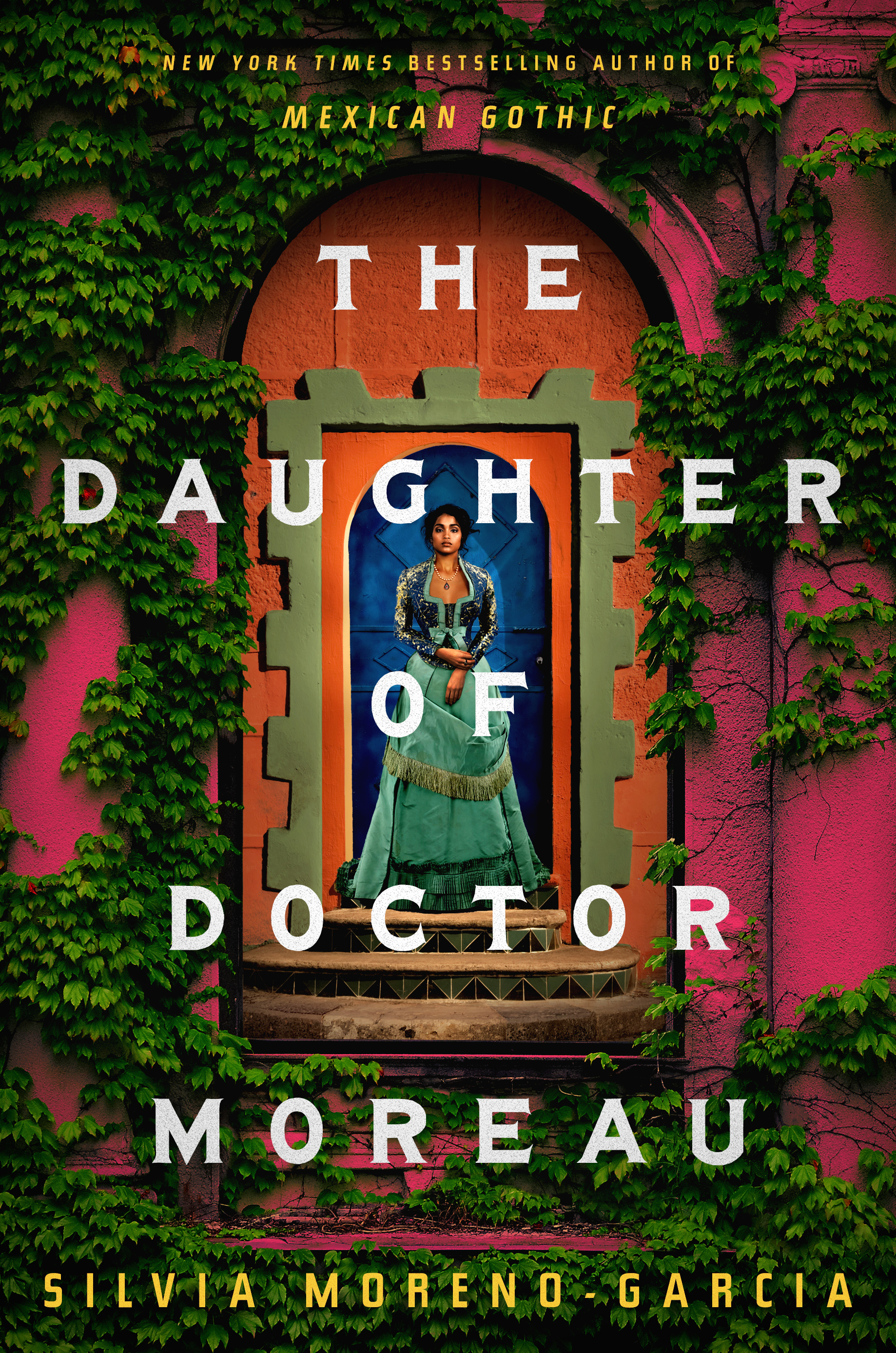
daughter of dr moreau

All this leads me into The Daughter of Doctor Moreau. This novel by Silvia Moreno-Garcia is a lovely retelling of Wells’s classic. The author shifts the setting from an unnamed island in the South Pacific to the Yucatan Peninsula of Mexico. It’s a dual POV story, alternating chapters between Carlota, the titular character, and Montgomery Laughton, Dr. Moreau’s assistant who is finally given a last name. 

There are some intriguing changes to this novel, naturally, mainly in shifting the setting to 19th century Mexico. It is set against the backdrop of the Caste War of the Yucatan, which informs some of the social mores and political discussions in Moreno-Garcia’s novel, though the war itself is not a main focus. Including it, though, lays the groundwork for the conflicts in the story: the rich hacendados wanted to hire laborers to work their haciendas and help to guard them against the indigenous Mayan groups who were warring with them, the Mexican, European-descended, or mixed race people who held higher social status than the Indigenous peoples. This is where the author explores the issues of colonization and social class, themes that she explores in almost all of her works. For more information, visit Silvia Moreno-Gacia’s webpage for the novel, which has more more discussion about this point. The Caste War is not a historical event I know anything about, other than that it happened and lasted for like 50 years. That alone shows the sheer stronghold colonialism had on many parts of the world, and still does today. But using it as her novel’s backdrop makes this book richer, feel even more real, than it would have done if it were more of a fantasy setting. 

The themes of identity and what it means to be human are both carried over from Wells’s original story. In Moreno-Garcia’s hands, these take on new depths and meaning. The Beast People here are referred to as hybrids, which seems like a kinder way to call them. They are still as monstrous as the ones in Wells’s story, but that monstrosity isn’t as visceral as in his. Montgomery, upon seeing the hybrids, flips the fuck out but not because of any kind of inherent racism against a group of people. Rather, his temporary separation from sanity was because of his horror at the results of meddling with nature in what he thinks of as unethical ways. He’s not wrong. He is, though, horrified at what he thinks has been done to humans. It seems to matter less to him that the doctor is trying to elevate animals. It begs the question of why it makes a difference. Suffering is suffering, whether it is human or animal. 

I had a sense that Montgomery wouldn’t object much if Moreau was trying to find a cure for diseases with his hybrids. Instead, though, he is trying to make more laborers for the hacendados, in particular Mr. Lizalde, the man who funds Moreau’s research. Oh hi, worker exploitation! Again, I don’t think it should matter if the hybrid are people with animal parts or animals with people parts, but the fact is that it addresses a variety of thoughts on social and cultural identity. People are tribal apes with access to nukes, so it isn’t all that surprising that we can Other any group there is, regardless of their origin.

The experiments in this novel could be read in terms of current medical research. Plenty of people still are up in arms against stem cell research, for example, or animal testing of medical treatments. We can clone things, grow organs in petri dishes, transplant organs, keep micro-preemies alive. All of that because of experimentation. In Moreno-Garcia’s book, it is implied that Moreau’s experiments are the only reason Carlota is still alive, as he made use of some of his hybrid experiments to create a cure for her blood disease. So experiments aren’t always a bad thing despite what some might think. 

I like the way the author plays with identity and what makes us human throughout the novel. Montgomery, after his initial freak-out, quickly becomes attached to the hybrids and treats them no differently than he does anyone else. Probably better than he treats most others, frankly. So does Carlota, who has grown up with two hybrids in particular as close friends, almost as siblings. To her, they are no different than any other person. 

Carlota herself also brings a discussion on what it means to be a woman, particularly in 19th century Mexico. It is a travesty that most of the issues she faces in the book are still issues women today have to deal with. Moreau coddles her like she is still an infant. I suppose that, at least, is understandable since she is his child. A lot of parents have a hard time seeing their children as adults. That might be even more true when the child was so sick in the early years of their lives, as Carlota was. She is seen as an object or possession by Eduardo Lizalde, the son of the rich man funding Moreau’s research. She has limited choices, is expected to marry into a rich family so her father can continue his work, and is generally treated as inferior because she’s a woman. 

I just really love how the lines between human and animal are so thoroughly blurred in this novel. That line is a lot fuzzier than it was in Wells’s original story. In that, it was very clear that the Beast People were not considered human, that they were decidedly inferior. That is not the case in Moreno-Garcia’s novel. She has the hybrids living mostly alongside the Moreaus, working with them in the house or the gardens, treated generally as longtime friends or family. By the end of it, it is very easy to forget that the hybrids aren’t actually human, whereas the Lizaldes and their men are the barbarous ones. 

All in all, I really enjoyed this book pairing. I love old sci-fi because we get to see what people used to think and what came true, or even if some things have changed at all. Moreno-Garcia’s books have all been a delight to read, though I haven’t read them all yet. But they make me think about a lot of different topics, which is always a sign of a good book for me.

book review · books

Catch-Up Round: There There and Running with Sherman

There There by Tommy Orange

Genre: contemporary literature/ Indigenous

I read it as a(n): paperback

Length: 294 pp

Her Grace’s rating: 4 out of 5 stars

This novel highlights the lives of 12 people and how they intersect at the Big Oakland Powwow. There are people whose lives have been ruined by alcohol, drugs, the murder or suicide of loved ones, and somehow they still manage to keep going. There is an underlying discussion about generational trauma, especially among the Native tribes. There is also vast systemic racism, which impacts people in so many ways, sometimes in ways no one even is aware of. 

This was a short but powerful book. It was a fast read as well, but not an easy one. It is hard to read about the suffering of others and to know how very privileged you are by comparison. 

I always love reading about a culture I’m not that familiar with. Even though I live in the Southwest and there are several different Native American tribes in the area, I don’t know anyone personally who is Native. My exposure to actual Native culture is mostly confined to the occasional powwow I go to and reading books written by Native authors. 

Definitely recommended!

Running with Sherman by Christopher McDougall

Genre: nonfiction

I read it as a(n): audiobook

Length: 12:13:03

Her Grace’s rating: 2.5 out of 5 stars

Christopher McDougall and his wife, Mika, are tired of living in Philly so they buy a place in Amish country and basically now have a hobby farm. One of the neighbors tells McDougall that one of the members of his church needs help and that he’s an animal hoarder. McDougall goes with his friend to the hoarder’s farm and they rescue a little donkey who was severely ill, standing on horrifically overgrown hooves in filthy straw in a tiny stall. McDougall and his friends and family rally to take care of the donkey, who they name Sherman, and eventually he gets better. Then McDougall learns about donkey racing. 

This was not exactly what I thought it would be. I heard about it in an article I read somewhere recently and I thought it was about the Born to Run guy teaching the donkey how to go running with him, like you take your dog running with you. I had visions of a fuzzy donkey trotting alongside McDougall on the road and it is something I would desperately love to see. But no. Apparently there is a whole community of donkey racers who, from what it sounds like, allow their donkeys to drag them up hills and mountains in some kind of hard core trail running crossed with Mountain Man stuff. Much like running a marathon, it doesn’t sound at all fun. 

I thought this book was only OK, partly because I misunderstood the premise of running with Sherman and partly because it kind of dragged in a lot of places. There wasn’t as much about Sherman as I would have liked; instead, there was a lot about the people involved, the training involved, the stories of the people involved, and I just didn’t care that much about them. I stuck through to the end because I did want to see how Sherman did in his big donkey race in Colorado, and parts of it were funny, but overall I thought it was just mediocre.

book review · books

The Family Upstairs

The Family Upstairs by Lisa Jewell
Genre: mystery
I read it as a(n): hardback
Length: 338 pp
Her Grace’s rating: 3 out of 5 stars

Libby Jones has always known she was adopted. But upon her 25th birthday, she discovers she is apparently the sole remaining inheritor to a very large home in London’s posh Chelsea neighborhood. She also learns that her birth parents hadn’t really died in a car crash; they committed suicide in a cult. As Libby discovers more and more about her family’s dark history, with the help of a friendly investigative journalist, she finds herself enmeshed in a web of lies and deceit that could alter her entire life.

This was a fun piece of brain candy. It’s the second I’ve read by Lisa Jewell and so far I’ve enjoyed them both. I didn’t think there was a ton of character development but that’s ok. It’s a plot driven story and super in depth characters with a lot of growth throughout the book isn’t necessary for this to be a good read.

I’ve always been fascinated by cults except the cult of personality surrounding a certain orange former president. I know there are plenty of smart people who get sucked into cults so it’s weird to me how otherwise intelligent people can buy into shit like that. The cult in this story was small – just one disgusting but charismatic man and a few couples and small families – but the dynamics and deterioration from normal into crazy was horrifying and interesting all the same. Cults, man. They’re fucking weird.

Anyway, I liked the book, I’d read more by this author, and it was a nice diversion for a long weekend.

book review · books · lists

Bigass Catch-Up Round

I have been extremely lazy about blogging and book reviews lately. I am not sure why, but I am going to try to be better. My goal has always been to do a review for every book I read even if not one person reads my blog, so I’ve clearly failed at that recently. But I am also way too lazy to do a full review for… let me count… 19 different books. So I’mma rush through! Yay, slipshod blogging!

Dreamsnake by Vonda McIntyre

Genre: fantasy

Length: 9:41:00

Her Grace’s rating: 4 out of 5 stars

A fantasy set on a ruined Earth, Snake is a healer who, through the ignorance of others, loses one of her most effective and rare instruments of healing. This is the story of her quest to find another. The narrator was a little meh for me but despite that, this ended up on my “top books of 2022” list. 

The Cybernetic Tea Shop by Meredith Katz

Genre: sci-fi

Length: 112 pp

Her Grace’s rating: 3.5 out of 5 stars

Restless wanderer meets outdated but sentient robot and the two strike up an unlikely friendship. Lots of themes to unpack, including LGBT/ace relationships, hate crimes, and what it means to be human.

Children of Men by PD James

Genre: sci-fi

Length: 241 pp

Her Grace’s rating: 2 out of 5 stars

The youngest person on the planet is now in their 20s because no one can have babies anymore. Aside from the idea that not having so many freaking babies would be a good idea right now, this was one of the most boring books I ever actually completed. 
Continue reading “Bigass Catch-Up Round”