Black Lily is the tale of Zenobia and Lily. Zenobia was born into poverty, the daughter of an impoverished young girl who became the mistress of a shipping mogul. It is possible he was Greek or Middle Eastern but if it ever said, I missed that part. He was surprised when Zenobia was born blonde. Lily is a black woman who was brought to London from the Caribbean on a sugar and slave ship as a toy to a rich lord. She was a kept woman for a rich merchant who ended up being connected to Zenobia in a surprising way. The lives of these women continue to intertwine in intricate, often horrific, ways, and they both have to learn how to navigate society to her best advantage when her value is entirely decided by the men who control them. Lily ends up being a hidden driving force throughout Zenobia’s entire adult life in ways she never even knows. In turn, Zenobia unwittingly is a savior of sorts to Lily. Another woman, Lily’s maidservant, Agatha, is yet another link between the three women, forging deeper connections and bonds that are strong enough to keep the secrets they all hide from society and the men around them. Continue reading “Black Lily”→
One of my favorite authors, still sadly an obscure name, is Christy Nicholas. I had the good fortune to review a few of her books forDiscovering Diamonds. A few of her other books are also reviewed on DDRevs by my fellow reviewers which I didn’t read, but they are worth checking out for sure. One reason I enjoy Nicholas’s books so much is because she imbues them with so much feminine power. They are accurate within the scope of their timeframe, yet the women in each one are strong, bold, as feminist as possible. She pushes the boundaries of creating feminist characters and isn’t shy to use mythical characters, such as The Morrigan, to be more feminist. I fucking love it.
Below are a couple reviews, submitted as a guest post by Cathy Smith, who is also a reviewer at DDRevs. My own reviews of Nicholas’s books that have already been posted can be found both onDDRevsas well as on this blog.
Legacy of Hunger, book one of Christy Nicholas’s Druid’s Brooch Series, takes readers on an unforgettable quest from the shores of 1846 America to the distressed Irish countryside of Valentina McDowell’s ancestors. Driven by her mother’s legends and a desire to find an old family brooch, Valentina finds early on in her quest that she will discover friendship and come to realize the betrayal of enemies. She will see beauty and face tragedy. Guided by her mystical visions, Valentina’s journey is filled with joy and sorrow as each step of the quest prepares her for what awaits at the end.
Nicholas does an excellent job developing the story by painting detailed descriptions of the characters themselves, their past, and their present. Readers also feel the intensity of the characters’ personalities through the descriptive images of the ship’s voyage across the sea and of the Irish villages and countryside. Nicholas stays true to the history of 19th century Ireland. She uses this history, as well as the legends from the ancients, to provide readers with a real-world sense of Valentina’s adventures.
As I experienced Valentina’s journey to find the answers to the mysteries that haunted her from childhood, I thought of a time when my own father told me the story of his grandmother who came to America as an indentured servant during the An Gorta Mór – The Great Hunger. He told the story of how she met my great-grandfather while working off her servitude in a well-known Colorado bar. As I read Nicholas’ story, I realized that the legacy of hunger is a legacy that affects generations of people even into the 21st century.
Although Nicholas provides closure in the last chapter and epilogue, the happily or not so happily ever after resolutions of the individual character stories left me with deeper questions. It is my hope to see future novels that develop some of these characters’ journeys.
Legacy of Hunger is the story of the Irish people who suffered during the Great Hunger. It is the story of how Valentina McDowell journeys to find her strength, courage, and inner soul by overcoming the challenges to complete a quest that reveals her destiny.
Nicholas also has a standalone novel that I reviewed for DDRevs as well, Call of the Morrigu. The full review is here, as I forgot to post it to my own blog before now.
In late 1700s Ireland, rebellion against oppressive English rule was on the rise. In one quiet corner, however, society was still relatively peaceful. Theodosia “Dosey” Latimer lives with her grandfather in their family’s country estate of Strokestown. On the property, they discover a mysterious cave filled with ancient carvings and decide to try to excavate it. In the process, they accidentally awaken The Morrigan. Yes, that Morrigan. The mythical Irish war goddess. Now it is up to Dosey and her grandfather to teach Morrigan how to behave like a proper 18th century lady – and keep her out of the rebellion coming their way.
This was, simply put, a remarkably fun read. Author Christy Nicholas weaves in mythology and history smoothly throughout the narrative. Readers are given glimpses of Celtic myth alongside bits of information about the 1798 Irish Rebellion, led by Wolfe Tone. Parts of the story were surprisingly funny as well. Morrigan learning 18th century table manners is exactly what you would hope for.
The parts of the book that I most appreciated were its many feminist elements. Feminism was a necessary component of the plot for Dosey to be able to grow as a character and a woman. She also was a product of her time and none of her actions were unbelievable or out of place in the story. However, it’s hard for me not to cheer and fall in love with characters who make comments like “I do not understand the shame your society has for the body. It is a glorious thing, full of life and pleasure” or “You are power. You are woman. All woman are power.” Here, Morrigan was reflecting what was understood to be the typical pre-Christian culture of ancient Ireland (or at least the author’s interpretation of it), but it remains highly relevant in today’s society where women’s rights are still challenged and threatened by the patriarchy. Having a mythical character speak the words makes them no less relevant, and allows a certain safe distance from which we can examine our modern morals and values. I loved it.
My only criticism is that I felt some of the secondary characters could have been developed a little more. I wanted to get to know Nan better, and Cillian and Marcus. They were fine, but they felt like they were placeholders or extras just playing a necessary part in a formula. However, they were not totally flat or one-dimensional, either, and they served their respective purposes well enough.
Overall, I loved this book and look forward to reading more by this author. Strongly recommended for anyone who is interested in Irish mythology, history, or the influence of women on either subject.
In this ninth installation in the GoddessGirls series, Pandora opens that bloody box. The Titans, Epimetheus and Prometheus, are new students at Mount Olympus Academy and they are rather outcasts for the role the Titans played in the war between the Titans and Olympians. Spoiler alert: the Titans lost. Epimetheus has a box with him that makes odd noises and, of course, Pandora is intensely curious about it. When the godboys decide to play a game of keep-away with the box, it falls into Pandora’s hands without anyone noticing and it opens. Almost as if it were fated to do so. Huh. The box contained ten bubbles, which all floated out except one. Pandora seems to be the only one able to see the bubbles, so she is also the only one able to observe the effects of the bubbles bumping into people. So when Athena, for example, is bubble-bumped, Pandora hears it whisper “Ditz” and then Athena turns stupid. Similarly, another bubble bumps Aphrodite and whispers “rude,” and Aphrodite proceeds to become a vulgar and disgusting example of everyone one ought not to do, ever. Pandora doesn’t know whether or not to trust the Titans with this information, because she thinks they may have come to MOA to help take over and pave the way for a new Titan war against the Olympians. She has to decide who to trust and figure out how to reverse the effects of the bubbles before all hope is lost. See what I did there?
As with all the previous books in this series, Pandora the Curious provides an excellent way to begin teaching younger readers about the Classical myths. This one also provided a good example of troubleshooting and problem solving as well as making sure to give people second chances and not to judge based on a group but rather on an individual basis. Pandora learns a lot about herself and how curiosity can be both good and bad, depending on how it is used. She also learns that just because a person is a Titan and fought against the Olympians doesn’t make them a bad person and she should always take an individual approach to judging someone. This was a good way to talk about a variety of social issues with my daughter. We see in the news a lot of racism and sweeping generalizations made about entire groups of people. So we had a chat about how any group of people can include bad people, but that we should always try to get to know the person in front of us and not judge them or assume they are bad just because someone else like them did a bad thing. That’s no way to live.
Overall, the series has piqued my daughter’s interest in mythology, all kinds, not just Greco-Roman. At the end of the day, even if some of the stuff is silly or trite, I can live with that because of the interest it’s sparked in her for better things.
Blood and Ink by DK Marley is the tale of Christopher “Kit” Marlowe, Renaissance poet and playwright, near contemporary of Shakespeare. In Marley’s novel, our playwright is an unwanted child who is effectively sold to Sir Francis Walsingham, Queen Elizabeth’s spymaster, who noticed the boy’s intelligence when he visited a local school. Placing the young Marlowe under the mentorship of poet and spy, Sir Phillip Sydney, Marlowe continues his education as well as learns how to be a spy for Walsingham. As the years progress, Marlowe convinces Elizabeth to support his plays on-stage in exchange for his services to her. However, when factions more loyal to money and personal advancement than to the Queen step in, Marlowe makes a sacrifice that alters everything he has understood about the world, his writing, and himself.
Christopher Marlowe. I love that the portrait has “Quod me nutrit me destruit” in the upper left. That would make a cool tattoo…
This was an interesting novel and can potentially be classified as alternate history, depending on one’s perspective. It takes one of the more popular theories about Shakespeare, which is that Marlowe was actually the author of his works, and runs with it in a way that is believable. There are theories that Marlowe didn’t actually die at the inn in Deptford and that his death was, in fact, staged so that he could go either into hiding, exile, or continue his spy work for Walsingham. The author poses some of the more common and interesting questions in her note at the end of the book, including why Shakespeare, one of the greatest playwrights of his day, was buried in a common churchyard rather than in a glamorous cemetery; why the Queen provided her own coroner to preside over the inquest of Marlowe’s death when it wasn’t in her purview to do so; why we never heard anything at all about Shakespeare until after Marlowe’s death; the education of Shakespeare and Marlowe (Marlowe had a degree from Cambridge, Shakespeare was relatively uneducated); and why was Shakespeare’s grave dug 12 feet deep instead of only the usual 6 feet? Marley takes pains to answer these questions and more in the novel and does so quite thoroughly. She also is careful to note that she herself is a Shakespearean, at least until there is solid proof that someone else was the author. But it makes for a good story.
William Shakespeare
Various themes were at play throughout the novel, ranging from nature vs. nurture to loyalty to ambition to betrayal. The ways in which all these themes intertwine and influence one another are fascinating and very finely wrought, particularly the ways Marlowe had to balance his work as a spy with his calling as a playwright. The mix of blood and ink throughout the narrative is a stark reminder that his dreams come at a steep price, one that may be too much to bear. Overall, I think some of the characters were a tad one-dimensional, though Marlowe himself and the major secondary characters like Walsingham or Queen Elizabeth are complex figures. Shakespeare was the next most well-fleshed character besides Marlowe, which makes sense, though his motives were only apparent near the end of the novel. The last quarter or so of the book felt unnecessarily long and dragged down the pacing somewhat. However, the attention to historical detail was excellent and made for an immersive read. I particularly enjoyed all the bits and pieces of plays and poems scattered throughout the narrative. It was fun to see words that we automatically credit to Shakespeare coming from Marlowe’s pen or lips in this story, and it definitely reminds me that it’s time to reread the plays again. It has been too long. I look forward to more from this author in the future.
Picking up right where The Girl in the Tower left off, Vasilisa Petrovna finds herself the focus of the rage of Moscow’s people after inadvertently burning down a large part of the city. Accused of witchcraft, with the mob’s hatred fanned by the insane monk Konstantin, Vasya manages to escape into the realm of Midnight, a place where all midnights of the past, present, and future exist, but not before making a sacrifice that absolutely gutted me. In Midnight, Vasya meets many new characters, some friendly, others not so much. One of the best was the little mushroom spirit who made it a point to tell everyone that he was the first to support her quest. Baba Yaga also makes an important appearance. Vasya also learns that she has some surprising new abilities and the reasons for them, which draw the attention of the winter king Morozko. His twin brother, Medved, is bent on creating chaos in the spirit world and world of men, and Vasya and Morozko have to find a way to stop him. As if that all weren’t enough for her to worry about, Vasya also has to navigate the politics of the secular world to help save Rus from an invading horde of Tatars.
There isn’t really a good way to summarize this book. It is a satisfying end to the trilogy and I loved it, though I do think it is my least favorite of the three. I am not sure if it is simply because I was listening to it on audio (as I did the other two as well) and, because of work and personal schedules and things, I had a lot of days where I wasn’t able to listen at all, or not with my full attention. It felt a little disjointed in places, but that could have been me. In any case, Arden’s writing remains as lush and evocative as ever. I think I have to buy physical copies of this trilogy and eyeball read them all now, I loved this series that much.
Winter of the Witch dealt closely with destiny, identity, and loyalty, and how those influence people and their interactions. Just so many factors come into play – love, lust, fear, hate – and each one leaves its mark on Vasya. She learns hard lessons and makes some horrific sacrifices. She finds the only kind of love she could tolerate. She finds the place she belongs. She’s grown from a wild little girl into a strong and capable woman, with her own skills and secrets and pain and joys. Any woman would be proud to have a daughter such as her.
Favorite quotes:
“There are no monsters in the world, and no saints. Only infinite shades woven into the same tapestry, light and dark.”
“Yesterday she saved your life, slew a wicked magician, set fire to Moscow and then saved it all in a single night. Do you think she will consent to disappear, for the price of a dowry – for any price?’’
Image courtesy of Pixabay. Maybe it’s Solovey?
“I was asleep but those two woke me up. I missed you.”
“Who is to say, in the end, that the three guardians of Russia are not a witch, a frost-demon, and a chaos-spirit? I find it fitting.”
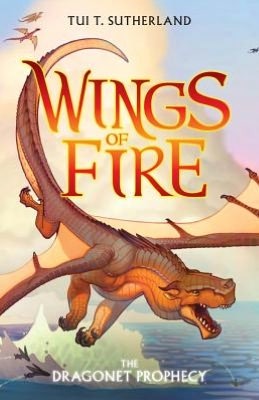
Wings of Fire: The Dragonet Prophecy by Tui T. Sutherland
I read it as a: paperback
Source: my daughter’s collection
Length: 336 pp
Publisher: Scholastic Press
Year: 2012
This world, at war for decades, is ruled by dragons. The land is broken and bleeding and all are suffering because of the wars between the seven various groups of dragons. A prophecy states that after 20 years of war, a group of dragonets, born under special circumstances, will come to unite the dragons and bring peace. These dragonets – Clay, Glory, Tsunami, Starflight, and Sunny – have been taken from their native homes, hatched together in a hidden cave under the mountains, and raised together against their will by dragons working for a group called the Talons of Peace. Their purpose is to raise these dragonets to fulfill the prophecy. The problem is, the dragonets have ideas of their own, don’t really want to be part of a prophecy, and just want to find their families and be normal dragons. And there are other factions who are not interested in bringing the war to an end.
This was a relatively fast read, or would have been if I wasn’t reading it as a bedtime story with my daughter, just a chapter or two per night. She loves this series, but Pern, it is not. It’s super violent for a middle grade book, which I don’t really like. It did provide for some decent discussion about why prophecies are illogical and false, a good exercise in using her critical thinking while still reading a fun story. It also shows how even the most bitter of enemies can learn to get along if you get to know each other, or are raised together and can overlook each other’s differences, i.e., nobody is born a racist. But in general, I didn’t find the actual story to be all that compelling or the writing that good. It was fine for what it was, which is a story my 8 year old enjoys, though I wish she enjoyed something less violent. I am determined to get her addicted to the Dragonriders of Pern. It WILL happen!
Humans have scattered across the galaxy and on the planet Zarathustra, they are mining for sunstones, incredibly rare gemstones. Jack Holloway, independent surveyor and contractor for ZaraCorp, has just discovered a giant seam of sunstones when he accidentally blew the face off a cliff at a survey site. Because of issues with his contract and legal maneuvering, it is unclear whether Holloway or ZaraCorp owns the seam, though the law is leaning in Holloway’s favor. ZaraCorp lawyers and owners are now out to bribe the hell out of Holloway to get him to play nice with them, even though they are willing to do anything to get their hands on that seam, including sabotaging his vehicles and putting his life in danger. If the legal machinations weren’t complicated enough, Holloway encounters adorable, fuzzy creatures on his property. Promptly naming the the Fuzzys, he contacts an old friend of his, who drops the bomb that the Fuzzys may actually be sentient beings. If true, it would mean that ZaraCorp and Holloway himself are invaders on a sovereign planet.
See, here’s the thing that I love so much about good sci-fi. You can read it on its surface, and it’s just a fun story. Fuzzy Nation is a fun story. It has action and creatures and bad guys and good guys (well, they’re all right) and it’s set on not!Earth and all the things the tick the boxes for fun sci-fi. But if you read even a little more deeply, this is also about so much more than just a fun story. There’s corporate greed, environmentalism, racism, and colonialism. Those are just the big ones. I’m sure there are dozens of other issues I could pick out, legalities or the way evidence is handled, for example. But this book tackles corporate greed head on. It shows how so often, giant corporations only seek to increase their own profits and don’t care a thing about the people or communities they disrupt or destroy. Money is the only thing that matters to them. The people in charge see the effects of their actions and decisions and make the decisions anyway, opting for more money instead of morality.
Environmentalism ties in to that, because in their desire to make more and more money, ZaraCorp twisted itself into Gordian knots trying to get around or find loopholes in environmental laws so it could continue to extract the gems. Their nod to keeping the environment healthy is to plant a few puny saplings when they leave a site. To some people, that might seem adequate, rather than leaving a place alone and not mining for a thing that isn’t a necessary commodity in the first place.
The major issues come when the Fuzzys show up. What determines sentience? What makes someone a person? Holloway recognized their intelligence right away, and his friend Isabelle realized they were likely sentient as soon as she saw them. But of course, ZaraCorp and its lawyers and LEOs argued otherwise. They don’t look, act, or, most importantly, talk like humans, so how could they possibly be people? History is riddled with examples of colonization being justified because the invaders were bringing civilization to the savages, who were of course not recognized as fully human because they didn’t look, act, or talk the same way as the invaders did who brought “civilization” with them. What a load of bullshit. But it is the course so much history has taken, and once humans make it to the stars, I can easily see the same thing happening with smaller, less advanced races like the Fuzzys. It will be the Long Walk or the Middle Passage all over again, because humans basically suck.
As a long-time Scalzi fan, I thought this was a terrific read. One of his best? Maybe not. But fun, certainly, and covering a lot of relevant topics. I never read Little Fuzzy, so I can’t compare the two, though in the intro, Scalzi said something about how that book was a product of its time and he wanted to update it. Yay, I guess. I get a little tired of rebooting old things, but since I never read the original, this was new to me so I’m not worn out on it. Whatever, I liked it and thought it was fun and thought-provoking, which is how I like my sci-fi anyway.
**This review will very much have all the spoilers. Consider yourselves warned.**
In Girls Burn Brighter, two young women form a strong friendship through the harshest adversities. Poornima is the daughter of a sari weaver. Her family is fairly poor but they have enough to eat and to hire Savitha to help with weaving after Poornima’s mother dies. Savitha is from a poor family, so poor they have to resort to digging through the landfill for food. When the two women meet, they form a deep bond, one of those once in a lifetime friendships. When Poornima’s father begins arranging her marriage, Savitha encourages her to hold out for a man who is young and kind with a bunch of good sisters. A match is finally made and Poornima’s marriage is set. Then, a cruel act drives Savitha away on the eve of Poornima’s marriage and each woman embarks on a new part of life, alone. Eventually, another horrific act drives Poornima away from her marriage and off to seek Savitha, a journey that takes her from her home village to Mumbai to Dubai and eventually to Seattle.
The title itself made me nervous when I first started reading and began to understand more about the plot (I rarely read more than the blurb when I pick a book, and I never read reviews before I read a book, so I stay spoiler-free). I had worried that someone was going to get burnt to death because she’s a girl. However, I liked that it served more as a discussion on the strength of women even through adversity. After Poornima’s husband and MIL burnt her with oil, she realized she was supposed to fade into obscurity and invisibility. Instead, her inner light burnt brighter and she was more her own person, and managed to carve out a life for herself, even if it wasn’t what she might have wanted. It was her own and she took no shit from anyone. Savitha had a brighter light at first, which was utterly extinguished by her rape and subsequent capture by the brothel owners, but she eventually remembered it and saved herself.
I think that the relationship each woman had with her own father was a major factor in how each handled her circumstances. Savitha had a good and loving relationship with her father, and when she encountered abuse and horrors, she was unprepared to deal with it. Conversely, Poornima hated her father, who was an abusive drunk, and when horrible things happened to her, she adapted and survived and did what she needed to in order to get out. She never seemed surprised or terribly hurt when people were awful, which is terrible in itself. It seems like a fucked up way of learning how to deal with real life, like some kind of Grey’s Anatomy version of parenting – preparation through emotional, mental, and physical abuse and neglect.
Girls Burn Brighter was a shocking novel to read on multiple levels. Strangely, I was startled when I realized it was set in the current time. There were references to some years, one of them being 2001, and I was simply amazed, I assume because of my ignorance about the culture, that it was in a modern setting. It just felt like something that would have happened in an earlier time, the crushing poverty, the cruelty, effectively selling your children into slavery. Things like that aren’t supposed to happen now. But of course they do, which is a central theme of the novel. The way Poornima and Savitha were handled in this novel was really eye-opening for me, not because I am unaware that women deal with things like domestic abuse, rape, or sex trafficking every day, but because the story put a face to these issues. Why else read but to gain a deeper understanding, empathy, and compassion for people whose situations in life are totally incomprehensible to us? I can’t fathom being drugged and taken to a brothel, being forcibly addicted to heroine, then forced to go through withdrawal, then sold into sex trafficking. But it happens. I can’t imagine living like Poornima or Savitha, having an arranged marriage, having a man who is so insecure with his masculinity that he feels it necessary to scar me for life by holding me down and pouring boiling oil on my face. But it happens. Actually, the conflict between Poornima and her husband, when she suggests she isn’t barren but perhaps he is, reminds me of the story Margaret Atwood tells about her male friend and the group of women: She asked him why men are afraid of women and he says it’s because men are afraid women will laugh at them. She asked a group of women why they are afraid of men and they said it’s because they’re afraid the men will kill them. There was so much of that woven throughout this narrative, of small, insecure men feeling threatened by women and so they hurt them to keep them under control or in terror.
Mohan might have been a somewhat sympathetic character since I think he didn’t want to be a part of his father’s “empire.” But since he didn’t actually do anything to stop it, and helped to bring girls to America to further the empire, I found him simply to be pathetic rather than sympathetic. He was a revolting figure, who oddly added rather a lot to the story. He was conflicted about what was happening, but too weak to stand up and do what was right. He wanted to study literature but was too weak to say so, and so studied it in secret on his own time. His small kindnesses to the women made him that much worse, because at least no one expected his brother or father to be kind at all.
The unrelenting brutality Poornima and Savitha endured really underscored how this is just the way it is for so many people, especially women, in so many parts of the world. It wasn’t so gratuitous that it was overdone, but it was an exhausting read. The end didn’t help, and I can see that it might be deeply unsatisfying to some readers. Personally, I thought it was perfect, because how could that particular scene be written ideally? I don’t think it can be, but the promise of it has to be enough. I do think Savitha was opening the door, and I do think it was ultimately a hopeful ending. The story at the beginning, with the old woman tending the trees that she called her daughters, seems to me to be foreshadowing of the end, that the women are strong enough to endure anything. Same with the owl’s story and how, if two people want to be together, they’ll find a way to do it. Poornima’s and Savitha’s friendship transcends anything they had endured, and for them not to find each other is not to be considered. I do choose to be hopeful at the end of the story.
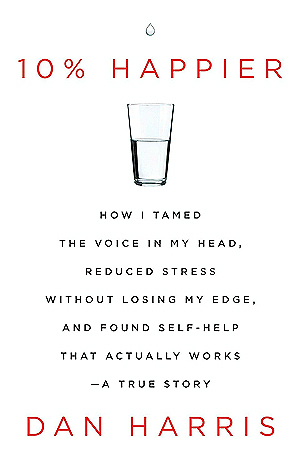
Dan Harris, the anchorman for Good Morning America, had a panic attack on national live TV and decided then and there that he might need to consider making some changes. Perhaps not doing cocaine anymore was one change. Learning about mindfulness and meditation was another. However, like me, Harris is a super skeptic and he gave meditation a hard side-eye. Eventually, he came around and realized that it is actually a thing that works, and which has scientific studies to back it up, and was able to get his shit together.
This was an ok book. I don’t know that I find Harris an interesting enough person in and of himself to have had a burning desire to listen to this. I got it when it was an Audible daily deal and it was the next in my queue. He really is kind of a dick, though good on him for trying not to be a dick so much anymore. I do really like his concept of how meditation makes him just 10% happier. I think that’s a really important point to make. Meditation (or medication, or religion, or shopping, or whatever you want) really isn’t a cure-all for anything in life, and it’s up to each individual how we choose to respond to a thing. You can’t expect something to make you purely happy, nor should you go looking for such a thing. To do so will surely make you 100% miserable. I think that’s something a lot of folks still need to figure out.
Overall, this was an all right book. I’m glad I had the time to listen to it mostly in one go because I didn’t think it was that interesting and I might have DNF’d it if I had had to listen to it over several days.
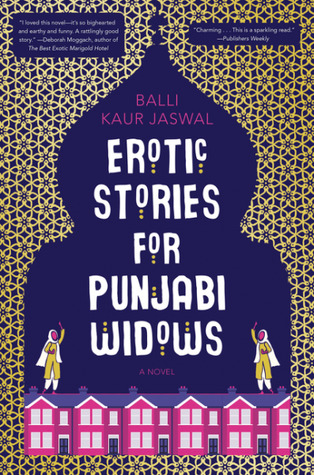
Erotic Stories for Punjabi Widows by Balli Kaur Jaswal
I read it as a: paperback
Source: my own collection
Length: 295 pp
Publisher: William Morrow
Year: 2017
London-born Nikki utterly rejects her Punjabi culture’s traditional views, especially arranged marriage. So she is naturally horrified when her older sister, Mindi, actually decides she wants an arranged marriage and asks Nikki to post a marriage profile on the temple’s announcements board for her. Nikki does, grudgingly, and while there, discovers a notice for a job teaching writing at the local Punjabi community center. She takes the job and quickly learns it is not a creative writing class, as the flier had implied, but a basic adult literacy class given to mostly older widows who had never been educated in their native language, let alone in English. Understandably, they are uninterested in learning to read and write using the texts for kindergarteners, which is all that is available to them. What they are interested in is storytelling. Specifically, telling romantic and generally filthy dirty erotic stories. So Nikki uses that to help empower the women, many of whom had never been encouraged to speak up or felt loved in their marriages, going against her culture and customs to do so. At the same time, she inadvertently stumbles across some evidence from the death of a young woman that may prove she hadn’t died in the way everyone had been told, placing Nikki and the widows in danger with the local gang of self-appointed “morality police.”
I loved every word of this novel. I thought it was so interesting to see the differences in the younger and older generations in this very traditional culture. I know next to nothing about Punjabi traditions, and so it was kind of shocking to me to know that arranged marriages are still a thing for many of them even living in Western countries. I am a bit confused by some things that I read when getting ready to write this review as compared to what was written in this book. For example, multiple sites indicate that Sikhs value gender equality, and yet it seems that some of them, at least the very traditional people, get bent if a girl is not a virgin when she gets married. Honor killings were a thing in this book. Of course, wayward sons didn’t seem to get anything worse than ignored/cut off from family, but girls get murdered. So I don’t get that at all. Not sure if that’s just typical religious hypocrisy or patriarchal bullshit or what, but there it is. Then there were The Brothers, the self-appointed bunch of moral police/thugs who try to reign in the widows from telling their stories. Word to the wise, little boys: don’t fuck with the grannies. It will not go well for you.
Aside from me being confused by religious contradictions and hypocrisy, which should come as a surprise to absolutely no one who knows me even a little bit, I just loved this story. I think it was interesting that Nikki got so involved with the widows. At first, it could seem like it was self-serving on her part, that she simply wanted a job, but I think she quickly realized that she could make a difference to the women and to the community as a whole. Also, when she tells the widows that some people don’t even know about Southall, the London Punjabi community, and that they should change that, I do think it is because she sees a lot of potential in the women themselves, and has tapped into her own latent desire to do social justice, even if she herself wasn’t aware of it yet. The widows are able to help her, and themselves, accomplish something new and daring in part because of their almost invisible role in the community. As one of the women stated, no one ever listens to old women talking because it’s like white noise. They used their low position in society to effect change, because no one knew what they were up to until it was too late to stop them or contain it. That’s fucking phenomenal.
This invisibility also shows just how much younger generations disregard the lives and experiences of their elders. No one ever thinks about how our parents or grandparents have lives and individual identities that have nothing to do with us. They have and had desires and fantasies just the same as our own generation, whatever generation that may be. Sometimes, I suppose that realization comes as a surprise to people. Having the widows write their fantasies is such a delightful way to show the young’uns that they were not, in fact, the first ones to discover stuff to do in the bedroom, or anywhere else.
Overall, I just loved this book and definitely recommend it. It would make a great book club selection.

 Black Lily by Philippa Stockley


 .
. 
 .
. 
 . Y
. Y
 .
. 
 .
. 

 Pandora the Curious


 Wings of Fire: The Dragonet Prophecy
  Fuzzy Nation

 10% Happier
  Erotic Stories for Punjabi Widows
  Her Grace's Library