book review · books · historical fiction

Mrs. Zant and the Ghost

28262527Mrs. Zant and the Ghost by Wilkie Collins

I read it as an: audiobook

Narrator: Gillian Anderson

Source: my own collection

Length: 01:37:00

Publisher: Audible Studios

Year: 2015

Mrs. Zant and the Ghost starts off with a chance encounter in Kensington Park between Mrs Zant and Mr Rayburn and his daughter. Mrs Zant appears to be mad to young Lucy Rayburn and she is initially frightened by her. When Mr Rayburn approaches her, he realizes she might perhaps be ill and takes it upon himself to find where she lives so he might make sure she is being cared for. He becomes swept up in Mrs Zant’s drama, trapped in the clutches of her brother in law, who took over her care after his brother died just weeks after marrying Mrs Zant. She is convinced, and rightfully so, that the ghost of her husband is guiding her and protecting her. Ultimately, Mr Rayburn and Mrs Zant uncover the truth about her visions and her BIL’s motives.

A good old fashioned Gothic ghost story, told with the lovely, overblown language I expect from Victorian literature. I have to say that I do not understand Victorian mannerisms; Mr Rayburn would be a stalker today if he had followed some random woman home, no matter what his motives. To modern sensibilities, he seems pushy and nosy, but of course times change and we can’t judge another time by our own standards. Maybe it was better then since he is obviously concerned for her and acts upon it. Today, people ignore each other or hurt each other.

For sure, the best part was Gillian Anderson narrating this. I cheerfully admit I only got this because she was the narrator, but I enjoyed the story anyway. Her voice adds to the overall otherworldliness of the book’s tone. I don’t know if that’s a lingering effect of her being Scully or if it’s just because she has a nice voice but it worked. It is also fun to hear her natural British accent since she has been classified as bi-dialectical. I used to think first of Scully when I think of her, but more and more I’m thinking of her as DSI Stella Gibson than Dana Scully.

Overall, this was an interesting and fast read. Listen. Whatever. I was in the mood for a Victorian story and this scratched that itch quite nicely.

book review · books

Coraline

13634292Coraline by Neil Gaiman

I read it as an: audiobook

Narrator: Neil Gaiman

Source: public library, though I own a paperback copy that I flipped through as he read it to me

Length: 3:36:00

Publisher: Harper Audio

Year: 2003

Coraline Jones’s new flat has 13 doors that open and close. The 14th door is locked, and when Coraline’s mother uses the key to it, it opens onto a brick wall. She assumes it would have adjoined the empty flat next door but when Coraline goes exploring, she finds a hallway to another flat mirroring her own. In it are another mother and another father and all the same things Coraline is familiar with, only they are altered in a fundamental way. Everything is darker and more sinister. Her other mother wants to keep Coraline with her forever. To force Coraline to stay, the other mother steals Coraline’s real parents and hides them. Coraline, with the help of a very special cat, engages the other mother in a battle of wits to find the souls of three children she encountered while exploring the other world in exchange for her and her parents’ freedom.

I’ve read this many times before but don’t think I’ve ever actually reviewed it. Huh. Naturally, I loved it. In true Gaiman style, Coraline is a study in darkness and strangeness and creepy-crawly feelings that the things you thought you knew are just a little bit off somehow. It is just scary enough to be horrifying to younger readers but delightful to adults. Button eyes ought to be terrifying to anyone. I love the themes of liminal space, which Gaiman always includes in his writing and which he handles so beautifully. It is also an interesting thought exercise on what happens if you can get different parents, which is surely a thought that every child has had at one point or other. Who hasn’t thought at least once that they wish they could have parents that let them have everything they wanted? Coraline’s other mother tried it, though darkly, and Coraline herself came to the conclusion that nobody actually wants everything they want, they want to want everything they want. There’s a big difference, and it is an important lesson to learn the distinction between the two.

It was funny because I chose to listen to it on audiobook this time and one night around midnight, my phone randomly turned itself on and started playing this book. Normally, it would have scared the bejesus out of me to hear a voice talking in the middle of the night. However, I recognized Neil’s voice and it didn’t scare me at all. I thought it was lovely. Instead, it worked itself into my dreams and I had an anxiety dream because I was in the middle of replacing my floors and my house was a mess and my furniture was all over the house and covered in tile dust and my overriding worry was, “Where am I going to have Neil Gaiman sit?? I don’t have anywhere for him to sit that’s clean!” And then I woke up and realized that he wasn’t actually at my house, though that would have made my entire life, it was just my phone reading to me in the middle of the night in his voice.

book review · books

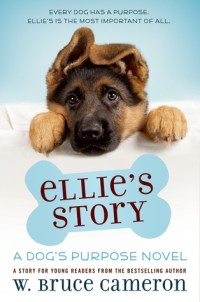
Ellie’s Story

22238177Ellie’s Story by W. Bruce Cameron

I read it as a: hardback

Source: my daughter’s collection

Length: 208 pp

Publisher: Starscape

Year: 2015

My daughter and I read books together at bedtime, and we take turns picking which book to read. Last time, I chose The Hobbit; this was the one she chose to read. It is a cute story for little kids about a search and rescue dog named, surprisingly, Ellie. The narrative takes us from the time she’s a pup with her littermates to her first trainer, Jakob, learning how to do her job, and on to her second and presumably final trainer, Maya. Jakob teaches Ellie how to be a search and rescue dog, what it means to Work, and Find, and Show in relation to lost people. When Jakob is shot in the line of duty and retires, Maya takes Ellie and becomes her new partner. They work together for many years until an injury forces the police department to retire Ellie herself. Rather than not having any job for her dog to do, Maya convinces the PD to let her use Ellie as an outreach program dog, teaching the community about the important work search and rescue dogs do every day.

My daughter ate this book up. It took a while to get through it since we only read it together at night before bed, but it was sufficient to keep her engaged. It is definitely written for much younger or less skilled readers; I mostly found the stories of the rescues to be repetitive and a little boring after a while, but the basic story was good, and since it is for children, that’s just fine.

One thing I particularly liked was that there was room for discussion with my daughter about some of the bad things that can happen. When Ellie and Maya went to the site of an earthquake to search for people, there were a lot of casualties. It was not a gory or very upsetting scene, likely because the narrator is Ellie herself and she didn’t quite understand that the people she found were dead. She only thought they smelled odd and they weren’t happy to be found like normal, so that was upsetting to her. But I thought it was important to include a scenario in which not everyone was found, or wasn’t found alive. That’s real life and I think it’s important not to shelter children from that. We talked about that a little bit so that she could understand that sometimes bad things happen, but I also took that opportunity to remind her about Mr Rogers and the helpers.

Something I think was not at all well done was the way body image was addressed with regard to Maya. It is written in a way that makes her sound inadequate compared to her male counterparts who are also out of shape. She is described as being unable to keep up with Ellie or with other officers out in the field, huffing and puffing and often in pain, whereas the men are rarely described as such. It was particularly gross when her mother told her now that she got certified to be Ellie’s handler, she needs to eat, making it sound as though she was starving herself to lose weight. Not a good message to send to young children. The only good thing about it at all was showing how hard Maya worked to get in shape, but even that has some drawbacks in that it highlights how her body was somehow imperfect or not up to par the way it was. It was obviously good enough to be a patrol officer, so she can’t have been too terribly out of shape to begin with given that there are physical fitness requirements for that position, but it made her sound like she belonged on My 600-Pound Life or something. This could have been handled better.

Overall, Ellie’s Story was a cute book to read together with my kid, and it offered some decent material for discussion with her. She had read it before on her own, which is fine, though I am glad I could read it with her so we could talk about some of the things I felt were important to address.

book review · books · historical fiction · Uncategorized

Update Round: Dodging and Burning; Finding the Way

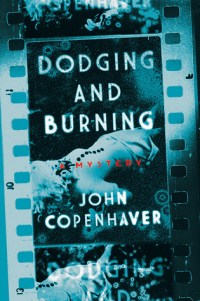
35004938Dodging and Burning by John Copenhaver

I read it as an: ARC

Source: HNS

Length: 365 pp

Publisher: Pegasus Crime

Year: 2018

Copenhaver’s debut novel gives readers a gorgeous, critical look at the LGBTQ community in post-WWII society, revolving around a murder. In Royal Oak, VA, three friends – Jay Greenwood, Bunny Prescott, and Ceola Bliss – spend the summer of 1945 trying to solve the apparent murder of a young woman who Jay photographed. As they investigate, it becomes clear that there is layer upon layer of deceit involving Jay, the woman in the photo, and Ceola’s brother, who had gone missing in action in the Pacific theater two years earlier. As events unfold, Jay’s wartime traumas surface, Ceola struggles to understand the beloved brother she thought she knew, and Bunny sets into motion a chain of reactions that will have ramifications for them all for decades.

Dodging and Burning has some absolutely lovely writing, filled with deep imagery and complex, living characters. The society is richly depicted, from the salt of the earth working poor to the upper middle class people of the town to the gay and lesbian people in the DC underground. The way the LGBTQ community was portrayed in the novel mirrors social mores of the time, which makes for some really intense and upsetting scenes. There is a lot of excellent, much-needed social commentary woven throughout. One character speaks for the LGBTQ community when he says, “If you’re afraid for long enough, you grow numb to it” (289). Another character later on summed up much of mainstream society when he said, “You’ve been blind from the beginning. When you look at Cee or me or anyone, all you see is what you want” (312). The final few pages were an absolute gutpunch, one which was vital. This is a book that must be read and discussed with as many people as possible. 

38993264

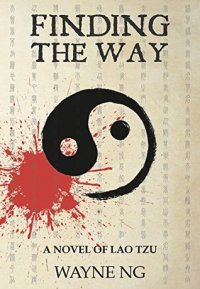
Finding the Way by Wayne Ng

I read it as an: egalley

Source: HNS/Netgalley

Length: 324 pp

Publisher: Earnshaw Books

Year: 2018

Written mostly in flashback, Ng’s lyrical debut is the story of Lao Tzu’s vibrant and turbulent life. Readers initially meet Lao Tzu as an old man riding into a military camp on the back of a water buffalo. The captain of the camp is at first understandably untrusting, for spies take all manner of guises in his world. But he soon realizes that the old man is who he claims to be – the renowned scholar Lao Tzu – and he quickly commands for a scribe to come and record his tale of escape from the royal Zhou palace and remarkable life story. Lao Tzu and the captain’s tales are closely linked, to the captain’s astonishment, proving to him that The Way has many wandering paths that diverge and intersect but all have a larger purpose in life.

Ng’s novel is a superbly written tale, full of intrigue and drama and rich with cultural narrative. All of the main characters are vivid and multidimensional, and even the secondary characters are distinct and memorable. I think some of the tertiary characters get a little lost, but even they are not just faceless beings in a crowd.

The writing itself is lovely. There are so many turns of phrase throughout this novel that are simply pretty that I took quite a long time to read this, just because I spent a lot of time highlighting things as I read. The philosophical discussions embedded within are welcome food for thought, and I learned a lot about Taoism through reading this. It piqued my interest to learn more, which I think is the highest praise I can give to any book, that it inspired me to go learn something new because of it. 

book review · books · historical fiction · Medievalism

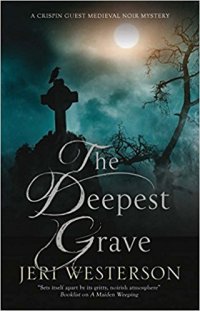
The Deepest Grave

51x-w2n9cgl-_sx318_bo1204203200_The Deepest Grave by Jeri Westerson

I read it as a: galley

Source: Netgalley

Length: 224 pp

Publisher: Severn House

Year: 2018

In this latest installment of Westerson’s Crispin Guest medieval noir series, the timeline skips ahead about a year from the previous novel, Season of Blood. The Deepest Grave opens (haha, see what I did there?) with one Father Bulthius coming to Crispin, seeking answers to the mystery of revenants – corpses rising from the grave and walking at night – in the small church of St. Modwen. Naturally, Crispin is skeptical but he takes the case. While he is out, a person from his past comes calling for aid. Philippa Walcote, Crispin’s former lover, comes begging for help, for her young son stands accused of murdering a neighboring fabric merchant and competitor to his father’s business. Crispin is reluctant to become entrenched with Philippa again in any way, but as his apprentice Jack Tucker reminds him, a client is a client, and the Walcotes are wealthy clients indeed. Crispin and Jack embark on a quest to solve the case of wandering corpses, save a child from the hangman’s noose, and figure out why the relic of St. Modwen herself keeps following Crispin around, to his supreme consternation. Continue reading “The Deepest Grave”

book review · books

#FearlessWomen Blog Tour: Starless by Jacqueline Carey Excerpt, Review, and Giveaway

FRIENDS!! YOU GUYS! Jacqueline Carey has a new stand-alone fantasy out, titled Starless, which was released this past Tuesday. Starless is part of #FearlessWomen, Tor Books’ celebration of sci-fi/fantasy books by women. How much more awesome do you want it? More? Ok, then. Ask and ye shall receive.

First of all, I get to be part of a blog tour for this book, which is rad. Readers get to participate in a giveaway for a Starless swag bag for playing, which one lucky person will get to snag! The swag bag will include: a Starless quote postcard, hawk feather, #FearlessWomen sticker, #FearlessWomen pen, and star confetti! Just leave me a comment below, and the random.org gods will decide who wins. I’ll leave the giveaway open until June 18, 2018.

Don’t forget to check out the other awesome blogs that participated in this blog tour as well:

Monday, June 11    Fantasy Cafe

Tuesday, June 12    Utopia State of Mind

Tuesday, June 12    If the book will be too difficult

Wednesday, June 13  Bibliophibian

Thursday, June 14   Between Dreams and Reality

About Starless

In the world of STARLESS the gods have been cast down to earth by Zar the Sun for their rebellion. Born during a solar eclipse, Khai has trained his whole life in the arts of killing and stealth by a warrior sect to prepare him to serve as protector of the princess Zariya. But when the dark god Miasmus rises Khai and Zariya join an unlikely crew of prophecy-seekers on a journey that will take them farther beneath the starless skies than anyone can imagine.

In addition to Carey’s standard incandescent prose, rich world-building, and complex characters, which are just expected for any of her works, Starless has a wonderful focus on gender norms and self-identity. I think these issues are highly relevant, charged topics in today’s society, and couching them in a fantasy setting allows a certain distance from which readers can perhaps more comfortably analyze them.

I loved the structure of the book as well. While I love a good series as much as the next person, sometimes I just want one book that tells one story and that doesn’t leave on a cliffhanger or with a never-ending story arc that just goes on ad infinitum. That Starless is a stand-alone novel is a huge plus in my opinion. I also loved that it was set up in three main parts, which should also appeal to those of us who love a good trilogy as well. Each section has its own main theme and feels, to me, almost like its own separate novel. The first section focuses on Khai and his training. The middle section sees Khai leave the desert and go to the palace, meeting Zariya for the first time. It is also where gender identity comes more into focus, as well as themes of friendship and companionship. The final section continues the discussion of companionship while traveling the world with the prophecy-hunters, seeing various peoples and places. I actually liked this part the best because it reminded me of travel writing and travel narratives I’ve read, though I don’t think the deep bonds between the characters was quite as well detailed here.

Additionally, and I have NO idea if this was intentional on Carey’s part or not, but this book felt like a quasi-Middle Eastern setting, which I really appreciated. It ties in to my earlier comment about how sci-fi/fantasy is ideal for discussing social issues. Placing the novel in a setting reminiscent of the Middle East might create a situation that causes readers to become more empathetic to real life events. And isn’t gaining empathy and learning more about the human condition really what good literature is all about?

I think Jacqueline Carey has written just about a perfect fantasy novel for our time. I have loved her writing since Kushiel’s Dart, and Starless is no disappointment. The vivid landscapes, detailed world, and rich characters combine to immerse me in a completely new world, something I intensely crave when reading fantasy. You will not be sorry if you just run out and buy it forthwith!

Read an excerpt of Chapter Three below. Continue reading “#FearlessWomen Blog Tour: Starless by Jacqueline Carey Excerpt, Review, and Giveaway”

bookish things · books · historical fiction · Medievalism

Llywelyn the Great

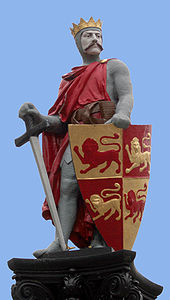
170px-llywelynfawr

Yesterday was the 776th anniversary of the death of Llywelyn ab Iorwerth, also known as Llywelyn the Great. Born in 1173, he began to take control of North Wales when he was about 14 years old. By the time he was about 28, he was effectively the ruler of all Wales. He unified Wales, historically a nation often divided by war and clan fighting, and held the land in peace. Even during the difficult years when he was at odds with King John, Llywelyn eventually managed to regain lands he lost, and he held the respect of his retainers and the nobles. He is one of only two Welsh kings to be given the title Fawr, “the Great.”

As a lover of historical fiction, in particular, medieval historical fiction, some of my favorite novels feature Llywelyn Fawr or his contemporaries. The best novels bring his time to life in the most vivid ways, transport me to his castles at Dolwyddelan, on his campaign trail, at his feast table. It takes a special kind of talent to make history come alive and not turn it into a dry, boring textbook. I’ve ready plenty of historical fiction novels that read like straight history textbooks, and it was awful. All I could think of while reading those was that I hoped other readers didn’t pick those particular books up as their first exposure to the time period. Otherwise, I just couldn’t see how they would ever be intrigued enough to want to learn more about it, and that makes me sad. For those who have not yet discovered good historical fiction based on Llywelyn ab Iorwerth, below are some of the very best.

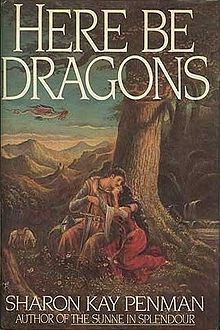
220px-herebedragons

Here Be Dragons by Sharon Kay Penman. Rich not only in (highly accurate) historical detail, but also in the complexities of medieval politics, kingship, and interpersonal relationships, Here Be Dragons is my favorite novel of medieval Wales. One of my favorite scenes in the whole book was the wedding night of Llywelyn and Joanna, the daughter of King John. She was young and scared, and Llywelyn, wanting to earn her trust, offered to delay consummating their wedding and opted instead to cut his arm so that she could show a bloodstained sheet to those wanting proof of her viginity.

61ws0ldb2bdl-_sy344_bo1204203200_

The Brothers of Gwynedd Quartet by Edith Pargeter. This series is about the grandson of Llywelyn Fawr, Llywelyn ap Gruffydd, also called Llywelyn the Last. It is a first person narrative told from the point of view of Llywelyn’s scribe and friend Samson. I rather like the first person account since it gives an immediacy to the story and an intimacy into just one aspect that we might not otherwise get to see. After all, we only can see life from our own perspective.

What others have you read?

bookish things · books · random

Book Perfumery, please

If you’re anything like me, books and scent go hand in hand. There is nothing like the smell of a new book, the crispness of the pages and the sharpness of the ink. I take a deep breath every time I enter a bookstore and instantly feel better about everything, no matter what. There is a special way new books smell, and it’s the same no matter where you go, and it is a comfort to me. If I am traveling and get homesick, a bookstore will still smell the same wherever I am as it would at home, and I feel more steady.

I’ve always associated places with scents, as well, and used books, too, have their own scent. Some, like ones I order from England, smell of old musty buildings and flowers, reminding me of centuries of people walking over the same stone floors and seeing much the same view as perhaps I have seen when I have visited. One, and I don’t remember where it came from except that I ordered it from one of the sellers on Amazon and it was listed as “very good condition,” reeked of cigarettes and smelled up my entire house in a matter of hours. Even setting it out directly in the heat of the desert sun didn’t kill the stink of it and I had to throw it away. That bookseller got a strongly worded email regarding the definition of “very good condition.” If only it was as strong as the stench emanating from the book they sent to me. Holy shit.

My point, of course, is that books and scent are inextricably linked for many of us. But to take it further, for me, books often make me wish I could distill the scents from the story and bottle them as a perfume. As a bit of a perfume junkie – I have dozens of bottles of perfume from Black Phoenix Alchemy Lab – I would just love to be part of a project to translate some books into scents. BPAL already is literary in the extreme, and has entire lines of scents devoted to books and characters from them, so this isn’t an unrealistic dream. Maybe I should hone my networking skills…

Some books that are simply begging to be made into perfumes right now are:

The Night Circus. Rose, ice, and sugar. Caramel and autumn leaves. Roses, dew, moss, and dirt. The language of the book was full of scent-filled imagery.

Uprooted. What does a Heart tree smell like? Sickly sweet and woody? Green leafy? And Agnieszka’s spell she chants with the Dragon? She needs a scent of her own, as does Sarkan himself.

When Christ and His Saints Slept. Eleanor of Aquitaine must have something rich and complex, yet subtle. Maybe something somewhat exotic, jasmine and sandalwood with  a topnote of lemon. Henry would be all male, leather and salt and perhaps a touch of cypress and lavender.

The Mists of AvalonThe Princess Bride. The Dragonriders of Pern. Just about anything written by Holly Black or Francesca Lia Block. I could go on all day long with this.

What perfumes would you make based on books you’ve read?