book review · historical fiction

Exploring Achilles’s Wife: A Review of Judith Starkston’s Historical Fiction

Achilles’s Wife by Judith Starkston
Genre: historical fiction
I read it as a(n): digital ARC
Length: 352 pp 
Her Grace’s rating: 5 stars

Achilles’s Wife by Judith Starkston takes one of those odd little side roads in Greek myth and turns it into a place you actually want to hang around in. This is the retold story of Achilles hidden away on the island of Skyros, disguised as a girl because his mother decides that’s the best way to keep him out of war. He becomes Pyrrha, living among the women of King Lycomedes’s household, where he meets Princess Deidamia (Mia), and promptly complicates both of their lives.

I’ll admit that I really didn’t remember Achilles having a wife at all, and I’ve forgotten a lot of Greek myth in general, to my shame. But I made a point of not looking anything up before reading this, so that it was like reading any brand new novel for the first time. That choice paid off. I got to meet these characters and find out what happens to them without mentally checking boxes or waiting for Famous Myth Moments™ to show up. I also got to see how Starkston used her skill as a writer to play around with the story and its people without unconsciously comparing her story to the classic myth. The tension builds through relationships and daily routines until everything blows up and the truth can’t stay hidden anymore. When Achilles’s identity is revealed, he and Mia are barely able to convince his enraged goddess mother to let them get married instead of wiping out the entire island. Yay! 

What kept pulling me deeper into the book was how realistic it feels. Starkston is very good at making you notice things without waving them in your face. Clothes matter. You feel the difference between fine fabric and rough wool. You notice how people move, how they sit, how they carry themselves. Skyros isn’t just a backdrop where things happen. You can feel how hot, rocky, salty, and alive the island is. I learned accidentally that Rupert Brooke is buried there, just one of those strange historical facts that sticks in your brain and refuses to leave. I can’t remember what I did this morning, but I’ll somehow remember that Rupert Brook is buried on Skyros for the rest of my life.

Later, in the Author’s Note, I learned that Starkston actually stayed on Skyros for the better part of a month so that she could see firsthand the site of this myth and accurately depict it for her readers. Mega researching FTW! That attention to detail pays off in the story. There were moments while reading when I had to remind myself that I was not, in fact, standing in ancient Greece. The research is doing serious work here, but it never turns into a lecture. Also, darn, what a hardship to get to visit an awesome island in the Aegean for a few weeks. Judith, do you need a research assistant? 😁

I also loved the way speech is handled. For example, servants don’t talk like nobles, and that’s not just in reference to their vocabulary. Their grammar isn’t always correct, they use more slang, and you can hear the class differences without being told about them. It adds texture and makes the household feel busy and real and full of overlapping lives instead of neatly arranged characters.

Also? There’s the food. So much food! I honestly wanted to eat my way through this book. Simple picnics with flatbread, cheese, and dried figs sound just as tempting as the more elaborate meals prepared for special occasions. Food becomes comfort, routine, celebration, and sometimes the only reliable pleasure in a life that is shaped by other people’s decisions. I finished more than one chapter thinking that I wanted to cook all the food mentioned in the book. To be fair, food plays a big role in Starkston’s other novels as well as in her own personal life. I know her and am friends with her in real life and have had the pleasure of eating meals that she prepared. Food is important, in history, in literature, and in real life, and this book helps us to remember that. 

There’s also a lot here about what it means to live as a woman in this world, seen through Achilles’s absolute misery at being forced into that role. His desperation to escape life as Pyrrha should feel uncomfortably familiar to modern readers. If living as a woman feels unbearable to him, that reaction alone tells you how constrained and dismissed women are supposed to be. Mia’s growth happens slowly, through frustration, observation, and little bits of well-meant manipulation. She doesn’t suddenly wake up enlightened. She learns the hard way, and that makes her far more believable.

One aspect that really pleased me was how thoughtfully the book handles Achilles’s dysmorphia in his female body. My own experience of body dysmorphia is limited to the usual Western baggage of mirrors, thinking I’m too fat, and impossible patriarchal standards, this portrayal felt careful and sincere. Drawing on what little I know about the lived experiences of trans people, it seemed clear that Starkston was trying to treat this part of the story with respect.

By the end, Achilles’s Wife left me with that extremely satisfying feeling that I had spent time somewhere real, with people who kept living after I closed the book. It doesn’t scream about its themes or beat you over the head with social commentary. It just invites you in, feeds you well, and lets the weight of the story settle where it may. I truly loved it. This is my favorite book that Starkston has written. Highly recommended!

book review · bookish things · historical fiction

Boudicca’s Daughter by Elodie Harper — Giving a Voice to the Forgotten

Elodie Harper’s Boudicca’s Daughter tells the imagined story of two young girls who, according to Roman accounts, were ordered by Gaius Suetonius Paulinus, the Roman governor of Britain, to be raped by Roman soldiers while their mother was flogged. This atrocity became the biggest catalyst for Boudicca’s rebellion against Rome. Historically, we know almost nothing about these daughters: not their names, their fates, or even whether Boudicca had other children besides the two girls. After their assault, they disappear completely from the historical record.

That’s what makes this novel so compelling. Harper takes these nameless figures, women who were written out of history, and gives them identities, voices, and lives of their own. The book begins with the lead-up to Boudicca’s rebellion, but the uprising itself only occupies about the first quarter. The rest of the story unfolds from the perspective of her eldest daughter, who in this book is called Solina, as she navigates the aftermath of her mother’s rebellion – the trauma of the assault, the crushing defeat of her people, and her struggle to survive being sold into slavery in the heart of Rome.

One of the things I appreciated most was Harper’s willingness to explore the complexity of what happens after the rebellion ends, especially to the women who are left behind. Solina’s story feels like a reclamation of history, giving voice to those who were silenced. I’m always drawn to stories of strong women, and this one in particular highlights how resilience and strength can take many forms. Sometimes strength is quiet, sometimes it is choosing one of two evils and hoping you can live with that choice. It is aways deeply personal.

A theme that really challenged me while reading was the “enemies to lovers” dynamic. Normally, that trope doesn’t bother me when it’s something like academic rivals, sports competitors, or even just a couple of people who take an instant dislike to each other. But I’ve always been uncomfortable with stories that romanticize relationships between oppressors and victims, for example, between a Nazi officer and a Jewish prisoner. While such relationships almost certainly existed – I would think it’s a survival mechanism in at least some cases – I’ve always found that version of the trope disturbing and something I’d rather not read even if it might be historically accurate.

Yet in Boudicca’s Daughter, Harper approaches that idea in a way that made me think more deeply. When Solina forms a complicated relationship with Paulinus, the very man who ordered her rape and who destroyed her people, it isn’t presented as simple romance. If it was, it would have been unforgivably disrespectful to Solina, Boudicca, and every other woman in history who had to make a similar choice. Instead, it’s messy, painful, and psychologically complex. It made me reflect on how trauma can distort love and loyalty, how survival can blur moral boundaries, and how what we label “enemies to lovers” might sometimes be closer to a portrayal of coercion, dependency, or even Stockholm syndrome. I am still not sure what I think about Solina and Paulinus’s relationship or how honest such a relationship could ever really be.

In the end, I came away deeply impressed. Boudicca’s Daughter is not just a story about rebellion; it’s about identity and reclaiming one’s voice in the aftermath of violence. It’s powerful, unsettling, and unforgettable. I’d highly recommend it to readers who love stories about strong women, historical fiction, or anyone interested in the human side of Boudicca’s rebellion.

(Image credit: duncan1890 via Getty Images)
book review · historical fiction

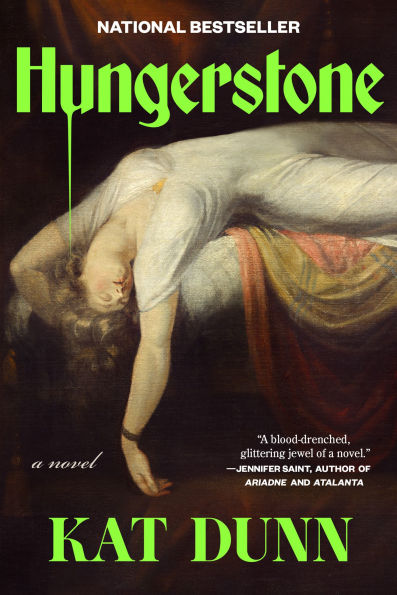
Hungerstone: A Feminist Retelling of Carmilla

Hungerstone by Kat Dunn
Genre: Gothic historical
I read it as a(n): Digital ARC 
Length: 336 pp 
Her Grace’s rating: 4.5 stars
2025 Reading Challenge tasks: TND: #1 – a 2025 release 

Lenore Crowther learned at a young age that nobody can save her but herself. She spent her childhood after the death of her parents learning everything a titled lady would need to know, secured herself a wealthy but untitled husband, and carried out a campaign to ingratiate him into the social circles that he craved. 

Ten years later, the shine is worn off the marriage and she has no children to occupy her time like a proper Victorian wife should have. When her husband, Henry, buys a large estate, Nethershaw, Lenore is hopeful it will be just what she needs to break the doldrums. 

However, the decrepit mansion is not at all what she’d hoped for, and the arrival of a mysterious woman who survived a carriage wreck only brings about more dissatisfaction. 

This atmospheric novel drips with the Gothic elements that so many of us love. The mansion isn’t a dark and drafty castle, but it is dilapidated and a sad shadow of its former imposing glory. The place is surrounded by misty heaths, treacherous cliffs, and windswept fields. The landscape and mansion are both characters in themselves, which is always a fun experience for readers, though significantly less so for the characters. 

Lenore tries her hardest to conform to the Victorian ideal of the Angel in the House, but as we read on, we learn that underneath her soft outer layers is a ruthless core of iron. Carmilla, the carriage-crash survivor who is recuperating at Nethershaw, is strange and defies every social convention there is. She awakens previously unknown desires in Lenore that are catalysts for her drastic change throughout the novel. 

This story is so much more than a retelling of Carmilla, as it is marketed, or even about hunger, as indicated in the Author’s Note. It is an examination of demand and dependency, societal expectation, and the injuries that cause invisible damage to us all. It is a commentary of society today as well. There is one quote that perfectly encompasses every issue the novel tackles: “What is a monster but a creature of agency?” Women’s agency, independence, intellect, women who decide for themselves what they want rather than allowing men to do it for them – all can be seen as monstrous depending on who’s doing the interpreting. What makes a monster or a savior is, in this novel, entirely in the eye of the beholder. 

Highly recommended for lovers of Gothic fiction, social commentary, and women who proudly identify as a problem.

book review · books · historical fiction

Carmilla: The Sapphic Vampire Classic

Carmilla by J. Sheridan Le Fanu
Genre: horror/Gothic/Classics
I read it as a(n): e-book
Length: 108 pp
Her Grace’s rating: 3.5 stars
2025 Reading Challenge tasks:
Her Grace’s: #10 – A book that was adapted to screen
TND: #9 – Author starting with J; #48 – Under 250 pages
PS: #39 – A classic you never read (I guess technically, I read it in college but I definitely didn’t pay attention to it then)

Predating Stoker’s Dracula by about 25 years, Carmilla is the Gothic Sapphic story you are looking for. Though by no means the oldest vampire story (that honor falls to Sekhmet from Ancient Egypt, circa 1500 BCE), Le Fanu’s novella highlights many of the now-familiar tropes within the vampire canon. Mysterious, highly attractive stranger? Check. Dark and spooky castle/forest/chateau/moors setting? Check. Weirdly incestuous vibes? Shuddercheck! Homoerotic fixation? Double check! 

Le Fanu opens his story with the narrator (her name is Laura but we don’t know that until about halfway through the story) reminiscing about a past experience that has haunted – literally and figuratively – her life ever since. The story is told in snapshots of memory as though written in a letter or diary format. Or as if we are sitting with Laura and she is telling the story to us. In any case, the format of the storytelling adds to the atmospheric setting overall. 

Laura is a young girl when she first meets Carmilla, or so it is implied. She seems to meet her in a dream, though as we read, it seems more likely that Carmilla found her in real life and had somehow marked her as her own. When they meet several years later, the intensity of the connection between Laura and Carmilla reads, at times, like long-lost friends as much as lovers. And there were a LOT of Sapphic vibes throughout this short book. Laura finds herself struck dumb more than once at Carmilla’s beauty, though savvy modern folks know that’s just what vampires do. They charm us. See? 

But seriously, that guy could charm me all he wants. 

Anyway. Carmilla’s victims that we know about are all young women or children who are young enough to still be fairly androgynous. That part is super creepy. Also creepy are the incestuous vibes when the General talks about his ward, who he views as his daughter, and who was unfortunately one of Carmilla’s victims. That’s a common vampire trope, so it isn’t out of the ordinary here, except when we consider that this is one of the earlier vampire stories we have and it was written in the Victorian Era, that period of supremely repressed sexual desire and general moral chucklefuckery. 

I decided to read Carmilla because I am reviewing a retelling of it for the Historical Novels Society and wanted a refresher. I’ll post that review once it goes live on the HNS site. For now, I am glad that I reread Carmilla; it is easy enough reading, once you get used to the very long sentences, and short enough to read in one sitting. 

book review · historical fiction · Medievalism

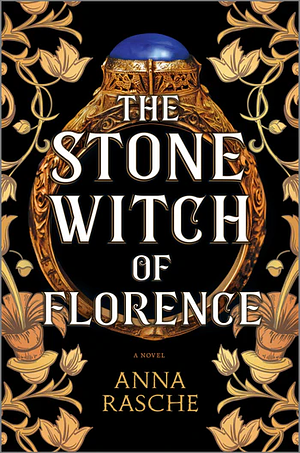
The Stone Witch: A Historical Fiction Mystery

book review · historical fiction

Exploring Women’s Voices in The Iliad’s Retelling

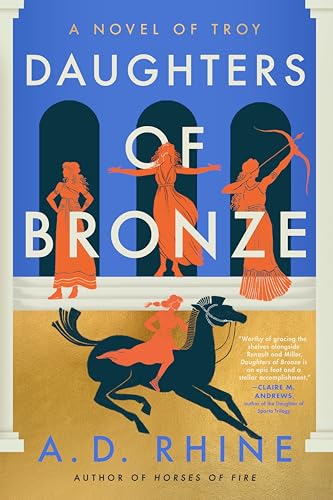
Daughters of Bronze by A.D. Rhine
Genre: historical fiction
I read it as a(n): digital ARC
Length: 512 pp
Her Grace’s rating: 5 stars

In Daughters of Bronze, A.D. Rhine (the penname of writing team Ashlee Cowles and Danielle Stinson) continues their feminist retelling of The Iliad, focusing on four women: Rhea, Andromache, Helen, and Cassandra. This second* novel brings their stories to the forefront, challenging the traditional male-dominated narrative.

Helen, often blamed for the Trojan War, is portrayed as a victim of Paris, who took her against her will. Rhine gives Helen a voice, exploring themes of female agency and resilience.

Andromache, usually seen as Hector’s wife and Astyanax’s mother, is depicted as a complex character, fiercely protecting her family and city. Her story delves into motherhood, duty, and honor.

Cassandra, the seer cursed to be ignored, is shown as a character of heartbreaking vision. Her voice is repeatedly silenced, often by other women, yet she remains devoted to the truth. Her story highlights the consequences of ignoring or marginalizing women.

Rhea, a refugee turned spy for Troy, plays a crucial role in the war. She and other brave women work to undermine the Greeks, risking their lives and highlighting the invisibility of women in historical narratives. If Helen, Andromache, and Cassandra are the warp of this story, Rhea is the weft that binds them together.

Rhine’s novel is rich with themes that resonate deeply in contemporary discourse. The author uses the framework of The Iliad to explore issues of gender, power, and agency. Each character’s story is a testament to the strength and resilience of women, challenging the patriarchal structures that seek to confine them. By giving voice to Rhea, Andromache, Helen, and Cassandra, Rhine underscores the importance of listening to and valuing women’s experiences and perspectives.

The novel also discusses the personal cost of war, not just for the men who fight, but for the women who endure its aftermath. The emotional and psychological toll of the Trojan War is vividly portrayed through the eyes of its female characters, offering a stark reminder of the often-overlooked victims of conflict.

Rhine’s prose is lyrical and evocative, capturing the grandeur of the ancient world while providing intimate glimpses into the lives of its characters. The alternating viewpoints of Rhea, Andromache, Helen, and Cassandra are seamlessly woven together, creating a tapestry of interconnected stories. This narrative structure not only highlights the individuality of each character but also emphasizes their collective experiences and struggles.

Daughters of Bronze is a powerful and thought-provoking retelling of The Iliad that places women at its heart. A.D. Rhine’s novel is a celebration of female strength, resilience, and agency, offering a fresh perspective on a timeless epic. By reimagining the stories of Rhea, Andromache, Helen, and Cassandra, Rhine provides readers with a deeper understanding of the human experience and the enduring impact of women’s voices in history. This novel is a must-read for fans of historical fiction, feminist literature, and anyone seeking a more inclusive and nuanced take on classic tales.

*I somehow missed that this was the second installment, but it didn’t matter. The narrative is tight, and anyone familiar with The Iliad can jump right in. However, some backstory from the first installment, Horses of Fire, might further enhance the reading experience.

A version of this review was originally published at the Historical Novel Society.

book review · historical fiction

I Am Rome

I Am Rome by Santiago Posteguillo
Genre: historical fiction
I read it as a(n): digital ARC
Length: 634 pp 
Her Grace’s rating: 5 stars

The end of the Roman Republic was a time of great strife and even greater corruption. Members of the ruling classes clashed with the regular population in terms of what taxes and rights each social class had. A prime example of this corruption was Gnaeus Cornelius Dolabella, close advisor to the dictator Sulla and governor of Macedonia. During his stint as governor, Dolabella abused his position to gain tremendous wealth, ignoring his duties in favor of abusing the people under his care and stealing taxes. He was charged in Rome with corruption, theft, and rape. However, since it was an age rife with general corruption, all of the jurors and judges were bribed to exonerate him. No one wanted to step into the role of prosecutor since doing so would not only effectively end a man’s political career but also very likely terminate his life. Except one young and inexperienced man decided he would do it. Gaius Julius Caesar was his name.

This novel was a 600+ page doorstopper – and I read it in just a few days. The story flowed rapidly and engaged my interest from page one. The novel’s structure was divided into sections dedicated to Dolabella’s trial mixed with flashbacks from various characters’ perspectives of events that led up to the trial over the course of many years. Readers are introduced to the main players and given glimpses into their motivations based on their experiences. 

The action-heavy scenes and battles are vividly depicted and exciting. This is definitely the novel’s strength. Many techniques the Romans were famous for, such as the testudo formation, are described here in detail, enhancing the action without slowing it down. The military strategies used throughout the novel would be familiar to students of Rome or military history. To the uninitiated, these details merely add to the excitement of the moment. 

The main drawback to Posteguillo’s novel is that there is little in the way of actual character development. Caesar largely remains the same throughout the book even though he is shown at various ages from childhood to early adulthood. Similarly, the dialogue is a little lacking and feels a bit stilted in places. It was great fun, though, to see Posteguillo’s young Caesar reflecting about how he will never be known as a military genius like his uncle Marius, or how he will never amount to anything if he loses the case against Dolabella. It is also always interesting when other real-life figures make appearances, such as Cicero here and there throughout the trial. 

I don’t usually look at any other reviews before I read a book, and I didn’t this time, either. I did, though, look at some after I finished. It seems that some readers felt the book was very inaccurate and played fast and loose with historical events. Normally I am a stickler for high fidelity in historical fiction since it will make historians happy and the rest of us won’t know any different. Perhaps this book is inaccurate, but I happily fall into the latter camp despite having taken 7 years of Latin throughout my college and grad school career. I just thought it was a great read and I would happily read more of Posteguillo’s works if they ever get translated into English. 

All in all, I thought this was a highly enjoyable novel, even if it had some flaws and inaccuracies. Definitely recommended. 

book review · fantasy · historical fiction

Unraveling the Intrigue in ‘Flights of Treason’ by Judith Starkston

Flights of Treason (Tesha #4) by Judith Starkston
Genre: historical fantasy
I read it as a(n): digital ARC
Length: 522 pp 
Her Grace’s rating: 5 stars

Flights of Treason, the 4th and final book in Judith Starkston’s Tesha historical fantasy series, takes place about 3 years after the end of book 3, Of Kings and Griffins. Queen Tesha of Alpara and her husband, King Hattu, are facing off against Hattu’s corrupt and incompetent nephew, Great King Urhi. Adding to this already tense political situation is the fact that Traj, one of the griffin cubs from the previous book, has been lured to Hattusa where he was bound with evil magic and nearly killed. The griffin king is enraged by the harm to his son and vows to kill the sorceror who hurt Traj. Unfortunately, that sorceror appears to be Tesha and Hattu’s 4-year-old daughter, Arinnel. Magic, demons, griffins, and more converge into this exciting final novel in the Tesha series!

I loved this book so much! In the spirit of full transparency, Judith is a friend of mine. However, that doesn’t change the fact that this was an awesome read. The characters all have a great deal of growth throughout this book as well as the series overall. Tesha has tremendous guilt about her magic, which is powerful, but she refuses to use it to its full potential because of the inadvertent damage it did to Arinnel in the womb. (For that story, you’ll need to read book 2, Sorcery in Alpara.) Tesha tries to do what she can to help without using magic, and she has to work through her feelings of guilt and fear to become the queen she needs to be. Her reluctance to use her magic causes some tension with Hattu, particularly when it comes to using it to force his nephew, Urhi, to become a better king. I liked this because it felt like an actual issue that causes couples to get mad at each other in real life. It wasn’t Big Drama, it wasn’t hugely emotional or a cause to worry that Tesha and Hattu were going to call it quits. It was just one of those things that happens to any couple on occasion, and it made the novel feel that much more relatable. 

Tesha’s older, blind sister, Daniti, has a big role as well. Her previous bond with the griffins and her ability to speak telepathically to them over great distances plays a vital role in the conflict between humans and griffins. Arinnel shares her aunt’s telepathic abilities, a source of tremendous joy to both of them most of the time. Arinnel, though, has blocked Daniti out of her thoughts and, because of this, everyone fears that that little girl was, in fact, responsible for the grievous injuries the griffin cub Traj suffered. 

Marak, Hattu’s second in command and Daniti’s husband, has a slightly smaller role in this than he did in previous books, but his role remains important. He is almost as brilliant a military strategist as Hattu himself, and Marak’s diplomatic bonds with the Paskans comes into play in a very big way. I have a soft spot for Marak. He always strikes me as sort of a protective big brother who seems fierce but is all squishy around the edges. 

Flights of Treason is filled with exciting battles ranging from fighting with human armies, facing off against sorcerors, or making a stand against fantastical beasts. These scenes are all vividly depicted and they played out like a movie in my mind. 

Starkston absolutely excels at the historical details in this book, as she does in all her other books as well. The series might be marketed as historical fantasy, but it is solidly based in actual Hittite history. Many of the spells and incantations are actual documented parts of ceremonies and rituals found on clay tablets from the Hittite Empire. Her skill lies in taking those snippets of historical fact and weaving them into a fascinating new story that is both unique and also remains true to the remarkable, ancient people who provided the inspiration. 

I have said for years and years that sci-fi/fantasy is an ideal medium in which to discuss real-world issues. Flights of Treason is no different. I love the themes of fighting for one’s home, doing what needs doing even if it scares the crap out of you, and going through self-discovery to become who you are really supposed to be. These are all things that people in the real world need to do at one point or another. Maybe we don’t battle actual griffins in our life, but we sure as hell battle our own inner demons. We do things that scare us because we need to do them. We learn to define what “home” means to each of us, and then fight to keep it safe. There are so many things we do in real life that are explored in fantasy novels, barely hidden beneath the veneer of magic. In a well-written fantasy such as this, it is easy to find ourselves in the pages even as we get lost in the story.

One more thing that I really loved about this book was actually the ending. Starkston did what I wish more authors of series could do: she gave a satisfying ending with no loose threads left, didn’t make those endings feel like an afterthought by rushing through them, and yet still left openings to return to the series later if she decides to. I honestly am not sure of any other authors that I have personally read who managed to pull that off so well! Because I am a selfish creature, I want MORE Tesha books, but if such is not meant to be, then the way this one ended is the ideal way to conclude the series. 

As with the three preceding books in the series, I highly recommend Flights of Treason for the amazing world-building, complex characters, and fascinating historical details woven into every page. You will not be sorry you read this!

historical fiction

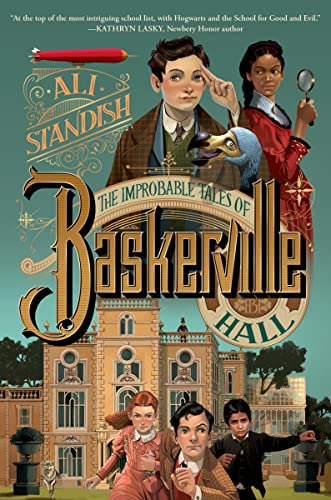
The Improbable Tales of Baskerville Hall

Baskerville HallThe Improbable Tales of Baskerville Hall by Ali Standish
Genre: historical fantasy/YA
I read it as a(n): ARC
Length:
336 pp
Her Grace’s rating: 2 out of 5 stars

The Improbable Tales of Baskerville Hall by Ali Standish mingles elements of the historical Arthur Conan Doyle and his most famous series, Sherlock Holmes into a steampunk-influenced adventure that’s reminiscent of a jaunt through Hogwart’s. A young Arthur Conan Doyle, living hand to mouth with his sisters, mother, and alcoholic father in Edinburgh, jumps at the chance to improve his family’s fortunes when he is offered a spot at an exclusive boarding school, Baskerville Hall. When he arrives – by airship! – Doyle settles in and quickly establishes himself as one of the most promising students currently in residence. When a series of break-ins, thefts, and threatening appearances by shadowy figures occur, events conspire to put Doyle’s education and life at risk.

This book will surely appeal to many young readers, but adult readers will wonder how the fuck Sherlock Holmes ended up in Hogwarts. At times, it felt as though the author were merely replacing names from Harry Potter with ones from Sherlock Holmes and dusting her hands off afterward. While that Potteresque aspect of the book might be forgiven since a lot of fantasy is pretty derivative anyway, it is harder to overlook the fantasy aspects as a whole. “Fantasy” isn’t usually what readers expect from anyone with the name Sherlock Holmes attached to it, so this book felt very out of alignment. The Sherlock Holmes series lends itself well to steampunk, no argument with that at all, and author Ali  Standish does a good job incorporating components of that genre into this novel. However, I was expecting a logic book. Where’s my damn logic book? In other words, it lacks the investigative style and logic that is associated with Sherlock Holmes and expected in any retelling of the great detective’s stories. 

To give credit where it is due, the story is filled with interesting and well-crafted characters. Real people such as Doyle himself mingle with his fictional characters such as Dr. Watson, creating an intriguing cast. I loved the diversity in the people the best. They’re not all homogenous and bland; they are vivid and have personalities that are deeply developed, given the relative shortness of the book and its targeted age level.

Younger readers will no doubt be thrilled with this story, but I don’t think it would appeal very much to many well-read adults.

This was originally published on the Historical Novels Review website. That review was nicer, though it said basically the same thing as here.

book review · historical fiction

Daughter of Black Lake

daughter of black lake

Daughter of Black Lake by Cathy Marie Buchanan

Genre: historical fiction

I read it as a(n): hardback

Length: 320 pp

Her Grace’s rating: 5 out of 5 stars

Set in the 1st century CE, Daughter of Black Lake centers on a small village to the northwest of Londinium. The Roman invasion is in process, though the villagers don’t really seem to care much. Most see it as an opportunity to make some money by trading with a nearby outpost town. When an unhinged Druid, Fox, comes along, trying to incite the tribesmen to band together and rise against the Romans, things get dangerous. One woman, Devout, and her daughter, Hobble, find themselves in the middle of a power struggle between the Druid and the leader of the village, in part because of Hobble’s ability to See the future. Devout, though, also has secrets of her own that may destroy the peace of the village and doom Fox and the rest of the Druids’ plans to overthrow the perceived shackles of their oppressors. 

At first, I wasn’t sure if I was going to like this book. It felt like a lot of not much was happening. But the characters were deeply developed and I got invested in their stories. Then Fox came along and I wanted to see what would happen with him. He was a hateful character, which was weird for me since I usually really like Druid characters. Of course, the Druid figures in other stories I’ve read were more like Merlin or Gandalf, so naturally I would like them. Fox, not so much. He was a fundy zealous dick. 

I liked Hobble a great deal. She was a healer, like her mother, and had vast knowledge for such a young girl. I cared less about her ability to see the future, especially since it was never really explained why she had the ability. Fox wanted to use her ability to help rally the tribes to the Druids’ cause and go to the aid of the Iceni queen, Boudicca, but Hobble couldn’t do that. She could see that the Romans were going to kick their asses. And historically, they did. Boudicca came damn close to winning but in the end, she didn’t. 

I really liked the writing style. It was almost dream-like. It felt similar to The Buried Giant by Kazuo Ishiguro, but I didn’t care for that story and I did like Daughter of Black Lake. Maybe comparing it to The Mists of Avalon would be more accurate. At any rate, I really liked this one. It’s certainly making my favorite books of 2023 list.