book review · historical fiction · Medievalism

The Good Wife of Bath

good wife of bath

The Good Wife of Bath by Karen Brooks

Genre: historical fiction

I read it as a(n): paperback

Length: 541 pp

Her Grace’s rating: 5 out of 5 stars

Eleanor is the daughter of a brogger, the mediaeval term for broker, in 1380s England. Her mother dies when Eleanor is a baby and her father when she is about ten. She goes into service for the local gentlelady and from there, proceeds to have men ruin her reputation, her joy, and her sense of self. She’s married off when she’s 12 to a man who is in his 60s and, to modern audiences, it goes downhill from there. However, Eleanor finds her joy in her many marriages and the found family she gains in her long life. Her friendship with a man of the merchant class, one Geoffrey Chaucer, ensures that she remains known and beloved for all time, living as his (in)famous Wife of Bath.

Or at least, this is the fictional take on how a real-life woman might have become the Wife of Bath. 

Replete with vivid images, sights, and sounds of mediaeval England, The Good Wife of Bath takes readers on a pilgrimage through this turbulent period of history seen through the eyes of an equally turbulent character! 

It’s been a long time since I read The Canterbury Tales, but this made me want to read them again. It would have been fun to do a side-by-side readalong sort of thing. Eleanor is, of course, modelled on the Wife of Bath, but other figures in the story are also modelled on other characters from the Tales. A new interpretation of them would be fun for this book nerd.

I loved the insights we got into Eleanor’s character in the chapters that were written as letters to Chaucer while she was on one pilgrimage or another. We got to see glimpses of this woman throughout the book anyway, but much of that was the public mask she put on. Her letters revealed her innermost thoughts and they were quite something! She would be fun to have drinks with for sure. The letters showed an irreverent, irrepressible person who found a way forward regardless of what misfortunes came her way and took absolutely zero shit in the process. She really took to heart the idea that if life gives you lemons, then squirt the juice into the eyes of your enemies! 

The differences in her various marriages were really intriguing, more so because of how Chaucer’s actual Wife was written. Brooks’s Eleanor marries three times for convenience and twice for love. The love matches were hot, stinking garbage fires of a relationship and the marriages of convenience were the ones that actually resulted in a good and pretty happy life for her. In particular, I loved her first husband, Fulk Bigod, and third, Mervyn Slynge the best. The second, Turbot Gerrish, was ok in the end, though he himself was a ridiculous caricature of a man. But Fulk allowed her to tell him what to do and as a result, they got significantly wealthier. Mervyn became a genuine friend to her and, although he had other issues, was a wonderful husband. I sometimes wish a kind old rich gay man wanted to marry me for beaver cover and then leave me all his piles of money when he died. 

Her convenient marriages allowed her to have the control over her own choices that she desired. Her love marriages were far more restrictive and made her a slave in more than one way. She had far less freedom in those. It’s an interesting point and one that would make for an excellent group discussion.

Ultimately, what I think Chaucer’s Wife wanted wasn’t control, or mastery, as he wrote it, over men. What she wanted was control over her own choices, her ability to choose for herself. Sovereignty over one’s choices, one’s body, one’s relationships, one’s money, was not something most women had in 1300s Europe. Really, it is a pathetic commentary on men and modern society that a very great many women still lack these things. The ones who do have them are either single, managed to find a truly feminist partner, or are old, rich, and widowed. Not a whole lot has changed in the 700 years since Chaucer wrote the Tales. Stop the ride, I want off. 

Overall, I highly recommend this to anyone who loves mediaeval historical fiction, and especially to those of us who hold a special place in our hearts for Chaucer.

wife-of-bath-British Library

book review · historical fiction

Everfair

everfair

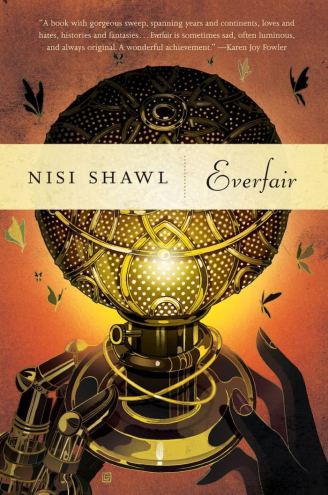
Everfair by Nisi Shawl

Genre: fantasy

I read it as a(n): audiobook

Narrator: Allyson Johnson

Length: 12:44:00

Her Grace’s rating: 2 out of 5 stars

Everfair by Nisi Shawl is a steampunk alternative history novel that presents a fascinating premise: the people of the Congo discovering steam power before they were invaded by Belgium. Afro-Victorian Steampunk? Hell, yes! Alas, while the concept is intriguing and offers great potential, the execution of the story leaves much to be desired. There is a plethora of characters and an overly ambitious narrative, so the book struggles to maintain a cohesive and engaging plot in my opinion.

One of the main issues with Everfair is the overwhelming number of characters. While a large cast can add depth and variety to a story, Shawl’s approach feels excessive and convoluted. With so many characters competing for attention, I never really could invest emotionally in any one individual. The lack of a clear focal point or well-developed protagonists hampers the overall cohesion of the plot and makes me care a lot less about their individual story arcs.

Another drawback is the sheer number of ideas and themes that Shawl attempts to explore within the confines of a single book. From political intrigue to social revolution, colonization to racial tensions, and the development of steam-powered technology, the novel feels…crowded. Really, really crowded. Like a college dorm room crowded. The result is a fragmented narrative that lacks the necessary depth and exploration to do justice to any of the ideas presented. The overarching story gets muddy and confusing and fails to provide a satisfying resolution for any of the themes introduced.

While the premise of an alternate Congo with steam power is undeniably captivating, the execution of the story falls flat. The pacing is uneven, with long stretches of slow development punctuated by sudden jumps in time and perspective. This disrupts the flow of the narrative and makes it difficult to fully immerse oneself in the world Shawl has created. 

It’s obvious that Shawl did a shitton of research and has a genuine passion for the subject matter, particularly in her exploration of the impact of colonization on the Congolese people. However, the execution of the story fails to translate that passion into a compelling narrative. The book’s potential is undermined by its disjointed structure and a lack of focus.

At the end of the day, Everfair by Nisi Shawl presents a fascinating premise that I really wanted to love so much, but it was just too much. It was a disappointing and tedious read.

book review · fantasy · historical fiction

The Heavenly Sword

the heavenly sword

The Heavenly Sword by Alice Poon 

Genre: fantasy

I read it as a(n): digital ARC

Length: 390 pp

Her Grace’s rating: 4 out of 5 stars

Alice Poon delivers the first of a duology epic fantasy based in Chinese mythology and kung fu. In this first novel, Sai’er is a simple village girl training in the ancient arts of kung fu. Thanks to a helpful sprite, she learns she is the reincarnation of the goddess Chang’e. She must go on a quest to stop the wicked Sky Wolf, who is reincarnated as the Ming Dynasty Emperor Zhu Di. Aided by her foster brother Binhong and several other friends, both mortal and supernatural, Sai’er embarks on an adventure rivaling any in the fantasy genre. 

I enjoyed this, as I did Poon’s earlier books. She does a terrific job of blending fantasy, mythology, and real history all together to make a credible story. I would almost categorize this book magical realism rather than fantasy simply because the elements of magic are so closely woven into the factual parts of the story. They just…belong. Of course Sai’er has a sprite friend. Of course she is an immortal sent to earth. It could be no other way. There isn’t any suspension of disbelief while reading this, it’s just the way things are in Sai’er’s life. So that is particularly well done on the author’s part.

I did have a little trouble, mostly in the earlier parts of the book, with the pacing. This is a very fast-paced story (which is fine, it adds to the kung fu feel of the plot for me), but sometimes I felt like I overlooked something when, for example, I thought we were in one place and then the narration kicked us over to a different place. For example, Sai’er and Binhong were traveling and one minute they were on a very steep staircase carved into a cliff and the next they were surrounded by imperial guards and there was a courtyard. The text hadn’t indicated any other setting prior to that so it was a little jarring to change settings like that. But then I got used to the pacing and it was fine after that.

I think for someone like me, whose experience with wuxia/kung fu extends to Crouching Tiger, Hidden Dragon and a handful of Jackie Chan films, this is a very good introduction to the genre. Poon talks about her lifelong love of wuxia (Chinese martial arts/kung fu novels), and references Jin Yong. I had never heard of him before so now I am tempted to read some of his works. Apparently, he’s big in the genre… I never would have learned about him had I not read this book. I always appreciate a book that teaches me something! 

I don’t think this necessarily has to be an adult novel, either. Yes, there’s some sex and gore, but I don’t think it was gratuitous or anything inappropriate for a teen to read. Maybe that’s just my Gen X showing. My parents had no clue what I was reading – or where I was, really – most of the time. So maybe take it with a grain of salt, but this read-all-of-Stephen-King’s-and-V.C.-Andrews’-then-published-works-by-the-time-I-was-12 GenXer thinks it’s totally fine for teen readers as well.

book review · historical fiction

Dark Stars

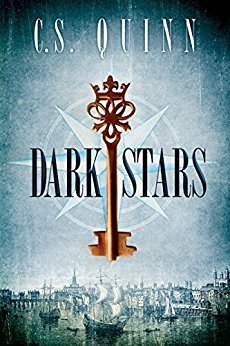
Dark Stars by CS Quinn

Genre: historical mystery

I read it as a(n): audiobook

Narrator: Steve West

Length: 12:23:00

Her Grace’s rating: 2 out of 5 stars

Set a few weeks after the events of Fire Catcher, this third installation in The Thief Taker series centers around a killer who is leaving mutilated corpses to wash up around the port town of Deptford. The bodies are all marked with astrological signs that indicate a catastrophe will soon descend upon England. Charlie Tuesday teams up with Lily Bosworth to find the person responsible for the murders. In the process, he discovers that he is connected to the killer in ways beyond their shared astrological fate.

OK. So I didn’t care much for this book. I felt that the characters were surprisingly one-dimensional, especially considering that it was the 3rd book in the series. The good guys were very good, the bad guys were very bad. There were a couple others who were a little more shades of grey, but they were secondary characters that didn’t really add anything super important to the plot.

Speaking of adding to the plot – I’m sorry, but everything involving the court was basically irrelevant. What information we did learn from court could easily have been included elsewhere instead, like a rumor or intercepted letter. The side plot with the king’s mistresses and court politics was just kind of boring and didn’t, in my opinion, add anything vital to the overall story. I do not care at all about his primary mistress, Lady Castlemaine, nor the innocent young girl he fixates on later. The entire book could have been written without them in it at all, and if the rest of the court intrigue stuff had to be included, then probably 75% of it could be cut and still have retained what relevance was necessary. 

SPOILERS BELOW!

Continue reading “Dark Stars”
book review · historical fiction · Medievalism

Oswald the Thief

Oswald the Thief by Jeri Westerson
Genre: historical mystery
I read it as a(n): paperback
Length: 270 pp
Her Grace’s rating: 4 out of 5 stars

Oswald is a half English, half Welsh charming bastard thieving tinker who gets trapped by a corrupt noble into doing a burglary. He only has to break into The Tower and steal the Crown Jewels. So that shouldn’t be too hard, right?

This was a really fun mediaeval caper. Westerson, as always, did a great job with the research of early 14th century London. She has the map of the Tower in the front of the book along with a brief list of terms, both of which are helpful for readers who may be new to her stories. The sights, sounds, smells (ugh), and social rules of mediaeval London shine through in every page.

Similarly, the characters are well crafted and complex. An honest thief? A corrupt noble? A man with the mind of a child but the skill to pick any lock in front of him? Check, check, and check. All the characters in this book are thoughtfully detailed and never one dimensional.

One thing I really like about this book – and actually about all of Westerson’s historical fiction – is that her characters are not all just nobles, royals, or church people. They’re mainly just regular people, the Pastons instead of the Plantagenets. They’re actually people most readers can identify with in ways we cannot with those of higher rank.

I think it’s a fucking tragedy that Westerson couldn’t get a traditional publisher to pick this book up. It was intended to be the first in a new series and I really hope we will get to read more about Oswald and his adventures in the future. It was a lot of fun and it should get more attention than it has.

I highly recommend this, as I do all of Westerson’s books. They’re well researched, the writing is fast paced, and they’re all witty and funny.

book review · historical fiction · Tudors

Dissolution

Dissolution by CJ Sansom

Genre: historical fiction

I read it as a(n): audiobook

Narrator: Steven Crossley

Length: 14:33:00

Her Grace’s rating: 3 out of 5 stars

The first of the Matthew Shardlake mysteries, Dissolution, features Master Shardlake being sent off to an abbey where one of the King’s commissioners had been murdered. Shardlake is a lawyer and clerk for Thomas Cromwell and is tasked with bringing the commissioner’s murderer to justice. When he arrives at the abbey, he finds it to be a seething morass of corruption, deceit, and forbidden faith. And of course the body count goes up and up the longer he’s there.

This was a good read overall. The setting was well described and the historical details were nicely researched. Sansom created a scene that easily came alive through his use of descriptive language. I am glad I don’t live in the Renaissance. The smell alone would kill me, if I somehow managed not to get burnt as a witch. 

The plot was complex and twisty without being overly complicated or unbelievable. I figured out the mystery, or one of them anyway, fairly early on but probably that’s just because I read a lot of mysteries. I was entertained throughout and the secondary plot/ mystery was one I didn’t guess before all was revealed. 

Would certainly read more in this series.

book review · historical fiction · Medievalism

The Deadliest Sin

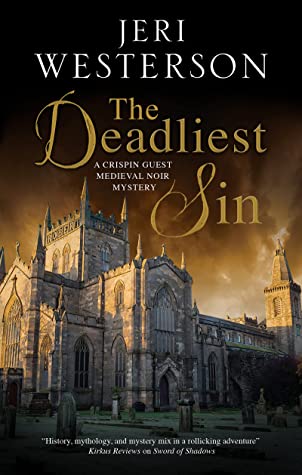
the deadliest sinThe Deadliest Sin by Jeri Westerson (Website | Twitter | IG)

Genre: medieval mystery

Setting: 14th century London

I read it as a(n): hardback

Source: my own collection 

Length: 321 pp

Her Grace’s rating: 5 out of 5 stars

In this 15th (and final) novel in the Crispin Guest medieval noir series, Crispin and his apprentice Jack Tucker are hired to help the prioress of a convent discover who is behind a series of grisly murders of her nuns. They each appear to be related to the Seven Deadly Sins, begging the question of what the victims really had to hide. At the same time, Henry Bolingbroke, the exiled son of John of Gaunt, has returned to England with an army at his back. Crispin once again finds himself in a position where he has to decide whether to support the crowned king or to commit treason again, possibly paying for it with his life this time. 

For the past 15ish years, readers have followed along on adventures with Crispin Guest, former knight and lord of the realm, disenfranchised for treason when he threw in his lot with the supporters of John of Gaunt over King Richard II. He’s gone from being angry and bitter to content and even happy and loving his role as the indulgent head of a very rowdy house full of Jack’s children. He has learned that he is quite able to make a decent life for himself through his tracking skills, and has earned the appreciation of many Londoners by helping them. Certainly, he has done more good for the citizens than the sheriffs ever did, which makes him smug. So it has been fun to watch his progression over the years. 

Same with Jack. He went from being a 10 year old mongrel street urchin who seemed to be on a glide path to the gallows for thievery to a competent apprentice tracker, loving husband, and fun loving father. His character arc was almost as big as Crispin’s and it has been a joy to see how he’s grown over the years. 

Yes, these characters feel real to me. 

The mystery in this novel was a fun and twisty one, full of murder and theft and nuns! With! Secrets! It would have been a great read on its own, but I was so focused on all the stuff with Henry Bolingbroke and Richard II that the mystery sort of fell to the wayside with me on this one. Not because it wasn’t good or anything. I just wanted to know how it would all end! After the mystery was solved, I found myself covering up any part of the page I hadn’t read yet so that I wouldn’t accidentally read too far ahead and spoil myself. I think that is a mark of a terrific story. 

I could tell you how it ended. I could tell you what I thought about it. But then maybe you wouldn’t go out and read these books for yourself, and that would truly be a loss for you. I realllllly think you should read them all. You won’t be sorry you did and then, when you get to this book, you will be on tenterhooks to see what new awful thing Westerson might do to poor Crispin! And then you can mourn the last book in the series. And then you can go out and be excited to read the other books Westerson already has, and look forward to the new Tudor series she’s got in the works!

book review · books · historical fiction

The Witch’s Daughter

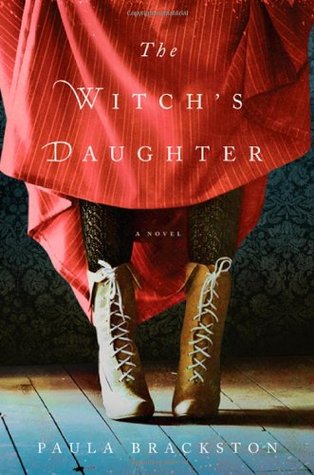
the witch's daughterThe Witch’s Daughter by Paula Brackston (Website | Twitter)

Genre: magical realism

Setting: Batchcombe, Wessex

I read it as a(n): paperback

Source: my own collection 

Length: 403 pp

Her Grace’s rating: 3 out of 5 stars

Bess Hawksmith is a young woman when the Great Plague of 1666 swept through her small village of Batchcombe. Naturally, the bereaved townsfolk need a scapegoat to blame for the losses they suffered. Bess’s mother, Anne, is a healer, so bingo! She must be a witch! The townsfolk round her up, along with another old woman who is a midwife, and hang them. The thing is, Anne really was a witch, and so is Bess. Bess flees and spends the next several centuries (she’s effectively immortal) running both from the memory of the horrific persecution as well as from the warlock who made a deal with the devil to give Bess her supernatural powers. Living a solitary life, Bess eventually finds a kindred spirit in young Tegan, a lonely teen who is drawn to Bess and her energy. But in taking Tegan under her wing, Bess inadvertently puts her in danger from Gideon, the man who has been hunting her throughout the years.

This one was, for me, SUPER slow to start. I almost quit. But then it picked up around chapter 4 or 5 and it was a very fast read from there out. I enjoyed this story a lot, though I don’t think it really had anything too unique about it. It was fairly predictable at the end, but the journey getting to the end was worth the read. I have a particular fondness for the Victorian Era, so I enjoyed that section the most. The bit from World War I was awful (an awful experience, not an awful read or awful writing). I don’t know much about that war, nor about the Battle of Passchendaele specifically, but it was an interesting, if sad and gory, part of the book. 

Overall, I think the characters were fairly well developed, but I’m not sure how much growth they really showed. Bess did mature and became a wise woman, but once she reached her maturity, she kind of stalled out. Gideon was consistently wicked but he was not a Bad Boy kind of character to me. I usually like those. Gideon was more like a cancerous presence to be cut out of a life rather than one who held any real attraction. Tegan was just a regular teen and didn’t really show anything other than that. Which is fine. They all worked for the story.

I think readers who enjoy Sarah Addison Allen or Alice Hoffman will enjoy this book. SAA and AH have more complex characters and richer storytelling, but I do think PB will get there eventually as well.

book review · historical fiction

The London Monster

The London MonsterThe London Monster by Donna Scott (Website, Twitter, IG)

Genre: historical mystery

Setting: Late Georgian London

I read it as a(n): ARC

Source: Helen Hollick at Discovering Diamonds

Length: 322 pp

Published by: Atlantic Publishing

Her Grace’s rating: 5 out of 5 stars

In Late Georgian London, a man dubbed as “The London Monster” was attacking women, assaulting first their ears and sensibilities with terribly vulgar come-ons and, when those inevitably failed to win the lady’s affection, he stabbed at her with a dagger. Most of the women only had their dresses torn, though a few were cut on their hips and fortunately, none of them died. It is unlikely that the correct man was ever arrested, though one man did serve time in Newgate as the Monster. Author Donna Scott takes this historical figure out for a ride in her new novel, The London Monster.

Sophie Carlisle, daughter of a minor noble, wants nothing more than to become a journalist. Unfortunately, not only is that a profession forbidden to women, she is also betrothed to Cuthbert “Bertie” Needham, her childhood friend. To attempt to get her articles written and published, Sophie goes around London dressed as a boy, researching and following leads. In the course of her journalistic adventures, Sophie meets and befriends Maeve, an Irish prostitute. Tom Hayes, meanwhile, is the son of a filthy rich merchant with aspirations to a seat in the House of Commons. Tom is haunted by his mother’s murder, which happened before his own eyes when he was ten. To atone for his past helplessness, Tom now is a pugilist and vigilante, determined to catch the Monster before he can hurt any more women. Their paths intersect in so many ways, some entirely unexpected. 

First of all, I loved this book. I actually read it in one sitting, which hasn’t happened with a book in a long time for me. I found the writing to be highly descriptive and engaging, the characters complex, and tone perfectly balanced to reflect a variety of tensions. Sophie is a charming and irrepressible figure. Tom appears to be one of those mythical creatures – a man who is handsome, intelligent, AND genuinely kind all rolled into one. Maeve is salty and pragmatic yet still retains a deep sense of hope despite life having taught her not to bother. Each one of these characters are flawed in some way, but it serves to highlight the strengths of their personalities rather than their weaknesses. 

Speaking of weaknesses. Bertie. Bertie, Bertie, Bertie. He had great potential as a man but he’s just so gross and frankly kind of pathetic. I don’t think readers are really supposed to like him, and certainly I did not. If he had even a little more self-awareness and consideration for others, he might have been a totally sympathetic character. As it was, he came off as more of a self-centered whiner who tried to make Sophie love him even while thinking about how marrying her would solve his family’s debt crisis. Not sure you can truly love a person if you want them for their money, no matter how hard he tries. And perhaps he really did love her, but it always seemed tinged with a variety of desperation. Super not attractive. 

As with any book, I’m not sure if the author wrote about certain themes intentionally or if I am imposing my own interpretation upon the story. However, I picked up some strong themes of consent and safety throughout this book. There was obviously no consent at all in the Monster’s attacks on his victims; they all roundly rejected him and he forced violence upon them anyway. Maeve occupies a liminal space of consent – she is a prostitute so her consent is implied through her vocation, but she hates it and is ashamed, so her consent is grudging at best. To me, I think that equates to NOT giving consent. Sophie wants to help catch the Monster in part because of a frightening experience she had at a party several years earlier when a gentleman she flirted with tried to rape her. At one point, she also tells Tom that she wants the Monster to be caught and imprisoned because she wants him and all men to know that they can’t make women feel they can’t be kind or polite without risking assault. Oh hi, modern women’s continuing issue! Women today STILL can’t be friendly to so many men without them thinking we are flirting and they are entitled to get some. 

Linked to that is a strong sense of shame. Sophie feels ashamed of the incident at the party, despite the fact that it was in no way her fault. No matter what a woman says or does, whether she’s flirting or not, at some point a man makes the decision to assault or rape a woman. It is entirely on him. Yet even today, where there is not nearly the stigma surrounding rape that there once was, many women still are too scared or ashamed to report their assaults. Those who do are often not believed, contributing further reasons for women not to bother. If it’s still like that now, I can only imagine how much worse it would have been in the 1780s. And, as explained in the Author’s Note, while there were more than 50 reported cases of women being attacked by the Monster, the true figure is actually unknown – some women almost certainly never reported their attacks, and others falsely reported an attack. Also like today’s society, some people will say anything to get a little attention, to get their 15 minutes of fame. Shame is carried out further in Maeve’s character. She is a prostitute and she does what she does to survive and to provide money to her young daughter, in the care of another family. But she doesn’t want to be a prostitute and, despite some very frank language about sex from her and other sex workers in the book, Maeve is deeply ashamed of what she does and dreams of a day when she might save enough money to pay off her debts to her madame and leave to do other work instead. 

I also felt there was a strong theme of Otherness and acceptance. Sophie at one point thought about how she would never have tolerated a prostitute near her and would never have thought she would even speak with one. Then she met Maeve and got to know her. The two became true friends, despite the huge gap in their social class, and Sophie found she would go to great lengths to help her friend. See what happens when we get to know people? They turn out to be people with their own feelings and hopes and fears, just like the rest of us! Getting to know people is one of the greatest killers of prejudice and bigotry there is, and the friendship between Sophie and Maeve provided a great example of that. I wish it happened more in real life.

Overall, I devoured this book and can’t wait to read more by Donna Scott. Highly recommended!

book review · historical fiction

Once Upon a River

Once Upon a RiverOnce Upon a River by Diane Setterfield (Website, Twitter)

Genre: magical realism/ historical fantasy

Setting: mid-late 1800s

I read it as a(n): hardback

Source: my own collection / BOTM Club

Length: 464 pp

Published by: Atria Books (pub date)

Her Grace’s rating: 5 out of 5 stars

Once Upon a River is the tale of a young girl who drowned, and then didn’t. There is an inn that is known for its storytelling, which is where the drowned girl and her rescuer end up. Her story spreads from there and she becomes three different girls who have all gone missing. The lives of a photographer, a healer, a farmer, and a pub owner all become entwined because of their connections, real or otherwise, to the drowned girl.

I honestly don’t want to write an in-depth review of this book. I fucking LOVED it and don’t want to have to think too closely about it. It was a fairy tale wrapped in a mystery set in a historical fiction. I never wanted it to end, and when it did, I wanted to forget all about it so I could read it again for the first time. The writing was gorgeous – truly evocative of fairy tales – and the characters were well defined and complex, every one of them. The setting was ephemeral and had very much an otherworldly feel to it, which was perfect for the story. I had too many favorite lines and scenes, so I only put a couple below. Otherwise, I’d just be copying down the entire book. I can’t describe it, just go read it for yourself. You will not be sorry you did!


Favorite part/ lines (spoilers!):

  • ‘The Swan was a very ancient inn, perhaps the most ancient of them all. It had been constructed in three parts: one was old, one was very old, and one was older still’ (3). 
  • ‘She could lift barrels without help and had legs so sturdy, she never felt the need to sit down. It was rumored she even slept on her feet, but she had given birth to thirteen children, so clearly she must have lain down sometimes’ (5). 
  • The discussion about the word one ought to use to describe a person rowing very quickly up a river. Can’t be haring because hares don’t go in row boats. Can’t be ottering because that sounds worse than haring. It was a very serious discussion.
  • ‘There was a general hubbub of conversation between the windows as the story was discussed, its missing pieces identified, attempts made to fill them in…Fred began to feel left out of his own tale, sensed it slipping from his grasp and altering in ways he hadn’t anticipated; now it had slipped the leash and was anybody’s’ (46)
  • ‘They sat on the bank. It was better to tell such stories close to the river than in a drawing room. Words accumulate indoors, trapped by walls and ceilings. The weight of what has been said can lie heavily on what might yet be said and suffocate it. By the river the air carries the story on a journey: one sentence drifts away and makes room for the next’ (361).
  • ‘While the water lay unperturbed and indifferent all around, the women at the Swan were engaged on the human pursuits of dying and being born. On one side of the wall Helena struggled to deliver her baby into life. On the other side, Joe struggled to depart it. The little Margots got on with everything that needed to be done so that life could be begun and so that it could be ended’ (417).
  • ‘There must be more to stories than you think’ (431).
  • ‘And though eventually there came a day when the man himself was forgotten, his stories lived on’ (457). 
  • ‘How many photographs could a man take in a lifetime? A hundred thousand? About that. A hundred thousand slivers of life, ten or fifteen seconds long, captured by light on glass’ (458).
  • ‘And now, dear reader, the story is over. It is time for you to cross the bridge once more and return to the world you came from. This river, which is and is not the Thames, must continue flowing without you. You have haunted here long enough, and besides, you surely must have rivers of your own to attend to?’ (460).