book review · bookish things · historical fiction

Boudicca’s Daughter by Elodie Harper — Giving a Voice to the Forgotten

Elodie Harper’s Boudicca’s Daughter tells the imagined story of two young girls who, according to Roman accounts, were ordered by Gaius Suetonius Paulinus, the Roman governor of Britain, to be raped by Roman soldiers while their mother was flogged. This atrocity became the biggest catalyst for Boudicca’s rebellion against Rome. Historically, we know almost nothing about these daughters: not their names, their fates, or even whether Boudicca had other children besides the two girls. After their assault, they disappear completely from the historical record.

That’s what makes this novel so compelling. Harper takes these nameless figures, women who were written out of history, and gives them identities, voices, and lives of their own. The book begins with the lead-up to Boudicca’s rebellion, but the uprising itself only occupies about the first quarter. The rest of the story unfolds from the perspective of her eldest daughter, who in this book is called Solina, as she navigates the aftermath of her mother’s rebellion – the trauma of the assault, the crushing defeat of her people, and her struggle to survive being sold into slavery in the heart of Rome.

One of the things I appreciated most was Harper’s willingness to explore the complexity of what happens after the rebellion ends, especially to the women who are left behind. Solina’s story feels like a reclamation of history, giving voice to those who were silenced. I’m always drawn to stories of strong women, and this one in particular highlights how resilience and strength can take many forms. Sometimes strength is quiet, sometimes it is choosing one of two evils and hoping you can live with that choice. It is aways deeply personal.

A theme that really challenged me while reading was the “enemies to lovers” dynamic. Normally, that trope doesn’t bother me when it’s something like academic rivals, sports competitors, or even just a couple of people who take an instant dislike to each other. But I’ve always been uncomfortable with stories that romanticize relationships between oppressors and victims, for example, between a Nazi officer and a Jewish prisoner. While such relationships almost certainly existed – I would think it’s a survival mechanism in at least some cases – I’ve always found that version of the trope disturbing and something I’d rather not read even if it might be historically accurate.

Yet in Boudicca’s Daughter, Harper approaches that idea in a way that made me think more deeply. When Solina forms a complicated relationship with Paulinus, the very man who ordered her rape and who destroyed her people, it isn’t presented as simple romance. If it was, it would have been unforgivably disrespectful to Solina, Boudicca, and every other woman in history who had to make a similar choice. Instead, it’s messy, painful, and psychologically complex. It made me reflect on how trauma can distort love and loyalty, how survival can blur moral boundaries, and how what we label “enemies to lovers” might sometimes be closer to a portrayal of coercion, dependency, or even Stockholm syndrome. I am still not sure what I think about Solina and Paulinus’s relationship or how honest such a relationship could ever really be.

In the end, I came away deeply impressed. Boudicca’s Daughter is not just a story about rebellion; it’s about identity and reclaiming one’s voice in the aftermath of violence. It’s powerful, unsettling, and unforgettable. I’d highly recommend it to readers who love stories about strong women, historical fiction, or anyone interested in the human side of Boudicca’s rebellion.

(Image credit: duncan1890 via Getty Images)
book review · historical fiction

I Am Rome

I Am Rome by Santiago Posteguillo
Genre: historical fiction
I read it as a(n): digital ARC
Length: 634 pp 
Her Grace’s rating: 5 stars

The end of the Roman Republic was a time of great strife and even greater corruption. Members of the ruling classes clashed with the regular population in terms of what taxes and rights each social class had. A prime example of this corruption was Gnaeus Cornelius Dolabella, close advisor to the dictator Sulla and governor of Macedonia. During his stint as governor, Dolabella abused his position to gain tremendous wealth, ignoring his duties in favor of abusing the people under his care and stealing taxes. He was charged in Rome with corruption, theft, and rape. However, since it was an age rife with general corruption, all of the jurors and judges were bribed to exonerate him. No one wanted to step into the role of prosecutor since doing so would not only effectively end a man’s political career but also very likely terminate his life. Except one young and inexperienced man decided he would do it. Gaius Julius Caesar was his name.

This novel was a 600+ page doorstopper – and I read it in just a few days. The story flowed rapidly and engaged my interest from page one. The novel’s structure was divided into sections dedicated to Dolabella’s trial mixed with flashbacks from various characters’ perspectives of events that led up to the trial over the course of many years. Readers are introduced to the main players and given glimpses into their motivations based on their experiences. 

The action-heavy scenes and battles are vividly depicted and exciting. This is definitely the novel’s strength. Many techniques the Romans were famous for, such as the testudo formation, are described here in detail, enhancing the action without slowing it down. The military strategies used throughout the novel would be familiar to students of Rome or military history. To the uninitiated, these details merely add to the excitement of the moment. 

The main drawback to Posteguillo’s novel is that there is little in the way of actual character development. Caesar largely remains the same throughout the book even though he is shown at various ages from childhood to early adulthood. Similarly, the dialogue is a little lacking and feels a bit stilted in places. It was great fun, though, to see Posteguillo’s young Caesar reflecting about how he will never be known as a military genius like his uncle Marius, or how he will never amount to anything if he loses the case against Dolabella. It is also always interesting when other real-life figures make appearances, such as Cicero here and there throughout the trial. 

I don’t usually look at any other reviews before I read a book, and I didn’t this time, either. I did, though, look at some after I finished. It seems that some readers felt the book was very inaccurate and played fast and loose with historical events. Normally I am a stickler for high fidelity in historical fiction since it will make historians happy and the rest of us won’t know any different. Perhaps this book is inaccurate, but I happily fall into the latter camp despite having taken 7 years of Latin throughout my college and grad school career. I just thought it was a great read and I would happily read more of Posteguillo’s works if they ever get translated into English. 

All in all, I thought this was a highly enjoyable novel, even if it had some flaws and inaccuracies. Definitely recommended. 

book review · historical fiction

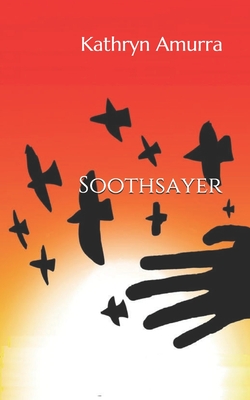
Soothsayer

SoothsayerSoothsayer by Kathryn Amurra (Website)

Genre: historical romance

Setting: Roman city of Lugdunum (modern day Lyon, France)

I read it as a(n): ARC

Source: Helen Hollick at Discovering Diamonds 

Length: 212 pp

Published by: Kathryn Amurra/ independently published (10 May 2020)

Her Grace’s rating: 3.5 out of 5 stars

Set in the Roman Empire, Soothsayer is the story of Aurelia, a beloved daughter of a minor nobleman. She is determined only to marry a man she loves and her doting father agrees, allowing her to turn down several potential suitors. His death, which takes place before the book begins and thus is no spoiler, places her in an unstable situation, not just on her own behalf as an unwed young woman, but because of her brother, Angelus. Angelus is what we would consider developmentally disabled, possibly autistic, and Aurelia is desperate to prevent him being inevitably killed during the mandatory military service required of men when they turn 16. The best way to do this is for Aurelia to marry the regional governor, an old friend of her father’s, who can give Angelus a dispensation from military duty.

Sent to bring Aurelia and her unpleasant aunt to the governor’s estate is Cassius, a career military man and captain of the governor’s soldiers. He was told by a soothsayer as a child that his life would be short, so Cassius has spent his whole life to date avoiding close attachments. He figures it would be better for others not to get attached to him only to have him die young. Of course, making a plan is the best way to make the gods laugh, so Cassius finds himself in charge of Aurelia after a series of small disasters separates them from the rest of Aurelia’s retinue and sets them alone on the road to the governor’s estate. 

This novel was a delightful surprise. I chose to read it mostly because I hadn’t read anything set in the Roman Empire in a long time and I felt the urge to, despite the obvious romance elements it contains (I’m NOT a reader of romance). What I found was not the usual predictable romance but rather a very well researched story about ancient Rome that just happened to have a little romance in it. Murra set this story solidly in a historical framework and adhered to the facts we know. 

Aurelia was a complex and well-crafted character. She did not come across as shallow or frivolous, which she could easily have done considering her young age of 19. She was a mature woman by the standards of the time and she was portrayed as such on the page, a fact I highly appreciated. She was the mistress of her own household once her father died, and she took her duties seriously. Her care for her brother would probably have been a pretty rare thing for the time, when no developmental delay was really understood. Many people, including Aurelia, thought Angelus’s defects were a result of his mother’s sins. When he got into some trouble with Cassius’s soldiers, it was evident that they probably would have killed him if Aurelia and Cassius both hadn’t intervened. With that kind of society, Aurelia learns that she has to make sacrifices to save her brother from a horrible life and quick, probably brutal, death. 

The title Soothsayer is interesting considering that the soothsayer in question had a very tiny on-page presence. But the notion of fate and one’s future is prevalent throughout. Aurelia thinks it is her fate to be unhappy but she is willing to make that sacrifice on Angelus’s behalf. Cassius thinks he is fated to die young. The choices each of them makes are informed almost entirely by their interpretation of the soothsayer’s predictions. The cool thing about fate, other than how it doesn’t exist, is that you can interpret a prediction in just about any fucking way you please. Which, in this case, provides a pleasing denouement to the story 

The only thing I didn’t like was that I felt there needed to be a little more description. Murra discussed the clothes the characters wore in that she called them a palla, tunic, or toga, but there wasn’t a lot of describing what those actually looked like. Same with the buildings. Wealthy Roman houses had an atrium with some kind of catchment for collecting water, gardens, various rooms. None of these were really described. It would help bring the story even more to life if these details had more prominence. But their lack did not take away from the story very much, so maybe other readers won’t care. 

Overall, I would definitely recommend this book and would gladly read others by the same author.