book review

A Journey in Eventing: Review of Ambition by Natalie Keller Reinert

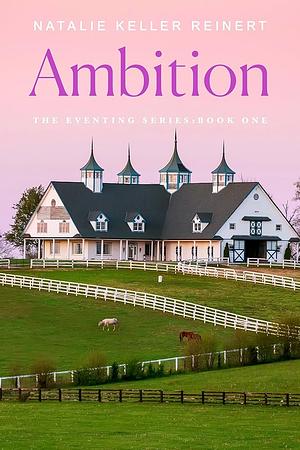
Ambition by Natalie Keller Reinert
Genre: contemporary fiction
I read it as a(n): paperback
Length: 358 pp
Her Grace’s rating: 4 stars
2025 Reading Challenge tasks:
Her Grace’s: #9 – Passes the Bechdel Test
TND: #17 – Animal on the cover; #34 – Starts with A or L
PS: #10 – You got it for free; #30 – Reminds you of your childhood

A few months ago, I was jonesing to read some adult horse novels. The one I read was atrocious and it made me a) definitely dumber than before I read it and b) turned me off to adult horse books in general in case they were all like that. As if horses and women can only go together in terms of vapidity and unrealistic romance. 

Then I saw reviews and recommendations for Natalie Keller Reinert’s eventing series and that it was an excellent overview of actual horse and eventing life. I decided to give it a try and am very glad I did. There was a little romance, but it was seriously like 10% of the story. The rest of the story focused on the protagonist, Jules Thornton, and her attempts to break into the upper levels of eventing while also trying to train other people’s horses AND keep her own barely-functioning farm afloat. 

Her own horse, Dynamo, has a big heart and he loves Jules as much as she loves him, but he is not talented enough to take her as far as she wants to go in competition. So Jules is thrilled when she signs on a new horse to board and train, Mickey, who is everything an eventing horse should be. Except that he’s crazy and traumatized. 

I did really enjoy this novel, enough that I placed the next one in the series on hold at my local library. It gave a good look into the actual work that goes into training horses at a very high level, some history of eventing, and the dangers involved. It is funny to me now, as an adult, to remember the horse crazy little girl I was who thought I would get to be on the US Olympic Equestrian team, despite not having remotely close to the money needed for such a sport and also the fact that my horse was too small and an entire coward. 

I definitely recommend this book if you have a love of horses and eventing, though I think if you aren’t familiar with that, or English style riding in general, it could be a bit confusing as some of the terms are not defined in context. 

book review

Exploring Themes in The Shadowed Land by Signe Pike

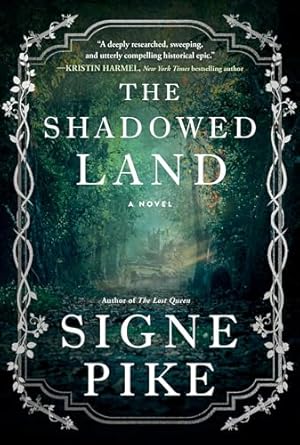
The Shadowed Land by Signe Pike
Genre: historical fantasy
I read it as a(n): audiobook
Narrator: Eilidh Beaton, Toni Frutin, Gary Furlong, Angus King, and Siobhan Waring
Length: 11:48:00 
Her Grace’s rating: 3.5 stars
2025 Reading Challenge tasks:
Her Grace’s: #15 – a retelling (Arthurian legend); #24 – Three or more point-of-view characters 
TND: #5 – Green on the cover; #30 – An author you love 
PS: #19 – Highly anticipated for 2025; #32 – An overlooked woman in history

The highly anticipated third installation of Signe Pike’s Arthurian retelling, The Shadowed Land, focuses on the reunion of Languoreth, Lailoken, and Angharad, Languoreth’s long-lost daughter. Everyone thought Angharad had died in a battle nine years before as no one could find her afterwards. She was, however, living with the Picts. Traveling with them is the warrior Artur Mac Aeden, who eventually gets summoned back to his father’s home in Dalriada, Languoreth and Lailoken go back to Strathclyde with the odious priest Mungo, and Angharad goes back to the Picts to try to convince the Druid Briochan to take her on as an apprentice. 

Maybe I just forgot some things since it was so long between book 2 and this book (I think it was at least 3 years since the previous book, The Forgotten Kingdom, was released). But it felt like a whole lot of nothing much happened. Partly, I think my reading was a bit tainted because I thought this was going to be the final book in a trilogy but then I read that it is now a series and at least one more book is planned. That honestly kind of killed most of the anticipation I had felt leading up to this book. Why does everything have to be a fucking series? Can’t anything stop at just a trilogy anymore? Or even just a single book? One book, one story. I get so sick of reading never-ending series. Most of them now just feel like selling out to make more money.

I also have no idea why we suddenly got Gladys, Languoreth’s elder daughter, as a POV character. She seemed to have zero purpose in the overarching plot. I listened to this as an audiobook and whoever they got to narrate her* was also super obnoxious. I hated her and I will never intentionally listen to any book she narrates. I don’t know how much, if any, input authors have into who is cast for their audiobook narrators, but if Pike has any say in it, I truly hope she tells them to find someone else next time. 

I did really like that there was a lot of focus on the Picts in this book. I don’t remember there being as much about them in the previous two books. I have always been intrigued by them, and we know so little about them, that it is fun to find a book that has Picts as main characters. I don’t have the print edition of this book yet – waiting for the paperback edition – but when I get that, I hope it has a little bibliography so I can check out some of the books myself. I love it when authors include a bib in their books, even if it is in no way all of the things they, themselves, read while researching. 

I also liked that there seemed to be a theme of self-discovery throughout. Each POV character, except Gladys, learned or discovered things about themselves that made them a more complete, complex character. I think it was nicely done on Pike’s part, as it showed growth that people just acquire as they age and engage in self-reflection. 

Overall, I still liked the book, but I frequently tuned out and was disappointed that it felt more like a filler or placeholder to the next book in the now-series. I wish it had stayed as a trilogy as originally planned.

*Eilidh Beaton narrates Gladys’s voice. Process of elimination by listening to samples on Audible, yay. Now she is on my Do Not Listen to This Narrator list. 

book review · historical fiction · Medievalism

The Stone Witch: A Historical Fiction Mystery

book review

Women, Witches, and Weyward: Exploring Nature, Patriarchy, and Resilience

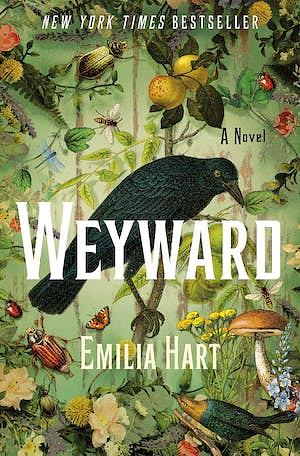
Weyward by Emilia Hart
Genre: magical realism
I read it as a(n): hardback
Length: 329 pp
Her Grace’s rating: 5 stars 
2025 Reading Challenge tasks: 

  • Her Grace’s: #21: About witches or nuns
  • TND: #35: Multiple perspectives
  • PS: #24: A happily single female protagonist

Words cannot adequately express how much I fucking loved this book. I read it in less than two days, which is astonishing considering that I have recently struggled to read a scant 200-page book within the space of an entire month. But I was hooked right from the start of Weyward. This gorgeous book tells the ways in which the lives of three women in three different time periods intersect. They are all connected by a shared link to nature and abuse at the hands of men. 

In 1619, Altha is a healer who is indicted for witchcraft after the husband of a childhood friend is killed. She has only ever used her skills to help her community, and they repay her by turning against her after a man falsely accuses her. Society fears female autonomy and strength, and we have the evidence of that in the witch crazes (and everything else that still persists today in how women are treated). There are references to Jennet Device and the Pendle Hill witch trial* scattered throughout Altha’s story, which is a historical reference I appreciate. Her trial for witchcraft underscores the dangers of being a woman with intelligence or independence in a world ruled by men. 

In 1942, Violet chafes against the harsh restrictions imposed on her by her father and society. She uses nature to seek freedom, and she goes around her father to learn about the ecosystem and insects, doing an end-run around society’s gendered constraints. She suffers mental and emotional abuse from her father, and physical abuse and rape from her cousin. When she takes matters into her own hands, using her innate understanding of nature and her own keen intelligence, she narrowly escapes forced institutionalization. Lobotomy was the implied treatment, along with hysterectomy. Violet escapes a horrorshow life in an institution mainly because her brother stands up for her and rejects their father alongside his sister. Violet’s experiences show the ways in which women’s autonomy was stripped away under the guise of propriety.

In 2019, Kate escapes an abusive boyfriend and flees to a small cottage in the north of England that was left to her by her great-aunt. Said great-aunt happens to be Violet. When she arrives at Weyward Cottage, the wilderness surrounding the area helps her to rediscover and refine her strength and confidence. Kate’s story shows the continuing battle women have to deal with even in modern times, the constant stream of bullshit from patriarchal desires and systems that are forced on society. Seriously, why do we still have to struggle with this? 

These three women are also case studies in how generational trauma works. They each have inherited both the wounds and the knowledge of their foremothers. The novel emphasizes the importance of embracing and working with that heritage. It is only by doing so that they, and we today, can find the ways to break the cycle of abuse and oppression. 

Each of these women are witches in their own way – healer, scientist, mother. This is a story about the deep strength and courage of women, how we intersect with each other even across time, and the impact of the natural world on us all. Through their connection with nature, these women reclaim their identities and strength that was stripped from them. They give the finger to their abuse, abusers, and generational trauma by refusing to allow that abuse to define them. Instead, they are defined by their resilience and the way they each embraced their rewilding.

I cannot recommend this book highly enough. I think it is one that will resonate with any woman. After all, as Aunt Jet reminds us, there’s a little witch in all of us.

*Side quest: If you are interested in reading a superb historical fiction about the Pendle Hill witch trial, you will immediately go pick up Daughters of the Witching Hill by Mary Sharratt.

book review

Fun Reading Challenge Ideas for Book Lovers

  1. Set in a non-patriarchal society, because FUCK the patriarchy: The Bees by Laline Paull, The Left Hand of Darkness by Ursula LeGuin, Ancillary Justice by Ann Leckie, or Herland by Charlotte Perkins Gilman. I’ve had all of these for ages and haven’t gotten around to reading any of them yet.
  2. Set in or about nature: Landlines by Raynor Winn, The Outrun by Amy Liptrott, Rain: Four Walks in English Weather by Melissa Harrison, The Book of Wildflowers by Angie Lewis, Chasing the Ghost: My Search for All the Wildflowers of Britain by Peter Marren.
  3. Reread a favorite childhood book: The Blue Ribbon series by Chris St. John. The first in the series is called Riding High. The whole series is about a group of girlfriends who are 3-day eventers. Or I might also revisit Pern, especially the Harper Hall trilogy, by Anne McCaffrey.
  4. A nonfiction by a woman about a STEM field: Lab Girl by Hope Jahren, or I might reread Braiding Sweetgrass by Robin Wall Kimmerer and take better notes this time.
  5. By or about a person struggling with a mental illness: Obviously, The Bell Jar, which I have somehow never read. Or We Have Always Lived in the Castle by Shirley Jackson.
  6. Recommended by a family member: The Book of Doors by Gareth Brown (rec’d by my BFF Lynn, who is certainly my family), or Counting by 7s by Holly Goldberg Sloan (rec’d by my cousin Ashley).
  7. A middle grade book: Can I Get There by Candlelight by Jean Slaughter Doty. I read this fucking decades ago but remember that I loved it, so I will reread the copy I have on my shelf.
  8. A nonfiction about an -ology: I have Enlightenment Now and Rationality by Steven Pinker, so I’ll tackle one of them. I also have a couple others that have been collecting dust, so maybe one of them instead. Guess we’ll see.
  9. Passes the Bechdel Test: The Fifth Season by NK Jemisin, which was listed on some library sites as passing the Bechdel test. I figure the librarians know what they’re talking about and it’ll give me a good reason to finally get around to reading this series.
  10. A book that was adapted to the screen: The Three-Body Problem by Cixin Liu, which I keep saying I will read and then never actually do. Or The Princess Bride by William Goldman, The Outrun by Amy Liptrot, or Fingersmith by Sarah Waters.
  11. A book that is a novelization of a TV show or movie: It isn’t exactly the same, I guess, but I have billions of Star Trek books, some of which are novelizations of specific episodes. Easy. 
  12. A book that won an award in 2023: Babel by RF Kuang (Nebula Award), or maybe Demon Copperhead by Barbara Kingsolver, which won several awards.
  13. A book with a yellow spine: How Long Til Black Future Month by NK Jemisin.
  14. Flowers on the cover: Weyward by Emilia Hart
  15. A retelling: What Moves the Dead by T. Kingfisher (retelling of “The Fall of the House of Usher”), The Witch’s Heart by Genevieve Cornichec (retells various Norse myths), or Lamb by Christopher Moore (retells The New Testament).
  16. A banned or frequently challenged book: Eleanor and Park by Rainbow Rowell, The Perks of Being a Wallflower by Stephen Chbosky.
  17. Explores a culture that is different from yours: Even As We Breathe by Annette Saunooke Clapsaddle (Appalachia), LaRose by Louise Erdrich (Objibwe), Guardian of the Dead by Karen Healey (New Zealand).
  18. Features snakes in some way (2025 is the Year of the Snake in Chinese zodiac): Ninth House by Leigh Bardugo, Demon Copperhead by Barbara Kingsolver, The Essex Serpent by Sarah Perry.
  19. Set in a utopian society, because reality is dystopian enough, thank you: The Mars trilogy by Kim Stanley Robinson, Dispossessed by LeGuin.
  20. Related to medicine: The Plague Tales by Ann Benson, The Patient’s Eye by David Pirie.
  21. About witches or nuns: The Corner That Held Them by Sylvia Warner Townsend, Anchoress by Robin Cadwallader, Her Majesty’s Royal Coven by Juno Dawson, A Pocketful of Crows by Joanne Harris
  22. About geek culture: The Geek Feminist Revolution by Kameron Hurley, Geek Wisdom: The Sacred Teachings of Nerd Culture edited by Steven H. Segal, The Geek’s Guide to Dating by Eric Smith.
  23. Takes place over one 24-hour period (circadian novel): The Uncertain Hour by Jesse Browner, Today Will Be Different by Maria Semple, Shy by Max Porter, or Orbital by Samantha Harvey.
  24. Three or more point-of-view characters: One of Us Is Lying by Karen McManus, Girl on the Train by Paula Hawkins.
  25. Bonus challenge 1: Complete the challenge using books only by people who identify as women: Every task above has at least 1 book by a woman as an option listed, so I should be good there. 
  26. Bonus challenge 2: Use the prompts to complete the A-Z reading challenge: I’ll fill these in as I can. Y’all are on your own for this one! 
book review

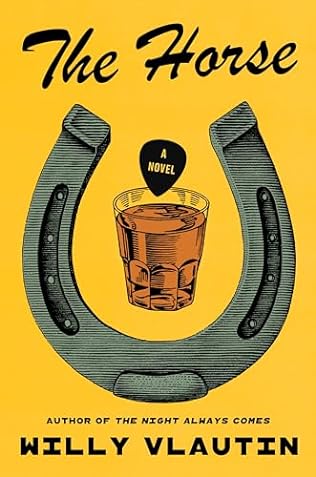
Exploring ‘The Horse’ by Willy Vlautin: A Reflection on Life

The Horse by Willy Vlautin
Genre: literary fiction
I read it as a(n): hardback
Length: 194 pp 
Her Grace’s rating: 3.5 stars 

Reading Challenge tasks: 
Her Grace’s: 13 – A book with a yellow spine
TND: 7 – A new to you author
PS: 8 – Under 250 pages

Al Ward is a 60-something alcoholic guitar player and songwriter who has hit rock bottom. He’s living in basically a shack with no electricity or running water on an old mining claim in the desert outside of Reno, NV, which he inherited from his uncle. Naturally, he’s wondering why he should bother to carry on when a random horse shows up at his door. The horse is blind, obviously old, and starving. It is also the middle of winter and Al worries that the horse will freeze to death. He decides it is his job to save the horse, but given that he has only canned condensed soup and no working vehicle, he’s in a quandary. He decides to walk 30 miles to the nearest neighbor’s farm to seek help for the animal, hoping that it will still be alive when he returns. Also, he’s hoping it’s a real horse and not a product of alcoholic hallucinations. 

In some ways, this book reads like a depressing case study in poor decisions and a life that has never had anything really go right. But it is also a deep reflection on the lived experiences of so many Americans. So many people live hand to mouth, no money, no savings, floating from one job to the next, wondering where they will sleep next or where their next meal will come from. Often it isn’t any fault of their own; they just lacked the necessary support systems to get a leg up. It also is about loneliness and people trying to make a connection with another living being, whether that is another human or a horse or something else. 

Al is a good man and sympathetic character. He never intentionally hurts anyone, he truly does try his best. He is also a highly unreliable narrator. His alcoholism becomes part of his identity and, try as he might, he is never able to totally dry out. This leads readers to question how much of his story is accurate or even real. It colors the portrayal of all the other characters in the story as well, whether they, too, are addicts in some way or not. 

The horse is more a place to hang the plot rather than being part of the plot itself. Its presence in the story is minimal and serves mainly as a way for Al to begin looking back over his own life and the choices he’s made. Anyone looking for an actual story about a horse will be disappointed. Initially, that was me, but the writing was excellent and I felt bad for Al. I wanted to know more about him and how it would end, so the lack of actual horses in the story quickly became irrelevant to its enjoyment.

lifestyle · travel

Highlights of My Busy 2024: Family, Travel, and Reading

My 2024 was pretty busy, mostly in good ways. 

So. That happened. I am sick to death of politics, so all I’ll say is, I hope everyone gets the year they voted for and deserve. 

New Zealand sister, her husband, and kids came for a good visit. I hadn’t gotten to meet her kids before now, so that was a delight. That whole visit was a highlight of the year, though I feel bad that their schedule meant they had to come in the hottest part of summer. There’s nothing good about summer in Phoenix. Sorry, Z – I hope next time you get to come when it is not a million degrees out. 

A few months after their visit, her younger brother came for a visit as well. He had a few days to kill between arriving in the States and taking his test to get promoted to captain (he works on superyachts – how cool is that?), so he came to visit us. I hadn’t seen him since he was like 8, so that was a fun visit as well.

I took my daughter on a trip to London during her fall break from school. One of my best friends met us there a few days later and we had one epic girls’ trip. I got a new tattoo while I was there; we saw a few plays, including A Comedy of Errors at Shakespeare’s Globe Theatre; got to visit my friend’s family during a trip to Kew Gardens and Camden; ate dinner at St John, which was one of Anthony Bourdain’s favorite restaurants in London; saw, FINALLY, the tomb of William Marshal in the Temple Church; and spent hours in a massive 6-storey Waterstone’s, buying books that weren’t published in the States yet because buying books in Britain is more fun, and also I have no ability to delay my gratification when it comes to books in general. 

I hit a major reading slump this year, too, but I still did alright. I read a total of: 

  • 36 books
  • 11,113 pages
  • 12 audiobooks
  • 153:27 hours listened
  • 67% of women authors
  • 33% of male authors
  • 8% LGBTQ+ authors 
  • 19% LGBTQ+ characters (I did really badly in these 2 categories this year; I try to do 25-30% at least)
  • The genre I read the most was sci-fi. Big surprise there. 44% of my reading was sci-fi
  • The month I read the most was December, which is weird
  • I had 8 books that I rated as 5-star reads
  • I had 1 book to which I gave a 1-star rating

My favorite books of this year were:

  • The Salt Path by Raynor Winn (also the audio)
  • The Wild Silence also by Raynor Winn
  • Thorn Hedge by T. Kingfisher
  • The Long Way to a Small, Angry Planet by Becky Chambers
  • A Closed and Common Orbit also by Becky Chambers
  • the witch doesn’t burn in this one by Amanda Lovelace

My favorite audiobooks of this year were:

  • The Salt Path written and read by Raynor Winn (also eyeball read this)
  • Lost Boy by Christina Henry, narrated by Samuel Roukin
  • Norse Mythology written and read by Neil Gaiman
  • The Gentleman by Forrest Leo, narrated by Samuel Roukin and John Keating. (Some serious, laugh out loud funny moments in this one. The side notes just about killed me)
  • The Shadowed Land by Signe Pike, narrated by Eilidh Beaton, Toni Frutin, Gary Furlong, Angus King, and Siobhan Waring (I waited 3 years for this book to come out and it was so worth it. Probably my new all-time favorite take on Arthurian legend)

I still have a few days left of 2024 so I may get a couple more books read between now and then. But it’s close enough.

My goals for 2025 are much as always – read lots, try new food, go to some interesting places, hang out with friends. I will try to complete my own reading challenge in 2025. For fun, I try to complete The Nerd Daily’s annual challenge as well, though I don’t make myself crazy if that doesn’t happen. And, of course, I try to do the reading challenges by tackling my own TBR in the process. I will post my annual reading challenge in a couple days for anyone who might want to participate. 

Happy Holidays, all!

book review

The Flaws of Remember Summer: A Romance Gone Wrong

Remember Summer by Elizabeth Lowell
Genre: ewww, romance
I read it as a(n): digital book from the library
Length: 384 pp 
Her Grace’s rating: 1 stars

Raine Smith is a world-class equestrian. Readers first meet her scanning the cross country obstacle course for the summer Olympics, where she is standing on a hill with a camera. The male protagonist, Cord Elliott, is an agent from a branch of the government anti-terrorist task force who is assigned to protect Raine, whose father is a bigwig in said task force. Except nobody told Raine that she has a protective detail, and someone gave Cord a terrible photo of Raine so he didn’t recognize her. Still thinking she’s alone, she reaches into her purse to grab a notebook, making Cord think she’s going for a gun – alone. On a hilltop. – and he tackles her to the ground. Two minutes later, they are making out.

I…do not understand romance books. Granted, this one was written in the 80s. But even in that strange time, I don’t think real people acted that way. Who the fuck makes out with a man who literally just attacked you? The only correct response, both in that instant and in every instance thereafter, is a solid kick to the balls.

I got this book (thankfully from the library – I spent no money on it) because I saw a review somewhere that only talked about the horse stuff. So I thought it was a horse book! For grown ups! I was a horse-crazy little girl. I still dig a good horse novel for adults, especially if it’s about English style riding or eventing. If I had known it was a romance, I would have passed on it. Because of crap like the above. There is hardly any horse stuff except in the last 10% or so, other than Raine talking or thinking about her horse. Otherwise, it could be just any kind of event or sport – fill in the blank with whatever activity you choose and you’ll have the same story.

The characters were flat and unlikable. Raine is supposed to be a world-class rider on a dangerous horse who has spent her entire life working towards this moment when she will compete in the Olympics, and yet one tackle and getting pinned to the ground by a random man turns her into a vapid cow who can only think about getting laid by said random man and who laments that her daddy doesn’t love her. 

Cord is a caveman with a gun – grunt woman mine! – who has poor communication skills and a one-track mind, if we’re being generous in factoring in his mission to kill a specific terrorist. Half-track mind if we focus only on his singular desire to drag Raine to bed by her hair and keep her there. Naturally, he also handles her horse better than she does.

I am sad that there is such a dearth of horse stories for adults, and that many of the ones that exist take the form of romance. Horses and women do not automatically have to equate to bodice-ripping, flat romance. I am definitely dumber for having read this book.

book review · sci-fi

Character-Driven Stories in The Wayfarers Series

I had done a very short review for The Long Way to a Small, Angry Planet in a catch-up round a while back. So I don’t really want to redo it here, even though there’s a lot I could say about it. Mostly I will say that I loved it and that it had spicy, diverse characters. The characters were the primary drivers of the story more than the plot, though that was ridiculously fun as well. I love the trope of Found Family and Chambers created a beautiful one on the Wayfarer. I give it 4.5/5 stars

Moving on. A Closed and Common Orbit is, I think, my favorite in the series. As fun as TLWtaSAP was, this one sat me down and fed me a delicious story of self-discovery AND a character backstory. I do love a good backstory. I like seeing how all the stories and characters are intertwining across these books. Pepper was a minor character in a couple scenes in the first book, and now she has a whole book of her own, along with Lovey, the Wayfarer’s AI. Other characters that got a small mention elsewhere show up as well. I love that kind of world-building. Very meta. 

I also loved this story because it was fun to get to know one specific setting well. The primary story was set in Port Coriol, and the descriptions of that city were vivid and tangible. It was a vibrant city and Pepper’s little neighborhood, Six Top, felt like a place I would love to stay. 

5/5 stars

————————————–

Record of a Spaceborn Few covers the Human fleet, called the Exodans. They are the remnants of the people who left Earth and who decided to remain in space rather than settling on a planet. As with the other books in the series, there are references to other characters from previous books. One of the POV characters in this is Ashby’s sister. Ashby, for those who may have forgotten, is the captain of the Wayfarer. It was fun to get “updates” about Ashby by way of a random comment here and there, a reminder of what the Wayfarer crew was up to at the same time the events in the Fleet were unfolding. 

This one focused on the ways we come to discover Home, and what that means to each of us. We saw this exploration through the eyes of several Humans, some who were Exodan and some who grew up on a planet. Some wanted out of the Fleet, some wanted back in, and others weren’t sure where they belonged. Chambers teased out the threads of their stories and wove them together to create a lovely, rich story.

3/5 stars

————————————–

The Galaxy, and the Ground Within. Yes, yes, it was chock full of complex characters and a little bit of splody space excitement and getting to know people and their various cultures. I dig all of that, don’t get me wrong. But! Did you know there is a whole scene dedicated to cheese? And how revolting it really is when you stop to think about it? And how, despite that, humans are “all so fucking bonkers for cheese that they’ll ingest a dose of the enzymes [needed to digest cheese] beforehand so that they can eat it.” I feel so seen.

As with the other three books in the series, this one was full of deep characters, lots of self-discovery, and growth. Also as with the rest of this series, it really isn’t an action-packed, standard space adventure kind of story. All of the books in this series are more like examples of kishotenketsu, where there isn’t a traditional hero or call to action or conflict. The characters interact and learn about each other and through them, their own biases and blind spots. Some of them try to figure out what they can do about those to do better. Their circumstances made them think introspectively, and I think it should do the same for any reader as well.

4/5 stars

————————————–

Overall, this entire series is the sort of generally happy, hopeful sci-fi I love. It’s reminiscent, in that way, of the original series Star Trek. I think we need more of the fun, optimistic, cozy kind of sci-fi and less of the dystopian, doom and gloom, we’re all going to die screaming kind. We already know we’re going to die screaming. I, for one, would like not to have to think about it for a minute. The Wayfarers series is the thing you are looking for to help distract you from…everything.

book review · historical fiction

Exploring Women’s Voices in The Iliad’s Retelling

Daughters of Bronze by A.D. Rhine
Genre: historical fiction
I read it as a(n): digital ARC
Length: 512 pp
Her Grace’s rating: 5 stars

In Daughters of Bronze, A.D. Rhine (the penname of writing team Ashlee Cowles and Danielle Stinson) continues their feminist retelling of The Iliad, focusing on four women: Rhea, Andromache, Helen, and Cassandra. This second* novel brings their stories to the forefront, challenging the traditional male-dominated narrative.

Helen, often blamed for the Trojan War, is portrayed as a victim of Paris, who took her against her will. Rhine gives Helen a voice, exploring themes of female agency and resilience.

Andromache, usually seen as Hector’s wife and Astyanax’s mother, is depicted as a complex character, fiercely protecting her family and city. Her story delves into motherhood, duty, and honor.

Cassandra, the seer cursed to be ignored, is shown as a character of heartbreaking vision. Her voice is repeatedly silenced, often by other women, yet she remains devoted to the truth. Her story highlights the consequences of ignoring or marginalizing women.

Rhea, a refugee turned spy for Troy, plays a crucial role in the war. She and other brave women work to undermine the Greeks, risking their lives and highlighting the invisibility of women in historical narratives. If Helen, Andromache, and Cassandra are the warp of this story, Rhea is the weft that binds them together.

Rhine’s novel is rich with themes that resonate deeply in contemporary discourse. The author uses the framework of The Iliad to explore issues of gender, power, and agency. Each character’s story is a testament to the strength and resilience of women, challenging the patriarchal structures that seek to confine them. By giving voice to Rhea, Andromache, Helen, and Cassandra, Rhine underscores the importance of listening to and valuing women’s experiences and perspectives.

The novel also discusses the personal cost of war, not just for the men who fight, but for the women who endure its aftermath. The emotional and psychological toll of the Trojan War is vividly portrayed through the eyes of its female characters, offering a stark reminder of the often-overlooked victims of conflict.

Rhine’s prose is lyrical and evocative, capturing the grandeur of the ancient world while providing intimate glimpses into the lives of its characters. The alternating viewpoints of Rhea, Andromache, Helen, and Cassandra are seamlessly woven together, creating a tapestry of interconnected stories. This narrative structure not only highlights the individuality of each character but also emphasizes their collective experiences and struggles.

Daughters of Bronze is a powerful and thought-provoking retelling of The Iliad that places women at its heart. A.D. Rhine’s novel is a celebration of female strength, resilience, and agency, offering a fresh perspective on a timeless epic. By reimagining the stories of Rhea, Andromache, Helen, and Cassandra, Rhine provides readers with a deeper understanding of the human experience and the enduring impact of women’s voices in history. This novel is a must-read for fans of historical fiction, feminist literature, and anyone seeking a more inclusive and nuanced take on classic tales.

*I somehow missed that this was the second installment, but it didn’t matter. The narrative is tight, and anyone familiar with The Iliad can jump right in. However, some backstory from the first installment, Horses of Fire, might further enhance the reading experience.

A version of this review was originally published at the Historical Novel Society.