book review

Exploring Magical Realism in _Spells for Forgetting_

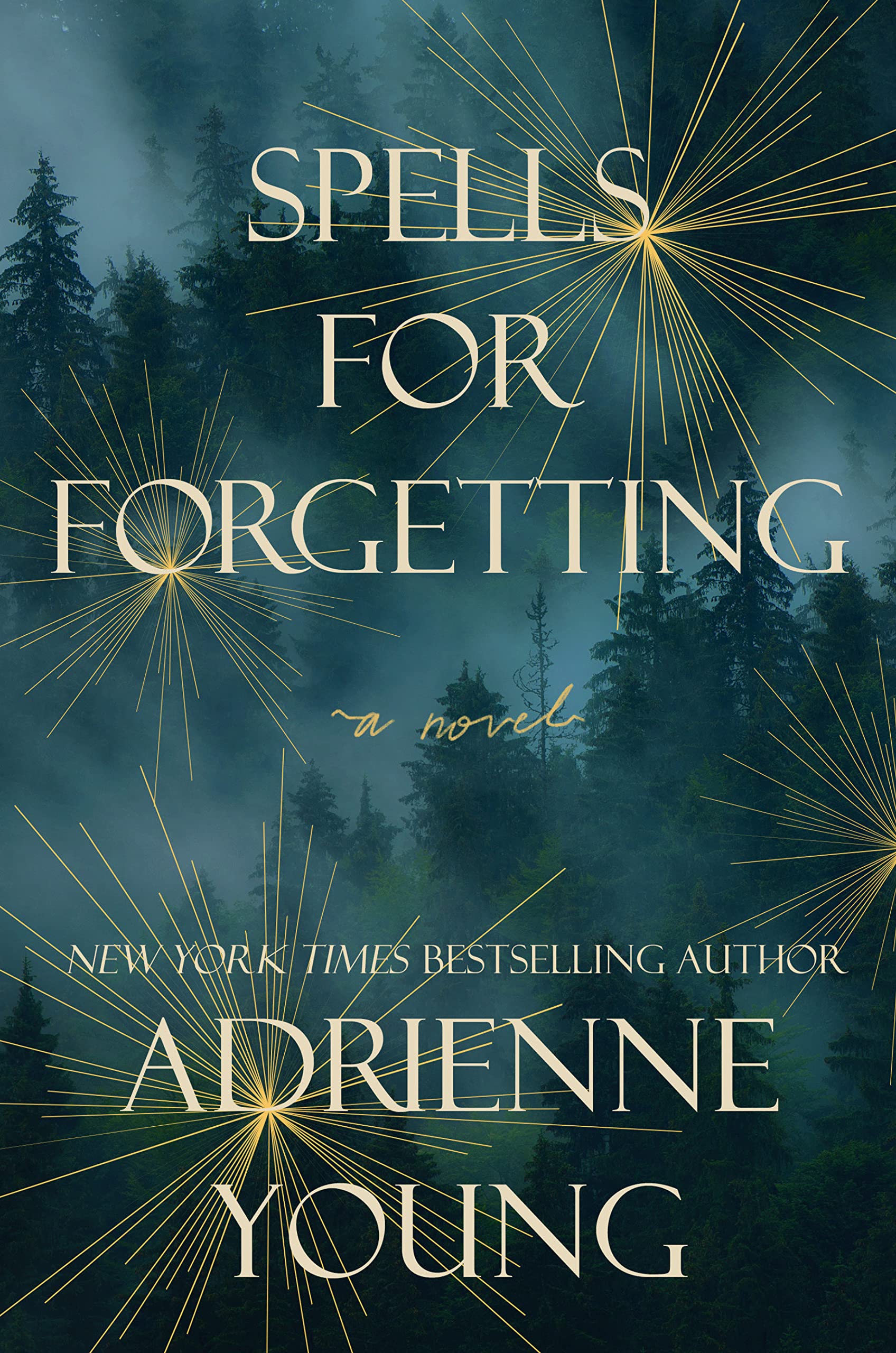
Spells for Forgetting by Adrienne Young
Genre: literary fiction/ magical realism
I read it as a(n): hb
Length: 350 pp 
Her Grace’s rating: 4 stars

The residents of Saoirse Island, WA, are a different group of people. They are insular, some of them to the point of xenophobia, yet they are almost entirely dependent on the tourists who come to the island to pick apples from its gigantic orchard. Every person on the island is tied in one way or another to the orchard. So when the orchard burned nearly to the ground and a teen died, folks did what they felt was necessary – ostracized the boy who seemed responsible, forcing him and his mother out of the community, and then never spoke of it again. That is, until that boy, now a man, returns to the island to bury the ashes of his mother. August Salt’s return to the island stirs up memories and secrets most want to leave buried except for Emery Blackwood, the girl August left behind.

Saoirse is an island that wraps itself around the lives of its people, dictating their fates in ways that feel inescapable. It is ironic since Saoirse means freedom in Irish, but it’s anything but free for some of the islanders who are bound by the weight of history, tradition, and unsolved mysteries. For those who live there, leaving is never really an option. Even when they manage to get away, as one of the characters does, they are always drawn back, like a magnet pulling them to confront what has been left unresolved. It is not really an ominous sense, though, as the island protects many who need it, and wreaks havoc on others who deserve it. Also? I love it when there is an inanimate object that is a fully fledged character in its own right. Saoirse Island is certainly that.

In magical realism, the blending of the ordinary with the extraordinary is seamless, and Spells for Forgetting exemplifies that perfectly. Saoirse is full of magic, but it’s a kind of magic that feels like part of the natural world. It just exists, like the air or the tides, and nobody questions its existence. The magic is tied to the land itself, the orchard in particular. The island breathes life into this magic, and just as it holds the people in its grip, it also holds their power. This is why the women, especially the older women, are so central to the story. Their knowledge of magic isn’t learned in books or schools—it’s passed down through the generations, grandmother to granddaughter, like a family secret. 

In folklore, older women tend to hold a special place when they aren’t relegated to the role of witch or wicked stepmother. They are the keepers of tradition, the wise ones who hold knowledge that others don’t understand or respect until it’s too late. But Spells for Forgetting subverts this role in an interesting way. Yes, the grandmothers are the teachers, the ones who understand the magic and the island, but they are also trapped by it. The island’s magic is as much a burden as it is a gift. It binds them to Saoirse just as much as it empowers them, and in this way, they are not the all-knowing, all-powerful figures of traditional folklore. Instead, they are characters shaped by the same constraints and fears as everyone else, forced to carry the weight of the island’s secrets and never able to escape its influence. 

The role of women in the story, particularly in the context of magical realism, highlights the balance between empowerment and imprisonment. Their connection to the island, through magic, bloodlines, and tradition, gives them strength but also makes them part of Saoirse’s pull. While folklore often celebrates the wisdom of old women, Spells for Forgetting shows the price of that wisdom—knowledge of the island’s magic comes with a cost, and freedom, in the true sense of the word, is not part of the bargain. 

In this way, the island itself becomes the ultimate character, shaping and controlling the lives of everyone who resides there. Its magic is subtle, but Saoirse is a constant reminder that what should be freedom is, in reality, a kind of beautiful, inescapable prison. The natural elements—earth, water, wind, and fire—aren’t just parts of the scenery but active forces that tie the people to the island, just as much as the magic and the folklore do.

fantasy · sci-fi

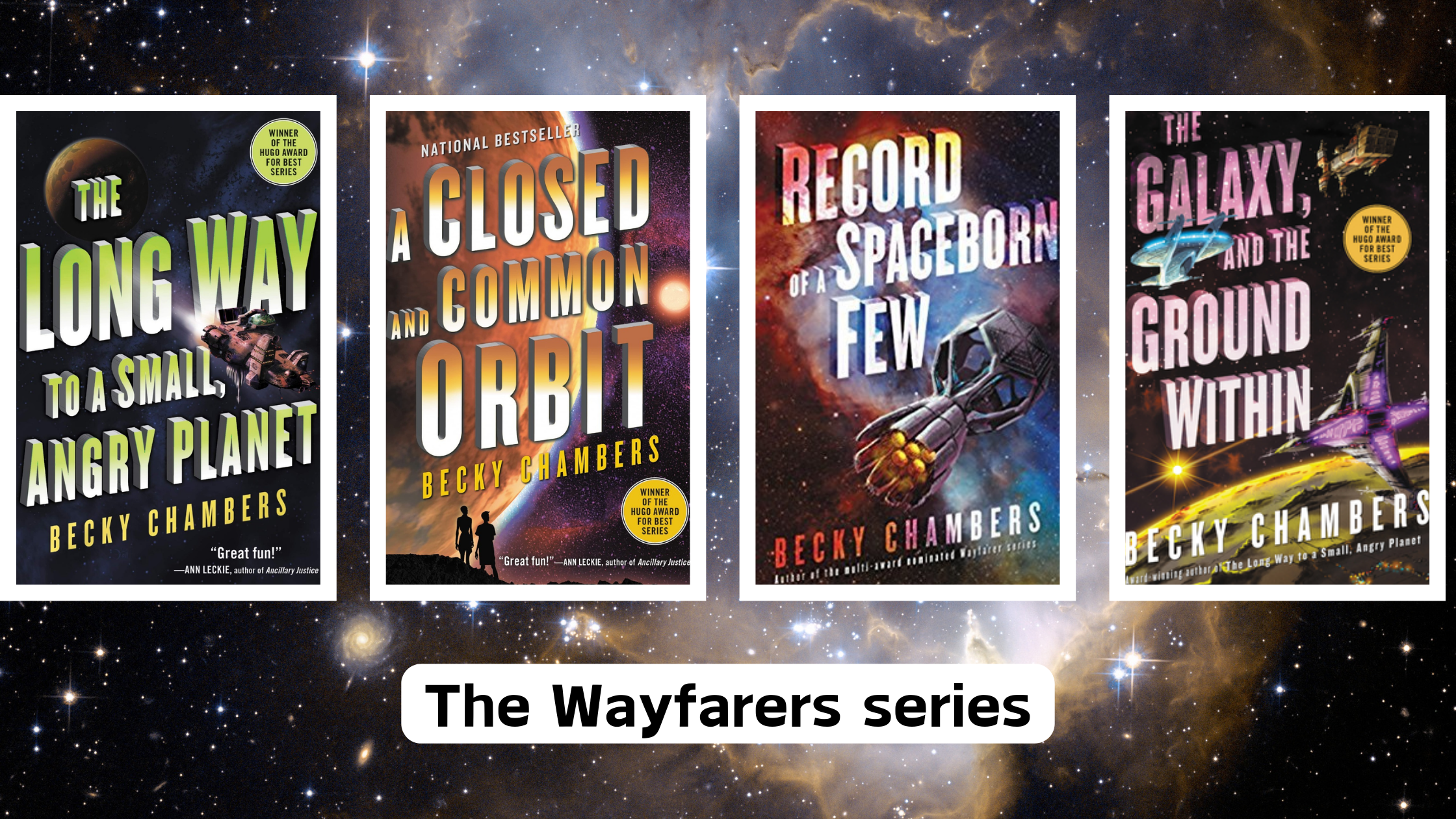
Thorn Hedge, Hell Followed With Us, and The Long Way to a Small, Angry Planet – A Catch-Up Review

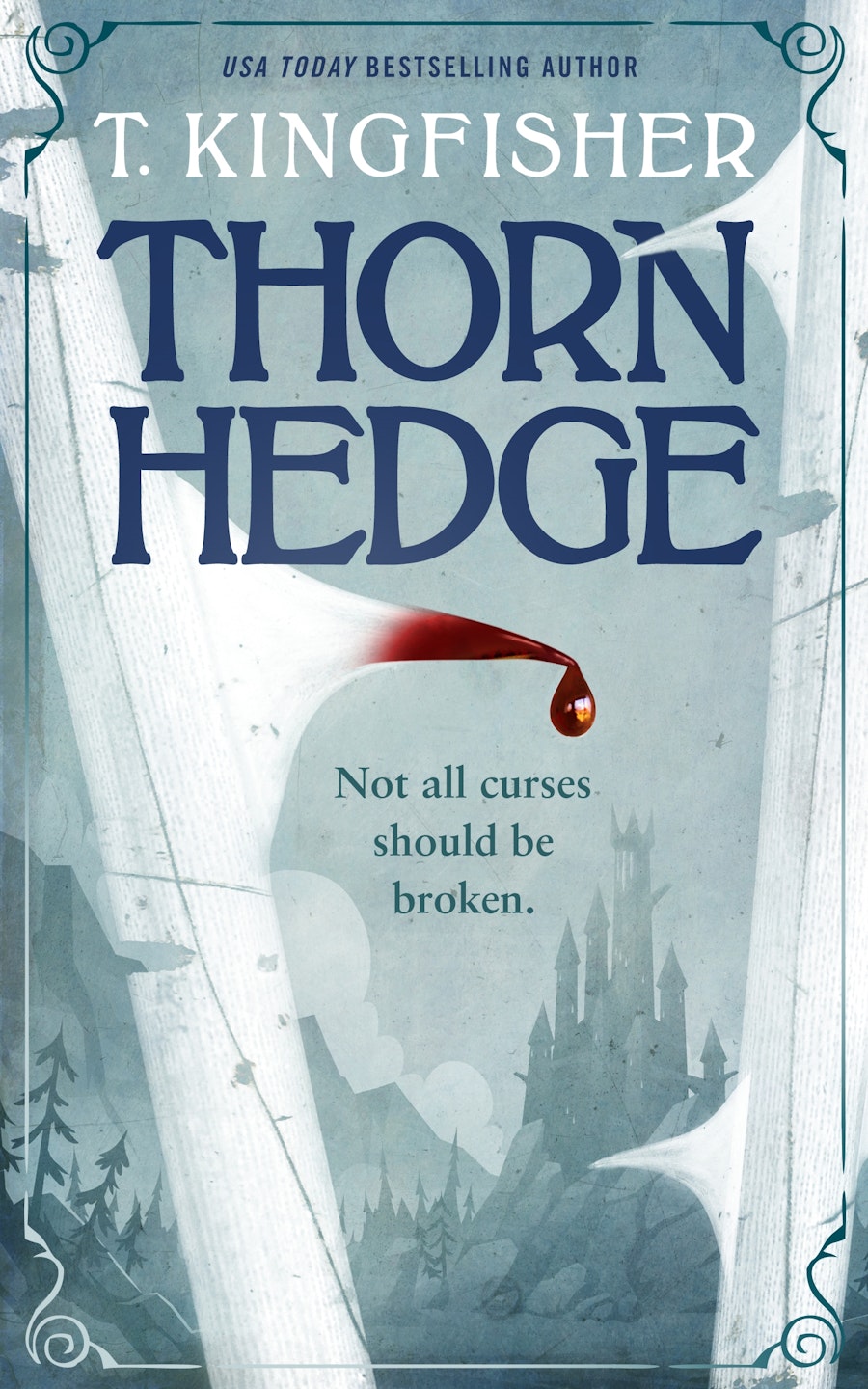
Thorn Hedge by T. Kingfisher
Genre: fantasy
I read it as a(n): hardback
Length: 116 pp 
Her Grace’s rating: 4 stars

A retelling of “Sleeping Beauty,” Thorn Hedge asks, “What if Briar Rose slept not because she was cursed but to protect everybody else?” Not all curses should be broken, as the blurb says, and it’s true. Kingfisher takes a beloved fairy tale and breathes new life into it. I loved everything about this story – the atmosphere, the self-discovery, and the anxiety it gave me to think about what might happen if the Princess woke up. Also, I think there needs to be a cat at some point in my future that I will name Toadling.  

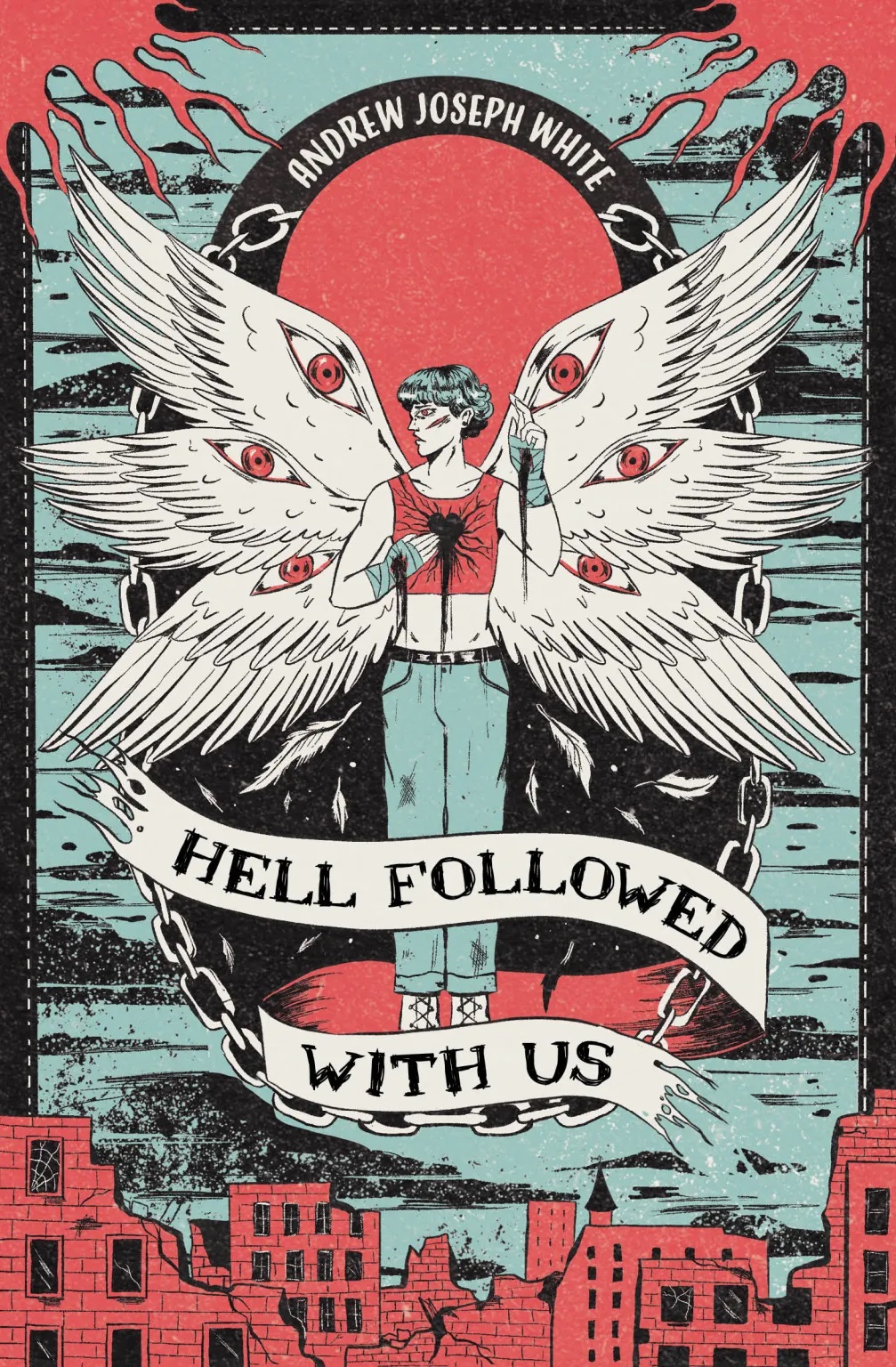
Hell Followed With Us by Andrew Joseph White
Genre: SF
I read it as a(n): paperback
Length: 398 pp
Her Grace’s rating: 3 stars

I had read White’s second book, The Spirit Bares Its Teeth, a while back and loved it. My daughter read this one first and begged me to read it, too, so I did. I enjoyed it but I was kind of grossed out. I dig a good cult book and escaping from said cult, but the body horror in this one was over the top. I loved the characters, though, and the dynamics between them all.

The Long Way to a Small, Angry Planet by Becky Chambers
Genre: SF
I read it as a(n): paperback
Length: 441 pp
Her Grace’s rating: 5 stars

I’ve had this one on my TBR for several years and I don’t know what took me so long to get around to reading it. I loved it! In some ways, it felt a bit like a more lighthearted version of The Expanse books. Not in terms of plot at all, but more in the sense of found family. It had enough action but also plenty of terrific world-building and character development. 

book review

Middle Earth March: Life Lessons from Tolkien

Happy March, friends. I like to call it Middle Earth March. I specifically look forward to March 25th each year. In the Tolkienverse, it’s the Gondorian New Year, the day Sauron fell, the One Ring was destroyed, and the beginning of the Fourth Age of Gondor. It’s often celebrated as Tolkien Reading Day, the theme of which this year isService and Sacrifice.” March 25 is also my almost-birthday. On this day, I fix many meals – first and second breakfast, luncheon, afternoon tea, dinner, and supper – and hole up with a Tolkien book. Ha ha, get it? In a hole in the ground, there lived a hobbit? Anyway. Sometimes I reread an old favorite and revisit The Hobbit or The Lord of the Rings. Other times, I’ll pick a less familiar work. It’s been probably 20 years and more since I read The Silmarillion, and I have only read Leaf by Niggle but once. Might be the year for that. Who knows? I did read The Fellowship of the Ring to my daughter for the first time a couple years ago. She was ten at the time and was mightily impressed that Frodo gets to go on a quest and see the elves and all. I think she will never forgive me for not warning her that Gandalf falls in Moria, though. She’s still mad at me for not warning her. But what could I do? I couldn’t spoil it for her. On the Gondorian New Year, I’ll definitely make all the food for her. I’m determined to make her a Tolkien fan and so far, my plan seems to be working.

As a lifelong Tolkien fan myself, it is natural for me to reread the books every few years. Each time, I discover something entirely new in them. I’ve always changed in some way between readings, grown older, hopefully a little wiser, and so I pick up new things in the text. It’s like an English trifle, each reading revealing a hidden layer to reveal some new treasure within. It’s delightful. I honestly don’t know if it is just because I love Tolkien’s works so much, or if they are just that rich, or what, because there are any number of other books that I adore and reread often but don’t find that much new in them upon rereading. In any case, there are many life lessons I have learned from Tolkien’s works. Just a few of the ones I have found to be the most meaningful are below. Continue reading “Middle Earth March: Life Lessons from Tolkien”

book review · books · fantasy · random · sci-fi

A random list of books based on an IG challenge

Greetings, fellow book nerds! I hope your summer is off to a good start and that you have many adventures to look forward to. I am looking forward to a couple short trips and, of course, making some kind of dent in my TBR. Which is hard because I seem to be in a reading slump and I haven’t read very much lately. 

Sometimes when I’m in a reading rut, I will try reading a genre that is completely opposite of the book I just finished. That often helps me get back on track. That doesn’t always work, though, and then I have to try something else. This time, I went to Instagram and dug around in the #bookstagramchallenges hashtags. I also follow the bookstagramchallenges channel to see a variety of book and reading challenges. Sometimes those are great for kicking me out of a reading rut. Plus, they’re just fun! Also, they’re like lists! I love lists. I love getting to cross things off of them. 

For this, I absolutely cherry-picked the prompts I wanted to use from a few different challenges. I went with an all science fiction and fantasy theme for these, since I’m in a big sci-fi mood. I also recognize that there are entirely too many books listed here. I had a hard time picking just one for some of the questions! 

  1. Last, current, and next reads: The Buried Giant by Kazuo Ishiguro; The Big Book of Science Fiction, edited by Ann and Jeff Vandermeer (print) and Seveneves by Neal Stephenson (audio); The Sound of Stars by Alechia Dow. 
  2. Favorite SFF series: Sci-fi – The Expanse series by James S.A. Corey; Fantasy – The Dragonriders of Pern by Anne McCaffrey.
  3. Side characters you wanted to see more of: Kamazotz, the Death Bat from Gods of Jade and Shadow by Silvia Moreno-Garcia. I guess it isn’t really a proper sidekick, but I would have a ball flapping around on a death bat while on epic quests. 
  4. Quick reads: All Systems Red by Martha Wells. We need more Muderbot in our lives!
  5. Sad reads: Never Let Me Go by Kazuo Ishiguro; “There Will Come Soft Rains” by Ray Bradbury; and several of the stories in Alexander Weinstein’s excellent collection Children of the New World, in particular the titular short story as well as “Saying Goodbye to Yang.” 
  6. Funny reads: Job: A Comedy of Justice by Robert A. Heinlein (possibly the most hilarious book I’ve ever read); Redshirts by John Scalzi; How to Live Safely in a Science Fictional Universe by Charles Yu. 
  7. Weapon on the cover: The Rising of the Moon by Flynn Connolly.
  8. Favorite mentor: Ged from The Earthsea trilogy by Ursula K. Le Guin. 
  9. Books and drinks: Split and Scumble, both from Terry Pratchett’s Discworld series! And, although these aren’t from books, honorable sci-fi drink mentions are: Green (AKA Aldebaran whisky) from the episode “Relics” from Star Trek TNG and A Warrior’s Drink (prune juice eww!) from the TNG episode “Yesterday’s Enterprise.”
  10. Unpopular opinions: Only Dune is good in the Dune series. The first rule of reading the Dune series is that you should only bother with Dune, not the rest of the books.
  11. The chosen one: Bastian Bux from The Neverending Story by Michael Ende.
  12. Revenge plotlines: Ancillary Justice by Ann Leckie.
  13. Favorite creatures: Mother Thing in Have Space Suit, Will Travel by Robert A. Heinlein; the Tendu, the frog-like beings in The Color of Distance by Amy Thomson; and the hen with a demon in her in Nettle and Bone by T. Kingfisher. 
  14. Loyal and noble: Robbie the robot, the titular character in Isaac Asimov’s short story “Robbie.”
  15. Book that I would recommend to new SFF readers: The Long Way to a Small, Angry Planet by Becky Chambers. For fantasy, I’d go with Spinning Silver by Naomi Novak or Daughter of the Forest by Juliet Marillier.
  16. Maps: There’s an awesome map in Cyteen by C.J. Cherryh. Also, I know I mentioned her several times in this post,  but the Dragonriders of Pern series by Anne McCaffrey has some excellent maps as well. I spent hours as a child poring over those, visualizing the various weyrs and halls of the planet. 
  17. Favorite anthology: The Paper Menagerie by Ken Liu; Black Thorn, White Rose, edited by Ellen Datlow and Terri Windling (any anthology edited by either of these women are excellent); and Mirrorshades, edited by Bruce Sterling. Click on the clicky-link! It takes you to a free, online version of the Mirrorshades anthology, which is awesome since it’s almost impossible to track down a copy anywhere. 
  18. Book that takes place during winter: City in the Middle of the Night by Charlie Jane Anders. Well, it isn’t winter so much as the night side of a tidally locked planet. Cold counts as winter, right? 
  19. High-flying characters: Sirantha Jax in Grimspace by Ann Aguirre.
  20. Favorite villain: Sydney from The Prey of Gods by Nicky Drayden; The Gentleman with the Thistle-Down Hair in Jonathan Strange and Mr. Norrell by Susanna Clarke.
  21. Cool animal companions who aren’t main characters: The Wolf in The Witch’s Boy by Kelly Barnhill; Solovey, the horse in The Bear and the Nightingale by Katherine Arden.
  22. Hopeful characters: Keyne from Sistersong by Lucy Holland.
  23. Rogues and scoundrels: Trouble and Her Friends by Melissa Scott.
  24. Ocean or beach setting: The Mountain Under the Sea by Ray Nayler.
  25. Bounty hunters or assassins: Warcross by Marie Lu.
  26. Droids and robots: Starship Grifters by Robert Kroese.
  27. Purple book stack: Star Trek TNG: Q-In-Law by Peter David; Sword Stone Table, eds. Swapna Krishna and Jenn Northington; Flames of the Dark Crystal by J.M. Lee; Prickle Moon by Juliet Marillier; and Smoke by Dan Vyleta. 
  28. Monthly book haul: Print books – The Rex Nihilo series by Robert Kroese, Star Trek Discovery: Somewhere to Belong by Dayton Ward, Loki’s Ring by Stina Leicht, The Blighted Stars by Megan O’Keefe. Audiobooks: Bacchanal by Veronica G. Henry, Anathem by Neal Stephenson, The Municipalists by Seth Fried, The Fold by Peter Cline, and the Themis Files trilogy by Sylvain Neuvel.
  29. Monthly wrap-up: I’ll be working my way through The Big Book of Science Fiction for quite a while. I haven’t been reading as much as usual. Also, Seveneves will take me forever to listen to because I can usually only listen when I’m driving. WFH and my kid’s summer break means that I hardly drive anywhere. So I expect that my reading stats for the month won’t be too much bigger than those two books plus The Buried Giant that I read for book club. 
bookish things

Books for the Kentucky Derby

I am not a sports fan. Like, at all. I don’t understand sportsball in any way. No offence to any fans out there – you do you, friends. But to me, sportsball involves watching grown men in tights chase a ball around, then pat each other on the ass, while the rest of the world pays to applaud. I just don’t get it. But I do LOVE horse races in general.* I love ponies. They run fast. I can pretend they’re unicorns. The epitome of the American racing world is the Kentucky Derby, held the first Saturday in May. This year, of course, that means it will run on May 6, 2023. 

Since its inception, the Kentucky Derby has grown and changed, but it remains one of America’s favorite sporting events. Like I said, I can’t stand most sports, but I’ll be glued to the Derby Day coverage from start to finish. They have ponies! I never know anything about the horses because I don’t follow racing in general, so if there is a jockey I know riding that day, like Pat Day (aww, Pat Day. He retired several years ago) or Gary Stevens (he also retired, and to give an idea of why, his nickname is “Bionic Man” because he’s had so many joint replacements. Riding is hard on the joints, yo), then I cheer on his horse. If I don’t know any of the jockeys, I cheer for the horse I think is the prettiest and/or who has the longest odds. Then, whichever horse actually wins the Derby is the one I cheer for to win the Preakness and Belmont, because Triple Crown! It’s a really scientific method, you see. After the Triple Crown is over, I’ve hit my critical mass of sports for the year and I don’t bother again until the next first Saturday of May. 

I’m sure you all know the usual Derby things – mint juleps, bourbon balls, ladies in ridiculous hats, most exciting two minutes in sports, and so on. But here are some things you might not have known:

  • The first Kentucky Derby was run in 1875. It is the longest-running sporting event in the US. It continued even through horrible things like two world wars and the Great Depression, when other major sporting events were put on hold. 
  • The racetrack, Churchill Downs, was founded by a partnership between Meriwether Lewis Clark (his grandad was the Clark of Lewis and Clark exploratory fame) and his uncles, John and Henry Churchill, who gave him land for a racetrack. Meriwether Clark wanted to start a racing club after he had traveled to England and saw the famous Epsom Derby. Once he got the land for the track, he got a jockey club going and named it the Louisville Jockey Club, which fundraised the money for the actual track. The track didn’t get named Churchill Downs until 1883. 
  • The very first Kentucky Derby winner was a 3 year old stallion named Aristides, who ran its original distance of 1.5 miles. The distance was shortened to 1.25 miles in 1896 because experts thought 1.5 miles was too long for a 3 year old to run in early spring. 
  • Regret was the first filly to win the Derby in 1915. You go, girl!
  • In 1919, Sir Barton was the first winner of what will eventually become the Triple Crown – The Kentucky Derby, the Preakness Stakes, and the Belmont Stakes.
  • Diane Crump was the first lady jockey to ride in the Derby in 1970. Her mount, Fathom, didn’t win, but she helped put another crack in that glass ceiling. 
  • In 1973, Secretariat won the Derby, and went on to become the first Triple Crown winner in 25 years (since Citation in 1948). He won the Belmont by 31 lengths in 2 minutes 24 seconds, both records that still stand. That amazing race can be seen here: Secretariat, Belmont Stakes June 9, 1973. When he was put down in 1989 because of a debilitating hoof condition, Secretariat was buried whole at his home farm of Claiborne Farm, which is a rare honor. Most winning race horses only have their heads, hearts, and hooves buried. 
  • Seattle Slew won the Derby and went on to win the Triple Crown in 1977. His win is unique because he was the only horse to win the Triple Crown while also undefeated in any of his other races. 
  • The filly Eight Belles came in second place in the 2008 Derby, but was immediately euthanized on the track due to grievous compound fractures of both her front legs. The fractures were the same as those suffered by the 2006 Derby winner Barbaro, who died after getting the same injuries in one front leg after the Preakness in 2006. These injuries have renewed controversy among the racing industry about the conditions of the tracks as well as the care of the horses. 
  • American Pharoah is the most recent winner of the Triple Crown, taking that title in 2015. 

If you want more about the Kentucky Derby, or just about horse racing in general, check out some of these books: 

Man o’ War: A Legend Like Lightning by Dorothy Ours. Man o’ War never ran in the Derby. His owner didn’t believe in running 3 year olds 10 furlongs. Instead, he won the Preakness and then smoked the competition in the Belmont, winning that race by 20 lengths. But this is a great biography of one of horse racing’s most famous horses. 

Seabiscuit by Laura Hillenbrand. It’s hard not to be fond of a horse named Seabiscuit, really. This is the most popular book about Seabiscuit. Also, sea biscuits, AKA sand dollars, are super cute, squishy little things when they’re alive. By all accounts, the horse Seabiscuit also had a super cute and squishy personality as well. He wasn’t named for the sand dollar critters, he was named for the hardtack food sailors eat because his sire’s name was Hard Tack, but I like the squishy little critters. 

The Prince of Jockeys: The Life of Isaac Burns Murphy by Pellom McDaniels III. Isaac Murphy Burns, who had been born into slavery, was a star jockey of the late 1800s. He was the first jockey to win the Kentucky Derby three times. At one point, he was the highest-paid jockey in racing. He has a documented win record of 34.5% (his own account states it was 44%). Whichever number is correct, they are both still unmatched today. He was eventually forced out of racing when Black jockeys were excluded from racing. This book details not only Murphy’s life but the social, racial, and political issues Black jockeys had to deal with. 

Riding for My Life by Julie Krone. The biography of one of racing’s leading female jockeys. She was the first woman to win a Breeder’s Cup race as well as a Triple Crown race, which she won while riding Colonial Affair in the Belmont in 1993. 

Lord of Misrule by Jaimy Gordon. A National Book Award winner (2010) about a down on its luck racing stable in West Virginia. Told from the perspectives of several different narrators, readers get a picture of what racing was like in a small stable in the 1970s. 

Horse Heaven by Jane Smiley. A literary fiction with multiple narratives about the world of racing. The horses know what they are doing and what they want; it’s the humans who are really struggling to figure things out. I love the animals in this book and how Smiley characterizes them without anthropomorphizing them. I hate when authors do that. 

The Scorpio Races by Maggie Steifvater. Because it’s like the Kentucky Derby, but with water horses, which are different from seahorses. This is a reimagining of the Scottish fairy tale of the kelpie, and leads up to a race in which riders might live if they are lucky. The race itself isn’t the main focus of the novel, but I wanted to include it here because it is like a YA fantasy version of the behind the scenes stuff happening at the racetrack. 

*Yes, there is a lot of controversy surrounding horse racing, the ethics involved, the safety and wellbeing of the horses, and so on. Activists have steadily worked to increase the safety of racing for both the horses and the people involved. An NPR article titled “Horse racing is on the cusp of major changes in the U.S. after years of scandal” details many of the upcoming changes to the racing industry that will soon be federally mandated. It is a start, at least.

book review

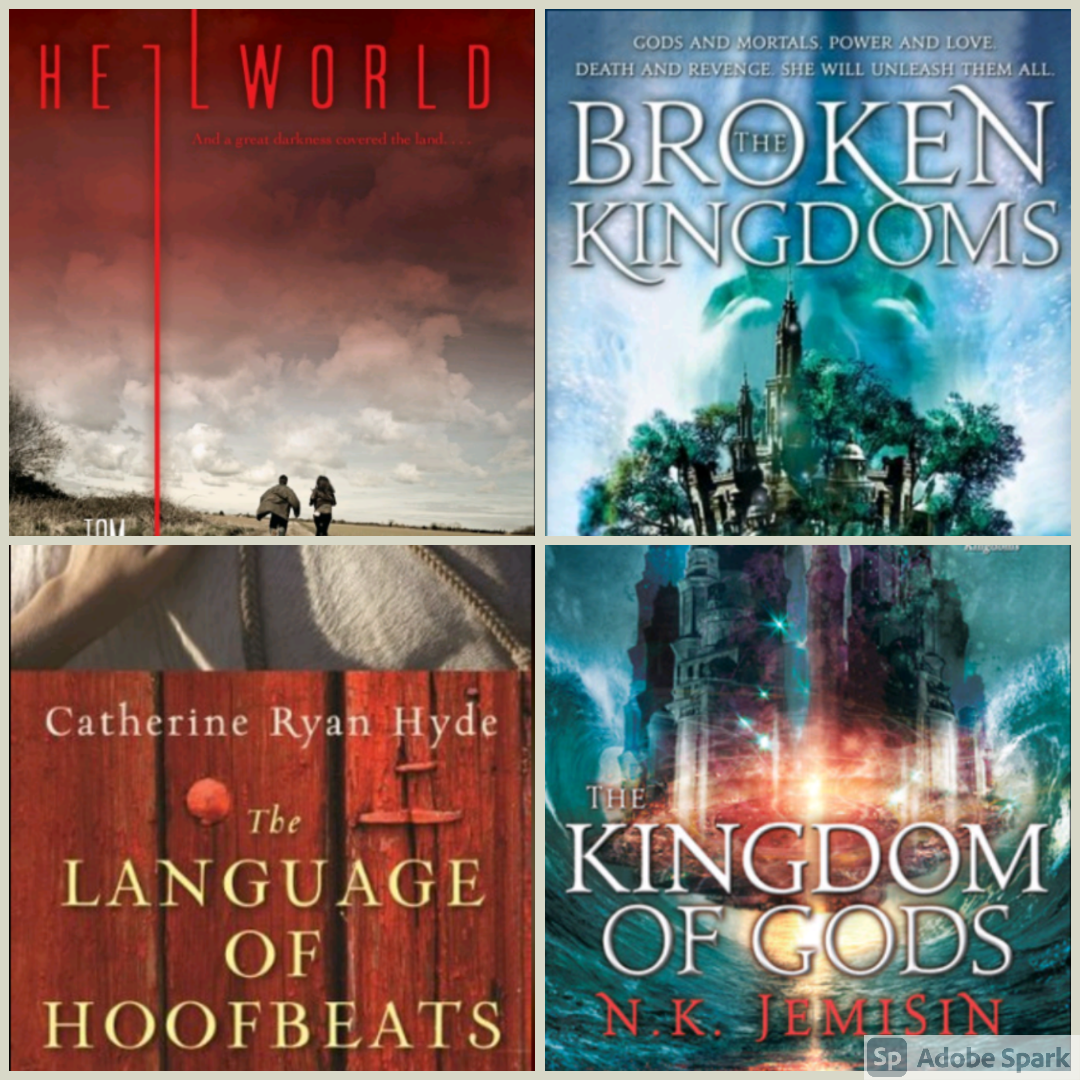
Catch-up Lightning Round: The Language of Hoofbeats, Hellworld, The Broken Kingdoms, and The Kingdom of Gods

Adobe_Post_20211105_0708420.02021520360969087

The Language of Hoofbeats by Catherine Ryan Hyde (Website | Twitter)

Genre: contemporary fiction

Setting: Easley, CA (fictional podunk town)

I read it as a(n): audiobook

Narrator: Kate Rudd and Laural Merlington

Source: my own collection 

Length: 10:27:00

Her Grace’s rating: 3.5 out of 5 stars

I liked it more than the typical 3-star book but not as much as a 4-star. So, 3.5 stars! I’m so smrt. 🤪 A lesbian couple, Jackie and Paula, moved to a small town with their adopted son and two foster children. Across the road from their new digs lives Clementine, the town shrew. She hates everything and everyone and blames it on her daughter’s suicide which, frankly, I think is totally valid. I would hate everything and everyone, too. But she apparently was always like that and she ends up driving her husband away and her treatment of Comet, her daughter’s horse, causes Star, Jackie and Paula’s troubled foster girl, to run away with him. Various dramas ensue and in the end, Clementine decides to be nice, just like that, and everything turns out bright and shiny.

For a piece of fluff, this was good. I liked the kids and their histories and I think it was nice that they weren’t written as all escapees from Hell or a mental asylum, nor that they automatically fit right in and adapted to being a foster kid. I thought Jackie and Paula were well developed enough that they were different on the page, but overall they were fairly one-dimensional. Clementine had development, but I didn’t find it all that believable. Still, she was the most richly-depicted adult in the book, a character you love to hate. I would read more by this author, though I’d probably get it from the library rather than spend my own money on it.

Hellworld by Tom Leveen (Website | Twitter | IG)

Genre: horror

Setting: mostly Tucson, AZ

I read it as a(n): hardback

Source: my own collection 

Length: 297 pp

Her Grace’s rating: 3 out of 5 stars

This was a fast read. I like to support local authors and I bought this one and another of Leveen’s books at a local book festival a couple years ago. So that was fun. He is a delightful human being from what I could tell. And I did enjoy this one, but I generally have a very hard time with most horror. Not because I get spooked – I don’t. It’s because I can’t suspend my disbelief. It’s why I don’t like werewolf or zombie or even sexy vampire stories all that much. They simply aren’t believable to me. Why I have a hard time suspending disbelief for horror and not for the billions of SFF books I’ve read over the years, I have no fucking clue. 

That said, I really liked the vast majority of this book. It was told in a sort of back and forth timeline, the same characters living in the moment for one chapter and then the next chapter being set X number of days, weeks, or months ago. I thought the characters were nicely developed for a genre novel. That’s not shade – genre novels don’t focus as much on character development, but these characters all felt like they had a history and experiences that made them people, not just templates of people like you find in a lot of genre novels. The crux of the plot is that four teens lost their parents a number of years ago while filming a show that sounds similar to Ghost Hunters. They were exploring a cave in the Arizona desert and never came out. The kids go gallivanting off to find them, but whoops! Instead they accidentally open an ancient ark of some kind that lets out gigantic monster bug things that can shoot lasers and fireballs and they start annihilating nuclear power plants, hospitals, schools, and news organizations. You know. Kind of like the Republicans want to do.

I’m not entirely sure the whole story isn’t actually an analogy about the GOP, in fact…

The Broken Kingdoms and The Kingdom of Gods by NK Jemisin (Website | Twitter)

Genre: fantasy

Setting: The city of Shadow, in the Hundred Thousand Kingdoms

I read it as a(n): audiobook

Narrator: Cassaundra Freeman

Source: my own collection

Length: 11:25:00 / 16:58:00

Her Grace’s rating: 3 out of 5 stars

(The Broken Kingdoms) A blind artist called Oree takes in a homeless man who glows. She can see some things like magic and the homeless man, who Oree names Shiny since he won’t tell her his name, throws magic all over. Also, someone is murdering godlings and now Oree is smack in the middle of it thanks to her act of kindness. Shiny happens to be Itempas, so you know things are going to get weird.

(The Kingdom of Gods) The gods of the Arameri are finally free and now they’re pissed, but they’re also all that is keeping the world from descending into unending war and annihilation. Good times. This one is told from the perspective of the godling Sieh, who has been changed into a mortal and is aging in leaps over time.

As always, crazy rich world-building and awesome characters in both of these books. I will want to read them again one day, only with my eyeballs, because the narrator was what kept these from being 4 star books. Her voice was too calm and unchanging and I found myself bored of listening to her. Once, someone ripped a heart out of someone else’s chest with their bare hands – and I missed that at first because there was just no emotion or anything to indicate exciting action in her voice. 

I really love Jemisin’s writing. It’s so complex and descriptive. She takes familiar fantasy tropes and turns them on their head. Some people might think that is heretical but I think it’s brilliant and it makes for a wholly new reading experience. One should never assume she will let the good guys win or allow a happily ever after in her books. I really, really appreciate that. She has said that she set out to subvert the genre and she has been successful in doing so.

bookish things

Armchair Traveler

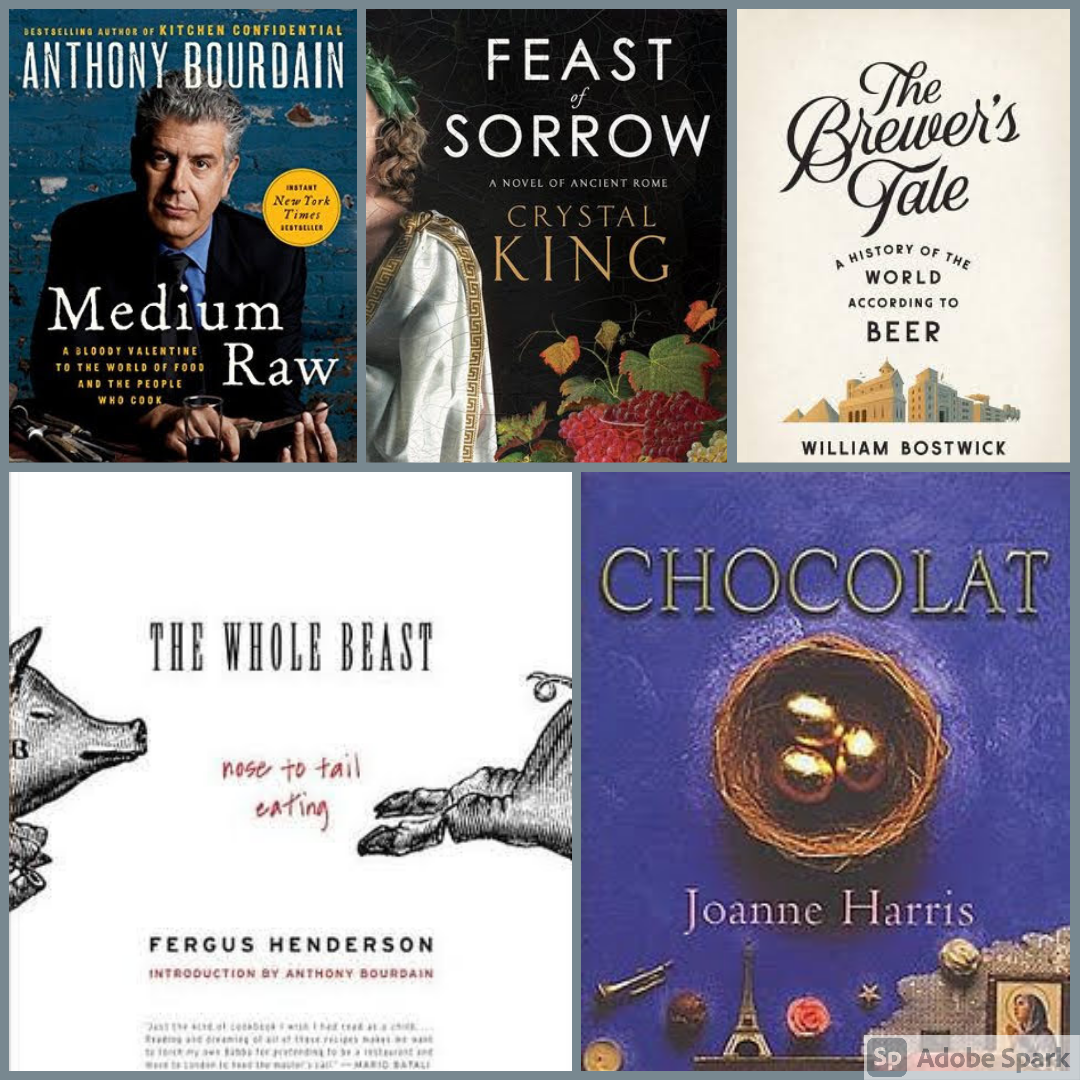
book collageThroughout this blog, I have tried to help bring diversity to my own (and hopefully others’) reading practices, to show new ways reading diversely can enrich your life, and teach how readers can do their part to try to influence publishing to stimulate diversity in the industry. Studies show that reading literary fiction helps to hone empathy and compassion by seeing the world from the point of view of people unlike ourselves. However, there is another side to this in addition to honing empathy. Many books set in different countries or even different communities within our own country offer a unique perspective of the world and can give readers the sense of having traveled to a new place from the comfort of our own chair. Enter: book tourism, or armchair traveling.

One of my favorite forms of armchair traveling is through food writing or food tourism. My very favorite food tourism writer is the late, greatly-missed Anthony Bourdain. He summed it up wonderfully in his book Medium Raw when he said, “Find out how other people live and eat and cook. Learn from them – wherever you go” (Bourdain 56). Food writing encompasses the best of both worlds, showing readers a new part of the world geographically as well as introducing them to new foods and the cultures that cook them. In addition to the canon of Bourdain’s writing, which is elegant, witty, and achingly poignant, the works of Bill Buford, Fuchsia Dunlop, and Fergus Henderson are also well worth a read. One of the best I have read is Climbing the Mango Tree by Madhur Jaffrey, which introduces readers to the influences of spice, dining al fresco under the mango trees, and learning to cook surrounded by your family matriarchs while growing up in the Indian Himalayan foothills. Who wouldn’t want to grow up climbing mango trees?

Fiction that prominently features food in some way also inspires wanderlust. A vivid scene over a meal or in a kitchen evokes the sights and aromas that truly bring a setting to life. The kitchen is the heart of the home for a reason, and it is over a meal where we can learn the most about people and cultures. Breaking bread is a traditional way to meet new friends and to make peace with enemies. When reading a book like Chocolat by Joanne Harris, you can taste the chocolate as well as feel the cool air of the small French village, smell the bakery up the road, see the cobblestones of the ancient streets. Like Water for Chocolate by Laura Esquivel gives readers a taste – pun intended – of life in turn of the century Mexico along with characters who can imbue their food with their emotions. One of my favorite novels of recent years is Feast of Sorrow by Crystal King, a historical fiction set in ancient Rome about Marcus Gavius Apicius, the author of the oldest cookbook in the world. This not only makes readers want to travel to Rome and see all the places referred to in the novel, but many passages from Apicius’s cookbook are included in the text as well. Ancient Roman cooking at its finest!

Below are some books, fiction and nonfiction alike, which have inspired wanderlust and food cravings in one way or another. What books would you recommend to instill wanderlust?

Julia Child (My Life in France)

Michael W. Twitty (The Cooking Gene: A Journey through the African American Culinary History in the Old South)

Laura Esquivel (Like Water for Chocolate)

William Bostwick (The Brewer’s Tale: A History of the World According to Beer)

Frances Mayes (Under the Tuscan Sun)

Bill Buford (Heat: An Amateur’s Adventures as Kitchen Slave, Line Cook, Pasta-Maker, and Apprentice to a Dante-Quoting Butcher in Tuscany)

Fuchsia Dunlop (Shark’s Fin and Sichuan Pepper: A Sweet-Sour Memoir of Eating in China)

Fergus Henderson (The Whole Beast: Nose to Tail Eating)

Marcus Samuelsson (Yes, Chef)

References:

Bourdain, Anthony. Medium Raw: A Bloody Valentine to the World of Food and the People Who Cook. London, Bloomsbury Publishing Group, 2010.

Stillman, Jessica. “New Study: Reading Fiction Really Will Make You Nicer and More Empathetic.” The Inc. Life, 2019.

book review · bookish things · books · lists

2020 Read Harder results and year-end wrap-up

2020 is finally coming to an end. This was one of the most miserable fucking years ever and it can piss right off. While my life wasn’t really impacted all that much by any kind of quarantine – I’m practically a shut-in in my daily life anyway – I did miss traveling. I am incredibly lucky and grateful that I have a job that allows me to work from home and that my daughter and I have remained healthy. So has my mom, though the rest of my family didn’t come through the pandemic unscathed. Everyone is doing ok so far, though, and I am happy for that. I feel terrible for the many millions of people who have lost their jobs, for the over 300,000 Americans who have lost their lives to COVID-19 (and the more than 1.6 million worldwide), and everyone who is struggling in ways large and small during this very strange and awful time. My grandmother would have said, “This, too, shall pass,” and I know she is right. Sometimes it is hard to see that, though, in the middle of events.

Of course, even the worst times have some bright points. Or, as Emperor Georgiou quoted in “Terra Firma part 2,” “Even the darkest night will end and the sun will rise.” The BEST thing has to be Biden kicking Idiot Hitler’s fat ass. A related bright point to Biden’s election is that we also get Kamala Harris as our first Madam Vice President. I can’t wait! Having a compassionate, intelligent, engaged, literate President and Vice President in office will surely be a sea change after the past obscene four years of the sub-literate, cruel, anti-science, racist, misogynist, corrupt excrescence currently squatting in the Oval Office. Can’t wait for that creature to become irrelevant again, and likely imprisoned. 

For me, books and reading are always a refuge and solace. I can travel by way of books, even if I am physically stuck in Arizona. I can go to other parts of the world or to new worlds entirely. I can encounter people who are facing the same struggles I face, or I can learn more about others who face completely different challenges in their life. I always aim to read 100 books a year. According to my Goodreads Year in Books, I didn’t get to 100 this year, though if I were to add up all the articles I read for research, I would probably get to 100 books total easily. But I didn’t count articles. I’m done researching now, though, and my manuscript is in to the publisher and I hopefully never have to think much on it again! Never thought I would be sick of medieval Europe, but here we are.

RH 2020 complete

Also, as anyone who spends any time with me at all knows, I love reading challenges because they stretch my comfort zone. I love learning about authors and cultures I’ve never been exposed to before. I am passionate about supporting and amplifying the voices of women and authors of color. So to try to do all of these things, I always participate in Book Riot’s Read Harder challenge. I don’t always get through the whole list, depending on what all is happening, but I did this year! I even reviewed almost all of them. I try hard to write a review for every book I read, but sometimes I don’t get around to doing it. But at least I finished it, even WITH all the research and work I was doing to write my own book. I’m pretty proud of me. How did you do on your various reading goals this year? Mine are below the cut.books

Continue reading “2020 Read Harder results and year-end wrap-up”

bookish things · lists

Reading Women 2021

Heyyyy, this year I decided also to outline what I might read for the Reading Women challenge. I tend to complete that challenge most years, too, but rarely write about it. I don’t know why, especially considering how hard I try to amplify women’s voices, work, and literature. Probably it’s because many of the tasks here overlap a little with the Book Riot Read Harder challenge so I don’t focus a lot on this one in its own right. Here’s what I’m thinking of. Where possible, of course, I am going to overlap with the Read Harder tasks. Every book listed is written by a woman, which makes sense because it’s the Reading Women Challenge. 

A Book Longlisted for the JCB Prize: A Burning by Megha Majumdar, which I already own, so bonus! Or Djinn Patrol on the Purple Line by Deepa Anappara sounds really good as well.

An Author from Eastern Europe: Maybe Seeing People Off by Jana Beňová. Or There Once Lived a Woman Who Tried to Kill Her Neighbor’s Baby by Ludmilla Petrushevskaya. Eastern European literature seems really fucking long, depressing, and boring from what I can tell. These two seem tolerable. There is a reason I’ve never read War and Peace, Anna Karenina, Crime and Punishment, or The Brothers Karamazov. Is it just because it’s frigid winter for like 10 months out of the year there? Is there not enough vodka? Too much vodka? I mean, FFS, I could hardly get through The Death of Ivan Ilyich and that wasn’t too bad, relatively speaking. But by the end of it, I wanted to swim in a barrel of vodka. Is vodka made in barrels? Whatever the fuck it’s made in, I wanted to swim in it.

A Book About Incarceration: Affinity by Sarah Waters! That should be awesome. Sarah Waters is awesome.

A Cookbook by a Woman of Color: Caribbean Potluck by Suzanne and Michelle Rousseau. I will need to track down a Caribbean restaurant near me so I can also eat all the food.

A Book with a Protagonist Older than 50: Illumination Night by Alice Hoffman. I love Alice Hoffman.

A Book by a South American Author in Translation: Savage Theories by Pola Oloixarac.

Reread a Favorite Book: Jeez. So many could go here.

A Memoir by an Indigenous, First Nations, Native, or Aboriginal Woman: Heart Berries by Terese Mailhot. This has been on my radar forever. 

A Book by a Neurodivergent Author: Maybe Otherbound by Corinne Duyvis (autism) or All the Birds in the Sky by Charlie Jane Anders (Sensory Integration Disorder). I think I own the Anders book, so probably I’ll read that.

A Crime Novel or Thriller in Translation: The Vegetarian by Han Kang. I don’t know how this is really a crime novel, but it is listed as such on the Pan Macmillan site (Our Favourite Crime Novels in Translation) and I’ve had it for ages, so I’m gonna go with that. 

A Book About the Natural World: The Long, Long Life of Trees by Fiona Safford, Rain: Four Walks in English Weather by Melissa Harrison, or To The River: A Journey Beneath the Surface by Olivia Laing. 

A Young Adult Novel by a Latinx Author: Clap When You Land by Elizabeth Acevedo.

A Poetry Collection by a Black Woman: Audre Lord seems popular, so I will try her writing. Or There Are More Beautiful Things Than Beyonce by Morgan Parker.

A Book with a Biracial Protagonist: Caucasia by Danzy Senna. Probably there are a ton of books I will read that can cover this one, but on the off chance none of them do, I will try this one.

A Muslim Middle-Grade Novel: Shooting Kabul by NH Senzai. I got this for my daughter a while back because I wanted to read it.

A Book Featuring a Queer Love Story: Red, White, and Royal Blue by Casey McQuiston.

About a Woman in Politics: The Woman Who Would Be King: Hatshepsut’s Rise to Power in Ancient Egypt by Kara Cooney, or maybe Nefertiti by Michelle Moran. Or, because she’s fucking awesome, The Truths We Hold by Madam Vice President Kamala Harris!

A Book with a Rural Setting: Real Queer America by Samantha Allen from my RH list can cover this. So can The Round House by Louise Erdrich. 

A Book with a Cover Designed by a Woman: Americanah by Chimamanda Ngozi Adichie (cover design by Abby Weintraub).

A Book by an Arab Author in Translation: Women of Sand and Myrrh or Only in London, both by Hanan al-Shaykh, or Girls of Riyadh by Rajaa Alsanea.

A Book by a Trans Author: Red, White, and Royal Blue will also work for this one. So will Felix Ever After by Kacen Callender

A Fantasy Novel by an Asian Author: These Violent Delights by Chloe Gong because I own it, but OMG there are so many I want to read! 

A Nonfiction Book Focused on Social Justice: When They Call You a Terrorist by Patrisse Khan-Cullors and asha bandele or White Fragility by Robin DiAngelo.

A Short Story Collection by a Caribbean Author: The Pain Tree by Olive Senior seems like a great collection. 

BONUS READS:

A Book by Alexis Wright (Waanyi Aboriginal): The Swan Book

A Book by Tsitsi Dangarembga (Zimbabwean): Nervous Conditions 

A Book by Leila Aboulela (Sundanese): The Translator

A Book by Yoko Ogawa (Japanese): The Memory Police sounds awesome. 

book review · books · sci-fi

Kindred

Kindred by Octavia Butler

Genre: let’s call it magical realism

Setting: 1976 and the antebellum South

I read it as a(n): kindle book

Source: my own collection

Length: 287 pp

Published by: Beacon Press (1 June 1979)

Her Grace’s rating: 4 out of 5 stars

Dana is a modern young Black woman, married to a white man called Kevin, and they are both authors. They have recently purchased their first real home together and are in the middle of unpacking when Dana feels dizzy and falls to the ground. When the dizziness passes, she finds herself outside and hears a child yelling for help. Since Dana isn’t a dick, she rushes to help and ends up saving a young boy named Rufus from drowning. The boy’s father comes across them and, thinking Dana is trying to harm his son, aims a rifle at her. Dana is then transported back to her home, soaking wet and covered in mud from her rescue efforts. 

Over the next few weeks, Dana finds herself inexplicably called back to what she learns is the antebellum South, to a plantation with slaves. Somehow, anytime Rufus is in mortal danger, he pulls her back in time to him, completely unintentionally. Dana learns that Rufus is one of her ancestors and she has to keep saving him until he is able to father the child who is her direct ancestor. Each time Dana goes back, she stays longer and the trip is more dangerous for her. She eventually figures out that when she herself fears for her life, she is able to return to her own time, which is moving more slowly than the past. Dana spends hours, days, and months in the past and yet her own time period only moves forward by a few minutes or days even for her longest period spent in the past. Dana has to learn how to survive in a harsh past, retain Rufus’s trust enough that he doesn’t harm her himself just because he can, and keep her husband Kevin safe during her travels as well. 

This story was a difficult and yet un-put-downable read. Difficult because of the subject matter but a very fast and engaging read. Even though it was written in 1979, there was not actually much reference to technology so it didn’t feel dated. In fact, it could have been written this year and would have been hailed as a timely discussion on race relations and equality, given the ongoing protests surrounding police brutality towards Black people. It was a horrifying read as well because it explores topics such as slavery, which is to be expected from the book’s premise. What was worst, though, was Dana’s thoughts on how easy it can be to become accustomed to injustice. The discussion of racism was deep and explored some of the ways in which it has become institutionalized in America even today. Some scenes reminded me of part of Angie Thomas’s novel The Hate U Give where Starr and her brothers received “the talk” from their parents. Not the sex talk, but the talk about what to do and how to act if and when they are stopped by a police officer. The fact that such talks are considered a necessary part of parenting for so many people is heartbreaking, and Butler’s novel shows readers partly why that has come to be. 

Dana adapted fairly quickly to her new environment, not because she was somehow weak or didn’t resist hard enough, but because she had to adapt or die. Part of the discussion on how quickly Dana had to adapt to slavery conditions was also the sense of mutual obligation between many of the characters. They all tried to look out for each other and take everyone’s well being into consideration, even if it was sometimes to their own detriment. But parents, for example, would do whatever was necessary to spare their children and to keep them with them rather than being sold to different places far away. I can understand that; there is nothing I wouldn’t do to keep my daughter safe with me in those conditions. Despite Dana’s ability to adapt quickly to her new circumstances, she was not spared from being on the receiving end of some awful abuse, and she lived in constant fear of being sold to a plantation further south that was notorious for its truly brutal conditions. A modern person worrying about being sold – if that doesn’t absolutely horrify you, then you must be part of the problem.

Part of the discussion on adapting is, I think, the ways Dana and the other Black characters view Tom Weylin and Rufus. Tom initially appears to be brutal, every bit the worst of the stereotypical slave owner. As the novel progresses, how he is viewed doesn’t change so much to liking him as to seeing how he is more or less a fair man operating within the social constructs of his time period. He is a hard man and sometimes does cruel things, but he is doing what is allowed for him to do and doesn’t really step out of those bounds, as disgusting as they are to our modern sensibilities. Similarly, with Rufus, he seems to grow up to take after his father in most ways, except that he is in love with Alice, and his father never would have loved a slave. Use her body, yes, but love her, no. Dana is able to forgive Rufus for so many wrongs, and he actually seems to do worse things than his father ever did. He makes overt threats to Dana, lies about sending her letters to Kevin when he got trapped in the past, and is a volatile drunk. His father at least never seemed to let himself get out of control like Rufus does. In many ways, Rufus is a pitiable character, largely lacking in understanding, empathy, or willpower. To be fair, though, I’d probably be blind fucking drunk all the time if I had to live in the South at that time of history. In any case, the way Dana and the other Black characters view the Weylins very much makes me think of Stockholm Syndrome. Maybe they were just as awful as one thinks they were but the effect was lessened over the course of the novel by the psychological impact of being held against their will, malnourished, beaten and whipped, and worked until they dropped.

Normally, I don’t care much for first-person perspective in novels. But I think first-person is the only way this novel could be as powerful as it was. If Dana hadn’t been the narrator, if we had a third-person POV instead, it would have created a distance between the characters, events they went through, and the reader; the situations she went through would not have been as visceral an experience for readers and thus the discussions on various issues would not have been as effective.

The title itself is a stark reminder that being related to a person doesn’t always mean they are your family. There’s a big difference between relatives and family. Rufus and Dana are related to one another. They have a sense of mutual obligation to each other, though an admittedly lop-sided one. But they are in no way family as I would define it. So that makes an interesting contrast throughout the book, especially when you consider Dana and her husband’s relationship, and her relationship with the slaves. She seems much closer to them than to Rufus, her actual relative. Similarly, her marriage to Kevin is illegal in the past and, I would imagine, is seen as at least odd in 1976. I don’t think interracial marriages were very well tolerated at the time. 

In any case, this was a terrific read, if difficult at times because of the things that happened to people. I definitely recommend it to any fans of timeslip, sci-fi, magical realism, or antebellum history.