book review · books

An American Marriage

38389692An American Marriage by Tayari Jones

I read it as an: audiobook

Narrator: Sean Crisden and Eisa Davis

Source: my own collection

Length: 08:59:00

Publisher: HighBridge

Year: 2018

Roy Hamilton and Celestial Davenport are a young, married, black couple living in Atlanta. They’re up and coming, just starting out – he’s a hotshot executive, having graduated from a prestigious college with a full scholarship, and she’s making a name for herself as an artist. Their plans for the future come to a grinding halt when they visit Roy’s parents in Louisiana one weekend, and Roy is arrested, and later convicted, for a rape he did not commit. He is sentenced to 12 years in prison, and is released after 5 when his conviction is overturned. He returns to Atlanta, ready to start his marriage back up again, but 5 years apart is a long time, and Roy isn’t the only one changed by his time in prison.

Sometimes, you read a book that highlights a social issue and it enrages you and makes you want to set the world on fire, like The New Jim Crow by Michelle Alexander. Other books, like An American Marriage, bring those social issues home, give them a human face, and put them into the context that shows the impact they have on whole families, not just one person. This book is a deep character study, using first person perspectives from Roy, Celestial, and their mutual friend Andre. During the years of Roy’s incarceration, it shifts to an epistolary narrative, which works really well and shows the ways in which his and Celestial’s marriage is beginning to crumble. It is a discussion on what marriage is, what is worth fighting for, how much of yourself are you willing to give up, and to what extent duty and obligation stretch. How does one person save another, and is it her job to do so? There were so many parts of this book that made me just…sad. Nothing made me ugly cry, though I can see how it might have if I had been in a different mood. But the whole thing just filled me with a deep sadness. Our system is so terribly broken. Although Roy is fictional, his story is not. There are so many young men whose lives are destroyed because they were simply in the wrong place at the wrong time, and they were victims of a system that is deeply flawed and stacked against them. Roy was the one to spend time in prison, but it was not just him to suffer. His family suffered and changed in irrevocable ways and no one came through the experience unscathed. To think only the person in prison is the one affected is very wrong. It shouldn’t need to be said at all, but in case it does, this book helps to bring that point home and show the human side of the broader social issues.

I think this story could have gone very differently. I am glad it ended as well as it did, though it was still heartbreaking. It could easily have gone a whole lot worse and I’m glad it didn’t. I was really worried it would go sideways and be bad, especially at the start of the epilogue. The resolution was imperfect and the best they could do and was, ultimately, very human and real.

book review · books · historical fiction

A Conspiracy in Belgravia

33835806A Conspiracy in Belgravia by Sherry Thomas

I read it as a: paperback

Source: library

Length: 317 pp

Publisher: Berkley

Year: 2017


In the second installment of the Lady Sherlock series, Charlotte Holmes has established her reputation as a consulting detective, albeit under the alias of Sherlock, her bedridden fictional brother. Here, she finds herself investigating the case of Lady Ingram’s first love, the man she would have preferred to marry rather than Charlotte’s friend Lord Ingram. The two former lovers have an agreement to meet but this year he misses the appointment, causing Lady Ingram to seek out help in finding him. At the same time, Charlotte’s sister Livia meets a handsome stranger and is being wooed by him, though he may not be who he seems. Through it all, Charlotte learns that her illegitimate half brother may be involved, and she also has to decide what to do with an intriguing marriage proposal to boot.

I thoroughly enjoyed the first book in this series, and I liked this one even better. Charlotte is growing as a person and it is interesting to see how it affects her logic. She kind of reminds me a lot of Cristina Yang in some ways – all cold logic and lack of emotions but hiding a caring person once she gets to know you. The way Thomas is handling original characters is really good. I still love Mrs Watson, and how shadowy Moriarty is in his (or her!) off-page debut in this novel. I really love the conclusion to this novel’s case, which is, I would like to believe, how Thomas will handle The Woman/Irene Adler. Maybe? I can see this particular character taking on that role, at any rate. I’ll be so interested to see how that plays out in later books. And that last line – loved it! I hadn’t actually seen that one coming. I love when that happens.

I really can’t talk in detail about the plot without giving spoilers, but this entire series so far is a genuine delight and I can’t wait to read the 3rd one!

book review · books · historical fiction

A Study in Scarlet Women

35009017A Study in  Scarlet Women by Sherry Thomas

I read it as an: audiobook

Narrator: Kate Reading

Source: my own collection

Length: 11:00:00

Publisher: Blackstone Audio

Year: 2016

A Study in Scarlet Women is, in essence, a gender-flipped Sherlock Holmes story. Right there, I wanted to read it. The premise of this novel is that Charlotte Holmes is a brilliant woman and has no interest whatsoever in marriage. She’s told her father so and they made a deal – if she makes a genuine effort to find a suitor and let him make her fall in love with him and she still doesn’t want to get married, when she is 25, he will pay for the education she needs to set up shop as the headmistress of a girls’ boarding school. Charlotte holds up her end of the bargain; her father does not. So she takes matters into her own hands and has an affair with a married man, thus ruining her reputation and rendering her unfit for marriage. Yay, idiotic Victorian morality! She has no intention, either, of being imprisoned at their family’s country estate forever, so she runs away to London where she intends to support herself as a typist. Eventually she meets Mrs Watson, who hires her as her companion. Mrs Watson convinces Charlotte to take on clients as an investigator, pretending to be the sister of the bedridden man, Sherlock Holmes. The ruse works and Charlotte is able to support herself quite well by solving mysteries. She is called in on one case that strikes close to home when suspicion falls on her sister, Livia, who had publicly accused the mother of Charlotte’s lover of ruining her sister’s life, and hours later, the woman was dead. When two other people die mysteriously, Charlotte and an Inspector Treadles work together to solve the mystery and figure out how the victims were connected.

I enjoyed seeing a gender-flipped Sherlock. Charlotte is a woman who knows what she wants and makes plans to get it. She has good body image and isn’t worried about being stick thin. These are all good things about this novel. There are a lot of strong and independent women, even being set in Victorian London. I think that the mystery itself took too long to set up and get to, though, and once we got to it, was unnecessarily convoluted. It was hard to keep everyone straight and the ending was really complicated. I read a ton of mysteries and am really good at keeping track of who’s who and it still confused the hell out of me. I felt that the book’s strength was in the character development, which was excellent for nearly every character we meet. Though I didn’t feel the mystery part of the plot was terribly well done, the rest made up for it and I am still looking forward to reading the rest of the books in this series.

book review · books · sci-fi

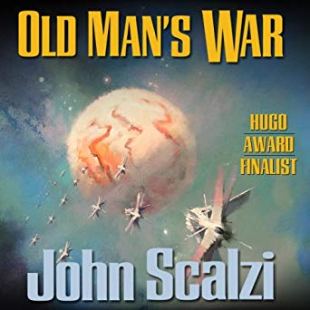
Old Man’s War

51tnlj8xnbl-_sx342_Old Man’s War by John Scalzi

I read it as an: audiobook

Narrator: William Dufris

Source: my own collection

Length: 9 h 58 m

Publisher: Macmillan Audio

Year: 2007

In the future, the Colonial Defence Forces don’t want young people with no experience to join up. They are too green, too excitable, too likely to do something stupid. Instead, the CDF takes recruits when they turn 75. They give them a shiny new, genetically enhanced body, teach them how to be soldiers that would be the envy of the most badass Marines or SeALs, or astronauts ever. And then they send them off to the front, where they will do battle with all the aliens in the galaxy who surround all the human colonies, and who want to kill humans, often for food. Neat!

This first entry in Scalzi’s Old Man’s War series is some of the finest sci-fi I’ve read in years. It was full of action, excitement, adventure, and a shit ton of sarcasm. Scalzi is one of the funniest writers around at the moment, and his humor colors nearly every page, from boot camp to even the goriest of battles. Who knew it could be hilarious to read a scene where an entire unit dies but one man, who gets his jaw ripped off and kicks himself in the uvula in the process? I wouldn’t have thought that, but indeed I laughed out loud. It’s either excellent writing, or there’s just something wrong with me. Jury’s still out on that one, I reckon.

The narrator for this was also excellent. I am used to Wil Wheaton narrating Scalzi’s books, but this was read by William Dufris. It was a good choice because he sounds older, or made himself sound older at any rate, than Wil is. He was able to do some terrific crotchety old fart voices, and had a bunch of different voices and accents and overall just really played up the already terrifically fun story.

I have universally loved all of Scalzi’s novels so far, and I can’t wait to read the rest of the Old Man’s War series.

book review

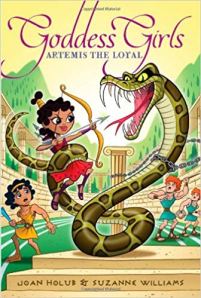
Artemis the Loyal

61tdlmrcvll-_sx334_bo1204203200_Artemis the Loyal by Joan Holub

I read it as a: paperback

Source: my own collection

Length: 288 pp

Publisher: Aladdin

Year: 2011

In Artemis the Loyal, Artemis is on a mission to convince Principal Zeus, King of the Gods and Ruler of the Heavens, that it is not fair that the Olympic Games are for boys only. She is an excellent athlete and wants to compete, as do many other girls. Artemis goes on a mission to convince Zeus to change his mind and allow girls to have their own girls-only Olympics. Simultaneously, he twin Apollo is determined to take on the Python of Parnassus in a battle of wits. Artemis is concerned because the python can read minds and she knows Apollo can’t tell a lie, so she thinks he will lose. She tries to discourage him from entering the contest and inadvertently causes a rift between them, which is heightened when Apollo utterly scorns her attempts to get Zeus to sign off on a girl Olympics. Artemis has to learn when to lean in and when to let others learn lessons on their own in this latest installment of Holub’s GoddessGirl series.

This was a fun and quick read with my daughter at night for a bedtime read. It was a little more progressive and feminist than the other books in the series thus far in that it had a lot of focus on gender equality. I also liked the theme of figuring out when it is ok to be pushy and try to help and when you need to back off and let others figure things out for themselves. That is something a lot of people need to learn.

I still think the books in general are too focused on what other people think and on hetero-normative crushes, but it wasn’t AS big a focus in this one as in others and it provided a couple times to have a good chat with my daughter about a few things.

book review · books

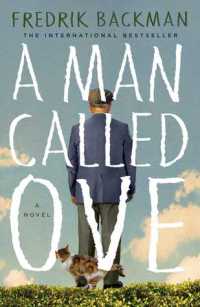
A Man Called Ove

18774964A Man Called Ove by Fredrik Backman

I read it as a: paperback

Source: my own collection

Length: 337 pp

Publisher: Washington Square Press

Year: 2012

Ove is a stereotypical curmudgeon, which is a terrific word anyway, isn’t it. He is cranky, he feuds with his neighbors for not following the posted signs or the rules of the neighborhood association, and he just wants to be left alone. Really, what he wants is to die, and he has his own reasons for wanting that which are no one else’s business. But things keep happening that piss him off just enough to keep him engaged and living, and he knows from long experience that if he doesn’t handle it, it will never get done right. Such as teaching the new neighbor how to back up a trailer so he doesn’t run over his mailbox. Again. Or teaching the neighbor’s wife how to drive because the neighbor fell off a ladder and broke himself and needs someone to drive him around. Or teaching the local barista how to fix a bike so he can give it to his girlfriend. Or do battle with a corrupt White Shirt (Ove’s version of two by two, hands of blue) determined to forcibly remove a neighbor with Alzheimer’s to a nursing home against the wishes of the family. Along the way, even though Ove is a cranky old sod (he really isn’t), it becomes clear that he has a deep and painful past and that it’s always the quiet ones who are the most interesting, the ones you have to keep your eye on, and who care the deepest even if they don’t make a spectacle about it.

This was such a touching book. People who say nothing much happened didn’t pay attention. The people who disliked it just because Ove didn’t like the cat (or Jimmy, or the kid who couldn’t repair his own bike, etc) totally missed the point. I feel bad for those people. Ove looked past the exterior of people and saw the good in them, despite not being able to do things he thought they should be able to do for themselves. If they didn’t know something, he taught them. He was rough on the outside, but at heart he was a true teacher and went out of his way to help people when he didn’t have to. In the end, the community realized they were the ones who had been wrong about Ove all along.

Also, this book made me miss my grandad, even though he wasn’t a curmudgeon. But in a lot of ways, Ove reminds me of him anyway.

Some of my favorite lines (behind the cut in case of spoilers): Continue reading “A Man Called Ove”

book review · books

Small Country

36750086Small Country by Gaël Faye

I read it as a: hardback

Source: my own collection (BOTM selection)

Length: 192 pp

Publisher: Hogarth

Year: 2018

Small Country is Gaël Faye’s debut novel, and it is a gutpunch. The novel is told through the eyes of a ten year old boy, Gaby, who is the child of a French father and Rwandan mother. He and his younger sister, Ama, live a fairly privileged life in a neighborhood of ex-pats, relatively sheltered from much of the political instability and poverty that the rest of the country is subject to. Gaby’s father actively discourages him from listening to or learning about politics and doesn’t believe children should join in adult conversations, so for the first half of the book, most of the political events are filtered through the lens of a child who doesn’t really understand what is going on. Gaby’s main sources of concern are his parents’ fracturing relationship and maintaining his friendships with Gino and the other children in his neighborhood. When the war touches his family, though, Gaby grows up faster than any child should ever have to.

This was a difficult read, obviously. The topic alone would make it so, but seeing it through a child’s eyes made it worse. It was obvious that Gaby had no real idea what was happening and that his life was a lot more sheltered than the lives of many of those around him, including his household staff. Gaby’s home was in a fairly exclusive, guarded, safe-ish area. The cook and gardener who worked at his house everyday lived in a different area and were in danger every time they set foot in their homes. I don’t think Gaby ever fully realized that. It was just that one day, he noticed Donatien and Prothe were not there anymore and he wondered where they were. The political events were similarly vague until near the end of the book. They were all filtered through Gaby’s childish ignorance, which wasn’t all his fault. His father kept his children ignorant of politics, whether for their own safety or for some other reason, we never really know. Clearly, it didn’t work to keep them safe or clear from war. It came to them anyway. It stripped Gaby of his childhood, brutally. The writing reflects the way Gaby tried to cling to his childhood, wanting to keep things the way they were, just wanting to play with his friends and not worry about protecting his street or neighborhood. One of the most poignant lines of the book was when Gaby told his friends Gino and Francis, “You’re my friends because I love you, not because you’re from one ethnic group or another. I don’t want anything to do with all that!” (153). He is clinging to a childhood that has already deserted him, but he has not yet realized it, and it is heartbreaking.

How much of Gaby’s childhood was taken from him is really highlighted in the letters he exchanges with his French pen pal, a ten year old girl named Laure. In one of his letters, Gaby told Laure about the elections held in Burundi and how the people turned out in their droves to vote, told her about the political parties in the country, the candidates, and who ultimately won the election and why it was such a big deal to the people. In return, Laure sent a three-line letter, telling him she was having a fun vacation at the beach and that what he had written to her was funny. What Gaby wrote didn’t even register to Laure as an actual event, or that another child the same age as her could be living through something as impactful as a democratic election, as horrific as a genocide. It makes me think of this when he is thinking to himself, years later, “I used to think I was exiled from my country. But, in retracing the steps of my past, I have understood that I was exiled from my childhood. Which seems so much crueler.” (179).

This is a book that I will be thinking about for a long time.

book review

Dragon’s Code

51m5loezfzl-_sx327_bo1204203200_

Dragon’s Code by Gigi McCaffrey
I read it as a: digital galley
Source: Netgalley
Length: 272 pp
Publisher: Del Rey
Year: 2018

A NEW PERN BOOK!! *FLAILS*

Ahem. Dragon’s Code, set in the Ninth Pass of the Red Star, returns readers to the characters Lady Anne originally wrote – F’lar, Lessa, Master Robinton, the Oldtimers. Here, young harper Piemur, whose voice had previously been glorious until its adolescent break, has been somewhat adrift for the past three years. While waiting for his voice to settle, he has been mapping the Southern Continent for Robinton, but has been pining for his lost voice and his harper’s trade. He feels bereft and useless, something no one enjoys. Robinton, really the Pern equivalent of Francis Walsingham, spymaster extraordinaire, has learned of a plot against Jaxom, the young Lord of Ruatha. This is based in part on the theft of Ramoth’s queen egg by the desperate Oldtimers, an event that could drive dragon to fight dragon, and which is very familiar to long-time Pern fans. In response, Robinton sends Piemur and Sebell, his own journeyman, into Nabol, from whence the threat arises. While there, Piemur and Sebell encounter the worst people Nabol has to offer, enduring abuse and worse. Piemur has to learn the lesson that sometimes revenge serves no justice and can cause further damage. Ultimately, he finds his voice – in an unexpected way.

This was a wonderful addition to the Pern canon. I admit that part of it is pure nostalgia because no one can write Pern as well as Lady Anne herself, not even her daughter. The Ninth Pass is my favorite, mostly because that is what Lady Anne wrote mostly, and what she wrote first, and what most readers were introduced to when first encountering Pern. It’s the “right” time to be in. It felt good to come home to the Ninth Pass.

I also loved seeing Piemur grow from a lost, and let’s face it, kind of whiny kid to a young man full of purpose and drive. There was a lot to be said of his path in this story. It is not just a traditional bildungsroman, which would have been boring, indeed. He learned to lean on his friends and family, to trust himself, and when in doubt, always listen to your mother. I loved the bits of wisdom Ama doled out – it felt like those might have been things Lady Anne said to Ms Gigi and Todd as they grew up. It was like a little bit of Anne coming back to talk to her readers, and whether it is true or not, it was delightful. My favorite was:

I don’t think, my Pie, that any of us could be happy in life by doing just one thing. Through all these long Turns I’ve lived, I’ve grown to see some parts of my life very clearly. It was the unlikely choices I made – where the sights I set my aim at were hardest to reach – that became the most highly valued feats of my life. Maybe it’s because the goals were hard-won. I could not say for certain. … You’ll be fine, my Pie. Just be yourself, and always listen to your instincts…and you’ll be fine. (Kindle loc 3421)

Piemur took these words to heart and managed to find his voice, literally and figuratively, in a way that is perfect for him. I can’t wait to see what the next installment has in store.

The book played on themes of honor and trust throughout, which is directly related to the titular dragon’s code. The code that has to be upheld for Pern’s way of life to work has been violated on both sides – Oldtimer and modern riders alike have acted wrongly. The trust the crafters and holders place in the dragons has been broken. The honor of the dragonfolk has been bent, if not broken as well, and all must learn to work together to repair the code.

At first, there was a little too much telling and not showing, especially for readers already intimately familiar with Pern. It took a little while, but Ms. Gigi did eventually hit her stride and the pacing got much better. Some things are a little inaccurate based on her mother’s previous books. For example, Silvina is the Harper Hall’s headwoman, not Fort’s. The Hall and Fort are separate, though adjacent, so each would have their own headwoman. Totally minor, though, and not anything that took away from the overall story.

Overall, I HIGHLY recommend this book – I already preordered the hardcopy for my own collection – and was absolutely beside myself to see a new Pern book on the market. I devoutly hope there will be more Pern books, and soon, from Ms Gigi. I was fine when Todd was writing Pern books, because any Pern book is better than none. But I didn’t care for his nearly as well as I did for this one. I thought Ms Gigi’s was better written, and I admit that I prefer those that are set in the Ninth Pass.

Dear Ms Gigi – PLEASE write more Pern books! I loved this and miss the people of the Ninth Pass terribly. They are real people, you know, and we need to visit our friends. I can’t wait to see what Piemur’s new career has in store for him! Love, Me.

book review · books

A Girl Like That

51h8gf05wjl-_sx329_bo1204203200_A Girl Like That  by Tanaz Bhathena

I read it as a: hardback

Source: library

Length: 384 pp

Publisher: Farrar Strauss

Year: 2018

Sixteen year old Zarin Wadia is a girl caught between family, social, and peer pressures. Orphaned at four, being raised by her hateful aunt and spineless uncle, Zarin has never really remembered a time when she felt loved. Her only friend is a boy she sees from her balcony who waves to her as he heads out to school each morning. When her aunt and uncle move her from her hometown of Mumbai to Jeddah, Saudi Arabia, Zarin has even more rules to follow, for interactions between men and women in Saudi are highly regulated and women are closely guarded. Zarin begins rebelling against the societal boundaries, learning to avoid the religious police as well as her aunt, just for an hour or two of unsupervised freedom. When she encounters Porus, a young man working at the neighborhood deli, they each recognize each other as the balcony friends they had been in Mumbai ten years earlier. Porus, against his mother’s wishes, stands by Zarin through bullying, slandering, assault, and abuse, determined to be everything for her that she never had before. When the two of them die in a horrific car accident (not a spoiler, it happens on the first page), the pieces of their stories come together in astonishing ways, revealing slowly just how Zarin came to be known as “a girl like that,” and how very, terribly wrong rumors and reputations can be.

This book was devastating. Utterly, completely, beautifully devastating. The pain the Zarin endured for so much of her life was tangible and leapt from the page. The bullying the girls at school put her through is something kids today across the world might be familiar with, which is disgusting as it is. Added to that was the way misogyny and violence towards women is codified into so much Arabic law. No, there was no hint of Islamophobia in this novel, as some reviews implied. It doesn’t make the author anti-Muslim to point out that Saudi Arabia actually has plenty of misogynistic laws reinforced by religious police. It was interesting to learn more about the region, and the various other cultural groups that live there besides Muslims. Zarin and her family are Zoroastrians, a small minority within the community. They don’t speak Arabic, or at least not well enough to defend themselves if they had been detained by the religious police. They spoke Hindi and Gujarati, mostly, and a little Arabic and Avestan. In my ignorance, I had never heard of Gujarati or Avestan in my entire life before reading this book. So I learned a few things, which is always good.

There were too many things that were sad and mad me cry in this. I loved the parts that made me happy, too. Porus is such a sweet character. We need more like him. The one thing I wanted more of was to know why her aunt was the way she was. Did she have schizophrenia? Early onset? Was she just an evil person? What happened to make her like that? What happened to Zarin’s uncle to make him lose his balls and not defend a child under his care from abuse? We also only got a little closure with the schoolmates. I get that the story was Zarin’s and not theirs, but they contributed to the misery of her life, so it would have been nice to know what happened to them beyond just a couple. I suppose we had some answers regarding the biggest offender, but I still wanted more about the other girls in the end.

I cannot overstate how much I enjoyed this book, how gutwrenching it was, and how important I think it is that everyone read it. It’s a major discussion on a multitude of topics from bullying to rape culture and toxic masculinity to the long term impact of an abusive home environment. It pulls no punches, nor should it.

book review · books

We Should All Be Feminists

51uuww2g32l-_sx342_We Should All Be Feminists by Chimamanda Ngozi Adichie

I read it as an: audiobook

Narrator: Chimamanda Ngozi Adichie

Source: library

Length: 45 min

Publisher: Random House Audio

Year: 2017

I’ve meant to read this book the split second it hit the shelves, and I haven’t got around to it until just now. Fail. But that doesn’t change the fact that this is a book I feel should be compulsory reading for every young person entering high school, and given as a graduation gift to every graduating student as well. I don’t mean just handing it to them and hoping they read it. I mean requiring active and participatory discussion. Make them think about what they read. Make your husbands read this with you. Make your daughters and sons read it with you and make them pay attention and make sure they understand that men as well as women can, and should, be feminists. Make sure they know that it is not unmanly, and indeed is a requisite life skill, to be able to cook and feed yourself, not something to depend on another person to do for you. Do not thank a father for participating in the caregiving of his own child – it’s called parenting, and it’s required. Do not ignore a woman when she enters with a man, as though she is a non-entity. Demanding these things does not make a woman an angry feminist or a man-hater. It means she respects herself and her sister women enough to expect that others treat her with respect as well. It is not acceptable that so many people do not understand this, or worse, do understand but simply don’t care or feel it is worthy of consideration. As Chimamanda Ngozi Adichie states, we all must do better.