book review · books · historical fiction

Pachinko

33905162Pachinko by Min Jin Lee

I read it as an: audiobook

Narrator: Allison Hiroto

Source: library

Length: 18:16:00

Publisher: Blackstone Audio

Year: 2017, listened to 7/2/18 – 7/13/18

Pachinko is a multigenerational saga about a family of Koreans who have to move to Japan because…reasons. Initially, Sunja, the beloved daughter of two older parents (older in that they were early 20s when she was born in the early 20th century), gets pregnant. Her lover, she discovers after it’s too late, already has a wife in Japan. One of the boarders at her parents’ boardinghouse, a preacher traveling to his new church, offers to marry her. She accepts and goes with him to make a new life in Japan. Together, they raise their sons in Japan and the story follows four generations of their family, navigating through wars, cultural upheaval, and constantly being viewed as outsiders even when one is born in Japan.

It’s been a really interesting read, though I am finding that I’m just not generally a fan of multigenerational narratives. Not in one book, anyway. This started out strong and then got rushed near the end, like there are too many stories, too many characters, and too much to say to give much attention to any one of them. The same thing happened with Homegoing. I loved the first half of the book and then it just got too rushed and I didn’t get to know the characters as well. I think doing multigenerational sagas over several books is a better way to go.

That said, this was an excellent read, especially the first half, and I learned a ton about Korean culture that I had no idea about before. I didn’t know so many Koreans had moved to Japan, nor that Japan had occupied Korea. Education fail in a big way! The way some of the people felt like they had to “pass” as Japanese just to be allowed to live in peace and make a life for themselves was so sad. Now I want to reread Passing.

Overall, though I had my quibbles with it, I thoroughly enjoyed Pachinko and would recommend it as an excellent and eye-opening read.

book review · books · lifestyle

French Women Don’t Get Fat

1320781French Women Don’t Get Fat by Mireille Guiliano

I read it as a: paperback

Source: my own collection

Length: 304 pp

Publisher: Vintage

Year: 2007

This book is about the French culture and how they manage to eat the foods they eat – lots of rich sauces and breads and wine and chocolate – without becoming obese the way so many Americans are. It’s the French Paradox, although I think that specific term was only used once in the whole book. I think that some people – a lot of people, actually, based on some of the criticism this book has received – might get defensive about what they view as an attack on American culture, or see it as fat shaming. But let’s face it: she’s right about a lot of things, like it or not. The main premise is simply to eat fresh, seasonal foods in moderation, get up off your lazy ass, eat with purpose and at an actual table off of actual plates with actual silverware, and drink a shitload of water. This isn’t a difficult concept to grasp, but I think American ideas of what is a portion are so overinflated that a correct portion seems like starvation rations. The entire framework requires a shift in mindset. It really struck me when Mireille wrote that French women are always thinking about good things to eat and American women are worrying about bad things to eat. I think that is true for many people, even those who are thin.

Throughout the book, Mireille tried to highlight the idea that food and eating should bring pleasure, not stress, anxiety, or shame. At the same time, she also stressed that there is no reason that pleasure from food implies it shouldn’t also be healthy. The concepts she claims are cultural to the French are very much common sense things that my own mother taught me. If you overindulge one day or one week, cut back a little until you feel back in balance. Don’t starve yourself. Have a good variety of foods that are in season. Eat lots of fruits and veggies. Walk or ride your bike to as many places as you can. I have a hard time with this one simply because it’s too hot to do that all the time where I live, and I also live in the suburbs. But when it isn’t over 90 (more often over 100), I do walk several times a week to the grocery store to buy what I need for a couple days. I make up for the lack of walking, which I love doing when it isn’t so hot it triggers a migraine, by going to my all-women’s studio gym, which I also love. I know Mireille hates the gym but I love beating the shit out of the mannequin Bob. I’m nicer after boxing. I take the stairs when I can, and I don’t park as close as I possibly can. I park where there is shade, no matter how far it is from where I need to go. When it gets cooler, I plan to get a bike and start riding it to the weekly farmer’s market. It should be fun, and buying fresh, local food items is a thing I support anyway. I’m rather looking forward to it!

There is also a huge component to eating at home and preparing your own meals. I think people now view cooking and food preparation as a tedious chore that has to be done, or else they don’t bother at all and just go out all the time or buy garbage you can throw in a microwave. And then kids have behavior problems because diet is absolutely linked to behavior. When my own kid eats healthy, she minds a lot better. She also has a healthier appetite when I don’t let her snack. She gets breakfast, lunch, a small afternoon snack, and dinner. She whines about it sometimes, especially if she’s been at my mom’s a lot because my stepdad eats constantly and she sees that bad example. When she gets back on a proper eating schedule, she eats well, and she is a lot more willing to try new foods. She also likes to  help me fix the meals on occasion, though I’m still trying to get her to understand that she has to follow a recipe until she learns what actually goes well together. But I try to make it fun and when she is able to make something well, she feels proud of herself. Cooking with my daughter is a lot of fun and is something I look forward to. It is my job to teach her how to be well and I see no reason why it should be a chore to do. There are a lot of recipes that were included in this book that we can try together that she would like. I also have a large collection of cookbooks that I use all the time, and I like to teach her how I plan a menu. She likes to pick out recipes so when I let her do that, it adds to her enjoyment of food and learning that it is a pleasurable thing to cook.

I liked that Mireille was careful to note that of course not every single French woman is thin. Being overweight or obese is a universal issue and not confined to American culture. It is, however, a lot more rare in France, where it is culturally ingrained to eat smaller portions, eat fresh and seasonal fruits and vegetables, walk everywhere as much as possible, linger over meals rather than cramming them down like you’re starving, drink tons of water, and any number of other things that Americans in general simply don’t do. Like it or not, the observations made in the book about American culture are pretty accurate. Some things may be a little out of touch, but overall, I thought this was a great intro to changing one’s mindset and relationship to food. Regardless of one’s social class or income, I think these basic rules are things most people can follow in their everyday life. It is just a matter of whether you want to or not.

book review · books · historical fiction · Medievalism

Misfortune of Time (Druid’s Brooch #6)

40176383Misfortune of Time by Christy Nicholas

I read it as an: egalley

Source: Helen Hollick at  Discovering Diamonds. 

Length: my file only gave Kindle locations, not page numbers. Super annoying.

Publisher: Tirgearr Publishing

Year: 2018

*Minor spoilers ahead. You have been warned.*

In this sixth installment of Christy Nicholas’s Druid’s Brooch series, Etain, a 12th century Irish woman, has the ability not to age thanks to the magic she draws from her Druid’s brooch. The brooch is an heirloom inherited from her mother, passed down the family line, first given to her family by a Druid in thanks for saving his life. Etain is able to change her appearance at will, so she can age herself appropriately over the years, but her natural appearance is of a woman around 30 years old. In truth, she is around 150. She has had many husbands, many children, and has had to leave them all behind in her long life to avoid being discovered and killed as a witch or Fae. Her current husband, Airtre, is a mentally and physically abusive putrescence of a man, a Christian priest whose primary goal is to move up in the Church to a bishopric. Etain stays only to protect her young grandson, Maelan, from Airtre. When events explode, Etain is forced to flee, getting help from some unexpected allies, including other priests and monks, as well as a few kindly Fae.

I have read several books by Christy Nicholas, including some in the Druid’s Brooch series, and I must say I think this is my favorite one so far. The characters were all multidimensional and interesting, for the most part, and I enjoyed seeing a variety of people mingling together in the villages Etain traveled to, even if life wasn’t really like that in 12th century Ireland. I think she captured the fear and ambivalence of an abused woman well, though I hope I never truly understand that. Etain had a horrific life and it speaks to the strength of her spirit that she kept going and trying to survive rather than just giving up and letting some mad horde kill her as a witch, for the brooch can’t protect her from death.

I loved the theme of tolerance woven throughout, as well as the Gaelic hospitality. There were many instances of travelers or even old friends being offered food, drink, and washing water the moment they set foot indoors. I loved that because that’s how I was raised and it felt like home to see it reflected on the page. As well, the tolerance was a thread throughout. Etain has lived long enough to know that belief isn’t what is important, it is people who are important. She tells Maelan that “a little kindness can have unexpected rewards,” and often she herself has to remember her own lesson and take the kindness of others. Later, Maelan’s wife, Liadan, tells her, “Before I met [Aes], I didn’t realize pagans were just normal people like you and me.” Learning that people have more similarities than differences is a vital life lesson that many people today still need to learn.

The one thing I wish was different was that some of the narrative felt rushed. When Etain left Faerieland and settled in the ringfort, working in the kitchens, for example, little time was spent there, little real detail. The same happened before she entered Faerieland, when she was in the village and traded all her herbs for a cow. I wanted more detail and time spent in those places. Doing so, I feel, would give more of a sense of loss, of fatigue, because Etain was happy in both of those places and then was forced to go again. But these are minor quibbles in my overall enjoyment of this very engaging historical fantasy.

Also, it totally made me think of Dar Williams’ song The Christians and the Pagans.

book review · books · historical fiction

Mrs. Zant and the Ghost

28262527Mrs. Zant and the Ghost by Wilkie Collins

I read it as an: audiobook

Narrator: Gillian Anderson

Source: my own collection

Length: 01:37:00

Publisher: Audible Studios

Year: 2015

Mrs. Zant and the Ghost starts off with a chance encounter in Kensington Park between Mrs Zant and Mr Rayburn and his daughter. Mrs Zant appears to be mad to young Lucy Rayburn and she is initially frightened by her. When Mr Rayburn approaches her, he realizes she might perhaps be ill and takes it upon himself to find where she lives so he might make sure she is being cared for. He becomes swept up in Mrs Zant’s drama, trapped in the clutches of her brother in law, who took over her care after his brother died just weeks after marrying Mrs Zant. She is convinced, and rightfully so, that the ghost of her husband is guiding her and protecting her. Ultimately, Mr Rayburn and Mrs Zant uncover the truth about her visions and her BIL’s motives.

A good old fashioned Gothic ghost story, told with the lovely, overblown language I expect from Victorian literature. I have to say that I do not understand Victorian mannerisms; Mr Rayburn would be a stalker today if he had followed some random woman home, no matter what his motives. To modern sensibilities, he seems pushy and nosy, but of course times change and we can’t judge another time by our own standards. Maybe it was better then since he is obviously concerned for her and acts upon it. Today, people ignore each other or hurt each other.

For sure, the best part was Gillian Anderson narrating this. I cheerfully admit I only got this because she was the narrator, but I enjoyed the story anyway. Her voice adds to the overall otherworldliness of the book’s tone. I don’t know if that’s a lingering effect of her being Scully or if it’s just because she has a nice voice but it worked. It is also fun to hear her natural British accent since she has been classified as bi-dialectical. I used to think first of Scully when I think of her, but more and more I’m thinking of her as DSI Stella Gibson than Dana Scully.

Overall, this was an interesting and fast read. Listen. Whatever. I was in the mood for a Victorian story and this scratched that itch quite nicely.

book review · books

Coraline

13634292Coraline by Neil Gaiman

I read it as an: audiobook

Narrator: Neil Gaiman

Source: public library, though I own a paperback copy that I flipped through as he read it to me

Length: 3:36:00

Publisher: Harper Audio

Year: 2003

Coraline Jones’s new flat has 13 doors that open and close. The 14th door is locked, and when Coraline’s mother uses the key to it, it opens onto a brick wall. She assumes it would have adjoined the empty flat next door but when Coraline goes exploring, she finds a hallway to another flat mirroring her own. In it are another mother and another father and all the same things Coraline is familiar with, only they are altered in a fundamental way. Everything is darker and more sinister. Her other mother wants to keep Coraline with her forever. To force Coraline to stay, the other mother steals Coraline’s real parents and hides them. Coraline, with the help of a very special cat, engages the other mother in a battle of wits to find the souls of three children she encountered while exploring the other world in exchange for her and her parents’ freedom.

I’ve read this many times before but don’t think I’ve ever actually reviewed it. Huh. Naturally, I loved it. In true Gaiman style, Coraline is a study in darkness and strangeness and creepy-crawly feelings that the things you thought you knew are just a little bit off somehow. It is just scary enough to be horrifying to younger readers but delightful to adults. Button eyes ought to be terrifying to anyone. I love the themes of liminal space, which Gaiman always includes in his writing and which he handles so beautifully. It is also an interesting thought exercise on what happens if you can get different parents, which is surely a thought that every child has had at one point or other. Who hasn’t thought at least once that they wish they could have parents that let them have everything they wanted? Coraline’s other mother tried it, though darkly, and Coraline herself came to the conclusion that nobody actually wants everything they want, they want to want everything they want. There’s a big difference, and it is an important lesson to learn the distinction between the two.

It was funny because I chose to listen to it on audiobook this time and one night around midnight, my phone randomly turned itself on and started playing this book. Normally, it would have scared the bejesus out of me to hear a voice talking in the middle of the night. However, I recognized Neil’s voice and it didn’t scare me at all. I thought it was lovely. Instead, it worked itself into my dreams and I had an anxiety dream because I was in the middle of replacing my floors and my house was a mess and my furniture was all over the house and covered in tile dust and my overriding worry was, “Where am I going to have Neil Gaiman sit?? I don’t have anywhere for him to sit that’s clean!” And then I woke up and realized that he wasn’t actually at my house, though that would have made my entire life, it was just my phone reading to me in the middle of the night in his voice.

book review · books

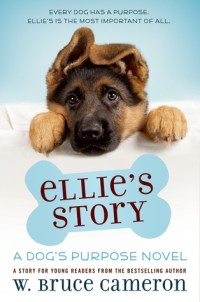
Ellie’s Story

22238177Ellie’s Story by W. Bruce Cameron

I read it as a: hardback

Source: my daughter’s collection

Length: 208 pp

Publisher: Starscape

Year: 2015

My daughter and I read books together at bedtime, and we take turns picking which book to read. Last time, I chose The Hobbit; this was the one she chose to read. It is a cute story for little kids about a search and rescue dog named, surprisingly, Ellie. The narrative takes us from the time she’s a pup with her littermates to her first trainer, Jakob, learning how to do her job, and on to her second and presumably final trainer, Maya. Jakob teaches Ellie how to be a search and rescue dog, what it means to Work, and Find, and Show in relation to lost people. When Jakob is shot in the line of duty and retires, Maya takes Ellie and becomes her new partner. They work together for many years until an injury forces the police department to retire Ellie herself. Rather than not having any job for her dog to do, Maya convinces the PD to let her use Ellie as an outreach program dog, teaching the community about the important work search and rescue dogs do every day.

My daughter ate this book up. It took a while to get through it since we only read it together at night before bed, but it was sufficient to keep her engaged. It is definitely written for much younger or less skilled readers; I mostly found the stories of the rescues to be repetitive and a little boring after a while, but the basic story was good, and since it is for children, that’s just fine.

One thing I particularly liked was that there was room for discussion with my daughter about some of the bad things that can happen. When Ellie and Maya went to the site of an earthquake to search for people, there were a lot of casualties. It was not a gory or very upsetting scene, likely because the narrator is Ellie herself and she didn’t quite understand that the people she found were dead. She only thought they smelled odd and they weren’t happy to be found like normal, so that was upsetting to her. But I thought it was important to include a scenario in which not everyone was found, or wasn’t found alive. That’s real life and I think it’s important not to shelter children from that. We talked about that a little bit so that she could understand that sometimes bad things happen, but I also took that opportunity to remind her about Mr Rogers and the helpers.

Something I think was not at all well done was the way body image was addressed with regard to Maya. It is written in a way that makes her sound inadequate compared to her male counterparts who are also out of shape. She is described as being unable to keep up with Ellie or with other officers out in the field, huffing and puffing and often in pain, whereas the men are rarely described as such. It was particularly gross when her mother told her now that she got certified to be Ellie’s handler, she needs to eat, making it sound as though she was starving herself to lose weight. Not a good message to send to young children. The only good thing about it at all was showing how hard Maya worked to get in shape, but even that has some drawbacks in that it highlights how her body was somehow imperfect or not up to par the way it was. It was obviously good enough to be a patrol officer, so she can’t have been too terribly out of shape to begin with given that there are physical fitness requirements for that position, but it made her sound like she belonged on My 600-Pound Life or something. This could have been handled better.

Overall, Ellie’s Story was a cute book to read together with my kid, and it offered some decent material for discussion with her. She had read it before on her own, which is fine, though I am glad I could read it with her so we could talk about some of the things I felt were important to address.

bookish things · books · historical fiction · Medievalism

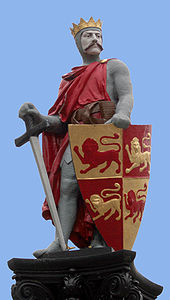
Llywelyn the Great

170px-llywelynfawr

Yesterday was the 776th anniversary of the death of Llywelyn ab Iorwerth, also known as Llywelyn the Great. Born in 1173, he began to take control of North Wales when he was about 14 years old. By the time he was about 28, he was effectively the ruler of all Wales. He unified Wales, historically a nation often divided by war and clan fighting, and held the land in peace. Even during the difficult years when he was at odds with King John, Llywelyn eventually managed to regain lands he lost, and he held the respect of his retainers and the nobles. He is one of only two Welsh kings to be given the title Fawr, “the Great.”

As a lover of historical fiction, in particular, medieval historical fiction, some of my favorite novels feature Llywelyn Fawr or his contemporaries. The best novels bring his time to life in the most vivid ways, transport me to his castles at Dolwyddelan, on his campaign trail, at his feast table. It takes a special kind of talent to make history come alive and not turn it into a dry, boring textbook. I’ve ready plenty of historical fiction novels that read like straight history textbooks, and it was awful. All I could think of while reading those was that I hoped other readers didn’t pick those particular books up as their first exposure to the time period. Otherwise, I just couldn’t see how they would ever be intrigued enough to want to learn more about it, and that makes me sad. For those who have not yet discovered good historical fiction based on Llywelyn ab Iorwerth, below are some of the very best.

220px-herebedragons

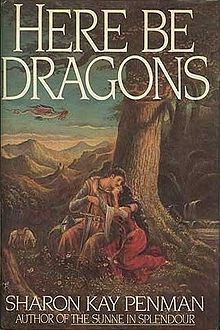
Here Be Dragons by Sharon Kay Penman. Rich not only in (highly accurate) historical detail, but also in the complexities of medieval politics, kingship, and interpersonal relationships, Here Be Dragons is my favorite novel of medieval Wales. One of my favorite scenes in the whole book was the wedding night of Llywelyn and Joanna, the daughter of King John. She was young and scared, and Llywelyn, wanting to earn her trust, offered to delay consummating their wedding and opted instead to cut his arm so that she could show a bloodstained sheet to those wanting proof of her viginity.

61ws0ldb2bdl-_sy344_bo1204203200_

The Brothers of Gwynedd Quartet by Edith Pargeter. This series is about the grandson of Llywelyn Fawr, Llywelyn ap Gruffydd, also called Llywelyn the Last. It is a first person narrative told from the point of view of Llywelyn’s scribe and friend Samson. I rather like the first person account since it gives an immediacy to the story and an intimacy into just one aspect that we might not otherwise get to see. After all, we only can see life from our own perspective.

What others have you read?

Writing

Story By A Line

I don’t know how the brains of all reading addicts work. But for my own brain, we will often read a story together, my brain and I, then go on a tangent, and make up a new story about something it just saw in the book we’re reading. I’m not talking about writing fanfiction, though that has often happened as well. I’m talking about reading a scene, or even a single line, and wanting an entirely new story completely separate from the novel as a whole, totally unrelated to the story, based just on that singular line. Maybe there is a proper term for it, but in my head I’ve always referred to it as a story by a line. Continue reading “Story By A Line”

bookish things · books · random

Book Perfumery, please

If you’re anything like me, books and scent go hand in hand. There is nothing like the smell of a new book, the crispness of the pages and the sharpness of the ink. I take a deep breath every time I enter a bookstore and instantly feel better about everything, no matter what. There is a special way new books smell, and it’s the same no matter where you go, and it is a comfort to me. If I am traveling and get homesick, a bookstore will still smell the same wherever I am as it would at home, and I feel more steady.

I’ve always associated places with scents, as well, and used books, too, have their own scent. Some, like ones I order from England, smell of old musty buildings and flowers, reminding me of centuries of people walking over the same stone floors and seeing much the same view as perhaps I have seen when I have visited. One, and I don’t remember where it came from except that I ordered it from one of the sellers on Amazon and it was listed as “very good condition,” reeked of cigarettes and smelled up my entire house in a matter of hours. Even setting it out directly in the heat of the desert sun didn’t kill the stink of it and I had to throw it away. That bookseller got a strongly worded email regarding the definition of “very good condition.” If only it was as strong as the stench emanating from the book they sent to me. Holy shit.

My point, of course, is that books and scent are inextricably linked for many of us. But to take it further, for me, books often make me wish I could distill the scents from the story and bottle them as a perfume. As a bit of a perfume junkie – I have dozens of bottles of perfume from Black Phoenix Alchemy Lab – I would just love to be part of a project to translate some books into scents. BPAL already is literary in the extreme, and has entire lines of scents devoted to books and characters from them, so this isn’t an unrealistic dream. Maybe I should hone my networking skills…

Some books that are simply begging to be made into perfumes right now are:

The Night Circus. Rose, ice, and sugar. Caramel and autumn leaves. Roses, dew, moss, and dirt. The language of the book was full of scent-filled imagery.

Uprooted. What does a Heart tree smell like? Sickly sweet and woody? Green leafy? And Agnieszka’s spell she chants with the Dragon? She needs a scent of her own, as does Sarkan himself.

When Christ and His Saints Slept. Eleanor of Aquitaine must have something rich and complex, yet subtle. Maybe something somewhat exotic, jasmine and sandalwood with  a topnote of lemon. Henry would be all male, leather and salt and perhaps a touch of cypress and lavender.

The Mists of AvalonThe Princess Bride. The Dragonriders of Pern. Just about anything written by Holly Black or Francesca Lia Block. I could go on all day long with this.

What perfumes would you make based on books you’ve read?


book review · historical fiction · Medievalism

A Morbid Taste For Bones

321545

As a die hard fan of medieval mysteries, I feel a great deal of gratitude to Ellis Peters for essentially starting the genre with this, the first entry in the Brother Cadfael series.

And what a treat it is! For a tiny book that inexplicably took me an inordinate length of time to read, this was really a fun story. Cadfael is a terrific character, full of quirks and orneriness. Love it! He’d be fun to hang out with.

The secondary characters were nicely developed. Brother John was awesome, and his minor story arc was delightful. Sioned was a strong, wonderful woman and I was glad to see her story have enough twists and turns to give her some adventure during her journey.

I liked that the bad guys weren’t so blatantly bad that Whodunnit was immediately obvious. There were some nice moral dilemmas and grey areas, which are really still relevant today.

Can’t wait to read the rest of the stories in this series.