book review · bookish things · books

Exploring Witchcraft in Lolly Willowes: A Feminist Classic

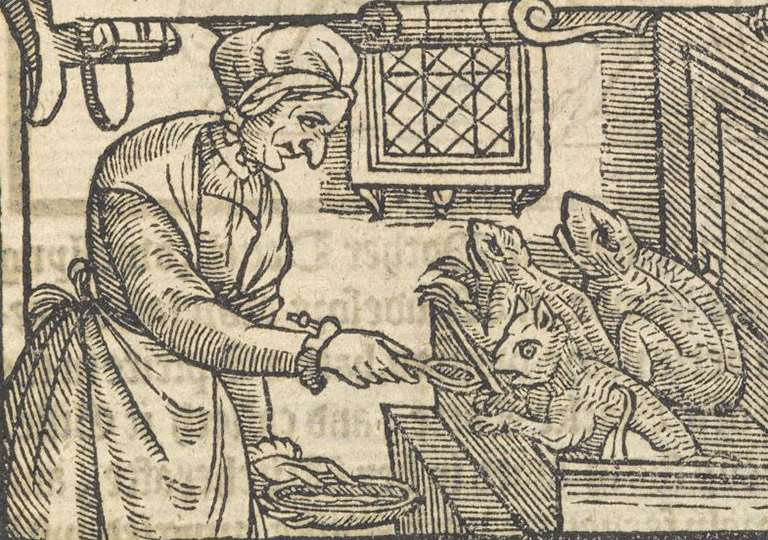
A woodcut from a 1579 pamphlet showing a witch feeding her familiars. From englishheritage.org, courtesy of The British Library

Lolly Willowes by Sylvia Townsend Warner Genre: British classics I read it as a(n): hardback Length: 222 pp  Her Grace’s rating: 4 stars 

This is another classic that I had never read and didn’t know anything about. I picked it to read partly because of that, and I also picked it for my book club when it was my turn because it was the very first book ever chosen by the Book of the Month Club. I thought that was cool. Also, a spinster who decides to move to the countryside and take up witchcraft? Hell, yes, sign me right up!

Laura “Lolly” Willowes is a spinster who has to go live with her brother and his family in London when their father dies. Because god forbid a woman live alone, as Lolly wanted to do. She has an affinity for the countryside and for learning about plants and herbs and animals. But she is not married and has few prospects of becoming so. I think maybe she is on the spectrum, though of course nobody knew about ASD when this book was written. Just the way she is described, though, makes me think that. She was also supremely introverted and didn’t want to go to parties or meet men to marry. Warner writes, “They had seen her at home, where animation brought color into her cheeks and spirit into her bearing. Abroad, and in company, she was not animated. She disliked going out, she seldom attended any but those formal parties at which the attendance of Miss Willowes of Lady Place was an obligatory civility; and she found there little reason for animation” (26). So, no weddings for Lolly.

She was viewed by her family as useful. The useful and doting aunt. The helpful sister. The competent household manager. Nobody ever really saw her for who she was, only for what they wanted her to be. So once her nieces and nephews were grown and no longer needed her, Lolly decided she was going to leave London and move to a town in the countryside called Great Mop, which is an awesome name, like she had wanted to do since her 20s, when she was required to move to London. 

She found a room to rent as a lodger in a nice little town with a nice little lady and her husband. Where Lolly discovered that all the townspeople were witches and served Satan, so she decided to join the fun. But all she ever did with her satan witchy powers was curdle some milk, though. I mean, WHAT? If I had satanic powers (or the Force, or telekinesis, or anything of the sort) I would most definitely not just curdle milk with them. I would be visiting some politicians. “That is not the bill you are voting for. You will vote for this bill. Behave or I shall cast deep rectal itch upon you.” I would also totally make everyone on the road get out of my way. Like Fezzik in The Princess Bride.

Something I noticed throughout the book, or at least until Lolly moved back to the countryside, was that there isn’t a lot of dialogue in it. It was a blur of events and years. Even World War I took like 1 ½ pages, if that. I think Warner did that on purpose. It highlighted how dull and drifting Lolly’s life was, how empty and meaningless she felt. She was just going through the motions. She came alive when she left the city for the country, and it had little to do with giving her soul over to Satan and getting a cat. Though those things helped. Everyone needs a cat, and a dark lord. 

The things Lolly noticed throughout the book were all tied to nature. She bought some fruit and jams from the grocer’s and wondered about the woman who had picked the fruit and made the jams: “A solitary old woman picking fruit in a darkening orchard, rubbing her rough fingertips over the smooth-skinned plums, a lean wiry old woman, standing with upstretched arms among her fruit trees as though she were a tree herself, growing out of the long grass, with arms stretched up like branches” (79). Sounds like some solid life goals to me! 

Since Lolly knows that “nothing is impossible for a single, middle-aged woman with an income of her own” (95), she decides to stop being useful and go do what she wants. She was also 47 when she came to that decision, the same age I am. Yes, girl, rewild yourself! Her coming-of-age is very late, but it comes all the same. She figures out, finally, that she is her own person and that nobody – not her brother or nephews or nieces – could “drive her out, or enslave her spirit any more, nor shake her possession of the place she had chosen. While she lived her solitudes were hers inalienably; she and the kitten, the witch and the familiar, would live on at Great Mop, growing old together, and hearing the owls hoot from the winter trees” (159-160). 

One thing I really loved is that Lolly totally had her own Barbie Speech. It is even longer than the Barbie Speech in the actual Barbie movie, but just as powerful. The Devil did tell her to talk, “not that I may know all your thoughts, but that you may” (216). And she certainly did talk. Her entire speech is still just as relevant today as it was when this book was published 100 years ago. That’s fucking infuriating. If you want to read her whole Lolly Barbie Speech, it is below the cut.

Click to reveal the spoiler

“When I think of witches, I seem to see all over England, all over Europe, women living and growing old, as common as blackberries, and as unregarded. I see them, wives and sisters of respectable men, chapel members, and blacksmiths, and small farmers, and Puritans. In places like Bedfordshire, the sort of country one sees from the train. You know. Well, there they were, there they are, child-rearing, house-keeping, hanging washed dishcloths on currant bushes; and for diversion each other’s silly conversation, and listening to men talking together in the way that men talk and women listen. Quite different to the way women talk, and men listen, if they listen at all. And all the time being thrust further down into dullness when the one thing all women hate is to be thought dull. And on Sunday they put on plain stuff gowns and starched white coverings on their heads and necks – the Puritan ones did – and walked across the fields to chapel, and listened to the sermon. Sin and Grace, and God and the –” (she stopped herself just in time), “and St. Paul. All men’s things, like politics, or mathematics. Nothing for them except subjection and plaiting their hair. And on the way back they listened to more talk. Talk about the sermon, or war, or cock-fighting; and when they got back, there were the potatoes to be cooked for dinner. It sounds very pretty to complain about, but I tell you, that sort of thing settles down on one like a fine dust, and by and by the dust is age, settling down. Settling down! You never die, do you? No doubt that’s far worse, but there is a dreadful kind of dreary immortality about being settled down on by one day after another. And they think how they were young once, and they see new young women, just like what they were, and yet as surprising as if it had never happened before, like trees in spring. But they are like trees towards the end of summer, heavy and dusty, and nobody finds their leaves surprising, or notices them till they fall off. If they could be passive and unnoticed, it wouldn’t matter. But they must be active, and still not noticed. Doing, doing, doing, till mere habit scolds at them like a house wife, and rouses them up – when they might sit in their doorways and think – to be doing still! …

Is it true that you can poke the fire with a stick of dynamite in perfect safety? I used to take my nieces to scientific lectures, and I believe I heard it then. Anyhow, even if it isn’t true of dynamite, it’s true of women. But they know they are dynamite, and long for the concussion that may justify them. Some may get religion, then they’re all right, I expect. But for the others, for so many, what can there be but witchcraft? That strikes them real. Even if other people still find them quite safe and usual, and go on poking with them, they know in their hearts how dangerous, how incalculable, how extraordinary they are. Even if they never do anything with their witchcraft, they know it’s there – ready! Respectable countrywomen keep their grave-clothes in a corner of the chest of drawers, hidden away, and when they want a little comfort they go and look at them, and think that once more, at any rate, they will be worth dressing with care. But the witch keeps her cloak of darkness, her dress embroidered with signs and planets; that’s better worth looking at. And think, Satan, what a compliment you pay her, pursuing her soul, lying in wait for it, following it through all its windings, crafty and patient and secret like a gentleman out killing tigers. Her soul – when no one else would give a look at her body even! And they are all so accustomed, so sure of her! They say: ‘Dear Lolly! What shall we give her for her birthday this year? Perhaps a hot-water bottle. Or what about a nice black lace scarf? Or a new workbox? Her old one is nearly worn out.’ But you say: ‘Come here, my bird! I will give you the dangerous black night to stretch your wings in, and poisonous berries to feed on, and a nest of bones and thorns, perched high up in danger where no one can climb to it.’ That’s why we become witches: to show our scorn of pretending life’s a safe business, to satisfy our passion for adventure. It’s not malice, or wickedness – well, perhaps it is wickedness, for most women love that – but certainly not malice, not wanting to plague cattle and make horrid children spout up pins and – what is it? – ‘blight the genial bed.’ Of course, given the power, one may go in for that sort of thing, either in self-defense, or just out of playfulness. But it’s a poor twopenny house-wifely kind of witchcraft, black magic is, and white magic is no better. One doesn’t become a witch to run around being harmful, or to run around being helpful either, a district visitor on a broomstick. It’s to escape all that – to have a life of one’s own, not an existence doled out to you by others, charitable refuse of their thoughts, so many ounces of stale bread of life a day, the workhouse dietary is scientifically calculated to support life. As for the witches who can only express themselves by pins and bed-blighting, they have been warped into that shape by the dismal lives they’ve led. Think of Miss Carloe! She’s a typical witch, people would say. Really she’s the typical genteel spinster who’s spent herself being useful to people who didn’t want her. If you’d got her younger she’d never be like that” (211-215).

And this quote really sums up not only the book but my entire worldview in a handy lil nutshell: That was one of the advantages of dealing with witches; they do not mind if you are a little odd in your ways, frown if you are late for meals, fret if you are out all night, pry and commiserate when at length you return. Lovely to be with people who prefer their thoughts to yours, lovely to live at your own sweet will, lovely to sleep out all night! (222).

Anyway, I enjoyed this book, and am eager to read more classics that I have never got around to before now. 

Reference:

Warner, Sylvia Townsend. Lolly Willowes. Book of the Month, 2017.

lifestyle · travel

Highlights of My Busy 2024: Family, Travel, and Reading

My 2024 was pretty busy, mostly in good ways. 

So. That happened. I am sick to death of politics, so all I’ll say is, I hope everyone gets the year they voted for and deserve. 

New Zealand sister, her husband, and kids came for a good visit. I hadn’t gotten to meet her kids before now, so that was a delight. That whole visit was a highlight of the year, though I feel bad that their schedule meant they had to come in the hottest part of summer. There’s nothing good about summer in Phoenix. Sorry, Z – I hope next time you get to come when it is not a million degrees out. 

A few months after their visit, her younger brother came for a visit as well. He had a few days to kill between arriving in the States and taking his test to get promoted to captain (he works on superyachts – how cool is that?), so he came to visit us. I hadn’t seen him since he was like 8, so that was a fun visit as well.

I took my daughter on a trip to London during her fall break from school. One of my best friends met us there a few days later and we had one epic girls’ trip. I got a new tattoo while I was there; we saw a few plays, including A Comedy of Errors at Shakespeare’s Globe Theatre; got to visit my friend’s family during a trip to Kew Gardens and Camden; ate dinner at St John, which was one of Anthony Bourdain’s favorite restaurants in London; saw, FINALLY, the tomb of William Marshal in the Temple Church; and spent hours in a massive 6-storey Waterstone’s, buying books that weren’t published in the States yet because buying books in Britain is more fun, and also I have no ability to delay my gratification when it comes to books in general. 

I hit a major reading slump this year, too, but I still did alright. I read a total of: 

  • 36 books
  • 11,113 pages
  • 12 audiobooks
  • 153:27 hours listened
  • 67% of women authors
  • 33% of male authors
  • 8% LGBTQ+ authors 
  • 19% LGBTQ+ characters (I did really badly in these 2 categories this year; I try to do 25-30% at least)
  • The genre I read the most was sci-fi. Big surprise there. 44% of my reading was sci-fi
  • The month I read the most was December, which is weird
  • I had 8 books that I rated as 5-star reads
  • I had 1 book to which I gave a 1-star rating

My favorite books of this year were:

  • The Salt Path by Raynor Winn (also the audio)
  • The Wild Silence also by Raynor Winn
  • Thorn Hedge by T. Kingfisher
  • The Long Way to a Small, Angry Planet by Becky Chambers
  • A Closed and Common Orbit also by Becky Chambers
  • the witch doesn’t burn in this one by Amanda Lovelace

My favorite audiobooks of this year were:

  • The Salt Path written and read by Raynor Winn (also eyeball read this)
  • Lost Boy by Christina Henry, narrated by Samuel Roukin
  • Norse Mythology written and read by Neil Gaiman
  • The Gentleman by Forrest Leo, narrated by Samuel Roukin and John Keating. (Some serious, laugh out loud funny moments in this one. The side notes just about killed me)
  • The Shadowed Land by Signe Pike, narrated by Eilidh Beaton, Toni Frutin, Gary Furlong, Angus King, and Siobhan Waring (I waited 3 years for this book to come out and it was so worth it. Probably my new all-time favorite take on Arthurian legend)

I still have a few days left of 2024 so I may get a couple more books read between now and then. But it’s close enough.

My goals for 2025 are much as always – read lots, try new food, go to some interesting places, hang out with friends. I will try to complete my own reading challenge in 2025. For fun, I try to complete The Nerd Daily’s annual challenge as well, though I don’t make myself crazy if that doesn’t happen. And, of course, I try to do the reading challenges by tackling my own TBR in the process. I will post my annual reading challenge in a couple days for anyone who might want to participate. 

Happy Holidays, all!

book review · bookish things

Exploring Resilience and Renewal: A Journey Through “The Salt Path”

The Salt Path by Raynor Winn
Genre: memoir
I read it as a(n): audiobook
Narrator: Raynor Winn
Length: 09:00:00 
Her Grace’s rating: 5 stars

Raynor Winn and her husband, Moth, are in their 50s when they lose everything due to a bad business scheme their friend got them into. They find themselves with no home, no business, no money, and no one able to help. On top of all that, Moth is diagnosed with a terminal degenerative illness just days after they lost everything else. So they pack their backpacks and set off to walk the South West Coastal Path, a 600+ mile trail around the Cornish peninsula. Just like any normal person would (WARNING: sarcasm detected). Having lost all their savings, they are dependent upon the miniscule amount of government funds they’re entitled to, which is something like £20 per week. 

I first became aware of this book because of an article I saw that said it was being filmed and is starring Jason Isaacs and Gillian Anderson. BOTH of my celebrity crushes in the SAME MOVIE OMFG *FLAIL* WHEN CAN I WATCH IT?? 

Here’s the thing, though. After reading it, it doesn’t even matter to me if Jason and Gillian are starring. At this point, I would have watched it no matter who was in the film. They could have cast Adam Sandler (shudder) and Gwyneth Paltrow (double shudder) and I would still watch it. That’s because I already know this book will top out in my 5 favorite reads of 2024

I read this book a few weeks ago and I still can’t get it out of my head. I felt so bad for Ray and Moth. I can’t imagine how hurt and scared they must have been to be screwed over like they were by a “friend” or how unfair the legal system was to them (they had proof they were not at fault but weren’t allowed to use it because they didn’t submit a form exactly right WTF). Also, how awful it must have been for Moth to carry on when his body was betraying him. 

One thing that struck me throughout the book was the casual cruelty they experienced. They could be sitting by themselves, bothering nobody, in a public park, and someone often would come along and tell them they’re disgusting for being drunk in public or sleeping in public or being crazy in public or whatever the fuck. Nevermind the fact that they were not drunk or stoned or anything like that, and they were homeless. There aren’t enough shelters or space in the existing ones. Where the fuck are they supposed to sleep, the Savoy? And what kind of judgmental jerk automatically assumes that if a person is homeless, they must also be an addict, criminal, or mental patient of some kind? I guess being poor in public is also frowned upon. The fact that these were educated, productive members of society prior to their devastating loss apparently never even occurred to any of the people who gave them grief. Also? I don’t know about you but if I were homeless, numbing all of that with drugs and alcohol probably would seem like an excellent idea.

I think the thing that made me feel the worst to hear about was when they were laying in their tent in the early morning (in a location where it is perfectly fine to pitch a tent) and waiting to get the day started when a random hiker and his dog both take a piss on their tent. I mean, who the fuck DOES that? What kind of asshole do you have to be to piss, literally, on someone’s home? See, this is an example of why I should never become a Jedi. If I had the Force, there is a 100% chance I would use it to give instant karma to assholes like that. Want to pee on someone’s tent? Cool – instant, antibiotic-resistant UTI for you. Maybe a scorching case of jock itch as well. Enjoy it, dickweed. 

All that is to say that this book correctly challenges the perceptions much of society has towards people who are marginalized, whether they are unhoused, addicted, mentally ill, or anything else. People without homes are still people. People with addictions are still people. People who are impoverished are still people. The fact that this needs to be said is a pathetic indictment on humanity as a whole. 

That said, they also did encounter many people who were kind and helpful along the way. Some of them were also walking the south west coast path and they ran into them more than once, though those people were all walking on vacation and only had so many days before they got into a car and drove back home. While they were generally kind and eager to share, it seemed like that was a painful encounter as well since Ray and Moth had no home to go to when they were cold or hungry or sick. Listening to it felt a little like rubbing salt in the wound. 

The book is also an exploration of home and what makes a home. Initially, home was their lost farm, the place where their kids had been born and grew up, where all their things were. By the end, home was simply with each other. They learned that they needed far less than they ever thought, and got by on less than that even though it was out of necessity. As long as they were together, that was really all they needed. That was home and they can take it with them anywhere they go.

FAVORITE QUOTE

We were lightly salted blackberries, hanging in the last of the summer sun, and this perfect moment was the only one we needed. 

book review · historical fiction

Daughter of Black Lake

daughter of black lake

Daughter of Black Lake by Cathy Marie Buchanan

Genre: historical fiction

I read it as a(n): hardback

Length: 320 pp

Her Grace’s rating: 5 out of 5 stars

Set in the 1st century CE, Daughter of Black Lake centers on a small village to the northwest of Londinium. The Roman invasion is in process, though the villagers don’t really seem to care much. Most see it as an opportunity to make some money by trading with a nearby outpost town. When an unhinged Druid, Fox, comes along, trying to incite the tribesmen to band together and rise against the Romans, things get dangerous. One woman, Devout, and her daughter, Hobble, find themselves in the middle of a power struggle between the Druid and the leader of the village, in part because of Hobble’s ability to See the future. Devout, though, also has secrets of her own that may destroy the peace of the village and doom Fox and the rest of the Druids’ plans to overthrow the perceived shackles of their oppressors. 

At first, I wasn’t sure if I was going to like this book. It felt like a lot of not much was happening. But the characters were deeply developed and I got invested in their stories. Then Fox came along and I wanted to see what would happen with him. He was a hateful character, which was weird for me since I usually really like Druid characters. Of course, the Druid figures in other stories I’ve read were more like Merlin or Gandalf, so naturally I would like them. Fox, not so much. He was a fundy zealous dick. 

I liked Hobble a great deal. She was a healer, like her mother, and had vast knowledge for such a young girl. I cared less about her ability to see the future, especially since it was never really explained why she had the ability. Fox wanted to use her ability to help rally the tribes to the Druids’ cause and go to the aid of the Iceni queen, Boudicca, but Hobble couldn’t do that. She could see that the Romans were going to kick their asses. And historically, they did. Boudicca came damn close to winning but in the end, she didn’t. 

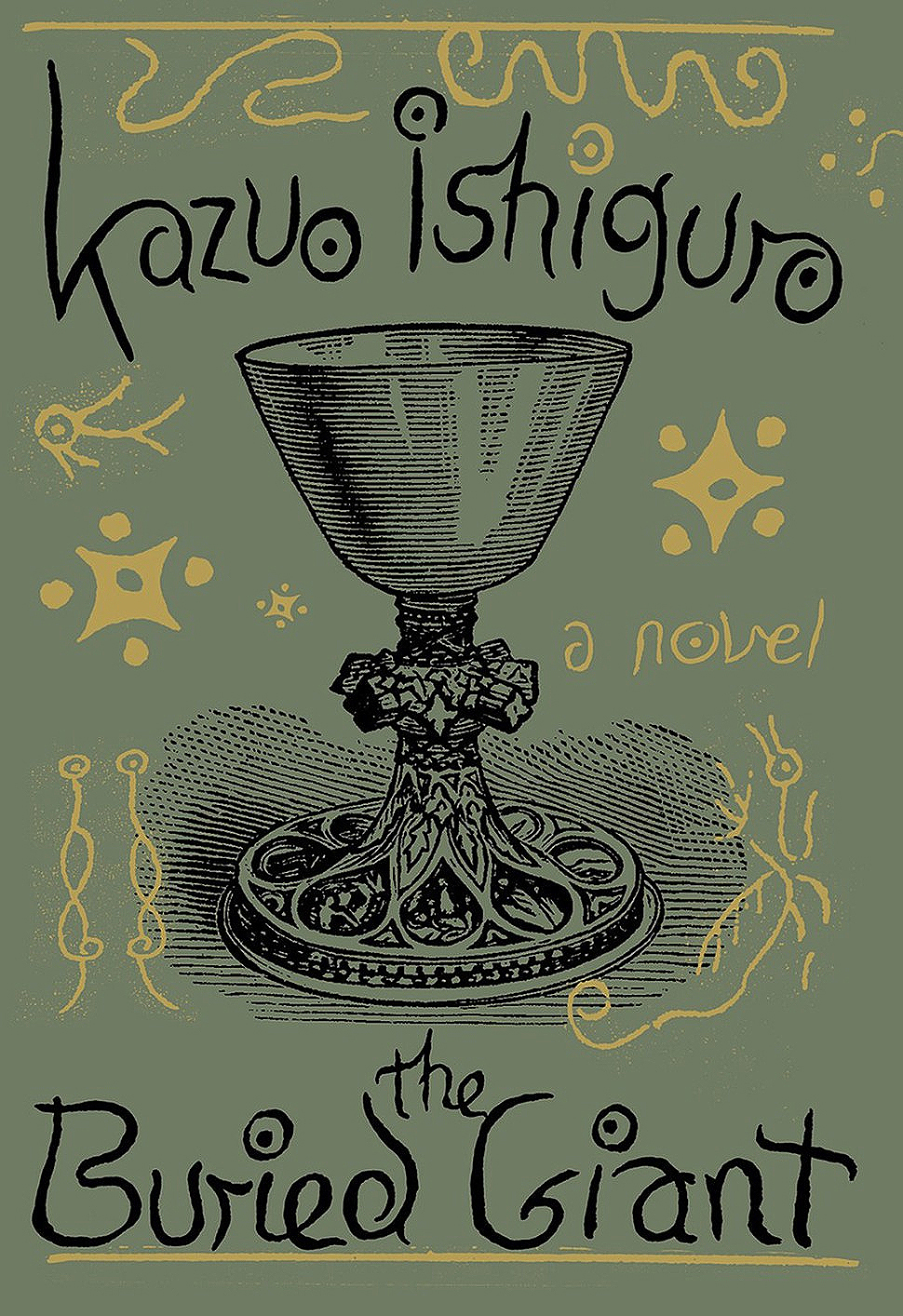
I really liked the writing style. It was almost dream-like. It felt similar to The Buried Giant by Kazuo Ishiguro, but I didn’t care for that story and I did like Daughter of Black Lake. Maybe comparing it to The Mists of Avalon would be more accurate. At any rate, I really liked this one. It’s certainly making my favorite books of 2023 list. 

book review · Medievalism

The Buried Giant

The Buried Giant by Kazuo Ishiguro

Genre: fantasy

I read it as a(n): hardback

Length: 317 pp

Her Grace’s rating: 2 out of 5 stars

I…did not understand this book. I’ve got plenty of game. I can talk about the allegory of the buried giant as the letting go of or forgetting of old grudges. I get that the mist is the collective forgetting that happens when we rewrite history or lose meaningful parts of history. I can understand the symbolism (So. Much. Symbolism) of the dragon, the pilgrimage, or the boatman. I can talk about how each person in the group of Axl, Beatrice, Wistan, Gawain, and Edwin represents a different social strata and that they collectively serve as a microcosm of post-Roman Britain. 

But I still do not understand this book. What even happened in it? I wanted to love it so much. I love most things even remotely related to Arthurian legend. But there was an old couple and a warrior and a kid and they all met Sir Gawain and then there’s a dragon and some monks and the kid’s weird visions and a boat and the end. All with nothing really happening. The characters were flat. Most of them were totally blank to me. I didn’t care about their quest or the fact that they couldn’t remember. The tidbits of memory from Axl were not tempting to me. There was nothing exciting, no plot progression, nada. Just, like…ok? And? 

I think people who enjoy introspective and meditative narratives will love it. That is usually me, but not this time. I could go on for days about it and still come up with nothing much. So weird.

Elizabethan England · Tudors

Anne Boleyn’s Little Neck

Of all the Queens throughout British history, one of the most infamous surely must be Anne Boleyn (c. 1501 – May 19, 1536). Painted throughout history as a temptress, seductress, traitor, and worse, Anne Boleyn has gotten a seriously bad rap. But where does this image of her really come from? Was she really these things? The answer is probably no, not really. Possibly the truth is somewhere in the middle, or maybe we will never know the truth at all. Many historical novelists have had their own interpretations of Anne over the years, and depending on their perceptions, readers are presented with very different people.

A very quick history lesson:

  • Much of our basis for how we view Anne Boleyn comes from the letters and documents of Eustace Chapuys, the ambassador for the Holy Roman Emperor, Charles V.
  • Chapuys’s job was literally to report what he heard at Henry VIII’s court, including about Anne, much of which came from her enemies. His actual letters reported others’ words, not necessarily his own.
  • The Holy Roman Emperor was Catherine of Aragon’s nephew, so he was naturally inclined to dislike Anne based on her replacement and treatment of his aunt. Often, he referred to Anne as “the Concubine,” which was recorded in letters to and from Chapuys.
  • Chapuys didn’t like Protestants or the French. At all. Anne was both Protestant and had French mannerisms, so it’s easy to see why historians think he hated her.
  • Chapuys and another man, Pedro Ortiz, exchanged a lot of letters in the course of their duties and the two might have become conflated over time. Ortiz was Catherine of Aragon’s proctor in Rome. HE REALLY loathed Anne, and his letters do actually prove it. Chapuys’s letters are fairly unbiased.
  • Chapuys only met Anne once, in April of 1535. All his other information about her came from other sources, including her enemies.
  • Chapuys was one of the only people who publicly stated that he thought Anne was innocent of the charges brought against her and was a victim of political machinations.
  • Regardless of politics, Anne was unpopular. Her failure to have a son gave Henry VIII the impetus he was looking for to have Thomas Cromwell charge her with adultery, incest, and treason.
  • Adultery, when one is married to the king, is high treason, punishable by death.
  • Five other men were charged with Anne and executed.

One scene that is often seized upon by authors occurs during Anne’s tenure in the Tower. While she was held in the Tower, both before and after her trial and sentencing, she was attended by Mary Kingston, the wife of the Tower constable, Sir William Kingston. The conversations Sir William recorded and reported to Cromwell were used at that time to seal Anne’s fate, as well as that of the five other men who were executed with her. Today, Kingston’s letters are considered among the most important bits of evidence that Anne and the others were totally innocent. In a letter written May 19, 1536, the morning of Anne’s execution, Kingston wrote:

 This morning she sent for me, that I might be with her at such time as she received the good Lord, to the intent I should hear her speak as touching her innocency alway to be clear. And in the writing of this she sent for me, and at my coming she said, ‘Mr. Kingston, I hear I shall not die afore noon, and I am very sorry therefore, for I thought to be dead by this time and past my pain.’ I told her it should be no pain, it was so little. And then she said, ‘I heard say the executioner was very good, and I have a little neck,’ and then put her hands about it, laughing heartily. I have seen many men and also women executed, and that they have been in great sorrow, and to my knowledge this lady has much joy in death. Sir, her almoner is continually with her, and had been since two o’clock after midnight.

 This statement serves as the focal point for many interpretations of Anne’s behavior in various novel, TV, and film adaptations. On a surface reading of Kingston’s letter, we might assume that he thought her actions to be aberrant, considering that he noted other condemned prisoners had displayed “great sorrow” at their impending demise, but Anne instead had “much joy in death.” However, a closer look indicates that he isn’t actually offering a commentary on Anne’s state of mind. He is merely observing what his charge is doing, as his job requires, like a doctor charts a patient’s progress. There is no judgment in Kingston’s letter. To the contrary, the letter implies he is a compassionate jailer. He attempts to calm her fears about any pain she will face during her execution, which he didn’t have to do. Perhaps he was kind to her because he believed she was innocent. We may never know, but writers certainly have their views on the matter. Two popular historical novelists, Margaret George and Alison Weir, have each tackled this scene, with very different results.

In Margaret George’s novel The Autobiography of Henry VIII, the scene in the Tower is unsettling to Kingston, who is distracted by preparations he must oversee for the executions. Kingston is on the verge of exhaustion, frazzled by the multitude of administrative functions he has to fulfill, and is perturbed by the lack of instructions from Henry VIII about Anne’s coffin. “Dawn came before five, and Master Kingston was already exhausted from the tasks of the day ahead. …[H]e naturally had many details of both practicality and protocol to attend to. … He was running late. … But still no word about the coffin!” (George 542). Kingston, when he goes to Anne’s rooms to deliver news of her delayed execution, is relieved by it because it gives him more time to carry out his other duties. When he speaks to Anne, he’s obviously in two places at once and has to force himself to pay attention to her. When she speaks, Anne’s dialogue is consistent with Kingston’s description in his letter to the king. Upon learning of the delay, Ms. George describes Anne as disappointed and sad. Anne goes on to comment that she thought by noon to be past her pain. But then she grabs Kingston’s arm and whispers frantically to him that she is innocent. Abruptly, she has another mood swing and asks him fearfully if her death will be painful. Her volatile swings in mood make her seem mentally unstable, which at that time in history would also imply her guilt. This version of Anne is worried about how big the executioner’s axe is: “I have a little neck. … But the axe is so thick, and rough” (George 542). Upon learning that she was to be beheaded by a swordsman, she laughed, saying that Henry was ever a good and gentle sovereign lord. That, friends, is what I like to call sarcasm. Her laugh is described as “that hideous, raucous laughter” (George 542), like a witch’s cackle, and Kingston is thoroughly unnerved by it. Anne’s laughter again starts up when she jokes to Kingston that she will be known as Queen Anne Lack-Head. Here, George describes Anne’s laughter as “shrieking” (543) and Kingston is actually frightened by it, all but fleeing her Tower chambers. The overtones of witchcraft, overlaid with her added comments about Henry making her a martyr, underscore the implied mental instability implicit in the text, neatly tying up the issue of her unsuitability to be queen. All told, her mannerisms combine to create a character that is unsympathetic, severing any lingering tender feelings readers may have had for her. Given that this novel is told from Henry’s perspective, it makes sense for Ms. George to make Boleyn a character that readers no longer like at this point. We are seeing her through his eyes, and by now, he truly believed that she was guilty and had wronged him grievously.

In Alison Weir’s novel, Anne Boleyn: A King’s Obsession, readers get another interpretation of Anne’s famous “little neck” comment. Right away, the novel has a decidedly favorable tone towards Anne, whereas George’s novel did not. From the moment Anne arrives at the Tower, concessions are made to her rank as queen: She was given the same rooms she had used before her coronation, she had several ladies attending her, she ate with Sir William and his family. Her clothes were richly described, and pomp and ceremony were seen to more so than in other novels. Kingston is referred to as the “Gentleman Jailer” (Weir 527), making him sound as though he is a courtier there to wait upon her and lending more dignity to Anne’s imprisonment than it would have had otherwise. After her sentencing, Kingston was more forthcoming with Anne and was very gentle, taking time to talk with her and answer any questions she asked of him, acting very much the gentleman indeed. When he informed Anne of the time of her execution, she was relieved, for she had just been forced at Henry’s order to watch from the Tower the executions of the other five men. Kingston showed no hint that her relief was aberrant, as in other interpretations. Here, Anne is described as “agitated and panicky” (539) when her execution is delayed. This seems the more natural reaction in the two novels. Who among us hasn’t been agitated and panicky over facing something that we are dreading and have no choice to go through with? Hysteria and inappropriate reactions seem the most logical explanation. Anne has spent days dwelling on the fact that she’s going to die by having her head cut off. She is asking a normal question to a person who is a logical choice, having witnessed many executions in his line of work. Anne says, as we know, that she had hoped to be past her pain, because she’s been brooding about it and the suspense is eating her alive. Kingston is quick to reassure her it will be painless. When Anne says, “I have heard you say the executioner is very good, and I have a little neck” (593) she gives a nervous laugh afterwards. Of course she is nervous. She’s beyond nervous; she’s petrified. But she is also acknowledging Kingston’s role as a figure who has given her succor, because he was the one who told her about the swordsman from Calais, and that he was skilled and humane. Kingston went out of his way to try to calm her, without judgment. She explains to him that she wants to die now but her body “shrinks from it, so I am heartily glad it will be over quickly” (540) and Kingston assures her it will be, and squeezes her hand kindly. This is a very human moment for both of them, the most poignant and touching of the entire book, to be honest. This is a woman who went from being a queen to taking comfort from the man who will lead her to her execution. More so than any other scene, this is truly the full circle moment for Anne.

There is a reason why novelists continue to write about the Tudors. Yes, in part it is because the books will sell. But more than that, there is still a deep current of compassion we feel towards the people then, a desire to understand their motives and thoughts, and to better understand ourselves through them. Anne Boleyn remains a tragic figure – hated by some, beloved by others, mysterious in many ways to all. Her story encompasses so much depth that it is hard to look away, regardless of how one views her. Nearly 500 years after her death, the lingering controversy, intrigue, and curiosity surrounding Anne Boleyn may be the best elegy she could have asked for.


References:

Bordo, S. (2012, May 6). When fictionalized facts matter. The Chronicle Review, retrieved from https://www.chronicle.com/article/When-Fictionalized-Facts/131759

George, M. (1987). The Autobiography of Henry VIII, With Notes by His Fool, Will Somers. St. Martin’s Griffin: New York.

Mantel, H. (2012, May 11). Anne Boleyn: witch, bitch, temptress, feminist. The Guardian, retrieved from https://www.theguardian.com/books/2012/may/11/hilary-mantel-on-anne-boleyn

Mantel, H. (2012). Bring Up the Bodies. Henry Holt and Co: New York.

McKay, L. (2016, May 6). Did Eustace Chapuys really despise Anne Boleyn? HistoryExtra.com, retrieved from https://www.historyextra.com/period/tudor/did-eustace-chapuys-really-despise-anne-boleyn/

Weir, A. (2017). Anne Boleyn: A King’s Obsession. Ballantine Books, New York.


book review

The Lido

the lido

The Lido by Libby Page

Genre: contemporary fiction

I read it as a(n): hardback

Length: 310 pp

Her Grace’s rating: 4.5 out of 5 stars

Kate is a young woman living in the Brixton neighborhood of London, working at a local newspaper. She isn’t in charge of any important articles – mostly ads for lost pets and new restaurants – and seems to be struggling to launch. Rosemary is an 86-year-old widow who has never traveled outside of Brixton and has a lifetime’s worth of experience. The two should never have crossed paths, until Kate is assigned to interview the people of Brixton who have lived much of their life around the Brockwell Lido, an outdoor swimming and rec area. Kate decides to learn more about the lido and help to prevent it from being paved over for tennis courts by a developer for luxury apartments. Rosemary decides she’s never met anyone more in need of a swim than Kate. Friendship ensues.

This was such a sweet book. It sort of had the same feel as A Man Called Ove in that there were several generations of people making unlikely friends with each other. Kate finds her stride over the months she works to interview the people who have put the lido at the center of their community, and she becomes friends not only with Rosemary but with several other members of the Brixton community. She learns that she can do hard things and do them well.

Rosemary sees Kate as a last hope of saving her beloved lido, where she has swum daily since it opened in the 1930s, where she met and fell in love with her husband George, and where she places her sense of self even more so than at her home. She learns that there is still a lot of life left to live even if George is gone and possibly her lido as well. 

I read this for my book club and I’m glad this is the one that was selected. It was a sweet, fast read that had all the warm fuzzy feels and a couple face leaks. 

Favorite quotes:

  • Kate felt more comfortable in her books than she does in real life. She liked to reread her favorite stories: knowing what was going to happen made her feel calm, as though she was directing the story herself (29). 
  • There are no cubicles free in the communal changing room so Kate peels off her clothes behind her towel. Fear of being seen naked brings out flexibility she didn’t know she had (44). 
  • …she will tell him about the protest and the ducks and how proud she felt standing with her friends underneath the banner and the lido clock. How she felt like she was a somebody (185).
book review · historical fiction

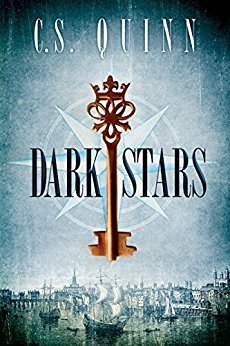
Dark Stars

Dark Stars by CS Quinn

Genre: historical mystery

I read it as a(n): audiobook

Narrator: Steve West

Length: 12:23:00

Her Grace’s rating: 2 out of 5 stars

Set a few weeks after the events of Fire Catcher, this third installation in The Thief Taker series centers around a killer who is leaving mutilated corpses to wash up around the port town of Deptford. The bodies are all marked with astrological signs that indicate a catastrophe will soon descend upon England. Charlie Tuesday teams up with Lily Bosworth to find the person responsible for the murders. In the process, he discovers that he is connected to the killer in ways beyond their shared astrological fate.

OK. So I didn’t care much for this book. I felt that the characters were surprisingly one-dimensional, especially considering that it was the 3rd book in the series. The good guys were very good, the bad guys were very bad. There were a couple others who were a little more shades of grey, but they were secondary characters that didn’t really add anything super important to the plot.

Speaking of adding to the plot – I’m sorry, but everything involving the court was basically irrelevant. What information we did learn from court could easily have been included elsewhere instead, like a rumor or intercepted letter. The side plot with the king’s mistresses and court politics was just kind of boring and didn’t, in my opinion, add anything vital to the overall story. I do not care at all about his primary mistress, Lady Castlemaine, nor the innocent young girl he fixates on later. The entire book could have been written without them in it at all, and if the rest of the court intrigue stuff had to be included, then probably 75% of it could be cut and still have retained what relevance was necessary. 

SPOILERS BELOW!

Continue reading “Dark Stars”
book review

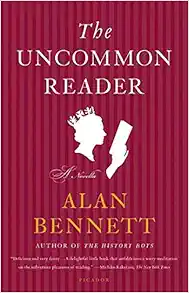
The Uncommon Reader

An Uncommon Reader by Alan Bennett

Genre: literary fiction

I read it as a(n): audiobook

Narrator: Alan Bennett

Length: 2:41:00

Her Grace’s rating: 4.5 out of 5 stars

This was a totally delightful little diversion. The Queen has discovered a love of reading and it’s affecting her ability to do – or rather, her interest in doing – her royal duties. Her family, government officials, and courtiers are Not Amused by her newfound obsession, either.

Mostly I thought this was a witty little story with several places that made me laugh out loud. I admit I know little of Queen Elizabeth’s personal life so I have no idea if she was never a reader until later in her life or not. I do know she basically had to ask to be educated because she wasn’t supposed to be the monarch and then, well. Whoops. So maybe she wasn’t much of a reader. What was funny though was that all her snobby officials and courtiers didn’t have a clue what she was talking about when making references to some very famous authors and their books. So they came across as boneheads, which I am sure was Bennett’s intention. 

I did think it was kind of sad too that no one other than Norman, the former kitchen boy, was at all supportive of her reading. They all treated her like either a dumb old woman in need of humoring or someone who shouldn’t have any personal interests and just do boring duties 100% of the time. I don’t care who you are, everyone ought to have interests outside of work and support of friends or family. 

There is a lot of social commentary in this small book, from class and social rank to the obligations a ruler owes to their country to the many virtues of literature. Lots to think about. My book club picked this as our next read and I’m glad. I imagine it will generate some great discussion.

book review · historical fiction · Medievalism

Oswald the Thief

Oswald the Thief by Jeri Westerson
Genre: historical mystery
I read it as a(n): paperback
Length: 270 pp
Her Grace’s rating: 4 out of 5 stars

Oswald is a half English, half Welsh charming bastard thieving tinker who gets trapped by a corrupt noble into doing a burglary. He only has to break into The Tower and steal the Crown Jewels. So that shouldn’t be too hard, right?

This was a really fun mediaeval caper. Westerson, as always, did a great job with the research of early 14th century London. She has the map of the Tower in the front of the book along with a brief list of terms, both of which are helpful for readers who may be new to her stories. The sights, sounds, smells (ugh), and social rules of mediaeval London shine through in every page.

Similarly, the characters are well crafted and complex. An honest thief? A corrupt noble? A man with the mind of a child but the skill to pick any lock in front of him? Check, check, and check. All the characters in this book are thoughtfully detailed and never one dimensional.

One thing I really like about this book – and actually about all of Westerson’s historical fiction – is that her characters are not all just nobles, royals, or church people. They’re mainly just regular people, the Pastons instead of the Plantagenets. They’re actually people most readers can identify with in ways we cannot with those of higher rank.

I think it’s a fucking tragedy that Westerson couldn’t get a traditional publisher to pick this book up. It was intended to be the first in a new series and I really hope we will get to read more about Oswald and his adventures in the future. It was a lot of fun and it should get more attention than it has.

I highly recommend this, as I do all of Westerson’s books. They’re well researched, the writing is fast paced, and they’re all witty and funny.