book review · bookish things · books

Exploring Witchcraft in Lolly Willowes: A Feminist Classic

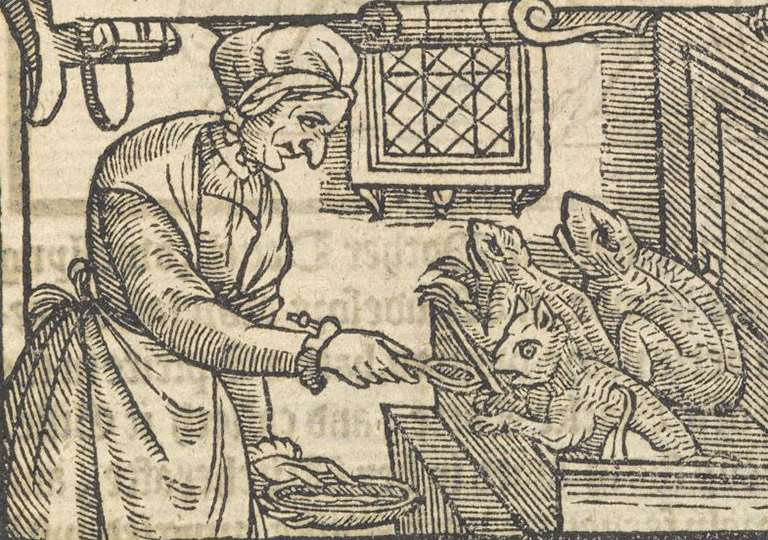
A woodcut from a 1579 pamphlet showing a witch feeding her familiars. From englishheritage.org, courtesy of The British Library

Lolly Willowes by Sylvia Townsend Warner Genre: British classics I read it as a(n): hardback Length: 222 pp  Her Grace’s rating: 4 stars 

This is another classic that I had never read and didn’t know anything about. I picked it to read partly because of that, and I also picked it for my book club when it was my turn because it was the very first book ever chosen by the Book of the Month Club. I thought that was cool. Also, a spinster who decides to move to the countryside and take up witchcraft? Hell, yes, sign me right up!

Laura “Lolly” Willowes is a spinster who has to go live with her brother and his family in London when their father dies. Because god forbid a woman live alone, as Lolly wanted to do. She has an affinity for the countryside and for learning about plants and herbs and animals. But she is not married and has few prospects of becoming so. I think maybe she is on the spectrum, though of course nobody knew about ASD when this book was written. Just the way she is described, though, makes me think that. She was also supremely introverted and didn’t want to go to parties or meet men to marry. Warner writes, “They had seen her at home, where animation brought color into her cheeks and spirit into her bearing. Abroad, and in company, she was not animated. She disliked going out, she seldom attended any but those formal parties at which the attendance of Miss Willowes of Lady Place was an obligatory civility; and she found there little reason for animation” (26). So, no weddings for Lolly.

She was viewed by her family as useful. The useful and doting aunt. The helpful sister. The competent household manager. Nobody ever really saw her for who she was, only for what they wanted her to be. So once her nieces and nephews were grown and no longer needed her, Lolly decided she was going to leave London and move to a town in the countryside called Great Mop, which is an awesome name, like she had wanted to do since her 20s, when she was required to move to London. 

She found a room to rent as a lodger in a nice little town with a nice little lady and her husband. Where Lolly discovered that all the townspeople were witches and served Satan, so she decided to join the fun. But all she ever did with her satan witchy powers was curdle some milk, though. I mean, WHAT? If I had satanic powers (or the Force, or telekinesis, or anything of the sort) I would most definitely not just curdle milk with them. I would be visiting some politicians. “That is not the bill you are voting for. You will vote for this bill. Behave or I shall cast deep rectal itch upon you.” I would also totally make everyone on the road get out of my way. Like Fezzik in The Princess Bride.

Something I noticed throughout the book, or at least until Lolly moved back to the countryside, was that there isn’t a lot of dialogue in it. It was a blur of events and years. Even World War I took like 1 ½ pages, if that. I think Warner did that on purpose. It highlighted how dull and drifting Lolly’s life was, how empty and meaningless she felt. She was just going through the motions. She came alive when she left the city for the country, and it had little to do with giving her soul over to Satan and getting a cat. Though those things helped. Everyone needs a cat, and a dark lord. 

The things Lolly noticed throughout the book were all tied to nature. She bought some fruit and jams from the grocer’s and wondered about the woman who had picked the fruit and made the jams: “A solitary old woman picking fruit in a darkening orchard, rubbing her rough fingertips over the smooth-skinned plums, a lean wiry old woman, standing with upstretched arms among her fruit trees as though she were a tree herself, growing out of the long grass, with arms stretched up like branches” (79). Sounds like some solid life goals to me! 

Since Lolly knows that “nothing is impossible for a single, middle-aged woman with an income of her own” (95), she decides to stop being useful and go do what she wants. She was also 47 when she came to that decision, the same age I am. Yes, girl, rewild yourself! Her coming-of-age is very late, but it comes all the same. She figures out, finally, that she is her own person and that nobody – not her brother or nephews or nieces – could “drive her out, or enslave her spirit any more, nor shake her possession of the place she had chosen. While she lived her solitudes were hers inalienably; she and the kitten, the witch and the familiar, would live on at Great Mop, growing old together, and hearing the owls hoot from the winter trees” (159-160). 

One thing I really loved is that Lolly totally had her own Barbie Speech. It is even longer than the Barbie Speech in the actual Barbie movie, but just as powerful. The Devil did tell her to talk, “not that I may know all your thoughts, but that you may” (216). And she certainly did talk. Her entire speech is still just as relevant today as it was when this book was published 100 years ago. That’s fucking infuriating. If you want to read her whole Lolly Barbie Speech, it is below the cut.

Click to reveal the spoiler

“When I think of witches, I seem to see all over England, all over Europe, women living and growing old, as common as blackberries, and as unregarded. I see them, wives and sisters of respectable men, chapel members, and blacksmiths, and small farmers, and Puritans. In places like Bedfordshire, the sort of country one sees from the train. You know. Well, there they were, there they are, child-rearing, house-keeping, hanging washed dishcloths on currant bushes; and for diversion each other’s silly conversation, and listening to men talking together in the way that men talk and women listen. Quite different to the way women talk, and men listen, if they listen at all. And all the time being thrust further down into dullness when the one thing all women hate is to be thought dull. And on Sunday they put on plain stuff gowns and starched white coverings on their heads and necks – the Puritan ones did – and walked across the fields to chapel, and listened to the sermon. Sin and Grace, and God and the –” (she stopped herself just in time), “and St. Paul. All men’s things, like politics, or mathematics. Nothing for them except subjection and plaiting their hair. And on the way back they listened to more talk. Talk about the sermon, or war, or cock-fighting; and when they got back, there were the potatoes to be cooked for dinner. It sounds very pretty to complain about, but I tell you, that sort of thing settles down on one like a fine dust, and by and by the dust is age, settling down. Settling down! You never die, do you? No doubt that’s far worse, but there is a dreadful kind of dreary immortality about being settled down on by one day after another. And they think how they were young once, and they see new young women, just like what they were, and yet as surprising as if it had never happened before, like trees in spring. But they are like trees towards the end of summer, heavy and dusty, and nobody finds their leaves surprising, or notices them till they fall off. If they could be passive and unnoticed, it wouldn’t matter. But they must be active, and still not noticed. Doing, doing, doing, till mere habit scolds at them like a house wife, and rouses them up – when they might sit in their doorways and think – to be doing still! …

Is it true that you can poke the fire with a stick of dynamite in perfect safety? I used to take my nieces to scientific lectures, and I believe I heard it then. Anyhow, even if it isn’t true of dynamite, it’s true of women. But they know they are dynamite, and long for the concussion that may justify them. Some may get religion, then they’re all right, I expect. But for the others, for so many, what can there be but witchcraft? That strikes them real. Even if other people still find them quite safe and usual, and go on poking with them, they know in their hearts how dangerous, how incalculable, how extraordinary they are. Even if they never do anything with their witchcraft, they know it’s there – ready! Respectable countrywomen keep their grave-clothes in a corner of the chest of drawers, hidden away, and when they want a little comfort they go and look at them, and think that once more, at any rate, they will be worth dressing with care. But the witch keeps her cloak of darkness, her dress embroidered with signs and planets; that’s better worth looking at. And think, Satan, what a compliment you pay her, pursuing her soul, lying in wait for it, following it through all its windings, crafty and patient and secret like a gentleman out killing tigers. Her soul – when no one else would give a look at her body even! And they are all so accustomed, so sure of her! They say: ‘Dear Lolly! What shall we give her for her birthday this year? Perhaps a hot-water bottle. Or what about a nice black lace scarf? Or a new workbox? Her old one is nearly worn out.’ But you say: ‘Come here, my bird! I will give you the dangerous black night to stretch your wings in, and poisonous berries to feed on, and a nest of bones and thorns, perched high up in danger where no one can climb to it.’ That’s why we become witches: to show our scorn of pretending life’s a safe business, to satisfy our passion for adventure. It’s not malice, or wickedness – well, perhaps it is wickedness, for most women love that – but certainly not malice, not wanting to plague cattle and make horrid children spout up pins and – what is it? – ‘blight the genial bed.’ Of course, given the power, one may go in for that sort of thing, either in self-defense, or just out of playfulness. But it’s a poor twopenny house-wifely kind of witchcraft, black magic is, and white magic is no better. One doesn’t become a witch to run around being harmful, or to run around being helpful either, a district visitor on a broomstick. It’s to escape all that – to have a life of one’s own, not an existence doled out to you by others, charitable refuse of their thoughts, so many ounces of stale bread of life a day, the workhouse dietary is scientifically calculated to support life. As for the witches who can only express themselves by pins and bed-blighting, they have been warped into that shape by the dismal lives they’ve led. Think of Miss Carloe! She’s a typical witch, people would say. Really she’s the typical genteel spinster who’s spent herself being useful to people who didn’t want her. If you’d got her younger she’d never be like that” (211-215).

And this quote really sums up not only the book but my entire worldview in a handy lil nutshell: That was one of the advantages of dealing with witches; they do not mind if you are a little odd in your ways, frown if you are late for meals, fret if you are out all night, pry and commiserate when at length you return. Lovely to be with people who prefer their thoughts to yours, lovely to live at your own sweet will, lovely to sleep out all night! (222).

Anyway, I enjoyed this book, and am eager to read more classics that I have never got around to before now. 

Reference:

Warner, Sylvia Townsend. Lolly Willowes. Book of the Month, 2017.

book review · historical fiction

Hungerstone: A Feminist Retelling of Carmilla

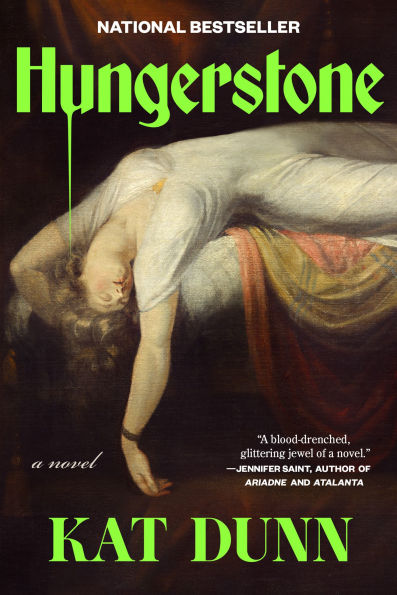
Hungerstone by Kat Dunn
Genre: Gothic historical
I read it as a(n): Digital ARC 
Length: 336 pp 
Her Grace’s rating: 4.5 stars
2025 Reading Challenge tasks: TND: #1 – a 2025 release 

Lenore Crowther learned at a young age that nobody can save her but herself. She spent her childhood after the death of her parents learning everything a titled lady would need to know, secured herself a wealthy but untitled husband, and carried out a campaign to ingratiate him into the social circles that he craved. 

Ten years later, the shine is worn off the marriage and she has no children to occupy her time like a proper Victorian wife should have. When her husband, Henry, buys a large estate, Nethershaw, Lenore is hopeful it will be just what she needs to break the doldrums. 

However, the decrepit mansion is not at all what she’d hoped for, and the arrival of a mysterious woman who survived a carriage wreck only brings about more dissatisfaction. 

This atmospheric novel drips with the Gothic elements that so many of us love. The mansion isn’t a dark and drafty castle, but it is dilapidated and a sad shadow of its former imposing glory. The place is surrounded by misty heaths, treacherous cliffs, and windswept fields. The landscape and mansion are both characters in themselves, which is always a fun experience for readers, though significantly less so for the characters. 

Lenore tries her hardest to conform to the Victorian ideal of the Angel in the House, but as we read on, we learn that underneath her soft outer layers is a ruthless core of iron. Carmilla, the carriage-crash survivor who is recuperating at Nethershaw, is strange and defies every social convention there is. She awakens previously unknown desires in Lenore that are catalysts for her drastic change throughout the novel. 

This story is so much more than a retelling of Carmilla, as it is marketed, or even about hunger, as indicated in the Author’s Note. It is an examination of demand and dependency, societal expectation, and the injuries that cause invisible damage to us all. It is a commentary of society today as well. There is one quote that perfectly encompasses every issue the novel tackles: “What is a monster but a creature of agency?” Women’s agency, independence, intellect, women who decide for themselves what they want rather than allowing men to do it for them – all can be seen as monstrous depending on who’s doing the interpreting. What makes a monster or a savior is, in this novel, entirely in the eye of the beholder. 

Highly recommended for lovers of Gothic fiction, social commentary, and women who proudly identify as a problem.

book review · historical fiction

Exploring Women’s Voices in The Iliad’s Retelling

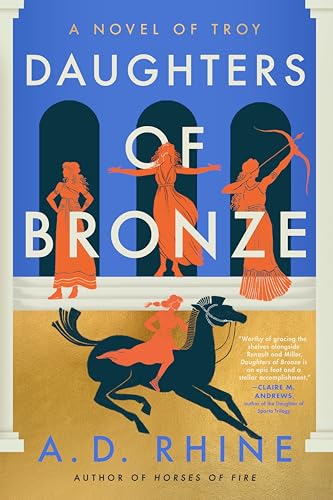
Daughters of Bronze by A.D. Rhine
Genre: historical fiction
I read it as a(n): digital ARC
Length: 512 pp
Her Grace’s rating: 5 stars

In Daughters of Bronze, A.D. Rhine (the penname of writing team Ashlee Cowles and Danielle Stinson) continues their feminist retelling of The Iliad, focusing on four women: Rhea, Andromache, Helen, and Cassandra. This second* novel brings their stories to the forefront, challenging the traditional male-dominated narrative.

Helen, often blamed for the Trojan War, is portrayed as a victim of Paris, who took her against her will. Rhine gives Helen a voice, exploring themes of female agency and resilience.

Andromache, usually seen as Hector’s wife and Astyanax’s mother, is depicted as a complex character, fiercely protecting her family and city. Her story delves into motherhood, duty, and honor.

Cassandra, the seer cursed to be ignored, is shown as a character of heartbreaking vision. Her voice is repeatedly silenced, often by other women, yet she remains devoted to the truth. Her story highlights the consequences of ignoring or marginalizing women.

Rhea, a refugee turned spy for Troy, plays a crucial role in the war. She and other brave women work to undermine the Greeks, risking their lives and highlighting the invisibility of women in historical narratives. If Helen, Andromache, and Cassandra are the warp of this story, Rhea is the weft that binds them together.

Rhine’s novel is rich with themes that resonate deeply in contemporary discourse. The author uses the framework of The Iliad to explore issues of gender, power, and agency. Each character’s story is a testament to the strength and resilience of women, challenging the patriarchal structures that seek to confine them. By giving voice to Rhea, Andromache, Helen, and Cassandra, Rhine underscores the importance of listening to and valuing women’s experiences and perspectives.

The novel also discusses the personal cost of war, not just for the men who fight, but for the women who endure its aftermath. The emotional and psychological toll of the Trojan War is vividly portrayed through the eyes of its female characters, offering a stark reminder of the often-overlooked victims of conflict.

Rhine’s prose is lyrical and evocative, capturing the grandeur of the ancient world while providing intimate glimpses into the lives of its characters. The alternating viewpoints of Rhea, Andromache, Helen, and Cassandra are seamlessly woven together, creating a tapestry of interconnected stories. This narrative structure not only highlights the individuality of each character but also emphasizes their collective experiences and struggles.

Daughters of Bronze is a powerful and thought-provoking retelling of The Iliad that places women at its heart. A.D. Rhine’s novel is a celebration of female strength, resilience, and agency, offering a fresh perspective on a timeless epic. By reimagining the stories of Rhea, Andromache, Helen, and Cassandra, Rhine provides readers with a deeper understanding of the human experience and the enduring impact of women’s voices in history. This novel is a must-read for fans of historical fiction, feminist literature, and anyone seeking a more inclusive and nuanced take on classic tales.

*I somehow missed that this was the second installment, but it didn’t matter. The narrative is tight, and anyone familiar with The Iliad can jump right in. However, some backstory from the first installment, Horses of Fire, might further enhance the reading experience.

A version of this review was originally published at the Historical Novel Society.

book review · historical fiction · Medievalism

The Good Wife of Bath

good wife of bath

The Good Wife of Bath by Karen Brooks

Genre: historical fiction

I read it as a(n): paperback

Length: 541 pp

Her Grace’s rating: 5 out of 5 stars

Eleanor is the daughter of a brogger, the mediaeval term for broker, in 1380s England. Her mother dies when Eleanor is a baby and her father when she is about ten. She goes into service for the local gentlelady and from there, proceeds to have men ruin her reputation, her joy, and her sense of self. She’s married off when she’s 12 to a man who is in his 60s and, to modern audiences, it goes downhill from there. However, Eleanor finds her joy in her many marriages and the found family she gains in her long life. Her friendship with a man of the merchant class, one Geoffrey Chaucer, ensures that she remains known and beloved for all time, living as his (in)famous Wife of Bath.

Or at least, this is the fictional take on how a real-life woman might have become the Wife of Bath. 

Replete with vivid images, sights, and sounds of mediaeval England, The Good Wife of Bath takes readers on a pilgrimage through this turbulent period of history seen through the eyes of an equally turbulent character! 

It’s been a long time since I read The Canterbury Tales, but this made me want to read them again. It would have been fun to do a side-by-side readalong sort of thing. Eleanor is, of course, modelled on the Wife of Bath, but other figures in the story are also modelled on other characters from the Tales. A new interpretation of them would be fun for this book nerd.

I loved the insights we got into Eleanor’s character in the chapters that were written as letters to Chaucer while she was on one pilgrimage or another. We got to see glimpses of this woman throughout the book anyway, but much of that was the public mask she put on. Her letters revealed her innermost thoughts and they were quite something! She would be fun to have drinks with for sure. The letters showed an irreverent, irrepressible person who found a way forward regardless of what misfortunes came her way and took absolutely zero shit in the process. She really took to heart the idea that if life gives you lemons, then squirt the juice into the eyes of your enemies! 

The differences in her various marriages were really intriguing, more so because of how Chaucer’s actual Wife was written. Brooks’s Eleanor marries three times for convenience and twice for love. The love matches were hot, stinking garbage fires of a relationship and the marriages of convenience were the ones that actually resulted in a good and pretty happy life for her. In particular, I loved her first husband, Fulk Bigod, and third, Mervyn Slynge the best. The second, Turbot Gerrish, was ok in the end, though he himself was a ridiculous caricature of a man. But Fulk allowed her to tell him what to do and as a result, they got significantly wealthier. Mervyn became a genuine friend to her and, although he had other issues, was a wonderful husband. I sometimes wish a kind old rich gay man wanted to marry me for beaver cover and then leave me all his piles of money when he died. 

Her convenient marriages allowed her to have the control over her own choices that she desired. Her love marriages were far more restrictive and made her a slave in more than one way. She had far less freedom in those. It’s an interesting point and one that would make for an excellent group discussion.

Ultimately, what I think Chaucer’s Wife wanted wasn’t control, or mastery, as he wrote it, over men. What she wanted was control over her own choices, her ability to choose for herself. Sovereignty over one’s choices, one’s body, one’s relationships, one’s money, was not something most women had in 1300s Europe. Really, it is a pathetic commentary on men and modern society that a very great many women still lack these things. The ones who do have them are either single, managed to find a truly feminist partner, or are old, rich, and widowed. Not a whole lot has changed in the 700 years since Chaucer wrote the Tales. Stop the ride, I want off. 

Overall, I highly recommend this to anyone who loves mediaeval historical fiction, and especially to those of us who hold a special place in our hearts for Chaucer.

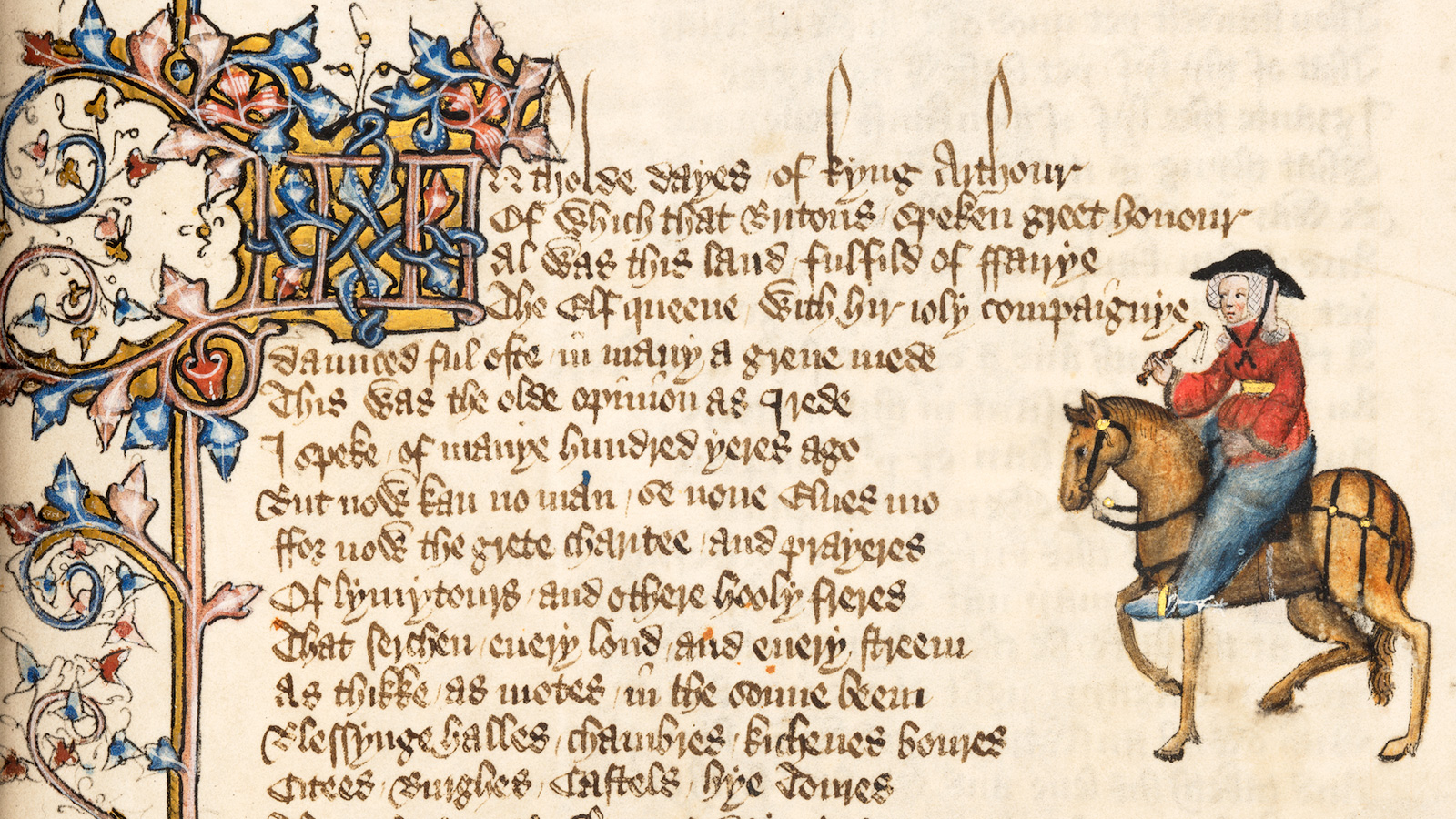
wife-of-bath-British Library

bookish things · lists

The Best Lines from the Practical Magic books – and some recipes!

Happy Halloween, everyone! It has long been my practice to watch the 1998 film version of Practical Magic. If I am going to reread any of the books, I also tend to do so in October. It just makes sense! 

This time, I thought I would make a post of my personal favorite lines from all four of the Practical Magic book series. I think they are either touching, make me think, are funny, or are wise. 

What lines would you add?

Practical Magic

  • Sometimes you have to leave home. Sometimes, running away means you’re headed in the exact right direction.
  • The moon is always jealous of the heat of the day, just as the sun always longs for something dark and deep.
  • Trouble is just like love, after all; it comes in unannounced and takes over before you’ve had a chance to reconsider, or even to think.
  • There’s a little witch in all of us.
  • If a woman is in trouble, she should always wear blue for protection.
  • His grandfather used to say that holding tears back makes them drain upward, higher and higher, until one day your head just explodes and you’re left with a stub of a neck and nothing more. … Crying in a woman’s kitchen doesn’t embarrass him; he’s seen his grandfather’s eyes fill with tears nearly every time he looked at a beautiful horse or a woman with dark hair.
  • Some things, when they change, never do return to the way they once were. Butterflies, for instance, and women who’ve been in love with the wrong man too often.
  • Although she’d never believe it, those lines in Gillian’s face are the most beautiful part about her. They reveal what she’s gone through and what she’s survived and who exactly she is, deep inside.
  • At twilight they will always think of those women who would do anything for love. And in spite of everything, they will discover that this, above all others, is their favorite time of day. It’s the hour when they remember everything the aunts taught them. It’s the hour they’re most grateful for.
  • Always throw spoiled salt over your left shoulder. Keep rosemary by your garden gate. Add pepper to your mashed potatoes. Plants roses and lavender, for luck. Fall in love whenever you can.

Magic Lessons:

  • This was true magic, the making and unmaking of the world with paper and ink. 
  • But it was a woman’s personal book that was most important; here she would record the correct recipes for all manner of enchantments. … literary magic, the writing of charms and amulets and incantations, for there read no magic as covered or as effective as that which used words.
  • Even when you kept your eyes wide open, the world would surprise you.
  • What is a daughter but good fortune, as complicated as she might be.
  • There are no spells for many of the sorrows in this world, and death is one of them.
  • A woman alone who could read and write was suspect. Words were magic. Books were not to be trusted. What men could not understand, they wished to burn.
  • “Never be without thread,” she told the girl. “What is broken can also be mended.”
  • Tell a witch to go, and she’ll plant her feet on the ground and stay exactly where she is. 
  • Tell a witch to bind a wild creature and she will do the opposite.
  • What was a witch if not a woman with wisdom and talent?
  • If they called her beautiful, it was a mark against them, for what a person was could not be seen with the naked eye.
  • These are the lessons to be learned. Drink chamomile tea to calm the spirit. Feed a cold and starve a fever. Read as many books as you can. Always choose courage. Never watch another woman burn. Know that love is the only answer. 

The Rules of Magic:

  • “Anything whole can be broken,” Isabelle told her. “And anything broken can be put back together again. That is the meaning of Abracadabra. I create what I speak.” 
  • “Do you have business at the cemetery, Miss Owens?” the driver asked in a nervous tone.  
    • “We all will have business there sooner or later,” she answered brightly.
  • Three hundred years ago people believed in the devil. They believed if an incident could not be explained, then the cause was said to be a witch. Women who did as they pleased, women with property, women who had enemies, women who took lovers, women who knew about the mysteries of childbirth, all were suspect…
  • …witches were difficult to control, for they had minds of their own and didn’t hold to keeping to the law.
  • The world will do enough to us, we don’t have to do it to ourselves.
  • She had wanted to be a bird, but now she knew…that even birds are chained to earth by their needs and desires.
  • …when you truly love someone and they love you in return, you ruin your lives together. That is not a curse, it’s what life is, my girl. We all come to ruin, we turn to dust, but whom we love is the thing that lasts.
  • I just do the best I can to face what life brings. That’s the secret, you know. That’s the way you change your fate.
  • …he kissed her and told her he didn’t care if they were witches or warlocks or zombies or Republicans.
  • “But trying is a start. What is your story?”
    • “My life.”
    • “Ah.”
    • “If you write it all down, it doesn’t hurt as much.”
  • But rules were never the point. It was finding out who you were.
  • Always leave out seed for the birds when the first snow falls. Wash your hair with rosemary. Drink lavender tea when you cannot sleep. Know that the only remedy for love is to love more.

The Book of Magic:

  • Some stories begin at the beginning and others begin at the end, but all the best stories begin in a library.
  • But stories change, depending on who tells them, and stories are nothing if you don’t have someone to tell them to.
  • “If you can’t eat chocolate cake for breakfast, what’s the point of being alive?” Franny said.
  • There are some things you have only once in a lifetime, and then only if you’re lucky.
  • When Kylie and Antonia were growing up, their mother had told them if they were ever lost it was always best to find their way to a library.
  • “There are no witches,” Antonia said. “Only people who want to burn them.”
  • “Do you think I’m a fool”
    • “No, I think you’re a witch.”
    • “Then you’re not so stupid after all.”
  • “If it isn’t written down, it will likely be forgotten,” Isabelle had told her. That was why women had been illiterate for so long; reading and writing gave power, and power was what had been so often denied to women.
  • A woman with knowledge, one who could read and write, and who spoke her own mind had always been considered dangerous.
  • If a woman doesn’t write her own history, there are very few who will.
  • It never hurt to have some assistance from a sister, and this was a simple spell that had been used by women since the beginning of time, with words that resembled the wild clacking of birds when they were spoken aloud.
  • What a life she had, most of it unexpected. She would not have it any other way, not even the losses. This life was hers and hers alone.
  • Her love was the fiercest part about her. 
  • The Book of the Raven was meant to go to the next woman who needed it. It might sit on the shelf for another three hundred years or it might be discovered the very next day, either way it would continue to live, for people often find the books they need.
  • Once, a long time ago, before we knew who we were, we thought we wanted to be like everyone else. How lucky to be exactly who we were. 
  • Women here in Massachusetts had been drowned and beaten and hanged, especially if they were found to have access to books other than the Bible…

Fans of this book series also know that there are many references made in them to the Owens’ women’s black soap, Chocolate Tipsy Cake, and a variety of teas. These are the ones I found, along with a couple possible recipes. I use Adagio Tea for a lot of my tea-making supplies. I will do the same when I make these tea blends. If I can’t find an item on Adagio, I’m sure a local farmer’s market or bulk foods store will have the rest. 

Teas and Other Foodstuffs:

  • Courage Tea: currants, vanilla, green tea, thyme. Steep it for a long time.
  • Fever Tea: cinnamon, bayberry, ginger, thyme, marjoram
  • Frustration Tea: chamomile, hyssop, raspberry leaf, rosemary
  • Clairvoyant Tea: mugwort, thyme, yarrow, rosemary
  • Travel Well Tea: orange peel, black tea, mint, rosemary
  • Chocolate Tipsy Cake. I found this recipe on The Hungry Bookworm and it seems the most accurate and tipsy-making cake of the sort, so I am going to refer to it when I make my own: Chocolate Tipsy Cake by The Hungry Bookworm
  • Practical Magic Black Soap. Similarly, I found a recipe for the Owens Women’s Black Soap on Under a Tin Roof. This sounds lovely, though there are a few changes I will make to my own batches, different oils, loads more lavender since it is supposed to be lavender scented, but overall I think this one is the most legit recipe I’ve found for the black soap yet! To do it further justice, according to Aunt Isabelle, “The best soap is made in March in the dark of the moon.” 
academic · bookish things · Medievalism · Writing

It’s here!

My author’s copies of my book, The Two Isabellas of King John, arrived at my house yesterday! So exciting to get to unbox those!

PXL_20211012_222226366.PORTRAIT

book review

The Witches Are Coming

48589607._sx318_The Witches Are Coming by Lindy West (Website, Insta)

Genre: nonfiction/ essays

I read it as an: audiobook

Narrator: Lindy West

Source: my own TBR

Length: 06:27:00 

Published by: Hachette Audio (5 Nov 2019)

Her Grace’s rating:  4.5 out of 5 stars

The Witches Are Coming is a collection of essays dealing with various aspects of feminism, mostly, with other topics such as white nationalism and climate change added as well. West is a terrific writer, making her arguments succinctly, pointedly, and with a lot of humor. I had not read any of her work before, nor have I watched Shrill on Hulu. So I don’t know how much of this collection is repetitive from anything she’s written previously, but it was all new to me. 

Well, the topics themselves were not new, and I’m not really sure West added any new points to them that haven’t already been said. But her own take on them was new for me, and I enjoyed her writing voice a great deal. 

She wrote about some things I’ve said for years, among which is we need to stop praising people, especially mediocre white men, for doing things normal adults are supposed to do anyway. You went to work! You do not get a ‘yay for you!’ for that. Adults are supposed to go to work. No, you cannot babysit your own children. Taking care of your own children is called parenting. Babysitting is what you pay the teenager across the street to do. Praising mediocre white men for doing things normal people are supposed to do is partly why we are stuck with Trump in the White House and his troglodyte followers in positions of power they are in no way qualified to hold. 

Also, stop talking about how charming and handsome Ted Bundy was. He murdered women and everyone is still hung up on how nice he was. No he fucking wasn’t! He liked to kill people. Murderers by definition are not nice. If it takes a while to catch them, it’s not because they are so nice or blend in so well with society, it’s because they snowed everyone around them and used their gullibility to get away, literally, with murder. That’s not charming, that is creepy.

Also, abortions are health care and modern day fucked up rape culture needs to stop. 

So yeah, I guess a lot of it is preaching to the choir and all, but I still think most of the essays included are excellent and this is yet another book that should be required reading.


book review

The Power

29751398._sy475_The Power by Naomi Alderman (Website, Twitter)

Genre: speculative fiction

Setting: everywhere, possibly in the near future

I read it as a: paperback

Source: my own collection

Length: 341 pp

Published by: Viking (27 Oct 2017)

Her Grace’s rating: 3 out of 5 stars

TL;DR version: girls are now born with the ability to conduct electricity (specifically, they can electrocute people) because of a weird skein under their collar bones, and the menz are scared shitless.

In an unspecified time which feels like the near future, girls are suddenly born with a ‘skein’ under their collar bones which allows them to electrocute people. They can turn on this ability in older women as well. The Power follows four young people through their initial discovery of these skeins and the ways in which they adapt to them. One is Roxy, a tough girl from London whose family is feared for running an organized crime operation. Allie/Mother Eve is an abused foster child from the east coast who takes the power from her skein to escape and set up a new life for herself. Jocelyn is the daughter of an up and coming political superstar in the midwest, and her skein seems to be broken. Tunde is an aimless young man from Nigeria who finds his path as a reporter. The ways each of their lives intermingle relay the genesis of the skeins and their impact upon all of human society.

First, things I liked.

If I had a skein that let me zap people, I can’t honestly say I would use it for good. I can think of a fair few men who could use a good electrocution. But you know? If (mainly white) men overall, and throughout history, weren’t such rapey, abusive dicks bent on systematic oppression of women and minorities (see plot line with Roxy’s brother and dad), I wouldn’t even think about what I could do with the ability to electrocute people. Do better, menz. 

I liked that the book touched on beneficial ways women could use their skeins. It was clear that some women were more skilled than others in how they could use their power – some could only use it to hurt, but others could use it to try to help or heal people. Some girls were skilled and powerful enough to awaken the power in older women who had not been born with a skein. Others healed the sick or injured. 

I thought it was interesting, though not at all surprising, to consider that religious exploitation was a thing regardless of whether it was women in charge or men. It seems that religion will always find a way to take advantage of people who are afraid or feel lost or whatever it is that makes them flock in their thousands to weird evangelical circus-like performances and throw their money at it. Faith healers are such a crock, whether in reality or in spec fic, and they prey upon people who are desperate in some way or other. And really, religion is a crock as well. Logic is better than magical thinking, and taking active steps to fix a problem in society is more effective than trying to pray it away. 

Also, I did like that this dystopian novel gave something to women rather than taking something away and exploring the fallout from that. In The Handmaid’s Tale and Red Clocks, women no longer have any reproductive rights. In The Unit, older people are sent to a nursing home type of setting to await the days when their organs will be needed for people who are considered young and relevant still. In Vox, women’s voices are taken away in that they are only permitted to speak 100 words a day. So many other examples portray a world in which something vital is taken away from women. So it is interesting to read a book where something is given to them for once. 

Now, things I didn’t care for.

The novel at times felt more like a research project than a book. It should come as a surprise to absolutely no one that power and authority in the world tends to come from the ability to hurt other people. Ask any woman and I can almost guarantee that she has at least once in her life been afraid of a man and what he would do to her. So kind of the whole premise, while an interesting thought experiment, it also doesn’t really ask any new or profound questions. It seems to be trying to answer questions that have been posed and explored forever in other speculative fiction novels, movies, TV shows… 

The book eventually got around to Men’s Rights movements. I found myself snorting at these scenes every time they came up. Of course, my reading is influenced by actual history and I couldn’t quite separate that from the book, which is no fault of Alderman’s. But a Men’s Rights movement was as ridiculous to me as a Straight Pride parade – do men think women’s rights are as preposterous as I felt the men’s rights were in this? Again, if the menfolk would quit trying to control and suppress everyone, there would be no need for men’s OR women’s rights movements. We could all just be equal. Which seems to scare men like Moscow Mitch absolutely shitless. 

The biggest drawback for me was that the plot and character development were really…not great. Most of the characters were flat, had little actual development, and I didn’t give a crap about any single one of them. Well, I kind of cared what happened to Jocelyn a little bit, and Tunde was an interesting perspective. But in general, even they were mostly static, and I don’t think the novel needed ALL of the POV characters to be POV characters. Most of them weren’t really all that interesting, or at least I didn’t think so. I think it would have been more interesting if the novel had been told from the POV of just one person. All the international politics and women going insane seemed like it was contrived and hard for Alderman to pull off convincingly. 

I actually quite liked this book and don’t mean to sound as if I didn’t, but I think it had a lot of problems.

book review

Guest Post: The Book of Gutsy Women

The Book of Gutsy Women

The Book of Gutsy Women by Hilary Rodham Clinton and Chelsea Clinton

Reviewed by Cathy Smith

Although I wanted to speak to my friend from 50 years ago, I was not looking forward to the phone call. I mostly did not want to speak with him because I knew the conversation would be pushed into opposing political views or religious views, regardless of how many times I would ask that we “not go there”. After much thought, I set my concerns aside, told my inside mind to be kind and stay nice, and returned my friend’s calls.

It started out well but less than three minutes into the call, he said (without taking a breath), “You live in Oregon. Right? My oldest son lived in Portland for a year. He hated it. He mostly didn’t like living there because he said people in Oregon let women speak their minds and what’s worse is that they listen to them…”

My inside mind lost all its filters, triggering my voice, and what followed was a five-hour conversation about women, their rights, and all the major political and religious issues facing the nation today. At the end of the phone call, which required both of us having to charge our phones in midstream, we were still friends (I think). He tried to convince me to go to the next class reunion, and I ended with a maybe. We hung up, and I returned to listening to The Book of Gutsy Women by Hillary Rodham Clinton and Chelsea Clinton.

The Book of Gutsy Women is more than just the biographies of some of the most courageous women in the world. It is about the issues faced by humanity in the past and in the present. The book discusses issues from all aspects of life and talks about how individual woman have had the courage to step out of their comfort zones to take a stand.

After finishing the book, the one fact that really stayed with me is the issue of women and their reproductive rights. When reading the chapter about Venus and Serena Williams, I learned that the maternal mortality rate is rising in the United States. According to Delbanco, Lehan, Montalvo, and Levin-Scherz (2019) “Over 700 women a year die of complications related to pregnancy each year in the United States, and two-thirds of those deaths are preventable” (para. 2).

The estimated maternal mortality rate (per 100,000 live births) for 48 states and Washington, DC (excluding California and Texas, analyzed separately) increased by 26.6%, from 18.8 in 2000 to 23.8 in 2014. California showed a declining trend, whereas Texas had a sudden increase in 2011-2012. (MacDorman, et al., 2016, p. 447)

This information is mind-boggling, especially as it relates to Serena Williams and why she needed to wear a specially designed catsuit during the French Open in 2018. Williams knew that she had several blood clots in both her lungs, and after giving birth to her daughter in 2017, she had a pulmonary embolism (Friedman, 2018). The catsuit was a compression suit that would prevent blood clots (Clinton, H. R, & Clinton, C., 2019). Unfortunately, Williams was told by the French Tennis Federation that she could not wear a black catsuit during a match. It is interesting how women have been and are regulated regarding the clothes they are expected to wear or not wear personally and professionally.

Unlike Williams, another athlete featured in The Book of Gutsy Women is Ibtihaj Muhammad who chose fencing as a sport because “fencers wear full-body suits and masks, the uniforms wouldn’t need to be altered” (Clinton & Clinton, 2019, Chapter Athletes, Section Ibtihaj Muhammad, para. 1). Although what Muhammad wore was not an issue for the sport she excelled in, many tried to use her religious and personal beliefs to dissuade her from following through with her dreams and her goals. Throughout her career, Muhammad was told she could not succeed because she was a Muslim woman and even received life threats. None of this has stopped this gutsy woman.

Living in harm’s way, being threatened and abused, and being the victims of bullying is not uncommon for gutsy women. The Book of Gutsy Women shares the short bios of women that have advocated for education, the environment, and politics. The Clintons share stories about activists, writers, and women groundbreakers. Each bio provides readers and listeners with insightful information about the lives and work of some of the most remarkable women who have changed and are changing the world.

Recently, I had the opportunity to read The Tubman Command by Elizabeth Cobbs. Although fiction, the book inspired me to learn more about Harriet Tubman, so when Tubman was the first gutsy woman that the Clintons wrote about, I was hooked. As I read about and listened to each story, I discovered tidbits of information that I, as a woman, could relate to. For example, when reading about Margaret Bourke-White, I found a new hero in my life. She is known as a fearless photojournalist for Life magazine and the first female war correspondent (Clinton & Clinton, 2019). Throughout my younger years, my dream job was to be a writer and a war correspondent, much to my parents’ dismay. Of course, this did not happen since my Dad’s dying wish was that I finish college and become a teacher.

As it turned out, teaching was a perfect career for me, especially since I was able to work with multicultural and bilingual education, reading, and writing. My first teaching positions were with Migrant education. The stories and the journeys of migrant children and families were both heart-wrenching and inspirational. Before working in migrant education, I previously worked as a migrant farm worker and was aware of the work done by Cesar Chavez and the United Farm Workers so when I read and listened to the Clintons’ bio of Dolores Huerta, I continued to embrace their book. In the 1940s, Huerta completed college and became a teacher, and soon after starting her teaching career, she discovered her purpose in life (Clinton & Clinton, 2019). Huerta (as cited in Clinton & Clinton, 2016) stated, “I couldn’t tolerate seeing kids come to class hungry and needing shoes” and continued to say, “I thought I could do more by organizing farmworkers than by trying to teach their hungry children” (Chapter Advocates and Activists Section Dolores Huerta para. 4). Huerta worked side by side with Cesar Chavez to cofound the United Farm Workers.

The stories of the amazing women in The Book of Gutsy Women are all unique and inspiring. Many of the women featured were my personal heroes growing up, and others are new heroes who now give me the courage to step outside of my comfort zone to do more work for the different communities that I have come to call my own. The Book of Gutsy Women by Hillary Rodham Clinton and Chelsea Clinton is a book that I recommend everyone read. In fact, I sent a print copy to my daughter and granddaughter so they will realize that it is important for all women to find their voice and share their passions with the world.

References

Clinton, H. R. & Clinton, C. (2019). The Book of Gutsy Women [Kindle Fire 10 version] Retrieved from Amazon.com.

Delbanco, S., Lehan, M. Montalvo, T., and Levin-Scherz, J. (2019) The rising U.S. material mortality rate demands action from employers. Harvard Law Review. Retrieved on February 24, 2020 from https://hbr.org/2019/06/the-rising-u-s-maternal-mortality-rate-demands-action-from-employers

Friedman, M. (2018) French Open bans Serena Williams from wearing her life-saving catsuit -Even though it helped her with a major health issue. Elle. Retrieved on February 24, 2020 from https://www.elle.com/culture/celebrities/a22826732/serena-williams-catsuit-french-open-dress-code/

MacDorman, M.F., Declercq, E. Cabral, H. & Morton, C. (2016). Recent increases in the U.S. maternal mortality rate: Disentangling trends from measurement issues. Obstetrics and Gynecology, 128(3), 447–455. https://doi.org/10.1097/AOG.0000000000001556


book review · fantasy

Who Fears Death

16064625Who Fears Death by Nnedi Okorafor (WEBSITE, TWITTER)

Her Grace’s rating: 4.5 out of 5 stars

Genre: fantasy/ Afrofuturism

I read it as a: paperback

Source: my own collection

Length: 420 pp

Published by: Daw (1 June 2010)

In a future post-apocalyptic Sudan, genocide between different tribes still occurs. When a woman is raped by the military leader of another tribe, she wanders into the desert, hoping to die. When she discovers she is pregnant, she lives in the desert for years and raises her daughter to be strong and fierce. They eventually move into a town so the girl, Onyesonwu, can attend school. There, Onye learns that she has strange and frightening abilities, able to turn herself into animals or travel a spirit realm. Convincing the town’s shaman to train her, Onye soon learns that a powerful sorcerer is trying to kill her in order to prevent a prophecy from coming true, a prophecy that says Onye is the person who will change the fabric of her society. 

There is so much to unpack in this novel. On the surface, it can be read just as a fantasy/ post-apocalyptic story. But if you pay attention, you can see the seamless manner in which traditional legends, stories, and customs are woven in with technology like computers, capture stations, and GPS. The blending of the traditional and the technological is, I think, a commentary on contemporary Africa. I have never been to any country in Africa, but I know several people who have and from what they say, it seems reflective of various societies. I wonder if the connection to the traditional is simply too strong to abandon, despite the advances in technology available. 

***SPOILERS BELOW*** Continue reading “Who Fears Death”