book review · Tudors

The Tragic Tale of Mark Smeaton: A Historical Fiction Review

The Queen’s Musician by Martha Jean Johnson
Genre: historical fiction
I read it as a(n): digital ARC 
Length: 344 pp 
Her Grace’s rating: 5 stars
2025 Reading Challenge tasks: PS: #31 – music plays a prominent role 

Spanning the years 1529 to 1536, The Queen’s Musician follows the story of Mark Smeaton, one of the musicians who played for Henry VIII and Anne Boleyn. The novel follows his meteoric rise from total obscurity to fame. Much of his success, at least in this book, stemmed from being in the right place at the right time as much as his genuine musical talent. However, what goes up must come down and his tragic fall from favor was catastrophic and swift. Alongside Smeaton, the novel also follows Madge Shelton, cousin and courtier to Anne Boleyn, whose own path is shaped by the strict rules and expectations of class as well as by rumors. Through the perspectives of these two historical figures, Johnson takes readers on a deep and thoughtful exploration of the perils of the Tudor court.

Anyone familiar with Tudor history knows the fate of Anne Boleyn and the men accused of being her lovers. Smeaton was the lowest-born among them, an easy target for manipulation. Little is known about his life before court, but Johnson vividly imagines what it might have been, filling his world with music that feels as essential as breathing. The novel highlights how deeply Smeaton connected with his art, not just as a performer but as someone who saw music as his true language. His passion for his subject extends beyond the demands of his life as a royal musician. His admiration for composer John Taverner reflects his appreciation for the era’s greatest musical minds. The gentleness written into his character, especially his love for music, people, and, most touchingly, his horses, makes his fate even more devastating. I felt absolute rage on his behalf. 

Music was central to the Tudor court, not just as entertainment but as a reflection of power and prestige. Henry VIII himself was an accomplished musician and composer, and courtiers were expected to be well-versed in music. While some composers of the time, like Thomas Tallis and John Taverner, left behind enduring legacies, no known compositions of Smeaton’s survive. If he did write his own music, as Johnson imagines in the novel, it has been lost to time. This adds to the novel’s poignancy – Smeaton’s talent, like his life, was ultimately erased by history.

Similarly, little is known about Madge Shelton’s early life. At various points, there were rumors that she was briefly Henry VIII’s mistress, but her real experiences are largely unknown. Johnson brings her to life as a woman navigating court politics, her innocent romance with Smeaton offering a brief moment of sweetness amid the court’s poisonous gossiping and currying favor. Even though their social classes made it impossible for them to consider a future, or even a genuine friendship, it was nice to have that hope for just a moment. Their entwined story felt like a rare and delicate thing in a world where relationships were mostly transactional. 

The characters are vibrant and deeply human. Some secondary characters, such as Smeaton’s friend Paul, are a delight on the page and bring a lot of warmth to the story. Others, such as Cromwell and the head musician at court (I’m totally blanking on his name now), give a masterclass in villainy and are the sort of characters you love to hate. Johnson excels at making readers care about them, drawing us into a world where we already know the outcome, but nonetheless making us hope for a minute before slowly shattering our hearts. We know how this journey ends, but the path to that end is gut-wrenching, beautiful, and filled with moments of quiet grace.

Highly recommended for anyone who loves Tudor history or anyone who, like me, enjoys being completely destroyed by a story.
book review · historical fiction

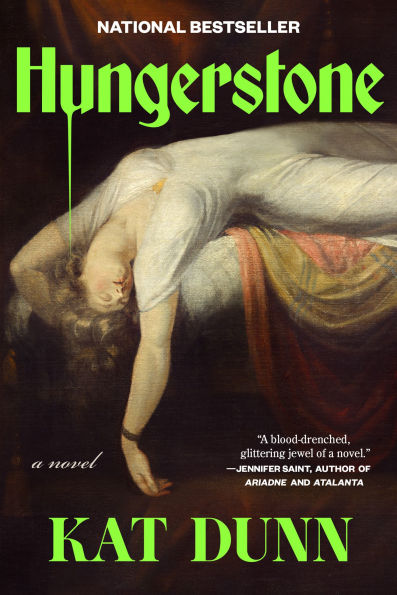
Hungerstone: A Feminist Retelling of Carmilla

Hungerstone by Kat Dunn
Genre: Gothic historical
I read it as a(n): Digital ARC 
Length: 336 pp 
Her Grace’s rating: 4.5 stars
2025 Reading Challenge tasks: TND: #1 – a 2025 release 

Lenore Crowther learned at a young age that nobody can save her but herself. She spent her childhood after the death of her parents learning everything a titled lady would need to know, secured herself a wealthy but untitled husband, and carried out a campaign to ingratiate him into the social circles that he craved. 

Ten years later, the shine is worn off the marriage and she has no children to occupy her time like a proper Victorian wife should have. When her husband, Henry, buys a large estate, Nethershaw, Lenore is hopeful it will be just what she needs to break the doldrums. 

However, the decrepit mansion is not at all what she’d hoped for, and the arrival of a mysterious woman who survived a carriage wreck only brings about more dissatisfaction. 

This atmospheric novel drips with the Gothic elements that so many of us love. The mansion isn’t a dark and drafty castle, but it is dilapidated and a sad shadow of its former imposing glory. The place is surrounded by misty heaths, treacherous cliffs, and windswept fields. The landscape and mansion are both characters in themselves, which is always a fun experience for readers, though significantly less so for the characters. 

Lenore tries her hardest to conform to the Victorian ideal of the Angel in the House, but as we read on, we learn that underneath her soft outer layers is a ruthless core of iron. Carmilla, the carriage-crash survivor who is recuperating at Nethershaw, is strange and defies every social convention there is. She awakens previously unknown desires in Lenore that are catalysts for her drastic change throughout the novel. 

This story is so much more than a retelling of Carmilla, as it is marketed, or even about hunger, as indicated in the Author’s Note. It is an examination of demand and dependency, societal expectation, and the injuries that cause invisible damage to us all. It is a commentary of society today as well. There is one quote that perfectly encompasses every issue the novel tackles: “What is a monster but a creature of agency?” Women’s agency, independence, intellect, women who decide for themselves what they want rather than allowing men to do it for them – all can be seen as monstrous depending on who’s doing the interpreting. What makes a monster or a savior is, in this novel, entirely in the eye of the beholder. 

Highly recommended for lovers of Gothic fiction, social commentary, and women who proudly identify as a problem.

book review · historical fiction

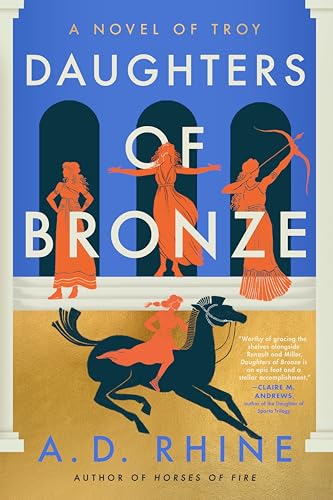
Exploring Women’s Voices in The Iliad’s Retelling

Daughters of Bronze by A.D. Rhine
Genre: historical fiction
I read it as a(n): digital ARC
Length: 512 pp
Her Grace’s rating: 5 stars

In Daughters of Bronze, A.D. Rhine (the penname of writing team Ashlee Cowles and Danielle Stinson) continues their feminist retelling of The Iliad, focusing on four women: Rhea, Andromache, Helen, and Cassandra. This second* novel brings their stories to the forefront, challenging the traditional male-dominated narrative.

Helen, often blamed for the Trojan War, is portrayed as a victim of Paris, who took her against her will. Rhine gives Helen a voice, exploring themes of female agency and resilience.

Andromache, usually seen as Hector’s wife and Astyanax’s mother, is depicted as a complex character, fiercely protecting her family and city. Her story delves into motherhood, duty, and honor.

Cassandra, the seer cursed to be ignored, is shown as a character of heartbreaking vision. Her voice is repeatedly silenced, often by other women, yet she remains devoted to the truth. Her story highlights the consequences of ignoring or marginalizing women.

Rhea, a refugee turned spy for Troy, plays a crucial role in the war. She and other brave women work to undermine the Greeks, risking their lives and highlighting the invisibility of women in historical narratives. If Helen, Andromache, and Cassandra are the warp of this story, Rhea is the weft that binds them together.

Rhine’s novel is rich with themes that resonate deeply in contemporary discourse. The author uses the framework of The Iliad to explore issues of gender, power, and agency. Each character’s story is a testament to the strength and resilience of women, challenging the patriarchal structures that seek to confine them. By giving voice to Rhea, Andromache, Helen, and Cassandra, Rhine underscores the importance of listening to and valuing women’s experiences and perspectives.

The novel also discusses the personal cost of war, not just for the men who fight, but for the women who endure its aftermath. The emotional and psychological toll of the Trojan War is vividly portrayed through the eyes of its female characters, offering a stark reminder of the often-overlooked victims of conflict.

Rhine’s prose is lyrical and evocative, capturing the grandeur of the ancient world while providing intimate glimpses into the lives of its characters. The alternating viewpoints of Rhea, Andromache, Helen, and Cassandra are seamlessly woven together, creating a tapestry of interconnected stories. This narrative structure not only highlights the individuality of each character but also emphasizes their collective experiences and struggles.

Daughters of Bronze is a powerful and thought-provoking retelling of The Iliad that places women at its heart. A.D. Rhine’s novel is a celebration of female strength, resilience, and agency, offering a fresh perspective on a timeless epic. By reimagining the stories of Rhea, Andromache, Helen, and Cassandra, Rhine provides readers with a deeper understanding of the human experience and the enduring impact of women’s voices in history. This novel is a must-read for fans of historical fiction, feminist literature, and anyone seeking a more inclusive and nuanced take on classic tales.

*I somehow missed that this was the second installment, but it didn’t matter. The narrative is tight, and anyone familiar with The Iliad can jump right in. However, some backstory from the first installment, Horses of Fire, might further enhance the reading experience.

A version of this review was originally published at the Historical Novel Society.

book review · interview

Reflections of Identity & History: Discussing Hall of Mirrors with John Copenhaver

Originally published in Historical Novels Review | Issue 109 (August 2024)

The 1950s were a complex time, filled with political intrigue and deep social and moral imbalances. This is the tumultuous backdrop for John Copenhaver’s latest novel, Hall of Mirrors (Pegasus Crime, 2024), a thoughtful reflection of identity, politics, and the human experience.

Copenhaver set Hall of Mirrors in the McCarthy era, following the timeline established in his previous post-WWII novel, The Savage Kind (Pegasus Crime, 2021), featuring the same main characters, Judy and Philippa. Copenhaver explains that he had more to tell about their story and wanted to follow them in their growth from teenagers to young women. He says that the McCarthy era was “a particularly difficult time to be an independent-minded woman, especially if you’re queer and, in Judy’s case, mixed race.”

Researching and writing about this period uncovered some unique challenges, particularly those facing the LGBTQ+ and Black communities. Copenhaver immersed himself in the socio-political climate of the 1950s, uncovering the intricate ways in which government policies shaped societal attitudes. The McCarthy era is indelibly marked by government-sanctioned discrimination against Black and queer individuals, which bled over into society as a whole. Copenhaver notes, “The McCarthy era, from overt political figures grasping for power like McCarthy to the FBI under J. Edgar Hoover, led to the perpetuation of discriminatory ideologies that still linger.” It is in the space left by these attitudes that Copenhaver is able to explore their continuing impact on modern society. He says, “These attitudes still echo today, making it a rich and relevant setting for my story.”

Copenhaver deftly manages the delicate task of balancing historical accuracy with creative storytelling. His story incorporates many of the dark facets of the McCarthy era and how various government agencies acted while simultaneously revolving around a domestic setting through the private lives of Judy and Philippa, as well as those of Roger and Lionel, the novel’s murder victim and suspect. He explains that this balance was crucial to create an authentic and engaging narrative. The domestic side of the novel really is where the narrative shines, allowing readers a glimpse into the minds of the characters.

The book’s title itself gives readers a deeper perspective and acts as a portal into the themes within, with the concept of reflection and doubling at the forefront. The society that Judy and Philippa navigate is fraught with double standards and questions of identity. Copenhaver elaborates, “I’ve always been interested in mirroring and doubles, a consistent theme in film noir. In this novel, I explore several doubles: Judy and Philippa, Roger and Lionel. Opposites attract, and love aligns, yet mirrors also suggest vanity and the question of identity.”

Identity is further explored in the representation of LGBTQ+ characters, which are a cornerstone of Copenhaver’s writing. Thanks to Copenhaver and other contemporary writers, these characters are being written back into historical fiction. He says that LGBTQ+ representation in his work is an intentional correction of invisibility and, “It’s about enjoying a twisty mystery while considering historical representation.”

The theme of “passing” is also central the narrative. Judy has spent her life passing as a white woman, though in reality she is biracial. Passing has been a complex issue for decades, having its origins in the colonial and antebellum South eras. Initially, the practice of racial passing was used as a means of escaping slavery, but it continued in the post-Reconstruction era as a strategy to avoid systemic racism. Passing carried on into the 1950s, both in terms of racial passing as well as passing as straight for members of the queer community, again as an attempt to escape from the racism and homophobia of the time. Copenhaver notes that passing also “raises questions of identity and agency, highlighting the moral imbalances of societal norms.”

Moral imbalances are further explored through the lens of the political landscape of the 1950s. This time period was marked by the Red Scare and Jim Crow laws which also targeted LGBTQ+ individuals. The merest hint of accusation could be enough to destroy an entire life. Copenhaver reflects, “The Lavender Scare, a subset of the Red Scare, led to the persecution of gays and lesbians in government roles, driven by fearmongering and power dynamics.”  Roger’s firing from his job at the State Department and Lionel hiding his true relationship with Roger from the police during their investigations are reflections of the Lavender Scare and systemic racism in action.

While acknowledging social progress since then, Copenhaver questions the true extent of change. Through the characters’ experiences, he urges readers to critically analyze fear-driven narratives, emphasizing the importance of understanding historical contexts to foster meaningful change.

When dealing with heavy themes, a reflection on grief and loss is only natural. Copenhaver’s personal experiences with grief shape his writing. He candidly discusses the impact of his father’s early death, stating that this formative experience forced him to reflect on loss, mortality, and why bad things happen. He describes his writing as “inherently dark yet affirming, reflecting the complexities of life.”

Copenhaver further notes, “Exploring grief allows for a deeper understanding of human experiences, showcasing the resilience and affirmation that coexist with sorrow.” Philippa, Judy, and Lionel embody various aspects of grief and resilience as they experience the loss of loved ones, of their security, livelihood, and identity. They also are the embodiment of perseverance, carrying on despite hardship and persecution. As Copenhaver’s vibrant, complex characters demonstrate, it is during difficult times that people’s true selves emerges.

Hall of Mirrors emerges as a nuanced exploration of identity, politics, and human resilience within the McCarthy-era, as well as holding up a mirror to our modern lives and challenging us to do better. Copenhaver’s captivating narrative encourages readers to reflect on historical legacies, LGBTQ+ representation, and the enduring quest for identity and belonging.

book review · historical fiction

I Am Rome

I Am Rome by Santiago Posteguillo
Genre: historical fiction
I read it as a(n): digital ARC
Length: 634 pp 
Her Grace’s rating: 5 stars

The end of the Roman Republic was a time of great strife and even greater corruption. Members of the ruling classes clashed with the regular population in terms of what taxes and rights each social class had. A prime example of this corruption was Gnaeus Cornelius Dolabella, close advisor to the dictator Sulla and governor of Macedonia. During his stint as governor, Dolabella abused his position to gain tremendous wealth, ignoring his duties in favor of abusing the people under his care and stealing taxes. He was charged in Rome with corruption, theft, and rape. However, since it was an age rife with general corruption, all of the jurors and judges were bribed to exonerate him. No one wanted to step into the role of prosecutor since doing so would not only effectively end a man’s political career but also very likely terminate his life. Except one young and inexperienced man decided he would do it. Gaius Julius Caesar was his name.

This novel was a 600+ page doorstopper – and I read it in just a few days. The story flowed rapidly and engaged my interest from page one. The novel’s structure was divided into sections dedicated to Dolabella’s trial mixed with flashbacks from various characters’ perspectives of events that led up to the trial over the course of many years. Readers are introduced to the main players and given glimpses into their motivations based on their experiences. 

The action-heavy scenes and battles are vividly depicted and exciting. This is definitely the novel’s strength. Many techniques the Romans were famous for, such as the testudo formation, are described here in detail, enhancing the action without slowing it down. The military strategies used throughout the novel would be familiar to students of Rome or military history. To the uninitiated, these details merely add to the excitement of the moment. 

The main drawback to Posteguillo’s novel is that there is little in the way of actual character development. Caesar largely remains the same throughout the book even though he is shown at various ages from childhood to early adulthood. Similarly, the dialogue is a little lacking and feels a bit stilted in places. It was great fun, though, to see Posteguillo’s young Caesar reflecting about how he will never be known as a military genius like his uncle Marius, or how he will never amount to anything if he loses the case against Dolabella. It is also always interesting when other real-life figures make appearances, such as Cicero here and there throughout the trial. 

I don’t usually look at any other reviews before I read a book, and I didn’t this time, either. I did, though, look at some after I finished. It seems that some readers felt the book was very inaccurate and played fast and loose with historical events. Normally I am a stickler for high fidelity in historical fiction since it will make historians happy and the rest of us won’t know any different. Perhaps this book is inaccurate, but I happily fall into the latter camp despite having taken 7 years of Latin throughout my college and grad school career. I just thought it was a great read and I would happily read more of Posteguillo’s works if they ever get translated into English. 

All in all, I thought this was a highly enjoyable novel, even if it had some flaws and inaccuracies. Definitely recommended. 

book review

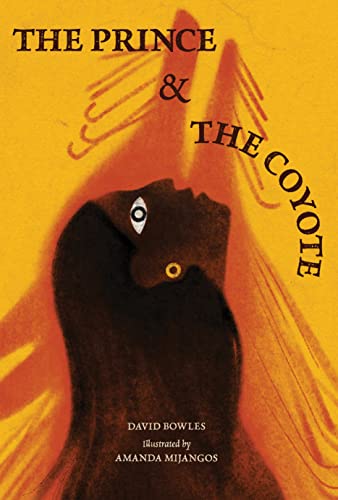
The Prince and the Coyote

The prince and the coyoteThe Prince and the Coyote by David Bowles
Genre: historical fiction
I read it as a(n): ARC
Length: 424 pp
Her Grace’s rating: 3 out of 5 stars

Set in 1418, pre-Columbian Mexico, a young nobleman comes of age in a time of tremendous upheaval. The Mexican national hero, Nezahualcoyotl, a dreamer and poet as well as the Crown Prince of Tetzcoco (modern Texcoco), is sent to an elite school to learn the many duties of being a royal. His world is shattered when an uprising, led in part by his illegitimate half-brother, leads to the deaths of all of Nezahualcoyotl’s family and sends Nezahualcoyotl himself into exile. Complex political strategy, military brilliance, and sheer stubborn determination to reclaim his throne keep Nezahualcoyotl going as he forges new alliances and fights for his rightful throne.

The world building in this novel was exceptional. Bowles took great pains to create a living, breathing world that appeals to modern readers. The labyrinthine politics involved in the relationships between the various city-states of Mexico at the time are fascinating. That aspect of the novel was certainly the strongest. The battle scenes, though sometimes feeling a little rushed, were exciting and detailed. Learning more about the weapons and battle tactics of this time period was intriguing and made me want to learn more. Similarly, I appreciated learning about daily life for this region and time period.

I have two minor quibbles: the book is marketed as a YA but because of the complexity of the plot, it definitely reads like an adult novel. I think a lot of younger readers would be bored with this.

Also, even though the story quickly grabbed my attention, I was almost undone by the names. While I appreciate, and usually insist upon, historical accuracy, this might be an instance where it would be acceptable to shorten some names to make this book more readable, even if that isn’t technically accurate. It would have been so much easier to read and keep straight all the characters if they were actually called Fasting Coyote or whatever the translation of their name would be. 

Overall, The Prince and the Coyote is a gripping, enjoyable epic through a period of history that the U.S. largely skips right over. Warmly recommended. 

book review · fantasy

Snow and Poison

Snow and Poison

Snow and Poison by Melissa de la Cruz*

Genre: fantasy

I read it as a(n): digital galley

Length: 288 pp

Her Grace’s rating: 2 out of 5 stars

De la Cruz’s lush retelling of Snow White is set in 17th century Bavaria. The central figure is Sophie, the Duke of Bavaria’s daughter, and her love interest is Phillip of Spain. They meet at her debut ball, which is also the marriage of her father to a woman called Claudia, who hails from a remote region of Bavaria. Events are set in motion that will test the strength of Sophie’s resilience as well as the bond between Sophie and everyone she loves.

There were many things to like about this book. In particular, the relationship between Sophie and Claudia was delightful; it’s always refreshing when an author makes a traditionally negative character into one worthy of love and respect as she did with Claudia. She turned the trope of the wicked stepmother on its head. 

There were several drawbacks to the novel as well, though. The pacing was generally poor. The first three-quarters of the book were a straightforward historical story; one wondered when or if there would be any elements of the Snow White tale. I had actually wondered if this was perhaps the first part of a duology or trilogy. Then, in the last quarter of the book, the dwarves’ and the wicked witch’s characters were introduced and the whole rest of the fairy tale proceeded from there in a very rushed manner. Mostly because of the inconsistent pacing, the characters in general all lacked development, and a couple of them who had the potential to be honestly fascinating were more or less glossed over in favor of concluding the story. Many unanswered questions remained as a result of the pacing deficiencies.

The novel should appeal to younger teens or established fans of de la Cruz, but I think it would disappoint older teens or adult YA readers.

*This review was originally published with the Historical Novel Society