academic · book review

Outgrowing God

Outgrowing GodOutgrowing God by Richard Dawkins (Website, Twitter, Insta, Facebook)

Genre: nonfiction/atheism/YA?

Setting: n/a

I read it as a: hardback

Source: my own collection

Length: 294 pp

Published by: Random House (8 Oct 2019)

Her Grace’s rating: 5 out of 5 stars

This is a terrific, brief book that addresses religion from a scientific perspective, as do all of Dawkins’s books. In it, he lays out many arguments people use for believing in a god (it teaches you morality, you can’t be good without God, etc) and then he goes on to point out the fallacies involved in thinking that. Such is the first part of the book. The second deals more directly with actual science and evidence for how we know what we know. 

I love this logical approach. Even as a child, religion never made sense to me. When I asked questions in Sunday School, I was rarely satisfied with the answers I was given – you just have to have faith (why, though? That’s not good enough), we can’t see God but we can’t see the wind either and so that’s the same thing (honestly, what the actual fuck?). Now, of course, I know a lot more about logic and reasoning than I did as a child, and the kinds of arguments and fallacies that are involved. But not everyone does. Nor would I try to change, say, my granny’s mind about her beliefs. It doesn’t hurt me and it is a comfort to her, so I’m not here for that. But I do think a ton of people need to read this book, and all of Dawkins’s other books, and then move on to writers like Sam Harris, AC Grayling, Daniel Dennett, Dan Barker, and the late, greatly missed Christopher Hitchens. It will be an eye opener for many, in the best way, I promise.

I felt like this book was written for a slightly younger audience. I don’t know if Dawkins did that intentionally but this would be easy for most teens to grasp, as well as adults who are not as scientifically literate as some of his other readers. I appreciate Dawkins’s ability to write science in a way that is easy for a layperson to understand but that doesn’t dumb it down so much it is essentially inaccurate. Some people say he is condescending, but I don’t really think it’s that so much as he is breaking down complex issues and tells his readers if an upcoming section is particularly challenging. He’s just being a typical professor – ok, class, time to take careful notes. I think too that maybe some of the ‘he’s really condescending’ crowd might just feel a little defensive about their beliefs that he is disassembling. Just a thought. 

I highly recommend this book to everyone, especially those who might still cling to certain beliefs, religious or otherwise, without good evidence to support it.

Favorite part/ lines (potential spoilers!):

  • Arguing over whether angels are demigods is rather like arguing whether fairies are the same as pixies. 
  • …if I’d been born to Viking parents I’d firmly believe in Odin and Thor. If I’d been born in ancient Greece I’d worship Zeus and Aphrodite. In modern times, if I’d been born in Pakistan or Egypt I’d believe that Jesus was only a prophet, not the Son of God as the Christian priests teach.
  • We can’t prove there are not fairies but that doesn’t mean we think there’s a 50:50 chance fairies exist. 
  • ‘Jesus’ is the Roman form of the Hebrew name Joshua or Yeshua. It was a common name and wandering preachers were common. So it’s not unlikely there was a preacher called Yeshua. There could have been many.
  • We tend to think the United States is an advanced, well-educated country. And so it is in part. Yet it is an astonishing fact that nearly half the people in that great country believe literally in the story of Adam and Eve. 
  • You get the impression from him that God i far more interested in the sins of one species, living on one little planet, than he is in the vast expanding universe he had created. 
  • The whole bit in chapter 11 about patterns and how human brains are evolutionarily hard wired to seek them, and how false positives and false negatives may have started superstitions and religions. 
  • Science regularly upsets common sense. It serves up surprises which can be perplexing or even shocking; and we need a kind of courage to follow reason where it leads, even if where it leads is very surprising indeed. The truth can be more than surprising, it can even be frightening. 
  • Courage isn’t enough. You have to go on and prove your idea right.
  • Isn’t science wonderful? If you think you’ve found a gap in our understanding, which you hope might be filled by God, my advice is: ‘Look back through history and never bet against science.’
  • I think we should take our courage in both hands, grow up and give up on all gods. Don’t you? 


book review

Jonny Appleseed

Jonny AppleseedJonny Appleseed by Joshua Whitehead (Twitter, Insta)

Genre: contemporary/literary fiction

Setting: Manitoba/Peguis First Nation

I read it as a: paperback

Source: my own collection

Length: 224 pp

Published by: Arsenal Press (15 May 2018)

Her Grace’s rating: 4 out of 5 stars

Jonny Appleseed is about a First Nations boy who is gay and trying to figure out how to be his best self. His mother wants him to come back to the Reservation for his stepfather’s funeral. Getting there requires more cash than he has on hand and so he works extra at his job, which is as an online sex worker. During the few days it takes him to save enough cash to get home, Jonny reflects on the experiences from his past that have helped to make him who he is right now, with a fever-dream kind of feel to the memories.

I am honestly not sure how to write a review of this book that really encompasses my thoughts without making me sound like either an idiot or an asshole. I loved this book, though, and loved learning more about the Cree Nation, where Jonny as well as author Joshua Whitehead are from. Truly, it isn’t possible for me to have known less about the Cree before beginning this book, so it was an interesting reading and learning experience. 

I enjoyed learning some Cree words, though I absolutely have no idea how to say them. At first, I wanted a glossary because not all of the words used in the book were explained by context (or maybe I just didn’t get it), but then I decided that I liked that there was no glossary. It felt more real for the words just to be there, slipped into the narrative as they probably would be in normal conversation, and it is my job as a reader to figure them out. I always like learning about a culture that isn’t familiar to me and I appreciated the richness that was imparted through this story.

Many parts of this were heartbreaking. Not just because of how people treated Jonny as a Two-Spirit indigiqueer person, as he calls himself. But also because of how poor he and most of his acquaintances are, how hard they have to work to scrape together enough to buy something like a six-pack, or that they work hard just SO they can buy a six-pack or spirits. 

I think this is a book everyone should read. It will make you laugh, cry, and most importantly, think and empathise. 

Favorite part/ lines (potential spoilers!):

  • Home isn’t a space, it’s a feeling. … And it isn’t always comfortable – at least, not an NDN home. In fact, quite often, it’s uncomfortable. But it’s home because the bannock is still browning in the oven and your kokum is still making tea and eating Arrowroot biscuits. … And, given time, it becomes mobile – you can take those rituals with you, uproot your home as if it were a flower.
  • But I just laughed and I think he got mad – I wish he knew that when an NDN laughs, it’s because they’re applying a fresh layer of medicine on an open wound.
  • Don’t be thinking I don’t know who this is for – you like that Walker boy. I’m fine with that, son, Creator, he made you for a reason – you girl and you boy and that’s fine with me, but what’s not fine is you selling yourself short. You gotta leave if you wanna survive, and when you do you’re gonna need the steadiness of those hands, m’boy. You’re gonna need a rock and a whole lotta medicine. 
  • I am my own best medicine.
  • But the way he told stories was so sincere that I couldn’t help but become enamoured. That was when I learned just how much power there is in stories …
  • “Howa, he’s just snapped,” someone said, which made Jordan laugh. “Oh heck, that guy’s feeling no pain,” she said. That saying is weird, “feeling no pain.” I used to laugh at it too, but nowadays I think that they’re drunk because they’re feeling all kinds of pain.
  • My kokum had always told me that sleep was not a waste of time, that it was a time for healing, so I slept long and hard, waiting for my blood to leech out its memories and for my body to rejuvenate.
  • “But you – you my everything, m’boy, all this time you been my rock.”  “No, Momma,” I replied, “you’re my rock. I’m just the one who broke you.”  “Maybe,” she said, biting her lip. “But then you also the one who ground me. Ground me up into a medicine.”
  • …a good story is always a healing ceremony, we recuperate, re-member, and rejuvenate those we storytell into the world…


academic · bookish things · Medievalism · Writing

Writing Things

I’m holed up in our cabin in the woods, working on my book. These are just a few of the things I’ve read in the past week. I need to format it right. Send halp and booze.

Boethius. The Consolation of Philosophy. Translated by Richard Green, Martino Publishing, 2011. 

Brewer, Jessica. “Etheldreda: Queen, Abbess, Saint.” Medievalists.net, 23 Feb. 2019, http://www.medievalists.net/2019/02/etheldreda-queen-abbess-saint/.

Cartwright, Mark. “The Daily Life of Medieval Nuns.” Ancient History Encyclopedia, Ancient History Encyclopedia, 10 Mar. 2020, http://www.ancient.eu/article/1298/the-daily-life-of-medieval-nuns/.

Clark, Christine G. “Women’s Rights in Early England.” BYU Law Review, 1995 March; 207(1): 206-236.

Crosby, Everett U. “Children of the Middle Ages.” Review of Medieval Children by Nicholas Orme. The Virginia Quarterly Review, Autumn 2002, vol 78 issue 4, p. 766-773.

Cybulskie, Danièle. “Royalit: What Did Medieval Kings Read?” Medievalists.net, 14 Apr. 2018, http://www.medievalists.net/2016/04/royalit-what-did-medieval-kings-read/.

Dawkins, Richard. Outgrowing God. New York: Random House, 2019.

Dragnea, Mihai. “The Influence of the Bible on Medieval Women’s Literacy.” Medievalists.net, 14 July 2014, http://www.medievalists.net/2014/07/the-influence-of-the-bible-on-medieval-womens-literacy/.

Dresner, Samuel H. “Barren Rachel.” Judaism. Fall91, Vol. 40 Issue 4, p 442. 

FitzGerald, Brian D. “Medieval Theories of Education: Hugh of St. Victor and John of Salisbury.” Oxford Review of Education, vol 36 issue 5, October 2010, p. 575-588.

Friehs, Julia Teresa. “What Did People Read in the Middle Ages? Courtly and Middle-Class Reading Matter.” Die Welt Der Habsburger, http://www.habsburger.net/en/chapter/what-did-people-read-middle-ages-courtly-and-middle-class-reading-matter.

Frijhoff, Willem. “Historian’s Discovery of Childhood.’ Paedagogica Historica Vol. 48, No. 1, February 2012, 11–29.

Gordon, Edward E. Centuries of Tutoring: A Perspective on Childhood Education. 1988. Loyola University, PhD Dissertation. 

Green Richard. “Introduction.” In Boethius’s The Consolation of Philosophy, translated by Richard Green, Martino Publishing, 2011.

Guillelmi de Conchis’s Dragmaticon. Translated by Italo Ronca, University of Notre Dame Press, 1997.

Harvey, Katherine. “Episcopal Virginity in MEdieval England.” Journal of the History of Sexuality, 2017 May ; 26(2): 273–293.

John of Salisbury (1962 [1159]) The Metalogicon of John of Salisbury: a twelfth-century defense of the verbal and logical arts of the trivium. Translated by D. McGarry. Berkeley, University of California.

Kuefler, Mathew S. “‘A Wyred Existence’: Attitudes Towards Children in Anglo-Saxon England.” Journal of Social History. Summer91, Vol. 24 Issue 4, p823-834. 

Lewis, Katherine J. “Model Girls? Virgin-Martyrs and the Training of Young Women in Late Medieval England.” In Young Medieval Women, edited by Katherine J. Lewis, Menuge Noël James, and Kim M. Phillips. St. Martins Press, 1999: 25-46.

Lewis, Mary, Fiona Shapland, and Rebecca Watts. “On the Threshold of Adulthood: A New Approach for the Use of Maturation Indicators to Assess Puberty in Adolescents from Medieval England.” 2016. American Journal of Human Biology, 28:48-56.

Otten, Willemien. “Christianity’s Content: (Neo)Platonism in the Middle Ages, Its Theoretical and Theological Appeal.” Numen 63 (2016): 245-270. 

Potkay, Monica Brzezinski and Regula Meyer Evitt. Minding the Body: Women and Literature in the Middle Ages, 800-1500. London: Twayne’s Women and Literature Series, 1997.

Riches, Sam and Miriam Gill. “Saints in Medieval Society.” Pilgrims and Pilgrimage, http://www.york.ac.uk/projects/pilgrimage/content/med_saint.html.

Riches, Sam and Miriam Gill. “Saints in Medieval Society.” Pilgrims and Pilgrimage, http://www.york.ac.uk/projects/pilgrimage/content/med_saint.html. 

Salih, Sarah. “Saints and Sanctity in Medieval England.” The British Library, 4 Jan. 2018, http://www.bl.uk/medieval-literature/articles/saints-and-sanctity-in-medieval-england#. 

Shapland, Fiona, Mary Lewis, and Rebecca Watts. “Lives and Deaths of Young Medieval Women.” Medieval Archaeology, vol. 59, 2015, pp. 272-289.

Stevenson, Cait. “The Holy Spirit in Female Form: Medieval Tales of Faith and Heresy.” Medievalists.net, 29 Aug. 2019, http://www.medievalists.net/2019/08/the-holy-spirit-in-female-form-medieval-tales-of-faith-and-heresy/.

Vauchez, André. Sainthood in the Later Middle Ages. Cambridge: University Press; 1997.

Vincent, Nicholas. “The Great Lost Library of England’s Medieval Kings?: Royal Use and Ownership of Books, 1066-1272.” 1000 Years of Royal Books and Manuscripts, edited by Kathleen Doyle and Scot McKendrick, British Library, 2013, pp. 73-112.

Wilkinson, Louise. “Isabella, First Wife of King John.” Magna Carta Trust, https://magnacarta800th.com/schools/biographies/women-of-magna-carta/isabella-of-gloucester/


academic · bookish things · random

We Rise digest

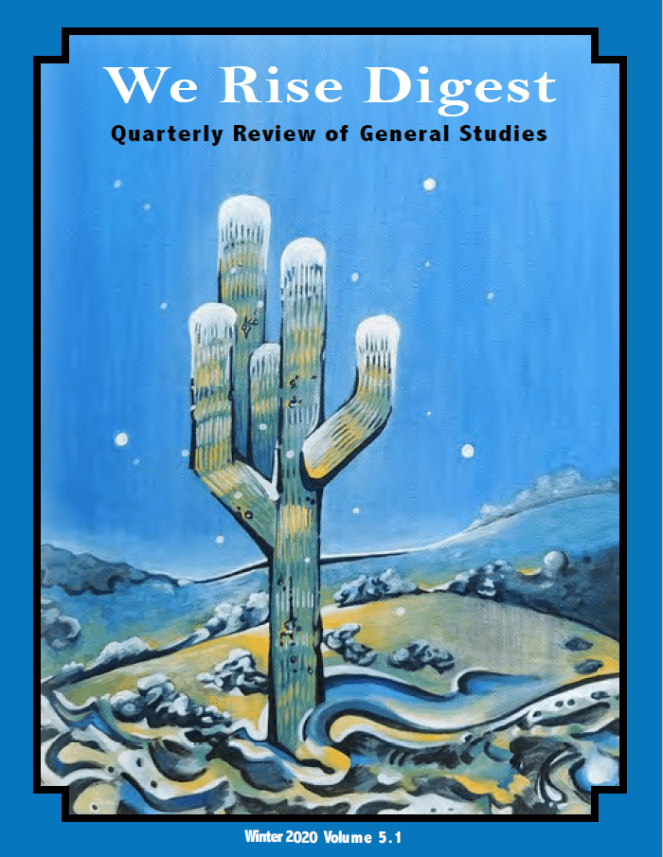
So in my day job, one of my roles is to produce the quarterly digest for my college. I work with an amazing team of writers and designers and what we’ve done has really grown over the past couple years. I just wanted to share this with the interwebs, because I am proud of my team and their work.

We Rise Winter 2020 SPV

We Rise cover

Cover art by Brad Carroll.

book review · historical fiction

The Testament of Mary

The Testament of Mary


The Testament of Mary by Colm Toibin (Website)

Genre: literary/historical fiction

Setting: 1st century Ephesus

I read it as an: audiobook

Narrator: Meryl Streep

Source: my own collection

Length: 03:07:00

Published by: Simon and Schuster Audio (10 Sept 2013)

Her Grace’s rating: 5 out of 5 stars

A first person narrative of some of the events of the alleged life of Jesus, told from his mother Mary’s point of view. The premise is that she is now an old woman waiting to die, and so is writing down her recollections in a factual manner. She is not amused by her son’s choice of friends, who she says are mostly men who can’t even look a woman in the eye. Nor is she impressed with the people who believe her son is the son of God. She definitely has no time for that. She has no interest in collaborating with the authors of the Gospels, who are her keepers as well. She doesn’t think they are ‘holy disciples’ or that her son’s death was ‘worth it.’

I dig this Mary. This Mary has absolutely zero fucks left to give, and she’s not shy about telling you so. She points out the many times she was dismissed or treated badly by her son or others. She is not the gentle, meek, retiring woman portrayed over the centuries in so much art and literature. This Mary has Things to Say™ and she is not happy about the way events played out, nor with the players involved. Here, she is a grieving, bitter old woman, and I don’t blame her. If someone killed my child in any way, let alone in a horrifically brutal way, I’d be bitter and pissed off about it, too. And would likely have a whole lot more to say about it than she did here. Or else I’d be dead because I would attack the people and get it over so they’d kill me. 

I am as atheist as they come and find this a refreshing and realistic portrayal of Mary, totally divorced from centuries of veneration that has been heaped on her. Not that I believe she existed any more than Jesus did. But if she did, I can see her ending up like this. This Mary obviously loves her son but she doesn’t spare him any criticism, either. She doesn’t think he is divine or that he is the son of God. She thinks he didn’t treat her all that well once he was grown. She didn’t like his friends and thought they were a bunch of misfits. She felt that her son’s preaching was dangerous, bizarre, and delusional. She will not tell her keepers stories about her son that weren’t true just so they could fit them in with the narrative they created about him. She simply refuses to play. I loved her, and I felt horrible for her.

Meryl Streep, of course, did an exceptional job narrating this story. She imbues her voice with age, fatigue, bitterness, grief, everything you might expect to find in a woman who has lived far longer than she really wants to, burdened as she is with sorrow and anger. 

I loved this book (novella, really) and recommend it highly. However, if a reader is really religious and isn’t inclined to view Mary or her son in any way other than how they are represented in the Wholly Babble, then it might be better to skip this one. It is NOT an irreverent or heretical book, but it pulls no punches and undermines the whole point of Christianity. Which is why I loved it, naturally.