book review · books

A Review of The Castle of Otranto: Insights into the First Gothic Novel

The Castle of Otranto by Horace Walpole Genre: Gothic, classics I read it as a(n): pb Length: 117  Her Grace’s rating: 4 stars

Generally considered to be the very first Gothic story, The Castle of Otranto is centered on Lord Manfred, his wife Hippolyta, his daughter Matilda, and his son’s fiancée Isabella. In the opening scenes, Manfred’s son, Conrad, gets smashed to a pulp by a giant metal helmet that seemed to come flying out of thin air when he was on his way to the church to marry Isabella. This, friends, is foreshadowing! Events proceed from there, with a family curse, a nefarious plot, a hidden nobleman, a random but handsome stranger from another town, and a salty monk bringing the action along with them.

One of the first things I noticed, and was surprised about, was how funny this story was! There are a couple of servants, Jaquez and Diego, who are like Rosencrantz and Guildenstern. The lady’s maid, Bianca, is like all four of those men rolled into one. Or maybe she is channeling her inner Lwaxana Troi. Either way, she’s hilarious. There were several spots where just the writing and narration itself made me laugh out loud as well. Walpole occasionally broke the fourth wall but good.  

There was also a very heavy implication that nobility is a blood- or birthright. Considering that Walpole was himself a nobleman, that makes sense. It was a little on-the-nose in some parts, but I feel like Walpole was making a deliberate commentary about nobility. The idea running throughout the story is that nobility is inherent, not something one can inherit with titles or take through force. We see this played out in full force with Theodore and Manfred. Theo started out as a peasant in the story but through his actions and behaviors, showed that he was more noble than Manfred. When Theo is revealed to actually be a nobleman, it reads like a confirmation of what we already knew more than an actual plot twist. It’s a big contrast to Manfred who has the titles and lands to back up his claim of nobility, but he’s cruel, paranoid, and basically unhinged. Just like a certain tangerine-colored politician. Example of how life imitates art! 

The way the women fit into nobility is also interesting, if frustrating on occasion. Hippolyta is noble by birth and actions. Her nobility is closely tied to her loyalty, humility, and piety. But she goes way overboard with the whole obedience thing and eventually her virtues are tied so closely with submission that they actually become the problem. She is a very virtuous doormat. Matilda is also virtuous and noble, and her compassion bears that out. She forgives and is empathetic even to people who wrong her. But since this is a Proper Gothic Story, there’s a lot of fatalism and in the end, Matilda’s virtues are not enough to save her. 

I think Isabella is the most interesting. She is virtuous and everything a woman was expected to be at that time, but she also has a spine. She tells Manfred to fuck off when he wants to marry her, she always tries to protect other people, she chooses to be noble as well as being noble by birth. She also tries to save herself by getting the hell out of the castle and pelting to the monastery where she can claim sanctuary and avoid Manfred. She and Theo would make a great match, if that were part of the plot. 

Overall, this was a fast and fun read, the first real Gothic story, and definitely one I recommend to anyone who is into that. 

Some of my favorite lines:

“I fear no bad angel, and have offended no good one” (30).

“He tells you he is in love, or unhappy, it is the same thing” (41).

“Since mirth is not your mood, let us be sad” (64). 

“A good Knight cannot go to the grave with more satisfaction than when falling in his vocation: whatever is the will of heaven, I submit” (66).

“He sighed, and retired, but with eyes fixed on the gate, until Matilda, closing it, put an end to an interview, in which the hearts of both had drunk so deeply of a passion, which both now tasted for the first time” (72).

“I can forget injuries, but never benefits” (95).

book review · books · historical fiction

Carmilla: The Sapphic Vampire Classic

Carmilla by J. Sheridan Le Fanu
Genre: horror/Gothic/Classics
I read it as a(n): e-book
Length: 108 pp
Her Grace’s rating: 3.5 stars
2025 Reading Challenge tasks:
Her Grace’s: #10 – A book that was adapted to screen
TND: #9 – Author starting with J; #48 – Under 250 pages
PS: #39 – A classic you never read (I guess technically, I read it in college but I definitely didn’t pay attention to it then)

Predating Stoker’s Dracula by about 25 years, Carmilla is the Gothic Sapphic story you are looking for. Though by no means the oldest vampire story (that honor falls to Sekhmet from Ancient Egypt, circa 1500 BCE), Le Fanu’s novella highlights many of the now-familiar tropes within the vampire canon. Mysterious, highly attractive stranger? Check. Dark and spooky castle/forest/chateau/moors setting? Check. Weirdly incestuous vibes? Shuddercheck! Homoerotic fixation? Double check! 

Le Fanu opens his story with the narrator (her name is Laura but we don’t know that until about halfway through the story) reminiscing about a past experience that has haunted – literally and figuratively – her life ever since. The story is told in snapshots of memory as though written in a letter or diary format. Or as if we are sitting with Laura and she is telling the story to us. In any case, the format of the storytelling adds to the atmospheric setting overall. 

Laura is a young girl when she first meets Carmilla, or so it is implied. She seems to meet her in a dream, though as we read, it seems more likely that Carmilla found her in real life and had somehow marked her as her own. When they meet several years later, the intensity of the connection between Laura and Carmilla reads, at times, like long-lost friends as much as lovers. And there were a LOT of Sapphic vibes throughout this short book. Laura finds herself struck dumb more than once at Carmilla’s beauty, though savvy modern folks know that’s just what vampires do. They charm us. See? 

But seriously, that guy could charm me all he wants. 

Anyway. Carmilla’s victims that we know about are all young women or children who are young enough to still be fairly androgynous. That part is super creepy. Also creepy are the incestuous vibes when the General talks about his ward, who he views as his daughter, and who was unfortunately one of Carmilla’s victims. That’s a common vampire trope, so it isn’t out of the ordinary here, except when we consider that this is one of the earlier vampire stories we have and it was written in the Victorian Era, that period of supremely repressed sexual desire and general moral chucklefuckery. 

I decided to read Carmilla because I am reviewing a retelling of it for the Historical Novels Society and wanted a refresher. I’ll post that review once it goes live on the HNS site. For now, I am glad that I reread Carmilla; it is easy enough reading, once you get used to the very long sentences, and short enough to read in one sitting. 

book review

Navigating Teenage Girls’ Growth: Insights from Untangled

Untangled: Guiding Teenage GIrls through the Seven Transitions into Adulthood by Lisa Damour, Ph.D.
Genre: nonfiction/sociology
I read it as a(n): paperback
Length: 343 pp 
Her Grace’s rating: 4 stars
2025 Reading Challenge tasks:
Her Grace’s: #8 – a nonfiction about an -ology
TND: #10 – The title is red; #42 – Wish you had read when you were younger 

As the title suggests, Untangled is a guide for parents of teenage girls. It breaks down, clearly and logically, the major phases of life the author, who is a practicing clinical psychologist, has identified that teen girls go through. Each section discusses the unique phase in depth as well as includes some case studies and examples. It also has suggestions for ways to approach topics, how to handle difficult conversations, and when you should legitimately worry and seek outside help. 

I enjoyed Damour’s writing style. I found her approach to be supportive and encouraging – and honestly hilarious at times! The humor was welcome, because teenage years are horrific and if you don’t look for the humor in it all, then you’re going to end up rocking in a corner somewhere. 

Part of the reason I picked this book up in the first place is that it seems like most psychology books for parents of teens deal with the Generic Teenager. Others deal specifically with Teenage Boys. Finding books about Teenage Girls are fewer and farther between. It’s an important distinction because, yes, teens do have some of the same weirdnesses across genders, such as the way the brain restructures itself from the primitive lizard brain first to the frontal cortex (where logic lives) at the very last. But many other experiences are unique to girls, their biology, and the way they process emotions and thoughts. Having a resource specific to teen girls is super important and I, at least, found it really insightful.

I would definitely recommend this if you have a teen or soon-to-be teen girl. I wish I had read this book years ago, before my girl turned into a teen. Honestly, ever since she hit 13, this song has been playing in my head on repeat.

book review

A Journey in Eventing: Review of Ambition by Natalie Keller Reinert

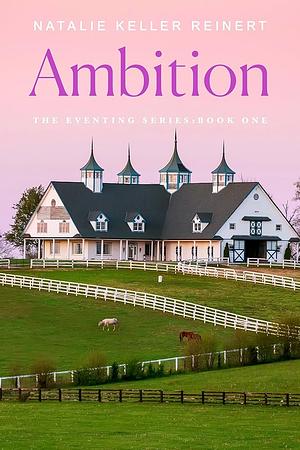
Ambition by Natalie Keller Reinert
Genre: contemporary fiction
I read it as a(n): paperback
Length: 358 pp
Her Grace’s rating: 4 stars
2025 Reading Challenge tasks:
Her Grace’s: #9 – Passes the Bechdel Test
TND: #17 – Animal on the cover; #34 – Starts with A or L
PS: #10 – You got it for free; #30 – Reminds you of your childhood

A few months ago, I was jonesing to read some adult horse novels. The one I read was atrocious and it made me a) definitely dumber than before I read it and b) turned me off to adult horse books in general in case they were all like that. As if horses and women can only go together in terms of vapidity and unrealistic romance. 

Then I saw reviews and recommendations for Natalie Keller Reinert’s eventing series and that it was an excellent overview of actual horse and eventing life. I decided to give it a try and am very glad I did. There was a little romance, but it was seriously like 10% of the story. The rest of the story focused on the protagonist, Jules Thornton, and her attempts to break into the upper levels of eventing while also trying to train other people’s horses AND keep her own barely-functioning farm afloat. 

Her own horse, Dynamo, has a big heart and he loves Jules as much as she loves him, but he is not talented enough to take her as far as she wants to go in competition. So Jules is thrilled when she signs on a new horse to board and train, Mickey, who is everything an eventing horse should be. Except that he’s crazy and traumatized. 

I did really enjoy this novel, enough that I placed the next one in the series on hold at my local library. It gave a good look into the actual work that goes into training horses at a very high level, some history of eventing, and the dangers involved. It is funny to me now, as an adult, to remember the horse crazy little girl I was who thought I would get to be on the US Olympic Equestrian team, despite not having remotely close to the money needed for such a sport and also the fact that my horse was too small and an entire coward. 

I definitely recommend this book if you have a love of horses and eventing, though I think if you aren’t familiar with that, or English style riding in general, it could be a bit confusing as some of the terms are not defined in context. 

book review

Exploring Themes in The Shadowed Land by Signe Pike

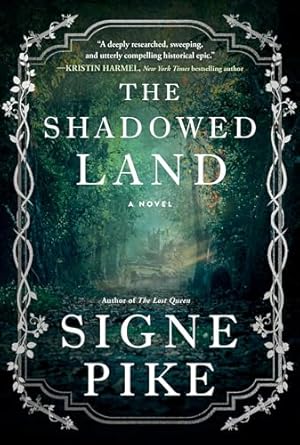
The Shadowed Land by Signe Pike
Genre: historical fantasy
I read it as a(n): audiobook
Narrator: Eilidh Beaton, Toni Frutin, Gary Furlong, Angus King, and Siobhan Waring
Length: 11:48:00 
Her Grace’s rating: 3.5 stars
2025 Reading Challenge tasks:
Her Grace’s: #15 – a retelling (Arthurian legend); #24 – Three or more point-of-view characters 
TND: #5 – Green on the cover; #30 – An author you love 
PS: #19 – Highly anticipated for 2025; #32 – An overlooked woman in history

The highly anticipated third installation of Signe Pike’s Arthurian retelling, The Shadowed Land, focuses on the reunion of Languoreth, Lailoken, and Angharad, Languoreth’s long-lost daughter. Everyone thought Angharad had died in a battle nine years before as no one could find her afterwards. She was, however, living with the Picts. Traveling with them is the warrior Artur Mac Aeden, who eventually gets summoned back to his father’s home in Dalriada, Languoreth and Lailoken go back to Strathclyde with the odious priest Mungo, and Angharad goes back to the Picts to try to convince the Druid Briochan to take her on as an apprentice. 

Maybe I just forgot some things since it was so long between book 2 and this book (I think it was at least 3 years since the previous book, The Forgotten Kingdom, was released). But it felt like a whole lot of nothing much happened. Partly, I think my reading was a bit tainted because I thought this was going to be the final book in a trilogy but then I read that it is now a series and at least one more book is planned. That honestly kind of killed most of the anticipation I had felt leading up to this book. Why does everything have to be a fucking series? Can’t anything stop at just a trilogy anymore? Or even just a single book? One book, one story. I get so sick of reading never-ending series. Most of them now just feel like selling out to make more money.

I also have no idea why we suddenly got Gladys, Languoreth’s elder daughter, as a POV character. She seemed to have zero purpose in the overarching plot. I listened to this as an audiobook and whoever they got to narrate her* was also super obnoxious. I hated her and I will never intentionally listen to any book she narrates. I don’t know how much, if any, input authors have into who is cast for their audiobook narrators, but if Pike has any say in it, I truly hope she tells them to find someone else next time. 

I did really like that there was a lot of focus on the Picts in this book. I don’t remember there being as much about them in the previous two books. I have always been intrigued by them, and we know so little about them, that it is fun to find a book that has Picts as main characters. I don’t have the print edition of this book yet – waiting for the paperback edition – but when I get that, I hope it has a little bibliography so I can check out some of the books myself. I love it when authors include a bib in their books, even if it is in no way all of the things they, themselves, read while researching. 

I also liked that there seemed to be a theme of self-discovery throughout. Each POV character, except Gladys, learned or discovered things about themselves that made them a more complete, complex character. I think it was nicely done on Pike’s part, as it showed growth that people just acquire as they age and engage in self-reflection. 

Overall, I still liked the book, but I frequently tuned out and was disappointed that it felt more like a filler or placeholder to the next book in the now-series. I wish it had stayed as a trilogy as originally planned.

*Eilidh Beaton narrates Gladys’s voice. Process of elimination by listening to samples on Audible, yay. Now she is on my Do Not Listen to This Narrator list. 

book review

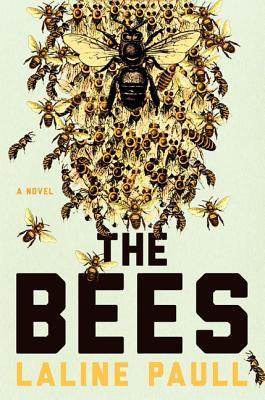
The Bees: An Allegorical Journey Through Hive Hierarchy

The Bees by Laline Paull
Genre: speculative fiction
I read it as a(n): paperback
Length: 340 pp
Her Grace’s rating: 4 stars
2025 Reading Challenge tasks:
Her Grace’s: 1 – set in a non-patriarchal society
TND: 4 – Debut author; 36 – Standalone
PS: 18 – contains magical creatures that aren’t dragons (bees are absolutely magical creatures. Fight me) 

Flora 717 is a worker bee of the sanitation caste, the lowest kind of bee in her hive’s strict matriarchal hierarchy. Her intended purpose is to clean, and only clean, and do whatever is commanded of her. Naturally, her destiny is wildly different than that.

What a unique, wonderful book! Laline Paull takes real science about bees and their hierarchy and blends it beautifully with allegory to create this novel. To be fair, I was inclined to like this one anyway because I love bees. But I was not prepared for the story of one little bee to make me cry. 

Because of her bravery, Flora’s journey takes her from a lowly sanitation worker to a forager, a role rarely granted to a bee of her caste. She becomes an important figure in the hive, rallying her sisters during crises, being a most excellent forager, and reminding her sisters to hold onto hope during times of despair. Her growth as a character mirrors the hive’s broader struggles, which dig into themes of individuality and collective responsibility. 

Flora also has a secret – but so do the bees of the Sage caste, the ruling members of the hive. Surprise! 

I think the way Paull wrote the story – entirely from a bee’s perspective – is masterful. Throughout the novel, the world is entirely portrayed from the sensory and cognitive framework of bees. Creating the story from a non-human point of view is a great challenge to readers to consider our world in a different way. Predators like wasps and spiders are described as existential threats, and bluebottles are depicted as clumsy and disgusting. Human structures like cell phone towers are perceived as confusing, loud, and dangerous metal trees. Thinking about our structures and technology in that way not only enhances the story but also encourages us to reflect on humanity’s impact on the natural world. Whether Paull intended this commentary or not (I’m guessing she absolutely did), the novel should encourage readers to think about our ecological footprint.

This book also has a lot of allegorical layers that show how the hive is a microcosm of our own society. It explores systems of governance ranging from democratic and collectivist to authoritarian and dictatorship. It touches on themes of community, sisterhood, and the sacrifices demanded for the greater good but then juxtaposes those with the dangers of blind devotion to leadership. The hive’s cult-like adoration of the Queen highlights the dangers of unquestioning loyalty, which ought to ring a bell of some kind – any kind – with contemporary political and social dynamics. MAGA, anyone? The Bees predates the administration of a certain incompetent, unintelligent, narcissistic, orange-hued wannabe king, but its critique of oppressive hierarchies and groupthink feels prescient.

I enjoyed Paull’s writing style as well. The pacing was a little uneven at times, but not so much that it destroyed the engagement or anything. I think the places where the narrative slows are offset by the richness of the writing and the depth of the characters. The depth of character development and emotional complexity make Flora a very sympathetic and relatable character. 

Overall, I think this is a unique and thought-provoking novel that should appeal to fans of speculative fiction and allegory alike. Now I want to go read Honeybee Democracy and The Lives of Bees

book review · historical fiction · Medievalism

The Stone Witch: A Historical Fiction Mystery

book review

Women, Witches, and Weyward: Exploring Nature, Patriarchy, and Resilience

Weyward by Emilia Hart
Genre: magical realism
I read it as a(n): hardback
Length: 329 pp
Her Grace’s rating: 5 stars 
2025 Reading Challenge tasks: 

  • Her Grace’s: #21: About witches or nuns
  • TND: #35: Multiple perspectives
  • PS: #24: A happily single female protagonist

Words cannot adequately express how much I fucking loved this book. I read it in less than two days, which is astonishing considering that I have recently struggled to read a scant 200-page book within the space of an entire month. But I was hooked right from the start of Weyward. This gorgeous book tells the ways in which the lives of three women in three different time periods intersect. They are all connected by a shared link to nature and abuse at the hands of men. 

In 1619, Altha is a healer who is indicted for witchcraft after the husband of a childhood friend is killed. She has only ever used her skills to help her community, and they repay her by turning against her after a man falsely accuses her. Society fears female autonomy and strength, and we have the evidence of that in the witch crazes (and everything else that still persists today in how women are treated). There are references to Jennet Device and the Pendle Hill witch trial* scattered throughout Altha’s story, which is a historical reference I appreciate. Her trial for witchcraft underscores the dangers of being a woman with intelligence or independence in a world ruled by men. 

In 1942, Violet chafes against the harsh restrictions imposed on her by her father and society. She uses nature to seek freedom, and she goes around her father to learn about the ecosystem and insects, doing an end-run around society’s gendered constraints. She suffers mental and emotional abuse from her father, and physical abuse and rape from her cousin. When she takes matters into her own hands, using her innate understanding of nature and her own keen intelligence, she narrowly escapes forced institutionalization. Lobotomy was the implied treatment, along with hysterectomy. Violet escapes a horrorshow life in an institution mainly because her brother stands up for her and rejects their father alongside his sister. Violet’s experiences show the ways in which women’s autonomy was stripped away under the guise of propriety.

In 2019, Kate escapes an abusive boyfriend and flees to a small cottage in the north of England that was left to her by her great-aunt. Said great-aunt happens to be Violet. When she arrives at Weyward Cottage, the wilderness surrounding the area helps her to rediscover and refine her strength and confidence. Kate’s story shows the continuing battle women have to deal with even in modern times, the constant stream of bullshit from patriarchal desires and systems that are forced on society. Seriously, why do we still have to struggle with this? 

These three women are also case studies in how generational trauma works. They each have inherited both the wounds and the knowledge of their foremothers. The novel emphasizes the importance of embracing and working with that heritage. It is only by doing so that they, and we today, can find the ways to break the cycle of abuse and oppression. 

Each of these women are witches in their own way – healer, scientist, mother. This is a story about the deep strength and courage of women, how we intersect with each other even across time, and the impact of the natural world on us all. Through their connection with nature, these women reclaim their identities and strength that was stripped from them. They give the finger to their abuse, abusers, and generational trauma by refusing to allow that abuse to define them. Instead, they are defined by their resilience and the way they each embraced their rewilding.

I cannot recommend this book highly enough. I think it is one that will resonate with any woman. After all, as Aunt Jet reminds us, there’s a little witch in all of us.

*Side quest: If you are interested in reading a superb historical fiction about the Pendle Hill witch trial, you will immediately go pick up Daughters of the Witching Hill by Mary Sharratt.

book review

Fun Reading Challenge Ideas for Book Lovers

  1. Set in a non-patriarchal society, because FUCK the patriarchy: The Bees by Laline Paull, The Left Hand of Darkness by Ursula LeGuin, Ancillary Justice by Ann Leckie, or Herland by Charlotte Perkins Gilman. I’ve had all of these for ages and haven’t gotten around to reading any of them yet.
  2. Set in or about nature: Landlines by Raynor Winn, The Outrun by Amy Liptrott, Rain: Four Walks in English Weather by Melissa Harrison, The Book of Wildflowers by Angie Lewis, Chasing the Ghost: My Search for All the Wildflowers of Britain by Peter Marren.
  3. Reread a favorite childhood book: The Blue Ribbon series by Chris St. John. The first in the series is called Riding High. The whole series is about a group of girlfriends who are 3-day eventers. Or I might also revisit Pern, especially the Harper Hall trilogy, by Anne McCaffrey.
  4. A nonfiction by a woman about a STEM field: Lab Girl by Hope Jahren, or I might reread Braiding Sweetgrass by Robin Wall Kimmerer and take better notes this time.
  5. By or about a person struggling with a mental illness: Obviously, The Bell Jar, which I have somehow never read. Or We Have Always Lived in the Castle by Shirley Jackson.
  6. Recommended by a family member: The Book of Doors by Gareth Brown (rec’d by my BFF Lynn, who is certainly my family), or Counting by 7s by Holly Goldberg Sloan (rec’d by my cousin Ashley).
  7. A middle grade book: Can I Get There by Candlelight by Jean Slaughter Doty. I read this fucking decades ago but remember that I loved it, so I will reread the copy I have on my shelf.
  8. A nonfiction about an -ology: I have Enlightenment Now and Rationality by Steven Pinker, so I’ll tackle one of them. I also have a couple others that have been collecting dust, so maybe one of them instead. Guess we’ll see.
  9. Passes the Bechdel Test: The Fifth Season by NK Jemisin, which was listed on some library sites as passing the Bechdel test. I figure the librarians know what they’re talking about and it’ll give me a good reason to finally get around to reading this series.
  10. A book that was adapted to the screen: The Three-Body Problem by Cixin Liu, which I keep saying I will read and then never actually do. Or The Princess Bride by William Goldman, The Outrun by Amy Liptrot, or Fingersmith by Sarah Waters.
  11. A book that is a novelization of a TV show or movie: It isn’t exactly the same, I guess, but I have billions of Star Trek books, some of which are novelizations of specific episodes. Easy. 
  12. A book that won an award in 2023: Babel by RF Kuang (Nebula Award), or maybe Demon Copperhead by Barbara Kingsolver, which won several awards.
  13. A book with a yellow spine: How Long Til Black Future Month by NK Jemisin.
  14. Flowers on the cover: Weyward by Emilia Hart
  15. A retelling: What Moves the Dead by T. Kingfisher (retelling of “The Fall of the House of Usher”), The Witch’s Heart by Genevieve Cornichec (retells various Norse myths), or Lamb by Christopher Moore (retells The New Testament).
  16. A banned or frequently challenged book: Eleanor and Park by Rainbow Rowell, The Perks of Being a Wallflower by Stephen Chbosky.
  17. Explores a culture that is different from yours: Even As We Breathe by Annette Saunooke Clapsaddle (Appalachia), LaRose by Louise Erdrich (Objibwe), Guardian of the Dead by Karen Healey (New Zealand).
  18. Features snakes in some way (2025 is the Year of the Snake in Chinese zodiac): Ninth House by Leigh Bardugo, Demon Copperhead by Barbara Kingsolver, The Essex Serpent by Sarah Perry.
  19. Set in a utopian society, because reality is dystopian enough, thank you: The Mars trilogy by Kim Stanley Robinson, Dispossessed by LeGuin.
  20. Related to medicine: The Plague Tales by Ann Benson, The Patient’s Eye by David Pirie.
  21. About witches or nuns: The Corner That Held Them by Sylvia Warner Townsend, Anchoress by Robin Cadwallader, Her Majesty’s Royal Coven by Juno Dawson, A Pocketful of Crows by Joanne Harris
  22. About geek culture: The Geek Feminist Revolution by Kameron Hurley, Geek Wisdom: The Sacred Teachings of Nerd Culture edited by Steven H. Segal, The Geek’s Guide to Dating by Eric Smith.
  23. Takes place over one 24-hour period (circadian novel): The Uncertain Hour by Jesse Browner, Today Will Be Different by Maria Semple, Shy by Max Porter, or Orbital by Samantha Harvey.
  24. Three or more point-of-view characters: One of Us Is Lying by Karen McManus, Girl on the Train by Paula Hawkins.
  25. Bonus challenge 1: Complete the challenge using books only by people who identify as women: Every task above has at least 1 book by a woman as an option listed, so I should be good there. 
  26. Bonus challenge 2: Use the prompts to complete the A-Z reading challenge: I’ll fill these in as I can. Y’all are on your own for this one! 
book review

Exploring ‘The Horse’ by Willy Vlautin: A Reflection on Life

The Horse by Willy Vlautin
Genre: literary fiction
I read it as a(n): hardback
Length: 194 pp 
Her Grace’s rating: 3.5 stars 

Reading Challenge tasks: 
Her Grace’s: 13 – A book with a yellow spine
TND: 7 – A new to you author
PS: 8 – Under 250 pages

Al Ward is a 60-something alcoholic guitar player and songwriter who has hit rock bottom. He’s living in basically a shack with no electricity or running water on an old mining claim in the desert outside of Reno, NV, which he inherited from his uncle. Naturally, he’s wondering why he should bother to carry on when a random horse shows up at his door. The horse is blind, obviously old, and starving. It is also the middle of winter and Al worries that the horse will freeze to death. He decides it is his job to save the horse, but given that he has only canned condensed soup and no working vehicle, he’s in a quandary. He decides to walk 30 miles to the nearest neighbor’s farm to seek help for the animal, hoping that it will still be alive when he returns. Also, he’s hoping it’s a real horse and not a product of alcoholic hallucinations. 

In some ways, this book reads like a depressing case study in poor decisions and a life that has never had anything really go right. But it is also a deep reflection on the lived experiences of so many Americans. So many people live hand to mouth, no money, no savings, floating from one job to the next, wondering where they will sleep next or where their next meal will come from. Often it isn’t any fault of their own; they just lacked the necessary support systems to get a leg up. It also is about loneliness and people trying to make a connection with another living being, whether that is another human or a horse or something else. 

Al is a good man and sympathetic character. He never intentionally hurts anyone, he truly does try his best. He is also a highly unreliable narrator. His alcoholism becomes part of his identity and, try as he might, he is never able to totally dry out. This leads readers to question how much of his story is accurate or even real. It colors the portrayal of all the other characters in the story as well, whether they, too, are addicts in some way or not. 

The horse is more a place to hang the plot rather than being part of the plot itself. Its presence in the story is minimal and serves mainly as a way for Al to begin looking back over his own life and the choices he’s made. Anyone looking for an actual story about a horse will be disappointed. Initially, that was me, but the writing was excellent and I felt bad for Al. I wanted to know more about him and how it would end, so the lack of actual horses in the story quickly became irrelevant to its enjoyment.