book review · books · historical fiction

Pachinko

33905162Pachinko by Min Jin Lee

I read it as an: audiobook

Narrator: Allison Hiroto

Source: library

Length: 18:16:00

Publisher: Blackstone Audio

Year: 2017, listened to 7/2/18 – 7/13/18

Pachinko is a multigenerational saga about a family of Koreans who have to move to Japan because…reasons. Initially, Sunja, the beloved daughter of two older parents (older in that they were early 20s when she was born in the early 20th century), gets pregnant. Her lover, she discovers after it’s too late, already has a wife in Japan. One of the boarders at her parents’ boardinghouse, a preacher traveling to his new church, offers to marry her. She accepts and goes with him to make a new life in Japan. Together, they raise their sons in Japan and the story follows four generations of their family, navigating through wars, cultural upheaval, and constantly being viewed as outsiders even when one is born in Japan.

It’s been a really interesting read, though I am finding that I’m just not generally a fan of multigenerational narratives. Not in one book, anyway. This started out strong and then got rushed near the end, like there are too many stories, too many characters, and too much to say to give much attention to any one of them. The same thing happened with Homegoing. I loved the first half of the book and then it just got too rushed and I didn’t get to know the characters as well. I think doing multigenerational sagas over several books is a better way to go.

That said, this was an excellent read, especially the first half, and I learned a ton about Korean culture that I had no idea about before. I didn’t know so many Koreans had moved to Japan, nor that Japan had occupied Korea. Education fail in a big way! The way some of the people felt like they had to “pass” as Japanese just to be allowed to live in peace and make a life for themselves was so sad. Now I want to reread Passing.

Overall, though I had my quibbles with it, I thoroughly enjoyed Pachinko and would recommend it as an excellent and eye-opening read.

book review · books · historical fiction · Medievalism

Misfortune of Time (Druid’s Brooch #6)

40176383Misfortune of Time by Christy Nicholas

I read it as an: egalley

Source: Helen Hollick at  Discovering Diamonds. 

Length: my file only gave Kindle locations, not page numbers. Super annoying.

Publisher: Tirgearr Publishing

Year: 2018

*Minor spoilers ahead. You have been warned.*

In this sixth installment of Christy Nicholas’s Druid’s Brooch series, Etain, a 12th century Irish woman, has the ability not to age thanks to the magic she draws from her Druid’s brooch. The brooch is an heirloom inherited from her mother, passed down the family line, first given to her family by a Druid in thanks for saving his life. Etain is able to change her appearance at will, so she can age herself appropriately over the years, but her natural appearance is of a woman around 30 years old. In truth, she is around 150. She has had many husbands, many children, and has had to leave them all behind in her long life to avoid being discovered and killed as a witch or Fae. Her current husband, Airtre, is a mentally and physically abusive putrescence of a man, a Christian priest whose primary goal is to move up in the Church to a bishopric. Etain stays only to protect her young grandson, Maelan, from Airtre. When events explode, Etain is forced to flee, getting help from some unexpected allies, including other priests and monks, as well as a few kindly Fae.

I have read several books by Christy Nicholas, including some in the Druid’s Brooch series, and I must say I think this is my favorite one so far. The characters were all multidimensional and interesting, for the most part, and I enjoyed seeing a variety of people mingling together in the villages Etain traveled to, even if life wasn’t really like that in 12th century Ireland. I think she captured the fear and ambivalence of an abused woman well, though I hope I never truly understand that. Etain had a horrific life and it speaks to the strength of her spirit that she kept going and trying to survive rather than just giving up and letting some mad horde kill her as a witch, for the brooch can’t protect her from death.

I loved the theme of tolerance woven throughout, as well as the Gaelic hospitality. There were many instances of travelers or even old friends being offered food, drink, and washing water the moment they set foot indoors. I loved that because that’s how I was raised and it felt like home to see it reflected on the page. As well, the tolerance was a thread throughout. Etain has lived long enough to know that belief isn’t what is important, it is people who are important. She tells Maelan that “a little kindness can have unexpected rewards,” and often she herself has to remember her own lesson and take the kindness of others. Later, Maelan’s wife, Liadan, tells her, “Before I met [Aes], I didn’t realize pagans were just normal people like you and me.” Learning that people have more similarities than differences is a vital life lesson that many people today still need to learn.

The one thing I wish was different was that some of the narrative felt rushed. When Etain left Faerieland and settled in the ringfort, working in the kitchens, for example, little time was spent there, little real detail. The same happened before she entered Faerieland, when she was in the village and traded all her herbs for a cow. I wanted more detail and time spent in those places. Doing so, I feel, would give more of a sense of loss, of fatigue, because Etain was happy in both of those places and then was forced to go again. But these are minor quibbles in my overall enjoyment of this very engaging historical fantasy.

Also, it totally made me think of Dar Williams’ song The Christians and the Pagans.

book review · books · historical fiction

Mrs. Zant and the Ghost

28262527Mrs. Zant and the Ghost by Wilkie Collins

I read it as an: audiobook

Narrator: Gillian Anderson

Source: my own collection

Length: 01:37:00

Publisher: Audible Studios

Year: 2015

Mrs. Zant and the Ghost starts off with a chance encounter in Kensington Park between Mrs Zant and Mr Rayburn and his daughter. Mrs Zant appears to be mad to young Lucy Rayburn and she is initially frightened by her. When Mr Rayburn approaches her, he realizes she might perhaps be ill and takes it upon himself to find where she lives so he might make sure she is being cared for. He becomes swept up in Mrs Zant’s drama, trapped in the clutches of her brother in law, who took over her care after his brother died just weeks after marrying Mrs Zant. She is convinced, and rightfully so, that the ghost of her husband is guiding her and protecting her. Ultimately, Mr Rayburn and Mrs Zant uncover the truth about her visions and her BIL’s motives.

A good old fashioned Gothic ghost story, told with the lovely, overblown language I expect from Victorian literature. I have to say that I do not understand Victorian mannerisms; Mr Rayburn would be a stalker today if he had followed some random woman home, no matter what his motives. To modern sensibilities, he seems pushy and nosy, but of course times change and we can’t judge another time by our own standards. Maybe it was better then since he is obviously concerned for her and acts upon it. Today, people ignore each other or hurt each other.

For sure, the best part was Gillian Anderson narrating this. I cheerfully admit I only got this because she was the narrator, but I enjoyed the story anyway. Her voice adds to the overall otherworldliness of the book’s tone. I don’t know if that’s a lingering effect of her being Scully or if it’s just because she has a nice voice but it worked. It is also fun to hear her natural British accent since she has been classified as bi-dialectical. I used to think first of Scully when I think of her, but more and more I’m thinking of her as DSI Stella Gibson than Dana Scully.

Overall, this was an interesting and fast read. Listen. Whatever. I was in the mood for a Victorian story and this scratched that itch quite nicely.

book review · books · historical fiction · Uncategorized

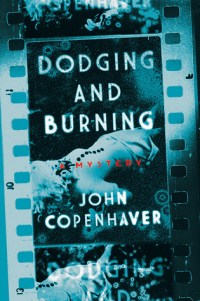
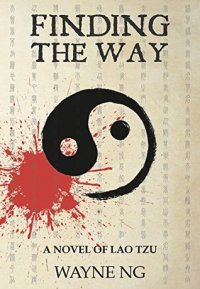
Update Round: Dodging and Burning; Finding the Way

35004938Dodging and Burning by John Copenhaver

I read it as an: ARC

Source: HNS

Length: 365 pp

Publisher: Pegasus Crime

Year: 2018

Copenhaver’s debut novel gives readers a gorgeous, critical look at the LGBTQ community in post-WWII society, revolving around a murder. In Royal Oak, VA, three friends – Jay Greenwood, Bunny Prescott, and Ceola Bliss – spend the summer of 1945 trying to solve the apparent murder of a young woman who Jay photographed. As they investigate, it becomes clear that there is layer upon layer of deceit involving Jay, the woman in the photo, and Ceola’s brother, who had gone missing in action in the Pacific theater two years earlier. As events unfold, Jay’s wartime traumas surface, Ceola struggles to understand the beloved brother she thought she knew, and Bunny sets into motion a chain of reactions that will have ramifications for them all for decades.

Dodging and Burning has some absolutely lovely writing, filled with deep imagery and complex, living characters. The society is richly depicted, from the salt of the earth working poor to the upper middle class people of the town to the gay and lesbian people in the DC underground. The way the LGBTQ community was portrayed in the novel mirrors social mores of the time, which makes for some really intense and upsetting scenes. There is a lot of excellent, much-needed social commentary woven throughout. One character speaks for the LGBTQ community when he says, “If you’re afraid for long enough, you grow numb to it” (289). Another character later on summed up much of mainstream society when he said, “You’ve been blind from the beginning. When you look at Cee or me or anyone, all you see is what you want” (312). The final few pages were an absolute gutpunch, one which was vital. This is a book that must be read and discussed with as many people as possible. 

38993264

Finding the Way by Wayne Ng

I read it as an: egalley

Source: HNS/Netgalley

Length: 324 pp

Publisher: Earnshaw Books

Year: 2018

Written mostly in flashback, Ng’s lyrical debut is the story of Lao Tzu’s vibrant and turbulent life. Readers initially meet Lao Tzu as an old man riding into a military camp on the back of a water buffalo. The captain of the camp is at first understandably untrusting, for spies take all manner of guises in his world. But he soon realizes that the old man is who he claims to be – the renowned scholar Lao Tzu – and he quickly commands for a scribe to come and record his tale of escape from the royal Zhou palace and remarkable life story. Lao Tzu and the captain’s tales are closely linked, to the captain’s astonishment, proving to him that The Way has many wandering paths that diverge and intersect but all have a larger purpose in life.

Ng’s novel is a superbly written tale, full of intrigue and drama and rich with cultural narrative. All of the main characters are vivid and multidimensional, and even the secondary characters are distinct and memorable. I think some of the tertiary characters get a little lost, but even they are not just faceless beings in a crowd.

The writing itself is lovely. There are so many turns of phrase throughout this novel that are simply pretty that I took quite a long time to read this, just because I spent a lot of time highlighting things as I read. The philosophical discussions embedded within are welcome food for thought, and I learned a lot about Taoism through reading this. It piqued my interest to learn more, which I think is the highest praise I can give to any book, that it inspired me to go learn something new because of it. 

book review · books · historical fiction · Medievalism

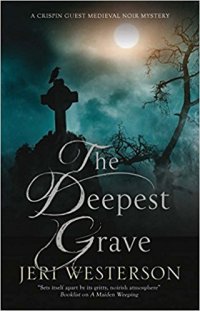
The Deepest Grave

51x-w2n9cgl-_sx318_bo1204203200_The Deepest Grave by Jeri Westerson

I read it as a: galley

Source: Netgalley

Length: 224 pp

Publisher: Severn House

Year: 2018

In this latest installment of Westerson’s Crispin Guest medieval noir series, the timeline skips ahead about a year from the previous novel, Season of Blood. The Deepest Grave opens (haha, see what I did there?) with one Father Bulthius coming to Crispin, seeking answers to the mystery of revenants – corpses rising from the grave and walking at night – in the small church of St. Modwen. Naturally, Crispin is skeptical but he takes the case. While he is out, a person from his past comes calling for aid. Philippa Walcote, Crispin’s former lover, comes begging for help, for her young son stands accused of murdering a neighboring fabric merchant and competitor to his father’s business. Crispin is reluctant to become entrenched with Philippa again in any way, but as his apprentice Jack Tucker reminds him, a client is a client, and the Walcotes are wealthy clients indeed. Crispin and Jack embark on a quest to solve the case of wandering corpses, save a child from the hangman’s noose, and figure out why the relic of St. Modwen herself keeps following Crispin around, to his supreme consternation. Continue reading “The Deepest Grave”

bookish things · books · historical fiction · Medievalism

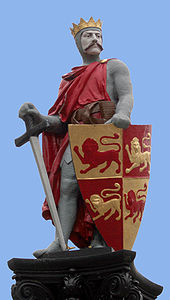
Llywelyn the Great

170px-llywelynfawr

Yesterday was the 776th anniversary of the death of Llywelyn ab Iorwerth, also known as Llywelyn the Great. Born in 1173, he began to take control of North Wales when he was about 14 years old. By the time he was about 28, he was effectively the ruler of all Wales. He unified Wales, historically a nation often divided by war and clan fighting, and held the land in peace. Even during the difficult years when he was at odds with King John, Llywelyn eventually managed to regain lands he lost, and he held the respect of his retainers and the nobles. He is one of only two Welsh kings to be given the title Fawr, “the Great.”

As a lover of historical fiction, in particular, medieval historical fiction, some of my favorite novels feature Llywelyn Fawr or his contemporaries. The best novels bring his time to life in the most vivid ways, transport me to his castles at Dolwyddelan, on his campaign trail, at his feast table. It takes a special kind of talent to make history come alive and not turn it into a dry, boring textbook. I’ve ready plenty of historical fiction novels that read like straight history textbooks, and it was awful. All I could think of while reading those was that I hoped other readers didn’t pick those particular books up as their first exposure to the time period. Otherwise, I just couldn’t see how they would ever be intrigued enough to want to learn more about it, and that makes me sad. For those who have not yet discovered good historical fiction based on Llywelyn ab Iorwerth, below are some of the very best.

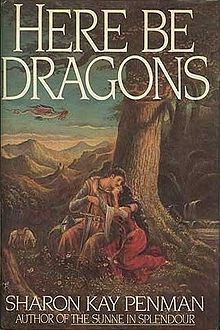
220px-herebedragons

Here Be Dragons by Sharon Kay Penman. Rich not only in (highly accurate) historical detail, but also in the complexities of medieval politics, kingship, and interpersonal relationships, Here Be Dragons is my favorite novel of medieval Wales. One of my favorite scenes in the whole book was the wedding night of Llywelyn and Joanna, the daughter of King John. She was young and scared, and Llywelyn, wanting to earn her trust, offered to delay consummating their wedding and opted instead to cut his arm so that she could show a bloodstained sheet to those wanting proof of her viginity.

61ws0ldb2bdl-_sy344_bo1204203200_

The Brothers of Gwynedd Quartet by Edith Pargeter. This series is about the grandson of Llywelyn Fawr, Llywelyn ap Gruffydd, also called Llywelyn the Last. It is a first person narrative told from the point of view of Llywelyn’s scribe and friend Samson. I rather like the first person account since it gives an immediacy to the story and an intimacy into just one aspect that we might not otherwise get to see. After all, we only can see life from our own perspective.

What others have you read?

book review · historical fiction · Uncategorized

Only the Stones Survive

only-stones-survive-morgan-llywelyn

Morgan Llywelyn reminds readers why she is the mistress of Irish historical fiction with this newest addition to her extensive body of work, which weaves Irish myth with historical and archaeological evidence into a complex and fascinating tale of mythic prehistoric Ireland. Told largely from the perspective of Joss, a young man of the Túatha Dé Danann struggling to figure out his place in the changing world, the novel covers the conquest of the Túatha Dé Danann and the settlement of the Gaels in Ireland. It is rich with Irish mythology, as is any novel worth its salt that’s written by this author.

The character development is detailed and satisfying throughout. Readers see Joss grow from a child to a leader and deal with joy and tremendous loss. Eremon and Amergin are similarly complex and conflicted figures. Secondary characters such as Shinnan, the Dagda, and Sakkar are nearly as well-fleshed as primary characters and add depth because they make readers genuinely care about them. A third category of characters that is particularly intriguing are the inanimate ones, such as Ierne (Ireland) and the harp, Clarsah. Giving names and traits to inanimate objects gives them power, and the same holds true here as well. The land and the harp both hold subtle but prominent places within the narrative, and the novel would not have quite the same lovely otherworldly tone without their voices. One line is particularly beautiful: “The harp, if it was a harp, added other themes. The music, if it was music, gave voice to sunshine. And moonlight. A woman’s exultant cry as she bore a child. The clashing antlers of rutting stags. Hope and fear and courage… That is more than music; it represents an entire world.”

This beautiful novel is highly recommended for lovers of Irish mythology, magical realism, and those who hold out hope that they may themselves be descendants of the ancient noble blood.

book review · historical fiction · Medievalism

A Morbid Taste For Bones

321545

As a die hard fan of medieval mysteries, I feel a great deal of gratitude to Ellis Peters for essentially starting the genre with this, the first entry in the Brother Cadfael series.

And what a treat it is! For a tiny book that inexplicably took me an inordinate length of time to read, this was really a fun story. Cadfael is a terrific character, full of quirks and orneriness. Love it! He’d be fun to hang out with.

The secondary characters were nicely developed. Brother John was awesome, and his minor story arc was delightful. Sioned was a strong, wonderful woman and I was glad to see her story have enough twists and turns to give her some adventure during her journey.

I liked that the bad guys weren’t so blatantly bad that Whodunnit was immediately obvious. There were some nice moral dilemmas and grey areas, which are really still relevant today.

Can’t wait to read the rest of the stories in this series.

book review · historical fiction

Shadow of the Alchemist

Now I want to read Harry Potter again. Nicholas Flamel, indeed! Continue reading “Shadow of the Alchemist”

book review · historical fiction

Blood Lance

bloodlance-170

Holy cow. I thought Demons Parchment was my favorite Crispin Guest book. Nope, not anymore. Blood Lance ousted it for first place. Continue reading “Blood Lance”