Uncategorized

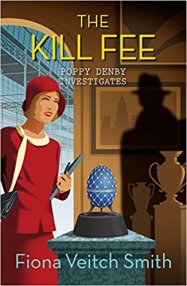
The Kill Fee

51kb9sptu2l-_sx324_bo1204203200_The Kill Fee  by Fiona Veitch Smith

I read it as a: paperback

Source: my own collection

Length: 330 pp

Publisher: Lion FIction

Year: 2016

Thoughts: The second instalment of the Poppy Denby series finds our intrepid heroine chasing down a killer who is after a stolen Faberge egg. The egg may contain a document containing information about the monarchs and other ruling members of European society, enough to destabilize every government and draw the continent back into war again. Key to finding the egg are members from a Russian noble family who were thought to have been murdered years ago. Poppy and her colleagues are trying to track down the egg and missing Russian nobility before the killer strikes again, this time at one of Poppy’s inner circle.

This book was as tautly written as the first in the series. The action was fast paced and the plot was complex without being unbelievable. The characters, including the secondary ones, were interesting and fun in their various ways. I enjoyed getting to know more about Poppy and Rollo. Rollo is my favorite, I believe, next to Poppy herself. I do enjoy a strong lady Bright Young Thing. However, not gonna lie. I just – can’t – care about the Russian stuff. It wasn’t anything the author did that I felt was badly handled or anything. I just don’t care about and have never been interested in Russian stuff, current politics excepted. Don’t know why, just not my jam. So this took me forever to read because I wasn’t all that invested in the actual plot, though it was well written.

I am, however, excited to read the next in the series, which I started today.


Uncategorized

Let the Tournament Begin!

Yay, the 2018 Tournament of Books is here! Looking forward to this year’s literary fireworks! 🙂

Uncategorized

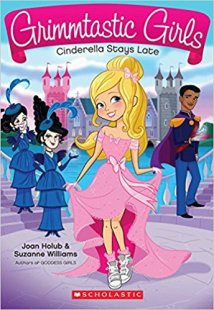
Grimmtastic Girls #1: Cinderella Stays Late

51ojqeu0dul-_sx342_bo1204203200_Grimmtastic Girls #1: Cinderella Stays Late by Joan Holub

I read it as a: paperback

Source: daughter’s personal collection

Length: 192 pp

Publisher: Scholastic

Year: 2014

Thoughts: In this introductory book to the Grimmtastic Girls series, we get to learn about the Grimm Academy, where characters from fairy tales and folklore go to school. Cinderella (call her Cinda) is just starting her first year at the Academy, having been too poor to afford tuition before now. Her mean “Steps” have attended the Academy since first grade. Cinda is quick to learn the ropes but there are so many rules and new ways of doing things that she never would have expected. This retelling of “Cinderella” sticks to the main plot points of the original tale, but includes new twists like a secret society that her stepsisters are involved with, a magical mystery, and a sentient wand instead of a fairy godmother.

This series seems like a fun way to teach younger readers about various characters from literature in a setting that is not as stuffy as some of the original fairy tales themselves. This particular book highlights themes such as perseverance, being brave in new surroundings, and making new friends. As with Holub’s other series, I appreciate the diversity shown in the characters, but there is still too much emphasis placed on who has a crush on whom, and on getting a crush on someone. Also, if romance is going to be a feature, I really think less time needs to be spent on gender norming and heteronormative social constructs. If fairy tales are going to be rewritten for the 21st century, then include characters in the LGBTQ community as well as the characters of color.


Uncategorized

Rubies of the Viper

51vmvrmuwll-_sx331_bo1204203200_Rubies of the Viper by Martha Marks

I read it as an: ARC

Source: Helen Hollick/Discovering Diamonds

Length: 368 pp

Publisher: Martha’s Art

Year: 2010

Theodosia Varro had been living in the slums of Rome when her fortune changed. Upon the murder of her brother, Gaius, she became the sole heir to her father’s vast fortune. She moves back home to her childhood villa north of Rome, determined to make a new life of wealth and ease for herself. Marriage is nowhere near the top of her list of things to do, though as one of the most eligible young women in the Empire, Theodosia suddenly finds herself courted by many suitors. The prime candidates for her affections are Otho, an ambitious politician and Gaius’s best friend, and Titus, the son of her father’s best friend Vespasian. Otho tries to help the innocent and somewhat naive Theodosia understand that her slaves may not have her best interests at heart, that they may in fact have killed her brother. Titus is barely out of his boyhood, just starting out on his military career, more a friend than a lover at this point. Theodosia is torn as to which man she wants to marry more, and soon she has to discover for herself whom among her servants she can trust – her steward Alexander, her childhood friend Stefan, her maid Lucilla? Is Otho correct that they are conspiring to kill her, as he’s convinced they killed Gaius? Or is something darker at work in the alleys of ancient Rome?

Marks’s novel was a fast read, full of twists and dark plots and some heavy topics. I was quickly drawn into Theodosia’s world and her struggle to navigate the treacherous waters that were Rome, so dangerous for a single woman. The characters are complex and have deep motivations for their actions. As I learned more about her brother and his actions, the happier I got that someone did him in. He was a despicable human being. The question grew, though, of whether one of Theodosia’s servants had done the job and was now putting her in danger, or if someone else was to blame. The tension mounts nicely throughout the book, and I felt genuine concern for her when one person reveals the true depth of their vileness, costing Theodosia all she had so suddenly gained.

There were a couple things I think were anachronistic. There were many references to the glass windows at Theodosia’s villa, for example. I am a medievalist, not a Roman historian, but I believe even the very richest Romans had a hard time affording glass windows. According to this article, glass windows were in use at the time this novel was set, though mostly in bathhouses. So I suppose it isn’t entirely impossible that Theodosia’s villa had glass windows, but it still seems a little out of place. I also had to give a bit of a side-eye to the way Theodosia treated her servants. She was quite progressive, I think, for her time. Granted, her attitude was explained by her unusual childhood and living conditions after her father’s death, but it was still perhaps a bit a stretch. None of these minor quibbles prevented me from thoroughly enjoying the book, though.

This was a great read with many enjoyable characters (or deplorable characters, as appropriate) and a good deal of vivid historical detail. I am eager to read the sequel, The Viper Amulet.

You can read the official review at DDRevs: https://discoveringdiamonds.blogspot.com/


Uncategorized

Catch-Up Round: Toxic Night and Worthy

Toxic Night by Daniel Mason

I read it as an: ARC

Source: Publicist/review site editor

Length: 270 pp

Publisher: Createspace Independent Publishing Platform (This has to be code for “self-published.” The quality of the writing would support this suspicion.)

Year: 2017 Continue reading “Catch-Up Round: Toxic Night and Worthy”

Uncategorized

A Man Like His Grandfather

A Man Like His Grandfather by R. Jack Punch

I read it as an: ARC

Source: review site

Length: 330 pp

Publisher: iUniverse

Year: 2017

Thoughts: During the Irish Potato Famine (1845-1852), many starving and desperate Irish immigrated to America in hopes of starting a new and better life. In A Man Like His Grandfather, Matt Donahee is one such immigrant. After the deaths of his mother and fiancee due to illness, Matt, bitter and full of rage, flees Ireland for America, determined to make a better life for himself. Upon arriving in New York City, he instantly lands a good job with a railroad company and quickly moves up the ranks, becoming a valued negotiator. He meets Jade Malloy, an abolitionist and suffragette who operates a branch of the Underground Railroad with her father. Eventually, Matt and Jade fall in love and marry, to her father’s delight, despite having “broken all the rules of Victorian courtship.” But, like, they’re in America, not England. Would they really know, or give a shit if they did? That seemed weird to me that Matt thought about this more than once. Over the years, Matt and Jade have four children. Their youngest son, Ross, carries the point of view during the next section of the novel. As the narratives continue on from Ross’s generation and through his children and grandchildren, the Donahee family continues its growth and progress through WWI, the Depression, WWII, and Vietnam, and I basically lost interest. Each generation always manages to come out a little further ahead than the one before, always at the right place at the right time, and making the most of the latest trends in technology. It were like magic! They are the epitome of the old fashioned American Dream, in a too-perfect, mostly unrealistic sense. They seem utterly unfazed by everything – all their immediate family is unscathed during WWI (a BIL is killed but he’s only related through marriage, so it felt like it didn’t matter. His widow, who was a Donahee, didn’t seem too fussed about it); they all land on their feet and aren’t starving and out of work during the Depression; no one dies in WWII or Vietnam. The only one who dies young is one of the Donahee grandchildren who falls off a newfangled trolley and gets run over when she’s 10, but hey, she’s just a girl and they had an abundance of boys. It felt like an afterthought. Her family was sad for a minute and then they moved on.

This novel had nothing really going for it to set it apart from any other multigenerational saga. It wasn’t *bad,* it just wasn’t good. It was too rushed and short for a really in-depth multigenerational novel, but too long for the lack of detail that we got. There was a whole lot of nothing really happening, only not in a “quiet novel” kind of way. It was mostly just blah and lucky white men. A big problem throughout is that the passage of time is really, really hard to keep track of. On one page, there’s a newborn baby and a page later, the baby is 17 years old and talking about getting married. In other cases, major historical events are almost entirely glossed over. Matt’s years fighting in the Civil War, for example, spanned two paragraphs (paragraphs, not chapters, not pages. Paragraphs. Short ones, at that), and the entire war lasted for eight paragraphs, including dialogue. Additionally, after Ross’s generation, which ends about halfway through the book, the narration speeds wayyyy up. Each successive generation gets less time spent with it, each point of view character has a shorter time to talk, and there are more and more of them talking. There were suddenly SO MANY people! It felt like the author got himself in a pickle and wasn’t quite sure how to wrap things up.

Ultimately, if you dig immigration narratives where every single point of view character is white, almost every single one is male, everything magically goes right for them almost all of the time, weird sexist comments that seem to be the author’s own biases leaking through rather than inaccurate historical character traits, and being beat over the head with the message that working is the only thing real men should do because education is for people who can’t make it in the real world, then this is the book you are looking for. If you are looking for something with actual character depth and historical detail, keep looking.

 

Uncategorized

Rudy’s Rules for Travel

38146532

Rudy’s Rules for Travel by Mary Jensen

I read it as an: ARC

Source: a site I review for

Length: 256 pp

Publisher: She Writes Press

Year: 2018

Jensen and her late husband, WWII veteran Rudy, have diametrically opposite personalities, but the combination makes for excellent travel stories. Jensen’s travel memoir highlights her husband’s list of rules he developed for travel, and over the course of their marriage and global adventures, he teaches her how to apply those rules to all things in life. The tales span from side-splittingly hilarious to utterly heartbreaking. All showcase the spectrum of the human condition and highlight Rule #11: “Relax – Some kind stranger will appear.” Throughout, readers are introduced to Rudy’s adventuresome spirit and absolute optimism. The book journeys from Scotland to Mexico, Egypt to Indonesia. The stories have the effect of teaching readers not necessarily about the places themselves, but rather how to live life to the fullest. “We don’t travel to have comfort…we can have comfort at home. And we don’t travel to meet Americans. We can meet Americans at home.” Traveling, according to Rudy, is for learning about a new culture and meeting people from that culture. To do that, you must “ride with locals, not tourists.” In Oaxaca, for example, the Jensens, eating at a tiny local taqueria, get swept up in a crowd headed to celebrate Holy Thursday in an unplanned local tradition. They would have missed the opportunity to participate in the ceremony if they had gone to the recommended tourist destinations, and indeed Jensen looked up “to see tourists in the two restaurants above us … straining to see, to understand what has happened on the streets below. I see what they had missed.” Other stories are laugh out loud funny, such as when the Jensens had to decide between one of two death-trap modes of transportation in Puerto Escondido. When in Egypt, the Jensens are faced with one of the most heartbreaking experiences of their travels, yet it also shows the generosity of people in a community when a family’s cow is killed by a car. The cow is the only thing they own and the villagers are trying to collect items from their own limited provisions to help. Not a lot of time is spent at any given location in each section. Instead, readers are taken to many places, each vividly but briefly described. In this way, Jensen is able to provide many examples for how Rudy’s Rules apply to a variety of scenarios.

Bonus points for feminist presses!

Uncategorized

Red Clocks

51vadbxr02bl-_sx328_bo1204203200_Red Clocks by Leni Zumas

I read it as a: hardback

Source: my own library

Length: 351 pp

Publisher: Little, Brown & Company

Year: 2018

Thoughts: What an interesting novel and writing style. I’ve heard it described as The Handmaid’s Tale for the 21st century. I’m not sure it’s quite that, but it does tell an important and terrifying story, made all the more frightening because it is one I can very easily see happening.

In a future-state America, the fucking old white Republican men have won and overturned Roe v Wade, and a personhood amendment has been passed. Abortion for any reason is illegal in all states, and any kind of fertilized egg has the same protection under law as existing, full grown humans. IVF is also outlawed because fertilized embryos can’t consent to being moved and they can’t consent to who their parents will be. My IQ dropped 10 points just writing that. As if any naturally conceived embryo has a say in who their parents will be. Most of us would probably swap out at least one of our parents if we did have a say as embryos. But I’m sure we all know at least one person in real life who thinks this should be reality. In Zumas’ novel, it has come to pass.

The story is told from the perspective of five different women, all of whom have differing relationships to pregnancy in this horrifying dystopia. Each has a name, but she is referred to mostly by her role. There is the Wife, who is stuck in a marriage she no longer enjoys, with two kids she loves but isn’t really sure are worth having given up a promising law career to have; the Daughter, adopted and doted upon, a math whiz, and incidentally pregnant at 15; the Biographer, a high school teacher desperate for a baby of her own, but single, unable under the new laws to adopt unless she’s married, and now biologically unable to have one of her own; the Explorer, a 19th century woman who studied ice and who is the subject of the Biographer and who wanted nothing more than to be taken seriously in her field, but was scorned and dismissed because she was a woman; and the Mender, a herbalist and hedge-witch, who will provide herbal remedies for what ails you, up to and including an inconveniently full uterus. Each character is connected in surprising and intricate ways in a well crafted narrative. My favorite was naturally the Mender. My least favorite was the Explorer, mostly because I just didn’t find much to identify with about her, but I also really didn’t like the Biographer. I thought she was weak and helpless. If you want something that bad and you know your time is running out, be bold and do more to get it. Instead, she was meek and retiring and I just didn’t care for her at all. However, in the end, she seemed like she’d had enough already and was ready to take on more of the world and possibly join the resistance and change things, so maybe there was hope for her.

Overall, I thought this was a beautifully written and terrifying glimpse into the ways in which women’s lives weave together. It is something that should worry any thinking person who has any woman in their life they care about.

Uncategorized

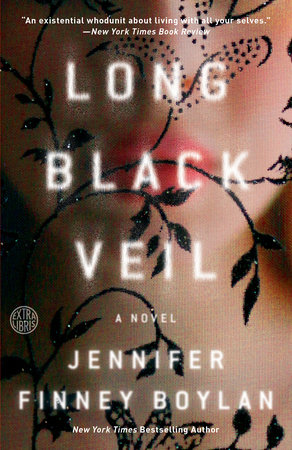
Long Black Veil

Long Black Veil by Jennifer Finney Boylan

I read it as an: ARC

Source: Blogging for Books

Length: 320 pp

Publisher: Broadway Books

Year: 2018

Thoughts: Well… the writing itself was good. The characters were fine. But a thriller, this was not. If you were going into this thinking you are going to get a thriller, you’ll be disappointed. It was a disappointment to me because I was expecting one thing – a kind of Gothic mystery thriller type of novel – and got something else entirely. If I’d had different expectations, I might have liked it better. Also, while there were a lot of ways in which this novel was very inclusive, the author’s bias against overweight people is glaringly obvious. “Fat fuck” is a common expression throughout, and it got annoying, especially considering that she seemed to go out of her way to be PC with every single other group in the book. Guess fat shaming is still ok…

I received this book from Blogging for Books for this review.

Uncategorized

Misfortune of Vision

5182s1dgi4l-_sy346_Misfortune of Vision: Druid’s Brooch #4 by Christy Nicholas

I read it as an: ARC

Source: Helen Hollick/ DDRevs

Length: 307 pp

Publisher: Tirgearr Publishing

Year: 2018

Thoughts: In 12th century Ireland, the old ways of Druidism and prophecy are coming into conflict with the new ways of Christianity. Orlagh has been the Royal Seer to her chieftain for over 40 years. Recently, though, the chieftain has been disregarding Orlagh’s visions, to the detriment of the tribe. While Orlagh honors the old ways and the Fey Folk, she walks a fine line and knows that she must balance her gift of prophecy against the teachings of the new church, and tries to give proper credit to the new Christian god for her abilities. She knows, though, that her long life is soon to end, and since she is the only living member of her family left, she must find a worthy heir to whom she can pass on her family brooch, a faerie brooch that gives its owner magical abilities. In exchange for knowledge needed to fulfill her mission, Orlagh makes a deal with a faerie Lord. At the same time, her long-lost grandson, Declan, turns up, having traveled from town to town after the death of his parents. Declan is plagued by bad luck, mostly brought on by his poor decision-making skills and laziness, but his new sweetheart has given him a reinvigorated outlook on life and he is determined to make himself into a man worthy of her. When Declan and Orlagh reunite, will he be able to live up to everyone’s expectations, or will he revert to his past tendencies? And what of Orlagh’s agreement with the faerie Lord? For, as everyone knows, one does not lightly enter into a contract with the Fey…

Christy Nicholas has done it again with another vibrant, fast-paced, gripping tale. The tensions between the folk who incorporate the older ways into their daily habits and the priests of the Christian church are strong throughout. The cast of characters is complex and well drawn. I enjoyed Orlagh a great deal. She reminded me in many ways of my grandmother. I also tremendously appreciated reading a story where the protagonist was a woman older than 60. That’s not something readers get to see a whole lot of and it’s a shame, really. Older characters have a great deal to offer, so it is nice to see an older main character who is honored and respected. I hated Declan, as I think we were supposed to. Maybe he was supposed to instill some sympathy since we probably all know someone who can’t get out of their own way and keep making the same stupid mistakes, but I lack sympathy for people who can’t learn from their mistakes or who bring bad things upon themselves because they’re too lazy to work. I loved Cu-Ulaidh and absolutely adored the way he doted on Orlagh. I feel that Clodagh, Orlagh’s ward, could have been developed more, as well as her back story, but overall, this was a delightful read.

You can also read this review on DDRevs: https://discoveringdiamonds.blogspot.com/