Uncategorized

Selfish, Shallow, and Self-Absorbed

51l6ucq47dl-_aa300_Selfish, Shallow, and Self-Absorbed by Meghan Daum, ed.

I read it as an: audiobook

Narrator: Jo Anna Perrin, Johnny Heller

Source: library

Length: 7h 40 m

Publisher: Tantor Audio

Year: 2015

Thoughts: Eh. I liked most of the essays well enough. I think it is a topic that needs to be addressed, for sure. I do not think anyone is selfish for not wanting to have children. I think if anyone is hesitant, they should NOT have children. It is too big a deal, and can mess up a kid too badly, not to be sure you want them. And I think it is absolutely wrong for anyone to give anyone else shit about a decision that is entirely personal. The gall of some people is remarkable. I enjoyed the essay by Geoff Dyer, “Over and Out.” It was funny and insightful and just what I have thought a lot of the time. I didn’t want kids for a long time, until I did, and realized it wasn’t the kids I didn’t want, it was the man and the marriage. So there.

I did NOT care for the narration, though, on any of this. The lady narrator in particular sounded about as old as God and kind of robotic. I know they were essays, but that doesn’t mean they should be dry and boring and read without much feeling. I almost quit listening a few times because of the narration. It would have been faster and easier to eyeball read this one, but I had a bunch of other books to read, so I just kept on…


Uncategorized

The Call

41ywomzzesl-_sx329_bo1204203200_The Call by Peadair O’Guilin

I read it as a: hardback

Source: personal collection

Length: 307 pp

Publisher: David Fickling Books

Year: 2016

Thoughts: If you’re into super dark faerie tales, this is the book you are looking for. In O’Guilin’s Ireland, the Sidhe, the faerie folk of Irish legend, have declared war upon the land and its inhabitants for forcing them into the Grey Lands. Twenty-five years ago, the Sidhe magically sealed off the borders of Ireland, preventing anyone from entering or leaving the country. Additionally, without warning, they steal the children who are between 12 and 18 and take them to the Grey Lands. These children then have 3 minutes in the human world to survive, though a whole day passes in the land of the Sidhe. During that time, the Sidhe hunt them, and when they catch the humans, they will change them into horrifying caricatures of people before sending them back, sometimes alive, usually dead. Across Ireland are military-like “survival colleges,” designed with the sole purpose of teaching children as much as humans know about the Sidhe to help them survive. Nessa is a student at one such school and she awaits her Call with more dread than most. She survived polio and her legs are atrophied as a result, leaving her unable to run as she will need to do when she is Called. She has to learn the best way to use the skills she has to survive when only 1 in 10 physically able children manage to make it back, and most of them don’t come back in one piece.

This was one of the darkest faerie tales I’ve ever read, and I loved it. None of the characters were very likeable, which I think is understandable and believable under those circumstances. Everyone in the book is traumatized in one way or another. I thought it was an interesting take on the legends that depict the conflict between humans and the Sidhe and other fey beings of Irish mythology. I also really liked that, although this is listed as the first of a series, it can be read as a standalone. It doesn’t end on a cliffhanger and it had a satisfying conclusion, although it has plenty of ground to continue the story. But I am thrilled that I don’t *have* to read the next book in the series. I enjoyed this book and I’m sure I will eventually read the rest of the series once it’s complete, but I get SO tired of series, especially fantasy or sci-fi series, that go on and on for a floppity jillion books. It is a welcome change of pace to find one that can be its own standalone novel.

Uncategorized

Sea Witch

51bsi1ybail-_sx328_bo1204203200_Sea Witch by Helen Hollick

I read it as a: paperback

Source: my own collection. Actually, it was a gift from Helen for a favor I did for her on her website. ❤

Length: 314 pp

Publisher: SilverWood Books of Bristol

Year: 2011

Thoughts: I have to confess that if I hadn’t received the prequel to this series, I likely wouldn’t have read this, even though I’ve read all of Helen’s other books and loved them. I had never really been too interested in pirates beyond generally romanticizing them like everyone else, and enjoying the Pirates of the Caribbean at Disneyland. It’s not generally the time period I’m into. But she sent me the prequel to review and I LOVED it, and then she sent me this as a gift for some help I gave on her website, and now I want to read the whole series. I wouldn’t say it if it wasn’t true. I LOVE this series so much.

In this first book of the Jesamiah Acorne series, readers are introduced to Jesamiah, obviously, and learn a little of his history. We get to know about life on the sea and I, at least, learned a whole lot of cool things about ships. And some truly delightful expressions and vocabulary. I am well equipped for the next International Talk Like a Pirate Day! This book was chock full of action and adventure, a ton of humor, and plenty of romance. I loved Tiola and her strength, I loved Rue and his wit, and I adore Jes for his bravery and his vulnerability. These are not characters on a page, they are people who breathe and feel and love and suffer and I tell the truth when I say I am going to run right out and pick up the rest of the series. I never thought I’d fall in love with a historical series that wasn’t medieval, Renaissance, or Victorian, but I did. I read this in one sitting and I can’t wait to jump into the next book.

My favorite scene in the whole book (and there were many awesome scene to choose from) was when Jes helped Tiola deliver a baby.

And another scene even had a line that I added to my commonplace book, which doesn’t happen often.

Helen’s personal site: http://www.helenhollick.net/

DDRevs: https://discoveringdiamonds.blogspot.com/


Uncategorized

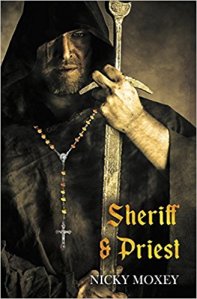
Sheriff and Priest

51ststr4awl-_sx326_bo1204203200_

Sheriff and Priest by Nicky Moxey

I read it as an: ARC

Source: got it from Helen Hollick to review on Discovering Diamonds

Length: 360 pp

Publisher: Dodnash Books

Year: 2017

In 12th century England, times are turbulent. Tensions between the lower class Saxon English and ruling class Norman nobles simmer, and The Anarchy is at its peak. This debut historical novel opens in the middle of these times, in a small town with a young boy, Wimer. He is a bright boy but, as a Saxon peasant, has few opportunities. His luck changes when he comes to the notice of the local priest, who sponsors his attendance at a school in Norwich. From there, Wimer has the option of becoming a monk or a chaplain. He decides to become a chaplain and go out into the world. He makes a name for himself in the service of Hugh Bigod, and is able to leave that house and work directly for Henry II as the High Sheriff of Norfolk and Suffolk. In the course of discharging his duties, he runs afoul of Thomas Becket and is excommunicated, twice by Becket and once by the Pope. He also has a doomed love for Ida de Toscny, Henry’s ward. Eventually, Wimer is reinstated into the Church but in order to feel truly free of his mortal sins, both from his rifts with his religious superiors and because of his love for Ida, Wimer decides he needs to return to a life devoted to the Church and make an act of spectacular penitence.

Sheriff and Priest was a delightful novel. There are several novels available which tell the tale of The Anarchy, all told from the perspective of Henry II or Eleanor of Aquitaine, or perhaps from various other nobles. Getting the perspective of a man who began life as a Saxon peasant is a unique take, and a refreshing change. Wimer is a complex and sympathetic figure. He overthinks just about everything and makes life a lot harder for himself in many ways, which is a very believable character trait. Some of the secondary characters could have been fleshed out a little more, but the people readers encountered the most were not flat and were developed enough for the purpose. The only thing that was a little jarring was the reference to Thomas a’Becket. He wasn’t referred to as such during his life, and not until at least the Post-Reformation. Nitpicky thing, yes, but noticeable. Overall, though, this novel was full of wonderful medieval detail and flowed swiftly across the page. Highly recommended (4.5 stars if you want a star rating).

Uncategorized

The Bear and the Nightingale

25489134The Bear and the Nightingale by Katherine Arden

I read it as an: audiobook

Source: my own collection

Length: 11 h 48 m

Publisher: Del Rey

Year: 2017

Thoughts: In a medieval-ish Russian setting, Vasya is the daughter her mother most wanted, and the one who ultimately killed her. Growing up half wild at the edge of a deep forest, Vasya’s father eventually decides that he should remarry so that Vasya can have a mother. However, her new stepmother is city-bred and zealously religious. She forbids her household or the villagers from practicing the traditional rituals of honoring the spirits of the hearth, forest, and meadows which will protect their homes. Vasya knows this is wrong and is afraid, and she is right to fear. The crops and animals start dying, drought comes, and horrifying creatures straight out of Vasya’s nurse’s fairy tales begin walking the night. Her stepmother, convinced that Vasya is the cause of all the troubles, is determined that Vasya will either marry or go to a convent by midwinter. Vasya has to rely on her own talents, which she has kept hidden out of fear of being killed as a witch, to save her family and village.

“Vasilisa the Fair” is one of my favorite Russian fairy tales, and “East of the Sun, West of the Moon” is another of my favorites. This novel makes me think of both of these stories, drawing heavily from myth and folklore from a wide range of cultures. The setting is brutal and atmospheric – I got cold listening to parts of this! But I loved imagining the way the houses were set up and was curious about the stoves the family slept on. I had to look it up and learned a lot about the Russian oven! I loved the characters of the home, the house spirits and the men and women and the horses. Such horses! And Vasya is a tremendous character, brave and honest. I can’t wait to see what Arden comes up with for her next novel, which is supposedly set in the same world.

My only complaint is that the narration was a tad slow at times. But in general, I enjoyed listening to this on audiobook because I am unfamiliar with the Russian language. I would have been completely unable to pronounce the words correctly. I appreciated hearing them spoken aloud for me.


Uncategorized

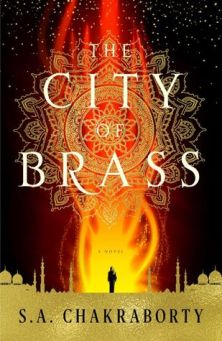
The City of Brass

32718027The City of Brass by S.A. Chakraborty

I read it as a: hardback

Source: library

Length: 526 pp

Publisher: Harper Voyager

Year: 2017

Thoughts: Nahri is a young woman alone in 18th century Cairo, a place where young women should not be alone. To survive, she has established a reputation for herself as a healer and woman who can help with supernatural problems, such as banishing unwanted djinns from inhabiting a person. In reality, she is a con artist, using her reputation to find her next mark. She doesn’t actually believe in magic or djinns, despite the fact that she has an unnatural ability to heal people, and she can understand any language after hearing it just once. During a ritual to exorcise a young girl from demons, Nahri inadvertently summons a real djinn, Dara. This has the side effect of attracting the attention of several other wicked creatures who set out to find Nahri. Dara takes her with him on a journey to the city of Daevabad, the mythic home of all the djinn tribes. There, Nahri meets the royal family, including the younger prince Ali, who is a rebel and idealist struggling to find peace and equality for all the tribes as well as the shafit, the djinn-human mixed race people who are treated as second-class citizens. Nahri learns that she is the long-lost daughter of the last of a great tribe of djinn healers and is welcomed almost as a goddess. She has to learn how to navigate palace politics as well as learn new rules of healing with magic. In an effort to unite the tribes and put a halt to escalating violence in the city, the king decides that a marriage between Nahri and his eldest son is in order. Nahri is devastated to learn that Dara has a vicious history in the city and is known as the Scourge of Daevabad for his actions in a war 1400 years ago. She must decide whether to believe him when he has never been forthcoming with her before, trust her increasing friendship with Ali, or trust her own instincts which are telling her that nothing is what it seems.

This debut novel was rich with Middle Eastern mythology and culture, strong world building, and stronger characters. AND it’s an #ownvoices story, which is awesome. I’ve never read a Muslim fantasy before and let me tell you, it was so cool to read about a culture that is not as familiar to me. I LOVED it. I loved it so much. Chakraborty weaves a vibrant, rich tapestry for her readers and does a beautiful job painting a picture of life not only in her fantasy world, but also how elements of Islam are interwoven throughout seamlessly. I loved how descriptive the writing was. I could smell the spices in the air at the bazaar, and feel the heat of the desert air rising up from the dunes. The colors and sounds and scents were immersive, practically a virtual reality experience leaping out of the pages.

The characters are all flawed and deeply human and even the ones you aren’t really supposed to like, you still find yourself caring about in some way or another. That is a rare thing for me as a reader. I don’t often care about all the characters in a book, or even any of them, depending on the story. But this book made me love Nahri and Ali, made me frustrated with Dara, made me suspect the king but in a way that didn’t make me hate him. Every character had well defined personalities and behaved within the scope of them. It’s always annoying when characters have their personalities violated by their own authors; that never happened here. Everything the characters did, even if it was a surprise, was never out of character upon reflection.

I absolutely loved this book and cannot wait for the next book in the trilogy.


Uncategorized

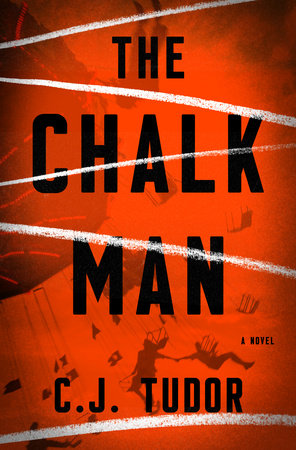
The Chalk Man

9781524760984The Chalk Man by CJ Tudor (which is a rad name) Her Twitter, FB, bio

I read it as a: hardback

Source: publicist ARC

Length: 277 pp

Publisher: Crown

Year: 2018

Thoughts: This was a debut? Holy shit! It was so good! Good job, debut novelist! The tension was strong throughout and the plot twists were interesting. I did not guess them all, and I am generally really good at figuring out whodunnit. And that last scene! Ahh! Loved it. Such a great end.

The characters were believable and complex. They were not all likeable, including the protagonist, which is fine. I don’t necessarily have to have all likeable characters, especially not in a murder mystery. But in this case, it worked well. Eddie was sometimes a bit weak, but that was part of the theme. Metal Mickey was the token sociopath of the group. Fat Gav was the leader and general peacemaker. Nicky was the tomboy. They all had their roles, and various iterations of them played out over time. The changing group dynamics was as interesting to watch as the mystery itself, which was really well done.

There wasn’t a lot of gore on the page, which may appeal to some readers. Gore on the page doesn’t bother me as long as it’s not kids or animals being hurt. Hurt grown-ups, but not kids or animals. I think leaving it out here, though, added a Hitchcock-esque feel to the novel, making it creepier than it would have been otherwise.

The only thing I didn’t like – or maybe it isn’t that I disliked it, more that I felt it was absent – was that it didn’t really feel like the earlier times were in the 80s. For example, with the show Stranger Things, you KNOW you’re in the 80s because of the ubiquitous presence or allusions to D&D, the new Star Wars films (NOT the ones with Poe Dameron), Trapper Keepers, the music, and just general 80s pop culture permeating the setting. I didn’t really get that so much in this book. It felt more like a generic time period than specifically set in the 80s.

But seriously, that last scene! Totally made up for anything I missed from the 80s.

I received this book from Blogging for Books for this review.

Uncategorized

Read Harder 2018 – in the works!

book fantasySo the 2018 Read Harder challenge posted a few weeks ago. I spent way more time than I ought to have done figuring out what books I might use for each task. I have as much fun doing research as I do actually reading, I think. #nerdalert. I managed to get a couple to double dip, which is awesome, and allowed for the challenge. I’m adding another layer of challenge to myself and will only use books I already own and haven’t gotten around to reading, or will use my library, to complete this challenge. I will not buy any more books this year. Unless someone gives me a gift card. Or I get a reading copy from a publicist.

Below is my tentative 2018 Read Harder list, which will probably change as I read throughout the year. It is always interesting to see what I had planned to read vs what I ended up actually reading…

  1. A book published posthumously: Northanger Abbey – Jane Austen OR The Aeneid
  2. A book of true crime: The Wicked Boy – Kate Summerscale or The Monster of Florence – Douglas Preston & Mario Spezi
  3. A classic of genre fiction (i.e. mystery, sci fi/fantasy, romance): The Moon is a Harsh Mistress – Robert A. Heinlein
  4. A comic written and illustrated by the same person: Perspolis – Marjane Satrapi
  5. A book set in or about one of the five BRICS countries (Brazil, Russia, India, China, or South Africa): The Bear and the Nightingale – Katherine Arden
  6. A book about nature: The Long, Long Life of Trees – Joanna Stafford
  7. A western: Topaz – Beverly Jenkins
  8. A comic written or illustrated by a person of color: Perspolis – Marjane Satrapi
  9. A book of colonial or postcolonial literature: Interpreter of Maladies – Jhumpa Lahiri or Half a Yellow Sun – Chimamanda Ngozi Adichie
  10. A romance novel by or about a person of color: Topaz – Beverly Jenkins
  11. A children’s classic published before 1980: The Witch of Blackbird Pond – Elizabeth George Speare
  12. A celebrity memoir: Wishful Drinking – Carrie Fisher (or maybe The Princess Diarist)
  13. An Oprah Book Club selection: Midwives – Chris Bohjalian
  14. A book of social science: Homo Deus – Yuval Noah Harari or We Should All Be Feminists – Chimamanda Ngozi Adichie
  15. A one-sitting book: won’t know for sure until I read it, though I think The Witch of Blackbird Pond would do the job. It’s short.
  16. The first book in a new-to-you YA or middle grade series: Howl’s Moving Castle – Diana Wynn Jones or One Crazy Summer – Rita Williams-Garcia
  17. A sci fi novel with a female protagonist by a female author: ALL the NK Jemisin books! OR An Unkindness of Ghosts – Rivers Solomon. Or the space books by Anne McCaffrey (The Ship Who Sang, etc)
  18. A comic that isn’t published by Marvel, DC, or Image: Perspolis – Marjane Satrapi
  19. A book of genre fiction in translation: The Three-Body Problem – Cixin Liu
  20. A book with a cover you hate: maybe One Crazy Summer – Rita Williams-Garcia? I hate the way the copy I have depicts the girls. Not a fan of cartoonish book covers.
  21. A mystery by a person of color or LGBTQ+ author: The Cutting Season – Attica Locke OR Devil in a Blue Dress – Walter Mosley
  22. An essay anthology: View from the Cheap Seats – Neil Gaiman or The Sweetness of a Simple Life – Diana Beresford-Kroeger
  23. A book with a female protagonist over the age of 60: Mrs Queen Takes the Train – William Kuhn
  24. An assigned book you hated (or never finished): something by Charles Dickens OR The Aeneid


Uncategorized

Read Harder 2017 – 95.8% Complete

bookstoreSo I didn’t finish every task on the 2017 Read Harder Challenge. Try as I might, I couldn’t find a book that kept my attention for task #4. But 23 out of 24 tasks complete, a couple in multiple ways, is pretty good in my book, so I’m ok with not reading one book that I maybe should have. I read a ton of other books this year on top of the RH Challenge anyway, partly for myself and partly because I was reviewing them, either for the Historical Novel Society or for Discovering Diamonds. All told, I read 85 books in 2017, though there are still a few days left. I might squeeze in one or two more.  

So my final list ended up as follows (my originally planned books are in parentheses):

  1. Read a book about sports: Riding Lessons – Sara Gruen (The Sport of Kings – CE Morgan)
  2. Read a debut novel: Scribe of Siena – Melodie Winawer (Cinder – Marissa Meyer)
  3. Read a book about books: My Life with Bob – Pamela Paul (The Physick Book of Deliverance Dane – Katherine Howe)
  4. Read a book set in Central / S. America by a Central/S American author: did not finish. I tried Perla by Carolina de Robertis, a collection of short stories by Gabriel Garcia Marquez, one of Isabel Allende’s novels, and some random book I found in the library. I was just bored. It was the last task I got to. (I’d planned to read House of Mist – Maria Luisa Bombal)
  5. Read a book by an immigrant or with a central immigration narrative: Listen, Slowly – Thanhha Lai (Funny in Farsi – Firoozeh Dumas)
  6. Read an all-ages comic: Phoebe and her Unicorn – Dana Simpson (read as planned)
  7. Read a book published between 1900 – 1950: The Door in the Wall – Marguerite di Angeli (had also considered I Capture the Castle, And Then There Were None, 1984, or The House of Mirth)
  8. Read a travel memoir: Wild – Cheryl Strayed (Gorge – Kara Richardson Whitely)
  9. Read a book you’ve read before: The Door in the Wall – Marguerite di Angeli (didn’t have one in mind)
  10. Read a book set within 100 miles of your location: Stargirl – Jerry Spinelli (I’d planned The Turquoise Ledge – Leslie Marmon Silko)
  11. Read a book more than 5000 miles from your location: so many. Listen, Slowly – Thanhha Lai; Leonardo da Vinci – Walter Isaacson; the Du Lac Chronicles – Mary Anne Yarde; GoddessGirls 1-4; Deeds of Darkness – Mel Starr; Season of Blood – Jeri Westerson; A Secret History of Witches – Louisa Morgan; An Argument of Blood – JA Ironside; Down the Common – Ann Baer; Homegoing – Yaa Gyosi; Half Sick of Shadows – Richard Abbott; Hunting Prince Dracula – Kerri Maniscalco; The Colour of Cold Blood – Toni Mount; The Colour of Gold – Toni Mount; The Eleventh Hour – MJ Trow; The Inquisitor’s Tale – Adam Gidwitz; Daughter of Destiny – Nicola Evelina; The Thief Taker – CS Quinn; The Scribe of Siena – Melodie Winawer; H is for Hawk – Helen Macdonald. (Wave by Sonali Deraniyagala; Flirting with French; The Tale of Raw Head and Bloody Bones; The World We Found; The Light Between Oceans)
  12. Read a fantasy novel: Miranda and Caliban – Jacqueline Carey (didn’t have one in mind)
  13. Read a nonfiction book about technology: Astrophysics for People in a Hurry – Neil Degrasse Tyson (Bringing Columbia Home by Michael Leinbach or Rise of the Rocket Girls by Nathalia Holt)
  14. Read a book about war: Listen, Slowly – Thanhha Lai (House of Splendid Isolation – Edna O’Brien)
  15. Read a YA or MG book by an author who identifies as LGBTQ+: Tell Me Again How a Crush Should Feel – Sara Farizan; Tattoo Atlas – Tim Floreen (read as planned)
  16. Read a book that has been banned or frequently challenged in your country: The Color Purple – Alice Walker (The Handmaid’s Tale – Margaret Atwood)
  17. Read a classic by an author of color: The Color Purple – Alice Walker (Lakota Woman – Mary Crow Dog)
  18. Read a superhero comic with a female lead: The Legend of Wonder Woman vol 1 (Captain Marvel – Kelly Sue DeConnick)
  19. Read a book in which a character of color goes on a spiritual journey: Labyrinth Lost – Zoraida Cordova (Ceremony – Leslie Marmon Silko)
  20. Read an LGBTQ+ romance: Tell Me Again How a Crush Should Feel – Sara Farizan (Tipping the Velvet by Sarah Waters)
  21. Read a book published by a micropress: Deer Woman – Elizabeth LaPensee; Fig Tree in Winter – Anne Graue (read as planned)
  22. Read a collection of stories by a woman: Prickle Moon – Juliet Marillier (Interpreter of Maladies – Jhumpa Lahiri)
  23. Read a collection of poetry in translation on a theme other than love: The Rubaiyat – Omar Khayyam (Old Norse Women’s Poetry – Sandra Ballif Straubhaar)
  24. Read a book wherein all point-of-view characters are people of color: Listen, Slowly; Labyrinth Lost; The Color Purple; When Dimple Met Rishi; Little & Lion; The Hate U Give; Deer Woman (Association of Small Bombs – Karan Mahajari)

Overall, I am pretty happy with the end results, though I ended up reading less diversely than I had intended. I am planning to go back and pick up the ones I had wanted to read, like The Association of Small Bombs or an LGBTQ romance that actually fits the romance genre a little better and use those in the 2018 Read Harder Challenge. I am also challenging myself to use only books from my own bookshelf or, in a pinch, from the library. I refuse to buy more books this year (barring receiving a gift certificate or getting review copies from publicists).

Did you do any reading challenges this year? If so, what one(s) did you do and how did you fare?

Uncategorized

The Last Hours

511pcahhayl-_sx335_bo1204203200_The Last Hours  by Minette Walters

I read it as a: paperback

Source: my own collection because of Book Depository! Otherwise, I would have had to wait until Aug 2018 to be able to read this in the US.

Length: 547 pp

Publisher: Allen & Unwin

Year: 2017


The Last Hours is the account of one demesne, Develish, and its occupants as they struggle to survive and make sense of their terrifying new world in the grip of the bubonic plague. Lady Anne of Develish is left behind with her daughter, Eleanor, when her husband, Sir Richard, heads out to the neighboring demesne of Foxcote, intending on securing a husband for Eleanor. Instead, they encounter the pestilence and death. Lady Anne, convent raised and well educated, knows enough about health and healing to understand the importance of cleanliness and quarantine, and so orders her serfs within the walls of the manor and then seals off the manor, not allowing anyone to enter or leave. Sir Richard and his retinue return to find the manor barred against them and all but one of them die outside the walls. Anne surreptitiously send her steward, Thaddeus, a bastard serf, outside the walls on reconnaissance with the surviving member of Sir Richard’s retinue, Gyles, the captain of the guard. Eventually, Gyles is allowed to return within the walls when it is clear he does is not sick with the plague. Within Develish’s walls, serfs unused to inactivity are beginning to get stir crazy, stores are running low, and then a murder occurs. Thaddeus takes five young men, sons of the leading serfs, with him outside the walls to go in search of more supplies, and to help cover a scandal that could shatter the fragile peace Anne has created and which her daughter Eleanor seems determined to destroy.

This was a fast-paced and fun historical novel overall. The descriptions of the land and clothes were vibrant, and the effects of the plague were terrifyingly real. It seems that Walters did some thorough research on both, which is much appreciated. There were quite a few other areas that required a huge suspension of disbelief, and which were a bit too much to overcome – noblewomen with basically modern sensibilities teaching their serfs to read comes to mind – which draw away from the historical quality of the story. I think the same effect could have been achieved simply by acknowledging historical fact – so many deaths did occur that skilled serfs and farmers were needed and they could move up the social ladder in ways that hadn’t been open to them prior to the plague. Fact. Teaching the serfs to read isn’t necessary for that to have happened within the story, and it would have been more believable in the end. Just my two cents.

The characters were well developed and all were interesting, even the ones you love to hate. Anne was a more complex character than she first appears, and it becomes more apparent as the plot comes to its climax. Some intriguing questions are posed about her character and personality and I hope that they are answered in the next book. Thaddeus is intriguing, even if I don’t believe that such a man would really have existed, or not very likely, and I hope to know more about him as well. Gyles is one of my favorites and I want him to get more of the limelight. Eleanor is odious and I want to know how she ends up. There are too many unanswered questions and I am really excited that the book specifically said “to be continued” at the end, because I would be so unhappy otherwise.

I am eagerly looking forward to the next instalment, literate serfs and all.