academic · book review · bookish things · Medievalism

From Purity to Corruption: Gardens in Medieval and Gothic Stories

So this initially started as a straightforward book review. I read a book that I’m reviewing for the Historical Novel Society, called Her Wicked Roots, which is a retelling of Nathaniel Hawthorne’s short story “Rappaccini’s Daughter.” But as I worked on that review, I kept getting side-tracked and decided that I wanted to write a more in-depth article about gardens, both mediaeval and Gothic. Plus, I can’t post my HNS reviews until they publish it first. So instead I decided to remove the HNS book from this and will just post that plain review once they publish it. So now, behold! I will talk at you about gardens.

The concept of a divine garden has carried symbolic weight for thousands of years. From the gods’ garden in ancient Sumeria to the Hesperides’ golden apples, to the comparatively new Garden of Eden, stories of sacred gardens appear in myths all around the world. In medieval Europe, the image of the hortus conclusus (the enclosed garden) was particularly popular. It symbolized purity, chastity, and divine protection. In art, the Virgin Mary is often depicted sitting serenely within walled greenery, surrounded by lilies or roses that symbolize innocence and immaculate conception. The hortus conclusus was supposed to be safety itself. 

Anonymous, Madonna and saints in the Garden of Paradise (around 1410), Public Domain

But by the time Gothic literature popped up centuries later, that enclosed space had changed. The Gothic garden is the hortus conclusus inverted, a space where safety becomes confinement, purity becomes corruption, and nature no longer reflects divine harmony but human ambition, repression, and dread. It is the Upside Down of gardens! Also, humans ruin everything. 

St. Dunstan in the East, London, my own photo taken Sept 26, 2024.

Nathaniel Hawthorne’s short story, “Rappaccini’s Daughter,” portrays this transformation. Hawthorne sets his tale in a beautiful but deadly garden in mediaeval Padua, which mirrors the mediaeval hortus conclusus while also making it dark and twisty, and honestly way cooler. Rappaccini filled his garden with extremely poisonous plants and raised his daughter, Beatrice, among them until she herself literally became toxic. Birds avoid her, bugs and butterflies drop dead if they breathe near her. She is an innocent made unclean, a sort of parody of the Marian enclosed garden. Rather than a rose without blemish, Beatrice is a warped flower that was made monstrous by her father’s quest for knowledge at any cost. Rappaccini’s garden is a site of scientific overreach and destruction. It might be hidden away but it’s not protective, and its walls keep in corruption rather than keeping it out. Beatrice is just another victim of patriarchal control and as such, she is easily discarded once she is of no further use to her father or the story.

The Gothic novel frequently returns to this darker version of the garden. There are ruins, tangled vines, shadowy groves, hidden paths, and rot rather than cultivation. Nature turns into something dangerous and unhealthy. Flowers no longer symbolize purity. In Gothic hands, the garden isn’t a symbol of sanctity anymore. It becomes a mirror of humanity’s depravity. This reversal would very likely cause the Romantics to rend their garments and tear their hair. Byron would probably write super emo poems about it, for sure.

The medieval tradition makes the change in how nature is viewed even sharper. Texts such as the Song of Solomon which reads, “My sister, my spouse, is a garden enclosed, a garden enclosed, a fountain sealed up” (4.12, Douay-Rheims Bible), were read as allegories of Mary’s virginity. Poetry and iconography saw gardens as pure and contained spaces. But the Gothic imagination with its preoccupation with death and the uncanny, was, like Romanticism, a reaction against Enlightenment rationalism. As a result, the Gothic turned the idea of enclosure inside out. Enclosure meant captivity. Purity blurred into promiscuity. Now everything is all open and leaky and symbolic of corruption, specifically female corruption.

This shift tells us a lot about cultural change. The Gothic garden reflects human fears about unchecked knowledge, the danger of passion, and women’s agency. God forbid a woman have agency in any time period. These changes make sense when we view them as a reflection of the fears Enlightenment rationality and pursuit of science had upon much of society. Hawthorne’s Padua is one piece of this cultural shift, but so are the other crumbling castles, gardens, and estates that are scattered throughout Gothic fiction across the centuries.

Where the hortus conclusus invites reflection about purity, the Gothic garden forces us to reckon with corruption. Both depend on boundaries and are heavy with symbolism, but they serve opposite ends. One offers a vision of sanctity; the other, a mirror of human darkness. And yet they are inextricably linked: without Mary’s walled gardens, the poisoned gardens of the Gothic would lose their danger. The Gothic thrives on inversion, and the Gothic garden is my favorite reversal.

Further Reading:

Reference:
The Holy Bible: Douay-Rheims Version. Translated from the Latin Vulgate. Rockford, IL: TAN Books, 1971.

book review

Cultivating Our Garden with Voltaire: Why Candide Still Resonates

Candide by Voltaire Genre: Classics I read it as a(n): pb Length: 155 pp, including extensive footnotes Her Grace’s rating: 4 stars 

Stick with me here. I promise this has to do with Candide. Most of you probably know that the Enlightenment was a movement focused on reason, individualism, and challenging traditional institutes of authority like religion. One of the greatest Enlightenment authors, philosophers, essayists, and satirists was Voltaire. He had a bit of a feud going with Gottfried Leibnitz. That was the guy who independently discovered calculus at the same time as Sir Isaac Newton. Seriously, fuck both of those guys. Actually, nobody apparently ever did fuck Newton. The going belief is that he died a virgin. That’s what you get for inventing calculus. 

Then, on November 1, 1755, an offshore earthquake caused a tsunami that all but annihilated Lisbon, Portugal. It killed about 30-40,000 of Lisbon’s ~200,000 people outright, and about 10-15,000 more in Morocco and other seaside port towns. All of Lisbon’s churches were destroyed. Incidentally, this earthquake also occurred on All Saint’s Day and the vast majority of those killed were in church for worship. The irony.

This catastrophe posed a big problem for Leibnitz and the Optimists, those who follow the philosophical idea that this is the best of all possible worlds. God wiping out all the churches on his own holiday sure is a hilarious way of showing that this is the best of all possible worlds and that it somehow solves the Problem of Evil while also proving God’s perfect goodness. Leibnitz and his fellow Optimists apparently tied themselves in knots trying to rationalize this in the face of such tragic loss of innocent life and human suffering. I’m not sure why they didn’t have a crisis of Optimism in the face of the vast suffering and death caused by capitalism, slavery, colonialism, war, torture, disease, or any of the other daily horrors that existed and still exist, but compartmental thinking is a special skill most humans have. People are strange. 

Enter Voltaire, that absolute scamp, with An Explanation! Sort of, anyway. He wrote a satirical novella – if you guessed Candide, you were right! – to refute the concept of Optimism since this is very clearly NOT a great world and he was going to point that out to anybody who thought it was. I did mention he was a satirist, yes? Good, that bit is important.

Now, on to the actual story!

Candide is a young scholar in the house of a baron. He gets kicked out of the baron’s estate for carrying on with the baron’s daughter, Cunégonde. Candide sets out to try to make his own fortune. Along the way, he gets forcibly conscripted into the military, gets shipwrecked, survives an earthquake (nods to Lisbon), gets flogged, reunites with Cunégonde, loses her again, goes to South America, finds actual El Dorado and befriends its king, inexplicably decides to leave El Dorado but now he’s filthy rich since he picked up mass quantities of diamonds and gemstones just laying on the ground in that city, loses most of said fortune when the majority of his pack red sheep (AKA, llamas) fall off a cliff, has run-ins with Inquisitors, and a variety of other upsetting and disturbing experiences in his vast travels. Seriously, it’s like the story of Job, only Candide is a whole lot derpier than Job, and naive. I think naivete is really unappealing in an adult, and I am pretty sure Voltaire thought so as well. The only good thing that happens during his varied travels, really, is that Candide collects a terrific assortment of friends and companions. 

All of Candide’s experiences sorely test his devotion to Optimism which, as he explains to his servant Cacambo, is “The mania for insisting that all is well when all is by no means well” (52). It’s the same line of reasoning as “God works in mysterious ways” or “Everything happens for a reason,” and just as unrealistic. Voltaire thoroughly excoriates Optimism as delusion by using his little treatise to highlight religious hypocrisy in the face of massive amounts of suffering, humiliation, war, greed, and human cruelty, because these things happen in this alleged best of all possible worlds. 

Voltaire is imaginative and diabolical in the torments he invents, only not really because everything he heaps onto poor Candide is drawn from the real world. Some of it is honestly funny, such as when he got rich in and then lost his money and jewels because the llamas that were packing it out for him fell off a cliff. Poor llamas. But many other examples were not funny, and not intended to be so. For instance, Candide encounters a slave who is only half-clothed and is missing a leg and hand. Candide stops to talk to him and the man tells him, “When we work in the sugar-mills and get a finger caught in the machinery, they cut off the hand; but if we try to run away, they cut off a leg: I have found myself in both situations. It is the price we pay for the sugar you eat in Europe” (51-52, my emphasis). This is just one scene where Voltaire criticizes the common practice of the time. He was against slavery, and took ample opportunity to speak against it in Candide, despite his sometimes problematic views on race, which we can also see in the novella. 

Similarly, Voltaire challenged colonialism and religious hypocrisy by showing Candide’s experiences with the Jesuit priests. They had control over the indigenous peoples and claimed that they were there to convert and be spiritual leaders to them. That’s pretty hard to do when your whole group is deeply involved in political and economic power struggles that expose the breathtaking hypocrisy of such organizations. Throughout Candide, Voltaire spoke against colonialism, religion, greed, war, and the general human capacity for overwhelming cruelty. I could go on for days about it, and how amazing it is that he could so thoroughly cover so many pressing issues in under 100 pages. But I won’t. I just urge you to read it if you haven’t done so.

Candide reads as easily as a modern book, partly because so many of the topics Voltaire tackles in it are still so disgustingly relevant to today’s society. That is the beauty of satire as well. It takes heavy topics that nobody wants to think about and uses absurdity to mirror those issues. It can also highlight the struggle between cynicism and hope. Personally, I think too many people confuse reality for cynicism. One can be hopeful and work towards good things and still be realistic about the fact that we do, in fact, live in a vast and relentless hellscape. The two are not mutually exclusive. That’s where Candide’s naivety comes in, and why we shouldn’t be naive. Also, let’s be honest. Satire also works as a social commentary because some of it is fucking hilarious and we remember things that are funny, even if they are darkly so. Laugh or cry, folks. If you have to do one or the other, I reckon it’s better to laugh.

I really liked the end, which has been a source of discussion for a long time. In case you have gotten this far and don’t want to be spoiled about the ending, I’ll put it behind a spoiler tag.

Click to reveal the spoiler Candide, Cunégonde, Pangloss, Cacambo, Martin, and a handful of other motley characters retreat from society and go live on a little farm, their Optimism thoroughly beaten into submission.

On occasion, Pangloss tries to wax philosophic with Candide, whose final reply is, “That is well said, … but we must cultivate our garden” (94). That’s a nice little bit of Stoicism, which Voltaire embodied through his own preference for emotional control and rationality, even if he might not have specifically adhered to that philosophy. It also brings to my mind the mediaeval concept of the hortus conclusus, the enclosed garden, a metaphor for one’s inner thoughts and growth, and protection. Traditionally, it was originally symbolic of the Virgin Mary and purity, and I am morally certain that Voltaire did not have that in mind when he wrote his famous final line of the novella. Maybe he meant it in more of the protective way, that Candide and his found family took care of each other and were safe from the dangers of Optimism. That seems like something he’d say. 

Regardless of whether you are the darkest pessimist, the ultimate optimist, or something in the middle, I think Candide is a great read and you should do so if you haven’t already. Like I said, it’s still highly relevant to modern society and is a great little book to get you thinking about what really matters and what is just distraction and chaff. 

Reference:

Voltaire. Candide, or Optimism. Translated and edited by Theo Cuffe, Penguin Classics, 2005. 

Elizabethan England · Tudors

Anne Boleyn’s Little Neck

Of all the Queens throughout British history, one of the most infamous surely must be Anne Boleyn (c. 1501 – May 19, 1536). Painted throughout history as a temptress, seductress, traitor, and worse, Anne Boleyn has gotten a seriously bad rap. But where does this image of her really come from? Was she really these things? The answer is probably no, not really. Possibly the truth is somewhere in the middle, or maybe we will never know the truth at all. Many historical novelists have had their own interpretations of Anne over the years, and depending on their perceptions, readers are presented with very different people.

A very quick history lesson:

  • Much of our basis for how we view Anne Boleyn comes from the letters and documents of Eustace Chapuys, the ambassador for the Holy Roman Emperor, Charles V.
  • Chapuys’s job was literally to report what he heard at Henry VIII’s court, including about Anne, much of which came from her enemies. His actual letters reported others’ words, not necessarily his own.
  • The Holy Roman Emperor was Catherine of Aragon’s nephew, so he was naturally inclined to dislike Anne based on her replacement and treatment of his aunt. Often, he referred to Anne as “the Concubine,” which was recorded in letters to and from Chapuys.
  • Chapuys didn’t like Protestants or the French. At all. Anne was both Protestant and had French mannerisms, so it’s easy to see why historians think he hated her.
  • Chapuys and another man, Pedro Ortiz, exchanged a lot of letters in the course of their duties and the two might have become conflated over time. Ortiz was Catherine of Aragon’s proctor in Rome. HE REALLY loathed Anne, and his letters do actually prove it. Chapuys’s letters are fairly unbiased.
  • Chapuys only met Anne once, in April of 1535. All his other information about her came from other sources, including her enemies.
  • Chapuys was one of the only people who publicly stated that he thought Anne was innocent of the charges brought against her and was a victim of political machinations.
  • Regardless of politics, Anne was unpopular. Her failure to have a son gave Henry VIII the impetus he was looking for to have Thomas Cromwell charge her with adultery, incest, and treason.
  • Adultery, when one is married to the king, is high treason, punishable by death.
  • Five other men were charged with Anne and executed.

One scene that is often seized upon by authors occurs during Anne’s tenure in the Tower. While she was held in the Tower, both before and after her trial and sentencing, she was attended by Mary Kingston, the wife of the Tower constable, Sir William Kingston. The conversations Sir William recorded and reported to Cromwell were used at that time to seal Anne’s fate, as well as that of the five other men who were executed with her. Today, Kingston’s letters are considered among the most important bits of evidence that Anne and the others were totally innocent. In a letter written May 19, 1536, the morning of Anne’s execution, Kingston wrote:

 This morning she sent for me, that I might be with her at such time as she received the good Lord, to the intent I should hear her speak as touching her innocency alway to be clear. And in the writing of this she sent for me, and at my coming she said, ‘Mr. Kingston, I hear I shall not die afore noon, and I am very sorry therefore, for I thought to be dead by this time and past my pain.’ I told her it should be no pain, it was so little. And then she said, ‘I heard say the executioner was very good, and I have a little neck,’ and then put her hands about it, laughing heartily. I have seen many men and also women executed, and that they have been in great sorrow, and to my knowledge this lady has much joy in death. Sir, her almoner is continually with her, and had been since two o’clock after midnight.

 This statement serves as the focal point for many interpretations of Anne’s behavior in various novel, TV, and film adaptations. On a surface reading of Kingston’s letter, we might assume that he thought her actions to be aberrant, considering that he noted other condemned prisoners had displayed “great sorrow” at their impending demise, but Anne instead had “much joy in death.” However, a closer look indicates that he isn’t actually offering a commentary on Anne’s state of mind. He is merely observing what his charge is doing, as his job requires, like a doctor charts a patient’s progress. There is no judgment in Kingston’s letter. To the contrary, the letter implies he is a compassionate jailer. He attempts to calm her fears about any pain she will face during her execution, which he didn’t have to do. Perhaps he was kind to her because he believed she was innocent. We may never know, but writers certainly have their views on the matter. Two popular historical novelists, Margaret George and Alison Weir, have each tackled this scene, with very different results.

In Margaret George’s novel The Autobiography of Henry VIII, the scene in the Tower is unsettling to Kingston, who is distracted by preparations he must oversee for the executions. Kingston is on the verge of exhaustion, frazzled by the multitude of administrative functions he has to fulfill, and is perturbed by the lack of instructions from Henry VIII about Anne’s coffin. “Dawn came before five, and Master Kingston was already exhausted from the tasks of the day ahead. …[H]e naturally had many details of both practicality and protocol to attend to. … He was running late. … But still no word about the coffin!” (George 542). Kingston, when he goes to Anne’s rooms to deliver news of her delayed execution, is relieved by it because it gives him more time to carry out his other duties. When he speaks to Anne, he’s obviously in two places at once and has to force himself to pay attention to her. When she speaks, Anne’s dialogue is consistent with Kingston’s description in his letter to the king. Upon learning of the delay, Ms. George describes Anne as disappointed and sad. Anne goes on to comment that she thought by noon to be past her pain. But then she grabs Kingston’s arm and whispers frantically to him that she is innocent. Abruptly, she has another mood swing and asks him fearfully if her death will be painful. Her volatile swings in mood make her seem mentally unstable, which at that time in history would also imply her guilt. This version of Anne is worried about how big the executioner’s axe is: “I have a little neck. … But the axe is so thick, and rough” (George 542). Upon learning that she was to be beheaded by a swordsman, she laughed, saying that Henry was ever a good and gentle sovereign lord. That, friends, is what I like to call sarcasm. Her laugh is described as “that hideous, raucous laughter” (George 542), like a witch’s cackle, and Kingston is thoroughly unnerved by it. Anne’s laughter again starts up when she jokes to Kingston that she will be known as Queen Anne Lack-Head. Here, George describes Anne’s laughter as “shrieking” (543) and Kingston is actually frightened by it, all but fleeing her Tower chambers. The overtones of witchcraft, overlaid with her added comments about Henry making her a martyr, underscore the implied mental instability implicit in the text, neatly tying up the issue of her unsuitability to be queen. All told, her mannerisms combine to create a character that is unsympathetic, severing any lingering tender feelings readers may have had for her. Given that this novel is told from Henry’s perspective, it makes sense for Ms. George to make Boleyn a character that readers no longer like at this point. We are seeing her through his eyes, and by now, he truly believed that she was guilty and had wronged him grievously.

In Alison Weir’s novel, Anne Boleyn: A King’s Obsession, readers get another interpretation of Anne’s famous “little neck” comment. Right away, the novel has a decidedly favorable tone towards Anne, whereas George’s novel did not. From the moment Anne arrives at the Tower, concessions are made to her rank as queen: She was given the same rooms she had used before her coronation, she had several ladies attending her, she ate with Sir William and his family. Her clothes were richly described, and pomp and ceremony were seen to more so than in other novels. Kingston is referred to as the “Gentleman Jailer” (Weir 527), making him sound as though he is a courtier there to wait upon her and lending more dignity to Anne’s imprisonment than it would have had otherwise. After her sentencing, Kingston was more forthcoming with Anne and was very gentle, taking time to talk with her and answer any questions she asked of him, acting very much the gentleman indeed. When he informed Anne of the time of her execution, she was relieved, for she had just been forced at Henry’s order to watch from the Tower the executions of the other five men. Kingston showed no hint that her relief was aberrant, as in other interpretations. Here, Anne is described as “agitated and panicky” (539) when her execution is delayed. This seems the more natural reaction in the two novels. Who among us hasn’t been agitated and panicky over facing something that we are dreading and have no choice to go through with? Hysteria and inappropriate reactions seem the most logical explanation. Anne has spent days dwelling on the fact that she’s going to die by having her head cut off. She is asking a normal question to a person who is a logical choice, having witnessed many executions in his line of work. Anne says, as we know, that she had hoped to be past her pain, because she’s been brooding about it and the suspense is eating her alive. Kingston is quick to reassure her it will be painless. When Anne says, “I have heard you say the executioner is very good, and I have a little neck” (593) she gives a nervous laugh afterwards. Of course she is nervous. She’s beyond nervous; she’s petrified. But she is also acknowledging Kingston’s role as a figure who has given her succor, because he was the one who told her about the swordsman from Calais, and that he was skilled and humane. Kingston went out of his way to try to calm her, without judgment. She explains to him that she wants to die now but her body “shrinks from it, so I am heartily glad it will be over quickly” (540) and Kingston assures her it will be, and squeezes her hand kindly. This is a very human moment for both of them, the most poignant and touching of the entire book, to be honest. This is a woman who went from being a queen to taking comfort from the man who will lead her to her execution. More so than any other scene, this is truly the full circle moment for Anne.

There is a reason why novelists continue to write about the Tudors. Yes, in part it is because the books will sell. But more than that, there is still a deep current of compassion we feel towards the people then, a desire to understand their motives and thoughts, and to better understand ourselves through them. Anne Boleyn remains a tragic figure – hated by some, beloved by others, mysterious in many ways to all. Her story encompasses so much depth that it is hard to look away, regardless of how one views her. Nearly 500 years after her death, the lingering controversy, intrigue, and curiosity surrounding Anne Boleyn may be the best elegy she could have asked for.


References:

Bordo, S. (2012, May 6). When fictionalized facts matter. The Chronicle Review, retrieved from https://www.chronicle.com/article/When-Fictionalized-Facts/131759

George, M. (1987). The Autobiography of Henry VIII, With Notes by His Fool, Will Somers. St. Martin’s Griffin: New York.

Mantel, H. (2012, May 11). Anne Boleyn: witch, bitch, temptress, feminist. The Guardian, retrieved from https://www.theguardian.com/books/2012/may/11/hilary-mantel-on-anne-boleyn

Mantel, H. (2012). Bring Up the Bodies. Henry Holt and Co: New York.

McKay, L. (2016, May 6). Did Eustace Chapuys really despise Anne Boleyn? HistoryExtra.com, retrieved from https://www.historyextra.com/period/tudor/did-eustace-chapuys-really-despise-anne-boleyn/

Weir, A. (2017). Anne Boleyn: A King’s Obsession. Ballantine Books, New York.


academic · bookish things · Medievalism · Writing

It’s here!

My author’s copies of my book, The Two Isabellas of King John, arrived at my house yesterday! So exciting to get to unbox those!

PXL_20211012_222226366.PORTRAIT

book review · historical fiction · Medievalism

The Land Beyond the Sea

31568110The Land Beyond the Sea by Sharon Kay Penman (WEBSITE, FACEBOOK)

Her Grace’s rating:  5 out of 5 stars

Genre: historical fiction

I read it as an: ARC

Source: Edelweiss+

Length: 688 pp

Published by: Putnam (3 March 2020)

Many people are at least a little familiar with the Crusades, Richard the Lionheart, and Saladin. Far fewer, I would wager, know about the life of Balian of Ibelin, a Frankish lord born in the Levant. Penman tells his story in The Land Beyond the Sea. The timespan of the novel is actually fairly short, beginning when Balian is a young man. Penman takes readers on a journey among the Poulain, the people born in the Levant and descended from the Crusaders who remained in the region after the First Crusade; she shows us the complex and surprisingly collaborative interactions between the Poulain, the migrant Crusaders, and the Saracens, which influence the local politics to an extraordinary degree; and she demonstrates, above all else, that history is not always what we’ve learned from school. 

Balian’s story here starts with his relationship with King Baldwin, known to history as The Leper King. The two had a relationship built on respect and Balian rose high at the court in Jerusalem as a result of Baldwin’s favor. Balian also had a good relationship with Saladin himself, as well as his brother, Al-Adil, one of Saladin’s most trusted advisors. These relationships came into play at the height of Balian’s influence, when he convinced Saladin to accept Jerusalem’s peaceful surrender after a prolonged siege that would have left thousands of civilians dead or sold into slavery. 

The labyrinthine politics of the court are described in detail and were an interesting change of pace, for me anyway, from the court politics I’m more used to reading about. I understand the politics of periods like the Wars of the Roses, the Tudors, or the Plantagenets, but I had never read anything set in the medieval Levant. Penman does a thorough and highly accurate job of showing these twisting intrigues. It was a bit surprising to me to learn how much the European and Saracen societies mingled and cooperated with one another. I think I had this vague notion that the two societies were mostly segregated from each other because of the religious wars between them. I think my favorite thing was learning just how closely tied the societies were and how much they had in common. Though, really, that shouldn’t surprise me at all, since rationally I knew the region was something of a melting pot; I just hadn’t really thought much about it. 

Related to that, I was fascinated by the way they treated each other. For example, once Saladin accepted Jerusalem’s surrender, he allowed the people to put forth a ransom rather than have them all shipped off to the slave markets in Cairo. Of the roughly 15,000 people who were too poor to help raise a ransom and would have been sent into slavery, he released 7000 of them, then granted his brother, Balian, and Patriarch Eraclius gifts of 1000 slaves each, which they immediately manumitted. The way the Saracen guards/escorts treated the group who was able to leave Jerusalem was also wonderful to read. They took good care to protect them, even though they were defeated enemies; however, Saladin had ordered them to treat them well, and so they did. In Penman’s extensive Author’s Note, she indicated, rightly, that she would have been hard pressed to believe that if it had been described so only in Saracen chronicles, but the description came from several Christian chronicles. 

Also, Penman has a great talent for taking her characters, whether fictional or historical, and making readers care about them. I was so sad when William of Tyre died; I felt awful for and was sad when Baldwin died, because he was so brave in facing his illness; I was furious when Guy de Lusignan did, well, all the stupid things he did; I loved and was grateful to Anselm for his unflinching service to Baldwin. So many other examples. Even though these people, the ones who were real anyway, died nearly 1000 years ago, Penman breathes life into them, brings them springing forth with their wonderfully messy, complex, endearing, irritating humanness. 

All in all, while I have come to expect nothing short of amazing writing and research from Sharon Kay Penman’s books, it is nevertheless a delight to dive into a new book of hers and discover that her reputation as a precise and vivid storyteller remains intact and well-deserved. 

Favorite part/ lines (potential spoilers!):

  • “You can get Amalric to pay his ransom.” Others might have found that answer cold, uncaring. Agnes did not. Her mother was simply recognizing the reality confronting them, as women had been compelled to do down through the ages. 
  • William suddenly found himself on the verge of tears, almost as if he knew he’d just been given a precious gift, a memory of the young king at a perfect moment in his life, one that held no shadows or dread, only bright promise. 
  • “This is the first course, honey dates stuffed with almonds. I am sure you’ll like them if you give them a try.” Balian leaned over and put a date on the other man’s plate. The knight let it lie there untouched. He was gazing at it as if it were offal, not a delicacy sure to please the most demanding palates, and Balian began to entertain a fantasy in which he held Gerard down and force-fed him every date in Outremer. 
  • He gestured toward the arrow with a grimace, saying it was only a flesh wound. [Was this a deliberate reference to Monty Python and the Holy Grail?? If so, well played, Ms Penman, well played.]
  • Almost as if sensing how dark his thoughts had become, Cairo padded across the chamber and nudged Baldwin’s hand with a cold nose. He’d noticed years ago that the dog never touched his right hand, the one without feeling; it was always the left, crippled but still capable of sensations. How did Cairo know? [Another thing I love about Penman’s writing is how she always portrays the dogs as noble and loving. Dogs are so much better than we are. We do not deserve dogs.]
  • [Balian playing with his children upon arriving home from battle] Once his father had boosted him up onto his shoulders, he whooped with delight, and for reasons he was too young to understand, that moment imprinted itself upon his memory. Long after he was grown, with sons of his own, he would recall very little of their flight from Nablus. But he would vividly remember the afternoon that his father came home and made him fly.
  • He wondered if the other man had acted impulsively, moved by the misery of the enslaved Franks. Or had he always intended to make this request, confident that his brother would welcome an opportunity to display mercy again? … Balian smiled, realizing he’d never have the answer to that question. He could answer another question, though, one that he’d pondered since their first meeting in Salah al-Din’s tent at Marj al-Safar. They shared neither the same faith nor the same blood. But al-Malik al-Adil Saif al-Din Abu Bakr Ahmad bin Ayyub was his friend. 


book review · bookish things · books · historical fiction

Arrr, Ahoy Me Hearties! Books for International Talk Like a Pirate Day*

Mateys. Why be pirates so mean? I don’t know, either, they just arrrrrr. 

I know, I know. Sink me, it’s awful. But I know two jokes and that be one of them. I wasn’t goin’ to be passin’ up the chance to share it with ye. Ye’re welcome. Since September 19 be International Talk Like a Pirate Day, it’s also a jest worthy of the day. Why be there a Talk Like a Pirate Day? Well…why not? It all really started as a parodic (parrotic? Do pirates really have parrots?) holiday for jolly good fun by two silly scalliwags who thought it be a good idea. Nothin’ more to it than that. And really, what better reason be there to drink grog and read about some of the finest swashbuckling crews on the high seas? 

There be pirate books a’plenty, far more than those penned by those most renowned authors Robert Louis Stevenson or Daniel Defoe (or Jonathan Swift, Herman Melville, Jules Verne, Bernard Cornwell, or Patrick O’Brian).  So if ye want to be learnin’ about talkin’ like a pirate so ye sound more like an old salt instead of a sprog, have a gander at some of these fine volumes. Just don’t go droppin’ ‘em in the briny deep or ye’ll be keelhauled. Savvy? 

And yes, I expect all ye landlubbers to talk (and write) like a pirate all the live long day. 

1958775Sea Witch by Helen Hollick. The first in the Sea Witch series featuring fictional pirate Jesamiah Acorne. Hollick’s research be impeccable and many other real life pirates have roles in these tales. This high seas rollicking adventure makes it easy to see why pirates be romanticized so often.

Lost Boy: The True Story of Captain Hook by Christina Henry. This be the story of Peter Pan, told from the perspective of Captain Hook, a Gentleman ‘o fortune who has been mightily abused by literature and that scoundrel Pan.

Winterwood by Jacey Bedford. A cross-dressing lassie privateer captain discovers she has a younger half-brother, inherits a magic winterwood box that might save all of the rowankind (like the wee fairy folk), and has a shapeshifting wolf courting her, to the great annoyance of her husband’s ghost. Read it anon!

32620311._sy475_Hook’s Tale: Being the Account of an Unjustly Villainized Pirate Written by Himself by John Leonard Pielmeier. As the title suggests, this be the autobiography of the illustrious, dashing Hook himself. 
Destiny’s Captive by Beverly Jenkins. Noah Yates sets off on the high seas, seeking adventure, not a wife. And then he be captured and tied up by a woman. Literally. A woman who be descended from pirates. Who then steals his ship. All manner of great, grand adventure ensues. 

Hurricane Dancers by Margarita Engle. A boy be traded from pirate ship to pirate ship as long as he can remember, used as a translator between Spanish and his mother’s Taino Indian language. Then a ruddy hurricane sinks his ship, he escapes, and he gets to decide the fate of his former captors. To keelhaul or not to keelhaul…

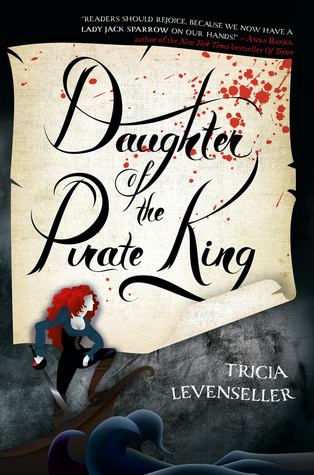
33643994._sy475_Daughter of the Pirate King by Tricia Levenseller. A 17-year-old pirate captain allows herself to be captured so that she can search her enemy’s ship for a secret map to a hidden treasure. A true pirate will go to any length to seek treasure and adventure.

Blackhearts by Nicole Castroman. A fancy rich merchant’s sprog wants to flee his strict social class and go to sea to make his own way, while a young orphaned woman wants to return to her mother’s home in Curacao. They meet, fall in love, and must decide whether to follow social rules or not. A pirate would tell rules to walk the plank. The young man grows up to be Blackbeard, the most fearsome and renowned pirate ever to sail the seven seas… 

49851Under the Black Flag by David Cordingly. Written by the former head of exhibitions at the British National Maritime Museum, this novel be all about the fact and fiction of a pirate’s life. Yo ho, yo ho, a pirate’s life for me…
One Piece by Eiichiro Oda. Pirate manga! Monkey D. Luffy wants to be the Pirate King. Instead, he accidentally gained the power to stretch like rubber, at the cost of never being able to swim again. Now, he and some pirate sprogs are on a quest to find the One Piece, which is reputed to be the greatest treasure in all the wide world.

*Originally posted on Book Riot. 

book review · historical fiction

In the Footsteps of Crazy Horse

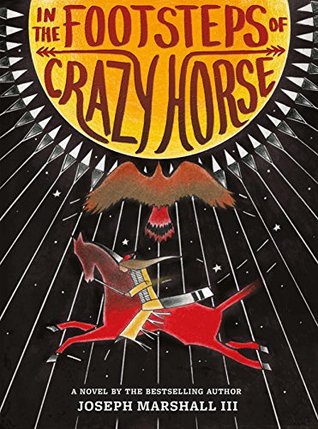
27778554._sx318_In the Footsteps of Crazy Horse by Joseph Marshall III (website, Twitter)

Her Grace’s rating:  3 out of 5 stars

Genre: children’s fiction

I read it as an: ebook

Source: library

Length: 176 pp

Published by: Harry Abrams (10 Nov 2015)

This children’s novel follows Jimmy McLean as he travels with his grandfather to learn about his famous ancestor, Crazy Horse. Jimmy has a hard time with bullies who mock him for not being full-blooded Lakota. Jimmy’s mother is Lakota but his father is biracial Lakota and Irish. His grandfather takes Jimmy on a road trip so they can visit the sites of Crazy Horse’s most famous moments. In the process, Jimmy learns something of strength, honor, and taking care of people, including yourself. 

I enjoyed this slim novel well enough. I tend not to read children’s fiction much; even the books my 9 year old reads are generally YA. So the writing felt overly simple to me with some information missing that I would have liked to have. However, I had to remind myself that it IS for children and they may not be able to read books that deeply yet. It was fun to learn more about Crazy Horse, especially from a Native American perspective. So much history is written by the victors, so the version of Crazy Horse we tend to get in school here is that he was a rabble-rouser and problematic for the white soldiers. I always took that with a grain of salt anyway, but it is still nice to hear about the story from a different perspective. 

I read this for task #22 of the Read Harder challenge: A children’s or middle grade book that has won a diversity award since 2009.

Favorite lines:

  • “A long time ago,” Grandpa said as he and Jimmy rode down the highway, “people and animals could understand each other’s languages. A person could understand what a hawk said. The hawk could understand people. But things changed. Animals and people don’t understand each other anymore. That’s sad.”
  • “When things like that happen, like to your dad and Crazy Horse, it’s okay for tough guys to cry. Don’t you ever forget that.”
  • Jimmy looked around at the hilly landscape. He had the same strange feeling he’d had at the Hundred in the Hands battlefield. He felt like he should be quiet or talk only in a whisper.
  • “That’s the sad part about war and battles,” he concluded. “Doesn’t matter who you are, what side you’re on. It’s still sad, no matter what kind of uniform you wear or the color of your skin. It’s still sad.”
  • Sometimes you have to do things no matter how scary it is, or how scared you are.
  • …that’s what being a warrior was all about: facing the scary things no matter how afraid you were. That’s what courage is.
book review · Medievalism

The History of William Marshal

29006215The History of William Marshal translated by Nigel Bryant

Her Grace’s rating:  3 out of 5 stars

Genre: nonfiction/biography

I read it as a: paperback

Source: my own collection

Length: 243 pp

Published by: The Boydell Press (1 Aug 2016)

This medieval chronicle, written in the 1220s in verse, depicts the life of William Marshal, The Greatest Knight. The author is unknown, but he was likely a close friend or a member of Marshal’s household. He wrote events as he knew them, both from firsthand knowledge or by asking those closest to Marshal. It certainly exaggerates Marshal’s life and abilities and glosses cheerfully over the times he blew it, but it is overall a valuable document of medieval noble life.

As a medievalist, I’ve read my share of chronicles and documents of the time. This one was a delightful change from the texts that are often dry accounts. It was easy to read and surprisingly funny. In part, this is due to Bryant’s skillful translation, but he can’t translate what wasn’t already there to begin with. The chronicler had a witty and sometimes playful tone to his writing. 

The whole document gives a fascinating glimpse into medieval noble life and the ways in which a knight can make a name for himself. The medieval mindset and things that the chronicler focused on are so intriguing. The politics and balancing acts these people had to perform must have been exhausting. It is also clear that women may have been respected (Eleanor of Aquitaine is mentioned in glowing terms) but they are still very much second-class citizens. One of Marshal’s horses is given a name, Blancart, and yet none of his sisters were named. Even queens are often referred to as ‘the queen’ or so and so’s wife. 

I wonder how much of the Stoics the author knew. Some passages were very Stoic in their reader: ‘But I tell you truly, no heart should grieve or rejoice excessively’ (p 28). Almost certainly he was influenced by Boethius as well; The Consolation of Philosophy had a lot of influence on medieval thought, and throughout Marshal’s history, numerous references exist to Fortune and her wheel. It feels like there may be some influences of the Beowulf poet on the chronicler as well. I’ll have to look into that more, because I’m a nerd. But the intro reminded me very much of the intro to Beowulf: þæt wæs god cyning! Yes, þæt wæs god knight! 

 This is definitely a must-read for any medievalist. Who doesn’t like learning about knights anyway, especially the one who was known as the greatest knight even in his own lifetime? 

Favorite parts/ lines:

  • On helping Empress Mathilda escape but she slowed them down by riding sidesaddle: ‘By Christ, lady, you can’t spur when you’re seated so! You’ll have to part your legs and swing over the saddle!’ (29)
  • And the fact is, sirs, the prowess of a single valiant knight can embolden a whole army… (37)
  • …joy and happiness are the due reward and stimulus for aptitude and prowess. (43)
  • Let’s be honest: being sedentary is shameful to the young. (52)
  • He won something of far more value, for the man who wins honour has made a rich profit indeed. (59)
  • I loved the part where the Marshal was at a tourney and he got smacked on the helmet so hard that it got stuck and he had to go lay on the smith’s anvil so the smith could pry it off. LOL. 
  • A man reveals himself by his actions! (70)
  • People often get what they deserve, and those who covet all lose all. (72)


books · editorial · Elizabethan England · historical fiction · Tudors

The Best Books about Anne Boleyn

On May 19, 1536, an English queen was executed. She really hadn’t done anything wrong, other than failing to give her king the son he craved. So, in order to get rid of her, some trumped up charges of adultery – treason at the time – were thrown at her and she was executed by beheading. The queen was, of course, Anne Boleyn.

668,Anne Boleyn,by Unknown artist Unknown artist

People may think of many different things when they think of Anne Boleyn. I tend to think primarily “mother of Elizabeth I” and “she was framed.” Others may see her as a victim (yes, indeed), as a homewrecker (no, read more history), an advocate for Protestantism (certainly, and likely the catalyst for Anglicanism, having owned copies of Tyndale and showing them to Henry at the right moment), generous to the poor (yes), and many, many other things. She was a skilled musician, dancer, and linguist. She was a genuine Renaissance woman. I think her full impact on history may never be fully understood.

Anne was born at her family home in Blickling probably in 1507 (some scholars say 1501) and grew up at Hever Castle in Kent. When she was about 7 years old, she went to Austria at the invitation of Margaret of Austria to study with her wards. In 1514, she went to the court of Queen Claude of France, where she stayed for several years. In early 1522, she returned to England, where she became a lady in waiting to Katherine of Aragon and caught the eye of Henry VIII. The rest, as they say, is history.

There remains a fascination with Anne Boleyn, and rightly so, in my opinion. By most accounts, she dazzled. She was witty and enjoyed dancing, riding, and hunting. She enthralled a king, and then she died for it. It’s hard not to be fascinated by her. Other people would seem to agree, if we take the many books written about Anne as evidence. Below are a few of my favorites.

Nonfiction:

31088The Rise and Fall of Anne Boleyn: Family Politics at the Court of Henry VIII (Canto) by Retha Warnicke. Warnicke was one of my college professors. She is a little crazy, and some of her theories about Anne are not really mainstream. But she is a fierce defender of Anne and for that, I have a soft spot for Warnicke.

The Life and Death of Anne Boleyn by Eric Ives. Ives and Warnicke had disagreements. A lot of them. I approve of academic nerdrage.

Anne Boleyn: Henry VIII’s Obsession by Elizabeth Norton. This is a relatively short, accessible scholarly work by one of my favorite historians.

18111981In the Footsteps of Anne Boleyn by Sarah Morris and Natalie Greuninger. This is a really cool book which informs readers not only about Anne, but also about the places she lived and traveled. It tells about each home, manor house, church, chapel, castle, abbey, and so on that Anne ever went to. It shows each room of those places, as much as is possible to do so now. It really helps bring Anne to life in ways that simply writing about her cannot, because it shows up the places where she lived and laughed and grieved. An absolute must-have. I wish more books like this existed for other historical figures.

Fiction:

The Secret Diary of Anne Boleyn by Robin Maxwell. It’s been years since I read this one, but I still remember it as the one that really sparked my interest in the Tudors.

10108The Autobiography of Henry VIII: With Notes by His Fool, Will Somers: A Novel by Margaret George. Not about Anne Boleyn, per se, but she featured prominently, of course, and Margaret George is awesome. There are few authors who can tell such a terrific story while also being accurate.

The Last Boleyn: A Novel by Karen Harper, about Mary Boleyn, the other one. Published about 20 years before the other book about Mary Boleyn that most people seem to know about, and which I’m not mentioning because it was awful, this one is nice because it gives readers the big events but entirely through the POV of Mary. None of the major characters we know – Anne, Henry, Katherine of Aragon, Cromwell, etc – appear unless it is when Mary encounters them. I liked it, too, for its more optimistic tone.

Brief Gaudy Hour: A Novel of Anne Boleyn by Margaret Campbell Barnes. One of the older books, but still super interesting. This is not one of the most accurate books you’ll ever read, but it does do a fantastic job of giving Anne a rich internal life, something that not all historical novels really do, oddly. Well worth a read despite the quibbles with the accuracy.

13540943The Queen’s Promise: A fresh and gripping take on Anne Boleyn’s story by Lyn Andrews. This one focuses on Anne before she met Henry, and the love affair she may have had with Henry Percy, Earl of Northumberland. Told primarily from Percy’s perspective, readers get a version of this familiar story from an entirely different angle than we usually do.

Wolf Hall by Hilary Mantel. I’m a little torn at including this one. Too many people use this as an example of how things really were, but Mantel herself has said no, it is her perception of how Cromwell might have viewed things, which makes sense since it’s from his POV. But it is a terrific read and it’s my blog, so I’m adding it because I liked the book and I want it on the list.

There are sooooooooooooo many other books, both fiction and nonfiction, I could have added here, but I had to rein it in or this would just get out of control. These are just a small handful of my favorites. Are there any others you would recommend?

*Amazon affiliate links

editorial · interview

Ancient Rites and Sexy Flowers: Discussing the Research Behind Historical Fantasy with Judith Starkston


42865572
Book cover: Priestess of Ishana

author-photo
Author Judith Starkston. Image retrieved from author website


A couple of months ago, I sat down to chat with author Judith Starkston about her new book, Priestess of Ishana. With deepest apologies to Judith about the delay in writing this article, especially as she was so gracious about giving me the interview – and feeding me in her own home, no less! – I want to talk a little bit about the awesome lady and the research behind a truly unique new series of books.

The series, which begins with Priestess… and will carry on with a forthcoming book (yay!) is based on Starkston’s research of the Hittite culture. I touched on this a little bit in my initial review of the book both on my blog and the historical novel review site, Discovering Diamonds. Her research is deep and accurate, and I would expect nothing less of her since she is a Classicist who is committed to providing detailed information about the ancient world in a fun and accessible way.

One of the overarching themes I noted in the book involve politics and shows men trying to keep women submissive. Starkston comments, “There are a lot of correlations between the politics of then and now. We like to think of history as progressing, but that isn’t always the case.” She goes on to explain about Hittite culture and how women like Tesha, her main character who is based on the real-life Hittite queen Puduhepa, were allowed to stay queens after their husband died. Often, if they had a son, they would navigate their power to get their sons on the throne, because there was always a king, unlike, for example, in Tudor England with Elizabeth I. But generally speaking, Hittite women had more power and freedom than Victorian women – they had property, could keep children even after a divorce, and they were allowed to initiate a divorce. Priestesses in particular had a key business and financial role as well as religious. The temples are sometimes referred to by scholars as “Little Vaticans” since they held so much power and influence over other non-religious institutions.

hattusa.temple1
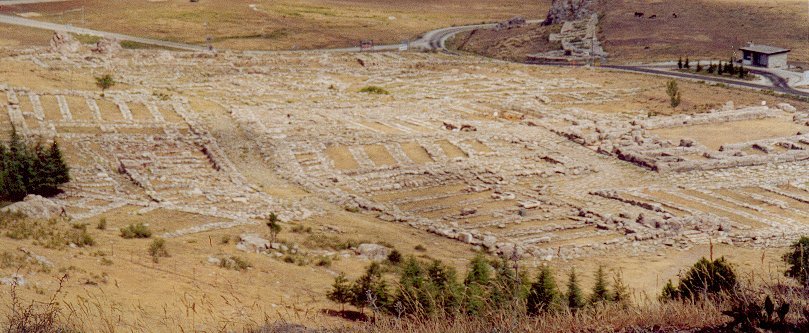
The Great Temple in Hattusa


The rites and rituals portrayed in Starkston’s book are fascinating and full of magic. They also come directly from existing Hittite records; none of them are made up. While this might seem unbelievable to modern readers, Starkston explains that the Hittite culture is imminently well-suited for a fantasy novel.

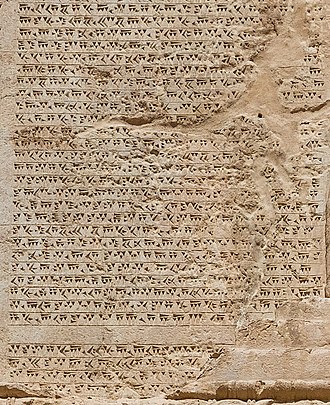
She says, “When I decided to change the series from straight historical fiction to fantasy, it was actually really liberating. There is so much about how they view the world that is hardwired for magic.” For example, there is a detailed scene where Tesha performs a rite in a cave to banish an evil spirit, which they believed was lingering because a man was burnt to death. The entire ritual comes directly from cuneiform records. Similarly, another ritual, not used in the book but which Starkston discovered about Hittite culture, deals with disputes within a family. When such instances occur, the family would call in a priestess to heal them, believing it was an illness. The priestess would make wax tongues, the family would say the words of the argument, then spit on the wax and burn it. Based on court records, Starkston explains that this ritual and other similar ones showed that the Hittites believed words were the most powerful thing, curses were believed to be real and were feared, and correcting bad words is written into the culture. Such belief is woven into the fabric of Priestess of Ishana at every level.

330px-tomb_of_darius_i_dna_inscription_part_ii
Cuneiform tablet

Another element of the book I truly loved were the mouth-watering descriptions of the food. I’m a foodie and I love to learn about new places and foods based on the books I read. Some of the foods in Priestess were made up to reinforce the fantasy elements, but overall, the foods in the book were also based on archaeological records and DNA studies of the residue from around hearths or pots, which can tell us if they contained wine, grains, cheese, and so on.

Starkston says, “Food is core to understanding a culture, so I really wanted to highlight it.” Indeed, she did. One of my favorite scenes involved Tesha and Hattu eating the stamens of large flowers in the temple. Who knew that eating flowers could be so sexy?

The flowers in this scene were made up, but the rest of the food in the same scene was not. I asked Starkston if she had ever tried making any of the recipes she had written about in the book or discovered in the historical record. Not only has she done so, she actually made a cookbook based on them. They are based on ingredients and techniques available at the time. All the recipes mentioned in her books are collected there and if you sign up for her newsletter, she will send it to you for free. I have tried some of them and I have to say, they are GOOD. My favorites are her hummus, lamb and lentil stew with raisins (though I hate raisins so I substituted with dried blueberries and it was delish), and the almond-stuffed dates. Seriously, the recipes are scrumptious and are fancy enough to impress your friends at a dinner party. That they are based on ancient recipes is just a delightful bonus for history nerds.

Starkston’s series will continue with a second novel, which I, for one, am eagerly anticipating. As yet, there is not a release date for the second book, though she says Tesha’s sister Daniti will be a point-of-view character. This will prove fascinating, as Daniti is blind, having lost her sight from chickenpox as a child. The way Starkston approaches illness and physical imperfection in the novel struck a balance between actual beliefs from antiquity. She is doing a lot of research to create as authentic a character as possible in Daniti. She says, “Since I found no evidence of how blindness might have been treated in Hittite society, or how the blind might have been viewed, I worked from close cultures like Sumerians to extrapolate. But there were split ideas toward blindness in ancient world. They were either thought to have inner visions sent by a god, like Homer’s ability, or they were thought to have a deformity or imperfection. Daniti is viewed by her father as cursed. Whatever went wrong was always the fault of the sick person, for example. So I made her an outcast, which was historically accurate, except that she and Tesha are close.”

Daniti is a strong woman, something Starkston excels at crafting. She creates women who can take on an enemy and do it without a sword. Tesha and Daniti are both women of deep strength.

Do magic and fantasy sit well together within historical fiction – indeed can such novels even be counted as historical? Should ‘historical’ be as accurate as possible without the addition of magic or obvious fantasy, or is there leeway for diversification? Should a book that is clearly fantasy in essence, but has its background of characters and general plot set very firmly within an accurately researched historical setting be considered as historical or as a fantasy novel, set in a fantasy world that is very loosely based in history, and therefore have no right to be classed as ‘historical’? What actually constitutes history or fantasy, anyway? Is the merging of fantasy into history acceptable? In short, of course it is! Within the varied genres of historical fiction, is it not this diversity which makes reading novels set in the past so exciting? The accurate biographical type novels of the lives of known people (usually kings and queens, or men and women of note) is one branch of historical fiction where the known facts are imperative to ensure the overall feel of ‘believability’ is ensured. For the other genres, mysteries, thrillers, romance, timeslip, alternative, it is the depth of the background research that creates the feeling of realism. If fantasy is not acceptable for historical fiction we would be sadly deprived of many wonderful novels and series: Mary Stewart, Barbara Erskine, Du Maurier to name just three – and there would be no Outlander!

When I find an author who writes a unique story, and who does it really well, it is a delight. When that story is also based on actual fact, as Judith Starkston’s novel is, it undergoes an alchemical change from just a fun story into a jaw-dropping narrative of women in the ancient world, struggling to gain their own agency, find their strength and bravery, give love to those around them, and fulfil a destiny. It provides an insight into what life was really like and shines a light on the human condition. We can look beyond the elements of fantasy and see the real people behind the magic.

And really, isn’t that what good literature is supposed to do, be it fact or fantasy?

42865572Buy the Book

AMAZON UK

AMAZON US

AMAZON CA

Find out more about Judith Starkston

Website: https://www.judithstarkston.com/

Facebook: https://www.facebook.com/judy.starkston

Twitter: @JudithStarkston