This is the story of a fertility goddess, Ezilie, sometimes called Lasiren, and the women whose bodies she possesses. The main point of view characters are Mer, a healer and slave on a plantation on the island of St. Domingue, what is now Haiti; Jeanne Duval, the Haitian mistress of Charles Baudelaire; and Thais or Meritet, a Nubian slave and prostitute in Alexandria, Egypt, who later becomes known as Mary of Egypt. In nonlinear timelines, the narrative follows the lives of these women as Lasiren inhabits and influences them. Mer is tasked with clearing the salt roads, the connections between Haitian slaves and their African gods. She tries to do so through peaceful means, even though a violent rebel called Makandal is rising in power and urging slaves to revolt against white slave owners. Mer knows her duty is to heal all the Ginen people. Jeanne Duval’s narrative focuses more on economic freedom. She is trying to support herself and her mother, who is ill and can’t afford medicine. To do so, she becomes a stage dancer in hopes of catching the eye of a rich man who will take her as his mistress and set her up in comfort so she can care for herself and her mother. Thais’s story comes pretty late in the book overall, but I think it can represent freedom from sexual slavery, since she was a prostitute and relied on that for survival before Lasiren began interacting with her, driving her to wander the desert. Her interactions with Lasiren eventually resulted in her sainthood.
At first, I admit I didn’t quite get this story. I really enjoyed it, but it took a few days of really thinking about it for me to find the threads that bound it together. I really love that, when a story makes me think and I don’t get it right away. Maybe I still don’t have it right, but this is what I’ve come up with. The various forms of freedom are, I believe, the overarching theme. The salt is the common element which binds women around the world together, through blood, sweat, tears, birth fluids, and sex.
I really enjoyed the way the lives of these women were linked throughout the story. They were so very different, but they each had their own struggles for freedom which bound them together, and Lasiren teased out their desires and eventually managed to bring comfort to them all, even if it was a long time coming.
Each setting was vivid and complex, containing rich cultural details. I hadn’t known, for example, that Makandal was a real man and that he did actually instigate a rebellion on St. Domingue. I learned as well that the Ginen is the Haitian name for the ancestral home of enslaved Africans, and that it referred to the slaves on St. Domingue. I didn’t know that Charles Baudelaire had a Haitian mistress. I had never heard of Mary of Egypt. Now I have so many new things to read about in more depth because of this book!
The narrator, Bahni Turpin, did a stellar job, as she always does. Her accents really bring the characters to life and she dramatizes the story without being melodramatic. She is one of my favorite narrators.
This is definitely one of the most unique books I’ve read ever, and I thoroughly enjoyed it. I highly recommend it and am looking forward to reading more by Nalo Hopkinson.
The Column of Burning Spices is the second in PK Adams’s duology about the renowned medieval holy woman, Hildegard of Bingen. This picks up right where the first book left off and covers the latter part of Hildegard’s life, when she was writing and creating the works for which she is most well known.
Where the first book had given Hildegard an interesting background and a plausible history that filled in gaps in the historical record, this second book continued with what is known of her and fleshed her out in a human way. I don’t feel that there was quite the depth of character as there was in the first book, but I think this is simply because there was so much that Hildegard did in her life that it is impossible to capture it all in the scope of one novel. Authors have to make a choice – are they going to focus on her music or her scientific writing? On her struggles with the men of the church or on her charitable work? Adams is no different, and she did exceedingly well with what she chose to include. I thought the details were sufficient for Hildegard fans like me while also serving to whet the appetite of readers who may not be as familiar with her, hopefully inspiring them to go out and learn more about her.
How Hildegard dealt with the troublesome men of the church was handled deftly, and accurately. One of my favorite parts of the book, as well as actual events of her life, was how she handled the question of the burial of a man who had been excommunicated and then forgiven. He was buried, then the canons demanded that he be exhumed and reburied in unconsecrated ground. Hildegard refused because she said his sins had been forgiven. The canons told local authorities to exhume the body, so Hildegard and her nuns went around and removed all the grave markers from the cemetery. I love that so much. She sounds like my granny, a salty old crone. The canons placed Hildegard, her nuns, and the abbey under interdict, so no Mass could be performed and, worse for Hildegard, no songs could be sung. But eventually, she won and they could have their Mass and music back.
I enjoyed how the relationships between Hildegard and others were developed. Volmar, who was her confessor in real life, was given a deeper place in her life. It is not part of the historical record, but the way it was written in the book was believable and still within the scope of acceptable behavior for a Benedictine nun, and raised a poignant “what if” for them both. Similarly with Ricardis, Hildegard’s personal assistant. The two women had a close bond in real life, prompting some scholars to speculate that Hildegard was actually a lesbian. Maybe she was, but I also think that is a stupid assumption; she lived almost entirely in the company of women from the time she was 8 years old and most of the men of her acquaintance were her adversaries. It is no wonder that she formed her closest bonds with other women. It should have no bearing on her sexual preferences. I disagree, however, with how the author handled Ricardis leaving the convent. There is no indication in the historical record that she left because she’d been spying on Hildegard to Abbot Helenger or that she was in the church only to advance her family’s standing. If that had been the case, I doubt very much Hildegard would have continued to write to her after she left, asking her to come back, which she did several times. That part of the novel required too much of a suspension of disbelief, and didn’t fit with the existing historical record, for me to buy.
Overall, the duology was very pleasing – Hildegard of Bingen is hands down my favorite medieval holy woman, and favorite medieval woman second only to Eleanor of Aquitaine. The first installment was stronger, and I would rate it 4.5 stars, but the second still offered a solid performance and I would rank it at at 4 stars. I heartily recommend both books to anyone interested in this fascinating woman, or to anyone who has never heard of her and would like a starting point to learn about her.
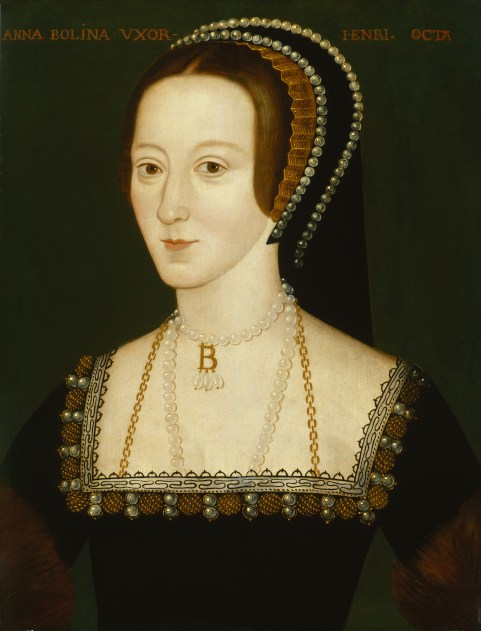
On May 19, 1536, an English queen was executed. She really hadn’t done anything wrong, other than failing to give her king the son he craved. So, in order to get rid of her, some trumped up charges of adultery – treason at the time – were thrown at her and she was executed by beheading. The queen was, of course, Anne Boleyn.
People may think of many different things when they think of Anne Boleyn. I tend to think primarily “mother of Elizabeth I” and “she was framed.” Others may see her as a victim (yes, indeed), as a homewrecker (no, read more history), an advocate for Protestantism (certainly, and likely the catalyst for Anglicanism, having owned copies of Tyndale and showing them to Henry at the right moment), generous to the poor (yes), and many, many other things. She was a skilled musician, dancer, and linguist. She was a genuine Renaissance woman. I think her full impact on history may never be fully understood.
Anne was born at her family home in Blickling probably in 1507 (some scholars say 1501) and grew up at Hever Castle in Kent. When she was about 7 years old, she went to Austria at the invitation of Margaret of Austria to study with her wards. In 1514, she went to the court of Queen Claude of France, where she stayed for several years. In early 1522, she returned to England, where she became a lady in waiting to Katherine of Aragon and caught the eye of Henry VIII. The rest, as they say, is history.
There remains a fascination with Anne Boleyn, and rightly so, in my opinion. By most accounts, she dazzled. She was witty and enjoyed dancing, riding, and hunting. She enthralled a king, and then she died for it. It’s hard not to be fascinated by her. Other people would seem to agree, if we take the many books written about Anne as evidence. Below are a few of my favorites.
Anne Boleyn: Henry VIII’s Obsession by Elizabeth Norton. This is a relatively short, accessible scholarly work by one of my favorite historians.
In the Footsteps of Anne Boleyn by Sarah Morris and Natalie Greuninger. This is a really cool book which informs readers not only about Anne, but also about the places she lived and traveled. It tells about each home, manor house, church, chapel, castle, abbey, and so on that Anne ever went to. It shows each room of those places, as much as is possible to do so now. It really helps bring Anne to life in ways that simply writing about her cannot, because it shows up the places where she lived and laughed and grieved. An absolute must-have. I wish more books like this existed for other historical figures.
Fiction:
The Secret Diary of Anne Boleyn by Robin Maxwell. It’s been years since I read this one, but I still remember it as the one that really sparked my interest in the Tudors.
The Last Boleyn: A Novel by Karen Harper, about Mary Boleyn, the other one. Published about 20 years before the other book about Mary Boleyn that most people seem to know about, and which I’m not mentioning because it was awful, this one is nice because it gives readers the big events but entirely through the POV of Mary. None of the major characters we know – Anne, Henry, Katherine of Aragon, Cromwell, etc – appear unless it is when Mary encounters them. I liked it, too, for its more optimistic tone.
Brief Gaudy Hour: A Novel of Anne Boleyn by Margaret Campbell Barnes. One of the older books, but still super interesting. This is not one of the most accurate books you’ll ever read, but it does do a fantastic job of giving Anne a rich internal life, something that not all historical novels really do, oddly. Well worth a read despite the quibbles with the accuracy.
The Queen’s Promise: A fresh and gripping take on Anne Boleyn’s story by Lyn Andrews. This one focuses on Anne before she met Henry, and the love affair she may have had with Henry Percy, Earl of Northumberland. Told primarily from Percy’s perspective, readers get a version of this familiar story from an entirely different angle than we usually do.
Wolf Hall by Hilary Mantel. I’m a little torn at including this one. Too many people use this as an example of how things really were, but Mantel herself has said no, it is her perception of how Cromwell might have viewed things, which makes sense since it’s from his POV. But it is a terrific read and it’s my blog, so I’m adding it because I liked the book and I want it on the list.
There are sooooooooooooo many other books, both fiction and nonfiction, I could have added here, but I had to rein it in or this would just get out of control. These are just a small handful of my favorites. Are there any others you would recommend?
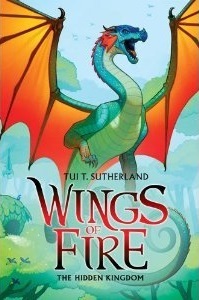
This is the third book in the Wings (snerk. I mistyped it wongs. I am amused. And, apparently, 12) of Fire series, this time focusing on Glory, the RainWing. The dragonets have decided to travel to Glory’s home in the rainforest to find her tribe, the RainWings, and see if they might be prevailed upon to help them in their quest, or at least shelter them from the SeaWings who are pissed off and chasing them from the previous book. When they get there, they discover that “lazy RainWings” isn’t a euphemism applied to Glory by their mean jailers, it is a breed trait. The RainWings generally know nothing about the land beyond the rainforest, don’t care about anything beyond napping, can’t even read, and basically have nothing much going for them. Nor do they notice or apparently care that various members of their tribe are going missing. Incensed, Glory and the other dragonets decide to find out what is happening and discover magical tunnels, like mini wormholes, that take them in an instant from the rainforest to other parts of the world. One of those takes them directly to SandWing territory, and another to NightWing territory. Glory herself becomes a prisoner after using herself as bait, but makes her escape with the help of a spunky baby dragonet, Kinkajou, and returns to the rainforest to challenge the current queen for the throne.
This was a decent entry in the Wings of Fire series. They are all pretty entertaining so far, for kids’ books, though to date, nothing has managed to come close to my love of the Dragonriders of Pern. But my daughter is enthralled with this series and wanted me to read them, so I am reading them to please her. I remember wanting my mom to read the books I loved when I was little, so I am happy to do the same for my own child.
Anyway. This book focused mainly on Glory as she learned about her tribe, the RainWings. They are perhaps not lazy, more like indifferent to the outside world, ignorant, and irresponsible. It’s like they’ve mentally arrested at the development level of young children, or Republicans but without the generally wilful meanness. They just don’t do things they don’t want to, or that sound boring, or that interfere with their naptime. Glory sees this and is appalled, especially once she realizes that none of them even realise dragons are missing, and no one cares to do anything about it. When she takes her complaint to the Queen, Magnificent, she tells Glory that it’s just a few and there are lots of RainWings, so it’s ok. Glory uses herself as bait to get kidnapped so she can find out where the missing dragons are, gets one tiny dragonet out (with help from said dragonet and Clay), and then challenges the Queen.
Glory develops a lot in this book. She learns to be more empathetic – or else she always was and it just shows more here. When she uses herself as bait, she makes sure to do it in such a way that protects her friends as much as possible. When she challenges the queen, she relies on the RainWings who have helped her to win the throne, which she couldn’t have done if she had used her prophecy friends. She learns to trust people other than herself and rely on people to do their jobs for her when she can’t do it herself. I think that is a good lesson for kids, and for adults as well: we can’t always do everything ourselves, sometimes we need help from our friends, and it’s absolutely fine not to know everything or be able to do it all on our own.
The other dragons are less of a feature, though Kinkajou was sometimes cute and a solid ally. Jambu was as well, though rather annoying. The prophecy dragons were mostly an afterthought in this one and played little role in the plot overall, which may not appeal to major fans of those characters. For myself, I am somewhat indifferent to them and don’t have a favorite, so this wasn’t a problem to me. The story was fine and the resolution of the challenge to the queen was satisfying.
However, there were several unfinished plot threads that I found a bit irksome. I hope they are picked up in book 4 because it would be sloppy otherwise, more so than in the previous book with a couple abandoned plots there. Maybe everything will tie together in later books. This is why I get bored with long series. I like a good, tight plot, dense and intricate but still resolved in two or three books. After that, super long series just become like Grey’s Anatomy or Game of Thrones – bloated and unending and just carrying on for the sake of seeing how much more the writers can wring out of it before sending it to a sad and meaningless death. Hopefully that doesn’t happen here. Sutherland seems a talented writer, so I remain hopeful that she hasn’t forgotten the plots she left behind and will tie them up neatly in the rest of the books.
In the early 12th century, a young girl was given as a tithe to the church with the intention that she would be enclosed as an anchoress at the abbey of Disibodenberg. That girl was Hildegard, known to history as Hildegard of Bingen. This novel tells the story of her early years at the abbey of Disibod and attempts to fill in a gap in the historical record.
Author PK Adams does a lovely job bringing a young Hildegard to life with her clear and elegant prose. The setting of the medieval Rhineland is well described and gives readers a vivid image of life during the Investiture Controversy. The conflicts brewing between the Church and secular authorities were complex and distressing to people at the time, and Adams captured these emotions plainly in her characters.
I have, at times, railed against authors of historical fiction who take liberties with historical fact for the sake of telling a story. I think if they can’t tell a good story without embellishing the facts then they aren’t good storytellers. However, Adams has found a sweet spot with regard to Hildegard’s story, and she’s run with it. Little is known about Hildegard’s life after she initially entered the abbey until Jutta’s death. Adams uses that gap in knowledge and creates a detailed and plausible version of her own, enhanced with excellent and accurate details of medieval life. We may not know about what Hildegard’s life was really like for a number of years, but this novel presents us with a viable option for consideration.
Adams wove in many lyrics from Hildegard’s songs, which was a nice touch. A vital touch, in my opinion. I don’t think one should write about Hildegard without including some of her songs, given that she wrote SO MANY of them. I do wish there had been more about herbology, such as recipes she might have used, but that’s just because I am super interested in herbalism. There was enough on that front to appeal to most readers who aren’t as interested as I am, I believe.
The characters are nicely developed overall. I would like more development with Helenger; right now, he just seems like the flat archvillain, mean just for the sake of being mean. I would also like more development with Volmar, particularly since he played such a large role in Hildegard’s real life. Maybe that will be in book two. The issue with Jutta and her bodily mortification left me a little wanting – I wanted to know more about Hildegard’s thoughts behind it. But overall, these were minor issues and didn’t impact my enjoyment of the book as a whole.
I am excited that I don’t have to wait to read the next in the series – thanks, Netgalley! It will be interesting to see how the next book handles the later parts of Hildegard’s much more well-documented life. Hopefully, Adams will continue Hildegard’s story with the same eye for detail as she has begun.
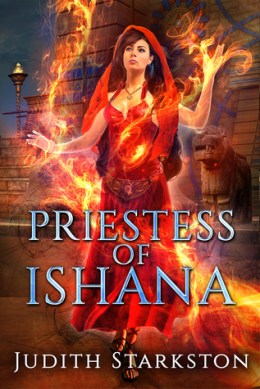
Book cover: Priestess of IshanaAuthor Judith Starkston. Image retrieved from author website
A couple of months ago, I sat down to chat with author Judith Starkston about her new book, Priestess of Ishana. With deepest apologies to Judith about the delay in writing this article, especially as she was so gracious about giving me the interview – and feeding me in her own home, no less! – I want to talk a little bit about the awesome lady and the research behind a truly unique new series of books.
The series, which begins with Priestess… and will carry on with a forthcoming book (yay!) is based on Starkston’s research of the Hittite culture. I touched on this a little bit in my initial review of the book both on my blog and the historical novel review site, Discovering Diamonds. Her research is deep and accurate, and I would expect nothing less of her since she is a Classicist who is committed to providing detailed information about the ancient world in a fun and accessible way.
One of the overarching themes I noted in the book involve politics and shows men trying to keep women submissive. Starkston comments, “There are a lot of correlations between the politics of then and now. We like to think of history as progressing, but that isn’t always the case.” She goes on to explain about Hittite culture and how women like Tesha, her main character who is based on the real-life Hittite queenPuduhepa, were allowed to stay queens after their husband died. Often, if they had a son, they would navigate their power to get their sons on the throne, because there was always a king, unlike, for example, in Tudor England with Elizabeth I. But generally speaking, Hittite women had more power and freedom than Victorian women – they had property, could keep children even after a divorce, and they were allowed to initiate a divorce. Priestesses in particular had a key business and financial role as well as religious. The temples are sometimes referred to by scholars as “Little Vaticans” since they held so much power and influence over other non-religious institutions.
The Great Temple in Hattusa
The rites and rituals portrayed in Starkston’s book are fascinating and full of magic. They also come directly from existing Hittite records; none of them are made up. While this might seem unbelievable to modern readers, Starkston explains that the Hittite culture is imminently well-suited for a fantasy novel.
She says, “When I decided to change the series from straight historical fiction to fantasy, it was actually really liberating. There is so much about how they view the world that is hardwired for magic.” For example, there is a detailed scene where Tesha performs a rite in a cave to banish an evil spirit, which they believed was lingering because a man was burnt to death. The entire ritual comes directly from cuneiform records. Similarly, another ritual, not used in the book but which Starkston discovered about Hittite culture, deals with disputes within a family. When such instances occur, the family would call in a priestess to heal them, believing it was an illness. The priestess would make wax tongues, the family would say the words of the argument, then spit on the wax and burn it. Based on court records, Starkston explains that this ritual and other similar ones showed that the Hittites believed words were the most powerful thing, curses were believed to be real and were feared, and correcting bad words is written into the culture. Such belief is woven into the fabric of Priestess of Ishana at every level.
Cuneiform tablet
Another element of the book I truly loved were the mouth-watering descriptions of the food. I’m a foodie and I love to learn about new places and foods based on the books I read. Some of the foods in Priestess were made up to reinforce the fantasy elements, but overall, the foods in the book were also based on archaeological records and DNA studies of the residue from around hearths or pots, which can tell us if they contained wine, grains, cheese, and so on.
Starkston says, “Food is core to understanding a culture, so I really wanted to highlight it.” Indeed, she did. One of my favorite scenes involved Tesha and Hattu eating the stamens of large flowers in the temple. Who knew that eating flowers could be so sexy?
The flowers in this scene were made up, but the rest of the food in the same scene was not. I asked Starkston if she had ever tried making any of the recipes she had written about in the book or discovered in the historical record. Not only has she done so, she actually made a cookbook based on them. They are based on ingredients and techniques available at the time. All the recipes mentioned in her books are collected there and if you sign up for her newsletter, she will send it to you for free. I have tried some of them and I have to say, they are GOOD. My favorites are her hummus, lamb and lentil stew with raisins (though I hate raisins so I substituted with dried blueberries and it was delish), and the almond-stuffed dates. Seriously, the recipes are scrumptious and are fancy enough to impress your friends at a dinner party. That they are based on ancient recipes is just a delightful bonus for history nerds.
Starkston’s series will continue with a second novel, which I, for one, am eagerly anticipating. As yet, there is not a release date for the second book, though she says Tesha’s sister Daniti will be a point-of-view character. This will prove fascinating, as Daniti is blind, having lost her sight from chickenpox as a child. The way Starkston approaches illness and physical imperfection in the novel struck a balance between actual beliefs from antiquity. She is doing a lot of research to create as authentic a character as possible in Daniti. She says, “Since I found no evidence of how blindness might have been treated in Hittite society, or how the blind might have been viewed, I worked from close cultures like Sumerians to extrapolate. But there were split ideas toward blindness in ancient world. They were either thought to have inner visions sent by a god, like Homer’s ability, or they were thought to have a deformity or imperfection. Daniti is viewed by her father as cursed. Whatever went wrong was always the fault of the sick person, for example. So I made her an outcast, which was historically accurate, except that she and Tesha are close.”
Daniti is a strong woman, something Starkston excels at crafting. She creates women who can take on an enemy and do it without a sword. Tesha and Daniti are both women of deep strength.
Do magic and fantasy sit well together within historical fiction – indeed can such novels even be counted as historical? Should ‘historical’ be as accurate as possible without the addition of magic or obvious fantasy, or is there leeway for diversification? Should a book that is clearly fantasy in essence, but has its background of characters and general plot set very firmly within an accurately researched historical setting be considered as historical or as a fantasy novel, set in a fantasy world that is very loosely based in history, and therefore have no right to be classed as ‘historical’? What actually constitutes history or fantasy, anyway? Is the merging of fantasy into history acceptable? In short, of course it is! Within the varied genres of historical fiction, is it not this diversity which makes reading novels set in the past so exciting? The accurate biographical type novels of the lives of known people (usually kings and queens, or men and women of note) is one branch of historical fiction where the known facts are imperative to ensure the overall feel of ‘believability’ is ensured. For the other genres, mysteries, thrillers, romance, timeslip, alternative, it is the depth of the background research that creates the feeling of realism. If fantasy is not acceptable for historical fiction we would be sadly deprived of many wonderful novels and series: Mary Stewart, Barbara Erskine, Du Maurier to name just three – and there would be no Outlander!
When I find an author who writes a unique story, and who does it really well, it is a delight. When that story is also based on actual fact, as Judith Starkston’s novel is, it undergoes an alchemical change from just a fun story into a jaw-dropping narrative of women in the ancient world, struggling to gain their own agency, find their strength and bravery, give love to those around them, and fulfil a destiny. It provides an insight into what life was really like and shines a light on the human condition. We can look beyond the elements of fantasy and see the real people behind the magic.
And really, isn’t that what good literature is supposed to do, be it fact or fantasy?
Get Well Soon is all a brief overview of several of the worst/ scariest/ grossest diseases in recorded history. Each chapter deals with one disease or condition and written with what is obviously a shit ton of research to back it up. Also, lots of gallows humor and pop references, to keep you entertained.
It should come as a surprise to absolutely no one who knows me that I LOVED this book. I mean, I know am I morbidly obsessed with the bubonic plague. Seriously. I’ll read anything about the plague. But this book? It was hilarious! I get that a book about horrific diseases shouldn’t, maybe, be classified as “hilarious,” but too bad. If you can’t laugh inappropriately at things, then I am not the person for you to hang out with. We won’t make good friends. This is one of my favorite nonfiction books ever. The writing is engaging, not sophomoric as one wet-blanket reviewer suggested. It is fun, and the use of pop culture references, even older ones, keeps readers reading. Given the gnat-like attention span many people have now (thanks, social media), keeping their attention focused is a good thing. It helps people learn. Learning is fun. I learned that smallpox is hemorrhagic. And that “boo-boo” likely derives from “bubo,” though I already knew not to kiss a bubo to make it better. I teach fairy tales and folklore, so I found the connections to those stories and encephalitis lethargica to be fascinating. Also, this should be required reading for all anti-vaxxers.
I listened to this on audio book, and I have to say the narrator was not my favorite. She had this weird way of starting a sentence sounding sort of nasaly/ raspy, like Kate Mulgrew, and then ending the sentence in a normal tone. It was worse when she was quoting someone. It was annoying AF. But the content of the book itself was so good that I did my best to ignore the narrator’s voice.
Christopher Boone likes to go walking at night sometimes. On one of his nightly excursions, he encounters Wellington, one of the neighbor’s dogs. Wellington is dead, killed by a garden fork. This is puzzling to Christopher, who likes to understand why things happen and likes it when rules are followed; Wellington should not be killed with a garden fork. He decides to discover who killed Wellington and begins “detecting” like Sherlock Holmes, asking his neighbors rather uncomfortable questions. In the process, Christopher uncovers many more truths than he ever expected to, and now he has to learn how to live with the consequences of those truths.
This was a sweet coming of age story, told from the perspective of a boy who is on the autism spectrum. Christopher is highly intelligent and is gifted in math – he is going to take his A-Level maths exams later in the book so he can attend university. But he doesn’t know how to buy a train ticket without help. He doesn’t understand humor. He can’t tell a lie and doesn’t understand why you must always tell the truth but can’t tell an old person they’re old or a smelly person that they stink. I loved that he says metaphors are lies, but similes aren’t, and that he hated yellow and brown but red was the best. I really loved his thoughts on logic and reasoning and religion. Getting the story from his perspective is a wonderful change of pace from the typical narrator. I listened to this on audio book, so I didn’t see any of the diagrams that I think were in it. But I did enjoy figuring out before it was explained in the story that the chapter numbers were prime numbers. If you know how good I am not at math, you will know how impressive that is. I was rather proud of myself.
Seeing Christopher’s growth over the course of the book was wonderful. He learns that he IS able to do far more than he ever thought he could or would be able to do. He figures out a soul-shattering secret that has been kept from him and it sends him into a spiral of confusion, anger, and pain. Fleeing to London, on his own for the first time, Christopher learns that he is capable of much more than her ever knew.
I also thought the way his parents were portrayed was probably pretty realistic. I don’t have an autistic child, so I can’t imagine how hard it must be. I AM the mother of a very smart and difficult child, though, and know very well how frustrating and exhausting it can be. I wouldn’t change it for anything, but I can maybe understand how some parents would snap after a while. It doesn’t make it right, but it is a human reaction, and I think Christopher’s parents were shown in a very human and sympathetic light.

 The Salt Roads

 *
* 


 *
* 
 *
* 


 Buy the Book
 *
* 
 *
*  Her Grace's Library