book review · historical fiction · Medievalism

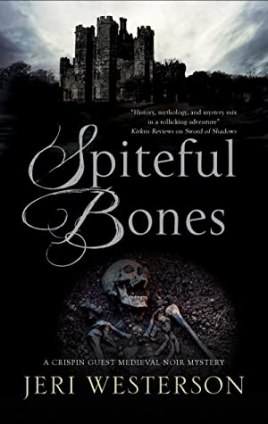
Spiteful Bones (Crispin Guest #14)

Spiteful BonesSpiteful Bones by Jeri Westerson (Website, Twitter, Insta)

Genre: historical fiction/ medieval noir

Setting: 14th century London

I read it as a(n): hardback

Source: my own collection 

Length: 178 pp

Published by: Severn House (1 Sept 2020)

Her Grace’s rating: 4 out of 5 stars

In this 14th instalment of Westerson’s Crispin Guest medieval noir series, some fun characters from the past feature in this story. Nigellus Cobmartin has inherited his father’s house upon the death of his older brother. He and his lover, the delightful John Rykener (under the guise of Eleanor) are in the process of restoring it, the house having fallen into disrepair. The workers discover a gruesome scene – a skeletonized body tied up within the walls of the manor house. It is determined that the body belonged to a former servant who the Cobmartin household thought stole a relic and then took off with the wife of another servant. At the same time, Nigellus and John are victims of extortion, under threat of their lifestyle being exposed if they fail to pay the unknown villain. But nothing is as it appears at first glance, and so Crispin and his apprentice, Jack Tucker, find themselves on the hunt for an extortionist who may also be a murderer. 

The character development over the course of this series has been excellent. Crispin is now in his forties and is beginning to feel the effects of a hard and active life, though he rails against it. Jack is taking on more of the lead role in the sleuthing duo and is the image of a young and vital man. There were a few times that he saved Crispin’s neck, literally and figuratively, and while it was lovely to see, I also miss little boy Jack even as I revel in the upstanding man he has become.

Crispin himself has long since accepted that he is no longer nobility and has made a family for himself with Jack, Jack’s wife Isabel, and their growing brood of children. He seems content enough with his lot and takes pleasure in the simple joys in life in ways he was unable to do before. One of his greatest joys is in his son, Christopher, who he is unable to acknowledge. His friends, too, are his joy, and he throws himself into investigating who would murder a friend’s servant, driven to protect those he loves. 

As always, Westerson creates vivid scenery in her settings. It is easy to picture the sights (and, unfortunately, the smells!) of the Shambles and other places in medieval London. The strength of her descriptive writing is exceptional and that, along with complex character development, have made Westerson one of my favorite authors. She creates characters readers genuinely care about and then develops them into rich and multidimensional people, even secondary characters. Take, for example, Nigellus Cobmartin and John Rykener. Nigellus is a fictional character, but Rykener was a real man who dressed as a woman and was a whore and a skilled embroideress. Their relationship, while it may seem implausible to us given the time period they were from, could well have happened. Rykener was listed as having a husband in one of the documents Westerson referenced, though the man was not named. Why not let the husband be Nigellus? There have always been LGBT people, even if they had been vilified, shunned, or even killed at various points in history. A lack of understanding does not mean they didn’t exist, and there is plenty of documentation to prove it. I think it is really important to discuss social issues in all their many elements, but literature is an ideal medium in which to do so. Readers get to know both Rykener and Nigellus over the course of a few books, and can see them as people rather than ideas, mere figures on a page, or solely by their sexual identity. Having other characters like Crispin sometimes struggle with how they see Rykener helps create depth but also gives a nuanced examination of our own society. A long-winded way to say that I love their relationship, the characters themselves, and how Westerson approached it.

I was sad while I was reading this story because I had thought it was the final entry in the Crispin Guest series. But I was wrong! There is one final adventure to share with Crispin, Jack, and friends, The Deadliest Sin, which Westerson’s website says will be released in 2022. 

In the meantime, I highly recommend this book, as well as the rest of the series, to anyone who loves a good, complex, brooding protagonist and a delightful cast of secondary characters.

book review · sci-fi · Star Trek

Star Trek Picard: The Last Best Hope

The Last Best Hope (Star Trek: Picard #1)

Star Trek Picard: The Last Best Hope by Una McCormack (Website, Twitter)

Genre: sci-fi

Setting: spaaaaaaace!

I read it as a(n): hardback

Source: my own collection 

Length: 322 pp

Published by: Gallery Books (11 Feb 2020)

Her Grace’s rating: 4.5 out of 5 stars

The Last Best Hope is the story of the mission Jean-Luc Picard led to evacuate Romulans from their home world and nearby planets when their sun went supernova. It is the prequel that forms the foundations of the Star Trek: Picard series. On its surface, it is the story of how one of the most beloved figures in all of science fiction ended his career. Digging deeper, it examines some of the darker aspects of humanity that we all carry.

I confess that I didn’t like the first season of STP very much. I only watched the season once and didn’t care at all for, well, most of it. Not because it wasn’t just TNG rebooted. I neither wanted nor expected that. I think it’s mostly that I didn’t recognize the characters in it. They were too changed, too damaged. I went into this book hoping it would help me like the show better, especially since McCormack is one of my favorite Trek authors.

I suppose it did that. I can understand how it would completely fuck with you to be put in command of THE biggest humanitarian mission in history, only for it to fail. And to fail largely because of politics? Adding insult to injury. Star Trek has always been political. It’s one of the many things I love about it. The Picard series, and this book, are no exceptions. The difference this time is that the politicians here are truly awful, with not the remotest veneer of idealism that they portray in the series. The political leaders of the Federation in this book are concerned with optics, with PR, with the cost to themselves. Councilor Quest is repugnant. She represents, to me, the worst of certain American political parties. I won’t say which but it starts with an R and ends with -epublican. Nationalism and only looking after one’s own interests is such bullshit and yet it’s on the rise. This book takes a look at the potential impact of nationalism, distanced through the lens of sci-fi. There were lots of oblique references to the Trump administration, trumpism, and nationalism. I’m so fucking glad he’s out of office and fuck anyone who gave this book a lower review just because it rightly was critical of those kinds of politics. We should take care of everyone, not just those in our immediate circle.

Picard, in TNG, is an idealist and a compassionate man. But he’s tempered with logic and pragmatism as well. Picard here gets so involved in the mission to save the Romulans that he becomes pretty myopic in his determination to fulfill the mission. If millions and millions of lives were in my hands, I probably would be myopic about my job, too (Actually, no, you could just put me in a padded room and have done with it if that task fell to me). I know some readers felt this Picard was a bit too starry-eyed, almost naive especially with regards to political machinations, but I felt that he was throwing himself headlong into the ideals of what Starfleet stood for. His doing so is the only way I can see to really explain his utter disenchantment with the fleet when the Romulan star blows and he fails in his mission. If he hadn’t been so involved, maybe more of his pragmatism would have prevailed and he would have been able to remain in the service. He still would have been horrified and grief-stricken at the loss of life, but he could have taken that extra distance to realize it was a futile effort from the start and to celebrate the lives they WERE able to save. But he wasn’t, and didn’t, and so railroaded his career, thus setting up the premise for the TV series. 

I do wish there had been more detail from the planets. We got some, but it would have made the story more visceral if we had seen more scenes from Romulus, the effect the supernova had on the citizens. What scenes we do get felt rushed a bit, more told than shown. Not that I want vivid descriptions of dying and suffering people. But it would have been just that much more depth to the story. 

And, maybe not super relevant to the story, but I thought Maddox/Jurati was gross. I can’t remember how her character was in the show so maybe McCormack picked up on something from that and ran with it. But Jurati in this novel was like everything I wouldn’t want to be as a woman. Yes, it’s rad she has a doctorate in robotics and is whip smart. I love that part about her. But she acts like a submissive, insecure little mouse who is desperate for Maddox’s approval, which makes her come off as pathetic. It’s such a big dichotomy, and unlike most of the other women in Star Trek that McCormack has written, and I haven’t figured out why it exists. 

Rereading what I just wrote, it sounds like a negative review. It absolutely is not. I loved this book, but I hated a lot of the people in it. I think that’s a sign of good writing, to make me hate a thing about a figure I’ve loved for the majority of my life, or to hate elements of the society I grew up watching and hoping to achieve in reality. I unreservedly recommend this book, especially if you haven’t yet seen the Picard series. It fills in a lot of gaps in the Picard series. I think it will be a good book to help build the Picard series canon. 

Favorite part/ lines (potential spoilers!):

  • He turned to the helm. 

“Lieutenant Miller…”

“Go on,” Raffi whispered. “They’re dying for you to say it.”

And why not?

“Engage!” (p 55)

  • The admiral shrugged. He had never seemed so French. “Better to ask forgiveness than permission, Raffi.”

“I’ll look forward to using that on you one day,” she said.

“I’d be disappointed if you didn’t.” (p 115)

  • “Who knows. An encounter with Beethoven might be the making of the man.”

“It might do something to him. Jeez, though, this might backfire. He might make us listen to Romulan indeterminate polyphony.” (p 130)

  • Mistakes are, after all, how we learn. (p 143)
  • “Warrior nuns. Romulan warrior nuns. You know, Raffi, I am grateful.”

“Grateful?”

“That the universe can still delight me.” (p 154)

  • “Story?”

“A fiction. A tale. Something made up.”

“A lie?” The boy looked puzzled.

“No,” said Picard gently. “A human way of telling certain truths.” (p 158)

  • “Tell a lie often enough, someone will believe it.”

“It’s worse than that, Kirsten. Tell a lie often enough, and it stands a good chance of becoming the truth.” (p 214)

  • Just a general comment that I thoroughly approve of Star Trek finally embracing the word fuck, as well as many others. To quote Tilly, this is so fucking cool.
book review

The Shadows

The ShadowsThe Shadows by Alex North (Twitter)

Genre: mystery

Setting: Gritten, UK (fictional village)

I read it as a(n): hardback

Source: BOTM Club

Length: 323 pp

Published by: Celadon Press (7 July 2020)

Her Grace’s rating: 2 out of 5 stars

Paul Adams is returning to his home town of Gritten after a 25 year absence. The only reason he is returning now is because his mother is dying in hospice. When he was a teen, one of Paul’s classmates was brutally murdered by two other classmates, Charlie and Bobby, and the town has never been the same since. When he returns, though, Paul seems to be haunted, literally, by the ghosts of the past. Is there a copycat murderer playing mind games with him as one of the suspects of the original murder? Is it really a ghost? Or did the teen who really committed the murder escape and carry on with his grisly crimes?

Splitting between Paul’s first-person POV and the 3rd person POV of Detective Amanda Beck, the story unfolds with a good sense of atmosphere. I really liked the way North wrote because I was never sure if this was a regular old murder or if it was actually a paranormal horror story. 

I did not, however, care much for the ending or the multitude of loose strings that I felt were left. One big twist that happened about 80% of the way through the book had no foreshadowing, so it felt like just a twist for the sake of it rather than any real part of the plot. Which is unfortunate because it did turn out to be a major plot point. It could have been really cool but I thought it was just awkwardly done. 

And this could just be me rolling my eyes because sometimes I’m too logical for my own good. But I just couldn’t get behind the whole lucid dreaming thing. Yes, I know one can dream lucidly and direct the course of one’s dreams. I have managed to do it once myself. I couldn’t suspend my disbelief enough to buy into the shared lucid dreaming stuff that Charlie was into and trying to teach to Bobby, Paul, and Paul’s best friend, James. It was just too silly to believe. If this had been a paranormal story, then sure, sign me up for shared lucid dreaming. But it wasn’t paranormal and so it just fell short for me. 

After I finished reading it, I looked at some other readers’ reviews. It seems that this book is a lot less popular than North’s first book, The Whisper Man. I think I’m glad I read this one first because now I can read the other and be far more entertained, I hope. Just to be clear, though, I didn’t hate this book, or even dislike it. I just wasn’t all that impressed by it. I still read it in just a couple days, which I wouldn’t have done if I hated it.

book review · fantasy

The Lady Jewel Diviner

The Lady Jewel DivinerThe Lady Jewel Diviner by Rosalie Oaks (Website, Twitter, Insta)

Genre: historical fantasy/ cosy mystery

Setting: Georgian England/ Devon coast

I read it as a(n): digital galley

Source: Helen Hollick at Discovering Diamonds 

Length: 266 pp

Published by: Parkerville Press (11 Jan 2021)

Her Grace’s rating: 4 out of 5 stars

Miss Elinor Avely finds herself exiled on the Devon coast with her mother and brother after her reputation was ruined in London in a most public fashion. Accused of stealing a jeweled necklace, she self-destructs further when she shuns Lord Beresford, who tried to save her by declaring before one and all that she was his fiancee. Exiled from society, Elinor is determined to keep her head down and be a dutiful daughter. Until, that is, her evening is interrupted by a bat flying into her room, turning into a tiny, naked woman, and demanding to be fed a sheep. The two form an unlikely alliance when a local man turns up dead, piles of jewels and gold are missing and presumed smuggled over to France to pay Napoleon, and the identity of an English spy may hit too close for comfort.

This was an entirely agreeable cosy mystery. Or cosy fantasy. Either one would be accurate. Honestly, though. Who wouldn’t adore a Regency cosy mystery fantasy romance? Elinor is a typical figure in many Regency romances and mysteries. She is curious, intelligent, and not at all afraid to speak her mind. If only Lord Beresford could appreciate that about her! Or does he? 

Aldreda Zooth, the tiny bat-woman, is a vampiri from France. She is in England to search for a necklace that belonged to her lost beloved and she convinces Elinor to help. Elinor is what Eldreda calls a Diviner, one who can find hidden objects by a sixth sense. This is, of course, what led to Elinor’s disgrace in London – she found a necklace but was accused of stealing it. Elinor agrees to help Eldreda but they are soon both drawn into an intrigue. Elinor gets to display her bravery and intelligence in several instances, but is still able to be a damsel in distress. Eldreda is an ideal chaperone, even though she is fairy-sized, and is a plucky and fun character.

Elinor’s brother, Perry, is a bit flat in terms of character development, but I really don’t think it matters a whole lot since he is not the main attraction of the novel. He is in it enough, though, that a little more depth for him would be appreciated. Perhaps this will come in future books, as the second in the series is set to be released on 1 March 2021. 

I will definitely be on the lookout for that book as well as others by this author. A light, somewhat silly, cosy mystery is exactly what I needed to read as pure escapism. Enthusiastically recommended.

book review

The Marrow Thieves

The Marrow ThievesThe Marrow Thieves by Cherie Dimaline (Website, Twitter, Insta)

Genre: futuristic/dystopian

Setting: Ontario, Canada

I read it as a(n): paperback

Source: my own collection 

Length: 234 pp

Published by: DCB (10 May 2017)

Her Grace’s rating: 2 out of 5 stars

Frenchie is a 15 year old boy from what is left of Canada’s First Nations Anishinaabe people. He is traveling with a group of other people from various Indigenous backgrounds, trying to avoid capture by the “recruiters,” the non-Indigenous people who have lost their ability to dream. The Native people are being hunted because they still have the ability to dream, and so the rest of the world wants them in the hopes of finding a cure for the dreamlessness that is causing mass suicide and madness.

This story had so much potential and an interesting premise, but it was not executed well at all. There is almost no character development for any of the people, very little back story, and no real plot. French and his group wander vaguely northward for the whole book, seeking some hopeful place where they will not be hunted anymore. The love story between French and Rose is forced and fake. The death of one of the group members seemed contrived simply for emotional impact, but since none of the characters had any real depth, it was pretty meaningless. 

The title implies the crux of the story had something to do with, well, marrow. But it turns out that the key to the dream plague is the ability to dream in one’s native language. This information was almost a throwaway line and I nearly missed it. But even with that evidence, there is no explanation for how Minerva was able to destroy the machine at the School when the recruiters were trying to harvest her marrow, or why she was used in such a role in the book when she was mostly dead weight the rest of the time. All of a sudden, she’s the key to solving all the world’s problems? Right.

The marrow itself is also a problem. I can’t remember what it’s called, but I think there is a technology we have NOW that allows a small sample of DNA to be replicated so the original sample isn’t destroyed. I remember reading about it in a true crime book and it is often used to solve murders where there isn’t a lot of DNA evidence. If we have the technology NOW, then believing the premise of the entire book – that Natives are being hunted for their marrow – becomes nearly impossible. If you have a dystopia, it needs to be believable to be effective as a story. But given the technology we already have, it’s impossible to think there would be any reason to hunt Native peoples for their marrow when a sample could just be collected and replicated. 

Also, French and his group spend the whole book trying to avoid the Schools and recruiters, and yet not once do we see one of the Schools. We don’t know what is being done to the Natives in them, there is no grand plan to rescue all the people from a nearby School, nothing. If the goal was to make the Schools seem monolithic and terrifying, then it really fell flat.  The closest we got was the rescue attempt to get Minerva back, and that didn’t even occur near a School. It seemed to exist simply to provide a reason to say she dreamed in her native language, which could have been said at any time without a pointless action sequence. Similarly, there was no discussion on how people lost the ability to dream, what caused it, how it is linked to climate change, or anything else. 

As a metaphor for the ways in which we have mistreated both Indigenous peoples and nature, it was a little ham-handed. Yes, I totally agree that white people are historically awful and continue to be today. Yes, Indigenous peoples all have a rich culture of their own and they should be fostered and supported, not torn down or assimilated. Yes, they experienced awful trauma because of colonization. I am not trying to criticize that aspect of the book, because learning and understanding history from various perspectives is important. I’m glad I read this since I do try hard to read diversely, but I also don’t feel like I came away with any better understanding of Native American or First Nations cultures at all, or how colonization fucked them over and became part of their story. 

Mostly, it seemed to be a meandering, plotless story with Indians running around in the woods. I think the book fell victim to the stereotypes it was trying to dismantle.

book review

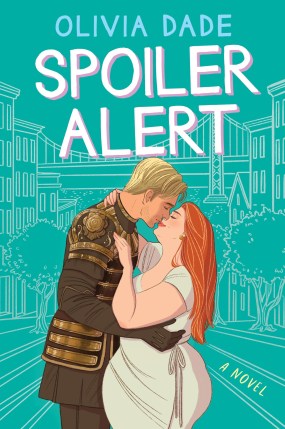
Spoiler Alert

Spoiler AlertSpoiler Alert by Olivia Dade (Website, Twitter)

Genre: romance

Setting: mostly San Francisco

I read it as a(n): paperback

Source: public library 

Length: 403 pp

Published by: Avon Press (6 Oct 2020)

Her Grace’s rating: 4 out of 5 stars

April Whittier is a fandom nerd, and proud of it. She writes fanfiction about her favorite show in her free time, and she loves cosplay. She has never really shared her true identity with her online friends, though, because she is worried they will reject her for being fat. When she decides she wants a change in her life, she posts an image of herself on Twitter in full cosplay regalia. Many people are very kind and supportive, but there are the inevitable fat-shaming assholes who bully her. The lead actor of the show she loves, Marcus Caster-Rupp, sees it happening online and decides to ask her on a date to dinner. She cautiously accepts, not sure if she is interested in what she sees as a PR stunt. When she arrives at the restaurant, April is stunned not only to find that the two of them have instant chemistry but that Marcus seems to have a much deeper side to his personality than his vapidly narcissistic public persona implies. He also has secrets, the biggest of which is that he is the friend who has been beta reading all her fanfic for years. Marcus found that out by accident and doesn’t know what to do with the information. Cue things going right, then spectacularly wrong, and adult angst.

So I really do not read romance. I read this one to tick a box for a couple of reading challenges I’m doing for 2021. I picked it because I am intimately familiar with fandom and fanfic and cons and everything associated with geekdom so I thought it would be somewhat more tolerable than the usual romance novel. I was surprised to find that not only was it tolerable, but I actually really liked it! I think that proves fandom just makes everything better, right? Yes, you know what is going to happen in the end. Yes, there is angst and some silly stuff. But April and Marcus are both really well developed characters and have complexity and depth. They are not both hot young things. They are 35 and 40, respectively, have had their share of relationships in the past, have lives outside of each other, and are thoroughly independent. I liked it. I didn’t ever think that either of them was a sucker or codependent or pitiful. 

A big part of this book was how accepting April was of her body. She didn’t feel shame for being fat, and she learned how to stick up for herself if people started fat shaming her. The book showed that it isn’t just the skinny people who can have a HEA or a relationship with a conventionally attractive person. Marcus thought right from the moment he saw April’s coplay picture on Twitter that she was beautiful and genuinely didn’t seem to understand why others didn’t think so as well. He loved her body, which is terrific, but not necessary because April already knows she’s hot. I loved seeing the body positivity, though. 

The secondary characters are also pretty well developed, though some more than others. There is a blurb at the back of the book that indicates two of the secondary figures will be getting their own book in summer of this year, so that is nice since I liked one of them a great deal. I may or may not read it (I probably will), but either way, I’m glad the author is getting established in her field. Based on this book and her author bio, she seems exactly like the kind of person I want to be friends with. 

Overall, a delightfully geeky love story that should appeal to anyone who knows what it’s like to belong to a fandom family.

book review

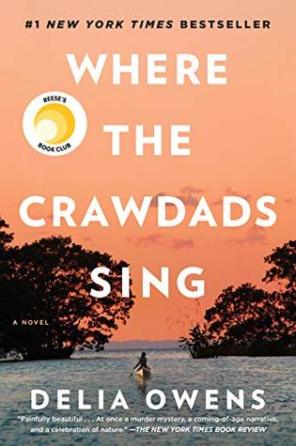
Where the Crawdads Sing

Where the Crawdads SingWhere the Crawdads Sing by Delia Owens (Website, Twitter, Insta)

Genre: literary fiction

Setting: North Carolina marsh/swamp

I read it as a(n): hardback

Source: public library 

Length: 370 pp

Published by: Putnam (2018)

Her Grace’s rating: 5 out of 5 stars

Beginning in the early 1950s, Kya Clark is known as the Marsh Girl in her tiny hometown of Barkley Cove, NC. Her family are dirt poor and live in a shack in the swamp, four kids and their parents all crammed into a tiny space. Kya’s father is an abusive drunk and, one by one, everyone starts leaving. First it was Kya’s two eldest siblings. Then her mother. Finally, her brother, Jodie, who was closest to her in age. Kya is about six at the time and she learns to keep the abusive drunk at bay, though eventually he, too, abandons her. Alone and penniless, Kya learns how to care for herself. Through the kindness of one Black family, Kya usually has enough to get by. A friend of Jodie’s teaches her how to read. Eventually, Kya blossoms into a beautiful woman, though her isolation and abandonment issues have made her exceedingly shy and eccentric. 

When Chase Andrews, a well known young man in town, is found dead at the bottom of a lookout tower, the sheriff decides it looks like foul play and eventually arrests Kya, now in her early 20s, for his murder. What follows is a beautifully written story that weaves between the “present” 1969/1970 and the past, starting in 1952. Slowly, the two times merge, bringing Kya’s story into crisp focus.

I don’t usually read books that are wildly popular. I find the hype surrounding them is too often overreaction and the book itself falls flat. But! I. Fucking. Loved. This. Book! It was so, sooooooooooo good! I loved that Kya had a way to educate herself, having avoided school after the one day she attended and was mercilessly bullied. She was an uneducated hick – literally one of the swamp people – at first but learned to read with the help of Jodie’s friend, Tate. She closely studies the ecosystem of the marsh and becomes an expert in the field. And there is no sappy plot that has her turning suddenly into a sophisticated woman who moves to the big city where she is super popular and happy in society or any such tripe. She never loses her connection to her land. She never gets comfortable with people, and certainly not with crowds. It is sad only because she could have become an expert in the marsh ecosystem AND been a more chic person if the vast majority of the people in her life hadn’t walked out on her or had welcomed her into their community. 

The underlying theme was one of tolerance and prejudice. It can be no coincidence that the only two people who truly loved and accepted Kya for herself, aside from Jodie, were Jumpin’ and his wife Mabel, a Black couple from the outskirts of town. They helped her as they were able and as Kya allowed them. They stood by her during the worst times. They were never ashamed to be friendly or to be seen with her. Most of the other people in the book treated her with disdain and rejection, calling her swamp trash or telling their children not to go near her because she was dirty. So much for their vaunted Christian charity. 

There were bright points throughout Kya’s life and the people she encountered. Tate was arguably the most important person in her life. Because he taught her how to read, she was able eventually to support herself with her deep knowledge of the marshes. Jumpin’ and Mabel helped her survive and always made sure she knew she could stay with them if she wanted to. The clerk at the store, who Kya thought was nosy, was actually helping her in ways Kya never knew. These kindnesses made the rejection and isolation Kya faced that much more painful. 

More than anything, I think this book was a reflection on acceptance, hypocrisy, and redemption. I’m sure we all know a person who says they are accepting of everyone, but when faced with a challenge to that, shows they are anything but accepting at all. The people of Barkley Cove like to think they are kind and helpful but they are all quick to make assumptions about Kya based solely on the fact that she is poor. As if it were her fault every single person in her family took off and never seemed to give a thought about her afterwards. Kya made do, and she would have loved to have a friend or someone to care for her like a parent, but she was taught from a young age not to trust people because they will just hurt and abandon her. Kya is able to redeem herself in more ways than one over the course of the novel, from learning to read at the age of 14 to supporting herself through her painting and scientific observations, she shows those around her she is far more than just the Marsh Girl if they care to look deeper. The townsfolk also redeem themselves in an unexpected way, though by the time they figure things out, it is far too late to have a useful impact on Kya. 

Overall, I thought this was a lovely novel and count myself among those who loved it. Seems like the feeling about this are black and white, which, strangely, is appropriate.