book review · sci-fi · Star Trek

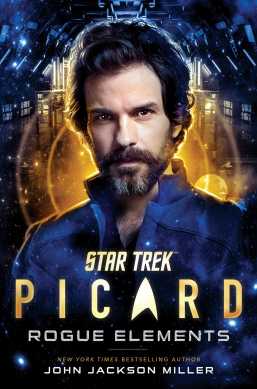
Star Trek Picard: Rogue Elements

STP rogue elements

Star Trek Picard: Rogue Elements by John Jackson Miller

Genre: sci-fi

I read it as a(n): paperback

Length: 406 pp

Her Grace’s rating: 4 out of 5 stars 

John Jackson Miller’s Star Trek Picard: Rogue Elements offers readers an escapist journey through the Federation’s seedier underbelly, a slightly different approach than the typical Trek novel. The author’s note indicated that it was written specifically to serve as a much-needed escape from the grip of the COVID pandemic lockdown. I, however, am several years behind in all of my reading, including Trek, so I only just now read it. It was still perfect escapist reading. With a focus on the charismatic Rios, the acquisition of the ship La Sirena, and seamless connections to the TV show Star Trek: Picard, this novel is a delightful addition to the Star Trek universe.

One of the standout elements of Rogue Elements is the exploration of Cristóbal Rios’s character and back story. I am a major sucker for a good back story, as anyone knows who has had the least contact with me and my bookish preferences. In fact, I’m pretty sure even the Awá people are aware of my love of back stories. Miller expertly delves into Rios’s past, unravelling the layers of his personality and providing readers with a deeper understanding of this complex character. Through actiony adventures and poignant moments, we witness Rios’s growth, gaining insight into the experiences that shaped him into the man we see on the TV show. 

The acquisition of La Sirena, a ship that holds its own aura of mystery, brings a new dynamic to the story. Miller paints a vivid picture of this ship, portraying it as a character in its own right. I also really fucking love it when inanimate objects are their own characters. Oh hi, The One Ring! Excalibur! Rocinante! As readers explore the ship alongside Rios and his ragtag, accidental crew, there is a palpable sense of adventure that permeates every page. 

Rogue Elements effortlessly weaves its story into the broader tapestry of Star Trek: Picard. Fans of the TV show will appreciate the integration of familiar faces and storylines, providing a sense of continuity and further expanding the world created on screen. Miller’s attention to detail ensures that the novel feels like a natural extension of the television series, making it a must-read for any true Trekkie.

book review · fantasy

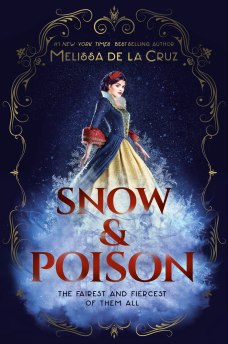
Snow and Poison

Snow and Poison

Snow and Poison by Melissa de la Cruz*

Genre: fantasy

I read it as a(n): digital galley

Length: 288 pp

Her Grace’s rating: 2 out of 5 stars

De la Cruz’s lush retelling of Snow White is set in 17th century Bavaria. The central figure is Sophie, the Duke of Bavaria’s daughter, and her love interest is Phillip of Spain. They meet at her debut ball, which is also the marriage of her father to a woman called Claudia, who hails from a remote region of Bavaria. Events are set in motion that will test the strength of Sophie’s resilience as well as the bond between Sophie and everyone she loves.

There were many things to like about this book. In particular, the relationship between Sophie and Claudia was delightful; it’s always refreshing when an author makes a traditionally negative character into one worthy of love and respect as she did with Claudia. She turned the trope of the wicked stepmother on its head. 

There were several drawbacks to the novel as well, though. The pacing was generally poor. The first three-quarters of the book were a straightforward historical story; one wondered when or if there would be any elements of the Snow White tale. I had actually wondered if this was perhaps the first part of a duology or trilogy. Then, in the last quarter of the book, the dwarves’ and the wicked witch’s characters were introduced and the whole rest of the fairy tale proceeded from there in a very rushed manner. Mostly because of the inconsistent pacing, the characters in general all lacked development, and a couple of them who had the potential to be honestly fascinating were more or less glossed over in favor of concluding the story. Many unanswered questions remained as a result of the pacing deficiencies.

The novel should appeal to younger teens or established fans of de la Cruz, but I think it would disappoint older teens or adult YA readers.

*This review was originally published with the Historical Novel Society

book review · books · sci-fi · Star Trek

Star Trek Coda: Moments Asunder, The Ashes of Tomorrow, and Oblivion’s Gate

Moments Asunder (MA) by Dayton Ward; The Ashes of Tomorrow (AoT) by James Swallow; Oblivion’s Gate (OG) by David Mack

Genre: sci-fi

Setting: spaaaaaaaaaaaaace!

I read it as a(n): paperbacks

Source: my own collection 

Length: 368 (MA), 368 (AoT), and 448 (OG)

Her Grace’s rating:  out of 5 stars

**There are spoilers below. You have been warned.**

Before beginning my own review, I think it would be helpful to share this exceptional, self-described “high speed crash course” summary of all the relevant Lit-verse post-series relaunch novels that lead up to the events depicted in the Coda trilogy. 

Have you finished reading that now? I hope so, because there is no way I can summarise all of the relaunch novels, and certainly not as nicely as Alvaro Zinoas-Amaro did up there. 

Given that there was not any new TV or film material to build on, it made sense that the post-series books would attain a life of their own. What followed was a vastly complex, intertwined mingling of stories, series, and characters that developed further the massive fanwank litverse of Star Trek. But then Star Trek: Picard began and it became clear that the relaunch books no longer bore any resemblance to the official canon of Trek. This Coda trilogy was designed to wrap up all the various relaunch storylines that sprang into existence in the 20 or so years since the end of all the Trek series. 

Fucking finally.

Don’t get me wrong. I love Star Trek in just about any form I can get it. That held true – and still holds true – for the rich litverse as well. But OMG, you guys, I’m so sick of the massive, overarching, crossover, mingled serial plots. I actually started feeling a little resentful that I had to read nearly every Trek novel after a certain point just to keep up with the story, even if it wasn’t a series that I really wanted to read about. 

With the conclusion of the relaunch books, I devoutly hope that it signals a return to the single story format. One book equals one story. I miss the old numbered paperbacks. I could read those when I wanted, in whatever order I wanted, could skip books from my less-beloved series if I wanted, and never missed out on any part of the actual necessary plot. There have been a couple episodic novels fairly recently, and they were awesome. Dear Star Trek authors – please, PLEASE return to episodic novels, even if the various TV series don’t. 

That said, I am very much looking forward to new Trek books, ESPECIALLY Discovery and Strange New Worlds. I’m digging Disco right now and am pumped for SNW. Anson Mount’s Capt. Pike is fucking awesome. 

So. The books. First thing to note, for anyone who hasn’t yet read these, nothing is sacred and not one single character is safe. 

Moments Asunder by Dayton Ward started the trilogy off, setting the stage for a cataclysmic disaster involving the very existence of time itself. The Devideans – remember the weird glowy dudes from the “Time’s Arrow” episodes in 1800s San Francisco? They’re back – have figured out how to feed not only on specific periods of time where there were a lot of people suffering. They figured out how to destroy entire universes and timelines to feed on an infinite number of people. 

Wesley is central to alerting Picard about the Devideans. His powers as a Traveler are the main reason the rest of Starfleet learns about the threat to their existence. Of course, it wouldn’t be normal if everyone believed Wesley or Picard immediately, so they have some work to do. Ezri Dax and her crew, along with all of Deep Space Nine, witness firsthand the Devideans and the creatures they’ve created, the phased serpent-like Nagas, and how a mere touch from a Naga can instantly age anything to death, from ships and metal to sentient beings. Naturally, Picard et al. are going to want to fight that.

Moving into The Ashes of Tomorrow by James Swallow, readers get the rising action and honestly, I blew through this book in about 3 days. It was fast paced and exciting. Picard and Wesley head to Starfleet HQ to convince Admiral Akaar and President Kellessar zh’Tarash but are floored when everyone wants to take a wait-and-see approach. Like, they are literally running out of time period, let alone time to do anything, so wait-and-see is a really stupid idea. Naturally, Picard takes matters into his own hands, aided along the way by the likes of Benjamin Sisko, Tom Paris, B’Elanna Torres, Odo, Quark, Miles O’Brien, and many others we’ve seen over the years. 

Their plan? They figure out that the Devideans are using the Bajoran wormhole as a staging ground for their temporal incursions into this timeline. So naturally, the plan is to close the wormhole. Permanently. At both ends. Beyond that, they actually need to totally destroy it. You can imagine what that means to the Bajorans who view the wormhole as their Celestial Temple and the home of their gods. 

Throughout AoT and Oblivion’s Gate, Rear Admiral William Riker goes completely off his nut. At first, readers assume it’s just because he’s righteously pissed that Picard not only went rogue but that he talked a shitload of other people into going along with his plan. As the story progresses, it becomes clear that Riker is suffering some kind of bad effects of the weird temporal shifts caused by the Devideans, resulting in what is termed Temporal Multiple Personality Disorder. Worf is also affected, but he is cured through a mind meld with none other than Ambassador Spock. 

In the final book of the trilogy, Oblivion’s Gate, the mission becomes desperate. Multiple timelines are at play and the mission now is to shut down a splinter timeline that never should have happened. Doing so will prevent the Devideans not only from feasting on the neural energy of billions of sentient beings, but also from annihilating time itself. To accomplish their mission, Picard and friends have to find the core of the Devideans’ temporal base, sync it with the timeline that shouldn’t exist, and obliterate the core. Oh, also, Kira Nerys has to take the Orb of Time into the Bajoran wormhole, which is always a good time. And K’Ehleyr is there, too! When they go to the Mirror Universe for help. Because that happens, too. K’Ehleyr is fucking awesome. One of my favourite lines in the trilogy was about her: “This is what it means to be Klingon. To savor the cries of my enemies and feel their blood on my faceMy Klingon ancestors would be proud. … She let go of her life, aglow with pride. Prepare a feast, heroes of Sto-Vo-Kor – a family of warriors is coming (Mack 379-380). 

Overall, I think Ward, Swallow, and Mack did a great job wrapping up the relaunch books with this trilogy. Of the three, my least favourite was the first, Moments Asunder. I love Star Trek and normally I don’t mind Dayton Ward’s writing, but the first probably 75% of MA was just a total slog for me to get through. It was just so boring. I almost didn’t bother to pick up the rest of the trilogy. It only picked up the pace in the last quarter or so, and mainly because he killed off Ezri Dax. I’m glad I DID finish reading the trilogy, though, because as I mentioned earlier, Swallow’s contribution was action-packed and fun, and Mack’s was similarly fast-paced and also really touching. 

In the end, I think the only thing I would have done differently would have been to find a way not to have to collapse the splinter timeline. It is Star Trek, after all. Amazing, 11th-hour rescues full of technobabble and marvels of engineering should always happen in Star Trek. 

But ultimately, it doesn’t matter when, how, or whether it’s expected. It hurts every time.

book review

My Sister’s Keeper

my sister's keeperMy Sister’s Keeper by Jodi Picoult (Website | Twitter | IG)

Genre: contemporary literature

Setting: Providence, RI

I read it as a(n): MMP

Source: my own collection 

Length: 500 pp

Published by: Pocket Books (2004)

Her Grace’s rating: 4 out of 5 stars

**Yeah, I’m gonna go ahead and smack a great big SPOILER ALERT on this whole review. Read at your own risk, you’ve been warned**

Thirteen-year-old Anna Fitzgerald loves her sister, Kate, who has a rare form of leukemia. But that doesn’t mean she is willing to donate a kidney to her on top of everything else she’s already had done to her. Anna was born via in vitro specifically so that she could be a donor for Kate. To be fair, her parents only wanted to use her cord blood to help Kate and everyone thought that would be the end of it. Turns out, it was only the beginning of years of blood, bone marrow, and other body part donations to Kate. Now Anna is suing her parents for medical emancipation, for her right to control her own body, even if it means Kate dies as a result.

Somehow I have missed the Jodi Picoult fandom; this is the first book of hers I’ve ever read. I can see why she is so popular! I sat my ass down and read this entire 500 page book in one day. I found her writing to be engaging and the story compelling. I look forward to reading more of her books in the future. 

The appeal of this one was how easily I could see and sympathize with all sides of the situation. There is so much to talk about regarding medical and scientific ethics. I don’t think anyone know what they would do in certain circumstances until they found themselves in it. I’m not sure I would have a whole other baby on the off chance their cord blood was curative. But then I also don’t have a child with a rare, treatment-resistant form of leukemia, either. Maybe I would have had baby after baby until one was a match, or gone the route the Fitzgeralds took and basically had a designer baby who would be a perfect match. I just don’t know. And neither do you, unless you’ve already lived it. 

I am not sure what I would feel about discovering that the cord blood only worked for a while and now the leukemia is no longer in remission, thus needing to turn to the younger child again for more blood and platelets. Or for that to be the constant situation. Or to have both children in the hospital because one has leukemia and the other is recovering from whatever else was done to her to donate blood, marrow, and other body fluids to the other. 

I really don’t know what I would do if my child was guaranteed to die without a new kidney, but might not make it off the table even if she did get her sister’s organ. I don’t know how to weigh the almost-certain death of one child against the life-long risks associated with losing one kidney for the other child, not to mention that the kidney donation itself is a major surgery with many weeks of recovery time required. 

And poor Jesse! Who is Jesse? He’s Anna and Kate’s brother. Yeah, his parents and usually his sisters forget about him all the time, too. I’d act out if I were in his shoes. I don’t need to have lived the same experiences to know at least that much. 

The parents of these kids were given the short straw for sure. But so did their children. This isn’t Never Let Me Go or The Unit. We don’t breed or keep people for the sole purpose of giving other people their organs. I know they only thought they would need Anna’s cord blood. But it still feels morally wrong to me to have a baby even for that one-time donation. I think if I were that kid, I would probably feel very used and mostly unwanted, that I was only here because of that and otherwise, they didn’t want me in the first place. 

I liked the lawyer, Campbell Alexander, for taking on Anna’s case for free, partly because of his own lack of control over his body and partly because Anna refused to take no for an answer. He did his job and won her case and then had to use his new Power of Attorney over Anna in the most heartbreaking way. This ending, BTW, was entirely different in the film version of this book, which I watched after I finished reading it. The movie ending sucked. The book’s end was so much more poignant. I can’t fathom why on earth the screenwriters would change it.

In the end, I loved this book for its multitude of ways it got me thinking. The fact that it was written in such an engaging and easy manner, with characters who I cared about, made it that much better. I am looking forward to reading more books by Picoult. That’s one good thing about coming to the party so very late – now I have a plethora of her books to choose from!

book review · fantasy · sci-fi

Binti: The Complete Trilogy

BintiBinti: The Complete Trilogy by Nnedi Okorafor

Genre: sci-fi

Setting: Earth, Ooma Uni, and spaaaaaaaaace!

I read it as a(n): paperback

Source: my own collection 

Length: 358 pp

Published by: Daw

Her Grace’s rating: 3 out of 5 stars

Binti is a young woman from Earth, a member of the Himba people of Namibia. She is what is known as a master harmonizer, a person who has a skill in bringing balance to all, usually through math. Her role is to succeed her father as her tribe’s master harmonizer. However, that is upended when Binti is accepted into the prestigious Oomza Uni, an entire planet devoted to learning. Binit runs away against her parents’ wishes to study, but while her ship is en route, it is attacked by the warlike Meduse, leaving her the traumatized only survivor. Binti eventually forms a bond with Okwu, one of the Medusae from the attack, and a link is created between their two peoples, paving the way for an unusual peace.

I read these novellas in the form of an omnibus paperback, so I can’t really separate the three stories in my mind. To me, they’re all one story. But, as always, I am impressed with Okorafor’s skill in creating such rich characters and culture in a relatively short span of pages. The Himba people are not fictional; they have a long and complex culture from which Okorafor could draw. But she fleshed out the people in ways that made them entirely real. I cared about every character on the page, which is a rare thing for me. 

I loved Binti’s search for herself, her bravery in leaving the only home she’d ever known in an attempt to create a different life for herself. The act of leaving home, becoming independent, learning new things about yourself is one of the best gifts we can give ourselves. I feel bad for people who never experience that in any way. 

The ways that humans and the Medusae were at conflict and how they resolved their problems is sadly still a relevant metaphor for human society as a whole. We seem plagued with people, whether groups or individuals, who only care about enriching themselves or enforcing their agenda and worldview. There isn’t enough peace anywhere. So much can be said about this but, as I’ve said for years, SFF is an ideal medium in which to discuss real-world issues. Binti is no different. There were many themes that made me think: home, community, identity, conflict, colonialism, friendship. I’m sure examinations of these themes and more could be made, and wind up longer than the book itself. I love that; books that make me think while also providing a good story are to be treasured.

Overall, I liked this story, though I think I enjoyed Okorafor’s other works that I’ve read a little more. This trilogy (plus the short story included in the omnibus edition) seemed to focus more on how to fit in social issues than how it impacts the plot, so I think there are some gaps that need to be filled. But still, the Binti trilogy is a terrific story and one I definitely recommend. 

Favorite lines:

  • Will his happiness kill him? (Okwu asked this without a hint of irony or sarcasm. Me, too, Okwu. Me. Too. Deeply suspicious of happiness.)
book review · fantasy

The Hundred Thousand Kingdoms

the hundred thousand kingdomsThe Hundred Thousand Kingdoms by NK Jemisin (Website, Twitter)

Genre: fantasy

Setting: the city of Sky

I read it as a(n): audiobook

Narrator: Cassaundra Freeman

Source: my own collection 

Length: 11:47:00

Published by: Daw 

Her Grace’s rating: 3 out of 5 stars

Yeine Darr is the daughter of a disgraced noblewoman of the Arameri, the rulers of the Hundred Thousand Kingdoms. Their seat of power is in the city of Sky. Yeine is summoned to Sky by her grandfather, her mother’s father, who is also the ruler of the Arameri. To her utter shock and horror, he names her as one of his three heirs to the throne. Now she will be expected to compete against two cousins she never knew for the throne. While she is learning the ways of Sky, rife with political machinations and corruption, Yeine also learns that several gods are held by the Arameri as slaves after they lost to the god Bright Itempas in the Gods’ War. Now those gods are bitter, unsurprisingly, and they have a plan to help Yeine win in her struggle for the throne.

This first instalment in Jemisin’s The Inheritance Trilogy is, in many ways, a pretty typical fantasy narrative: a young warrior woman loses her family, is named an heir to the kingdom, falls in love with a god, is used as a pawn by a variety of people, and eventually is victorious. But Jemisin sort of upends a lot of traditions as well, which was her stated goal in writing her novels. 

The people who were the ruling class, the Arameri, were the highest class because the high priestess of the goddess Itempas was an Arameri when the Gods’ War occurred millennia ago. So that part makes sense within this story. I really like how Jemisin then creates a society that is more and more corrupt the closer one gets to the gods. I don’t think it is untrue at all here, but it is certainly not what most people want to believe. This story tackles it head-on. 

The world building in this novel is amazing. That is one of the best things about Jemisin’s writing. I did find it a little hard to keep track of at times, which might be partly because I listened to the audiobook rather than eyeball reading this one. Sometimes the dialogue was not well marked that I could tell, so I wasn’t sure who was speaking for kind of big sections of discussion. But I’m not sure, again, how much that is a function of listening to the book instead of reading it. 

In line with the rich world building are many, MANY different themes. Off the top of my head, there is slavery, colonialism, racism, power, tradition, and religion. These are intricately woven throughout the entire narrative in ways that are sometimes startling or subversive. It’s a great way to get readers to think about many things we believe and hold dear without really knowing WHY we do. So many traditions in this novel were followed simply because that’s what has always been done, which is of course why something is a tradition. But if a tradition blows, then you should change it or abandon it. Columbus Day, for example, isn’t a traditional holiday we should still be observing in the 21st century. It is being replaced in many states by Indigenous Peoples Day, which is far better. Change can be a good thing. 

Every single character in this book is richly nuanced and complex with the exception, I think, of Scimena Arameri, Yeine’s cousin and another potential heir. She was all hate and bitterness, all the time. I’m not too sure why this one character was so one-dimensional but I’m sure Jemisin has her reasons. I may have just not picked up on what it was. She was an easy character to despise, though. Otherwise, the rest of the cast was really interesting, even those who you don’t like. 

Looking forward to getting into the second book!

book review · books · fantasy

Mexican Gothic

mexican gothicMexican Gothic by Silvia Moreno-Garcia (Website, Twitter, IG)

Genre: Gothic fantasy

Setting: 1950s Mexico

I read it as a(n): hardback

Source: my own collection

Length: 301 pp

Her Grace’s rating: 3 out of 5 stars

Noemi Taboada is a young socialite in 1950s Mexico City. Her father is a wealthy merchant and the head of the family. As such, he is concerned about image and avoiding scandal. So, when his niece Catalina sends a letter to him that sounds completely unhinged, he wants to get to the bottom of that and fix whatever needs fixing before it hits the society pages in the newspaper. He sends Noemi to visit Catalina in her husband’s home manor of High Place in the remote Mexican countryside. Things go downhill from there. 

I really loved the first part of this novel. It was everything a proper Gothic novel should be – eerie, mysterious, dark, neglected, and so on. Very much felt like a Mexican Jane Eyre. I kind of lost the Gothic feel around 2/3 of the way through, when I think it felt more like a straight horror novel than Gothic. That said, I still really loved all of it, it just felt like it switched genre a little bit in the middle there. I wouldn’t even care that much except I’m not a huge fan of horror. 

I thought Noemi was a very believable character. She was sort of shallow and vain at first, but then we learn she wants to go to university to get a master’s degree in anthropology. She is something of a flirt and prefers the chase or courtship to being caught in her relationships, but she is self-aware enough to know it. She had hidden depths that reveal themselves nicely throughout the novel. She was a really well-developed character.

I didn’t think that so much about Catalina. I know that her flat personality was actually a part of the plot, but the glimpses we got from Noemi’s perspective about her were not really enough to give her much depth or make her into a fully-fleshed person in the story for me. She felt more like a prop than a person. 

The rest of the characters – Virgil, Francis, Florence, and Howard – were suitably developed for the roles they played in the novel. I don’t think they were super deep but they all did have certain nuances to their personalities and were fine for the purposes they served.

I especially loved how the house, High Place, was described. It was in the tradition of the best Gothic manor homes, like a cross between Thornfield Hall and the Haunted Mansion. Old, dusty, neglected, falling apart, mouldy, and of course it had a cemetery! Minus the mould, I would love to have a house like that. I’d put just enough money into it that it had proper amenities but keep the abandoned Gothic feel. 🙂 

Overall, I thought this was a fun read. Didn’t blow me away, but it was fun. Would certainly recommend.

book review · sci-fi

Nemesis Games (The Expanse #5)

nemesis gamesNemesis Games (The Expanse #5) by James S.A. Corey 

Genre: sci-fi

Setting: spaaaaaaaaaaaaaace! 

I read it as a(n): paperback

Source: my own collection 

Length: 532 pp

Published by: Orbit

Her Grace’s rating: 4 out of 5 stars

In book 5 of The Expanse series, the crew of the Rocinante all go their separate ways. Temporarily, of course. The crew are family now and the Roci is home. That doesn’t mean they don’t still have business elsewhere to tend to, though, and they do. Holden is the only one who stays put; Naomi goes to Ceres Station to deal with a family  problem, Alex goes to Mars with a vague idea of getting his ex back, and Amos goes to Earth to make sure the death of someone he cared about was natural or not. Naturally, the entire solar system goes up in flames while the crew is scattered every which way.

The political situation is fraught in this entry. A radical branch of the OPA is behind the most devastating attack in history, their attempt to carve out a place for themselves within the larger political landscape. Because terrorism totally works. That was sarcasm for anyone who can’t parse Kristen-speak. 😊 Holden tries to work with Fred Johnson to reign in the violent nutjobs while, elsewhere, Alex researches why ships are going missing, with some help from Bobbie Draper. Amos makes an unexpected new friend. Or old friend, depending on how you look at it. And Naomi finds herself in the middle of everything in some strange ways.

The last few entries of The Expanse series, I have hoped for the other primary characters – Naomi, Alex, and Amos – to be point-of-view narrators. I got my wish in this novel! All of the POV characters were the crew of the Rocinante. We get a glimpse into their histories and some parts raised more questions. I learned, though, that there are Expanse novellas that dive into their past selves in more depth, so I have no doubt I’ll be reading those at some point as well. Because I am a giant sucker for a good back story. 

I like that there was a theme of family and home woven throughout. Everyone kept reflecting on home in terms of their past, but now that isn’t home, it isn’t their family. Home is where you make it, and family is who you choose. Birth and blood don’t really factor into either of those unless you want them to. I liked that the crew knows with a deep certainty that they are each other’s family. 

All in all, another fun entry in The Expanse series. Can’t wait to read the rest!

book review · fantasy

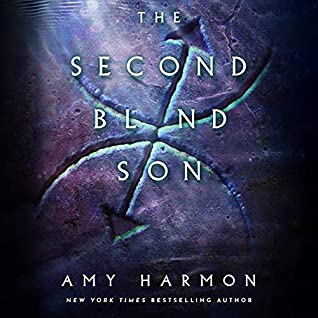
The Second Blind Son

the second blind sonThe Second Blind Son by Amy Harmon (Website, Twitter, IG)

Genre: fantasy

Setting: Saylock

I read it as a(n): audiobook

Narrator: Rob Shapiro

Source: my own collection 

Length: 15:58:00

Published by: Brilliance Audio (2021)

Her Grace’s rating: 4 out of 5 stars

The Second Blind Son is a sequel of sorts to Amy Harmon’s earlier novel, The First Girl Child. I say of sorts because this story ran concurrently to the events of TFGC, rather than portraying a continuation of that story. In this, the focus is on Hod, a blind man who is raised to be a Keeper of the Temple by Arwin, a cave keeper. Arwen has taught Hod how to listen, smell, feel in ways that are uncanny to help him compensate for his blindness. As a result, Hod is adept at hunting and fighting through the use of his heightened senses. He can identify the heartbeats of individual people, their specific scent, and so forth. And then one day, he rescues a girl who washes up near his cave from a shipwreck. Ghisla is the sole survivor from her people, the Songers, whose voices are ethereally beautiful, and she wants to die. Slowly, she and Hod become the best of friends and, when she uses a rune carved upon her hand, Hod is able to see. Their paths are often separated but they retain their connection through the years, through political upheaval, and across vast distances.

I loved this book so much. I really liked the way it wove into the earlier story of TFGC and made you remember events from that story alongside this new one. I hadn’t realised it was that sort of timeline, so I kind of wish I had reread TFGC before jumping into this one, but it in no way hindered the ease of following the story. It is just a thing I would have done to refresh my own memory. And yes, it can probably be read as a standalone, but I truly think readers are short-changing themselves not to read TFGC first. Not only will you become familiar with the world of Saylock, but the characters from that book who make appearances in this one are familiar and welcome. You’d miss out on that if you only read TSBS as a standalone.

The narration was excellent as well. The narrator did some different voices for various characters, but only enough to differentiate them within the scene. He didn’t go crazy with melodrama, he just read the story in an engaging way. There were times when he sounded just like Tuvok, though, so that was a bit of cognitive dissonance. I kept expecting Star Trek. 

The character development throughout was decent, though I would have liked to get more scenes with the other Daughters of the Temple. They were an important part of the story but I feel like I didn’t get to know them very well. Maybe future Saylock books will focus on them more in some way. Ghisla becomes one of the Daughters when she is forced to leave Hod’s cave and is given in lieu of a clan chieftain’s daughter to the Keepers. There, she is known as Liis of Leok and no one learns her true identity. Hod is the only one who knows her real story. Also, YAY for the book sample on Amazon having the spelling of characters’ names! I would not have gotten some right from just listening to it.

I thought it was interesting how King Banruud was a hateful, horrible person but Ghisla could help keep him from raging too much with her music. I don’t remember his madness at all from TFGC, but here it struck me as horrific, persistent tinnitus. I know that can make people crazy – mine sometimes wakes me up – but if one is already crazy and cruel to begin with, what new horrors could the condition bring about? Doesn’t make his actions at all ok, but I thought it was an interesting reading of madness. 

Keeping Hod and Ghisla apart in distance but giving them the means with which to communicate with each other was a great touch. It allowed them to grow and mature, and their relationship did likewise. The rune magic that helped them speak to one another really keeps things humming along for readers so we can sense their desire to be together but we don’t get bored by the separation. 

Probably there is a message in there about how true love doesn’t need to see to recognize one’s beloved. Or something. Ick. I don’t really do romance, though I find this sort of non-melodramatic, non-bodice-ripping romance within many fantasy novels to be entirely acceptable. 

Overall, a thoroughly lovely story, nicely paced, and I can’t wait to read more of Harmon’s fantasy novels!

book review · sci-fi

Cibola Burn (The Expanse #4)

cibola burnCibola Burn (The Expanse #4) by James S.A. Corey (Website, Twitter, Expanse Twitter)

Genre: sci-fi

Setting: spaaaaaaaaaaaaaace! And Ilus/New Terra

I read it as a(n): paperback

Source: my own collection 

Length: 581 pp

Published by: Orbit (2014)

Her Grace’s rating: 4 out of 5 stars

In this 4th entry in The Expanse series, humans are moving beyond their solar system and beginning to colonize far-flung planets on the other side of the Ring. Of course, they’re doing so before having fully studied them and analysed the data. What could go wrong?

Everything, of course! A group of Belter settlers lands on a planet they call Ilus and set up camp, ready to mine the planet’s rich deposits of lithium; the UN gets a contract to mine the same lithium on the same planet, which they’ve dubbed New Terra, and proclaim the Belters as squatters. Terrorism, murder, and mayhem ensue. This is all before the weird debilitating disease strikes. And the planet itself attacks the humans. And also, the orbits of the ships are all degrading and it’s only a matter of time before they all come plummeting out of the sky, including the Roci

Naturally, Holden and crew are the only ones who can fix things. 

I think sometimes Holden comes off as sort of Gary Stu in this one, even though he isn’t written as a perfect man free of weaknesses. He has plenty of those. But is it really a weakness to be the only one who can save humanity from itself? Again? I mean, it isn’t his fault everyone else is too wrapped up in their petty quibbles and research and murder to see what’s actually important. I’m still not entirely sure Holden is really a Mary Sue despite the above, and his human frailties do keep it from going too far over the edge. But it might be nice to see someone else come charging to the rescue sometime. 

Speaking of that. I do love how every book in the series so far has different POV characters. Yes, one is always Holden, but that’s fine and only makes sense given that he really is the main character. I like how we are meeting characters in this book as POV figures who were minor characters in previous books. I dig that kind of plot continuity. I would REALLY, though, love it if Naomi, Alex, and Amos were all POV characters in at least one of the books. I like them all but I have a soft spot for Amos. He reminds me a bit of the man they call Jayne.

It was interesting to see Basia Merton as a POV character. He was the man who was friends with Prax and whose son died on Ganymede back in book 2. Basia’s been through some things and his pain makes him do some stupid, cruel things that he normally wouldn’t. His character development was certainly thorough. He was a nicely complex person and I enjoyed seeing his progression. 

Overall, another great instalment in The Expanse series! It’s been a long time since I enjoyed reading a full, long series quite as much as this one!